Croatia - Austria
overview of historical and cultural relations - a sketch
Darko Zubrinic, 2005.Contents:
- General
- Science
- Art
- Croatian Latinists, Humanists, and Encyclopaedists
- Croatian Glagolitic Script
- Music
- Zrinski's and Frankapan's
- Jelacic
- Croatian coat of arms
- Sports
- Croatian mariners
- Cravate
- A Remarkable Adress
- Humanitarian activity
- Lipik
- King of Dolls
www.hr/darko/etf/et01.html
www.hr/darko/etf/cravate.html
Let us first give a very rough sketch of the main historical periods of the Croatia's past:
- the arrival of the Croats to the Balkan peninsula at the beginning of the 7th century,
- the period of Croatian Dukes and Kings of native birth (until 1102),
- Croatia sharing with Hungary a new state under common Hungarian and Croatian Kings (1102-1526),
- Croatia ruled by the Habsburgs, as a member of the Habsburg Crown (1527-1918, Austro Hungarian Empire from 1867 to 1918), parts of Croatia under Venice, Turkish Ottoman Empire and France,
- Croatia in the first Yugoslavia (1918-1941),
- The Independent State of Croatia (1941-1945),
- Croatia as a republic in Tito's (or second) Yugoslavia (1945-1991),
- internationally recognized Republic of Croatia (January 1992).
Croatia is a point of contact of very different cultures and civilizations. Across its territory or along its boundary
- the border between Western and Eastern Roman Empire had been laid by the Roman Emperor Theodosius in 395,
- the border between Francs and Byzantium (9th century),
- between Western and Eastern Christianity (11th century),
- and between Islam and Christianity (15-19th century).
Aucune
frontière en Europe n'est
plus lourde d'histoire que celle qui sépare Rome de Byzance,
l'Occident de l'Orient.
[Gregory
Peroche], p. 250.
One of the confluents to Don river near the region of Azov is called Horvatos (see [Pascenko], p. 87). The Croatian name can be traced to different sites in Ukraine, also around Krakow in Poland, in Bohemia, and Austria, thus showing migrations of the Croatian tribes to their future homeland.
In the ``Bavarian geographon'' (written in 666-890) there is a description of various tribes in the north of Karpatian and and Sudetian mountains, where the Croats are also mentioned.
In the region of northern Steiermark, Austria, (between Judenburg and Leoben) there is a place called Kraubat. The name appears many times in various charters of the 11th and 12th centuries, and is written as Chrowat (= Croat).
In the region of Kärnten (old Karantia in the south of Austria) there is a place called Kraut, also derived from the Middle Age name Chrowat, mentioned in many charters of the 11th and 12th centuries.
In Kärnten
(Karantia) there existed a Croatian parish
already in the 10th century. Old manuscripts call it pagus
Crouuati,
which is obviously derived from the Croatian name (= Croatian parish).
The name appears even in Royal charters. According to investigations of
Felicetti this parish of `pagus Crouuati' spread precisely along the
Gosposvetsko polje, where the earliest Slavic Dukes of Karantia had a
seat. It included also the region of today's Klagenfurt (Celovec),
capital of Karantia, together with the famous Church of Gospa Sveta
(Maria Saal, Maria in Solio, Maria ad Karanten), probably the oldest
Christian church in the region.
The
above information regarding the Croats in
Austria are taken from Ferdo Sisic, one of the greatest Croatian
historians.
From 1102 the Croats had shared together with Hungarians a newly built state under common Hungarian and Croatian Kings. The Kings were crowned twice: with the Hungarian and the Croatian crown. From that time on, the Croats were dreaming about having their own independent state, and it was revived after almost nine centuries in 1991.
During this very long period parts of Croatian soil were dominated by Venetians, Italy (in the first half of the 20th century), the Ottoman Empire and the Habsburgs. Among all the nations reigned by the Habsburgs (Czechs, Poles, Slovenians and others) the Croats are together with Austrians and Hungarians the only ones who have preserved an uninterrupted continuity of their state since the Early Middle Ages. Furthermore, as stated by one of best Croatian historians Vjekoslav Klaic, the Croatian Kingdom was the oldest one in the Habsburg Monarchy, older than Austrian, Hungarian, or Czech Kingdom.
During many centuries the Croats had their bans (viceroys) and their assembly called Sabor. The oldest known Sabor was held in Split in 925 and in 928 (devoted more to religious than to secular questions), and in 1076 when Dmitar Zvonimir was elected the Croatian King by the "unanimous choice of the clergy and the people". The Croats preserved these important state institutions of ban and Sabor also when they decided to enter the Habsburg state (1527--1918). Today the Sabor has the meaning of the Croatian Parliament.
Very important personality in Croatian history is Ban Josip Jelacic (1801, Petrovaradin - 1859, Zagreb). We offer you quite interesting presentation of the Jelacic family (in French), written by a descendent of this noble family in France, Monsieur Michel Iellatchitch.
Little known but important personality for Croatia, in particular for its northern part Slavonia, is an Austrian Karlo Prandau (1792-1856). He lived in Croatia, and considered Croatia as his homeland. Several palaces and parks were built upon his initiative. He was benefactor of the poor, financial supporter of many projects, composer etc. He composed a march dedicated to his good friend Josip Jelacic. According to his last wish, he was buried in a small Croatian town Valpovo, although he died in Vienna. His brother Antun Gustav Prandau also contributed very much to material and cultural welbeing of Croats in Slavonia.
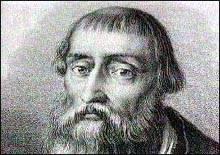 The
first technical
discoveries are related to the name of Faust
Vrancic (lat. Faustus
Verantius, italianized name Fausto
Veranzio, hungarized name Faustus
Verancsics, 1551-1617).
It is known that he collaborated with Tycho Brache and Johannes
Keppler. Vrancic was fluent in at least seven languages. At the court
of King Rudolph II in Hradcani in Prague (Rudloph II was Roman-German
Emperor and Croatian-Hungarian King) he worked as his secretary, and in
that period completed his important dictionary
of five most noble European languages
(Dictionarium quinque
nobilissimarum Europeae linguarum: Latinae, Italicae, Germanicae, Dalmaticae
et Hungaricae) and published in
Venice in 1595. He is best known
for his book of inventions in Machinae
Novae, published also in
Venice in 1595. The book was financially supported by the French King
Louis XIII, and the Toscan Duke Cosimo II de Medici. Among his numerous
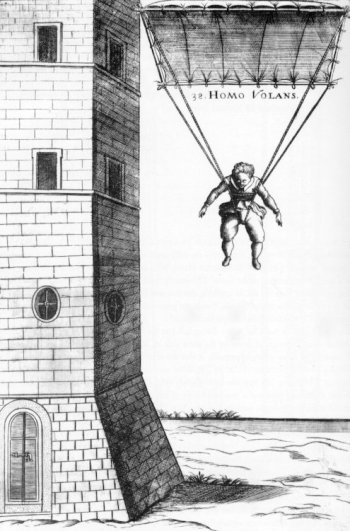
inventions the most famous is the parachute,
which he tested in
Venice. It is true that Leonardo da Vinci had a similar idea earlier,
but he made only a rough sketch of it, of pyramidal shape, while
Vranic's parachute had rectangular shape, as today.
The
first technical
discoveries are related to the name of Faust
Vrancic (lat. Faustus
Verantius, italianized name Fausto
Veranzio, hungarized name Faustus
Verancsics, 1551-1617).
It is known that he collaborated with Tycho Brache and Johannes
Keppler. Vrancic was fluent in at least seven languages. At the court
of King Rudolph II in Hradcani in Prague (Rudloph II was Roman-German
Emperor and Croatian-Hungarian King) he worked as his secretary, and in
that period completed his important dictionary
of five most noble European languages
(Dictionarium quinque
nobilissimarum Europeae linguarum: Latinae, Italicae, Germanicae, Dalmaticae
et Hungaricae) and published in
Venice in 1595. He is best known
for his book of inventions in Machinae
Novae, published also in
Venice in 1595. The book was financially supported by the French King
Louis XIII, and the Toscan Duke Cosimo II de Medici. Among his numerous
inventions the most famous is the parachute,
which he tested in
Venice. It is true that Leonardo da Vinci had a similar idea earlier,
but he made only a rough sketch of it, of pyramidal shape, while
Vranic's parachute had rectangular shape, as today.
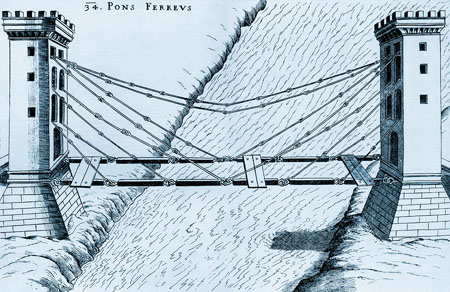
See Faust Vrancic (by dr. Vladimir Muljevic, in Croatian)
For example, the famous Verrazzano Narrows Bridge is the largest suspension bridge in the USA (New York, 1298 m), see also Historical Develpment of Iron and Steel in Bridges. 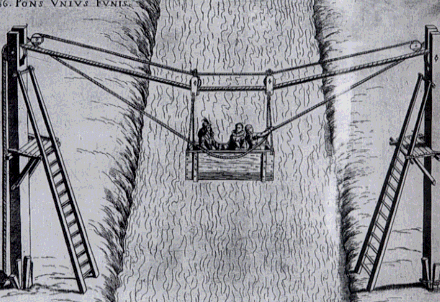
See Vladimir Muljevic: Hrvatski znanstvenici Antun i Faust Vrancic, Encyclopedia Moderna, god. 14, II, Zagreb, 1993. I express my sincere gratitude to Professor Emeritus V. Muljevic for this information.
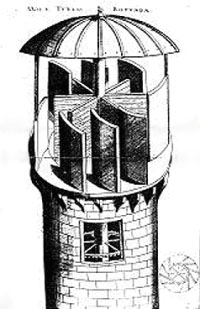
Vrancic also described in his book Machinae Novae the first wind turbine:
- in 1965 by "Heinz Moos Verlag", Munich, Germany (F. Klein, A. Wisner), translated into five languages,
- in 1968 by "Ferro", Milano, Italy (Umberto Forti), in Italian
- in 1985 by "Magveto", Budapest, Hungary, in Hungarian,
- in 1993 by "Novi Liber", Zagreb, Croatia
(Vladimir Muljevic, Zarko Dadic), in Latin and Croatian (from the
introduction:
"...This book is issued in dramatic time for Sibenik and its environs, for Dalmatia, and the whole of Croatia [that is, issued during Greater Serbian 1991-1995 aggression on Croatia]. The aim and importance of this book should be close and clear to any civilized person: it radiates with Renaissance spirit of activism and optimism that we also wish to develop in our time, despite all misfortune brought to us by imposed war...")
Ignacije Szentmartony (1718-1793) was a Croatian Jesuit born in Croatian north (Kotoriba in Medjimurje), of a Croat mother and Hungarian father. After his studies in Vienna and Graz he lectured mathematics in Graz. In 1751 he went to Lisabon, where he obtained the title of royal mathematician and astronomer, and as such was designated to be a member of expedition for determining borders. In 1753 he sailed off from Portugal to the mouth of Amazon river for geographic research there. Only a small amount of his work is preserved to these days: two maps of the Amazon and Rio Negro. By the end of his life, upon return to Croatia, he wrote the first Croatian kajkavian grammer for Germans: Einleitung zur kroatischen Sprachlehre für Teutschen, Varazdin 1783. For more information see [Zoric].
Ludwig
(Ljudevit) Mitterpacher von
Mitterburg (Mitterburg = Pazin
in Istria, 1734 - 1814), was born in
Bellye (Bilje in eastern Croatia, near Danube river) and educated in
Austria. He studied mathematics and theology at Vienna University and
was appointed a teacher of religion in 1762. In 1777, Mitterpacher
became the first professor of the newly-established agricultural
faculty at the Pest University, a position he kept until his death. A
very popular lecturer, Mitterpacher also wrote several schoolbooks and
lecture notes. His most significant work was the three-volume Elementa
rei Rusticae, a comprehensive
study of agricultural science and
practice. Subjects included cultivation, plant-growing, horticulture,
vine-growing, forestry, animal husbandry and food processing. His books
originally written in Latin language were translated into several
languages and became important works of reference for contemporary
science. Mitterpacher became a member of the Academy of Sciences in
Bologna.
Many
thanks to Mr. Darko Varga (from Bilje,
Baranja) for having contributed and Mittepacher's biography to this web.
Filip Vezdin or Wesdin (Paulinus a Sancto Bartolomaeo, 1748-1806), pioneer of European indology, was born in a Croatian village of Cimov (Hof am Leithagebirge) in Lower Austria in Burgenland (Gradisce). He completed his studies of philosophy and theology, Roman languages and English in Linz and Prague. Besides native Croatian he spoke Latin, Greek, Hebrew, German, Hungarian, Italian, Portuguese and English. As a Carmelitan missionary (with monastic name Paulin of St. Bartholomew) Vezdin was sent to India in 1776, where he learned Sanskrit and several Indian dialects.
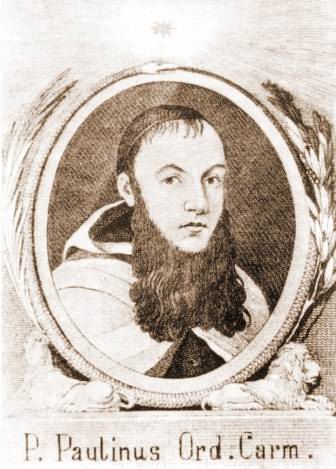
For more information see Filip Vezdin (in Croatian)
Vezdin is the author of Sidharubam seu gramatica samscrdamica, the first printed Sanskrit grammar in Europe, published in 1790 in Rome. Extended edition was published in 1804 and entitled Vyacarana seu locupletissima samsrdamicae linguae instituio. He wrote numerous works on Indian culture, and in addition to Sanskrit also learned Malayalam, the Malabar coastal language, in which he wrote his works as well. At the request of a local ruler, he wrote an English-Portuguese-Malayalam grammar. His works are kept in Rome, Vienna and Uppsala. The first methodical study of connections between indoeuropean languages is contained in his work De antiquitae et affimitate lingaue zendicae, samscrdamicae et germanicae disseratio, Rome 1798. 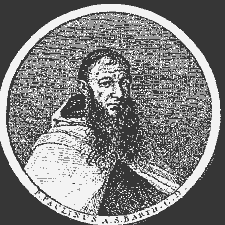
| Ivan Filip Vezdin, Burgenland Croat, Discalceate Carmelite, with the monastic name Paulin of St. Bartholomew, a missionary in Malabar from 1776 to 1789. The author of the first printed Sanskrit grammar and forerunner of Indian and Indo-European studies to the great honour of his homeland and the Croatian and Indian people. |
| Ivan Filip Vezdin, gradiscanski Hrvat, bosonogi karmelicanin, 1776. - 1789., misionarski je djelovao na Malabaru. Pisac prve tiskane sanskrtske gramatike i preteca indijskih i indoeuropskih studija na veliku cast svojoj domovini te hrvatskom i indijskom narodu. |
For more information see Branko Franolic: Filip Vezdin, and [Zoric].
Franjo Domin (born in Zagreb, 1754-1819), studied physics and theology in Vienna and later became a dean at the Faculty of Philosophy and rector of the University of Budapest. He was among the first who cured various diseases by electrotherapy using static electricity.
In 1888 Josip Belusic
constructed the first electric
speedometer. Belusic was born in
the region of Labin in Istria, and was professor in Kopar. This
invention was patented in Austria - Hungary under the name of
"velocimeter."
NOTE: Nikola
Tesla (1856-1943) is since
recently
credited for this discovery, see
here.
Modern Slavic studies were founded by Vatroslav Jagic (born in Varazdin, 1838-1923), professor of philology at the Universities of Zagreb, Berlin, Vienna, Sankt Petersburg, Odessa. He was a full member of the Petersburg's and Austrian Academies of Sciences. A great importance for the development of slavistic philology had the journal Archiv fur slavishe Philologie that he founded in Berlin, and whose editor in chief he was during 45 years. He also initiated and organized the Seminar for Slavic studies in Vienna in 1887, which later grew out to the Institute of Slavic Studies. His scientific opus is enormous: if collected, it would occupy about 100 books.
David Schwarz, a Zagreb Jew (1852-1897), invented steerable metal airship that is today unjustly bearing the name of the German count Zeppelin. Indeed, Zeppelin bought the complete project from Schwartz's wife, shortly after his premature death. It is true that in 1897 the `Zeppelin' constructed by Schwartz fell down during its trial flight near Berlin, due to a small technical error in the propeller, having reached the height of 460 m. It was 47.5 m long and had 35 tons.
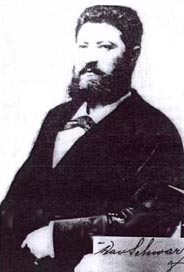
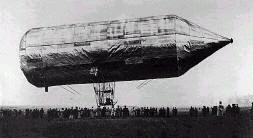
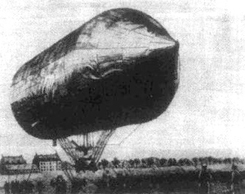
Photos from David Schwarz web site by Ante Sucur
The American Israel Numismatic Association issued two nice plaquettes in honour of David Schwarz, see here.The Croatian Jews left truly remarkable traces in arts, music, science and architecture.
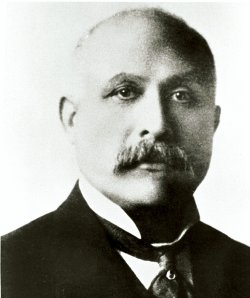
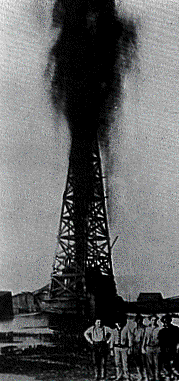 Antun Lucic
(americanized name is Anthony
F. Lucic; born in Split 1855,
died in Washington 1925) discovered the first major gusher in Texas, The
Lucas gusher, flowing at the
rate of 80,000 to 100,000 barrels per
day, blew in in January 1901. About 50,000 people came to see it. This
meant the earliest massive exploitation of oil and petroleum in the
world. Antun Lucic, known as Anthony
F. Lucas (F. = Francis is
after his father Franjo, mariner and shipbuilder from the island of
Hvar) believed that the nearby Spindletop hill,
near the town of Beaumont,
covered a vast pool of oil. His company became one of the first oil
companies in Texas. Antun Lucic was a mining engineer who completed his
studies at the Politechnical institute in Graz, Austria, where also his
fellow coutryman Nikola
Tesla later studied. By
1902, as many as 285 wells were operating on Spindletop Hill and over
600 oil companies had been chartered. In this way Captain Anthony Lucas
enabled the United States to surpass Russia as the world's leading oil
producer. With the Lucas gusher, a black-gold rush began, and
fortune-seekers from all over the world poured into Texas. Over time,
Houston became a center of the oil industry, and a captive of the
British-dominated global oil cartel. Antun Lucic is also considered to
be the founder of modern petroleum reservoir engineering. He was
consulting engineer in USA, Russia, Mexico, Algeria, and Romania. As an
expert in mining he was elected the life long chairman of the American
Committee for Oil and Gas (later
called Petroleum Division, more information).
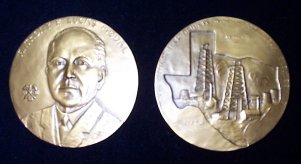
In 1936 The American
Institute for Geological and Metallurgical Investigations
founded a
prize named after him: Anthony F. Lucas Gold Medal.
Antun Lucic
(americanized name is Anthony
F. Lucic; born in Split 1855,
died in Washington 1925) discovered the first major gusher in Texas, The
Lucas gusher, flowing at the
rate of 80,000 to 100,000 barrels per
day, blew in in January 1901. About 50,000 people came to see it. This
meant the earliest massive exploitation of oil and petroleum in the
world. Antun Lucic, known as Anthony
F. Lucas (F. = Francis is
after his father Franjo, mariner and shipbuilder from the island of
Hvar) believed that the nearby Spindletop hill,
near the town of Beaumont,
covered a vast pool of oil. His company became one of the first oil
companies in Texas. Antun Lucic was a mining engineer who completed his
studies at the Politechnical institute in Graz, Austria, where also his
fellow coutryman Nikola
Tesla later studied. By
1902, as many as 285 wells were operating on Spindletop Hill and over
600 oil companies had been chartered. In this way Captain Anthony Lucas
enabled the United States to surpass Russia as the world's leading oil
producer. With the Lucas gusher, a black-gold rush began, and
fortune-seekers from all over the world poured into Texas. Over time,
Houston became a center of the oil industry, and a captive of the
British-dominated global oil cartel. Antun Lucic is also considered to
be the founder of modern petroleum reservoir engineering. He was
consulting engineer in USA, Russia, Mexico, Algeria, and Romania. As an
expert in mining he was elected the life long chairman of the American
Committee for Oil and Gas (later
called Petroleum Division, more information).
In 1936 The American
Institute for Geological and Metallurgical Investigations
founded a
prize named after him: Anthony F. Lucas Gold Medal.
- Lucas, Athnoy Francis (The Handbook of Texas)
- Who Was Anthony F. Lucas? (for children)
- James Anthony Clark and Michel T. Halbouty: Spindletop, New York, Random House, 1952
- Everett DeGoyler: Anthony F. Lucas and Spindletop, Southwest Review 30, Fall 1945
Many thanks to Mr. Vedran Joseph Nazor, USA, for help to collect data about Antun Lucic.
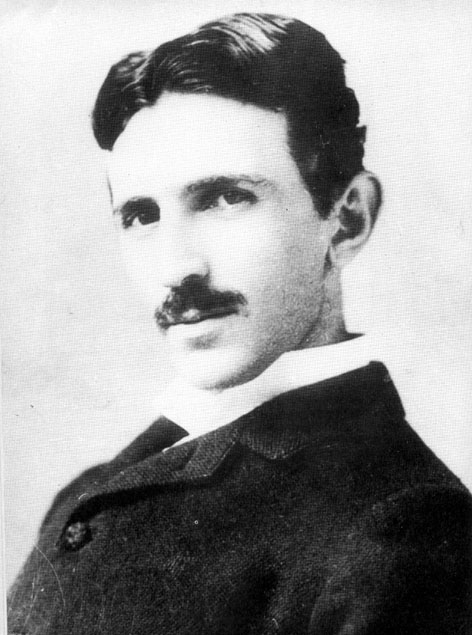 Nikola Tesla
(1856-1943), born in Croatia (at that time
within Austro-Hungary), is well known and need not be particularly
introduced.
We feel it is necessary to cite his words that he was equally proud of
his Croatian motherland and Serbian descent. He completed his
elementary and secondary school education in Croatia (in Gospic and
Karlovac), and studied in Graz and Prague. He is the father of
alternating electrical current technology and the three phase system.
He is equally known by his contribution to the high frequency
technology and wireless communications. The impact of Tesla's numerous
inventions (more than 700 patents) on the development of modern
civilization is immeasurable. The unit for magnetic induction Tesla,
was named after him (Conference general des poids et mesures, Paris,
1960). He refused to receive the Nobel prize which he had to share with
T.A. Edison.
Nikola Tesla
(1856-1943), born in Croatia (at that time
within Austro-Hungary), is well known and need not be particularly
introduced.
We feel it is necessary to cite his words that he was equally proud of
his Croatian motherland and Serbian descent. He completed his
elementary and secondary school education in Croatia (in Gospic and
Karlovac), and studied in Graz and Prague. He is the father of
alternating electrical current technology and the three phase system.
He is equally known by his contribution to the high frequency
technology and wireless communications. The impact of Tesla's numerous
inventions (more than 700 patents) on the development of modern
civilization is immeasurable. The unit for magnetic induction Tesla,
was named after him (Conference general des poids et mesures, Paris,
1960). He refused to receive the Nobel prize which he had to share with
T.A. Edison.
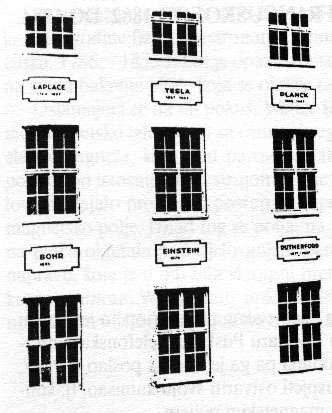 Windows
of the building of Electricité de Strasbourg
in France, where Tesla had worked for some time, have inscriptions with
names of outstanding scientists. There you can see his name surrounded
with Laplace, Planck, Bohr, Einstein and Rutherford (click on the
left). In front of the building of International Union for
Telecommunications in Geneva there is a statue of Nikola Tesla. When
his mother died, he payed a visit to Croatian capital Zagreb in 1892,
where he gave a lecture about alternating current. On that occasion he
said:
Windows
of the building of Electricité de Strasbourg
in France, where Tesla had worked for some time, have inscriptions with
names of outstanding scientists. There you can see his name surrounded
with Laplace, Planck, Bohr, Einstein and Rutherford (click on the
left). In front of the building of International Union for
Telecommunications in Geneva there is a statue of Nikola Tesla. When
his mother died, he payed a visit to Croatian capital Zagreb in 1892,
where he gave a lecture about alternating current. On that occasion he
said:
As a son of my homeland I feel it is my duty to help the city of Zagreb in every respect with my advice and work (Smatram svojom duznoscu da kao rodeni sin svoje zemlje pomognem gradu Zagrebu u svakom pogledu savjetom i cinom),
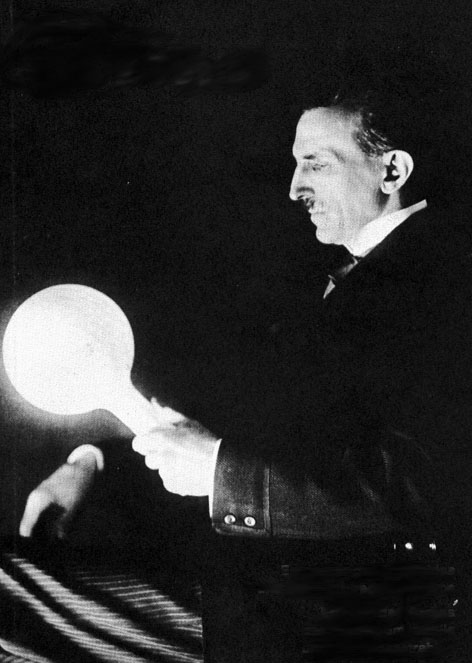 and
suggested to
build alternating current power plant. There is no doubt that by saying
"homeland" he meant Croatia. In 1931, at the age of 75, Tesla received
birthday greetings from Lee de
Forest and Albert
Einstein.
His monument carved by Ivan Mestrovic,
who
knew him personally, can be seen in Zagreb. After the end of World War
II, the famous sculptor was asked by Belgrade officials to prepare
Tesla's monument for the capital of Yugoslavia, but he refused,
explaining that Tesla did not like the city. By the way, the family
name Tesla does not exist in Serbia. Another monument, carved by
Croatian sculptor Frano Krsinic, can be seen near Tesla's hydro power
plant on Niagara Falls. A part of Technical Museum in Zagreb is
dedicated to Nikola Tesla. According to some recreational sources on
WWW, four greatest geniuses in the history of Mankind are Gutenberg,
Edison, da Vinci, and Tesla (in this order). There is not doubt that
with a different homeland Tesla's position on the list would be much
higher. Even today, so many years after Tesla's death (1943), his
numerous manuscripts are kept as top secret by the Ministry of Defense
of the USA (see Margaret Cheney, Tesla:
Man Out of Time,
Prentice Hall, 1981; Vladimir Muljevic, Nikola
Tesla, slavni
izumitelj, Hrvatska zajednica
tehnicke kulture, Zagreb, 2000, p.
75.)
and
suggested to
build alternating current power plant. There is no doubt that by saying
"homeland" he meant Croatia. In 1931, at the age of 75, Tesla received
birthday greetings from Lee de
Forest and Albert
Einstein.
His monument carved by Ivan Mestrovic,
who
knew him personally, can be seen in Zagreb. After the end of World War
II, the famous sculptor was asked by Belgrade officials to prepare
Tesla's monument for the capital of Yugoslavia, but he refused,
explaining that Tesla did not like the city. By the way, the family
name Tesla does not exist in Serbia. Another monument, carved by
Croatian sculptor Frano Krsinic, can be seen near Tesla's hydro power
plant on Niagara Falls. A part of Technical Museum in Zagreb is
dedicated to Nikola Tesla. According to some recreational sources on
WWW, four greatest geniuses in the history of Mankind are Gutenberg,
Edison, da Vinci, and Tesla (in this order). There is not doubt that
with a different homeland Tesla's position on the list would be much
higher. Even today, so many years after Tesla's death (1943), his
numerous manuscripts are kept as top secret by the Ministry of Defense
of the USA (see Margaret Cheney, Tesla:
Man Out of Time,
Prentice Hall, 1981; Vladimir Muljevic, Nikola
Tesla, slavni
izumitelj, Hrvatska zajednica
tehnicke kulture, Zagreb, 2000, p.
75.)
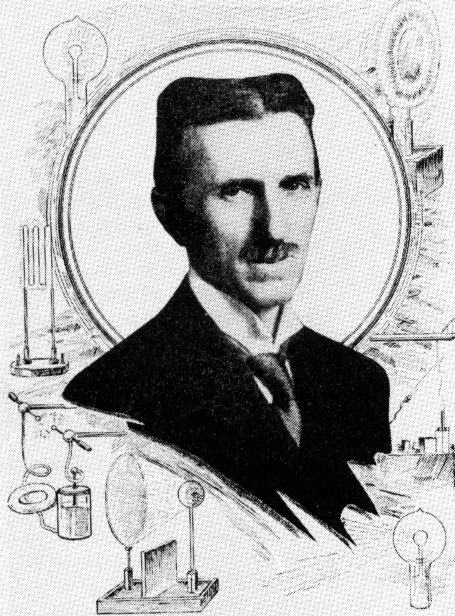
Technical Museum in Zagreb, about Tesla's inventions (rotating egg, Tesla's three phase generator, Tesla's transformer, Tesla's remote control boat, etc).
The Supreme Court of the USA overturned Marconi's patent of modern radio in favor of Nikola Tesla in 1943, soon after his death.
- Nikola Tesla, numerous links
- Nikola Tesla, the man who invented
the modern world
for example Tesla has indisputable priority in inventions of modern radio, X-rays, vacuum tube amplifier, radar, first robots, etc. - Nikola Tesla, forgotten american scientist, by John W. Wagner
It is interesting that in Bartol Kasic's dictionary of Croatian language (16/17 centuries) one can find the name of "tesla", meaning adze. The word tesla (adze) is without any doubt related to Croatian words tesar - carpenter, tesati - to trim (a log), to dress (a stone). One of grand-grandfathers of Nikola Tesla was Draganic (from the village of Ledenice near Novi), nicknamed Tesla. I owe this information to dr. Vladimir Muljevic, professor emeritus of the University of Zagreb.
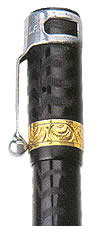
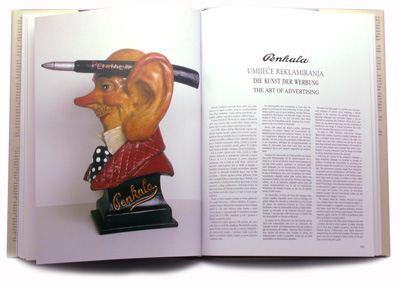
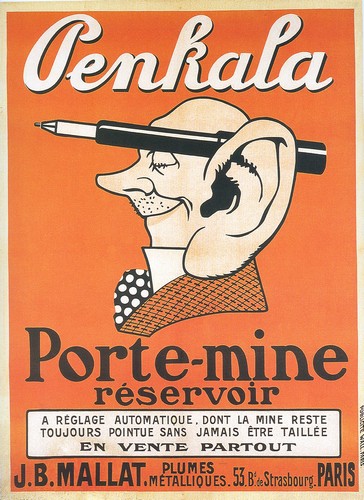
Eduard (Slavoljub) Penkala (1871-1922), born in Slovakia to a Polish/Dutch family, became naturalized Croat when after his marriage his family immigrated to Zagreb. He invented the mechanical pen and fountain pen which are bearing his name "penkala" and now they are in everyday use.


His first invention was a resin bottle filled with hot water, called Termofor (hot water bottle), used in bed as "central heating" during cold nights.
www.penkala.net
www.toz-penkala.hr
Ivan Jagsic (1886-1956), born as a Burgenland Croat in Austria, studied cartography, topography and geology in Zürich. As a professor of University of Cordoba, Argentina, he lectured also meteorology and astronomy, and wrote numerous scientific books. The South American Oceanographic Institute in Brazil was named after him.
Count Edgar Bourée de Corberon (1807-1861) was descendant of an old French noble family (born in Troissereux, dpt. of Oise), polyglot and interesting Croatian intellectual. In 1845 he arrived to Zagreb, and settled in Janusevac near Brdovec, the most beautiful Croatian palace at that time. He was a good friend to Ban (viceroy) Josip Jelacic. In his letters Corberon wrote about Croatia as his second homeland, about dangers of intensive magyarization (in his letters to the Hannover king Ernest August I written in French) in turbulent years around 1848.
His generous material support of various Croatian institutions persuaded him to leave the palace of Janusevac, and to settle in Bisag, in Draskovic's palace near Komin. In 1851/52 he urged Ban Josip Jelacic to reestablish the University of Zagreb to full extent (in 1850 the Faculty of Philosophy was concealed), offering his help as a potential lecturer. As a witness of epidemic of typhus and cholera in Croatia in 1851 he asked the Austrian monarchy officials to open the Faculty of medicine in Zagreb, suggesting its precise structure. Unfortunately, the faculty of medicine was opened only in 1917., during the reign of Emperor Franz Joseph I.
By the end of his life
Corberon wrote his Programm
für die Erweiterung der Königlichen Akademie Agram
[Zagreb]
to einer volständigen Universität,
but the sudden illness
and death prevented him from completing his work. According to his last
will, he was buried in Croatia in Bisag. How much he loved his new
homeland can be seen from the fact that (also according to his last
will) even obituary notices in his native Troisseraux in France had to
be printed in Croatian.
See Alojz Getliher, Marulic
3, Zagreb, 1999, pp 528-537.
Professor Andrija Stampar (1888-1958) was our leading authority in the field of epidemiology and a pioneer in preventive medicine. As an expert of the League of Nations he spent three years (1933-1936) in China, developing the health service there. During the WW2 he was arrested by the German Nazis and kept in custody in Graz in Austria. He was one of the founders of the World Health Organization (WHO) and very active in promoting the health service in Afghanistan, Egypt, Sudan and Ethiopia. He wrote the introductory declaration of the Statute of the WHO and was the first president of this organization.
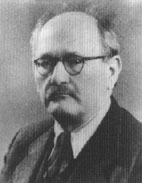
In 1955 he was awarded the medal of Leon Bernard, which is the most prestigious international acknowledgement in the field of social medicine. For more details see his book The first ten years of the World Health Organization, Geneva, 1958.
Stefan Gelineo, Croat by birth, born in Starigrad on the island of Hvar (1898-1971), studied in Leipzig and Vienna. He was the professor of physiology at the University of Belgrade (capital of Serbia and former Yugoslavia). He is internationally known by his contributions to the study of hypothermia, i.e. the study of vital functions under low temperatures.
Franz Leopold Jelacic (1808 Dorpat-Tartu / Estonia - 1888 Kazan / Russia) is a descendant of noble Croatian family of Jelacic (Russian branch). He studied in Vilnius in Lituania. After his specialisation in Berlin, Vienna, Paris and Munich, he founded The University Clinic in Kazan, for which he obtained felicitations from a minister in 1845.
The oldest orthopedic institution in Croatia and one of the oldest in Europe, is the hospital for orthopedic surgery and rehabilitation "Dr Martin Horvat" in Rovinj, a lovely coastal town in Istria. It was founded in 1888 by Viennese physicians for children from Vienna.
Karl Heitzmann (a German, born in Vinkovci, 1836-1896) was a histologist and pathologist and worked in Vienna and New York. He was the first who described hematoblasts. Emanuel Klein (1844-1925), a Croatian Jew born in Osijek, worked as a bacteriologist and histologist in London. He described many fine, until that time unknown structures of human body, and discovered Bacillus enteritidis sporogenes. He proved the streptococal etiology of scarlatina.
Eduard Miloslavic (1884-1952) was a descendant of Dubrovnik emigrants to the USA, born in Oakland, California. His family returned to Dubrovnik in 1889. Ed studied medicine in Vienna, where he became a professor of pathology. In 1920 an invitation came from the Marquette University in Wisconsin, USA, to take the chair of the full professor of pathology, bacteriology and forensic medicine. In subsequent years "Doc Milo", as colleagues called him, inaugurated criminal pathology in the USA. As an outstanding specialist he was also involved in investigations of crimes perpetrated by al Capone gang. He was one of the founders of the International Academy for Forensic Medicine, member of many American and European scientific societies and academies, and also vice president of the Croatian Fraternal Union (CFU) in the USA. In 1932 he moved to Zagreb, where he was a full professor at the Faculty of medicine until 1944, when he moved again to the USA. He was lecturing also pastoral medicine at the Faculty of Theology in Zagreb, and was known as ardent adversary of abortion and euthanasia. In 1940 he was elected member of the prestigious"Medico-Legal Society" in London, in 1941 promoted the full member of the Tzarist Leopoldine Carolingue Academy of Natural Sciences in Germany, and doctor "honoris causa" at the University of Vienna, where he started his scientific career. For his 1943 investigation of the slaughter of 12,000 Polish officers perpetrated by Soviets in the Katyn wood in 1940, see here. By the end of 1944 he moved again to the USA (St.Louis, Missouri), where he was working until his death. It is important to note that after his initiative in 1941 the Faculty of Medicine in Sarajevo was founded in 1944 during the NDH regime.
According to an article published in Vjesnik, December 27, 1992, due to his testimonies related to Katyn wood tragedy, Prof. Miloslavic was sentenced to death in absence by the ex-Yugoslavia.
When the University of Zagreb was founded in 1874, the Viennese government of the Austro-Hungarian Empire did not permit to open a medical school. Professor Drago Perovic (1888-1968), a Serb born in Herzegovina in Trebinje, who completed his studies in Vienna sub auspiciis regis, was one of the founders of the medical study at the University of Zagreb in 1918. He was one of our experts in the field of anatomy. He was one of important collaborators of Croatian Encyclopaedia, initiated in 1930s, and printed in part during the WWII in Zagreb (see his extensive article Anatomija there). He was editor in chief for basic medicinal sciences for the Croatian Encyclopaedia.
The white marble from the island of Brac, near the town of Pucisca, is highly appreciated among sculptors. It was also used in the building of
- the White House in Washington,
- the Battary park in New York
- the Austrian Parliament and the New Palace in Vienna,
- the Hungarian Parliament in Budapest,
- the White court in Trieste, Italy,
- hotel Panorama in Prague, Czechia
- many embassies in Belgrade, Yugoslavia, still in use today, etc.
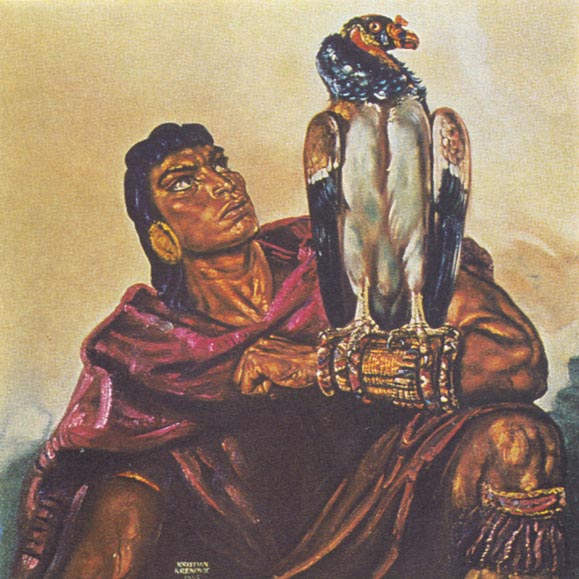 Kristian
Krekovic (1901-1985),
outstanding Croatian artist, born in the village of Koprivna near Tuzla
in Bosnia
- Herzegovina, in the family of
forester from Croatian region of Lika,
died in
Palma de Mallorca. He studied in Vienna and Paris, and already since
1928 was a member of the French Society of Visual Arts. The same year
he was awarded the gold medal in Bordeaux (Exhibition of international
art). Krekovic portrayed many ministers, statesmen, and outstanding
persons like
Kristian
Krekovic (1901-1985),
outstanding Croatian artist, born in the village of Koprivna near Tuzla
in Bosnia
- Herzegovina, in the family of
forester from Croatian region of Lika,
died in
Palma de Mallorca. He studied in Vienna and Paris, and already since
1928 was a member of the French Society of Visual Arts. The same year
he was awarded the gold medal in Bordeaux (Exhibition of international
art). Krekovic portrayed many ministers, statesmen, and outstanding
persons like
- Mahatma Gandhi (1931),
- the English Queen (in 1938, upon her request; the portrait is kept in the Buckingham palace in London, see [Sabater, p. 19]: "...Como expresión de su trabajo en esta época, basta citar el famosos retrato que hizo de la Reina María de Inglaterra, retrato que adorna una de las estancias del Palacio Real de Buckingham.",
- the royal family of Spain (King Juan Carlos and Queen Sophia), and
- the royal family of Sweden (King Gustav V upon his invitation to Stockholm in 1948, when he was at the age of 90),
- Queen Mary of Romania.
 His
extensive opus
of 143 large format works, devoted to Croatian history, including 63
portraits of Croatian
Dukes and Kings
(from Porga from 620 till Stjepan Tomasevic in 1463), was unfortunately
not preserved. Between 1928 and 1966 he visited Peru many times, so
that his work became deeply imprinted by the life and art of Incas.
Since 1955 he lived in Peru, and accepted Peruvian citizenship offered
to him. He had great success with exhibitions of
His
extensive opus
of 143 large format works, devoted to Croatian history, including 63
portraits of Croatian
Dukes and Kings
(from Porga from 620 till Stjepan Tomasevic in 1463), was unfortunately
not preserved. Between 1928 and 1966 he visited Peru many times, so
that his work became deeply imprinted by the life and art of Incas.
Since 1955 he lived in Peru, and accepted Peruvian citizenship offered
to him. He had great success with exhibitions of
(that is, Present and past of the fabulous Peru) in
- New York (Law Memorial Library Columbia University; Ambassador Hotel, 1956),
- Washington D.C. (National Museum of the Smithsonian Institution, 126,000 visitors in July and August 1955, that is, more than 2,000 people daily!); see an excerpt from the article by Thomas Beggs, director of the Fine Art Collection of the Smithsonian Institution, published in "The American Artist",
- Siracuse (The Siracuse Museum of fine Arts, 1956)
- Boston,
- Philadelphia (University Museum, 1955),
- Madrid (Circulo de Bellas Artes, 1957),
- Lima (exhibition opened by the president of Peru, Manuel A. Odria, 1954),
- Vienna (Neue Hofburg, visited also by Dr. Schaerf, president of Austria, 1957),
- Barcelona (Galeria Grife & Escoda, 1957),
- Palma de Mallorca (Casa de Cultura, 1961), etc.
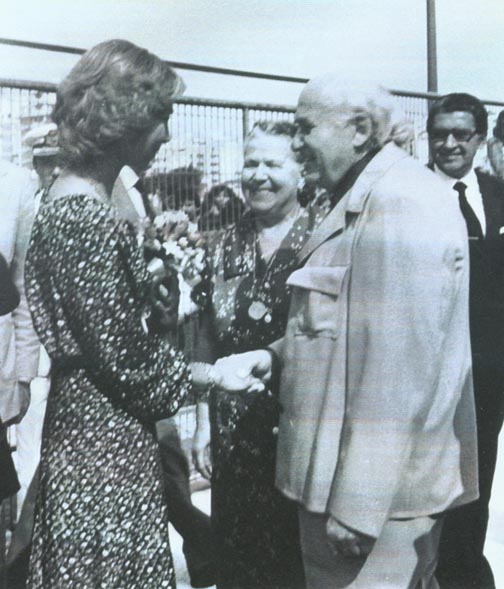
Tijekom Krekoviæeve prve izložbe u Beèu (ne kasnije od 1925., u vrijeme dok je bio još student na "Akademie der Bildenden Künste"), njegov rad su s najveæim pohvalama ocijenili poznati likovni kritièari A.F. Seligmann i Dr. Ankwicz-Kleehoven.
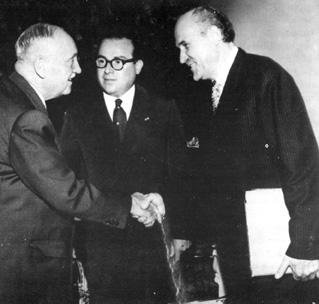 |
S
predsjednikom Austrije dr. Schaerfom, 1957.
na izložbi u Beèu
(Neue Hofburg)
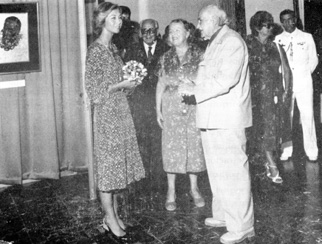 |
Sina i Kristian Krekoviæ s kraljicom Sofijom, 1981.
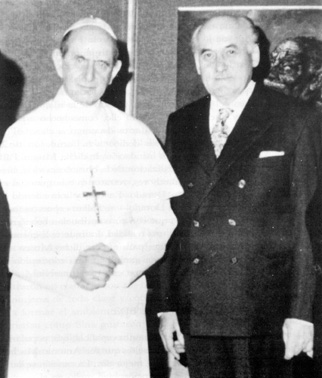 |
S papom Pavlom VI. tijekom privatne audijencije
 |
www.mallorca.de/tourismus/museen informs us that Kristian Krekovic was born in Wiener Hof! (2001?-2003)
Dusan Dzamonja (1928) is an avant-garde sculptor whose monuments can be seen, besides Croatia and Bosnia-Herzegovina, also in public areas in Austria, Switzerland, Belgium, France, the Netherlands, Italy, the USA, and in the new Yugoslavia. As a means of expression he uses iron, glass, concrete etc. In 1998 he had a great retrospective in Paris (Place Vendome).
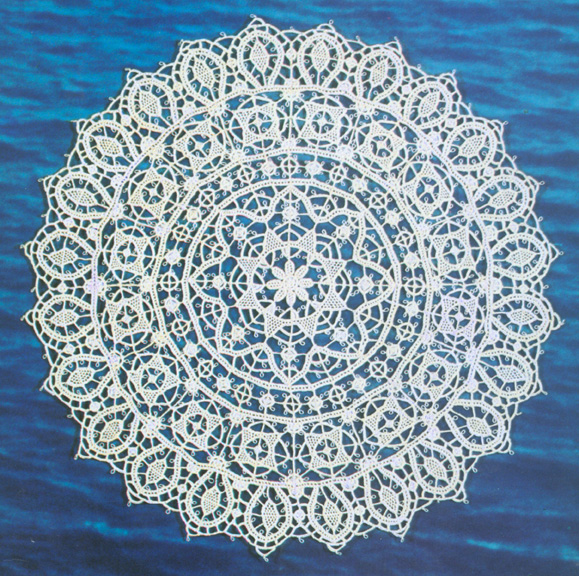
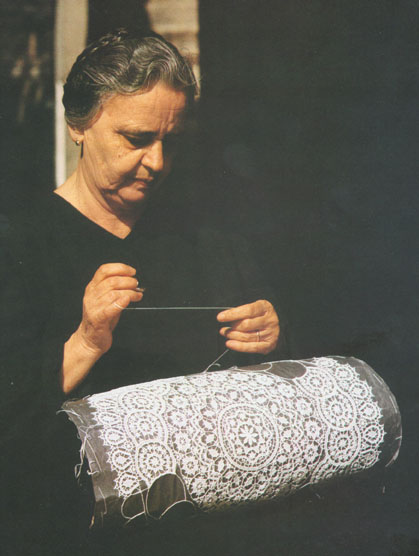 One
of the distinguishing traits of Croatian national art can be seen in
the famous PAG LACE.
Meticulous and painstaking work of sunburn women from the island of Pag
has been highly praised by European aristocracy. Maria Theresia
(1717-1780), Austrian Empress, visited the island of Pag solely to get
acquainted with lace-makers and their art. Afterwards, she invited
three of them to be permanently on her court in Vienna. Some of the
oldest Croatian laces, dating from 16th century, can be seen in the
Benedictine convent of St. Mary in Zadar.
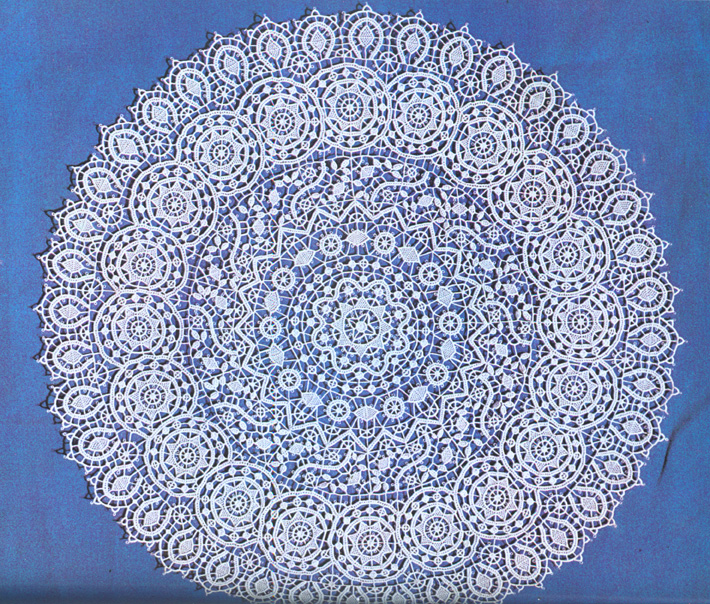
One
of the distinguishing traits of Croatian national art can be seen in
the famous PAG LACE.
Meticulous and painstaking work of sunburn women from the island of Pag
has been highly praised by European aristocracy. Maria Theresia
(1717-1780), Austrian Empress, visited the island of Pag solely to get
acquainted with lace-makers and their art. Afterwards, she invited
three of them to be permanently on her court in Vienna. Some of the
oldest Croatian laces, dating from 16th century, can be seen in the
Benedictine convent of St. Mary in Zadar.
 |
 |
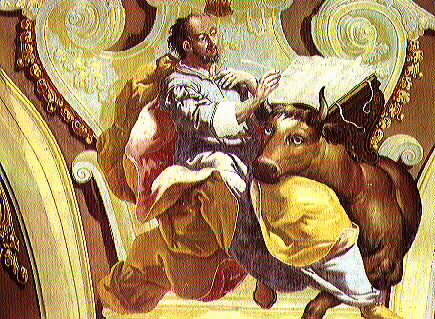
Many beautiful Croatian Baroque paintings and illuminations can be seen on the walls of the churches in north-western Croatia (Lepoglava, Strigova, Varazdin), created by Ivan Ranger (1700-1754). On the photo: St. Luka (Strigova).
The Baroque art in the Croatian north is described by a famous Japanese photographer [Keiichi Tahara]:
Quand un ami française m'a conseillé d'aller voir les églises baroques en Croatie...je n'ai pratiquement rien trouvé sur ce sujet. Cela m'a paru étrange, et j'ai cédé à la tentation...
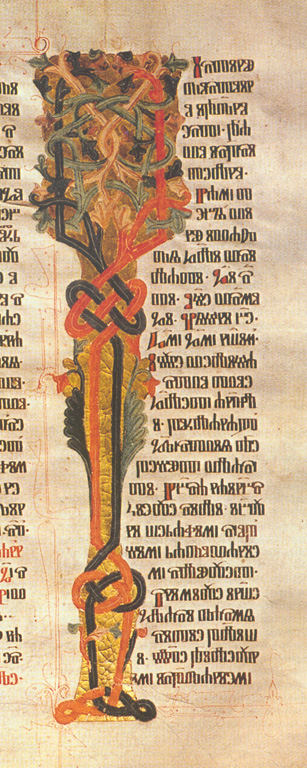
Outstanding writer and illuminator of glagolitic liturgical books was Bartol Krbavac, born in Lika in the 14th century. His preserved books are kept in the National Library of Vienna (Roc Missal, 15th century), in the State Library of Berlin (Berlin Missal, 15th century):
in the National and University Library of Ljubljana (Beram Missal, around 1425), and in Zagreb.
Frano Laurana, known also as Francesco Laureano (1420 - 1502), a Croat born near Zadar, was a sculptor in Italy (Naples, Messina, Palermo) and in France (Aix, Marseille, Avignon, Le Mans, Tarascon). In France (Provence) he worked at the Court of Bon Roi René, and married a daughter of a French painter in Avignon. His portrait busts of women represent the highest achievement of the Quatroccento sculpture. They can be seen in galleries in Palermo, Vienna, New York and Paris (Louvre, Musée Jacquemart - André). His disciple was the famous Donato Bramante. See [Gregory Peroche], p. 72.
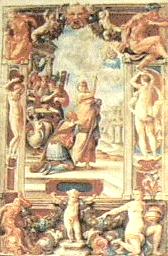
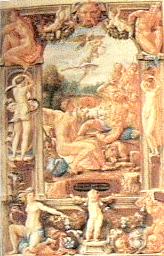 Julije Klovic,
or Don
Giulio Clovio de Croatia
(1498-1578), is regarded as the last great
representative of the classical European miniature. His works decorate
many famous galleries: Uffizi in Florence, Museo di Capodimonte in
Naples, Biblioteca Marciana in Venice, Galleria Sabanda in Torino,
Bibliothek der Albertina in Vienna, Louvre in Paris, Towneley Public
Library and Pierpont Morgan Library in New York (which is in possession
of "Officium Virginis", 228 pages, his most famous and the best
masterpiece, containing 30 valuable miniatures by his hand), the
British Museum and Soane's Museum in London, Windsor Castle (Royal
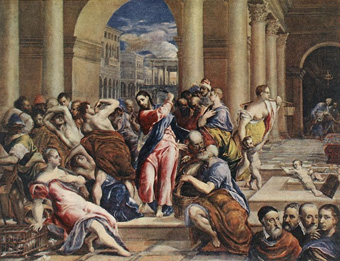
Library). His pupil was El Greco, who portrayed him in his work
"Expelling merchants from the temple" (together with figures of Rafael,
Michelangelo and Tizian, appearing on the bottom left of that work),
now kept in The Minneapolis Institute of Arts (The William Hood
Dunwoody Fund).
Julije Klovic,
or Don
Giulio Clovio de Croatia
(1498-1578), is regarded as the last great
representative of the classical European miniature. His works decorate
many famous galleries: Uffizi in Florence, Museo di Capodimonte in
Naples, Biblioteca Marciana in Venice, Galleria Sabanda in Torino,
Bibliothek der Albertina in Vienna, Louvre in Paris, Towneley Public
Library and Pierpont Morgan Library in New York (which is in possession
of "Officium Virginis", 228 pages, his most famous and the best
masterpiece, containing 30 valuable miniatures by his hand), the
British Museum and Soane's Museum in London, Windsor Castle (Royal
Library). His pupil was El Greco, who portrayed him in his work
"Expelling merchants from the temple" (together with figures of Rafael,
Michelangelo and Tizian, appearing on the bottom left of that work),
now kept in The Minneapolis Institute of Arts (The William Hood
Dunwoody Fund).
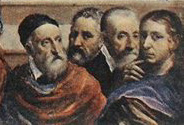
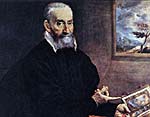
GEORGIVS JVLIVS CLOVIVS CROATA
His grave is situated near Michelangelo's Moses in the the church of S. Pietro in Vincoli, Rome, and bears an inscription "Pictor de Croatia". 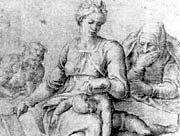
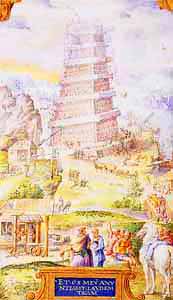
For more information see Julio Clovio Croata, protector del Greco Foven by Branko Kadic, an article by Marjana Vucic published in American Croatian Review, [Julije Klovic], and [Fontes Clovianae]
Andrija Medulic (Andrea Schiavone, Andrea Meldola de Hiadra), (~1500-1563), a painter born in Zadar or Nadin, started his artistic career in Sibenik and continued in Venice. His works of art are scattered throughout Europe: Zadar, Sibenik, Zagreb, Venice, Milano, Florence, Naples, Torino, Verona, Paris (Louvre), London, Oxford, Richmond, Dublin, Amsterdam, Vienna, Dresden, St. Petersburg, Belgrade. Medulic influenced Tintoretto, who stated that any true painter must possess at least one of his masterpieces. As Klovic, he also influenced El Greco, a famous Spanish painter of Greek origin. Medulic's paintings in the collection of Her Majesty the Queen
 Martin
Rota Kolunic (Martinus Rota) was
born in c. 1540 in Sibenik,
Croatia. About 1565 he was already working as an engraver in Venice,
while by 1573 he became the court portraitist in Vienna. He died in
Prague in 1583. He belongs to the most significant European graphic
artists of the second half of the 16th century. He is also well known
for his reproductions of the outstanding masters of the Renaissance:
Tizian, Michelangelo, Dürer and others. He engraved a number
of
portraits of important persons of his time, and remarkable geographical
maps and vedutes. He immortalized his home town Sibenik as well as his
compatriot Antun
Vrancic (Antonius
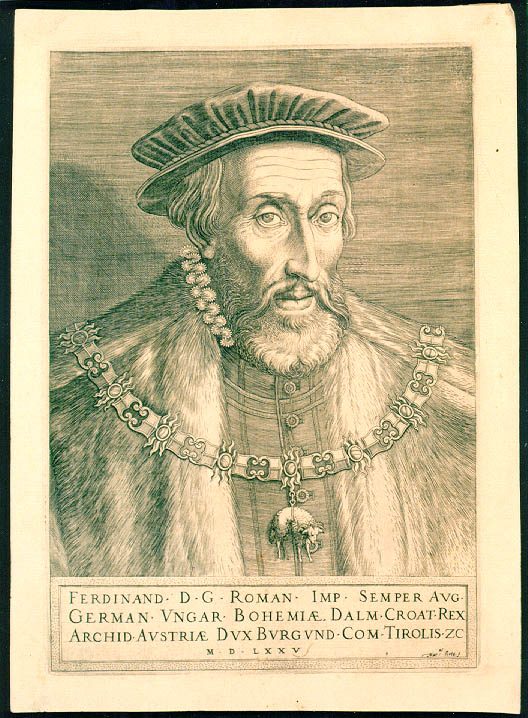
Verantius) on his prints. On the portrait of the emperor Ferdinand Ist
the master draws the forms with a clear and steady line, separating the
body from its background. This description is taken from the British
Library web (for more information follow the above link). Note the
title of the emperor Ferdinand Ist on the bottom of portrait by
Kolunic:
Martin
Rota Kolunic (Martinus Rota) was
born in c. 1540 in Sibenik,
Croatia. About 1565 he was already working as an engraver in Venice,
while by 1573 he became the court portraitist in Vienna. He died in
Prague in 1583. He belongs to the most significant European graphic
artists of the second half of the 16th century. He is also well known
for his reproductions of the outstanding masters of the Renaissance:
Tizian, Michelangelo, Dürer and others. He engraved a number
of
portraits of important persons of his time, and remarkable geographical
maps and vedutes. He immortalized his home town Sibenik as well as his
compatriot Antun
Vrancic (Antonius
Verantius) on his prints. On the portrait of the emperor Ferdinand Ist
the master draws the forms with a clear and steady line, separating the
body from its background. This description is taken from the British
Library web (for more information follow the above link). Note the
title of the emperor Ferdinand Ist on the bottom of portrait by
Kolunic:
German Ungar. Bohemiae. Dalm. Croat. Rex.
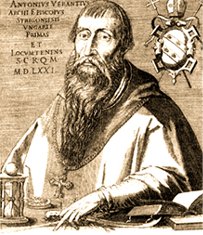
Portrait of Antun Vrancic
by outstanding Croatian painter
Martin Rota Kolunic from Sibenik
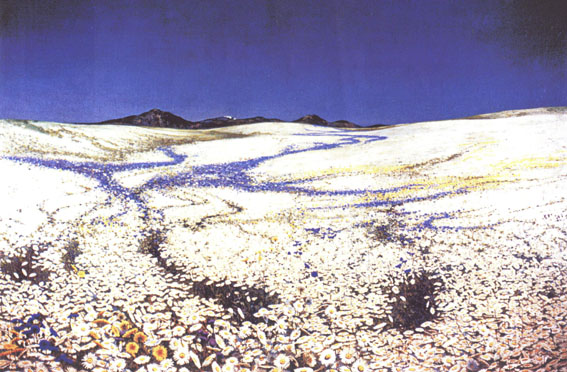 I
like very much Gabrijel
Jurkic (1886-1974), a little
known Croatian painter from Bosnia -
Herzegovina, who studied at the Academy of Arts in Vienna. If you come
to Sarajevo, don't miss to see his beautiful "Flower plateau" (from the
Kupres area) painted in 1914, held in The Art Gallery of Bosnia -
Herzegovina in Sarajevo. See on the left, and many more on Croats in Bosnia - Herzegovina.
Biography of Gabrijel
Jurkic (in Croatian).
I
like very much Gabrijel
Jurkic (1886-1974), a little
known Croatian painter from Bosnia -
Herzegovina, who studied at the Academy of Arts in Vienna. If you come
to Sarajevo, don't miss to see his beautiful "Flower plateau" (from the
Kupres area) painted in 1914, held in The Art Gallery of Bosnia -
Herzegovina in Sarajevo. See on the left, and many more on Croats in Bosnia - Herzegovina.
Biography of Gabrijel
Jurkic (in Croatian).
Contemporary Croatian architects contributed to urban shaping of several important European cities with their projects:
- Ivo Tatic and others - the building of the German Parliament in Bonn,
- Radovan Tajder - the building of BMW, Vienna and the front of the Hilton Plaza, Vienna,
Ivana Brlic Mazuranic (1874-1938) is a very well known name among Croatian children. She wrote beautiful books of Croatian fairy tales, the most famous being Price iz davnine (Tales of Long Ago) that appeared in Zagreb in 1916. It was translated from Croatian into English by F.S. Copeland under the title:
|
Croatian Tales of
Long Ago
by Iv. Berlic Mazuranic |
and published in 1924. in London by George Alen & Unwin Ltd (260 pp, hardcover). These stories have become popular worldwide due to recent fantastic flash-art presentations, initiated by Helena Bulaja, Zagreb. See for example Neva, music and animation by Ed Beals. Books of Ivana Brlic Mazuranic were translated into all major world languages (more information in Croatian). Except in English, there exist also translations into
- Swedish (Stockholm, 1928)
- Danish (Kopenhagen, 1929/30)
- Czech (Prague, 1930)
- Russian (Zagreb [!], Skazki davnyago vremeni, 1930)
- Slovakian (T. sv. Martin, 1931)
- German (Salzburg, 1933)
- ...
- Chinese (1957)
CROATIAN LATINISTS, HUMANISTS AND ENCYCLOPAEDISTS
The grand Library of Paulists in Lepoglava has been confiscated after the Austrians canceled the Paulist order in 1786. This was a tremendous loss for Croatian culture.
Julije Bajamonti (1744-1800) was medical historian, writer, translator, encyclopaedist, historian, philosopher, and musician. He composed the first opera in Croatia (performed only once), wrote the History of Split (unfinished and unpublished). Bajamonti helped Alberto Fortis with his journey round Dalmatia, and with his discovery of Hasanaginica. His wife was a Split commoner Ljuba. After the fall of Venice in 1797 he urged that Dalmatia should be annexed to Croatia (and Austro-Hungary). In his speech in 1797 he said that Austria was the successor of the old Croatian state. Like many other Croatian intellectuals along the Croatian coast, Bajamonti wrote most of his works in Italian. Despite this, he certainly felt himself a Croat (or Illyiran, as they said at the time). He was very interested in the Croatian language, national costumes and tradition, economic and cultural progress. See D.Keckemet, E. Stipcevic: Julije Bajamonti, Croatian P.E.N Centre, Zagreb - Split, 1997, p 16. Nicolo Tommaseo claims that there was no one in Italy writing better than Bajamonti in his time.
The voluminous Wurzback's Biographic Lexicon of Austrian Kingdom, prepared in 60 volumes between 1856 and 1891, comprises 24,200 biographies. According to investigations of dr. Igor Gostl as many as 1050 of them refer to the Croats.
Safvet-beg Basagic (1870-1934) was outstanding Muslim-Croatian poet, orientalist, historian and lexicographer. He studied oriental languages and history in Vienna, where he defended his thesis in 1910. His most important work is "Znameniti Hrvati Bosnjaci i Hercegovci (The famous Croatian Bosniaks and Herzegovinians), published by Matica hrvatska (Matrix Croatica) in Zagreb in 1931. In this lexicon he presented nearly 700 biographies. He occupied the position of curator of the Zemaljski muzej in Sarajevo (1919-1927), and was also vice-president of the Sabor (Parliament) of Bosnia and Herzegovina.
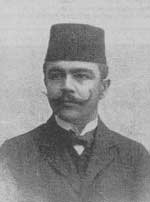
In the 15th century Luka Pozezanin and Juraj from Cazma were lecturing on mathematics at the University of Vienna. At the same institution Valent from Koprivnica was lecturing on natural philosophy, Ladislav from Pozega was lecturing on astronomy, etc.
The court of the king Mathias Korvin was a strong European humanistic center, to which the Croats gave a deep imprint. Thus the tutor of Mathias Korvin was Ivan Vitez (1405-1472), a Croatian latinist, who also had the merit to open the University of Bratislava (capital of Slovakia) and the Academy and library of Budim (part of today's Budapest). He was a cardinal and occupied the position of the king's chancellor. In his speech in Vienna he asked for help to stop the penetration of the Turkish Ottoman Empire to Croatian lands.
Antun Vrancic (lat Antonius Verantius, hungarized name Antal Verancsics, born in Sibenik in 1504) studied in Padova, Vienna and Krakow. After spending almost 20 years as a secretary and diplomat at the court of Ivan Zapolja, he continued his career at the court of Ferdinand I Habsburg in 1549. As the king's envoy he had a delicate task to negotiate with the Turks (he spent altogether 6 years as a diplomat in Turkey). Together with a Flamish diplomat Busbeck he discovered the Ankara plate (Monumentum ancyranum, held in the National Museum in Vienna), which is quite important for understanding the history of the Roman Empire, especially during the time of the Emperor Augustus. As a diplomat he traveled to France, Italy, Poland, England (on a diplomatic mission to the court of King Henry VIII), Turkey etc., and was exchanging letters with Erasmus of Rotterdam. In Krakow, Poland, he published two collections of poetry in the Latin language ("Elagiae" and "Otia").
Portrait of Antun Vrancic by
outstanding Croatian painter
Martin
Rota Kolunic from Sibenik
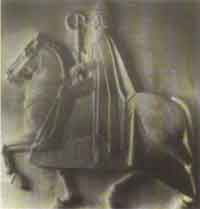
Antun Vrancic, that is, Antal Verancsics, is in Hungarian literature usually described as Hungarian, which is no surprise. The same for Faustus Verancsics, his very famous relative.
It is little known that the famous Venetian painter Tizian portrayed Frane Vrancic - father of Antun Vrancic.
Croatian language was taught in all church Universities in the 17th century as one of six world languages:
- Latin,
- Greek,
- Hebrew,
- Arabian,
- Caldean (Arameic),
- Illyric (Croatian).
- University of Bologna,
- University of Padova,
- University of Vienna,
- University of Ingolstadt,
- University of Köln,
- University of Louvain,
- University of Paris,
- University of Toulouse,
- University of Salmanca,
- University of Madrid (Alcalà de Henares).
This hitherto completely unknown fact has been published in a monograph by academician Stjepan Krasic, Pape i hrvatski knjizevni jezik u XVII. stoljecu, Zagreb - Citluk, Matica hrvatska, 2004. (Academician Krasic is professor of history at Papal University of St. Thomas Aquines in Rome).
Andrija Jamometic, a descendant of noble family from the town of Nin on Croatian littoral, was born between 1420-30, and died around 1486. He obtained excellent education in Padova, and later became outstanding diplomat in the service of Pope Sixto IV, tsar Friedrich III, and free cities like Nürnberg. In the Dominican convent in Udine (Italy) there was his portrait (now lost), with the following inscription: Brother Andrija, Croat, member of Udinese convent, famous for his knowledge of theological science and connoisseur of foreign languages. Pope Sixto IV appointed him Archbishop of Granea in Greece. He was deeply involved in Ecumenical questions related to delicate relations between Eastern and Western Christianity. He also insisted on the necessity to save Constantinople and Eastern Europe from Turkish onslaughts. In his letter written in 1482 to many European rulers, Jamometic sent an appeal to organize the Third General Church Council to discuss ecumenical questions, and to continue the unfinished Basel Council. He also sent an appeal to many universities, for example, to theological faculties in Vienna, Paris, Köln, Louvain, Krakow, and other similar institutions throughout Europe. His tragic destiny was similar to that of Thomas More about 50 years later.
A Croatian theologian, ecumenist panslavist and musicologist Juraj Krizanic (1618-1683) was trying to initiate the dialog on the unification of the Russian Church with Rome. He dreamed about an open and peaceful dialog with Orthodox Christians. His major works are "Politika" (in Russian), written during his 15 year exile to Siberia and the panslavic grammatical book "Gramaticcno iskazanie ob ruskom jaziku" (Tobolsk, 1665), as well as "Razgovory ob vladatelstvu", written in panslavic esperanto that he invented. He also spent some time in Ukraine, where he had close ties with some of leading scholars. Krizanic wrote "Historia de Siberia" in 1680. It is known that during his sojourn in Rome he supervised a publication of musical works of the Portuguese king D. João IV. According to Krizanic's systematization of science, music should be regarded as a part of mathematics. He wrote his "Asserta musicalia nova" in 1650. Krizanic died near Vienna while participating in its defense against the Turks in the Ukrainian troops that adjoined the troops of the Polish king Jan Sobiesky.
A Croatian Jesuit Nikola Plantic (born in Zagreb, 1720-1777) studied in Zagreb, Graz, Vienna and Trnava in Slovakia. He was teaching logic and philosophy at the Jesuit University in Cordoba in Argentina.
In some books we can read that Plantic allegedly had an important role in the formation of the unique Jesuit Kingdom in Paraguay, established for the well being of native Guarani Indians. It is true that the Jesuits managed to organize prosperous economic and cultural life, including printing in the Guarani language. It is well known that Jesuits led a rebellion against Portuguese conquistadors who wanted to exploit Paraguay and use Guarani's as slaves. This was too much for great forces, since this Jesuit-Indian Republic had shaken the existing "world order." The rebellion was put down in 1767, which led to the tragedy for Guaranis. The "international community" managed to achieve interdiction of the Jesuit order in 1773. But the claim that N.Plantic organized the rebellion is false. Some sources even claim that the Jesuit Republic was led by Plantic, and that allegedly a coin was issued with his figure in the Netherlands. Plantic was never in Paraguay, and never met Guaranis in their homeland. I owe this info to Mr. Joza Vrljicak, director of Studia Croatica, Buenos Aires. The only Croat known to have participated the famous Paraguay mission was Ivan Krstitelj Marchesetti (or Marqueseti, 1704-1767), born in Rijeka in a noble family having Italian roots, later Croatized. See [Zoric, pp. 49-51].
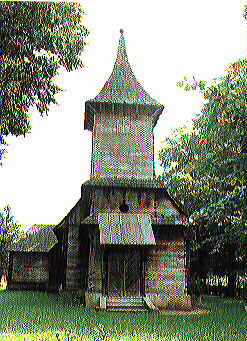 An
extremely interesting biography has Bartol
Gyurgieuits (Bartol Jurjevic or
Gjurgjevic, born in the region of
Turopolje near Zagreb, known for nice wooden churches, 1506 - 1566?), a
participant of the tragic battle on the Mohac field in 1526, where he
was captured by the Turks and lived as a slave in many parts of the
Turkish Empire. After 13 years of slavery he managed to escape. Since
that time he traveled a lot throughout Europe, agitating for the
creation of a strong union against the Ottoman Empire. His numerous
writings in the Latin language were published first in Antwerpen (1544)
and then extensively reprinted in many other languages: Italian,
French, English, German, Spanish, Dutch, Hungarian, Polish, Czech etc.
These extremely interesting testimonies about the Ottoman (Turkish)
Empire can be found in the libraries of almost all larger European
cities:
An
extremely interesting biography has Bartol
Gyurgieuits (Bartol Jurjevic or
Gjurgjevic, born in the region of
Turopolje near Zagreb, known for nice wooden churches, 1506 - 1566?), a
participant of the tragic battle on the Mohac field in 1526, where he
was captured by the Turks and lived as a slave in many parts of the
Turkish Empire. After 13 years of slavery he managed to escape. Since
that time he traveled a lot throughout Europe, agitating for the
creation of a strong union against the Ottoman Empire. His numerous
writings in the Latin language were published first in Antwerpen (1544)
and then extensively reprinted in many other languages: Italian,
French, English, German, Spanish, Dutch, Hungarian, Polish, Czech etc.
These extremely interesting testimonies about the Ottoman (Turkish)
Empire can be found in the libraries of almost all larger European
cities:
Paris, Rome, Vienna, Basel, Leiden, Wittenberg, Florence, London, Prague, Venice, Antwerpen, Liége, Worms, Nürenberg, Krakow, Lyon, Frankfurt etc. (e.g. in 44 towns of Germany alone) and in some cities of the USA.
Most of his writings
contain small dictionaries of the
Croatian (which he calls Slavonian), Turkish, Persian and Hungarian
languages. As a part of his "De afflictione...sub Turcae" (1544) he
wrote the first known Croatian - Latin dictionary (with the basic
prayers: Our Father, such as Hail Mary, Credo), which is also the first
known dictionary among the Croats. He is also the author of the
practical Italian - Arabian - Hebrew - Chaldean dictionary, added to
the description of his pilgrimage to Yerusalem when escaping from the
Turkish slavery. It was written in Italian: "Specchio della
peregrinazione delli piu notabili luoghi della Terra Santa", and the
author signed it as Georgievicz de Croatia. He also mentioned a
Croatian Script, which is "different from any other script in the
world" (Glagolitic).
He indicates that the
Croatian language is spoken among others on the Constantinople court of
Turkish sultans. Gyurgieuivits' works are also of interest for the
study of Islamic
music. He was not only
the first Croatian author, but also the first Slav author whose
writings were popular throughout Europe. For more information see [Zoric].
Branko
Franolic: Georgijevic's Description of Turkish
Ways and Customs:
Unique Work Published in London in 1570
The Englishman Hugh Goughe wrote "The Ofspringe of the House of Ottomane" (1570) which is a translation of Gyurgieuits' book "De origine imperii Turcorum". In Goughe's book there is a dialogue in Croatian with a parallel English translation, alongside with two prayers in Croatian (Our father and Hail Mary). Gyugyieuits himself is called the "first Croatian lexicographer" in this book.
Regarding early dictionaries of the Croatian language, let us mention a German knight Arnold von Harf (1471-1505) who visited the Croatian lands along the coast during his pilgrimage to the Holy Land in 1496-1499. His book "Die Pilgerfahrt des Ritters Arnold von Herff von Cöln", published in Köln in 1860, includes a short conversational dictionary of the Croatian language containing 56 words and basic expressions. He also visited the beautiful, strong and freedom loving city of Dubrovnik (as he says), for which he states to be in the Croatian Kingdom - in den Koenynckrijh van Croatijen.
Another Turkish captive was Juraj Hus (Hosti), contemporary of the above mentioned Bartol Gyurgieuvits. After the defeat of Sultan Suleyman the Magnificent in the battle with the army led by famous Croatian statesman Nikola Jurisic in 1533 (the aim of Suleyman was to occupy Vienna), and after his retreat through Croatian lands, Juraj Hus was taken to slavery from his village (Rasinje) to Constantinople. Since he did not want to renounce his Catholic faith, he managed somehow to be educated as a Turkish military trumpeter. As a musician he visited many lands: India, Egypt, Holy land. He described his visit to pyramids near Cairo, where he was playing his trumpet on the top of a pyramid, while soldiers below were measuring the volume of the pharaoh's grave. After many years he managed to escape, and reached Genova, and then Rome, where he was accepted in the Croatian Collegium of St. Jerome. In his village in Croatia he did not find any of his relatives, and died in Pozun (today's Bratislava in Slovakia) around 1566. He left the description of his pilgrims in his manuscript entitled Descriptio peregrinationis Georgii Huszthii. One version of the manuscript is held in the Vatican library, and the other in the National Library in Vienna. For more details see [Zoric].
Related to the famous Paulist convent in Lepoglava is Hilarion Gasparotti (1714-1762), born in the lovely town of Samobor near Zagreb. As a Lepoglava Paulist he wrote an encyclopaedic masterpiece Czvet Szveteh (The Flower of Saints) in 4 books on as many as 3,800 pages (982+923+987+896), published in Graz (written as Gradecz there, which reveals the Croatian origin of the name of Graz: grad - town) in 1752, and in Vienna in 1756, 1760 and 1761. In these books he wrote biographies of numerous saints in the beautiful kajkavian Croatian language, which he calls simultaneously slovenski jezik and horvatcki jezik. As we see, at that time Slovenian and Croatian languages were identified. On the front page Gasparotti stated that he consulted sources written in Spanish, Latin, French and German (see [Sekulic, pp 412-415]). Of course, he had at his disposal a magnificent library of the Lepoglava convent. The library and the valuables of the convent have been robbed by Austrian officials after canceling the Paulist order in Croatia in 1786. This top monument of Croatian culture served as prison during the Yugoslav communist period.
Josip Voltic (Voltiggi, 1750-1825), an Istrian writer and lexicographer, published the Illyrian (Croatian)-Italian-German dictionary in Vienna in 1803.
The Missal of Prince Novak from 1368 is considered as a rare and valuable monument of Croatian Glagolitic cultural heritage. It is held in the Austrian National Library in Vienna. The book was written in Krbava (now a part of Lika). Many specialists say that this is the most beautiful Glagolitic book. Facsimile edition is planned to be published in the near future in Austria.
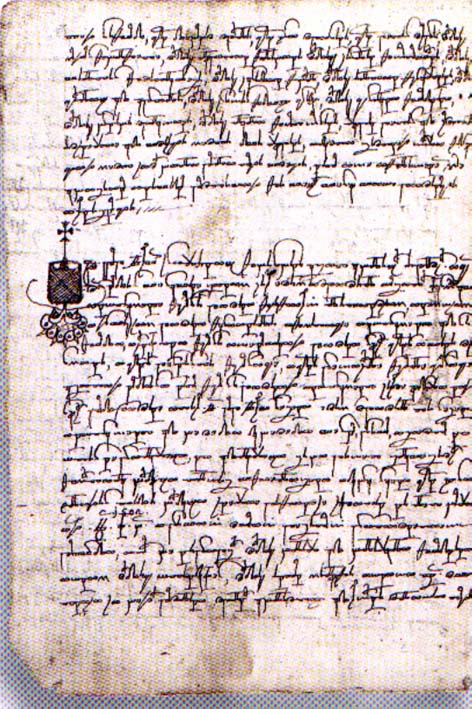 Istarski
razvod
(Istrian Book of Boundaries) from the Istrian
peninsula, 1275, written
originally in three languages: Croatian in
the Glagolitic alphabet, Latin and German. It defined the border
between different rulers in Istria.
Only the Croatian Glagolitic version has
been preserved. Istarski razvod has 53 pp, and mentions the Croatian
name expressly 23 times. There are Italian and Latin translations from
Croatian dating from the 16th century, which kept the original Croatian
names for many places, proof that the population in the Istrian
hinterland was dominantly Croatian. By its juridical and literary value
it can be ranked among the most interesting documents of that time in
Europe. It is also the oldest international diplomatic document written
in Croatian. Earlier written documents bear witness to the presence of
the Croats in Istria from the seventh century. See a nice web page
about Istrian Book of Boundaries
provided by The British
Library, London.
Istarski
razvod
(Istrian Book of Boundaries) from the Istrian
peninsula, 1275, written
originally in three languages: Croatian in
the Glagolitic alphabet, Latin and German. It defined the border
between different rulers in Istria.
Only the Croatian Glagolitic version has
been preserved. Istarski razvod has 53 pp, and mentions the Croatian
name expressly 23 times. There are Italian and Latin translations from
Croatian dating from the 16th century, which kept the original Croatian
names for many places, proof that the population in the Istrian
hinterland was dominantly Croatian. By its juridical and literary value
it can be ranked among the most interesting documents of that time in
Europe. It is also the oldest international diplomatic document written
in Croatian. Earlier written documents bear witness to the presence of
the Croats in Istria from the seventh century. See a nice web page
about Istrian Book of Boundaries
provided by The British
Library, London.
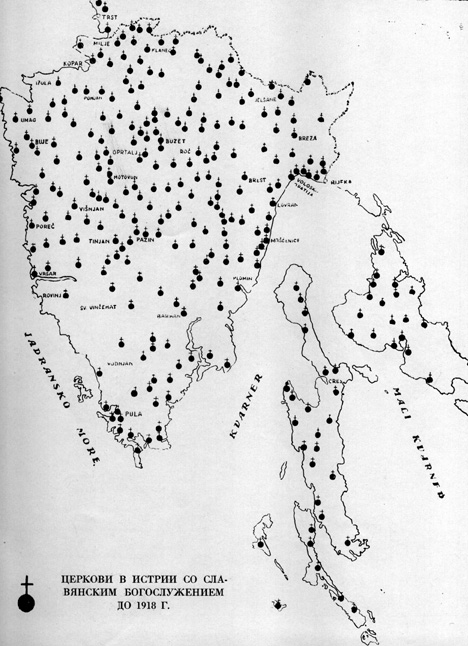
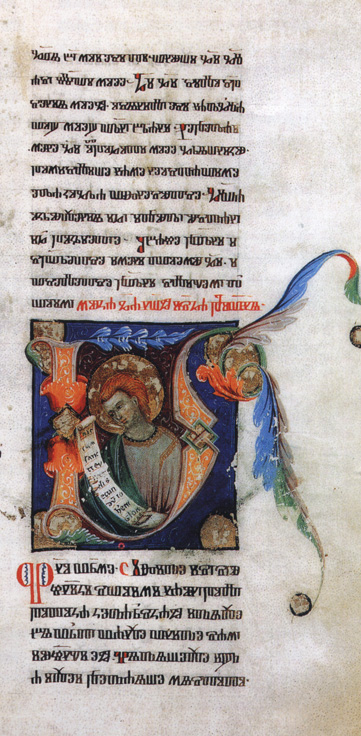 Austria, Vienna
(National Library), where
you can see
Austria, Vienna
(National Library), where
you can see
- Missal of Croatian prince Novak (1386),
- the Roch Missal (1420),
- Breviary of Vid from Omisalj (1396),
- Quadriga of Simun Greblo (Istria),
- the Frascic psalter (1463),
- the Brozic breviary (1561; with 250 printed ligatures, which seem to be unique in the history of printing),
- Vienna folia (11th century),
- 2 leaves of the Marian Evangel (end of 10th century; 172 leaves are in Moscow).
On one of the last pages of the famous Klimpeh Missal (Burgenland - Gradisce), printed in 1501 in Ostrogon, there are several inscriptions in the Glagolitic, Latin and Cyrillic, that the earliest Croatian priests there wrote between 1543 and 1563.
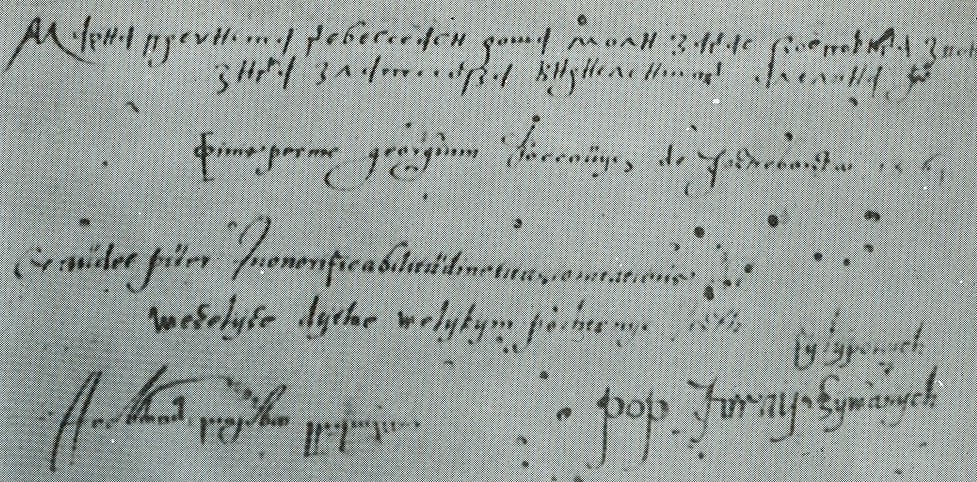
It is little known that a rescript of Austrian-Hungarian King Ferdinand I (1515-1564) granted the Burgenland Croats in Austria, who had to escape before the Turks, the right to choose their own priests who practiced God's service in Croatian vernacular language, and with holly books written in the Glagolitic. This privileges had been cancelled after his death, and since 1569 the Glagolitic was officially forbidden in Croatian parishes in Burgenland in Austria (Gradisce). See Miroslav Vuk-Croata: Hrvatske Bozicnice, HKD Sv. Jernoma, Zagreb 1995, p. 167.
Austria: Vienna, Innsbruck, Schwarzau, Linz, Güssing, Graz
Germany: Berlin, Kassel, Weimar, Wertheim, Stuttgart, Magdeburg, München, Frankfurt am Main, Trier, Tübingen, Bamberg
Blaca, a lonely convent built on cliffs on the island of Brac, is indeed a fascinating place. It was founded by Croatian Glagolitic hermits, who fled here from the Turks in the 16th century. The last Glagolitic hermit was Don Niko Milicevic, who was also an astronomer of international reputation, with his published works in such prestigious journal as "Astornomische Nachrichten" in Vienna, and with rich international correspondence. After his death in 1963 the place was transformed into museum.
The Arabica was also in use among the Muslims in Bosnia-Herzegovina. It was in fact the Arabic script used for the Croatian language and it constitutes the so-called Adjami or Aljamiado literature, similarly as in Spain. Its first sources in Croatia go back to the 15th century. One of the oldest texts is a love song called Chirvat-türkisi (Croatian song) from 1588, written by a certain Mehmed. This manuscript is held in the National Library in Vienna. Except for literature Arabica was also used in religious schools and administration. Of course, it was in much lesser use than other scripts. The last book in Arabica was printed in 1941.
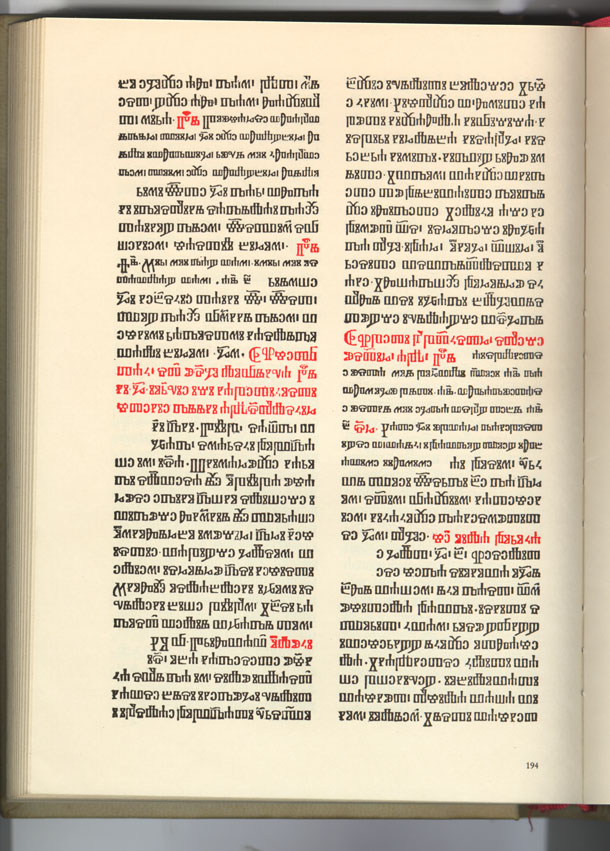 The first Croatian
printed book in Glagolitic
letters appeared as early as 1483,
only 28 years after Gutenberg's Bible, 6 years after the first printed
book in Paris and Venice, one year before Stockholm, 58 years before
Berlin and 70 years before Moscow. It was a Missal
(440 pp,
19x26 cm), unfortunately it is not known where it was printed. The
Croatian Glagolitic Script was the fifth to appear in the history of
European printing, very soon after the Latin, Gothic, Greek and Hebrew
scripts. Eleven preserved copies of the first Croatian incunabulum are
kept in
The first Croatian
printed book in Glagolitic
letters appeared as early as 1483,
only 28 years after Gutenberg's Bible, 6 years after the first printed
book in Paris and Venice, one year before Stockholm, 58 years before
Berlin and 70 years before Moscow. It was a Missal
(440 pp,
19x26 cm), unfortunately it is not known where it was printed. The
Croatian Glagolitic Script was the fifth to appear in the history of
European printing, very soon after the Latin, Gothic, Greek and Hebrew
scripts. Eleven preserved copies of the first Croatian incunabulum are
kept in
- The Library of Congress in Washington,
- in the Russian National Library in St. Petersburg,
- in the National Library in Vienna,
- in Apostolic Library in the Vatican (two copies),
- and in Croatia (six copies).
- the Vienna Folia (11th century), (see the photo on the right),
- the Glagolita Clozianus (11th century),
- Missal from Roch, Vienna, Austrian National Library, after 1420
- Missal of Prince Novak, Vienna, Austrian National Library, 1386
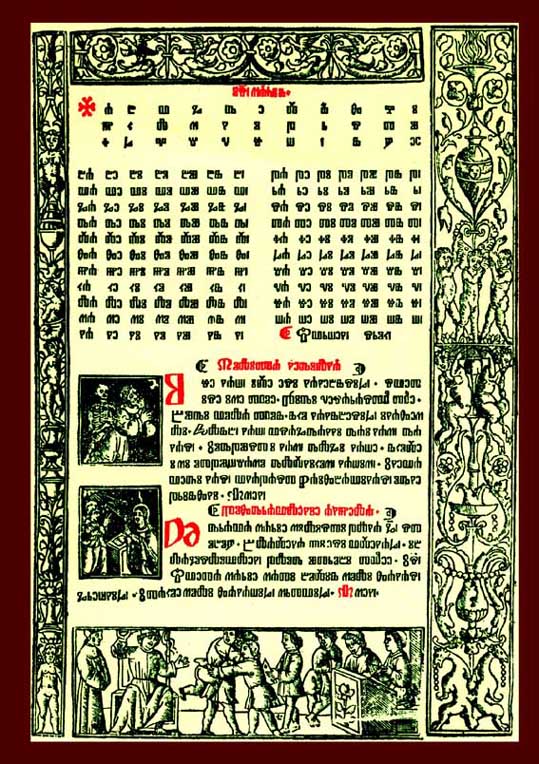 In
the Pierpont Library in New
York there is a
1527 copy of the oldest known Croatian manual for children, printed in
Venice in the Glagolitic script. Another three preserved copies are in
Vienna (National Library), Oxford (Bodleian Library) and St. Petersburg
(State Library).
In
the Pierpont Library in New
York there is a
1527 copy of the oldest known Croatian manual for children, printed in
Venice in the Glagolitic script. Another three preserved copies are in
Vienna (National Library), Oxford (Bodleian Library) and St. Petersburg
(State Library).
Baromic breviary, 1493 incunabulum printed in Venice (one copy in Schwartzau in Austria, München in Germany, Sibiu in Roumania, two in Zagreb)
Roc, by Bartol Krbavac, 1420 (National Library, Vienna, Austria)
Güssing fragment of breviary (now in the Nat. Library in Vienna)
Copenhagen missal, 14th century (Royal Library in Copenhagen, until 1839 in the Royal Library in Vienna)
A professional binder of Glagolitic books was Grgur Kraljic from Senj, working in the Senj printing house. Between 1497 and 1502 he lived in Istria, near Pazin (in Roc, Beram and Hum). We know that in Istria he rebound five Glagolitic books, among them the Vitus of Omisalj breviary (written in 1396), which is now held in the National Library in Vienna, Austria.
Blaz Baromic started his typographic career in Venice, where he published a breviary in 1493. Today we call this incunabulum Baromic's breviary. In the colophon we read that this book represents "brevijal hrvatski" (Croatian breviary). Two copies are held in Croatian capital Zagreb, one in München (in Germany), one in Schwarzau (in Austria), and one in Sibiu (in Romania).
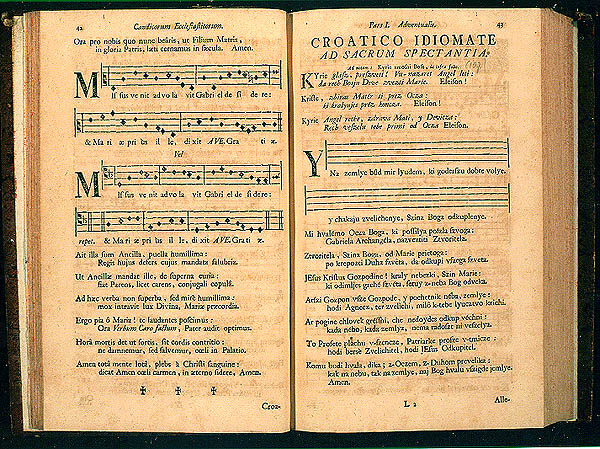
Cithara Octochorda is the most significant old collection of Latin - Croatian Church songs, published in 1701 in Vienna, reprinted in 1723 again in Vienna, and in 1757 in Zagreb. This impressive, monumental book contains 235 Croatian songs in the Kajkavian dialect. The songs were a part of the so called Zagreb church service, that was cancelled in 1878. A very nice web-page devoted to this jewel of Croatian culture is provided by the British Library, London.
The Pharos Cantors (Hvarski kantaduri) sang their very old Lenten chants in Czechia, Great Britain, Bosnia and Herzegovina, Hungary, Germany, Spain, the USA, the Netherlands, Austria, etc.
Ivan Mane Jarnovic (Italianized name Giornovichi, 1740-1804) was an outstanding Croatian violinist and composer of the 18th century, probably from Dubrovnik. He had a true European career - playing, composing and conducting in France (Paris), Austria, Germany, Switzerland, Poland, Scandinavian countries, England. Also played the first violin in the orchestra of the Russian empress Katarina II. Jarnovic composed about 50 chamber instrumental pieces, 22 violin concerts (17 preserved), and is known for having introduced the romanza as a slow movement into the structure of the violin concert. His life is described in a novel Jarnowick by G. Desnoisterres - Le Brisoys, Paris 1844, and in a collection Scènes de la vie d'artiste by P. Smith (Une leçon de Jarnovic, Paris, 1844).
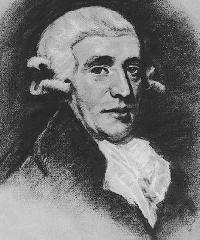 Our folk music is of great beauty and
variety.
Some of its themes were used by famous European composers, like Bedrich
Smetana and Joseph Haydn, who spoke Croatian. Joseph
Haydn (1738-1803) was born in a
Croatian ethnic enclave in
Burgenland (Gradisce)
in Austria. For
example the main theme of his London symphony no 164 in D major
(movement IV) is based on the well known Croatian traditional song "Oj,
Jelena, Jelena, jabuka zelena" (Oj, Jelena, Jelena, my green apple).
Also the final of his Es major symphony is based on the Croatian folk
song "Divojcica potok gazi" (A little girl treads on a brook). And even
the following song that is widely known in Croatia - "Nikaj na svetu
lepsega ni, nego gorica kad nam rodi..." (There is nothing more
beautiful in the world than a fruitful hill) was exploited by Haydn (I learned this on a wonderful 11th
birthday party of my
dear friend Ema Tolic).
Our folk music is of great beauty and
variety.
Some of its themes were used by famous European composers, like Bedrich
Smetana and Joseph Haydn, who spoke Croatian. Joseph
Haydn (1738-1803) was born in a
Croatian ethnic enclave in
Burgenland (Gradisce)
in Austria. For
example the main theme of his London symphony no 164 in D major
(movement IV) is based on the well known Croatian traditional song "Oj,
Jelena, Jelena, jabuka zelena" (Oj, Jelena, Jelena, my green apple).
Also the final of his Es major symphony is based on the Croatian folk
song "Divojcica potok gazi" (A little girl treads on a brook). And even
the following song that is widely known in Croatia - "Nikaj na svetu
lepsega ni, nego gorica kad nam rodi..." (There is nothing more
beautiful in the world than a fruitful hill) was exploited by Haydn (I learned this on a wonderful 11th
birthday party of my
dear friend Ema Tolic).
Sir William Henry Hadow, renowned English scholar and musicologist (1859-1937), lecturer in Oxford, editor in chief of the Oxford Encyclopedia of Music (1901-1905), and a leading influence in English education at all levels in the 1920s and 1930s, wrote a booklet entitled
in 1897 in London (published by Seely and co. limited; reprinted in 1972 by Freeport, New York). This and other references related to Joseph Haydn can be found at The Library of Congress Citations:
Author: Hadow, William Henry, Sir, 1859-1937.
Title: A Croatian composer; notes toward the study of Joseph Haydn.
Published: Freeport, N.Y., Books for Libraries Press [1972]
Description: 98 p. illus. 22 cm.
LC Call No.: ML410.H4 H3 1972
Dewey No.: 780/.92/4 B
ISBN: 0836968816
Notes: Reprint of the 1897 ed.
Subjects: Haydn, Joseph, 1732-1809.
Names, Personal -- Croatia.
Control No.: 72004147 /MN/r972
Here we reproduce the concluding paragraph of Haydn's short biography presented by MusicaClassica:
A distinguishing trait of Haydn's works was his frequent use of Croatian folk music for his melodic material. Wrote W. H. Hadow: "The Croatian melodies are bright, sensitive, piquant, but they seldom rise to any high level of dignity or earnestness. They belong to a temper which is marked rather by feeling and imagination than by any sustained breadth of thought, and hence, while they enrich their own field of art with great beauty, there are certain frontiers which they rarely cross, and from which, if crossed, they soon return." Even many of Haydn's original melodies are characterized by typical rhythmic and melodic qualities to be found in the Croatian folk songs. However, as Franze Bellinger has added, "Haydn's speech, like that of every genius, was not only that of his race, but of the world." To these Croatian characteristics, Haydn added his high inspiration and sensitivity, and produced a type of melody which, for the most part, is unmistakably his.
Haydn is a common Croatian family name. In the Croatian telephone book you can see the names of Hajdin, Hajdina, Hajdinjak, Hajdinac, Hajdinovic: 63 families in the Zagreb county, 91 families in Medimurje and Varazdin counties, 65 families in Primorsko-Goranska county; and altogether 320 families in the whole Croatia (1999). There is a village of Hajdine near Vrbovsko in Croatia, on the main road to Rijeka. The name Hajdin (= hajda's) is derived from hajda = buckwheat.
Parents of Franz Joseph Haydn are Mathias Haiden and Anna Maria Haidin, as can be seen on their grave in the Rohrau cemetery even today. This is stated by outstanding Croatian musicologist academician Lovro Zupanovic in his afterword to the book of [Kuhac, pp 305-306]. Academician Zupanovic stated also the following:
"It is a pity that in his time Kuhac did not know for team work, or could not (was not allowed to?) accomplish. Otherwise - the redactor [ie. Zupanovic] is firmly convinced on the basis of own experience - ... that for half of names listed [by Kuhac] in his Hystorical introduction he would have no problems in proving their Croatian descent. This especially holds for Franz Joseph Haydn..." (see [Kuhac, p. 305]).
For those who can read Croatian, here is what academician Zupanovic wrote (see [Kuhac, pp 305-306]):
"Šteta je što Kuhaè u svoje vrijeme nije znao za timski (grupni) rad, ili ga - ako mu je i bila poznata tehnika - nije umio/moga (smio?) ostvariti. Da mu je to uspjelo, on bi - prireðivaè je na osnovi vlastitog iskustva u to èvrsto uvjeren - zajedno s po jednim lingvistom, povjesnièarom, arheologom, teologom i još pokojim (strukovno srodnim) znanstvenikom za polovicu imena što ih je naveo u Historijskom uvodu argumentirano dokazao njihovo hrvatsko podrijetlo. To osobito vrijedi za Franza Josepha Haydna, sina Mathiasa Haden-a i Ane Marije Haidin kako piše na nadgrobnom spomeniku koji danas stoji na groblju u Rohrauu. U svoje vrijeme - uz iznimku engleskoga muzikologa W. H. Hadowa (1859.-1937.) - posebice u njemaèkim zemljama doèekana "na nož" a danas posvema odbaèena, Kuhaèeva pretpostavka ostaje ako ništa drugo a ono curiosum sui generis.
Let us add that the melody for the German national anthem, composed by Joseph Haydn, is based on a very old Croatian folk song ("V jutro rano se ja stanem, rano pred zorom...", see the Oxford Music Dictionary). It is also significant that Haydn himself named the song Volkslied, before it became the anthem. Compare the Croatian folk song

with the German national anthem:

See also sheet music taken from Austrian - American Magazine, March 2002. For more details see Hadow's analysis from his monograph A Croatian Composer; notes towards biography of Joseph Haydn (London 1897).
The verses for the Austrian national anthem "Land der Berge, Land am Storme", were written by Paula von Preradovic (1887-1951), Austrian writer and poetess, grand-daughter of the Croatian poet Petar Preradovic (1818-1872), with the music of W.A. Mozart.

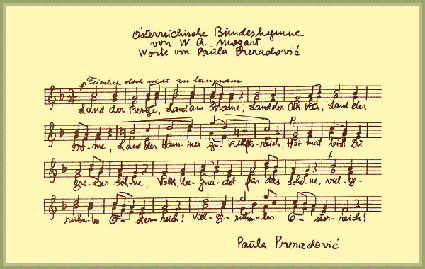
| Land
der
Berge, Land der Ströme, Land der Äcker, Land der Döme, Land der Hämmer, zukunftsreich. Heimat bist du grosser Söhne, Volk begnadet für das Schöne, Vielgerühmtes Österreich, Vielgerühmtes Österreich! Heiss umfehdet, wild umstritten, Mutig in die neuen Zeiten, |
Land
of
mountains, land on the river, Land of fields, land of cathedrals, Land of hammers, rich in outlook. You are the native home of great sons, A people uniquely gifted for the beautiful, Much applauded Austria. Fiercely embattled, ferociously
contested, Courageously we stride |
She wrote a lot about Croatia, its people, history and nature, for example "Kroatishe Königs legende".
- It is interesting that Paula von Preradovic's verses were chosen among as many as 1800 entries submitted for the Austrian national anthem in 1947.
- When Paula von Preradovic died in 1951, the Wiener Sanger Knaben (The Vienna Boy Choir) sang the Austrian national anthem on the funeral, with her verses.
- Paula von Preradovic: Gesamelte Werke, Verlag Fritz Molden (her son), Wien, 1967.
- Austrian Bundespresident Dr. Thomas Klestil: ...Ich glaube, die knappste Beschreibung der Geschichte und der Zukunft unseres Landes verdanken wir nach wie vor Paula von Preradovic, der Dichterin unserer Bundeshymne. Dort heisst es - mit dem Blick über tausend Jahre hinweg - in der zweiten Strophe: "Heiss umfehdet, wild umstritten liegst dem Erdteil Du inmitten - einem starken Herzen gleich!" So ist es - und so muss es bleiben. (1996)
A lovely parade march called the Jelacic March (Op. 244), composed by Johann Strauss the Elder, was played by the composer and his orchestra in Vienna in 1849, one day after Josip Jelacic was proclaimed an honorary citizen of the city. A total of eight marches and one waltz were dedicated to J. Jelacic by various Austrian composers.
Ivan Padovec (1800-1873), born in the beautiful baroque town of Varazdin (known for its festivals of baroque music) was a guitar virtuoso, who gave concerts in Zagreb, Vienna, Prague, Budapest, Hamburg, London, in Poland, Russia etc. He constructed a ten string guitar. Also, he published his Teoretish - praktische Guitar - Schule in Vienna in 1842.
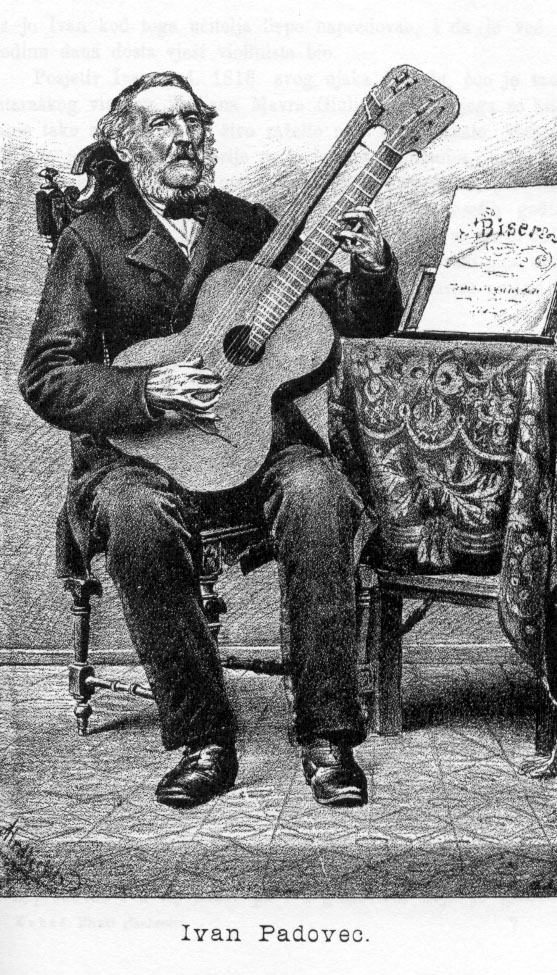
Illma de Murska (born as Ema Puksec in the town of Ogulin, 1834 - 1889) was an opera diva of international fame. She sang in Italy, Spain, Hungary, and her most fruitful period was in Vienna, Austria. She also sang in Berlin, Hamburg, Paris and London, and had tours in Australia, Russia, USA and New Zealand.
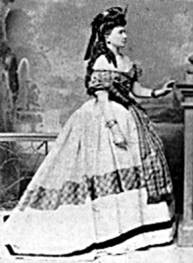
The prima donna Ilma di Murska on the London stage
Joseph
Angster (1834-1918) was
born in Jagodnjak (Kacsfalu) in eastern Croatia (near Danube river),
famous church organ constructor. His organs can be found in many
churches in Austria, Hungary, Croatia, Czech Republic, Slovakia,
Slovenia, Serbia & Montenegro, Poland, in Rome -Italy, Romania
and
Ukraine. He participated in organ construction for Cologne-castle,
Notre-Dame church in Paris and for St. Trinity church organ.
Many
thanks to Mr. Darko Varga (from Bilje,
Baranja) for having contributed Angster's biography to this web.
- the
violinist Zlatko Balokovic
(1895-1965); he was in possession of Guarneri's famous violin "the
King" from 1735 (named in honour of King Joseph of Hapsburg, estimated
to nine million dollars), that he donated to his beloved city of Zagreb
in 1964;
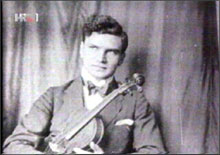
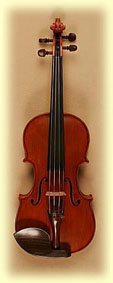
Guarneri's famous violin "the King" from 1735 (named in honour of King Joseph of Hapsburg, estimated to nine million dollars), that Balokovic donated to the city of Zagreb in 1964.
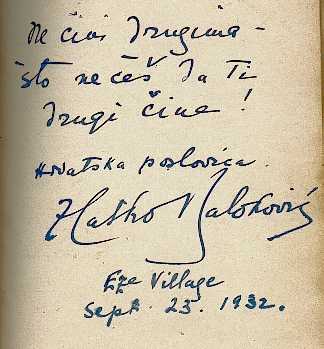
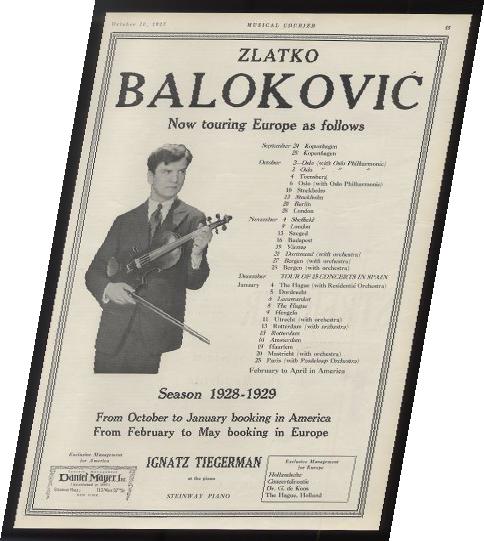
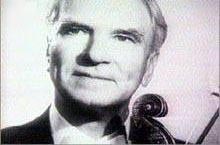
- Lovro
von Matacic, one of the
greatest conductors of the 20th century (1899-1985), started his career
in 1919 as conductor of orchestras in Osijek, Novi Sad, Ljubljana,
Belgrade, Riga, and in Zagreb in 1932. From 1942-1945 he was conductor
of the Vienna Opera. After 1945 he was imprisoned by the Yugoslav
communist regime, and together with Croatian poet Tin Ujevic and
painter Kristian
Krekovic sentenced to
confiscation of all movable and immovable property. In 1950's he became
organizer of Festivals in Dubrovnik and Split. In 1956 Matacic moved to
Germany to conduct East Berlin Opera and the famous Dresden
Staatskapelle, then conducted at Bayreuth in 1959, and from 1961 to
1966 was Gereralmuikdirektor in Frakfurt. He was also guest conductor
in Vienna Opera, Milan Scala, in Chicago, Naples, Palermo, Rome,
London, Cleveland, Tokyo, Prague, etc., and was elected the honorary
director of the Japanese Orchestra in Tokyo. From 1970 to 1980 he was
conductor and artistic director of the Zagreb Philharmonic Orchestra,
and almost simultaneously from 1973 to 1979 had the same role in the
Monte Carlo Orchestra.
Lovro Matacic is laureate of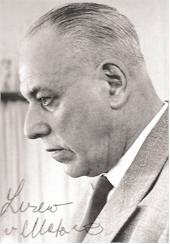
- the Bruckner Medal and of the International Bruckner Society, recipient of the Bruckner Ring from Viennese Symphonic Orchestra (one among only a few of the most outstanding conductors),
- recipient of the Smetana Medal from the Czech government and Janacek Medal,
- Hans von Bellow Medal from the Berlin Philharmonic Orchestra,
- medal for artistic work from the Prince Rainer of Monaco,
- the Cross of the First Order for Science and Art from the president of Republic of Austria,
- and of numerous recognitions in Croatia.
Maja Strozzi-Pecic (1881-1962), Thomas Mann wrote about her in his Dr. Faustus ("...she is probably the best soprano of both hemispheres"), while Igor Stravinski devoted his four compositions to her.
A famous opera singer Tino Pattiera (1890-1966) was born in the lovely town of Cavtat near Dubrovnik. His career started in Croatia, in the Opera of Osijek, where he sang as baritone. Pattiera was teaching singing in the Prague and in Vienna (Academy of Drama and Music). He is also buried in his native city.
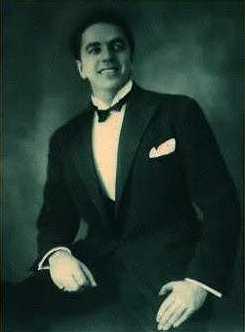
Berislav Klobucar (1924), one of the greatest Croatian conductors, born in Zagreb, student of Lovro pl. Matacic, started his impressive career leading the Zagreb Philharmonic Orchestra.
- He conducted the Vienna State Opera for more than fourty years (1133 performances in 56 operas!).
- During ten years Klobucar directed Symphonic Orchestra and the Opera in Graz, Austria.
- During nine years he was director of the Opera of Stockholm, Sweden.
- During six years Berislav Klobucar was director of Opera and Philharmonic Orchestra in Nice, France.
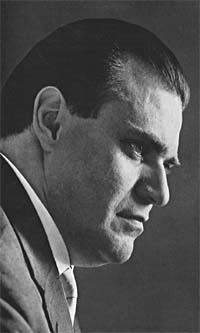
Vjekoslav Sutej (1951), a renowned conductor (for four consecutive years conducted the Viennese Symphonic orchestra during Christmas concerts held in Vienna, with the participation of such famous singers like Jose Carreras - concert in Arena di Verona in 1995, Placido Domingo, Luciano Pavarotti, the event being transmitted worldwide), from 1990 to 1993 musical director of Teatro La Fencie in Venice, conducted the Royal Philharmonic Orchestra in Sevilla (Spain) from 1990 to 1996, and the Houston opera orchestra (the USA) from 1992 to 1997, conducted Carmen in Arena di Verona,
Any admirer of classical music certainly knows the Zagreb Soloists, conducted by maestro Tonko Ninic (until 1997).

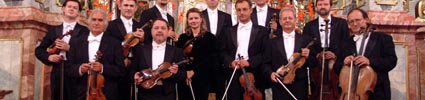
Viktor Vidovic (1973) and Ana Vidovic (1980), brilliant guitarists (brother and sister); Ana has won the 1998 International Guitarist Competition "Francisco Tarrega" in Benicasim, Spain, among forty competitors up to the age 32, see Toutes les qualités d'une jeune virtuose at Societé luxembourgeoise de guitare classique. She also won first prizes at "Albert Augustinum International Competition" in Bath, England, at the "Ferdinando Sor Competition" in Rome. She had concerts in London, Paris, Vienna, Salzburg, Rome, Budapest, Warszaw, Tel Aviv, Copenhagen, Tronto, San Francisco, Houston, Austin, Dallas, St Luis.
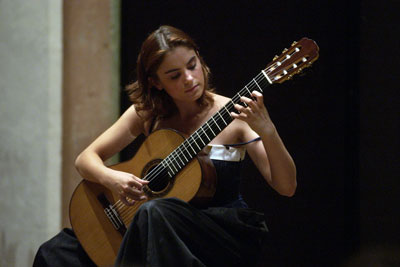
Mia Slavenska (born in Slavonski Brod, 1914-2002), became ballerina of the Zagreb Opera (1930-33), studied also in Vienna, and joined the Paris Opera in 1933. In London she danced with Anton Dolin before joining the Ballet Russe de Monte Carlo (1938-42). She later formed her own company, Ballet Variante.Iin 1953 she established the Slavenska-Franklin ballet company with Frederic Franklin. In 1950's she was primabalerina of the Metropolitan Opera. By the end of her career she was teaching in Los Angeles, California. Slavenska starred in a wonderful French film, La Mort du Cygne (1938).
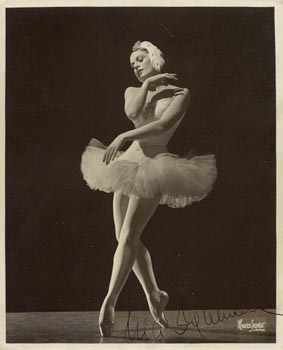
Zvjezdice (Little Stars), all girs' choir, founded in 1985 in Zagreb, conducted by Mr. Zdravko Sljivac, became two-times world champions of the Llangollen International Music Festival of choir music ((Llangollen International Musical Eisteddfod)), Llangollen, Wales, UK, in 2001, and Outstanding Prize at Sligo Choral Festival in Ireland. They are often compared with the Vienna Boys Choir. Little Stars were elected as Cultural Ambassadors of the European Union Parliament. They had very successful concerts in Norway (Oslo, Stavanger), France (Paris, Nantes, Auxerre), Italy (Milano, Riva del Garda), Switzerland (Zürich), Germany (Füssen), Bosnia and Herzegovina (Sarajevo), Austria (Salzburg), USA (New York, Pittsburgh, Dayton, Northern Kentucky, Cincinatti, Pittsburgh, Cleveland, Los Angeles, Chicago), etc. You can listen to their singing at Croatian Christmas Songs. Maestro Zdravko Sljivac conducted also the World Children Choir in Paris.
Tamburica links in Austria:
- www.tamburica.at, by Kristijan Karall,
- Tamburaski Orkestar i zbor Pinkovac.
It seems that "Sidi Mara..."
is
the origin for the melody of ALOHA
OE
(Farewell to Thee), famous
Hawaiian song and the national anthem of
Hawaii. Its
words were written by Her Majesty Queen
Liliuokalani around
1877. Possible
Croatian origin for the melody of ALOHA OE is indicated in an article
written
by John Berger in HAWAII MAGAZINE, August 1996, p. 41. Very close
relation between
the melody of "Sidi Mara..." and ALOHA OE has been indicated
by Branimir Vidmar,
Timmins, Ontario, Canada, 1978. Vidmar also
indicated
that the melody is close to American gospel "How Great
Thou Art," composed by K. Hine. It is also worth noting
that "Sidi Mara..." has
Austro-German version called Die
Träne, and
the English version is The Tear
(this can also be seen from
Vidmar's sheet
music). As stated in Ripley's Believe
it or
not, Hawaiian music is the
creation of a German
bandmaster captain Henry Berger
(1844-1929), invited to Hawaii
by King
Kamehameha V in 1872. Berger composed the
first Hawaiian songs which "he adapted from German folk
tunes." He composed 72 famous Hawaiian songs, including ALOHA OE and
the Hawaiian
national song. We can be pretty
sure that the "German tune" adapted to Hawaiian ALOHA OE was in fact
Croatian
song "Sidi Mara...", which Berger obviously
knew as "Die Träne."
I
express my gratitude to Adam Eterovich, USA,
for copies of sheet
music which very clearly confirm the above views, and for the above
mentioned
article from Hawaii Magazine. It is also worth noting that, according
to Eterovic,
the husband
Hawaiian Queen Liliuokalani was a Croata - John
Dominis, whose father was born
in Venice, and whose grandfather was
born
on the Croatian island of Brac, in the lovely town of Pucisca. Recall
that Dominis
= Gospodnetic, for example Marko Antun de
Dominis.
Eterovic believes that Hawaiian Queen could have opportunity to hear
the Croatian
song "Sidi Mara..." when she was hosted by the English
Queen.
www.hr/darko/etf/et02.html#jurisic
In 1526 the disastrous
defeat of Hungarian and Croatian army
took place in the Mohac field
in southern Hungary. Let us
mention by the way that since 1991 this area has offered refuge to
45,000 exiles, mostly Croats from Serbia and occupied parts of Croatia.
The
territory of western Bosnia, that was
occupied by the Turks only after the battle on the Mohac field, was
called Croatian Bosnia
or Turkish
Croatia
(Bosna hrvatska or Turska Hrvatska) until the Berlin Congress in 1878.
Here is a document depicting cut off heads of Croats killed after the battle at Petrinja near Zagreb in 1592:
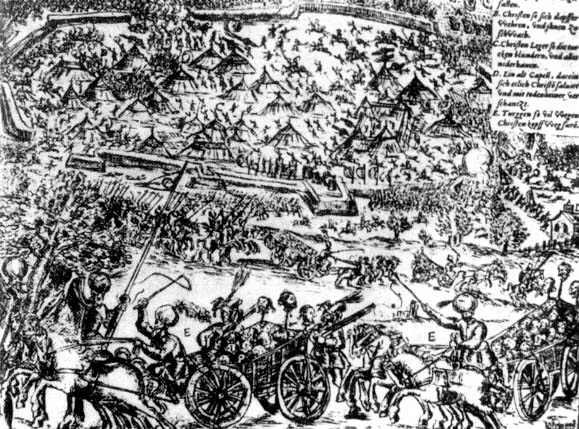
The 1592 defeat of Croatian-Habsburg army near Brest was celebrated in Constantinople by showing 29 chariots with 172 captured dignitaries, 600 cut off heads, and 23 captured flags.
A legendary Croatian military commander Nikola Jurisic (born in the town of Senj, 1490-~1545) managed to stop sultan Sulejman the Magnificent (or Great) in 1532 near the town of Köszeg (Güns) at Austrian and Hungarian border. Nikola Jurisic had about 700 Croatian soldiers, the Turks about 32,000 people. The Turkish onslaughts lasted for three weeks. The aim of sultan Sulejman was to occupy Vienna. It is interesting that two years earlier Nikola Jurisic visited sultan Sulejman in Constantinople as a deputy of King Ferdinand.
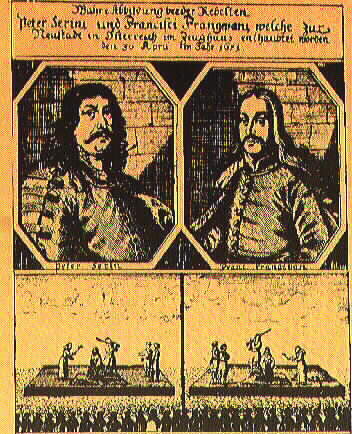 Ban
(Viceroy) Petar Zrinski
(1621-1671) and Fran Krsto
Frankapan
(1643-1671), both outstanding as statesmen and writers, are among the
most beloved figures in the history of Croatia. They had a great
successes in liberating the areas occupied by the Turks. However, the
Viennese Military council, instead of supporting them to free the rest
of the Hungarian and Croatian lands, signed a shameful peace treaty
with Turkey, by which the liberated territories had to be handed back
to the Turks. The result of the rebellion against Vienna was a cruel
public decapitation of Zrinski and Frankapan in Wiener Neustadt near
Vienna in 1671. The remains of these two Croatian martyrs were buried
in the Cathedral of Zagreb in 1919.
Ban
(Viceroy) Petar Zrinski
(1621-1671) and Fran Krsto
Frankapan
(1643-1671), both outstanding as statesmen and writers, are among the
most beloved figures in the history of Croatia. They had a great
successes in liberating the areas occupied by the Turks. However, the
Viennese Military council, instead of supporting them to free the rest
of the Hungarian and Croatian lands, signed a shameful peace treaty
with Turkey, by which the liberated territories had to be handed back
to the Turks. The result of the rebellion against Vienna was a cruel
public decapitation of Zrinski and Frankapan in Wiener Neustadt near
Vienna in 1671. The remains of these two Croatian martyrs were buried
in the Cathedral of Zagreb in 1919.
It is interesting that, while in prison from 18th April 1670 to 30th April 1671, Fran Krsto Frankapan translated Molier's "George Dandin" into Croatian, written in Paris in 1669, ie. only two years earlier. This was was its first European translation. Frankopan is the author of very famous Croatian verses Navik on zivi ki zgine posteno (Forever he lives who dies honorably).
Petar Zrinski was also very educated, being a statesman, poet, composer, polyglot. He presented his legendary sword to the town of Perast in Boka kotorska during his sojourn there in 1654.
The letter sent by Petar Zrinski to his wife Katarina (in Croatian) just a day before his death is one of the most deeply moving texts ever written in the Croatian language. It was very soon translated and published in
- Croatian (Moje drago serce), Vienna, 1671,
- English (My dear soul), London, 1672,
- German (Mein liebes Herz), Vienna, 1671,
- French (Ma chere Femme), Paris, 1691,
- Italian:
- Mio Cuore, Vienna, 1671,
- Carisima Consorte, Dresden, 1672,
- Latin (Delicium meum), Vienna, 1671,
- Spanish (Querida Esposa mia), Madrid, 1687,
- Dutch (Myn Liefste Hert), Amsterdam, 1671,
- Hungarian (Anna Catharina), Budapest, 1671.
His wife Katarina, also an outstanding poetess, was imprisoned by general Spankau in a monastery in Graz, where she went insane and died in extreme poverty. Even the son of Peter and Katarina - Ivan Antun, the last of the Zrinski's, was imprisoned in Graz, solely because he belonged to this outstanding noble family. He died after 20 years of prison in Schlossberg in Graz out of pneumonia.
These six centuries old noble Croatian families died out and their property was robbed. It should be stressed that both Petar Zrinski and Fran Krsto Frankapan went to Vienna voluntarily, where they have been arrested. During the trial they defended themselves claiming that only Croatian Parliament (Hrvatski Sabor) can try them. In their bourgs they had a considerable collection of books and works of art, which after confiscation are held in Austria (many of them in Austrian National Library). A period of the influence of the absolutistic Viennese politics had started.
Petar Zrinski and Fran Krsto Frankopan (1825-1871), by Dr. Vinko Grubisic
Even today some descendants of the Zrinski family (Sdrin, Sdrinias) live in Greece. See an interesting article by Dionisis pl. Sdrinias (Greece).
CROATS IN BOSNIA AND HERZEGOVINA
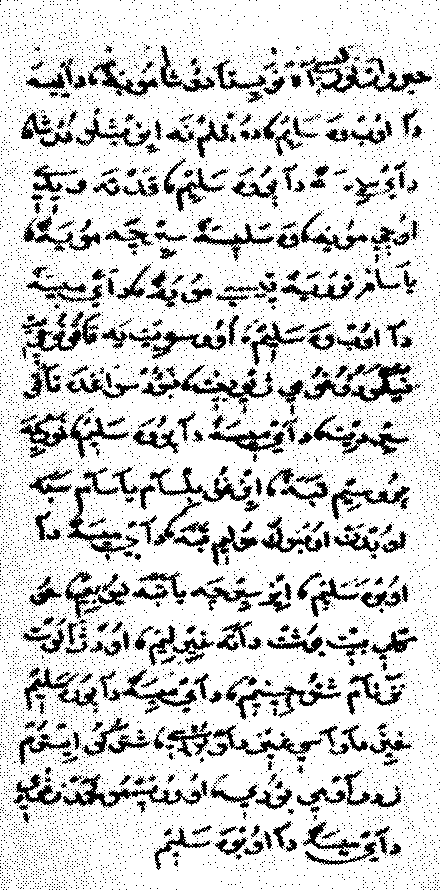
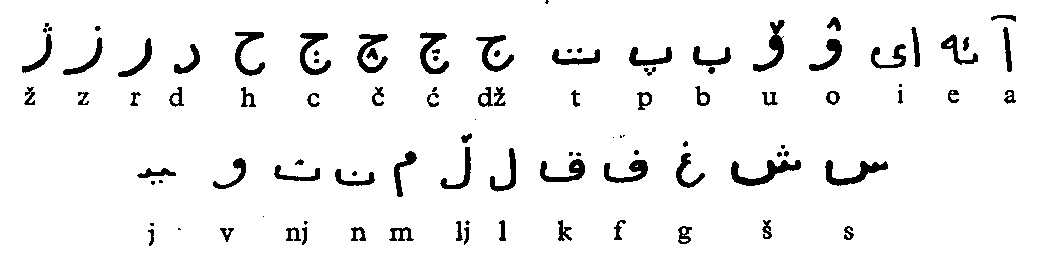 One of the oldest texts written in Arabica
(which is in fact Arabic script for the Croatian language) is a love
song called "Chirvat-türkisi"
(= Croatian song) from 1588,
written by a certain Mehmed
in Bosnia. This manuscript is held
in the National Library in Vienna. Except for literature Arabica was
also used in religious schools and administration. Of course, it was in
much lesser use than other scripts. The last book in Arabica was
printed in 1941.
One of the oldest texts written in Arabica
(which is in fact Arabic script for the Croatian language) is a love
song called "Chirvat-türkisi"
(= Croatian song) from 1588,
written by a certain Mehmed
in Bosnia. This manuscript is held
in the National Library in Vienna. Except for literature Arabica was
also used in religious schools and administration. Of course, it was in
much lesser use than other scripts. The last book in Arabica was
printed in 1941.
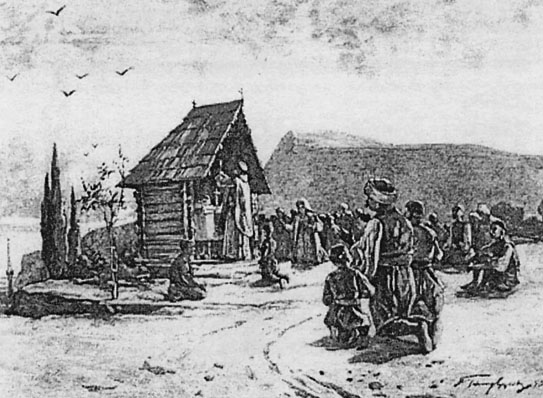 The
border between Middle Age Bosnia and Croatia was on the river Vrbas,
not on Una. The lovely town of Jajce (on river Vrbas) was in Croatia,
as well the town of Bihac. The territories enclosed by three rivers -
Sava, Una and Vrbas - bore the name of the Turkish
Croatia in
the European literature of 18th and 19th century. The name was given by
the Turks, and it was accepted by Austrian, Italian, German and Dutch
cartographers. It was only in 1860 that upon insistence of the Valachian
part of the population the name of Turkish
Croatia was abolished in favor of the new name - Bosanska Krajina
(Bosnian Frontier). This name appears on maps for the first time in
1869.
The
border between Middle Age Bosnia and Croatia was on the river Vrbas,
not on Una. The lovely town of Jajce (on river Vrbas) was in Croatia,
as well the town of Bihac. The territories enclosed by three rivers -
Sava, Una and Vrbas - bore the name of the Turkish
Croatia in
the European literature of 18th and 19th century. The name was given by
the Turks, and it was accepted by Austrian, Italian, German and Dutch
cartographers. It was only in 1860 that upon insistence of the Valachian
part of the population the name of Turkish
Croatia was abolished in favor of the new name - Bosanska Krajina
(Bosnian Frontier). This name appears on maps for the first time in
1869.
The Serbs living in Bosnia came with the Turks mostly as assisting Turkish troops. It should be emphasized that these Bosnian Serbs were originally Valachies (Vlachs) from Montenegro and northern Albania. In fact they were non-slavic nomads - Protoromans and romanized Balkan Celts and Illyrians, who accepted the Serbian Orthodox faith (there were also Catholic Valachies in Croatia, croatized after 16th century). Later, under the influence of the Serbian Orthodox Church in Bosnia, they became Serbs. They had been fighting on the Turkish side until the decline of the Turkish Empire started. Their enclaves in present day Croatia follow roughly the border of the Turkish Empire in the medieval Croatia.
These migrations led to further complications. Counting on these Serbian settlers as a military aid, the Austrian kings supplied them with privileges. This meant that parts of the Croatian territory were not completely under the Croatian jurisdiction and the Croats felt them as intruders within their state. This was the beginning of the so-called Krajina (`Military Frontier'; "Bosnian Krajina" appeared much later), whose complete and systematic ethnical cleansing from Croats and from everything reminding on their existence was finished during the Serbian aggression 1991-1995. Here we see the beginning of the drama in Croatia and Bosnia-Herzegovina. The Krajina region in Croatia has been liberated during the Flash and Storm operations in the summer 1995.
Franz Jelacic de Buzim
Extrait du Dictionnaire Universel Larousse, 1866-1879.
Baron, général autrichien, né à Petrinia en 1746, mort en 1810.
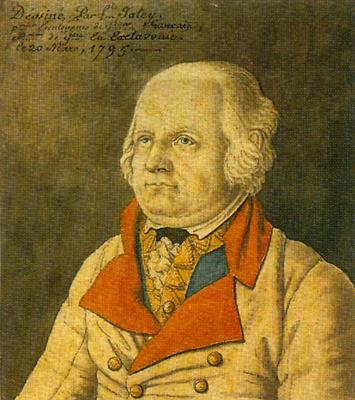 Descendant
d’une ancienne famille noble de Croatie, il prit du service
dans
l'armée autrichienne en 1763, se distingua pendant la guerre
contre les Turcs en 1789, fut nommé colonel en 1794, puis
commandant d'un corps de chasseurs de Croatie, et prit part, en 1796,
à la campagne du Rhin sous le commandement de l'archiduc
Charles. Promu général-major en 1797, il remporta
, deux
ans plus tard, à Feldkirch, un avantage marqué
sur [les
généraux français] Oudinot et
Masséna, et
reçut, en 1800, le grade de maréchal-lieutenant.
Pendant
la guerre de 1805, Jellachich fut chargé de
défendre le
Vorarlberg ; mais, à la suite de la
défaite
essuyée à Ulm par les Autrichiens, il se vit
enveloppé par les Français, et le
général
Wolskehl, qui commandait sous ses ordres, consentit à se
rendre
avec ses troupes à Augereau. En 1808, Jellachich prit le
commandement d’une division à Agram [Zagreb], mais
s’en démit peu après.
Descendant
d’une ancienne famille noble de Croatie, il prit du service
dans
l'armée autrichienne en 1763, se distingua pendant la guerre
contre les Turcs en 1789, fut nommé colonel en 1794, puis
commandant d'un corps de chasseurs de Croatie, et prit part, en 1796,
à la campagne du Rhin sous le commandement de l'archiduc
Charles. Promu général-major en 1797, il remporta
, deux
ans plus tard, à Feldkirch, un avantage marqué
sur [les
généraux français] Oudinot et
Masséna, et
reçut, en 1800, le grade de maréchal-lieutenant.
Pendant
la guerre de 1805, Jellachich fut chargé de
défendre le
Vorarlberg ; mais, à la suite de la
défaite
essuyée à Ulm par les Autrichiens, il se vit
enveloppé par les Français, et le
général
Wolskehl, qui commandait sous ses ordres, consentit à se
rendre
avec ses troupes à Augereau. En 1808, Jellachich prit le
commandement d’une division à Agram [Zagreb], mais
s’en démit peu après.
Dictionnaire Universel Larousse, 1866-1879
Liens:
- Croatian History Museum : Franjo Jelacic
- The Jelacic of Buzim coat of arms (counts)
Josef Jelacic de Buzim
Extrait du Dictionnaire Universel Larousse, 1866-1879
Baron, général autrichien, ban de Croatie, fils du précédent [Franz Jelacic de Buzim], né à Peterwardein (Slavonie) en 1801, mort à Agram [Zagreb] en 1859.
En sortant de l’école militaire de Vienne, en 1819, il entra dans l’armée autrichienne avec le grade de sous-lieutenant de dragons, cultiva la poésie dans ses loisirs de garnison et publia, en 1825, un recueil de vers. Nommé capitaine-lieutenant en 1830, major en 1837, puis lieutenant-colonel dans un régiment-frontière du Banat, il était colonel depuis 1842, lorsqu’il eut à combattre les bandes bosniaques qui infestaient les frontières de la Croatie. Il fit preuve, dans ces circonstances, d’autant de décision que d’habileté (1845), et acquit une grande popularité en Croatie par l’énergie avec laquelle il mit un terme aux déprédations de ces brigands.
 Les
événements de 1848 permirent bientôt
à
Jellachich de déployer toute l’énergie
de son
caractère et de donner carrière à son
ambition. A
cette époque, la Croatie avait été
réunie
à la couronne de Hongrie malgré ses habitants
qui,
séparés des magyares par la race, le langage, les
mœurs, supportaient avec une extrême impatience la
suprématie étrangère. D’un
côté, les Croates étaient
profondément
irrités de ce que, dans les actes du gouvernement, on se
servît exclusivement de la langue des magyares, et de ce que
ceux-ci servissent d’intermédiaires entre
l’empereur
et eux. D’un autre côté, les Hongrois,
tout en
réclamant pour eux l’indépendance,
n’avaient
rien stipulé pour les races slaves de la Croatie et de la
Dalmatie, de sorte que les Croates pouvaient redouter, de la part de
ces derniers, une oppression d’autant plus lourde
qu’elle
serait sans contre-poids. Loin de calmer ces inquiétudes,
Jellachich les accrut encore et persuada aux Croates que le salut de
leur nationalité tenait à la conservation de
l’Autriche. En conséquence, ces derniers
envoyèrent
une députation à Vienne pour déclarer
à
l’empereur Ferdinand que la Croatie était
prête
à donner son sang et ses biens pour le maintient de
l’intégrité de l’empire, et
pour demander que
Jellachich devînt leur ban. L’empereur,
enchanté de
trouver, dans un moment aussi critique, de telles dispositions dans une
partie de ses sujets, s’empressa de nommer Jellachich ban de
Croatie, conseiller privé et général
commandant et
chef des districts du Banat, de Waradin et de Carlstadt.
Les
événements de 1848 permirent bientôt
à
Jellachich de déployer toute l’énergie
de son
caractère et de donner carrière à son
ambition. A
cette époque, la Croatie avait été
réunie
à la couronne de Hongrie malgré ses habitants
qui,
séparés des magyares par la race, le langage, les
mœurs, supportaient avec une extrême impatience la
suprématie étrangère. D’un
côté, les Croates étaient
profondément
irrités de ce que, dans les actes du gouvernement, on se
servît exclusivement de la langue des magyares, et de ce que
ceux-ci servissent d’intermédiaires entre
l’empereur
et eux. D’un autre côté, les Hongrois,
tout en
réclamant pour eux l’indépendance,
n’avaient
rien stipulé pour les races slaves de la Croatie et de la
Dalmatie, de sorte que les Croates pouvaient redouter, de la part de
ces derniers, une oppression d’autant plus lourde
qu’elle
serait sans contre-poids. Loin de calmer ces inquiétudes,
Jellachich les accrut encore et persuada aux Croates que le salut de
leur nationalité tenait à la conservation de
l’Autriche. En conséquence, ces derniers
envoyèrent
une députation à Vienne pour déclarer
à
l’empereur Ferdinand que la Croatie était
prête
à donner son sang et ses biens pour le maintient de
l’intégrité de l’empire, et
pour demander que
Jellachich devînt leur ban. L’empereur,
enchanté de
trouver, dans un moment aussi critique, de telles dispositions dans une
partie de ses sujets, s’empressa de nommer Jellachich ban de
Croatie, conseiller privé et général
commandant et
chef des districts du Banat, de Waradin et de Carlstadt.
Le nouveau ban, au comble de ses vœux, se trouva néanmoins en présence de nombreuses difficultés. " D’abord, dit M. A. d’Héricourt, les Croates n’étaient pas tellement unis que l’on ne pût craindre des divisions excitées par des chefs jaloux. En outre, l’un des ministres de l’empereur (Bathyani) était Hongrois, et il était probable qu’il emploierait son influence à renverser un ban que ses connaissances militaires devaient rendre redoutable à ses compatriotes. Jellachich triompha, mais non sans peine, de tant d’obstacles. Il alla sans armes trouver les Croates mécontents et réunis, leur expliqua ses projets, et fut reconduit par eux en triomphe. Sommé par le ministère de rendre compte de sa conduite, il vint à Vienne à la tête d’une escorte nombreuse, refusa de s’expliquer en présence du ministre hongrois et obtint une audience publique de l’empereur, avec qui on redoutait qu’il n’eût un entrevue secrète. Il parla modestement de ce qu’il avait fait, déclara qu’une population aussi importante que les Slaves ne pouvaient être sacrifiée aux intérêts d’une poignée de Hongrois, et ajouta qu’il venait resserrer plus étroitement que jamais les liens qui unissaient la Croatie et l’empire, dont le salut n’était qu’à ce prix. Son discourt persuasif et éloquent eut un succès complet : l’empereur fut ému, des applaudissements éclatèrent, et l’archiduc Jean vint serrer Jellachich dans ses bras. On convient que le ban conserverait son autorité, mais que l’édit qui l’en dépouillait ne serait pas encore rapporté. Le soir, la population de Vienne se pressait sous ses fenêtres ; il prononça une nouvelle harangue et la termina par ces mots : " Je veux, mes frères, une Autriche grande, forte, puissante, libre et indivisible. Vive notre belle patrie ! Vive l’Allemagne ! ".
Comptant sur les promesses de la cour, Jellachich se tint prêt à commencer les hostilités contre les Hongrois ; il parcourut la Croatie et les autres provinces slaves de l’empire, recueillant partout de nombreuses preuves de patriotique sympathie ". Cependant le faible Ferdinand, craignant une rupture avec la Hongrie, hésitait encore à reporter l’édit qui privait le ban de sa dignité ; mais celui-ci, sûr de l’approbation tacite de la cours, continuait ses armements, obtenait des diètes slaves des subsides et une armée de 40 000 hommes, recevait de l’administration autrichienne des munitions et de l’artillerie ; enfin un édit du 4 septembre 1848 lui rendait, en récompense de ses services, ses dignités et ses fonctions. Cinq jours plus tard, Jellachich déclarait la guerre à la Hongrie et commençait les hostilités. Battu près d’Ofen, après un sanglant combat, il conclut un armistice pendant lequel il opéra sa retraite de façon à faire sa jonction avec Windischgrätz, marcha avec lui sur Vienne ; où venait d’éclater une révolution, et pris une part active à la prise de cette ville insurgée (2 novembre). Bientôt après, il pénétrait de nouveau en Hongrie avec Windischgrätz. Il remporta quelques succès, fut nommé général d’artillerie, reçut l’ordre de descendre la rive droite du Danube et de protéger, contre l’insurrection magyare, les provinces méridionales de l’empire, força Bem de se replier devant lui, mit garnison dans Bacska, puis fut complètement battu par Bem à Hegyes le 14 juillet1849. Il s’occupait de réorganiser ses troupes lorsque la Hongrie succomba devant l’intervention russe et surtout par la trahison de Goergei. Lorsque la lutte fut terminée, Jellachich retourna à Agram, en qualité de gouverneur civil et militaire de la Croatie et de la Slavonie. En 1853, il reçut le commandement d’un corps d’observation envoyé par le gouvernement autrichien sur la frontière du Monténégro. Enfin, en 1855, il reçut de l’empereur François-Josef le titre de comte.
Jellachich, dans sa carrière brillante et mouvementée, a montré plus d’habileté, de finesse et de décision politique que de grands talents militaires. En 1851, il donna une édition de ses poésies, parmi lesquelles on remarque ses chants patriotiques et une piquante satire du vieux système militaire, intitulé : Chanson de garnison, qui obtint un grand succès.
Liens:
- Igor Gostl: Andjeo cuvar, Hrvatsko Slovo
- Igor Gostl: Jelacicevo putovanje Dalmacijom, Hrvatsko Slovo
- Croatian History Museum:
Vers 1740, Franz ou Franz-Luka (°1720 à Vienne / Autriche- après 1776 à Moscou / Russie) partit s’installer à St Pétersbourg, en Russie. Il y étudia la médecine et fut diplômé en 1743 à l’hôpital général de St Pétersbourg. Il participa en tant que médecin à trois expéditions en Chine (1747, 1754-1756 et 1757-1764). En 1756, il fut chirurgien à l'hôpital principal de Moscou, puis en 1764 chirurgien à l’hôpital général de St Pétersbourg.
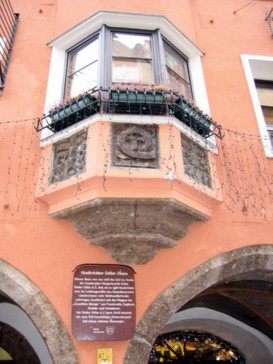
Croatian coats of arms can be seen on the
ceiling of the Stadtrichter Zeller Haus (Herzog Friedrichstr. 35)
of the city magistrate (Stadtrichter) in Innsbruck, Austria, dating
from 1495.
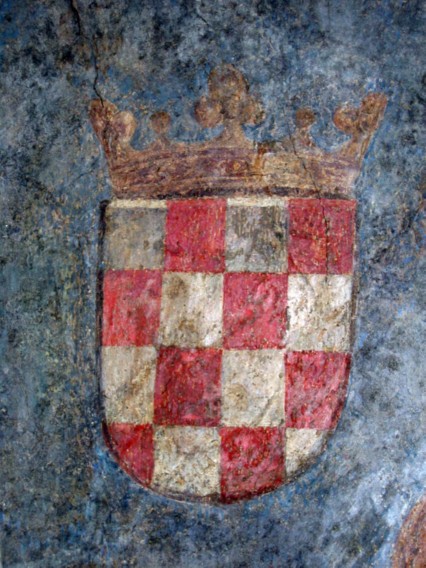 |
|
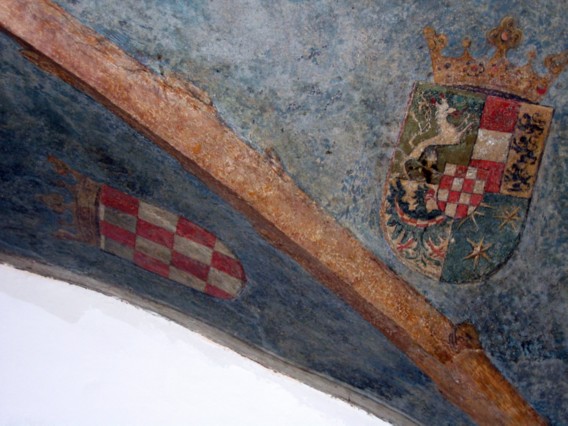 |
|


|
|
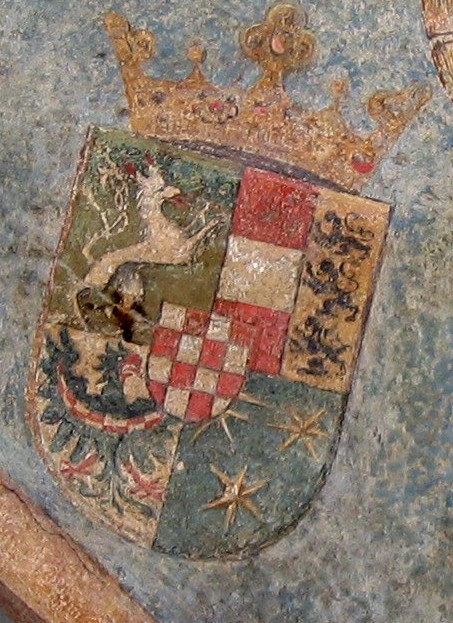
|
|
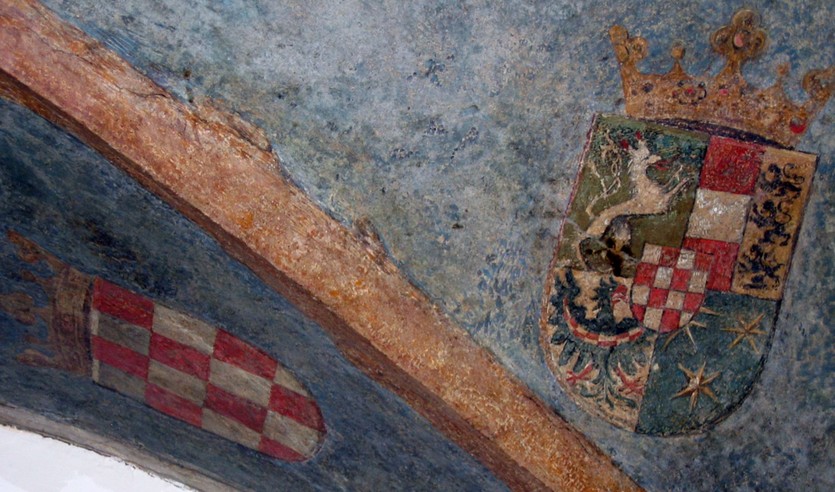
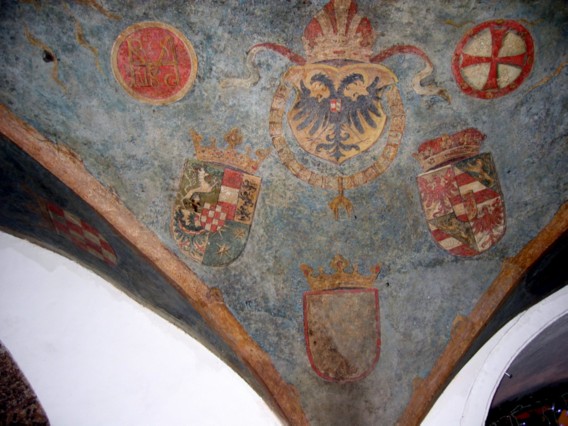
Another Croatian coat of arms from 1496
was in former
Wappenturm,
in Hofburg - the Imperial Palace in Innsbruck, Austria.
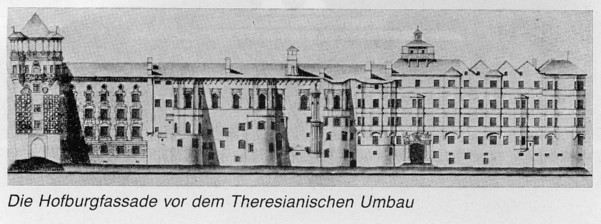
Wappenturm
(i.e. the Coat of Arms Tower) of
Hofburg is on the left on the above photo.
Unfortunately, since the 1770 renovation the Wappenturm was changed:
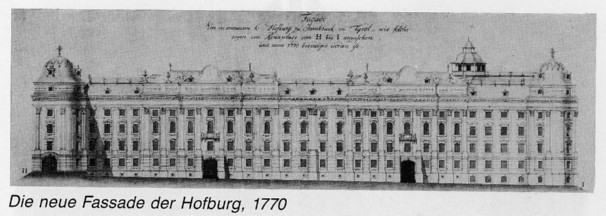
Luckily, the 18th century painting of the old Wappenturm has been made
for the Hofburg sacristy,
where Croatian coat of arms can still be seen:
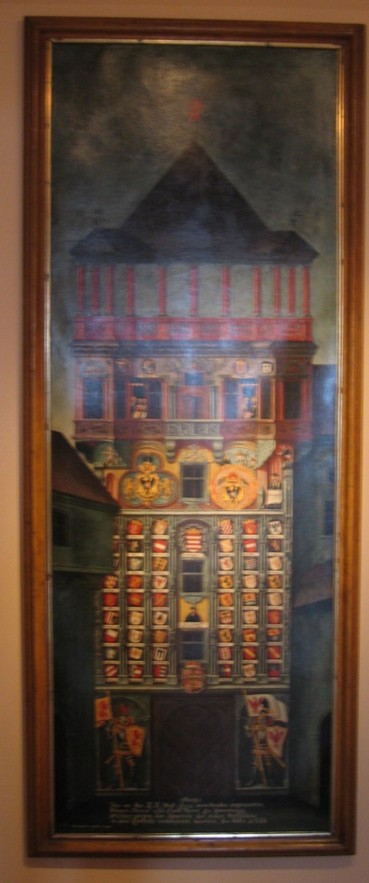
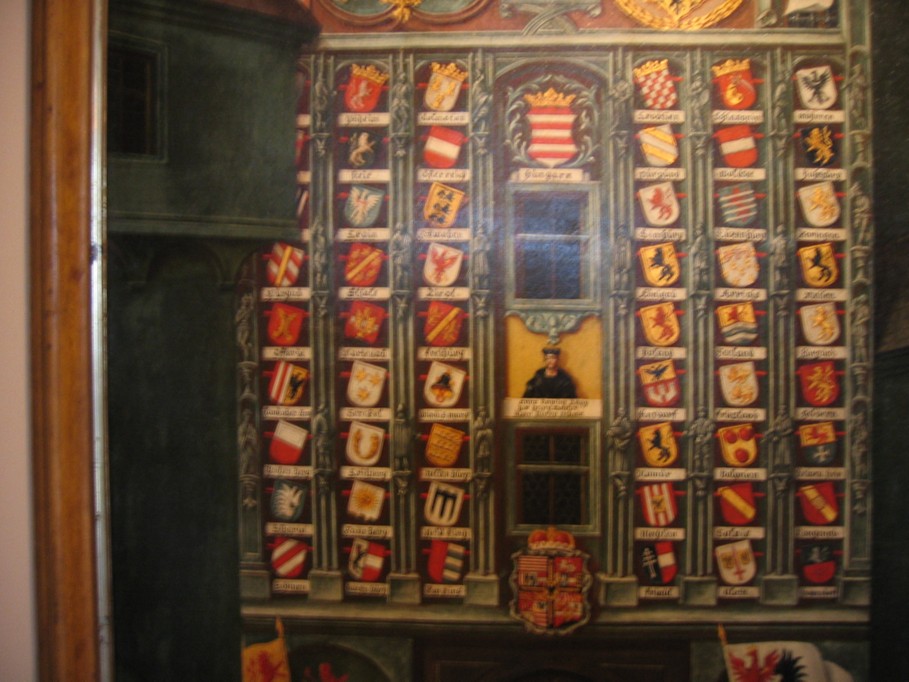

See also Ramski Zbornik, Zagreb, 2001.
Many thanks to Ivan and Aleksandar Szabo for kind help.
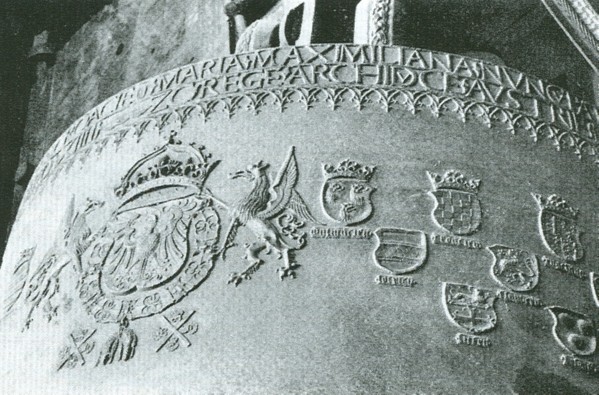
From
the bell in Schwaz near Innsbruck, 1503
(Ivan Bosilj: Zvona,
Graphis, Zagreb, 2000, p. 53; with
permission of prof.dr. Zvonko Bencic)
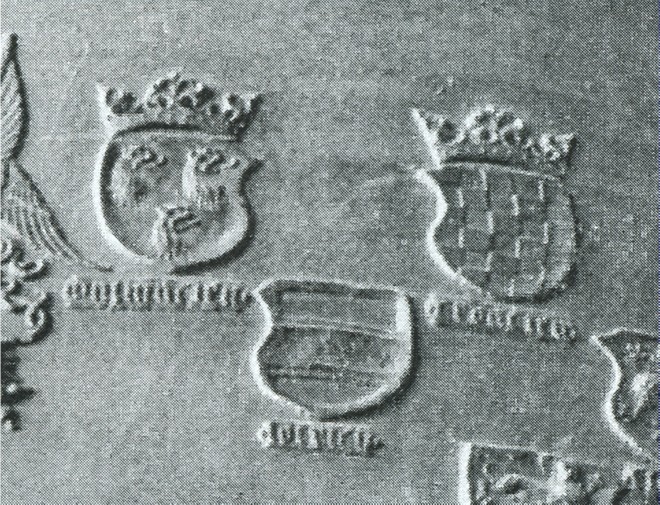
Dalmatie and Croacie on the top, from a bell in Schwaz near Innsbruck, Austria, 1503
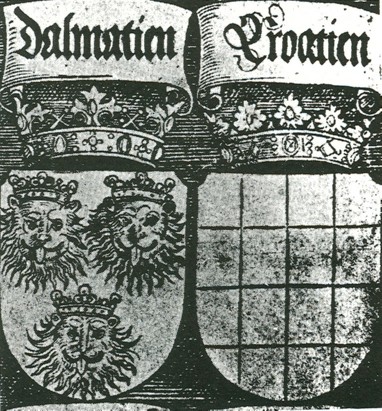
Croatian
coats of arms (Dalmatien, Croatien)
drawn by Albercht
Dürer (1427-1528),
kept in Albertina (a famous graphic art collection) in Vienna
Since his election in 1519 Charles V predominantly used the following title in official documents: "Carl der fünffte, von Gottes Gnaden Römischer Kayser, zu allen Zeiten Mehrer des Reichs, König in Germanien, zu Castilien, Aragon, Leon, beyder Sicilien, Hierusalem, Hungarn, Dalmatien, Croatien, Navarra, Granaten, Tolleten, Valentz, Gallicien, Majorca, Hispalis, Sardinien, Corduba, Corsica, Murcien, Giennis, Algarbien, Algeziren, Gibraltar, der Canarischen und Indianischen Insulen und der Terrae firmae des Oceanischen Meeres etc, Ertz-Hertzog zu Oesterreich, Hertzog zu Burgundi, zu Lotterich, zu Braband, zu Steyer, zu Kerndten, zu Krain, zu Limburg, zu Lützenburg, zu Geldern, zu Calabrien, zu Athen, zu Neopatrien und Würtenberg etc."
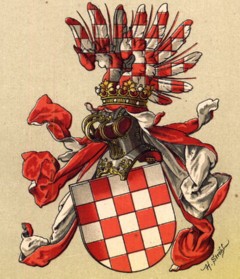
Kingdom
of Croatia (Austrian-Hungarian Imperial
civic heraldry)
photo from www.ngw.nl/int/oos/ooshong/croatia.htm

The artist Hans Burgkmair (1473-1531) included
Croatian and Dalmatian coats of arms
in his painting of King (Ludovik I) Louis (1516-1526) and in his
genealogy of the Habsburgs.
One of truly fascinating exploits in which Croatian mariners participated is related to ARCTIC EXPEDITION in 1872-1874, organized by the Austrian-Hungarian state.
Mirna Jukic, Croatian swimmer in Austria (born in in the town of Vukovar, destroyed during Greater Serbian aggression on Croatia), was elected the 2002 Sportswoman in Austria for her results in breaststroke swimming.
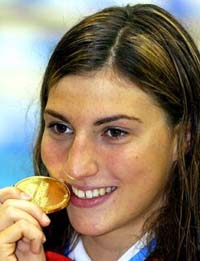
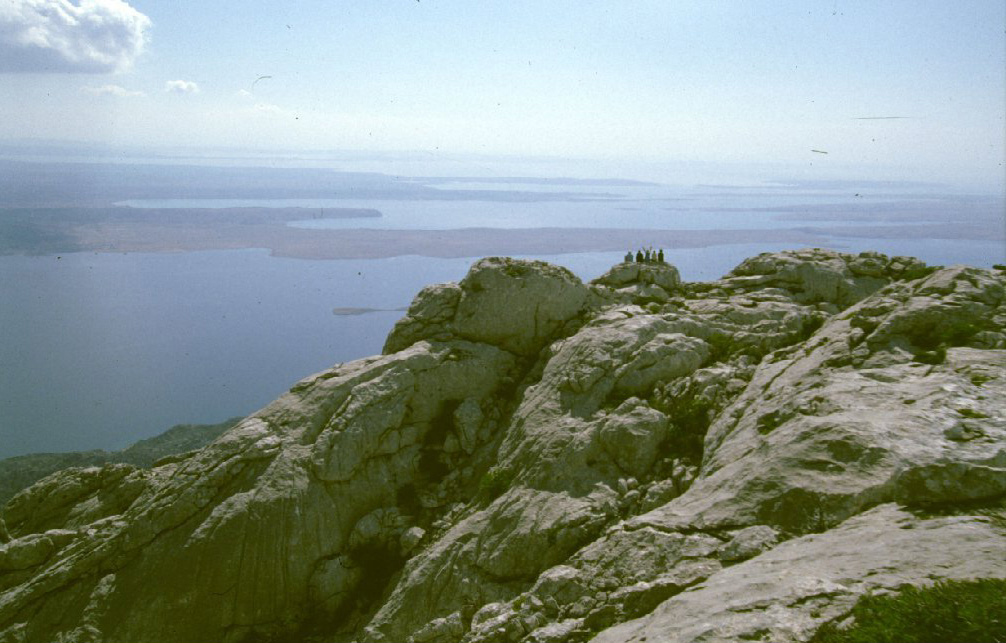 Croatia is the
only country in the world with no mountain above 2,000 meters (though
with probably the most beautiful mountain in Europe - VELEBIT) and with
world's top skier - Janica
Kostelic. She was shining in
women's slalom
in 1999 (being only 17 years old). Her second victory of the season put
her in first place in the World Cup overall standings and strengthened
her lead in the specialty standings. In her historical victory in Serre
Chevalier, France, 5. December 1999, the difference between the first
two was 1.78 seconds, the greatest achieved in the previous 20 years!
Her ardent supporter is Goran Ivanisevic. In March 2001 Janica became
the World Cup Champion in alpine skiing. This is one of greatest
successes in the history of Croatian sport. Upon her arrival to the
Zagreb airport she obtained 1256 roses and custard slices...
Croatia is the
only country in the world with no mountain above 2,000 meters (though
with probably the most beautiful mountain in Europe - VELEBIT) and with
world's top skier - Janica
Kostelic. She was shining in
women's slalom
in 1999 (being only 17 years old). Her second victory of the season put
her in first place in the World Cup overall standings and strengthened
her lead in the specialty standings. In her historical victory in Serre
Chevalier, France, 5. December 1999, the difference between the first
two was 1.78 seconds, the greatest achieved in the previous 20 years!
Her ardent supporter is Goran Ivanisevic. In March 2001 Janica became
the World Cup Champion in alpine skiing. This is one of greatest
successes in the history of Croatian sport. Upon her arrival to the
Zagreb airport she obtained 1256 roses and custard slices...

In 2002, at the Winter Olympic Games held in Salt Lake City in the USA, Janica Kostelic became the first Alpine skier to win as many as four Olympic medals at a single Game: three gold medals and one silver. This was a result of many years of painstaking work undertaken already at her tender age by her father Mr. Ante Kostelic and the whole family. As stated by Mr. Kostelic, this success would not have been possible without free Croatia.
And Janica's brother, Ivica Kostelic, stunned everybody with his win in the 2001 World Cup slalom in Aspen, Colorado, USA, at the age of 22. He skied out of the 64th position in the first run, then was fastest in the second run to win in 1 minute, 38.81 seconds. It was the latest starting position for a slalom winner in World Cup history and third latest in any event. Ivica is also known as the best blues and rock guitarist among skiers, and at the same time the best skier among blues and rock guitarists.
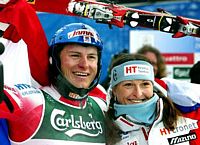
1. Ivica Kostelic, Croatia, 1 minute, 38.81 seconds. 2. Giorgio Rocca, Italy, 1:38.93. 3. Mario Matt, Austria, 1:39.00. 4. Kjetil Andre Aamodt, Norway, 1:39.43. 5. Jure Kosir, Slovania, 1:40.00. 6. Lasse Kjus, Norway, 1:40.03. 7. Michael Von Gruenigen, Switzerland, 1:40.09. 8. Kalle Palander, Finland, 1:40.15. 9. Jean-Pierre Vidal, France, 1:40.17. 10. Alan Perathoner, Italy, 1:40.18.
In 2003 Ivica and Janica Kostelic both won the title of world champions in slalom. They became the first siblings to win gold medals in the same event at the world's.

The life of the family of Kostelic is unique in the history of skiing sport (and may be in the history of sport in general). When Janica and Ivica were very young, they used to travel with their old Lada (Russian car), and also to sleep and eat in the car. At the same time other children stayed in a hotel, sleeping in their warm beds. Kotelic's were sleeping also in a small mountain tent, sometimes at the temperature reaching -20 degrees Celsius. They were not able to pay for their trainings, so they used to wake up at 4 o'clock in the morning, to wash their faces with snow, and train at dawn (free of charge) with their worn up gloves, while others were still sleeping or having breakfast.It is well known that skiing is the sport of the rich. When Kostelic's went back home from Austria, Germany, France or Switzerland, several times it happened to them that they had to sell their skies in order to be able to buy petrol for their Lada... And let us not forget, at that time the Greater Serbian aggression was raging throughout Croatia and Bosnia-Herzegovina (1990-1995). Mr. Ante Kostelic-Gips himself, father of Ivica and Janica, is an amazing Croatian sportsman and trainer, former handball player, working with his children on the long run. He remembers with deep gratitude an Austrian, Mr Willie Arnsteiner, wire-keeper, who donated them 100 Schillings daily during a critical period, and who predicted their great skiing future.
At the age of 15 Janica had 22 consecutive wins at European competitions for children during one season. One day after the death of president Franjo Tudjman, Janica was skiing with mourning black armband. Young Kostelic's were raised in deep patriotism, and their sacrifices will always be remembered. Let us also mention a regular short ritual of Christian crossing immediately before every competition. It is amusing to see how "objective" European TV media strive to avoid this indicative and important detail.
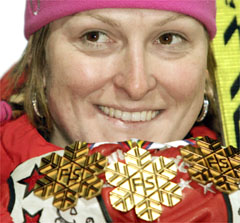
At the very end of 1999 Janica had a tragic fall: four of her ligaments on the knee out of five were broken. After a very difficult operation and reconstruction of her knee, she had a painstaking program of getting back to normal living. She was able not only to walk again, but also to win on European, World, and Olympic competitions in skiing.
The human story of Kostelic's is waiting to be written in all details, with a special emphasis on low blows of "independent" media. This story is much greater than the story about their sport successes. Ivica and Janica, like many others on this web page, would never have appeared without the advent of free Croatia.
Captain Marko Vekarich, Master of the Austro-Hungarian Barque "Isaac", received the following letter from the Government of Canada for saving the shipwrecked crew of Canadian ship "Angle" in the Atlantic (the letter is kept in the town of Orebic, Peljesac peninsula near Dubrovnik):
OFFICIAL SEAL
MARINE OF FISCHERIESOttawa, 12th February 1879
SirHer Majesty's Government having brought under the notice of this Department the circumstances connected with the wrecke of the "Angle" of St. John, New Bruswick, and the services rendered by you, as Master of the "Isaac", to the shipwrecked crew, it affords me much satisfaction to convey to you the thanks of the Government of Canada and to request your acceptance of the accompanying gold watch, which has been awarded in recognition of you human and generous services.
I am, Sir,
your most obediant servant
James C. Voke
Minister of Marine etc.
In 1861 captain Jozo Sunj from Orebic (Peljesac peninsula), Master of the Barque "Nicolo Despot", obtained official recognition and gold chronometer with engraved dedication from Abraham Lincoln, president of the USA, for having saved the crew of the USA sailor "Homer" in the Atlantic.
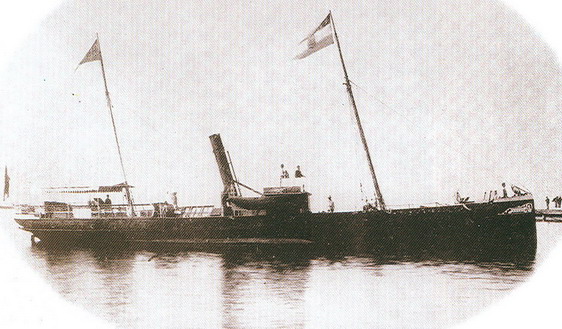
- Thegetthoff Class Dreadnoughts - The Sinking of Viribus Unitis, by Ante Sucur (...The last great victim of the World War I in the Adriatic sea was the admiral ship of the former Austro-Hungarian monarchy, battleship Viribus Unitis (lat. "With united forces" - mott of the emperor Franz Joseph I). She sank without battle, in the middle of Pula Hrbour, with Croatian flag on her mast, not Austro-Hungarian! Her tragic story certainly deserves attention...)
- [Barbalic, Marendic, Onput kad smo partili], zapisi o posljednjim kvarnerskim jedrenjacima, MH Rijeka, 2004.
Croatian mariners in the ARCTIC EXPEDITION in 1872-1874
© by Darko Zubrinic, Zagreb (2000)Many Arctic expeditions in the 19th century ended with shipwrecks. Probably the best known is Franklin's expedition (1845) which had tragic human losses: as many as 120 people died. Twenty expeditions were organized in order to find and save them, but in vain.
The Austrian-Hungarian state, which at that time included also Croatian coast, planned expedition to NE of Novaya Zemlya, and to find the so called North East Passage. This led to the discovery of Franz Josef Land in 1873, a collection of about 85 islands in the Arctic Ocean, now a Russian National Park called Zemlya Franca Iosifa.
The ship named Tegetthoff was built up in the German port Bremen using a special new technology, in order to endure extremely low temperatures and dangerous ice pressure (32 m long, 7 m wide, 220 tons). The crew was composed of 24 persons, members of Austrian-Hungarian marine in the Adriatic sea. It is interesting that the Croats were predominant in the crew. It was composed 9 Austrians, 1 Hungarian, 1 Moravian Czech, 1 Italian (?), and as many as 12 Croats from various parts of Croatian coast (Rijeka, Cres, Bakar, Volosko, Lovran, Plomin, Mali Losinj, Brac, Hvar). The names of these Croatian mariners are:
- Petar Lusina (from the island of Cres),
- Lovro Marolla (from Rijeka),
- Ante Vecerina (from Draga near Rijeka),
- Petar Falesic (from Bakar),
- Juraj Stiglic (from Bakar),
- Jakov Sucic (from Volosko),
- Fran Lettis (from Volosko),
- Vicko Palmic (from Volosko),
- Josip Latkovic (from Plomin),
- Ante Katarinic (from Mali Losinj),
- Ante Lukinovic (from Pucisca on the island of Brac),
- Ante Zaninovic (from Sv. Nedilja on the island of Hvar).
In his diary Julius Payer includes Ante Scarpa from Trieste into Slavonic (Croatian) group, see [Kunicic], p. 40, and according to Kunicic the Croatian crew had 13 members (see p. 2), not 12. Also every Sunday the Croats read parts of Evangel in Croatian (scavet), which belongs to glagolitic tradition, see [Kunicic] p. 38. On Christmas they sang a well known song "U se vrime godista", and remember their customs. The crew had a small library with about 400 books, half of them scientific. And a part of books was in Croatian.
For the complete list of names and other details related to this expedition, see here. There were some objections addressed to Karl Weyprecht, captain of the ship, why he chose so many Croats, instead of Tyrol Austrians. He answered that he counts on endurance, discipline and experience of Croatian mariners, and the fact that they do not drink.
Very important for success of this carefully planned and dangerous expedition was the presence of eight dogs. The expedition led to the discovery of Franz Josef's Land in the Arctic.
In 1872, when the expedition sailed off from the port of Bremen, weather condition and temperature were particularly severe. A result of ice movement was that the sailboat became wedged in the mass of ice for two years! At that time it was not possible to communicate with the rest of the world as it is today. During these two years the crew, although in extremely difficult situation, performed numerous scientific investigations. The preserved log-book testimonies about very serious and well organized everyday life and work. As the ice moved slowly northward, the mountains emerged, that they named Franz Josef's Land. It had been decided to leave the location of the ship, and carry three auxiliary saving ships on sledges, tugged with dogs and people. In dramatic 800 kilometers that they covered mostly on foot under very difficult conditions, they discovered numerous new interesting places. So today we have places like the Cape of Fiume (= the town of Rijeka, on Croatian littoral), and the Cape of Klagenfurt (a town in Austria).
One of participants of this adventure was Eling Carlson from Norway, connoisseur of northern seas. Unfortunately, one member died due to sickness: Oton Kriz from Moravia (today in Czechia). After about two years of stay in the Arctic the ship Thegetthoff was left by the whole crew in the ocean of ice, and 23 people set off back to Europe in three small saving ships. For almost three months people and dogs had to tug boats on sledges, and then during next nine days they had to row until they finally met two russian fishing boats near Novaya Zemlya.
As stated in [Kunicic], p. 122, there is no king in the world that would be accepted with such hospitality and joy as those totally exhausted people were accepted by Russian mariners. It is very probable that Croatian mariners were able to communicate with Russians, since Croatian and Russian languages are relatively close. Among all members of the expedition only Petar Lusina (from the island of Cres) knew Russian. Besides his native Croatian, he also spoke English, French and Italian. Members of the expedition learned many news that have happened in Europe during two and a half years of their expedition. The two boats took them to Vardoe in Norway, for which russian mariners have sacrificed four days of their fishing, plus four days for the return.
Upon successful arrival to Europe, with help of Russian and Norwegian navy, members of expedition reached Hamburg. In Vienna a glorious welcome was organised, and all of them obtained honorary citizenship in Austrian-Hungarian state. A grand "banchetto" was organized in the Croatian town of Volosko near Rijeka. The overall expenses were such that the expedition ended with +17.61 forints, which we know from a very detailed and pedantic final account.
Among numerous financial supporters of this daring exploit was Dora Pejacevic, a Croatian composer.
It is interesting that experiences of this expedition were important in the preparation of Amundsen's expedition to Arctic about 30 years later.
Croatian descent of half of the crew was not even mentioned in the existing literature available in German, English, and Italian. In Croatia itself, the expedition was described by Eugen Kumicic.
It also worth mentioning that in 1882, as a part of the First International Geophysical Year, another very ambitious and successful expedition had been organized to the region of Greenland (in the part which is north of Island). Also in this case, in the crew composed of 12 half of them were Croats. Their names are
Ivan Samanic, Josip Baretincic, Anton Mikacic, Anton Lukinovic, Jakov Succic, Tomas Diminich. For the remaining names of the crew and other details see here.
References:
- Das Tagebuch des Maschinisten Otto Krisch Österreichisch-Ungarische Nordpolexpedition von 1872 bis 1874 Hrsg.: Egon Reichhardt (Leykam Verlag 1973) [Payer & Weyprecht]
- Die Österreich-Ungarische Nordpol Expedition In den Jahren 1869-1874 Julius Payer (A.Hölder,Wien 1876 )
- FRANZ-JOSEFS-LAND -.-: ÖSTERREICHISCHE NATIONALBIBLIOTHEK: 100 Jahre Franz-Josefs-Land. Zur Erinnerung an die Entdeckungsreise der Österreichisch-Ungarischen Nordpol-Expedition 1872-1874 unter Julius von Payer und Carl Weyprecht. Katalog der Ausstellung 1973. Mit 24 Taf. Wien, o.V., 1973. Okart., g.e. XII, 128 pp.
- Austro-Hungarian North Pole Expedition 1872-74 (Franz Josef's Land)
- Petar Kunicic, Hrvati na Ledenom moru, putovanje po sjeveru s hrvatskim mornarima, po izvjescu Julija Payera (pretisak iz 1893.g.), Dom & Svijet, Zagreb, 1994. (Petar Kunicic was a teacher on the island of Vis)
Croatian soldiers served in many European armies since the seventeenth century. So in the French army in the 17th century, during the reign of Louis XIII, there was a cavalry composed exclusively of the Croats, called Royal - Cravate, which existed in the period of 1664-1789. These soldiers gave the world something that is today unavoidable in fashion: the tie, called la cravate by the French and by the Germans die Krawatte - the expression was coined from the Croatian name, and mentioned for the first time in 1651. The name entered also
- the Italian language - Cravatta
- Spanish - Corbata
- Portugese - Gravata
- Croatian - Kravata
- Irish - Carabhat
- English - Cravat
- Swedish - Kravatt
- Finnish - Kravatti
- Flemish - Krawaat
- Polish - Krawat
- Ukrainian - Kravatka
- Romanian - Cravata
and many other. So when you wear a tie, remember its Croatian origin.
A part of Vienna, capital of Austria, at Spittelberg (7. Bezirk), was since 1609 known as Krawattendörfl or Krowottendörfl, according to different Austrian dialects. It is insteresting that Austrian general Isolano, (Johann Ludwig Hektor Isolano, 17th century), had three houses there, and his troups were composed of Croats that brought the cravate to the world. Many thanks to Mr. Mijo Juric, Vienna, for this information.
It is interesting that the Croatian town of Slavonski Brod on river Sava appears on a map of the Habsburg Empire from 1697 with its center indicated as Cravatten Statt. The map was prepared by Nikola Sparr de Bensdorf from the Netherlands, and is kept in the Military Archives in Vienna.
Baron Trenck (1711-1749) was probably the most famous Croatian soldier who took part in the war of the Austrian Succession. He was the head of a regiment of Pandours recruited largely in Slavonia. His Memoirs of the Illustrous Francis Bacon Trenck were first printed in German and then translated into English (London, 1747).
www.hr/darko/etf/et22.html#address
Humanitarian activity
An amazing anti-war, pacifist sermon was given in 1778 by an anonymous Croatian preacher to Croatian soldiers, immediately before the battle between Austrian and Prussian troups in Bohemia: At that time majority of soldiers for Austrian army were recruited from Croats (that's how the necktie, ie., Cravate, had spread throughout the world): out of 80-100,000 Austrian soldiers, about 60,000 were Croats. While the Croatian original of this remarkable sermon is still unknown, that same year eight translations were published in German, Dutch and Swedish, and in Latvian in 1804:
- German: one edition from 1778;
- Dutch: three editions from 1778, published in the Hague (!), Amsterdam, and Leeuwarden;
- Swedish: 1778 edition in Norrköping, 1779 edition in Stockholm;
- Latvian: Riga - Leipzig 1804, reprint of Latvian and German translations in Riga 1804, Latvian translation in Jelgawa in 1805.
|
|
Here are title pages of Dutch and German 1778 editions:
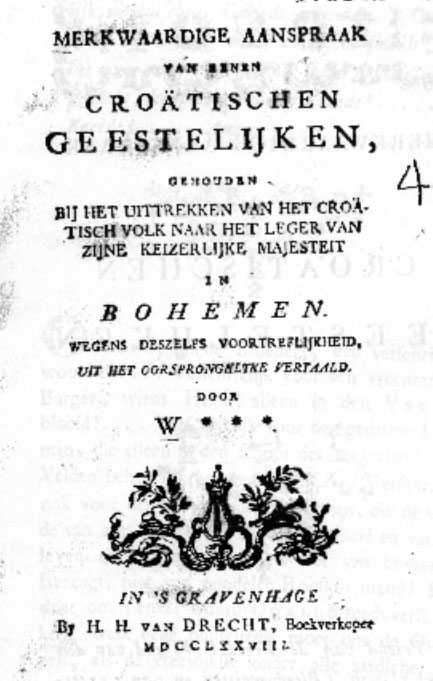
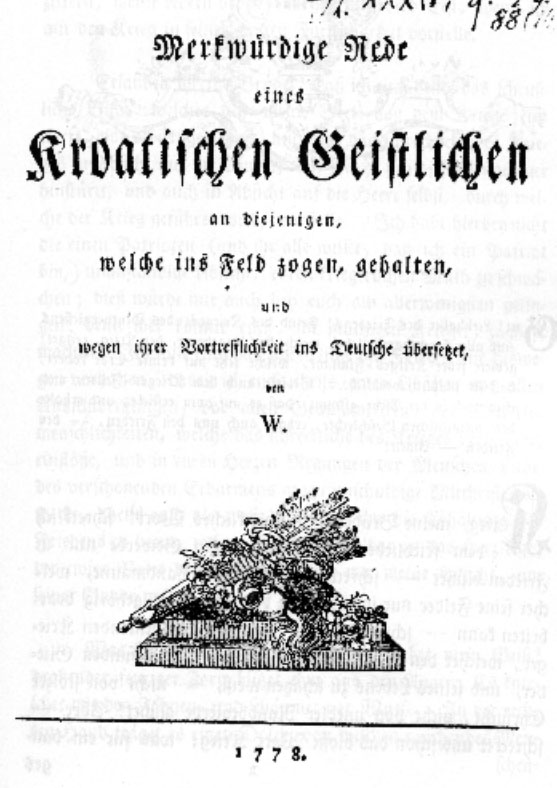
The German 1778 translation was retranslated back to Croatian language in Arapovic's monograph in 1999, where you can find also its English translation. It is very probable that the text was published in some other west-European languages as well. Note that this universal message of peace, religious tolerance and patriotism was translated in enemy countries (with respect to Austria), that were a part of Protestant Christianity.
Reference: Borislav
Arapovic, Hrvatski mirospis
1778,
Matica hrvatska, Mostar, 1999, ISBN 9958-9448-2-0
Dr. Borislav Arapovic
is a honorary director of
Biblical institute in Stockholm, Sweden. Born in Bisine, Bosnia and Herzegovina,
in 1935, studied in
Zagreb, emigrated in 1965 to Sweden due to political reasons, in
Stockholm obtained his Ph.D. In 1973 he founded The
Institute for
Translation of The Bible into Languages of (former) Soviet Union.
In 1996 the Russian Academy of Sciences conferred him a doctorate
honoris causa. In 1999 he was elected foreign member of the Russian
Academy of Sciences.
Borislav Arapovic discovered two interesting texts related to Croatian military, both written originally in the Croatian language, but only their German translations are known:
- Kurze Anrede (A Short Address), Vienna 1779, 10 pages, containing Ivan Vukasovic's address to Croatian soldiers. The full title is A Short Address to the children of his parish made by Mr. Ivan von Vukasovic, Catholic parish priest in the town of Otocac in Croatia, on 3 January 1779, when following the end of the first campaign they returned home on leave and in their principal parish church raised a captured Prussian flag which had most graciously been presented to them. Translated from the Croatian language into German.
- Die Hemkunft der Kroaten (The Return of the Croatas), poem of an anonymous author, Vienna 1779. It is probably related to the town of Krizevci on the north of Croatia, and contains 37 stanzas of four verses each.
www.hr/darko/etf/et22.html#pale
Humanitarian activity of the International Fund Hungry Child is world-wide known. Its founder (1969 in Zagreb) and the Secretary General was Vladimir Palecek (1940-1990). Only in the period from 1969 to 1979 humanitarian aid (medicaments, food, clothing, ambulances, money) has been sent to:
Many individuals (painters, musicians etc.) and companies (especially food producing and transport companies) in Croatia contributed to the activity of the International Fund Hungry Child. Vladimir Palecek also founded and was the Secretary General of the International Committee for the Protection of Unborn Children (1986 in Vienna) and the International Mission for Science and Peace (1988 in Geneva).
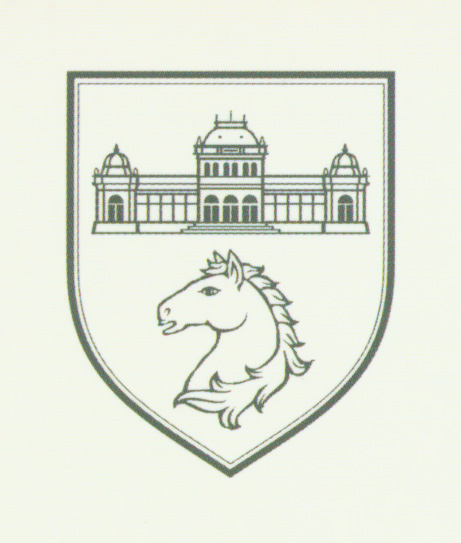 The Lipik
Children's home was the first object to be destroyed by Serbian forces
in 19 August 1991. The shelling of the city of Lipik and Pakrac started
at 05.30 with the shelling of orphanage, which had 80 children, aged
between 3 and 16, sleeping at the time. They took refuge in a cellar
for 7 days until they could be evacuated. The orphanage consisted of
three buildings, including kitchen and dining room, classrooms and
recreation rooms, and all were badly damaged and gutted by fire.
The Lipik
Children's home was the first object to be destroyed by Serbian forces
in 19 August 1991. The shelling of the city of Lipik and Pakrac started
at 05.30 with the shelling of orphanage, which had 80 children, aged
between 3 and 16, sleeping at the time. They took refuge in a cellar
for 7 days until they could be evacuated. The orphanage consisted of
three buildings, including kitchen and dining room, classrooms and
recreation rooms, and all were badly damaged and gutted by fire.
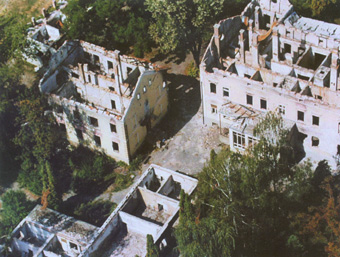
In October 1991 the largest Lipizzaner horse-farm in Croatia, situated near the town of Lipik, was bombed with napalm bombs.
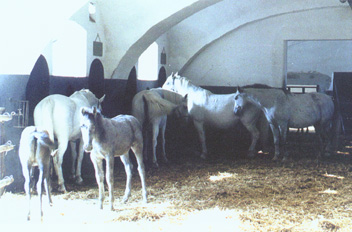
It is interesting that the first railway-track from Lipik to Vienna was built in 1861 by Henry D'Heureux - Gibel, a French enterprise dealing with exploitation of oak trees. Already in 1894 the town was electrified. In 1866 Lipik had 228 inhabitants: 222 Roman Catholics, 3 Pravoslavs, and 3 Jews.
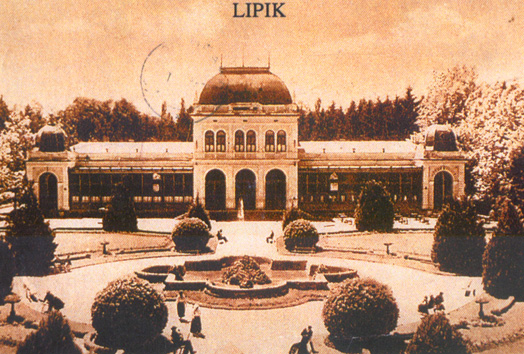
The town of Lipik is known for its very rich Recreation and Health Center, built already in the 19th century. It had
- baths with thermal mineral water, mineral water supply (300,000 liters per year),
- concert and congress hall, dancing hall,
- exceptionally cultivated park area,
- olympic swimming pool,
- cultural object (Kursalon) of zero category (neo renaissance object built in 1893 according to a project of Gustav Rath, architect from Budapest),
- hotel (four stars), hospital with hydrotherapeutic facilities,
- a small artificial lake with an island,
- tennis playgrounds,
- private villas in secession style, etc.
All of this was either destroyed or seriously damaged during Serbian shelling and bombing (including napalm bombs) in 1991.
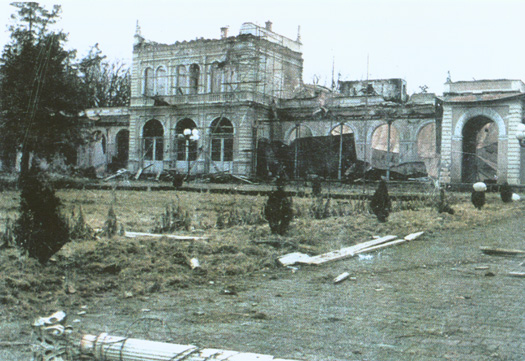
president Adolf SCHARF - 1957/65, 2 dolls
president Dr. Kurt WALDHEIM - 1986/92, 1 doll

I met Mr. Ljeposlav Perinic in the summer 1999 in Zagreb, after his friendly telephone call related to the famous Croatian Glagolitic Texte du Sacre in France. I learned an unusual story about his unique collection of more than 350 dolls in national costumes from over 120 countries, from all five continents. His invaluable collection contains dolls that he obtained as gifts from dignitaries, Kings, Queens, Emperors, Empresses, Presidents, First Ladies, Prime Ministers, Governors, etc. Among them are Pope Paul VI (the Vatican), Indira Gandhi (India), Carlos Menem (Argentina), G.A. Naser (Egypt), Grace Kelly (Monaco), Haile Selassie (Ethiopia), Farrah Diba Pahlavi - the First Lady of Iran, Benazir Bhutto (Pakistan), Konrad Adenauer (Germany), Queen Sofia of Spain, Mao Tse Tung (China), Dalai Lama (Tibet in China), Enver Hoxha (Albania), Moise Chombe (Kongo), then
(Nepal), Franjo Tudjman (Croatia), and many others.
How did he collect his dolls? Well, he simply wrote, and asked for dolls in national costumes. However, the story has deeper roots.
...
The international exhibition EXPO '67 held in Montreal in Canada had also a small pavilion full of dolls. It was Mr. Perinic's pavillion where he exhibited his collection, unofficially called Croatian pavilion (it was also the sole exhibit of Argentina). He had numerous charitable exhibitions of his dolls, mainly for UNICEF children's program. As an example, one of exhibitions of his dolls was organized in order to help children in Argentina suffering from leprosy. On another exhibition of dolls, funds gathered in this way sufficed to build a house in the children's village in Garin, in the vicinity of Buenos Aires, directed by S.O.S. OPROVI Argentina. Here S.O.S. Children's Village is a well known charitable international organization, founded by Hermann Gmeiner in 1949 in Austria. It is interesting that the building was named - CROACIA.
Kaiser
und König
Franz Joseph I
Emperor of Austria, ..., King of Croatia,...
(1830-1916)
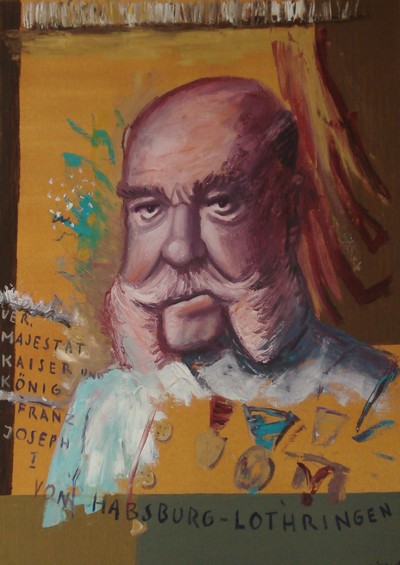
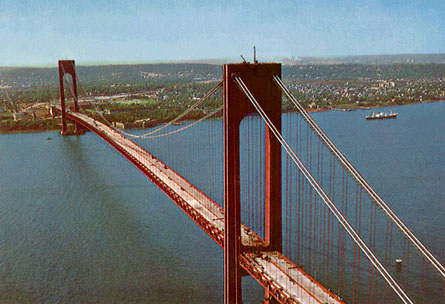
![[1]](../gif/berlin1.jpg)
![[2]](../gif/berlin2.jpg)
![[3]](../gif/berlin3.jpg)
![[4]](../gif/berlin4.jpg)
![[5]](../gif/berlin5.jpg)
![[6]](../gif/berlin7.jpg)
![[7]](../gif/berlin8.jpg)
![[8]](../gif/berlin9.jpg)
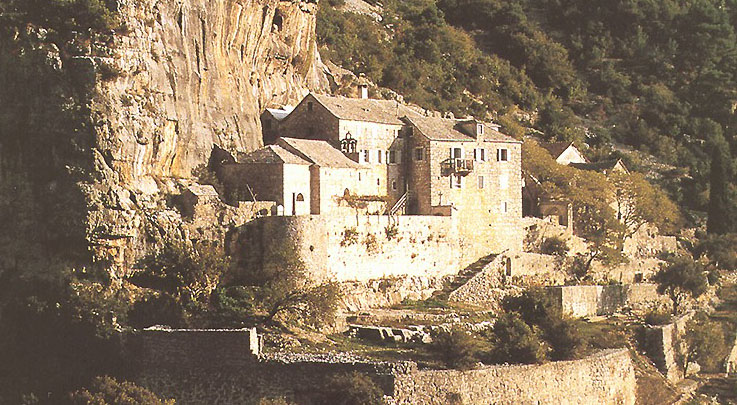
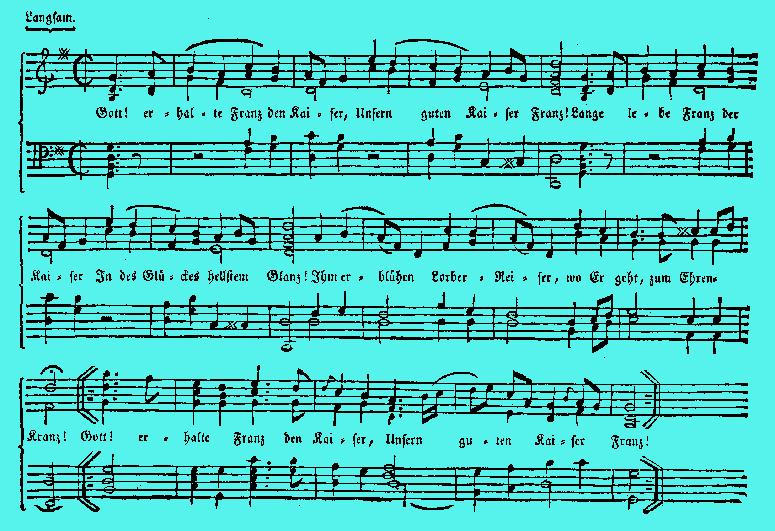
...after enjoying some wine from Croatian south,
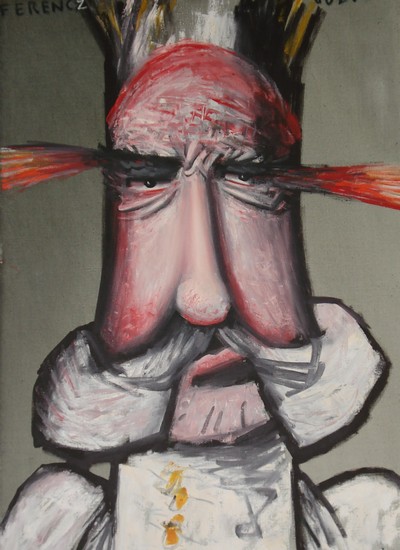
...and
after enjoying some very hot dishes from
Croatian north.
|
These two lovely portraits have been made around 2001 by Antun-Boris Svaljek, Croatian painter. They adorn Villa Astra in the town of Lovran, Croatia, belonging to Lovranske vile Ltd, directed by Mr. Vjeko Martinko. In 2006 The Guardian announced ten best places to stay in Croatia, with Lovranske Vile on the first place. Many thanks to Mr. Vjeko Martinko for permission to use the photos. |
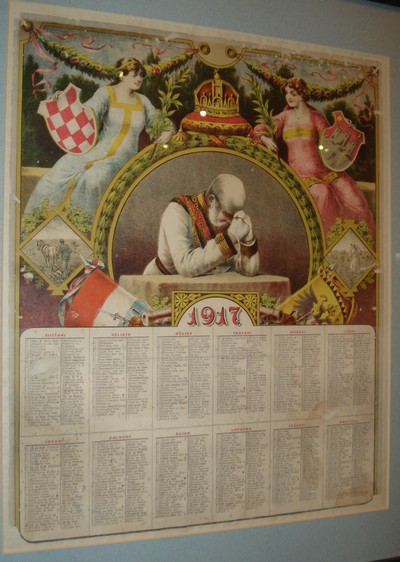
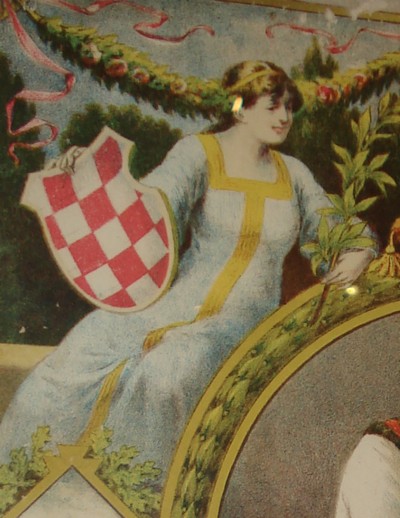
Calendar from 1917 with nice Croatian Coats of Arms, kept in the City Museum of Zagreb.
Croatia - Australia
Croatia - Japan Croatia - South America