JAPAN - CROATIA,
JEWELS
Darko Žubrinić, Zagreb, 2005
If we measure the quality (and popularity) of haiku poetry by a number of international prizes, then Croatia can be ranked very high: immediately after Japan and the USA (1993, 1995). This is due to continuous efforts and enthusiasm of Vladimir Devidé (1925-2010), a well known Croatian mathematician and japanologist. He obtained a prestigeous Japanese "Order of Sacred Treasure'' - Konsanto Zuihosho.
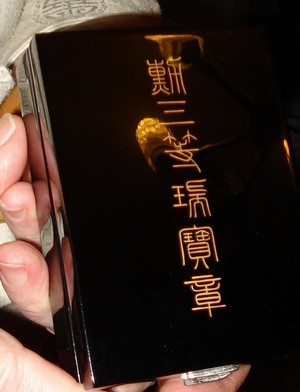
Order of the Sacred Treasure - Konsantõ Zuihôshõ, which Vladimir Devidé received from the Japanese Government in 1983
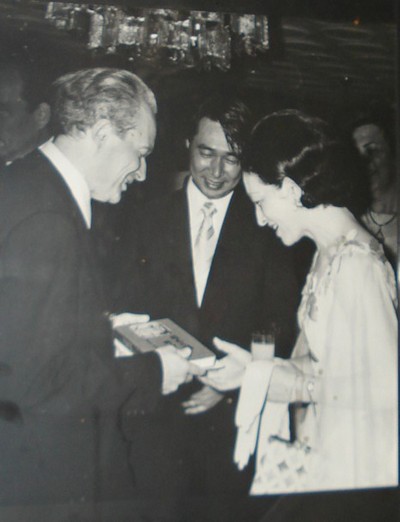
Japanese Princess Michiko, wife of Crown Prince Akihito (in 1989 they became Empress and Emperor of Japan), receiving a gift from professor Vladimir Devidé in Cavtat near Dubrovnik, June 12th, 1976. The gift was his book Japanska haiku poezija i njen kulturno-povijesni okvir (Japanese Haiku Poetry and its Cultural and Historical Framework), issued in Zagreb in 1976, published in Croatian.
Here is his haiku related to the aggression on Croatia written in 1991:
A
small pool of blood -
Chilled in air raid:
little girl and her huge doll
In
the burned-out village
a wounded stray dog
sniffing charred bones
The first competition in Croatia in haiku poetry among primary school children was organized in 1986, on the occasion of the grand exhibition Kyoto - svijet kulture (Kyoto - World of Culture) in Zagreb. About 500 children throughout Croatia participated. Kyoto and Zagreb are sister cities since 1972.
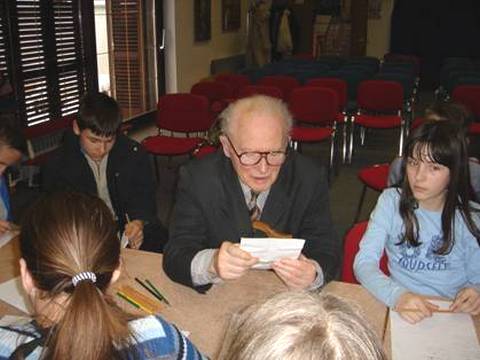
Academician Vladimir Devide discussing and reading haiku with
childrenin Croatia
2nd Vladimir Devidé Haiku Award - Open Haiku Competition - deadline March 1, 2012
Nikola Tesla
(1856-1943) defended his patents in 24 countries. One of his patents
were defended in Japan in 1912.
It seems that a well known tune "U boj, u boj" from the opera Nikola Subic Zrinski by Ivan Zajc is taught in Japanese schools. Information by Mr. Nenad Bach, New York. Professor Vladimir Devidé, japanologist from Zagreb, considers this very probable: he remembered a very young boy walking on a Tokyo street Komaba, wearing a huge rucksack filled with books, and whistling the familiar melody - "U boj, u boj"! (personal information, 2004).
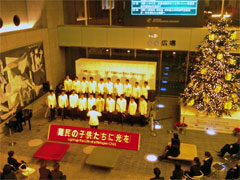
December 8, 2007, Tokyo, OAZO, Waseda University Glee Club singing U BOJ, U BOJ at the charity concert for refugee children. Source durianjp.com.jp
The web page "U boj, u boj" has been prepared for Japanese readers, with historical account, where you can listen to the tune performed by Japanese choire singing in Croatian! (Provided by Kwansei Gakuin Glee Club).
Listen to U BOJ, U BOJ (6MB), sung by Japanese choir in Croatian
U boj! Kwansei-Gakuin Choir in Zagreb, Croatia, 11th September 2014.
Los
Angeles Men's Glee Club sings U
Boj!
at Croatian Cultural
Extravaganza, Warner Grand
Theatre, San Pedro, California, USA
"L.A. Men's Glee Club" has a website: www.laglee.org. Many thanks to Ms Heidi Granic, director of St Anthony's Tamburica & Kolo Club Croatia in Los Angeles, and to Nenad Bach.
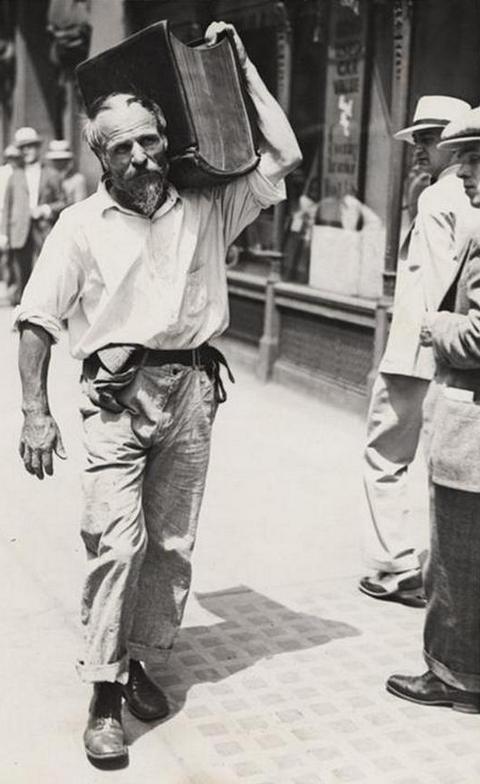
Josip Mikulec, Croatian Globe Trotter, walked through Japan, China, India, South America, etc., collecting signatures of famous people in his huge book.
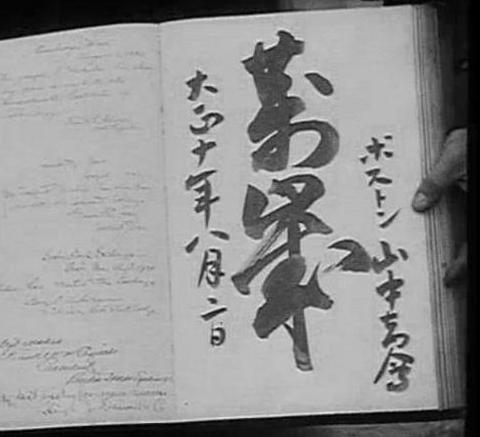
On the right, in Japanese:
The tenth year of DAZHENG (this is a way to count in Japan in one
dynasty, and the related year is 1921).
Information by the courtesy of Ms Wang Mu from the Croatian
program of Chinese Radio International.
It is interesting and little known that in Japan there exist two recordings of Vlaho Paljetak's well known song Marijana - in the Japanese language! I had opportunity to listen them on two records issued in Japan, when I visited Mr. Mario Kinel in his appartment in Zagreb (Mr. Kinel was a well known pop-music composer and translator; he even translated Vu plavem trnaci into Italian and German). Of course, out of Japanese verses I understood only - Marijana.
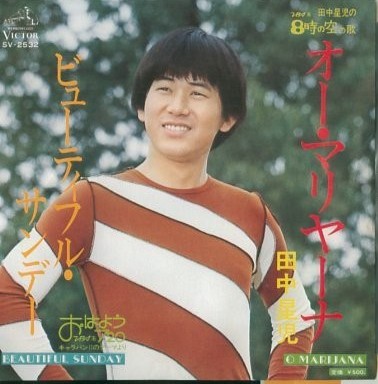
O Marijana (see bottom on the right), issued in Japan in 1976, sung by Seiji Tanaka, Japanese pop singer born in 1947.
Marijana is also very popular in Czechia. It was included in both Croatian original and Czech translation into the book "Svetove Evergreeny" (World's Evergreens), published in Prague in 2000 (Petr Jansky - MUSIC CHEB).
We invite you to listen to Vlaho Paljetak's tune O, MARIJANA, sung by Seiji Tanaka in Japanese and Croatian, recorded in 1976:
|
O
MARIJANA [mp3]
3.6 MB
|
By the courtesy of Dr. Drago Štambuk, Croatian ambassador in Tokyo.
 |
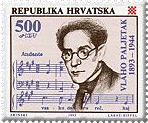 |
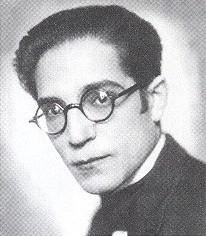
Vlaho Paljetak (1893-1944), born in Dubrovnik, on the photo and on the stamp. His Marijana is sung not only in Croatia, but also in Japan.
Izumi Yamaguchi, Japanese pop and jazz singer, surprized us all with her beautiful interpretation of a popular Croatian song Četiri staðuna (Four Seasons), which she sings in Croatian language. The song is orginally performed by Meri Cetinić, composed by Zdenko Runjić, and the accompaning text written by Tomislav Zuppa. See also the CROWN.
Izumi Yamaguchi i Meri Cetinić - Četiri staðuna (LIVE, HNK Split)
www.dubrovniknet.hr - Izumi Yamaguchi i "Linðo"
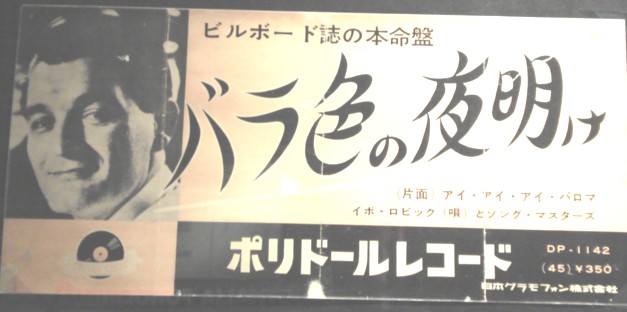
Ivo Robic (1923-2000), a famous Croatian pop singer, in Japan
RADOJKA ŠVERKO
- Let My Heart Keep Singing (WPSF1976 TOKYO,
Japan)
Radojka Šverko, the great Croatian singer, and the song LET
MY HEART KEEP SINGING, which she preformed at the WORLD POPULAR SONG
FESTIVAL 1976 in TOKYO. This is a video from a Croatian TV SHOW.
Lovro von Matacic, one of the greatest conductors of the 20th century (1899-1985), started his career in 1919 as conductor of orchestras in Osijek, Novi Sad, Ljubljana, Belgrade, Riga, and in Zagreb in 1932. From 1942-1945 he was conductor of the Vienna Opera.
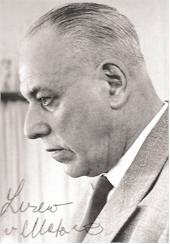
After 1945 he was imprisoned by the Yugoslav communist regime, and together with Croatian poet Tin Ujevic and painter Kristian Krekovic sentenced to confiscation of all movable and immovable property.
In 1950's he became organizer of Festivals in Dubrovnik and Split. In 1956 Matacic moved to Germany to conduct East Berlin Opera and the famous Dresden Staatskapelle, then conducted at Bayreuth in 1959, and from 1961 to 1966 was Gereralmuikdirektor in Frakfurt. He was also guest conductor in Vienna Opera, Milan Scala, in Chicago, Naples, Palermo, Rome, London, Cleveland, Tokyo, Prague, etc., and was elected the honorary director of the Japanese Orchestra in Tokyo.
From 1970 to 1980 he was conductor and artistic director of the Zagreb Philharmonic Orchestra, and almost simultanesously from 1973 to 1979 had the same role in the Monte Carlo Orchestra.
Miroslav Miletic, viola player, founded the Pro Arte string quartet in Zagreb, which in 1970's was among 10 best string quartets in the world. Among his numerous students was Hiroshi Hirano, violist from Japan (Tokyo). As a composer he promoted Croatian folklore and church music (in particular from the island of Hvar). He considers the Croatian folklore music the most beautiful and the richest in the world. In 1975, accompanied by the Leningrad philharmony, he played his Viola concert. Maestro Miletic collaborated also with K. Stockhausen on electronic music. He has his works published at Schott, Berben, Meckverlag, Pizzicatto etc, and an LP issued in the USA.
Distinguished Japanese conductor Kazushi Ono was the Chief Conductor of the Zagreb Philharmonic Orchestra during six years, from 1990 to 1996. This was one of the most difficult periods of Croatia's past. When he arrived to Zagreb in 1990, he was at the age of 30.
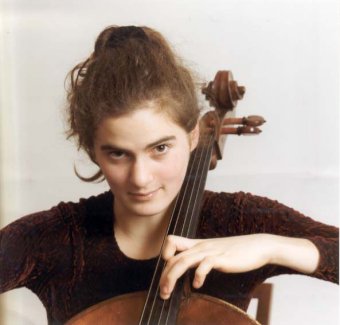
Croatian violoncellist Monika Leskovar (1981) is winner of the prestigeous Tchaikovsky competition in Japan for 1995 (a student of maestro Valter Despalj), the third prize at the 1997 Rostropovic competition in Paris, the second prize at the 1998 Eurovision contest for young instrumentalists, winner of the 1999 Roberto Caruana competition in Milano, Italy, the second prize at the famous ARD competition in 2001.

Nenad Bach's work and his life story have been featured on all the major US TV networks (CBS, ABC, NBC), on CNN, on Sky Channel, and on TV channels in Russia, France, Germany, Italy, Great Britain, Spain, Japan, and many other countries.
Dragutin Šurbek is a famous Croatian ping-pong player, who had many encounters with Japanese table tenis players, among them with the legendary I. Ogimura. One of those who knew him in person was another legendary Croatian ping-pong player (and the university professor of biochemistry), dr. Žarko Dolinar. See the photos below from the invitation of dr. on the occasion of his 80th birthday, dedicated to the memory of I. Ogimura.
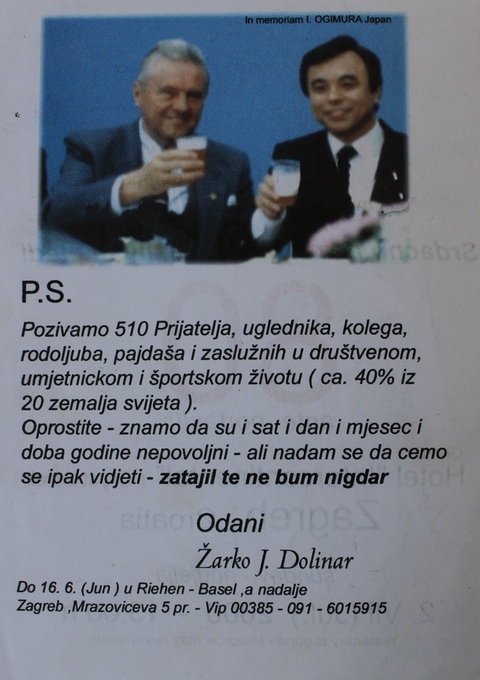
In memoriam I. Ogimura. Photo by the courtesy of Mr. Dragutin
Šurbek.
Among Croatian Latinists and writers in Croatian a central place is occupied by Marko Marulic, who is the "father of Croatian literature" (born in Split, 1450-1524). He was the most famous spiritual writer of his time in Europe, and also the first who defined and used the notion of `psychology', which is today in current use.
His book De institutione bene vivendi (six volumes, 64 chapters), published in Venice in 1506, had fifteen editions until 1686 and was translated from Latin into
- Italian,
- German (five editions between 1583 and 1614, all in Köln, in parts already in 1568),
- French (7 editions, the first in 1585),
- Japanese (in Nagasaki, in parts, 1585) ,
- Portuguese and Czech,
altogether 40 editions.
It is well known that St. Francis Xaver had taken only two books on his long pilgrimage to the East (India, Japan and China): the Bible and De institutione. Furthermore, in his testament St. Francis Xaver asked that Marulic's book be burried with him. Therefore we may conclude that Marulic was a spiritual father of St. Francis Xaver.
St. Francis Xaver's personal sample of Marulic's book was kept in Madrid in a collection of valuables until 1937, when it had dissapeared. St. Ignazio Loyola included De Insitutione into the list of basic references for the formation of Jesuits.
Marulic left us many beautiful verses and the epic poem Judita written in the Croatian language, for which he sais expressly to be written in the Croatian verses (versi harvatski). Some of his original verses are held in Glasgow (GB). His Judith was translated into English, Hungarian, French, Italian, and some parts into Spanish. Marulic translated from Latin into Croatian the famous "De imitatione Christi" by Thoma de Kempis.
The original Marulic's manuscript of "De institutione bene vivendi" has been stolen from the Croatian National Library in Zagreb around 1980. Any information about this would be appreciated.
According to investigations of a French specialist Charles Béné, Marulic's texts have been used extensively by Thomas More and Henry VIII. It is known that Marulic's "Evangelistarium" that was read by Henry VIII bears many comments by the King. It is considered that two of the king's three literary works were written under the influence of Marko Marulic. Marulic's poem "Carmen de Doctrina Domini Nostri Jesu Christi pendentis in cruce" was translated into English as "A Dialogue betwext a Christian and Christ hanging on the Crosse" by Philip Howard, Earl of Arundel (1557-1595).
According to C. Verdiani, Marulic is also the author of the Florence Codex, which contains a biography of St Jerome written in the Croatian language. There he wrote St Jerome is our Dalmatian, a glory, honour and fame, and brilliant crown of the Croatian language. In Croatian: Jerolim je nass Dalmatin, on je dika, posstenje i slava i svitla kruna hrvatskoga jezika. It is worth mentioning that preserved manuscripts of Marko Marulic show that he also used the cursive glagolitic script. Marko Marulic sent a dramatic letter to the Pope Hadrian VI, describing an extremely tragic position of the Croats threatened by the onslaughts of the Ottoman Empire and asking for help. His books were known not only in the whole of Europe, but also in Japan (in the 16th century) and South America. For example, parts of De institutione bene vivendi were translated into Japanese already in 1585, published in parts in Nagasaki under the title Sanctos no gosayuno, see Franolic (he mentions 1595 instead of 1585).
When St. Francis Xaver arrived to Kogoshima in Japan in 1549, he also brought Marulic's "De insitutione bene vivendi". According to bishop Hamao from Yokohama, president of Japanese Bishop's Conference and of Asian Caritas, the formation of earliest Japanese Christians had been very probably based on the spirituality of Marulic. See here (in Croatian).
It is interesting that in Berlin a monument of Marko Marulic was set up in 2000. In the Library of Congress, Washington, a symposium was held devoted to his work.
IT WOULD BE OF GREAT INTEREST TO HAVE A PHOTO OF THE FRONT PAGE OF MARULIC'S BOOK PUBLISHED IN JAPAN IN 1585.
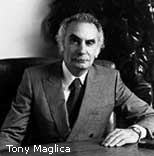 Anthony
Maglica,
holder of hundreds of patents and trademarks, founded Mag Instrument,
Inc, in Los Angeles in 1955, and designed Mag-Lite flashlight, which is
now an American product icon, among 100 top products that "America
makes best". The Maglite products have been honoured by the Japan
Institute of Design and the
Museum for Applied Art in Germany. Mag Instrument donated thousands of
flashlights to aid in the rescue efforts at the World Trade Center and
Pentagon in 2001. Born in New York, and as a child raised in Croatia,
Tony Maglica has plenty of other interests which include also Zlarin,
Croatia, where he grew up.
Anthony
Maglica,
holder of hundreds of patents and trademarks, founded Mag Instrument,
Inc, in Los Angeles in 1955, and designed Mag-Lite flashlight, which is
now an American product icon, among 100 top products that "America
makes best". The Maglite products have been honoured by the Japan
Institute of Design and the
Museum for Applied Art in Germany. Mag Instrument donated thousands of
flashlights to aid in the rescue efforts at the World Trade Center and
Pentagon in 2001. Born in New York, and as a child raised in Croatia,
Tony Maglica has plenty of other interests which include also Zlarin,
Croatia, where he grew up.

The SUVAG center for voice transmission for reeducation of speach disorders and deafness has been founded in Zagreb in 1961 by Academician Petar Guberina (1913-2005). The name of SUVAG is coined from Systeme Universel Verbotonal d'Audition Guberina.
His books were translated into many languages, including Arabic and Japanese. In France, he was awarded the Legion of Honour: Knighthood in 1968, the Officer's Cross in 1989, which he was awarded in main quadrangle of the Sorbonne in Paris.
崔, 春福, 吉田, 光演
CUI Chun-Fu, YOSHIDA Mitsunobu
Teaching of Japanese Compound Word Accent for Chinese Native Speakers : Effects of the Verbotonal Method with Reference to Japanese Learning
Accent errors of Chinese speakers learning Japanese are caused by various factors: negative interference of L1, transfer in language training, overgeneralization, etc. Among others, different functions of tonal accents between Chinese and Japanese are a major source of the errors. Chinese four tonal accents, which are constant at the phrasal level, have the distinctive functions of identifying the meaning of words with the same phonemic representation. On the other hand, Japanese accents have not only this distinctive function but also the syntactic one: Japanese accents delimit the boundary of a syntactic phrase or a compound word so that they vary from context to context (only one low-high pitch in a compound). Due to this difference, Chinese learners tend to pronounce each minimal word with separate accent patterns. Even advanced learners sometimes produce wrong accent patterns since they are not explicitly taught compound word accent rules. Therefore, a more effective instruction for the prosody in Japanese should be developed. In this paper, we investigate a teaching method of Japanese compound accents in terms of the Verbotonal method (VT) advocated by Petar Guberina. The VT method uses the body movement in language learning focusing on the global sound-meaning structure and the context in which phonetic, rhythmic and intonational outputs are evaluated. Based on previous studies of the VT method in Japanese teaching, we designed an experiment to evaluate effects of an explicit instruction of Japanese compound accents.
Source Hiroshima University
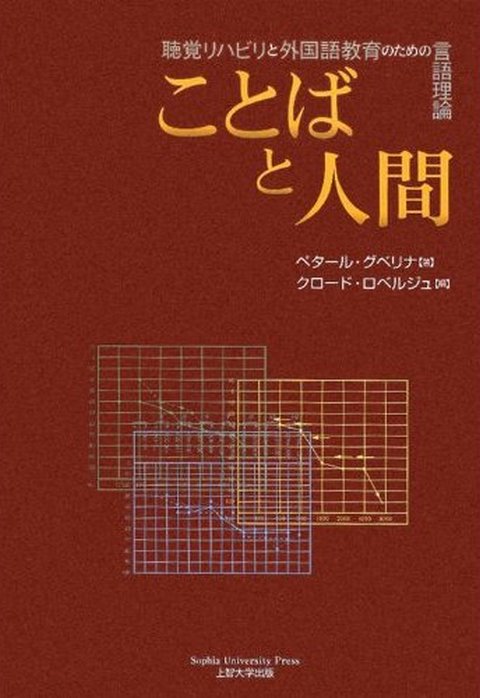
内 容紹介
言語・聴覚障がいのリハビリや、 外国語の習得に利用される音声指導法(VT法)を確立した、 ぺタール・グベリナの論文集! ◆フランス語、クロアチア語、スペイン語版に続き、関係者待望の日本語版の刊行です。 ◆VT法を日本に初めて紹介した、クロード・ロベルジュ(上智大学名誉教授)による編集。 ◆特別支援学校や病院、福祉関連の学校のほか、外国語学習の教育現場などにおすすめの一冊です。 VT法(ヴェルボトナル法) …言調聴覚法に基づいた音声指導法で、言語を習得する際に聴覚だけに頼るのではなく、 言葉の持つリズムやイントネーションを大切にし、 視覚・触覚など他の感覚を活用しながら言語を習得することに重点をおいた指導法。
著 者について
【著者】 ぺタール・グベリナ /1913年クロアチア生まれ。ザグレブ大学文学・芸術学部の教授を務め、1954年音声学研究所を設立。 のちに、「全体構造視聴覚法」(SGAV)を確立。2005年逝去。 【編者】 クロード・ロベルジュ /上智大学名誉教授。 【監修者・訳者】 小川裕花/上智大学、福岡大学講師などをへて、現在はロベルジュ教授助手。 北代美和子/翻訳家。日本文芸家協会会員。日本通訳翻訳学会会員。 佐野彩/一橋大学大学院言語社会研究科博士後期課程、NPO法人地球ことば村・世界言語博物館運営委員。 佐野純三/上智大学外国語学部フランス語学科卒業。元 株式会社ソニー・放送メディア 代表取締役社長。 寺尾いづみ/麻布大学・敬愛大学非常勤講師、首都大学東京オープンユニバーシティ講師。 常盤僚子/2008年より東京日仏学院で専任講師。 西田俊明/東京理科大学講師、暁星学園教諭などをへて同学園講師。 西沼行博/フランス国立科学研究センター音声言語研究所研究員。 原田早苗/上智大学外国語学部教授。 福山孝子/鹿児島純心女子短期大学教授。 南舘英孝/上智大学名誉教授。
Description:
Followed the established method of teaching voice to be used, and rehabilitation of hearing-impaired, language, the learning of a foreign language (law VT),! ◆ French Proceedings of Petar Guberina, Croatian, in Spanish, the long-awaited those involved. This is the Japanese version of the publication. ◆ Act was first introduced to Japan VT, edited by (Professor Emeritus, Sophia University) Claude Roberge. ◆ special needs schools and hospitals as well as schools, welfare-related, one is a book recommended for learning a foreign language, such as education. In the method of teaching voice based law VT Law auditory tone language ... (law Vu~erubotonaru), rather than rely solely on hearing when you learn a language, to cherish the intonation and rhythm with the words, other senses such as touch, vision method of teaching that focuses on learning the language while leveraging.
About the Author
Born in Croatia Petar Guberina / 1913 Area [author]. Professor of the University of Zagreb Faculty of Arts and Literature, in 1954 founded the Institute of Phonetics. Later, "established the overall structure audiovisual law" the (SGAV). He died in 2005. Sophia University Professor Emeritus Claude Roberge / [editor]. After supervising editor] [translator, Sophia / flower Hiroshi Ogawa, and Fukuoka University lecturer, currently assistant professor Roberge. Translator / Miwako Kitadai. Japan Writers Association members. Japan Society members interpreting and translation. Doctoral Program Graduate School of Language and Social Research, Hitotsubashi University / Aya Sano, Steering Committee for World Languages Village Museum Earth Words corporation NPO. Sophia graduated from the Department of Foreign Languages French / Junzo Sano. President, Sony Corporation broadcast media original. Part-time Lecturer Keiaidaigaku-Azabu / izumi Terao, Open University lecturer, Tokyo Metropolitan University. Lecturer at the Institut Franco-Japonais de Tokyo from / 2008 Tokiwa Ryoko. Same school instructor through Tokyo University of Science lecturer / T. Nishida, and Hyosung school teachers. Spoken Language Research Fellow National Centre for Scientific Research / France Hiroshi Nishinuma line. Sophia University Professor of Foreign Languages / Sanae Harada. Professor Kagoshimajunshinjoshitankidaigaku / Takako Fukuyama. Professor Emeritus of Sophia University / Hidetaka Minamidate.
登 録情報
単行本: 418ページ
出版社: ぎょうせい (2012/4/27)
言語 日本語
ISBN-10: 4324092079
ISBN-13: 978-4324092071
発売日: 2012/4/27
商品の寸法: 21.2 x 15 x 2.4 cm
Registration information
Paperback: 418 pages
Publisher: administrative (2012/4/27)
Japanese Language
ISBN-10: 4324092079
ISBN-13: 978-4324092071
Release date: 2012/4/27
Product dimensions: 21.2 x 15 x 2.4 cm
価格 (Price): ¥ 3,150
The title of the book and the accompaning short description in Japanese have been translated into English using the Google translator.
I apologize for possible imprecisions. D.Ž.
Danilo Blanusa (1903-1987), Croatian mathematician, professor at the University of Zagreb, was born in Osijek. He discovered a mistake in relations for absolute heat Q and temperature T in relativistic phenomenological thermodynamics, published by Max Planck in Annalen der Physik in 1908. This result that he published in Glasnik mat.-fiz i astr., 2/1947 in his article "Sur les paradoxes de la notion d'énergie", was rediscovered 13 years later by Heinrich Ott, and published in "Zeitschrift für Physik" in 1963. It is already time to correct wrong attribution of this discovery to Heinrich Ott in the scientific literature, since Blanusa's priority is indisputable.
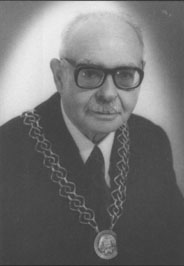
Blanusa's most important work is related to isometric immersions of two-dimensional Lobacevski plane into six-dimensional Euclidean space and generalizations. This result is included in authoritative Japanese mathematical encyclopedia Sugaku jiten published by Iwanami shoten, Tokyo, 1962, p. 612. His work about imbeddings of hyperbolic spaces into Euclidean spaces has been cited in 1956 by John Nash (well known mathematician, Nobel prize for economy; Blanusa is cited in his paper "The imbedding problem for Riemannian manifolds", Annals of Mathematics, Vol 63, No. 1, 1956, pp. 20-63).
The Baroque art in the Croatian north is described by a famous Japanese photographer Keiichi Tahara:
Quand un ami française m'a conseillé d'aller voir les églises baroques en Croatie...je n'ai pratiquement rien trouvé sur ce sujet. Cela m'a paru étrange, et j'ai cédé a la tentation...
Keiichi Tahara: Les Anges de Croatie, éd. Assouline, Paris, 1995 (Baroque art of the Croatian north), translated into Croatian under the title Pamcenje andjela, Nakladni zavod Globus, Zagreb, 1996.
Mrs. Masumi Shimooka Štiglić is a Japanese living in Zagreb since 1970. Her husband is Croatian. When a Japanese delegation visited Zagreb during the International Folklore Festival in the 1970s, then the organizers prepared a big surprise for them: Mrs. Shimooka Štiglić, dressed in her solemn kimono, was among Croatian hosts at the Zagreb airport, when the Japanese delegation arrived. In Zagreb, she is teaching ikebana and traditional Japanese cooking.
Ivan Rabuzin (1921-2008) designed a curtain decorating the stage of one of the best Kyoto theaters (Japan), as well as the Takarazuka Theatre in Tokyo (10.5 x 24 m, 1980), and several other museums in Japan: Sategaya Art Museum in Tokyo, Saitama Museum of Modern Art in Urawa, Isetan. He also had exhibitions at Daimaru and Shinsabashi in Osaka.
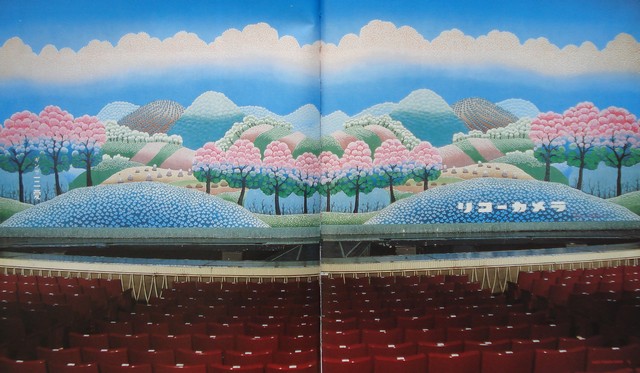
A detial from Ivan Rabuzin's
drop curtain
in Takarazuka Theatre in
Tokyo. Photos from Croatia,
homeland of Marco Polo,
Croatian national tourist board, 2008.
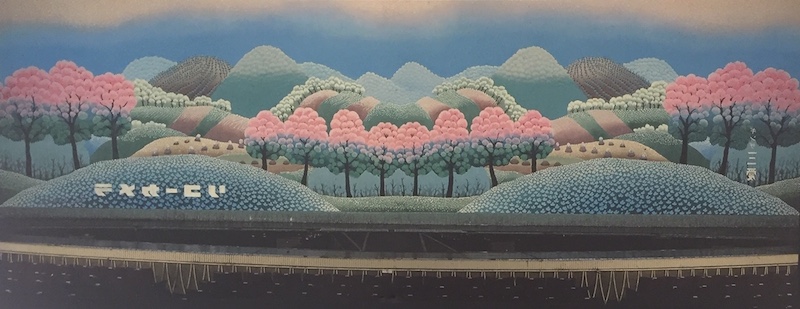
Many thanks to Mrs. Lana
Filippi Brkić for her kind permission to take the photo from her office
in the city of Korčula.
The photo represents the Takarazuka Theatre in Tokyo.
The above mentioned ceremonial drop curtain at the Takarazuka theatre in Tokyo was produced by the Heizo Tatsamura Institute, Textiles Arts Kyoto, in 1979 and 1980. Twenty four weavers were working for three months to make it. Among other materials, 30 kg of gold thread was used. Moritani Shiro produced a film about Rabuzin's ceremonial drop curtain. This information is from Croatia, homeland of Marco Polo, Croatian national tourist board, 2008.

Since 1976 his designs are used by "Rosenthal", renowned producer of procelain ware. He is also a member of the Croatian Parliament (Sabor). It is interesting that Rabuzin's father was a miner, while his mother was blind. His art was exhibited throughout the world: Zagreb, Paris, Antibes, Zurich, Milano, USA (Louisiana, Smithsonian Institution, Carnegie Insitute Museum of Art, Scottsdale Center for the Arts, Milwaukee Museum Art Center, Chicago Public Library, C.W. Post Art Galery/Long Island University, Pittsburgh), Oslo, Munich, Dusseldorf, Amsterdam, Verona, Brescia, Florence, Tokyo, Osaka, Geneva, Cologne, London, etc.
As many as 10 films have been made about Rabuzin's work, including one in Japan (Moritani Shiro, Kyoto). Amonog 13 monographs devoted to his work we mention only the following one: Masayoshi Honme, Ivan Rabuzin / Taiji Harada, 1990, published by Kodanasha, Japan.
Ivan (Juan) Vucetic (1858-1925), distinguished Croatian scientist who introduced the method of scientific dactyloscopy (identification of persons by fingerprints) in Argentina, visited China in 1910, and popularized this method there, especially for the needs of the police research. He was spreading this method also when he visited Japan.
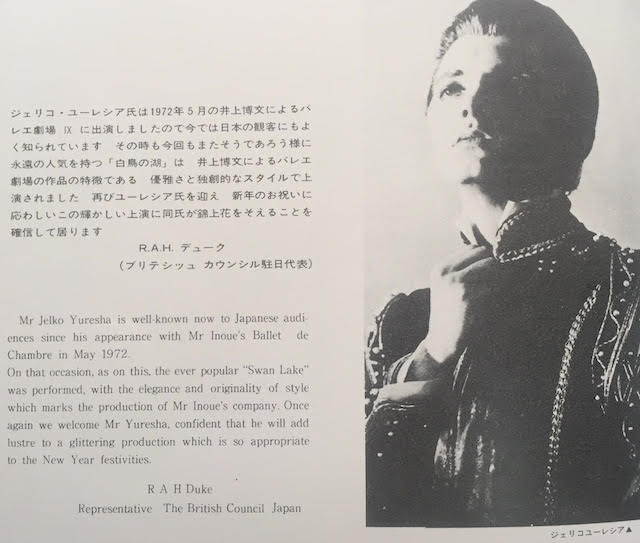
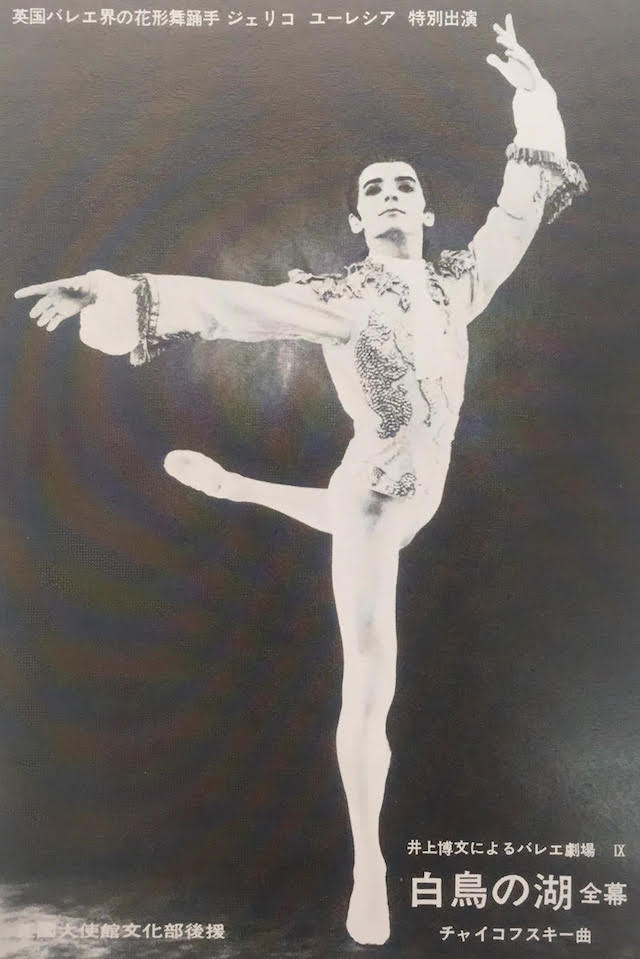
With his wife Belinda Wright Yuresha, he danced in Tokyo.
Source Davor Schopf and Mladen Mordej Vučković: Yuresha - Visions and Dreams / Jureša - Vizije i snovi,
(in English and Croatian), Zagreb 2011
Lace Tent is an interesting project initiated by Akiko Sato, a japanese artist (photographer). The tent measures 3x2 meters. In order to finish it, ten local lace-makers worked for two monts, six hours a day. The project has been supported by the Embassy of Japan in Croatia and by the City of Lepoglava, and the project has been realized in 2007, in the presence of H.E. Mr Shirakawa, ambassador of Japan in Croatia, and his wife. One lace tent is kept in the City Museum in Lepoglava, and another in Japan.
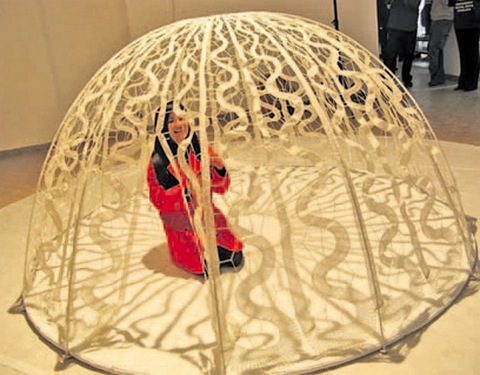
Akiko Sato enjoying in her
Croatian lace tent in Lepoglava.
Source Ministry of Culture of the Republic
of Croatia
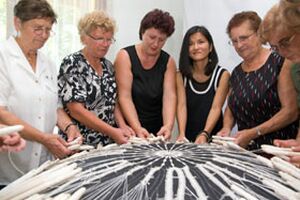
Akiko Sato (3rd from the right) with Lepoglava women
Akiko Sato in Lepoglava
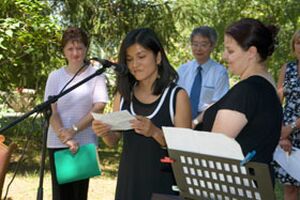
Akiko Sato, September 20, 2007, addressing in Lepoglava
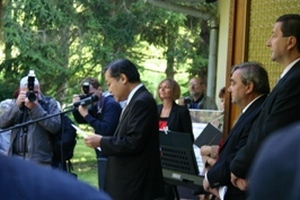
Address of H.E. Mr Shirakawa, ambassador of Japan in Croatia.
Photos from The Embassy of Japan in Croatia
and hagakure.blog.hr
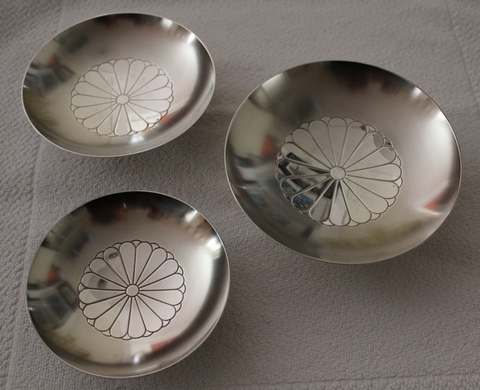
Ambassador of Japan in Croatia, H.E. Tetsuhisa Shirakawa, presented Mr. Ivica Maričić, Commissioner General of Croatia for EXPO 2005, with decoration "Silver Cups with the Chrysanthemum Crest" that was awarded to him by the Japanese Government, on behalf of His Imperial Majesty Akihito, the Emperor of Japan.
The Embassy stated that the Government of Japan very much appreciates Mr. Maricic's great contributions to the success of the EXPO 2005, and his devoted efforts to the promotion of friendly and cordial relations between two countries. It is the first Japanese honor awarded to a Croatian since Croatian independence.
Source: www.croatiaexpo.org
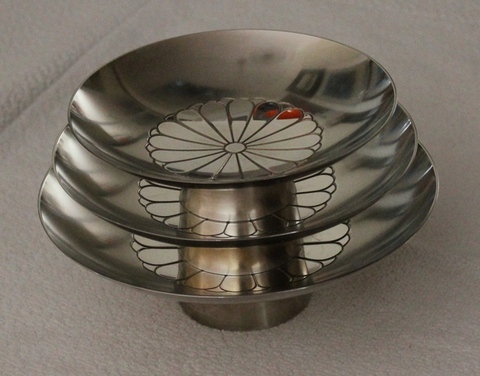
Silver cups with chrysantemum crest, that Ivica Maričić received from
the Emperor Akihito of Japan in 2006.
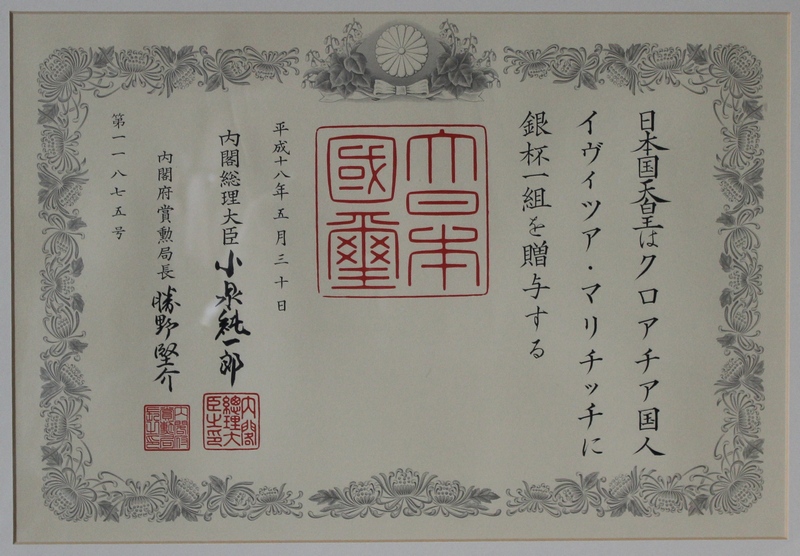
Recognition by the Emperor Akihito of Japan
conferred to Ivica Maričić in 2006,
with traditional Japanese seal in the middle.
Photos by the courtesy of Mr. Ivica Maričić
Theme / Exhibition
The theme of the Croatia Pavilion is "A Drop of Water: a Grain of Salt." The structure of a "drop of water" is very simple, but an unlimited number of combinations can be made if other elements and chemical compounds are added. It is the base of all lives on the Earth. In the just one drop of water, all the wisdoms of nature are represented.
Since Croatia is a
country accepting many stimuli from two
large areas - the European Continent and the Mediterranean Sea, it is
said the country represents the combination of water molecules.
On the first floor of the pavilion, a tour image of breaking through
the sea surface from under the sea to an upper part is presented,
making us remember the potentiality of the sea through ancient
salt-making techniques.
Salt, a spice and natural preservative, represents wisdom and
symbolizes moderation and purity. Today, everybody regards salt as a
natural and ordinary thing, but historically, wars were repeated over
saltpans, and the routes to transport salt were kept secret.
Work to separate salt from seawater and work to refine seawater into
purified drinking water are both closely connected to the history of
the people regarding the sea as important.
On the second floor, the whole picture of Croatia is introduced.
Visitors feel as if they are flying over Croatia with bird's-eye video
images taken from a plane of its scenery, the sea, cities, and the
people and cultures.
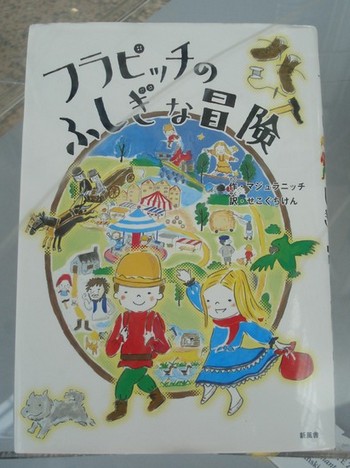
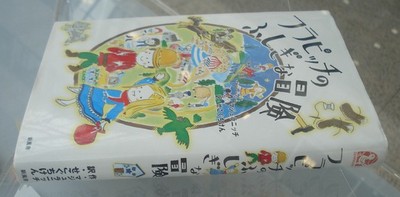
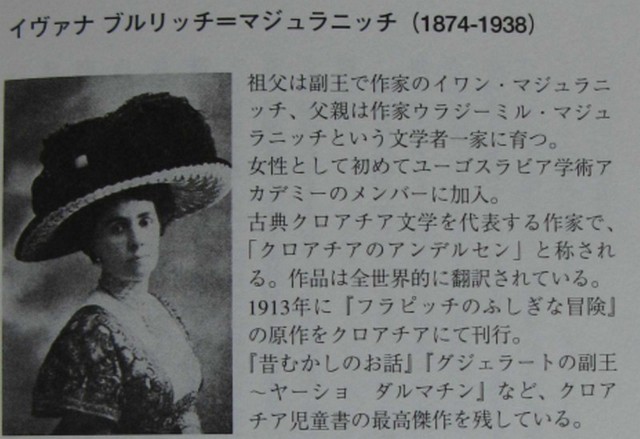
Šegrt Hlapić (Apprentice Hlapić) by Ivana Brlić-Mažuranić, Croatian fairy tale in Japanese. The book was exhibited at the National and University Library in Zagreb in 2008.
The unique beauty of Croatian landscape is offerend by the magnificant mountain of Velebit, and the famous Primosten vineyards, where folk builders used drystone walls to protect every handful of soil from being washed away from the arid rocky terrain. Thus an amazing rocky lace of Primosten has been obtain over the centuries, whose large sized photo can be seen inside the building of United Nations in New York. It is not surprising that Velebit's Endemic Garden and Vineyard from Primosten have won the gold medal at Japan Flora 2000 international exhibition of garden arrangmenents. The exhibition in 2000 was held on Awaji islands near Kyoto, with participation of 60 countries.
PHOTO OF THE CROATIAN GARDEN OF JAPAN FLORA 2000 IS REQUESTED
 Charles Billich is
outstanding Croatian painter born in 1934 in the town of Lovran in
Istria, and since 1956 working in Australia. He has permanent
exhibition of his works at Hakane Museum in Tokyo since 1997, and was
designated the official artist of the Australian Olypic team for
Olympic Games in Sydney in 2000. I like his Canberra cantata. In 1998
Charles Billich completed his series of Bleiburg paintings. He was
elected the official painter of Australian and the USA national teams
at Olympic Games in Greece, 2004. In 2004 he was elected the Official
Artiest of the 2008 Bejing Olympiad. Laurate of the Milan &
Spoleto Award, Italy, in 1989.
Charles Billich is
outstanding Croatian painter born in 1934 in the town of Lovran in
Istria, and since 1956 working in Australia. He has permanent
exhibition of his works at Hakane Museum in Tokyo since 1997, and was
designated the official artist of the Australian Olypic team for
Olympic Games in Sydney in 2000. I like his Canberra cantata. In 1998
Charles Billich completed his series of Bleiburg paintings. He was
elected the official painter of Australian and the USA national teams
at Olympic Games in Greece, 2004. In 2004 he was elected the Official
Artiest of the 2008 Bejing Olympiad. Laurate of the Milan &
Spoleto Award, Italy, in 1989.
His most famous galeries are Billich Gallery in Sydney (100 George Street), Australia, and Fortezza Gallery in the lovely town of Lovran, Croatia. In 2004 he had the exhibition of some of important Croatian contributions to science, held in the building of United Nations in New York (portraits of Faust Vrancic, David Schwartz, Lupis Vukic, Slavoljub Penkala, Josip Vucetic, Nikola Tesla, Marin Getaldic, Rudjer Boskovic, Marco Polo, Andrija Mohorovicic, Spiridion Brusina, Lavoslav Ruzicka, also Croatian cravate, and an oil representing one of truly painful Croatian themes from the period 1945-1948 immediately after the WW2: Bleiburg). He was commisioned to paint East Timor's official independence painting. He presented a pinting to pope John Paul II.
Charles Billich Collections (incomplete):
- The Vatican Collection
- The Parliament of Japan
- The Royal Collection of Thailand
- The City of Rijeka,
- Croatia The Town of Lovran,
- Croatia The City of Orebic (Franciscan Monastery: The Way of the Cross), Croatia
- Embassy of Croatia, Canberra,
- Australia City of Düsseldorf
- The City of Osaka, Japan
- The City of Sydney, Australia
- State Theater, Sydney, Australia
- The City of Melbourne, Australia
- United States Sports Academy
- New York State Govt. Port
- Authority Hall of Congress, Washington D.C., USA
- Internatinal Olympic Museum, Lausanne, Switzerland
- QinShiHuang BingMa Yong Museum, X'ian, China ...
Croatian ballet dancer Jelko Yuresha (Željko Jureša) sojourned
with his wife Belinda Wright-Yuresha in Japan, where they collaborated
with Tetsuya Kumakawa Theatre:
http://www.croatia.org/crown/articles/11046/1/Jelko-Yuresha-Croatian-ballet-prodigy-at-the-Royal-Ballet-in-London-since-1962.html
srdačan pozdrav,
http://www.croatia.org/crown/articles/11046/1/Jelko-Yuresha-Croatian-ballet-prodigy-at-the-Royal-Ballet-in-London-since-1962.html
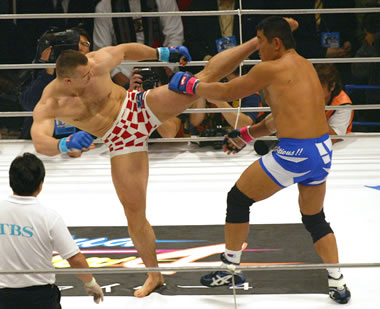
A world-wide reputation in thai boxing had Branko Cikatic from Split, winner of many international tournaments, including the grand 1994 K-1 Tokyo tournament.
The name of Croatian sportsman Mirko Filipovic Crocop is well known in Japan.

Blanka Vlasic celebrating her
victory with Croatian flag in her hands,
at the World Championship in Athletics, Osaka, Japan 2007, source CROWN
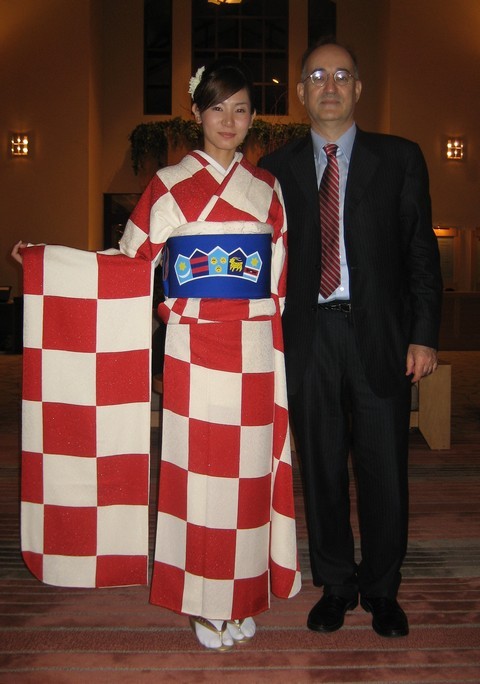
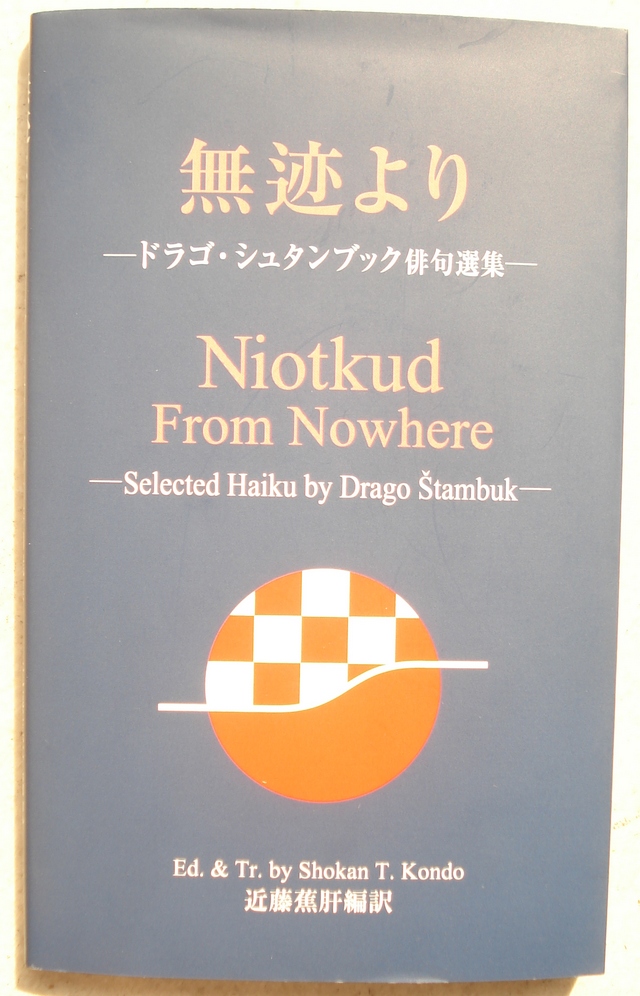
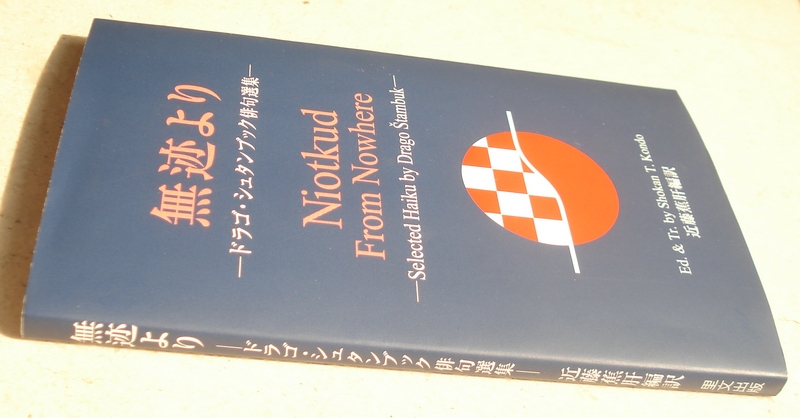
Drago Štambuk, Croatian ambassador: Squaring the circle and rounding the square, "... I spent one weekend last winter [2005/06] at the snow festival in Tokamachi. ... The first prize in the kimono competition at the festival went to a checkered red-and-white kimono called Croatia..."
Project of Croatian house in
Tokamachi Japan
Japan-Croatia Friendship House
Project presented in Tokamachi
Eugen Viktor Feller initiated the industrial production of Elsa fluid and its variants in Croatia (soaps, shampoos, shaving creams, balsams, hygienic and cosmetic products, elixirs, etc.), which was a world wide success, sold in the whole of Europe, Asia (Japan and China), Africa (Egypt), and in the USA. It would be interesting to find a photo of his products in Japan. His son Vilim Feller (William Feller) was a distinguished Croatian - American mathematician.
Dr. Drago Štambuk, Croatian ambassador in Japan:
- Speech in Hiroshima for the Vukovar victims, 2007
- Speech at the Holy Mass for Vukovar Victims, Tokyo 2008
Maestro Vjekoslav Sutej, distinguished Croatian conductor, had concerts in Tokyo and Nagoya.

„To je ubojstvo...“
Tsutomu Yamauchi
novinar, Independent, Japan
22. 12. 1993.
Naš kamion bio je prošao središnji dio Gornjeg Vakufa i bio gotovo na izlasku iz grada. Tada smo vozili praznom cestom brzinom od oko 50 km/sat. S ruba ceste iznenada se začula pucnjava. Vjetrobransko staklo našeg kamiona rasprsnulo se i nismo više mogli vidjeti ispred sebe. Ante (vozač) nagazio je kočnicu da zaustavi kamion. Opet se začula pucnjava, a vozač je povikao “no, no”. Nekoliko je metaka uletjelo, a komadići stakla i ostalog raspršili su se. Ante se prevalio prema meni i ječao slabim glasom koji se postupno gubio. Pogledao sam vrata s lijeve strane i u visini grudi ugledao dvije velike rupe. I ja sam osjetio bol u lijevoj ruci, ali iako je na kožnoj jakni bila rupa, činilo mi se da krv ne teče. Malo poslije pokraj nas je prošlo oklopljeno vozilo UN-a, a za njim i drugi kamioni i oklopna vozila. Desnom rukom razbio sam naprslo prednje staklo i provukao se, pa zvao oklopno vozilo UN-a. Kako neko vrijeme nisam mogao privući pozornost, ostavio sam Antu i potrčao prema vozilu UN-a. Činilo mi se da još ima blizu skrivenih muslimanskih vojnika te sam oko 100 metara pretrčao u jednom dahu.
Iz kamiona koji je bio vozio baš ispred nas vodili su dva ranjenika, jedan je bio ozbiljno ranjen u ruku i grudi te je istjecalo mnogo krvi. Drugome je krv tekla iz glave, ali činilo se da nije ništa ozbiljno. Molio sam vojnika UN-a da im da injekciju morfija, a zatim i da je u mom kamionu ranjen vozač, ali mi je odgovorio da ima pune ruke posla. Došlo je još nekoliko oklopnjaka i ja sam se obratio jednom od njih. Nešto poslije vojnik mi je rekao: “On je umro”. Suze su mi navrle na oči. Nekoliko desetaka minuta zadržali smo se na tom mjestu dok su donijeli Antino tijelo. Antino tijelo prevezeno je oklopnjakom, i ja sam se ukrcao na to vozilo. Preko njegova lica bila je prebačena jakna. Dogodilo se to gotovo u trenu, ali još mi se vraća kao ružan san. Srce me boli kada pomislim na njegovu obitelj, a da njega nije bilo s moje lijeve strane, sada bih sigurno bio mrtav.
Ovo nije samo jedan dogaðaj iz rata, moćnim oružjem ubijen je bespomoćan, nebranjen čovjek. To je ubojstvo, to je zločin. A zatim sam još shvatio i činjenicu da je i sama nazočnost UN-a bila bez ikakva smisla.
... ... ... ...
The injured Japanese reporter Tsutomu Yamauchi, who was in the truck cabin with the driver Ante Vlaic when he was killed, claimed that he had urged UNPROFOR soldiers to help Vlaic but that they had replied that there was no time for that now.
Source.
Helen Merrill aka Jelena Ana Milcetic, one of the most distinctive jazz singers ever (born in New York in 1930, her both parents are from Croatia, originating from the island of Krk)
Helen Merrill issued several gramophone records in Japan (she sang in Japanese as well!):
- Helen Merrill: Big in Japan
- HELEN MERRILL Live 1986 Kyoto
- Helen Merrill Live In Japan 1990 (at the age of 60)
- Sand Pile - Helen Merrill singing in Japanese
- Helen Merrill In Tokyo
- Helen Merrill - Bossa Nova In Tokyo
Her songs are even today very popular and studied in great detail among young people in Japan:
- Helen Merrill - You'd Be So Nice To Come Home To フリガナで解説!
- Let's sing a jazz song vol 5 / You'd Be So Nice to Come Home To / ジャズボーカルレッスン
Helen's son Alan Merrill (1951-2020) was very popular in Japan, see also here.
- Alan Merrill, Something In This Town, Japanese pops 1970.
- Alan Merrill, Automatic Pilot, Vodka Collins (in Japanese) アラン・メリル
- Alan Merrill and the Tokyo All Stars, Jan 2010
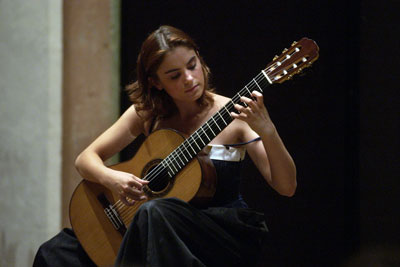
Ana Vidović,
a distinguished Croatian guitarist, had a series of recitals in Japan
(source www.anavidovic.com):
June 6, 2009 - 3:00 PM -
Otaru, Japan
Otaru Shimin Center, Recital
June 5, 2009 - 5:00 PM -
Sapporo, Japan
Watanabe Jun-Ichi Bungaku-Kan, Masterclass
June 4, 2009 - 7:00 PM -
Tokyo, Japan
GG Salon, Recital
June 3, 2009 - 7:00 PM -
Nogi, Japan
Nogi-Cho Bunka Kaikan, Recital
June 2, 2009 - 7:00 PM -
Tokyo, Japan
GG Salon, Recital
June 1, 2009 - 8:00 PM - Japan Tour
May 30, 2009 - 3:00 PM -
Nagoya, Japan
Munetsugu Hall, Recital
November 26, 2006 - 8:00
PM - Takayama, Japan
Japan Tour, Concert
November 24, 2006 - 6:45
PM - Yonago, Tokyo
Japan Tour, Concert
Yonago-shi Kokaido
November 23, 2006 - 8:00
PM - Okinawa, Japan
Japan Tour, Concert
Uruma Shimin Geijutsu Gekijo
November 22, 2006 - 7:00
PM - Yaizu, Japan
Japan Tour, Concert
Yaizu-shi Bunka Center
November 21, 2006 - 7:00
PM - Kashiwazaki, Japan
Japan Tour, Concert
Sangyo Bunka Kaikan Hall
February 20, 2005 - 8:00
PM - Tokorozawa City, Japan
Japan Tour
Shoumeidou Music Hall, Recital
February 19, 2005 - 8:00
PM - Tokyo,Japan
Japan Tour
Musashino Civic Cultural Hall, Recital
February 18, 2005 - 8:00
PM - Numazu City, Japan
Japan Tour, Concert
Numazu Shimin Bunka Center
February 17, 2005 - 8:00
PM - Nagoya City, Japan
Japan Tour
Studio Runde, Recital
Listen to her interpretation of Cavatina, played in Japan:
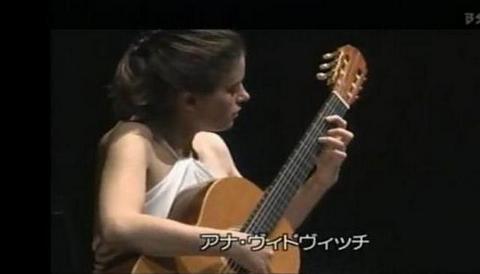
The name of Ana Vidović in Japanese: アナ ヴィドヴィッチ
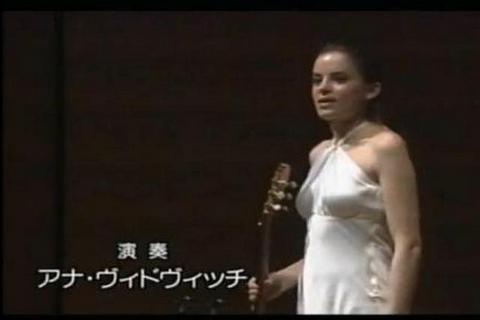
Performance by Ana Vidović (in Japanese)
Many thanks to Professor Satoshi Tanka, Okayama University of Science, and to Mr. Takeshi Harada,
for their explanation of the text in Japanese.
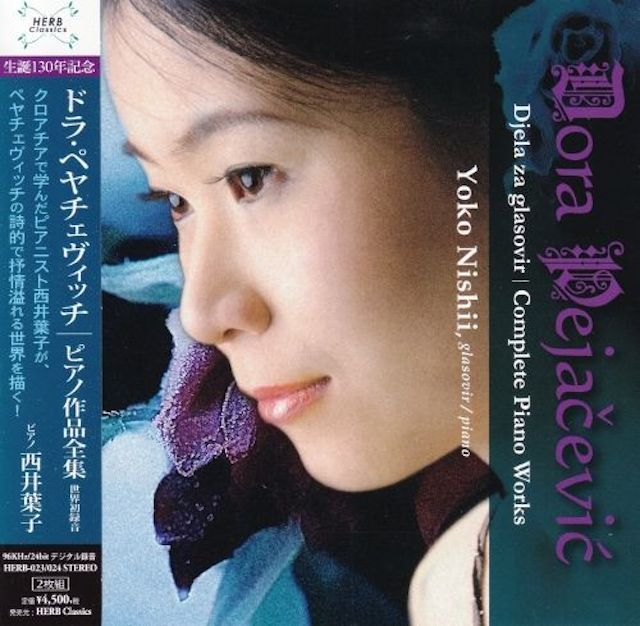
Yoko Nishii's humanitarian concert in Zagreb during the Japanese Culture Week in March 2016
Yoko Nishii's lecture about Croatia in the secondary school of the city of Toba in Japan 2020
Yoko Nishii - Croatian Journey, 22 min. film by Croatian Film Institute, USA (many thanks to Nikola Knez and his collaborators)
Yoko Nishii recipient of the Commendation from the Minister of Foreign Affairs of Japan in 2023, for her contributions to strenghtening cultural ties with Croatia in the field of music.
In 2024, Irena Srdanović, professor at the Juraj Dobrila University of Pula in Croatia (Istrian peninsula), received the Commendation from the Minister of Foreign Affairs of Japan for her contributions to deepening cultural ties between Japan and Croatia. Except of Japanese, she is lecturing Chinese and Korean languages.
Another recipient of the Commendation in 2024 was professor Zlatan Car, for his scientific cooperation with Japan in the field of robotics.
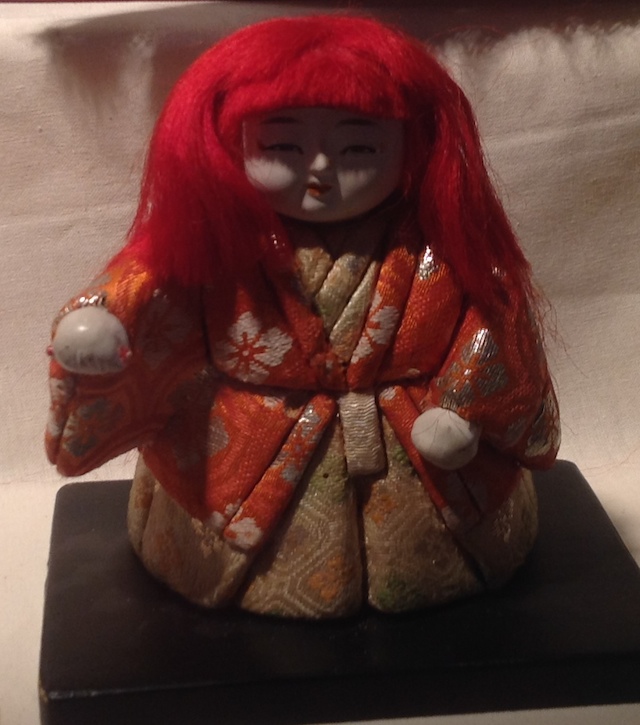
A Japanese doll from the collection of the King of Dolls (Ljeposlav Perinić, 1922-205), kept in Zagreb's
Ethnographic Museum. The dolls are collected from presidents of various states, queens, kings,
prime ministers and other dignitaries. This doll has been donated in 1963 by the then
Japanese Prime Minister Mr. Eisaku Sato.
Here is a brief explanation provided by the courtesy of Yoko Nishii, Japanese pianist:
Lovre Stavun linking Croatia and Japan via his native city of Zadar
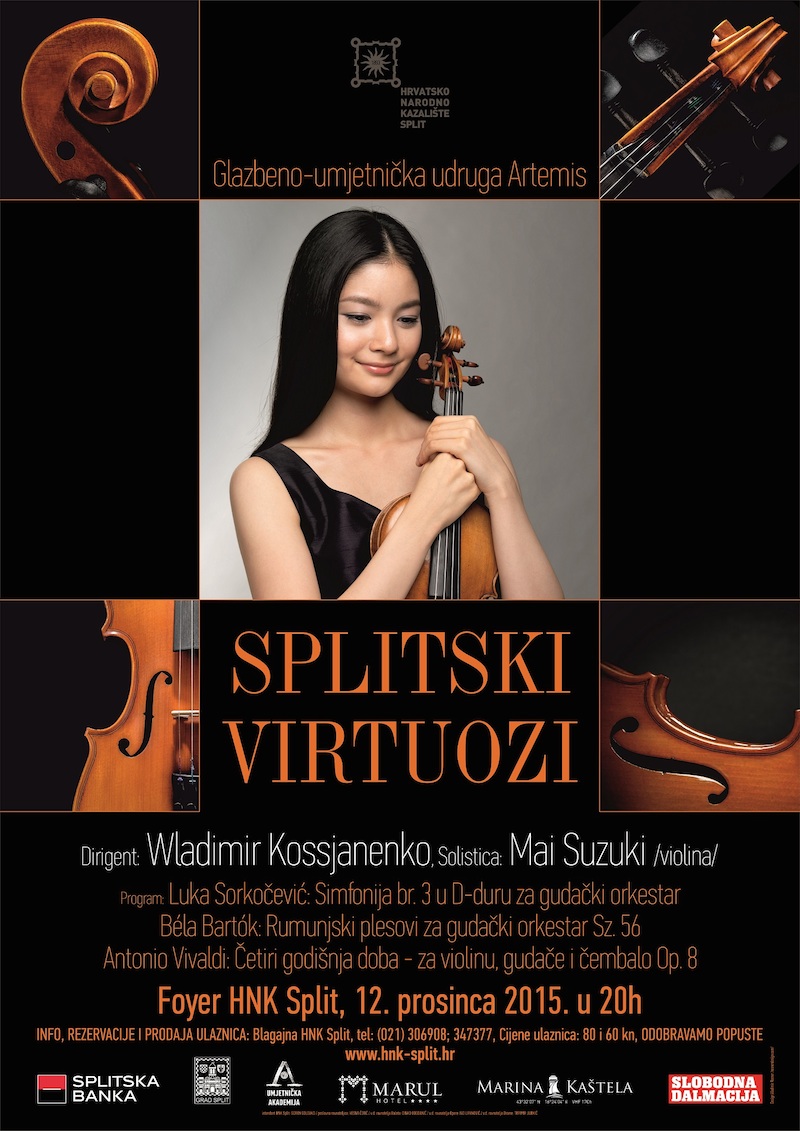
Adventski koncert Splitskih
virtuoza i Mai Suzuki 2015. pod ravnanjem maestra Wladimira
Kossjanenka
Croatian pupil Martin Kotarski and
Bill Gates awarded in Japan
by The Goi Peace Foundation
Martin Kotarski Croatian pupil winner of prestigious humanitarian award in Japan
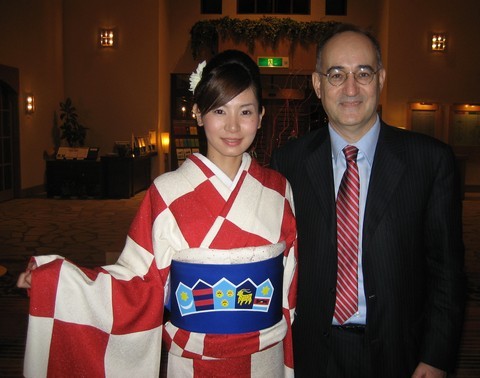
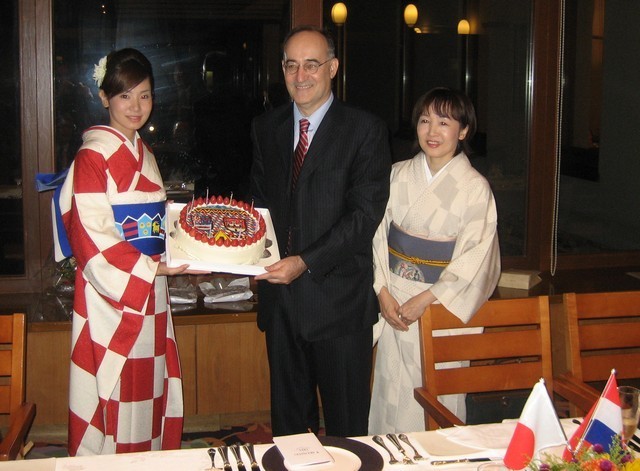
Kimono Croatia worn in honour of Croatian ambassador Stambuk's birthday
Tokamachi factor, a paradigm for Japan-Croatia emotional attachement
The winning silk kimono named Croatia has been made in Tokamachi in the memory of the Croatian national football team's presence during the World Cup 2002 in Japan. The Mayor's daughter has worn it for the Croatian ambassador's birthday.
For more details see Kimono Croatia
Photos by the courtesy of Dr. Drago Štambuk, ambassador of the Republic of Croatia in Japan.
Drago Štambuk Croatian ambassador in Japan writes about a beautiful friendship
LADO prestigious Croatian national folklore ensemble visited Japan in 2006
Japanese Ambassador in Croatia, H.E. Yoshio Tamura uses CroTram to go to work
Miro Gavran's drama "How To Kill the President" will be premiered in a stage reading on December 16 2009, organised by the Japanese Centre of ITI, at the IWATO Theatre in Japan. Ayako Funakawa has translated the play into Japanese, while the director of the reading is Yoshiko Nozaki.
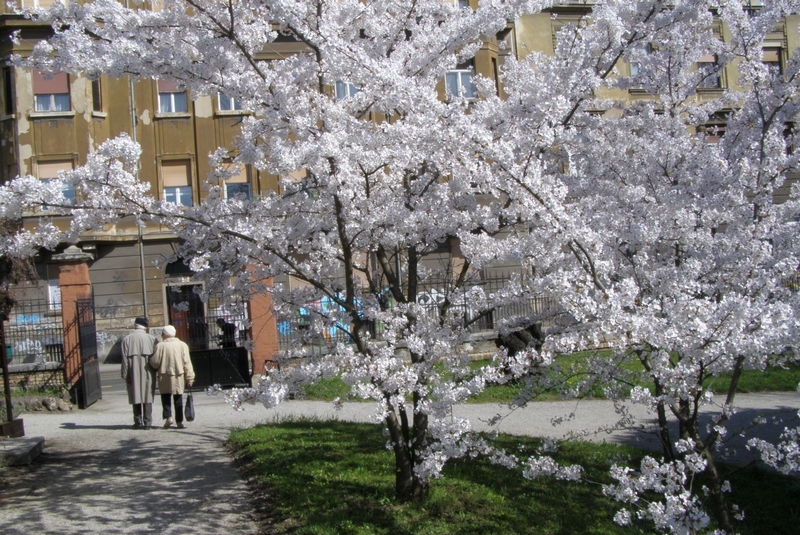
Japanese
cherry in the Botanical Garden
in Zagreb. Photo by Mr. Nikola
Piasevoli.
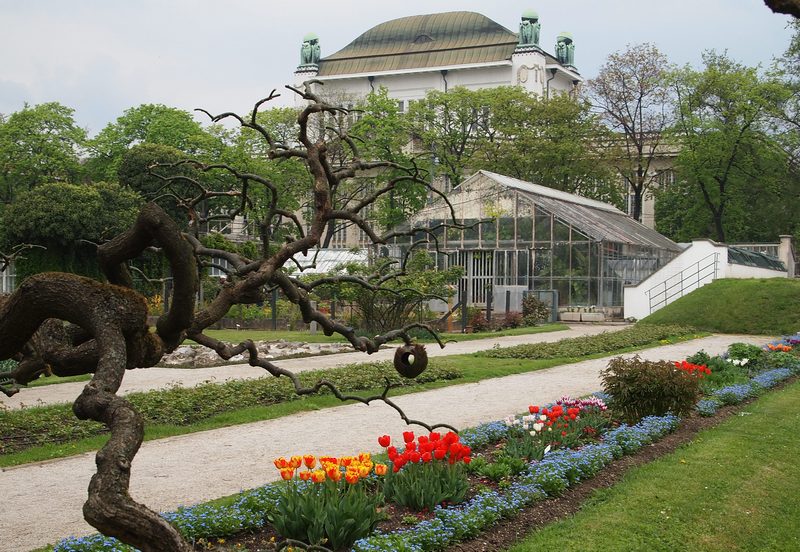 Sophora
Japonica pendula (on the lelft) in the Botanical Garden
in Zagreb. Photo by Mr. Nikola
Piasevoli.
Sophora
Japonica pendula (on the lelft) in the Botanical Garden
in Zagreb. Photo by Mr. Nikola
Piasevoli.
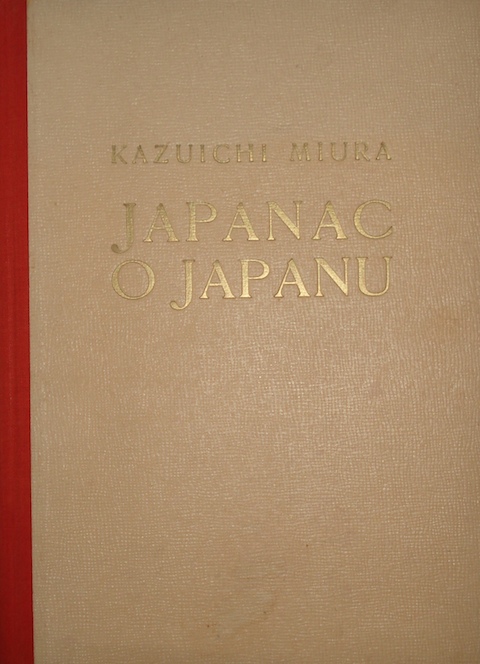
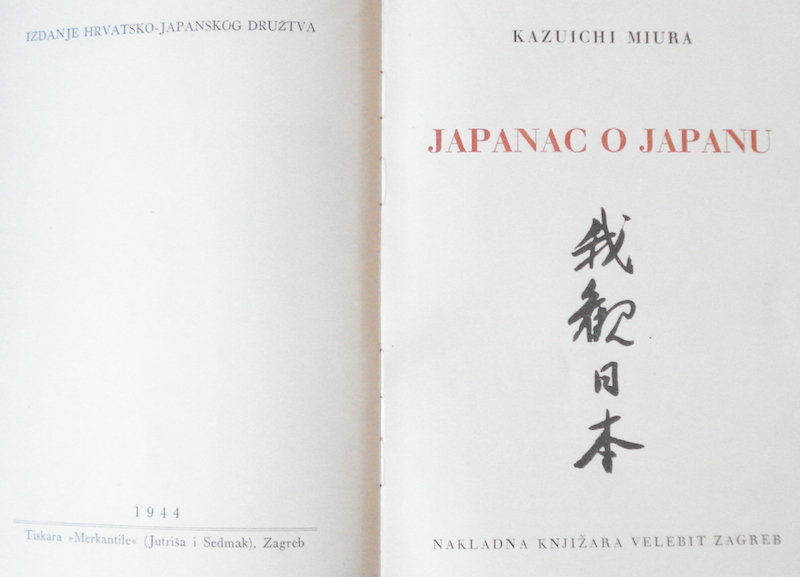
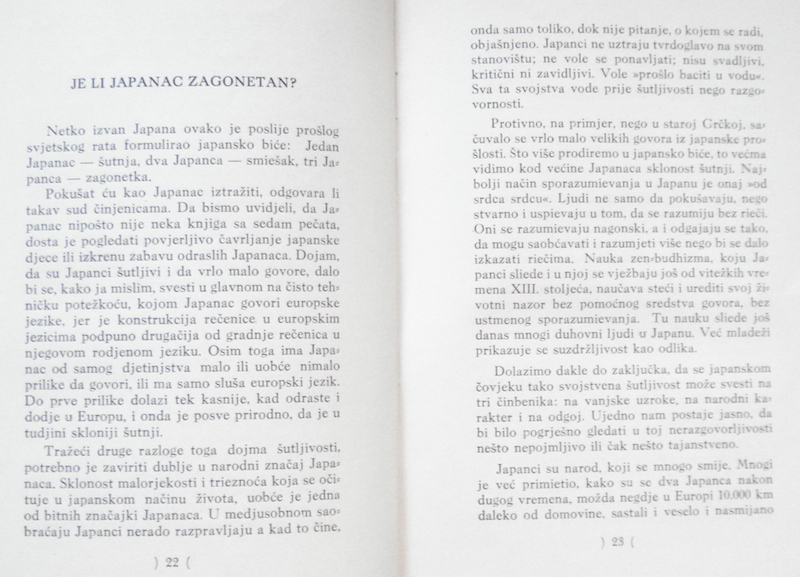
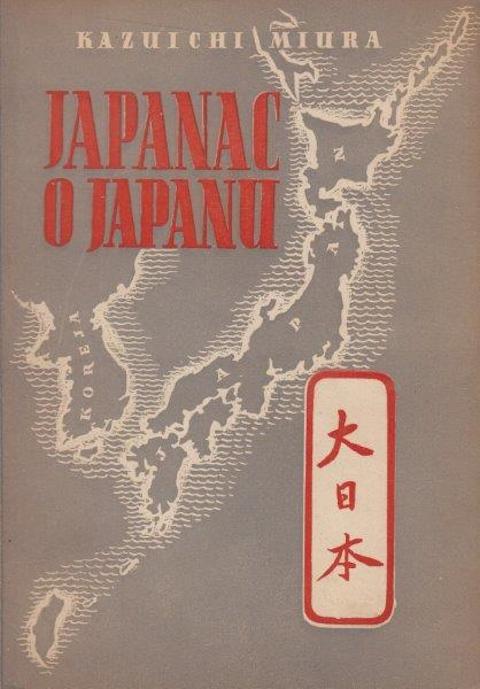
Kazuichi Miura, ambassador of Japan in Croatia from 1943 till 1945,
author of the book
"Japanese about Japan" (Japanac o Japanu). published by
Croatian-Japanese Society in Zagreb in 1944.
Dr. Keiko Mitani is a full professor at the Chair for Slavic Studies of the Philological Faculty of the Tokyo University.
She is the author of the following manual for learning Croatian language:
Keiko Mitani: Priručnik hrvatskoga jezika = Kuroachia do handobukku, Tokyo : Daigaku shorin, 1997. - 260 str. ; 24 cm

Photo by the courtesy of Yoko Nishii, Ise, Japan.
Keiko Mitani is also the author of a grammar of Croatian
language:
Keiko Mitani: Kuroachia go no Shikumi (Grammar of Croatan language). Here, "Shikumi" means Grammar, Mechanism, Structure, Construction... etc.
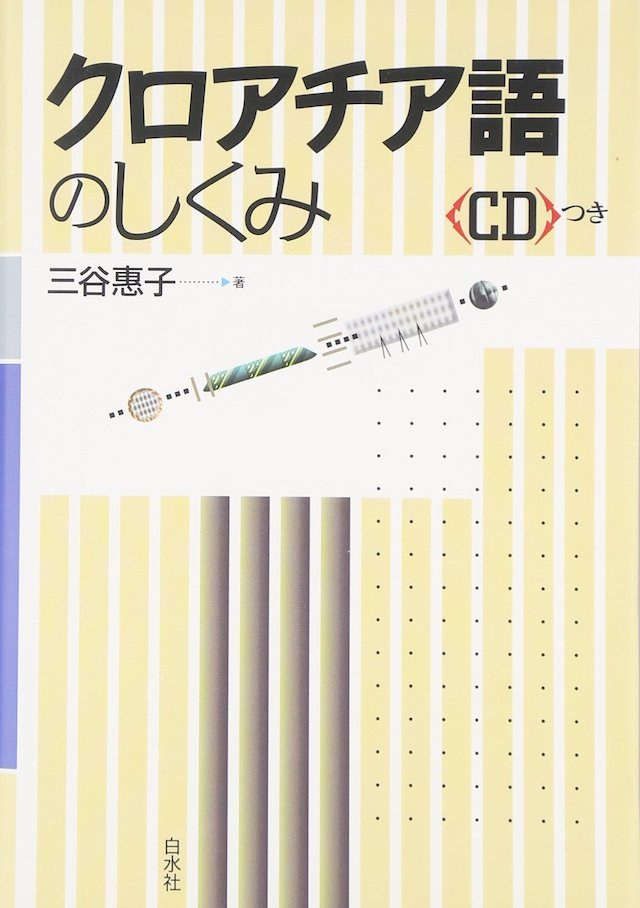
Keiko Mitani: Kuroachia go no Shikumi
(Grammar of Croatan language).
Photo by the courtesy of Yoko Nishii, Ise, Japan.
In 2017, she participated the scientific confererence The Phenomenon of the Glagolitic Script held in the cities of Biograd and Zadar. In Biograd, she visited the Monument of crane dedicated to friendship with the city of Hiroshima:
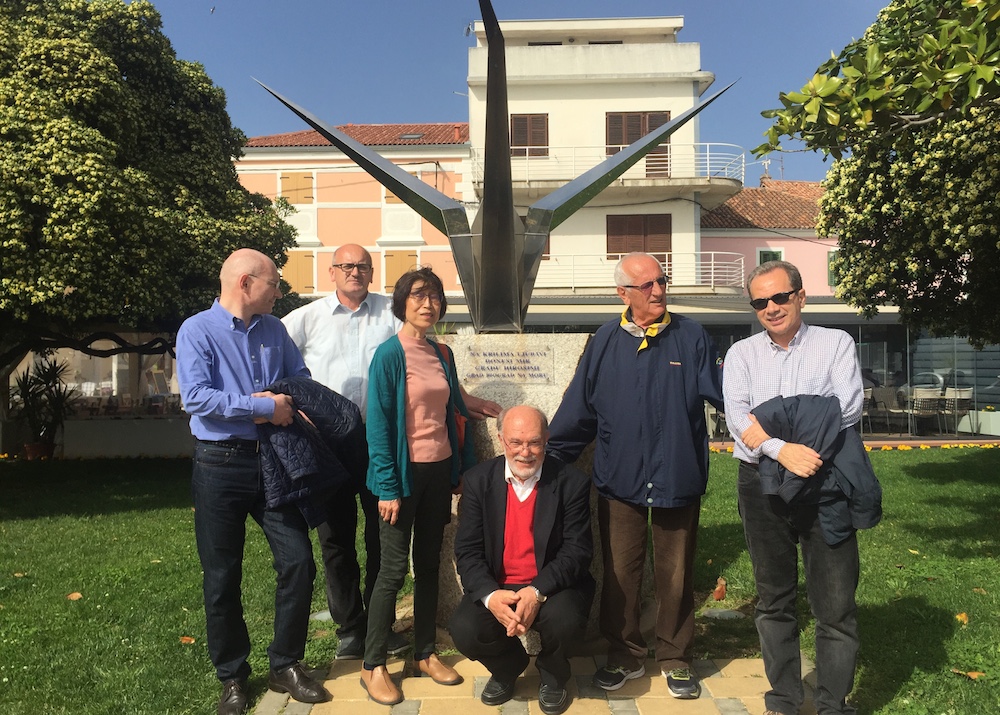
Dr. Keiko Mitani (third from left)
is
president of the Japan-Croatia Friendship Society in Tokyo. The
monument contains the following haiku:
NA KRILIMA LJUBAVI (On the wings of
love)
DONESI MIR (bring peace)
GRADU HIROŠIMI (to the city of
Hiroshima)
BIOGRAD NA MORU (Biograd on the Sea)
On
the photo: Andrei Sobolev (Russia), Draženko Samardžić (curator of the
Biograd Museum), Keiko Mitani (Japan), Josip Bratulić (of Croatian
Academy of Sicences and Arts), Božo Došen and Giorgio Ziffer (Italy).
Photo by D.Ž.
This very nice monument is placed in the city of Biograd, quite near the coast. Professor Keiko Mitani wrote a very interesting article (in Croatian) about language characteristics of Moravian Croats:
Posuðivanje u jezičnom dodiru i struktura jezika. Razmatranje na temelju podataka iz govora moravskih HrvataShe defended her PhD in 1988 at the University of Zagreb, under supervision of Professor Stjepan Damjanović..
In 2018, the Japanese Emperor awarded Mr. Ivan Knez, the Mayor of the city of Biograd n/M, the Order of the Rising Sun.

On the photo, the then ambassador of Japan to Croatia, decorating Mr. Knez.
Photos by the courtesy of Mr. Ivan Knez.
A few books by professors Kazuo Maeda and Asim Kurjak in Japanese:
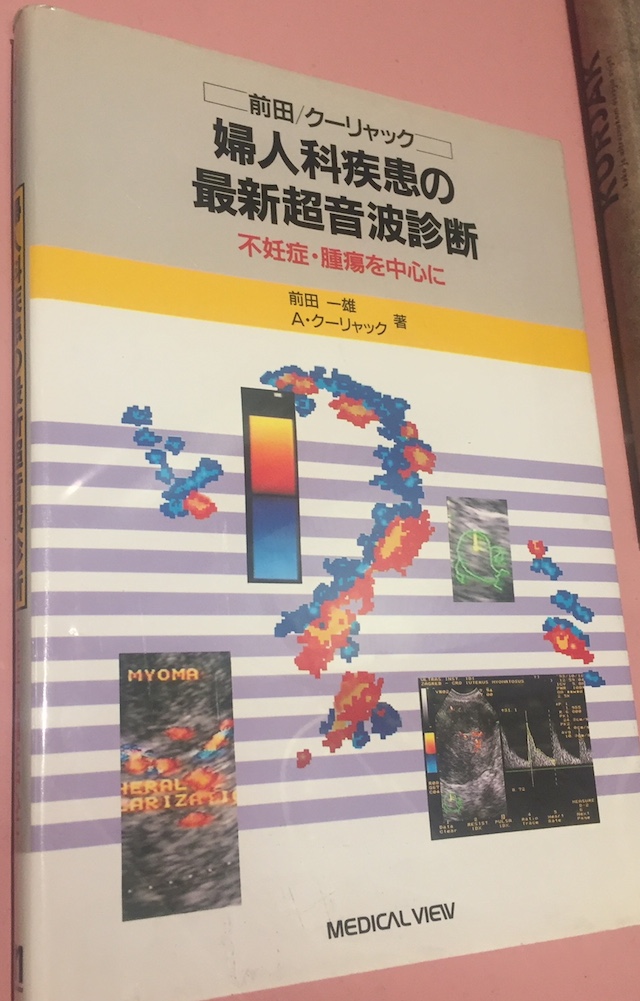
Kazuo Maeda and A. Kurjak: The
newest advances in ultrasound in gynecological diseases
- with a focus on inferitility and
tumors
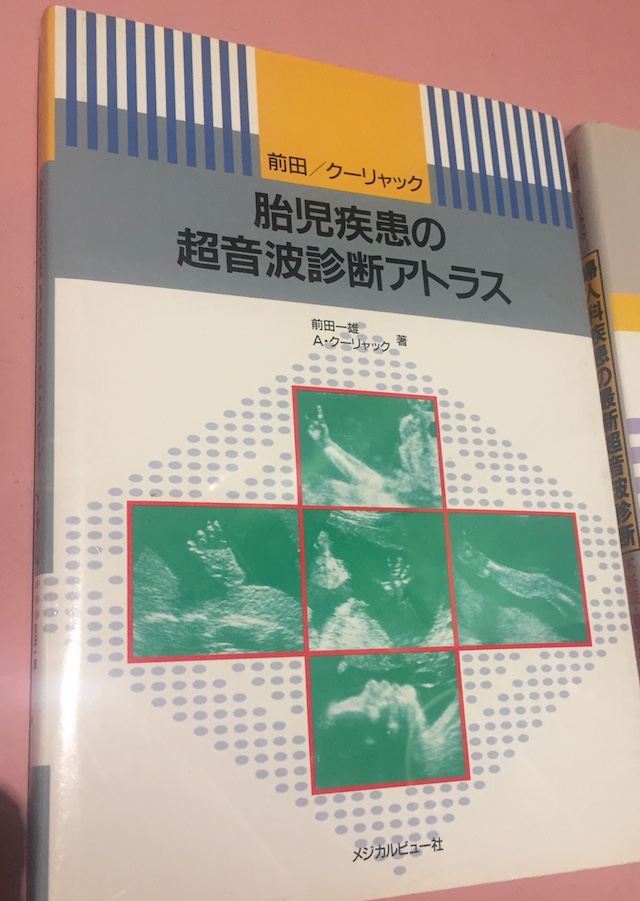
Kazuo Maeda and A. Kurjak: Atlas of
ultrasound in fetal diseases
Many thanks to Yoko Nishii for translating the above two Japanese
titles into Englesh.
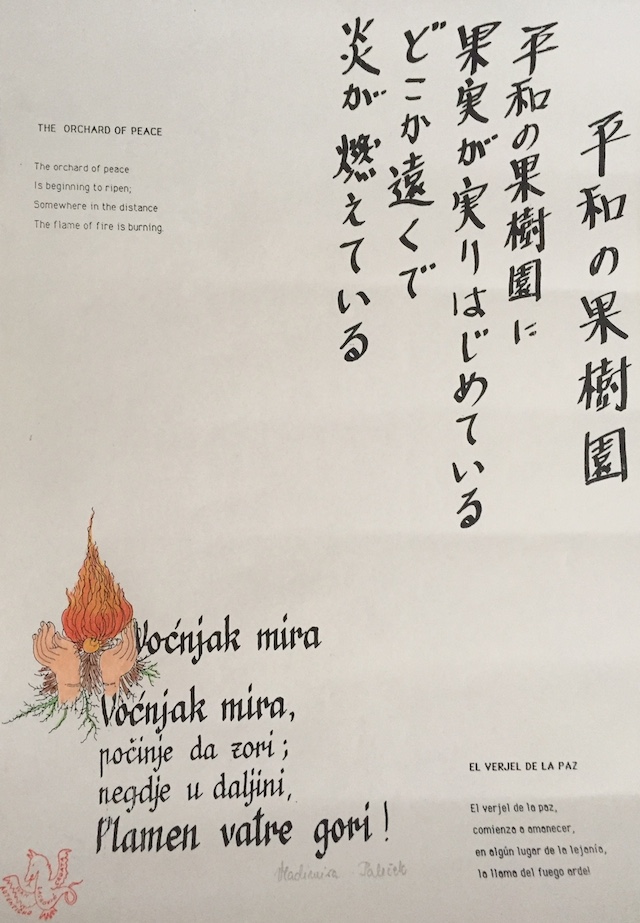
Vladimira Paleček: Voćnjak mira (1982.)
Vladimirin otac Vladimir Paleček,
osnivač je i voditelj Meðunarodnog fonda "Gladno dijete" (Hungry Child).
Kaligrafirani prijevod na japanski jezik: Yasuyo Hondo-Devide
Crtež: Ivan Lacković-Croata
Ivan Lackovic Croata distinguished painter inspired Fumiko Yamazaki in Japan
イワン・ラツコヴィッチ・クロアタ Ivan Lacković Croata(1932-2004)Lacković Art Japan-founded by Fumiko Yamazaki
1998 Lacković exhibition in Hakodate, Hokkaido.
2000 Lacković exhibition in Hakodate, Hokkaido.
2002 Lacković exhibition in Ogikubo, Tokyo.
2004 Ivan Lacković Croata exhibition at the Embassy of Croatia in Tokyo.
2004 Ivan Lacković Croata exhibition in Ochanomizu,Tokyo.
2005 Lacković exhibition in Tsunan, Niigata.
2010 Ivan Lacković Croata exhibition at BERG in Shinjuku,Tokyo.
2011 Lacković exhibition in Tsunan, Niigata.
2012 Lacković exhibition in Tsunan, Niigata.
2014 Lacković exhibition at the Kashiwa city gallery in Chiba.
2015 Ivan Lacković Croata exhibition at CREATIVE SPACE HAYASHI in Chigasaki, Kanagawa.
2016 Ivan Lacković Croata exhibition at CREATIVE SPACE HAYASHI in Chigasaki, Kanagawa
F. Zlatko Špehar, Croatian Franciscan, wrote his travel book "Putovima nade nastajanja", Ogranak Matice hrvatske Vukovar, Vukovar 2009, ISBN 978-953-95493-3-4 (a rough translation of the title could be: Along the paths of hope for growth), dealing with his visits to Finland and Japan (pp 133-343).
During his sojourn in Japan in July 2008 he was accompanied among others with Croatian soprano singer Mayumi Kamei. She was born in Tokyo, and lives in Croatia since 1997, employed at the Choir of Zagreb Radio Television.
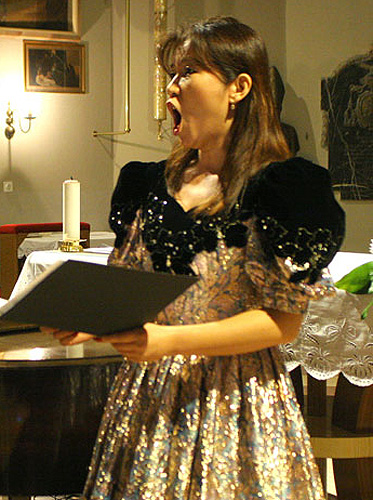
Source of the photo www.kulisa.eu
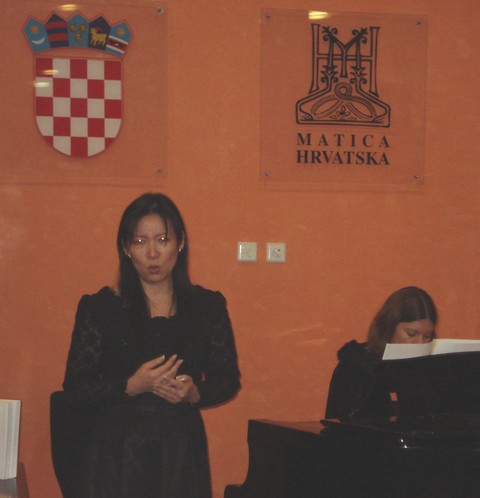
Mayumi Kamei singing a tender song about Hiroshima in the main hall of Matica hrvatska / Matrix Croatica, during the presentation of the book of F. Zlatko Špehar in December 2009. Accompanied on piano by Martina Mičija.
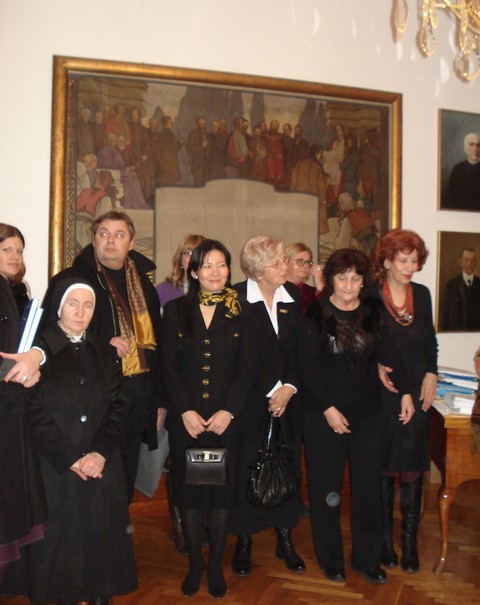
In one of the halls of the Matica hrvatska / Matrix Croatica in Zagreb. Mayumi Kamei with a group of women from thriloge city of Vukovar, on the right to her Štefica Šarčević, president of the Matica hrvatska Vukovar. Many thanks to Mr. Stjepan Sučić, vicepresident of Matica hrvatska in Zagreb, for hospitality.
Simultaneous chess game by Yudai Iwasaki, Japan, with attendants of the Chess School at the XXIst Winter Chess School in 2007 in the town of Ravna Gora, Gorski kotar, Croatia. The town is the only one in the world with a street called the Chess Street!
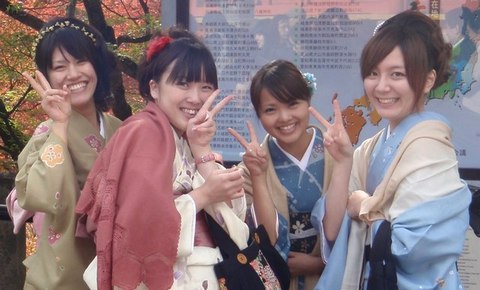
Studnets in Kyoto, photo by Professor Mervan Pašić,
Croatian mathematician.
Kyoto and Zagreb are sister cities.
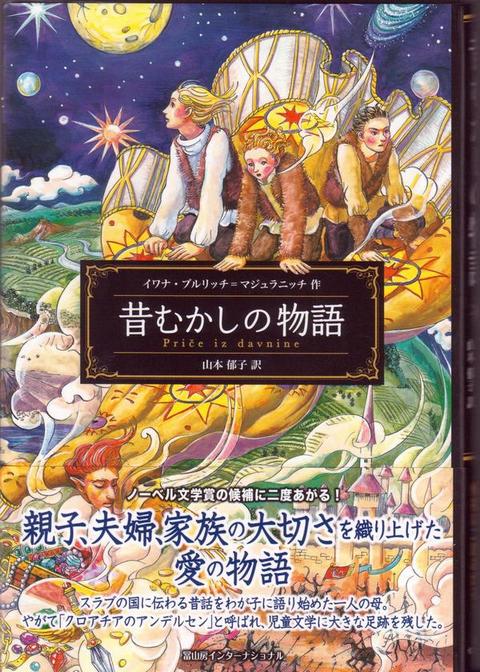
Ivana Brlić Mažuranić: Croatian Tales of Long Ago, Japanese edition in 2010.
Croatian Tales of Long Ago by Ivana B. Mazuranic published in Japanese in 2010
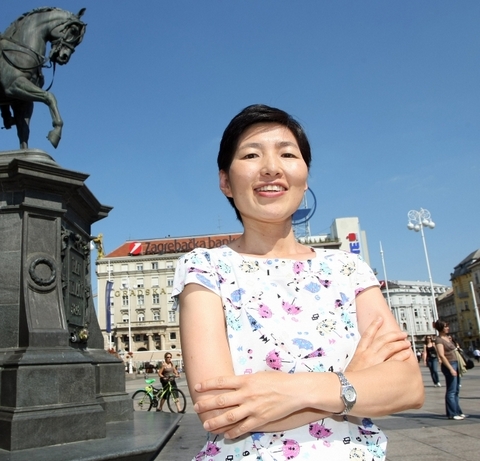
Mrs Ikuko
Jamamoto translated the book
from
Croatian into Japanese in 2010.
Photo from the main square of Croatia's capital Zagreb.
Kinjo Gakuin high school from Japan visited High School Sesvete in Croatia in 2019
Vukovar hosting fantastic Japanese Ningyo dolls
exhibition 2020
Božidar
Prosenjak: Priča o kravati / The
Story About Cravat,
translated by Yasuo Yamamoto
in Japanese | in
Croatian original | in English
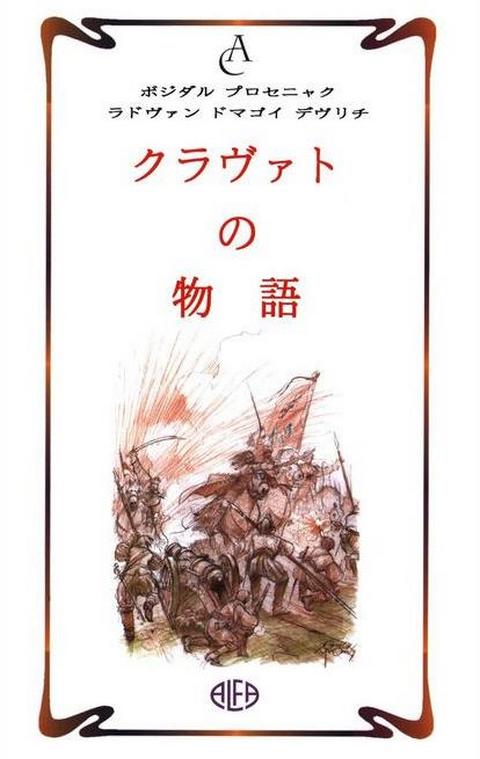
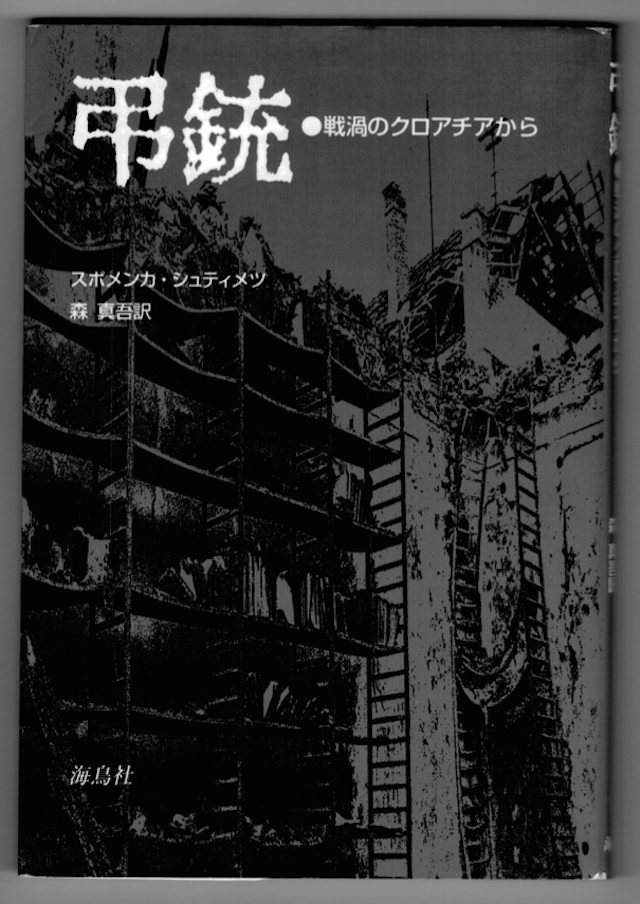
(translated from Esperanto in 1993).
The front cover contains the photo of the Public Library of the city of Vinkovci in Croatia,
destroyed during the Serbian 1990-1995 aggression.
The original esperanto title is Kroata milita noktlibro (i.e., Croatian War Nocturno), Vienna, 1993.
Translated into German and Japanese in 1993, into French in 2004, into Chinese in 2007,
into Icelandic in 2009, and into English in 2017.
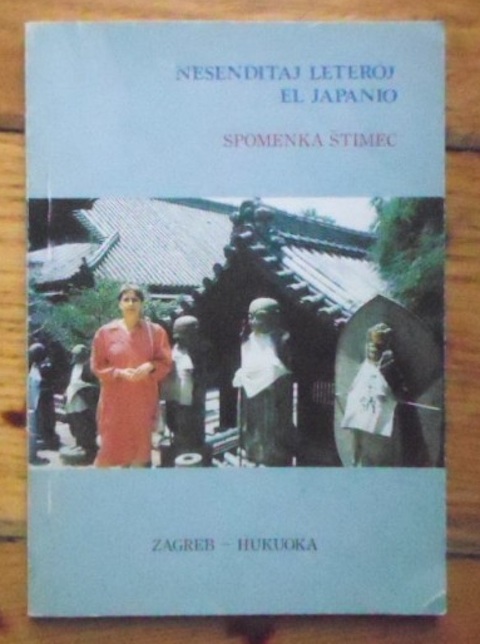
Spomenka Štimec: Nesenditaj leteroj el Japanio (i.e., Nonsent Letters from Japan), Zagreb - Hukuoka, 1990
(three editions, published in Japanese and Chinese)
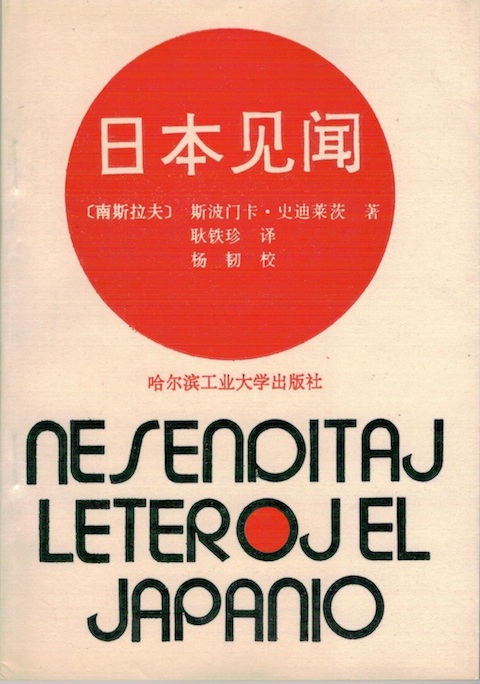
Spomenka Štimec (of the Esperanto Croatian-League in Zagreb): Nesenditaj leteroj el Japanio
(i.e., Nonsent Letters from Japan), in Chinese.
For more information, see
- Izložba knjiga - Libroekspozicio: 200 godina hrvatske književnosti na esperantu - Cent jaroj de kroata literaturo en Esperanto, Zagreb 1908.-2008. (and in particular, p. 21 of the following article by Spomenka Štimec, "Prijevodi hrvatske književnosti na esperanto od 1997. do 2008. / Translations of Croatian literature into Esperanto from 1997 to 2008", appearing in the same booklet on pp. 20-25).
- Esperanto Croatian-League in Zagreb
Japanese journalist Yasuyuki Nagatsuka fell in love with Croatia and Croatian football
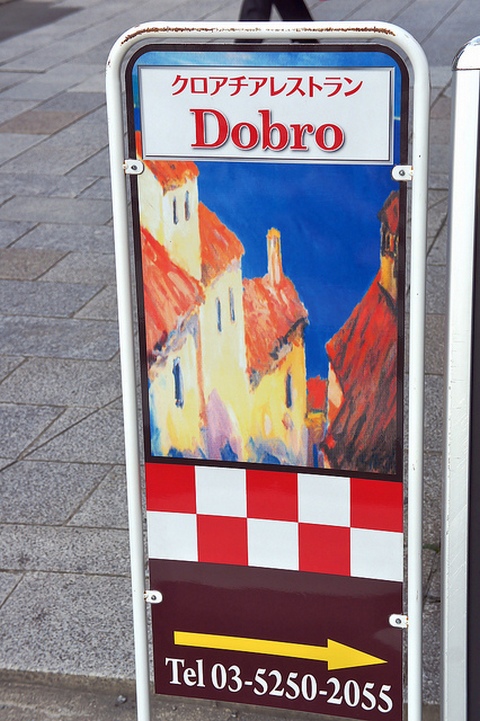
DOBRO Restaurant in the center of Tokyo, near Ginza
Max Emanuel Cencic, Croatian singing prodigy, is gifted with the most beautiful countertenor voice of our time. He was a member of the Vienna Boys' Choir, subsequently pursuing a solo career. He was awarded as the best new singer of the year 2003 by "Opernwelt" magazine. His performance of Andromeda Liberata in Tokyo was named the best concert of the year 2005 in Japan. Since 2007 Max EmanueI Cencic is recording with the top-label EMI/Virgin Classics.
Two Croatian mathematicians in Japan in November 2012
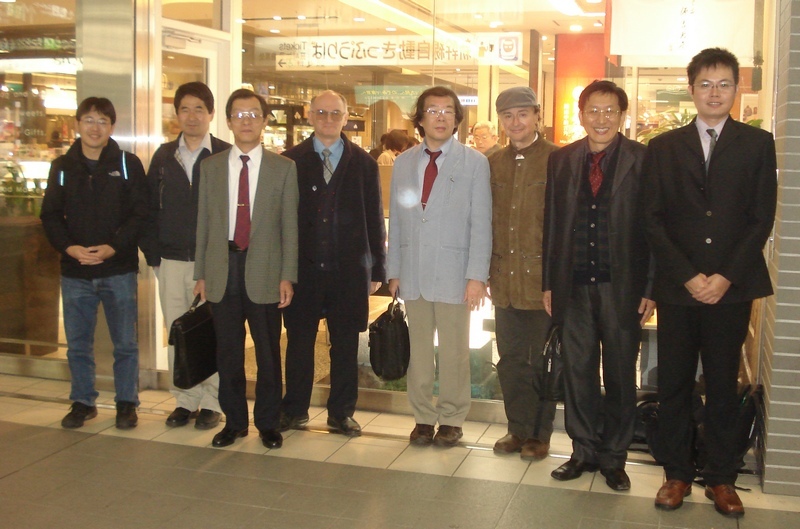
Participants of Handayama Differential Equation Seminar organized by the Department of Mathematics of the Okayama University of Science 2012: Professors Satoshi Tanaka, Yuki Naito, Manabu Naito, Darko Žubrinić (Croatia), Hiroyuki Usami, Mervan Pašić (Croatia), Shin-Hwa Wang (Taiwan), Kuo-Chih Hung (Taiwan). Photo by Dr. Masakazu Onitsuka.
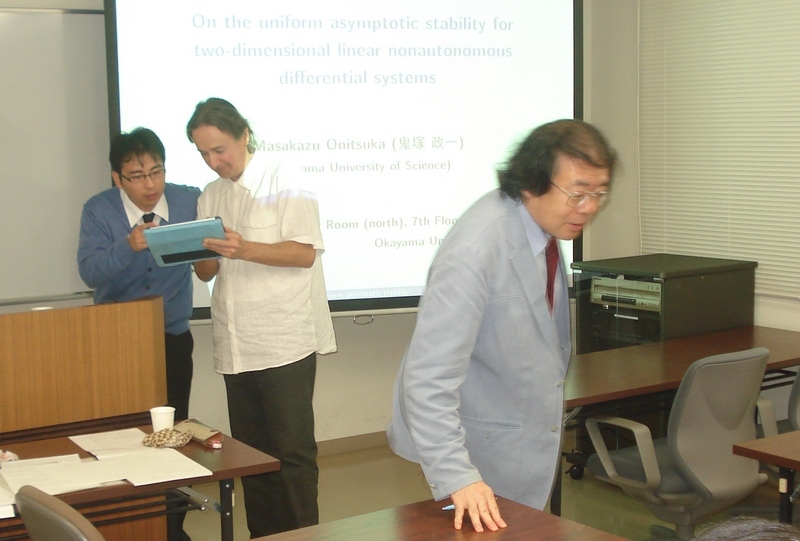
Professors Masakazu Onitsuka, Mervan Pašić and Hiroyuki Usami at the Okayama University of Science, Japan, November 2012.
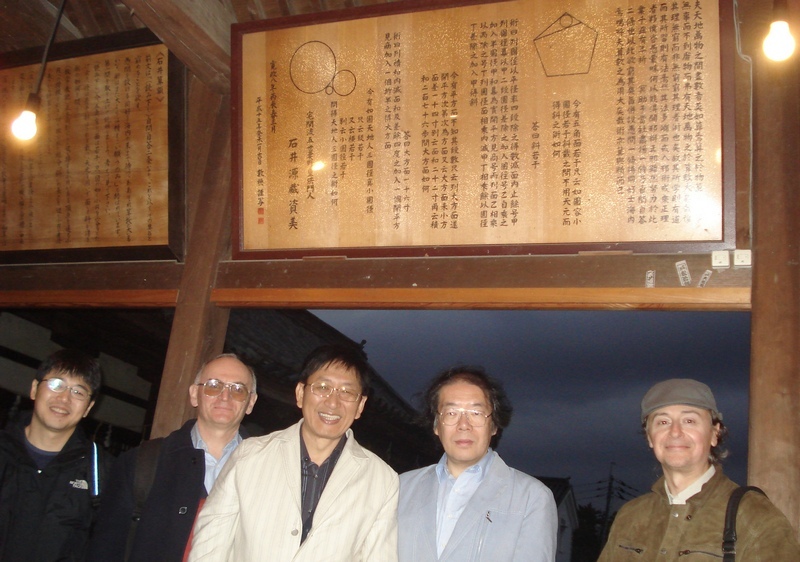
Famous Sangaku (Japanese mathematical problems in geometry) in a Japanese temples.
Professors Satoshi Tanaka, Darko Žubrinić, Shin-Hwa Wang, Hiroyuki Usami, Mervan Pašić; November 2012.
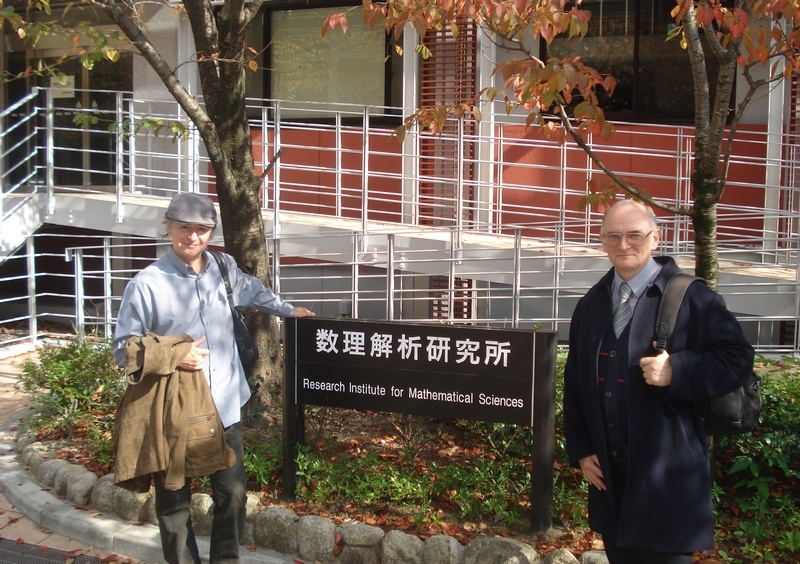
Professors Mervan Pašić and Darko Žubrinić, University of Zagreb, in front of the Research Institute for Mathematical Sciens (RIMS) at the University of Kyoto in November 2012.
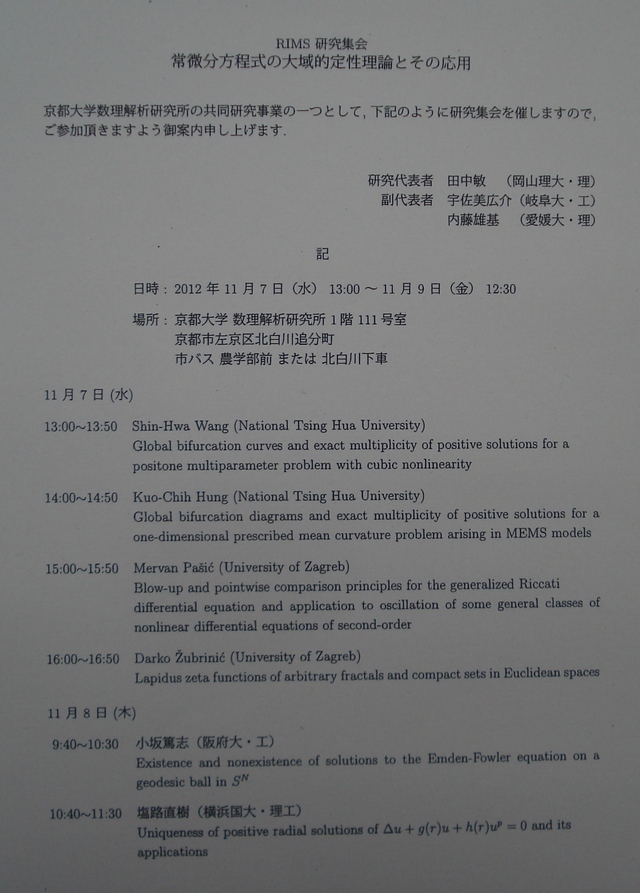
Lectures at the RIMS Workshop at the University of Kyoto, the first day:
Global qualitative theory of ordinary differential equations and its applications [PDF]
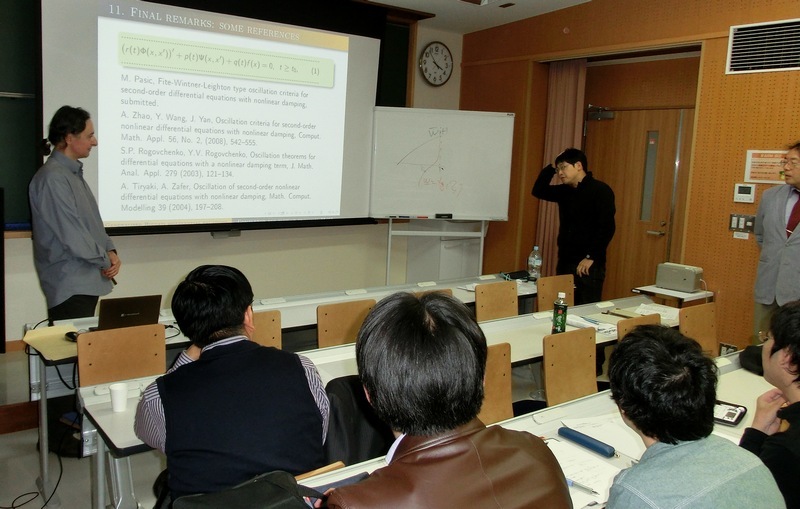
Lecture by Professor Mervan Pašić, on the right Professors Satoshi Tanaka and Hiroyuki Usami.
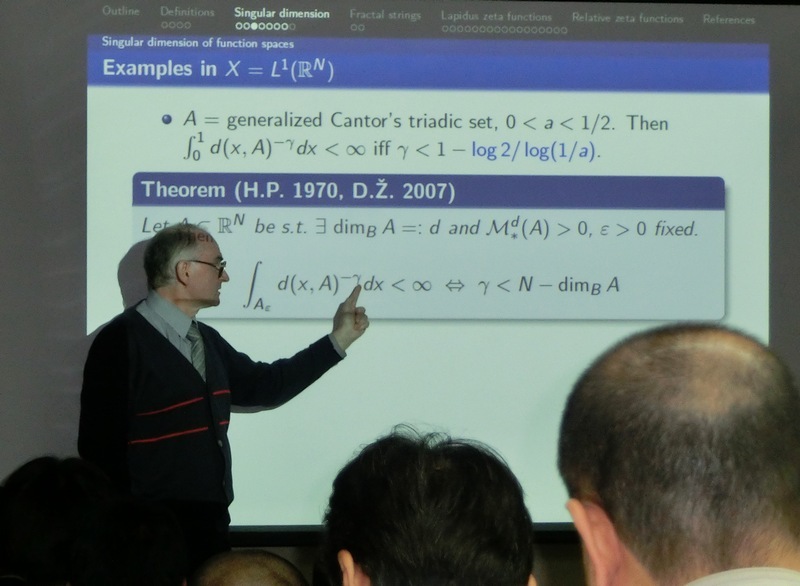
Lecture by D.Ž. at the Reasearch Institute of Mathematical Sciences (RIMS), University of Kyoto, November 2012.
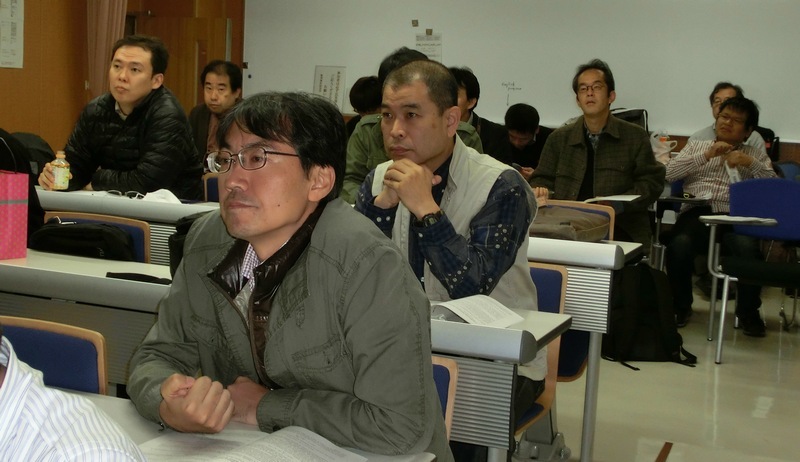
A part of auditorium at RIMS. In the second row Professor Ryuji Kajikiya (in white jacket), Saga University, Japan.
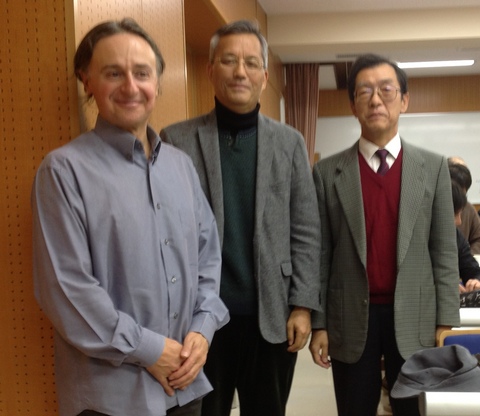
Professors Mervan Pašić, Manabu Naito and Norio Yoshida at the Research Institute of Mathematical Sciences of the Kyoto University.
Professor Pašić is an editor in chief of Differential Equations and Applications, Croatian scientifi journal,
which has several Japanese mathematicians in its editorial board.
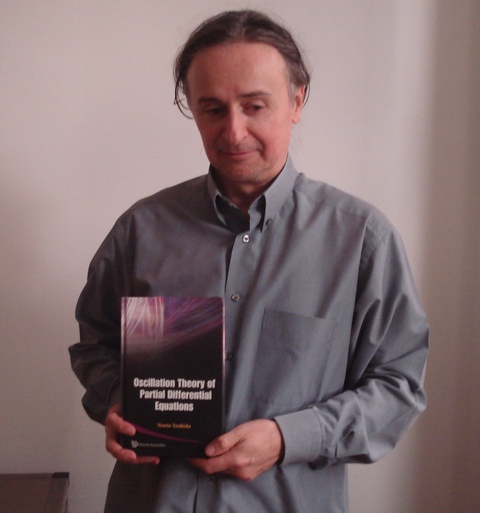
Professor Mervan Pašić at the Department of Applied Mathematics, FER, University of Zagreb,
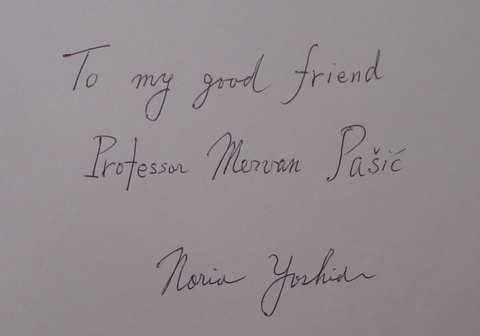
with a gift of Professor Norio Yoshida - his monograph on oscillation thery...

...containing the following dedication:
The international conferences in Okayama and Kyoto have been superbly organized
by Professors Satoshi Tanaka, Hiroyuki Usami, and Yuki Naito.
Gða. Mirna Potkovac Endrighetti stekla je magisterij na Sveučilištu za strane studije u Osaki (danas Fakultet za strane studije Sveučilišta u Osaki), a tijekom dugog niza godina prevela je mnoga japanska književna djela na hrvatski jezik, dajući tako velik doprinos širenju japanske književnosti i promicanju razumijevanja Japana u Hrvatskoj. U znak uvažavanja za spomenuta dostignuća, veleposlanik Iso uručio 11. studenog 2022. je gospoði Potkovac Endrighetti Priznanje ministra vanjskih poslova Japana.
Priznanje ministra vanjskih poslova dodjeljuju se pojedincima i organizacijama za njihov doprinos promicanju prijateljstva izmeðu Japana i drugih zemalja i područja. Priznanja takoðer imaju za cilj promicanje razumijevanja i podrške japanske javnosti za aktivnosti primatelja.
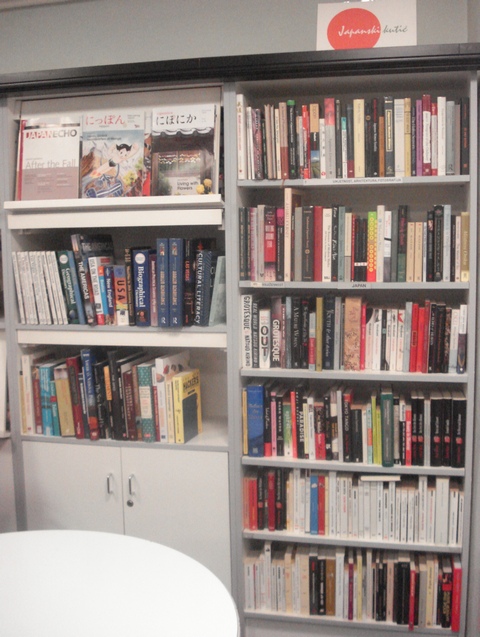
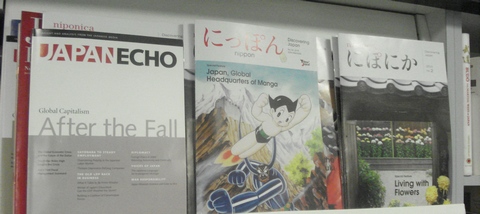
Japanese corner (Japanski kutić) in the Public library of Bogdan Ogrizovic in Zagreb, Preradovićeva 5 (Cvjetni trg - Flower square), contains a collection of books and journals from Japan and about Japan.
Japanese mathematicians Yuki Naito and Satoshi Tanaka visited Zagreb and Plitvice Lake
Yamato Japanese drummers in Croatia with students of Japanology, University of Zagreb, February 2012
Please help Japan
Japan has been struck by the tragedy of Biblical proportions. Pray for
Japan.
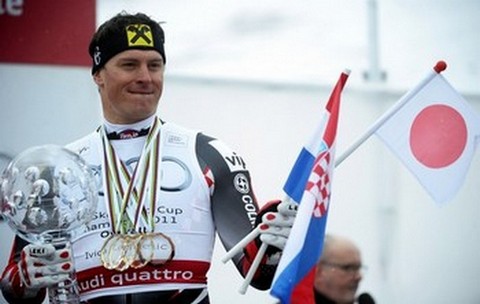
Croatian skier Ivica Kostelic won the World Cup slalom title, the combined World Cup title, and the overall World Cup title in 2011. He poses with a Japanese flag in tribute to the victims of the earthquake and ensuing Tsunami. Photo by Getty Images.
Concerts for Japan in Croatia 2011
Croatia - Japan cultural and economic society
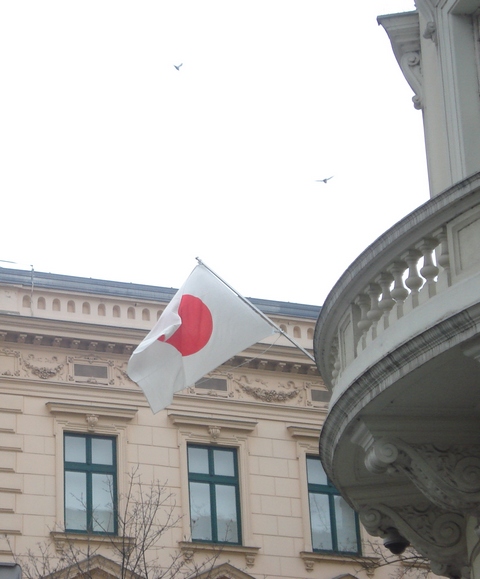
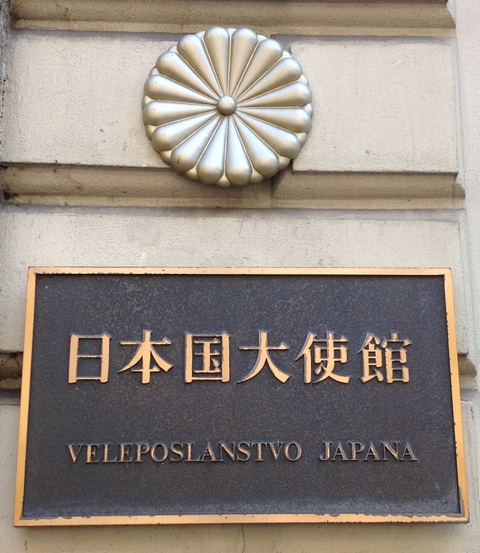
Embassy of Japan in Croatia's capital Zagreb
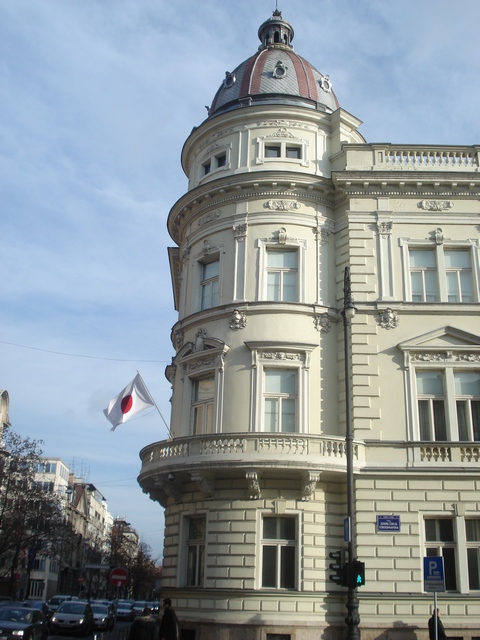
Boškovićeva street 2, Zagreb
Hrvatsko-japansko kulturno i gospodarsko društvo
Japan Croatia Association (Branko Cikatic)
DOBRO (GOOD) - web site inspired by Croatia in TokyoDOBRO - restaurant in Tokyo with Croatian gastronomic specialties
CROATIA - in Japanese
Dr. Slobodan Elezović: Dva desetljeća diplomatskih odnosa Hrvatska - Japan
MAKOTO, hrvatsko-japansko društvo u Zagrebu
Croatia - Australia
Croatia - South America
Croatia - its History, Culture and Science