Croatian glagolitic heritage related to Lika, Krbava, Gatska, Modruš and Senj
© Written by Darko Žubrinić, 2001 [in Croatian] ...But
he knew all too well
from which sides the winds blow,
and which adorn good deeds, and which injure the soul.
Antun
Mateša Kuhačević,
Laud for a
Glagolite
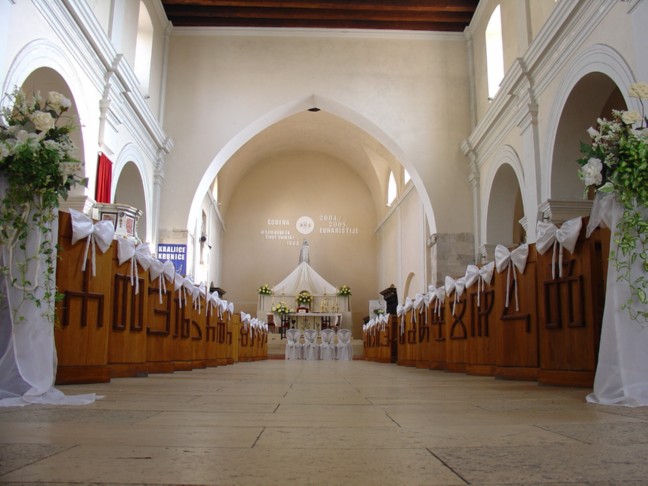
Church of Croatian Martyrs in Udbina
 t is
not excluded that the beginnings of the
Croatian state are related precisely to the Lika - Krbava region. The
Croatian Prince Borna
from the beginning of 9th century was
known first as the Dux
Guduscanorum, i.e. the Prince of
Gachans
(from the Gatska valley), before he traversed the mountain of Velebit.
There exist the remains of Croatian interlace from 10th century found
near the town of Smiljan. The most important monument of early Croatian
literacy, dating from the end of 11th century, is the Baška tablet,
where in its fifth line the
names of joupan (prefect) Desimir
from Krbava and Martin
(Mratin) from Lika are mentioned
as witnesses.
t is
not excluded that the beginnings of the
Croatian state are related precisely to the Lika - Krbava region. The
Croatian Prince Borna
from the beginning of 9th century was
known first as the Dux
Guduscanorum, i.e. the Prince of
Gachans
(from the Gatska valley), before he traversed the mountain of Velebit.
There exist the remains of Croatian interlace from 10th century found
near the town of Smiljan. The most important monument of early Croatian
literacy, dating from the end of 11th century, is the Baška tablet,
where in its fifth line the
names of joupan (prefect) Desimir
from Krbava and Martin
(Mratin) from Lika are mentioned
as witnesses.
![[Bogovic]](../gif/krbavska.jpg) There
were four important diocese centers
in this region in the Middle Ages:
There
were four important diocese centers
in this region in the Middle Ages:
- The Senj Diocese, around 1150 - 1969,
- The Krbava Diocese, 1185 - 1460,
- The Modrus Diocese, 1460 - 1493,
- The Otocac Diocese, 1460 - 1534,
- the famous Plitvice lakes (the most beautiful lakes in Europe),
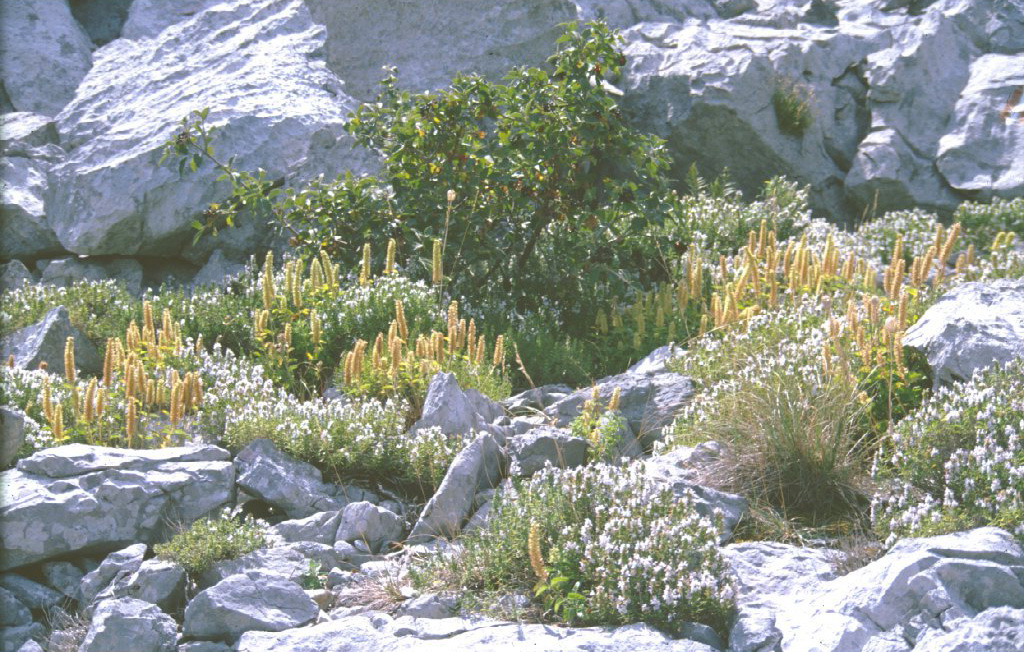
- Velebit mountain, the largest in Croatia, and a symbol of Croatia. Very beautiful verses of Vila Velebita are devoted to this mountain of rare beauty.
- I would like to add two very beautiful water springs in the Gatska valley, that you can see in the of village Sinac (Hoffman's spring and Mayer's spring).
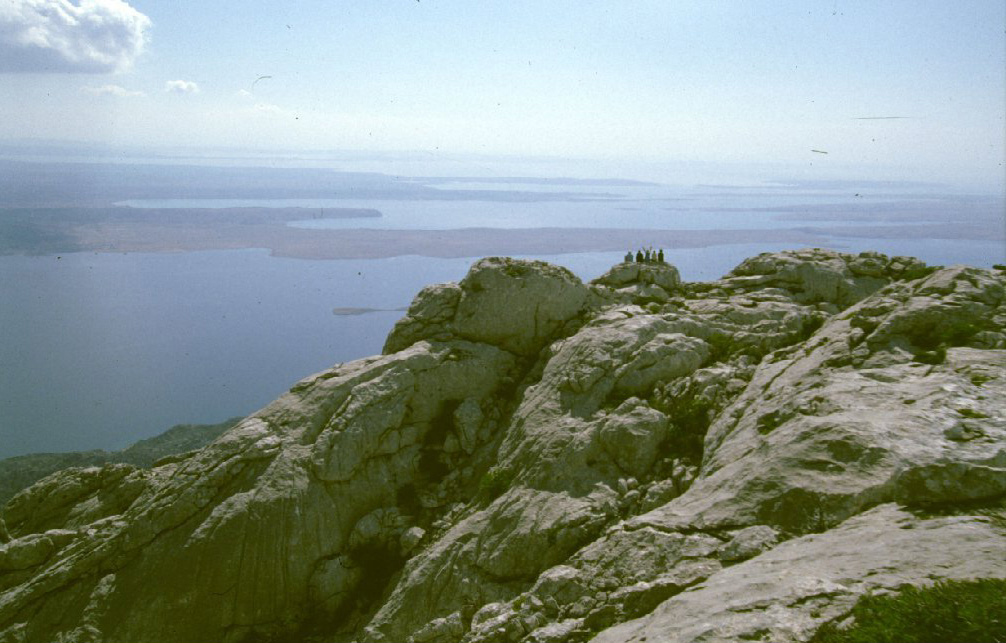
An impressive book about Lika and Plitvice lakes is [Hirc], published already in 1898, with drawings by a Czech painter Vaclav Anderle. However, it is little known that this area, full of natural beauties, had also interesting and rich history and culture.
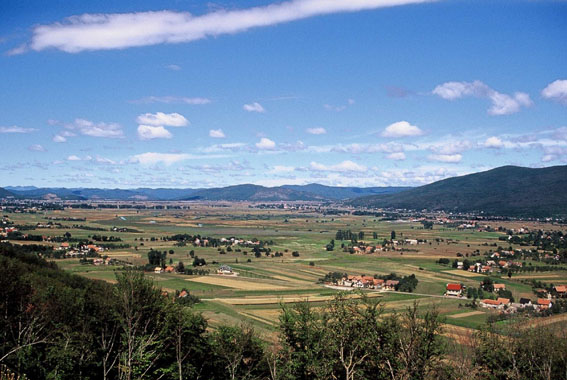
 esides
parishes in Lika and Krbava there existed
also
parishes of Brinje, Buzani, Hotuca, Oderjan, Una, Lapac, Nebljus
and Gatska (Gat). The Buzani parish is mentioned for the first
time in 1071, during the reign of Croatian King Kresimir IV (who
founded the city of Šibenik). The
name of Bužani reminds us to the name of Duchess
Buga, who
together with her sister Tuga and five brothers brought White
Croats to their new homeland. We
know this from writings of
Constantine Porphyrogenetus, a Byzantine emperor from 10th century.
esides
parishes in Lika and Krbava there existed
also
parishes of Brinje, Buzani, Hotuca, Oderjan, Una, Lapac, Nebljus
and Gatska (Gat). The Buzani parish is mentioned for the first
time in 1071, during the reign of Croatian King Kresimir IV (who
founded the city of Šibenik). The
name of Bužani reminds us to the name of Duchess
Buga, who
together with her sister Tuga and five brothers brought White
Croats to their new homeland. We
know this from writings of
Constantine Porphyrogenetus, a Byzantine emperor from 10th century.
The tribes of Bužani existed in 6th century on the north of the region inhabited by White Croats (around Krakow, in parts of Poland, Bohemia and Slovakia). We learned this from a map shown at the exhibition "Carolingians and Croats" kept in Split in 2001. It seems that the name of Buzani is derived from the name of river Bug in Ukraine, where they lived. They are mentioned in so called "Geograf Bawarski" and later in "Povest vremennyh let": "Buzhane zane sedoša po Bugu". Later on they were called Wolynianie (Volyniani). I am indebted to Halina Watrobska, Gdansk, Poland, for this last information.
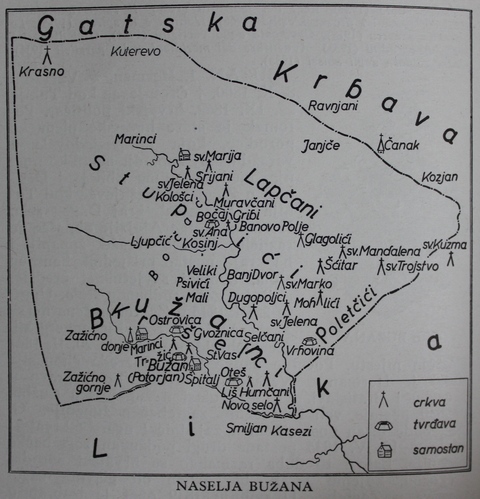
Source Croatian
Encyclopaedia,
under Buzan, written
by Josip Pavicic. A large map can be seen on the web page Acta croatica.
For the town Senj it is known to have been bishop's seat already in the fifth century. Before the tragic Krbava battle with the Turks in 1493 the region of Lika and Krbava, together with Senj, had numerous important cultural and spiritual centers. For instance, in the Middle Ages it had as many as 20 monasteries, while after Turkish penetrations only two of them survived in Senj. The remaining two were subsequently closed by Joseph II.
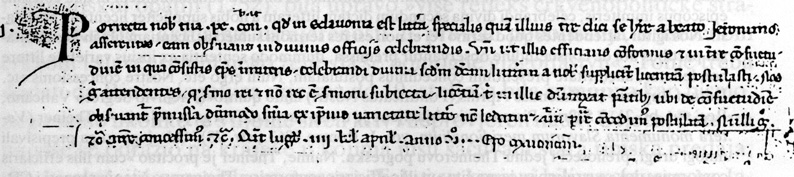
 In
1248
the Senj bishop Philip
obtained written
permission from Pope Innocent IV for the Glagolitic Mass to be used in
the Senj Cathedral, as well as in all areas where the custom had
existed. The same permission was given in 1252 to Benedictines from the
monastery of St. Nikola near Omisalj on the island of Krk. These events
were important for further flowering of Croatian Glagolitic culture.
This decision by Pope Innocent IV had also ecumenical importance, since
Croatian Glagolitic mass was very close to the mass served among
Orthodox Slaves (Serbs, Montenegrins, Macedonians, Bulgarians,
Ukrainians Byelorussians and Russians). These questions are discussed
in [Bogovic].
In
1248
the Senj bishop Philip
obtained written
permission from Pope Innocent IV for the Glagolitic Mass to be used in
the Senj Cathedral, as well as in all areas where the custom had
existed. The same permission was given in 1252 to Benedictines from the
monastery of St. Nikola near Omisalj on the island of Krk. These events
were important for further flowering of Croatian Glagolitic culture.
This decision by Pope Innocent IV had also ecumenical importance, since
Croatian Glagolitic mass was very close to the mass served among
Orthodox Slaves (Serbs, Montenegrins, Macedonians, Bulgarians,
Ukrainians Byelorussians and Russians). These questions are discussed
in [Bogovic].
It is interesting that even today in Croatia there exists the second name of Glagolić, dating from the 15th century. Also, it is indicative that there exists the village of Glagolić near the town of Kosinj in Lika. The name of the town of Gospic (now the seat of the Gospic - Senj Diocese) is derived from the Croatian name of Madonna: Gospa.
Most of Glagolić families live in Turopolje, a region South of Croatia's capital Zagreb. In the village of Velika Mlaka there is a street called Glagolići. I express my gratitude to Mr. Mišo Glagolić (sic!) for this information (2005).
The village of Glagolišće is mentioned in Acta croatica, in an important monograph by Ivan Kukuljević Sakcinski published in 1863 (printed in Zagreb in the Croatian Glagolitic Script!), on pp. 75, 132, 133, 210. We do not know if this village coincides with the metioned village of Glagolić.
St. Vojtech (Adalbert) visited Croatia in 989 while on his return from Rome to his native White Croatia. On that occasion he was in Skradin and Modrus. See an article by Ivan Kukuljevic Sakcinski in [Hrvatski putopis, p. 76].
 s a
young man King Charles IV visited for
several
days the
town of Senj in 1337, when he was only 21. In this
important Glagolitic center,
with the unique Roman Catholic cathedral where only
the Glagolitic
liturgy had been served (instead of Latin rite), he
made friends with the nobleman Bartolomej Frankapan.
Frankapan supplied him with military escort on his journey
to Tirol, where he was to meet his brother.
The Czech king Charles IV of Luxemburg built a Glagolitic
convent
in Prague in 1347, where
Croatian Benedictines from the island of Pasman were invited as
teachers.
It is remarkable that the convent was just a few hundred
meters from the famous Charles University, built the next
year, in 1348. Charles IV also founded the University of Vienna
in 1365. We recall by the way that the oldest university in
Croatia has been founded in the city of Zadar in
1396.
s a
young man King Charles IV visited for
several
days the
town of Senj in 1337, when he was only 21. In this
important Glagolitic center,
with the unique Roman Catholic cathedral where only
the Glagolitic
liturgy had been served (instead of Latin rite), he
made friends with the nobleman Bartolomej Frankapan.
Frankapan supplied him with military escort on his journey
to Tirol, where he was to meet his brother.
The Czech king Charles IV of Luxemburg built a Glagolitic
convent
in Prague in 1347, where
Croatian Benedictines from the island of Pasman were invited as
teachers.
It is remarkable that the convent was just a few hundred
meters from the famous Charles University, built the next
year, in 1348. Charles IV also founded the University of Vienna
in 1365. We recall by the way that the oldest university in
Croatia has been founded in the city of Zadar in
1396.
Some of important personalities in the history of the Glagolitic script related to Lika and Krbava are:
- Bishop Stipan, Modrus (13th century),
- Grgur, son of Martin Borislavić from Modruš (14th century),
- Petar pisac, author of the Vatican Illirico 8 (14th century),
- Prince Novak Disislavić (14th century),
- Grgur
- vicar Stanislav from Poland
- Paval dijak is Krbave (14/15th centuries),
- Bartol Krbavac (15th century),
- Broz Kolunic from Bužan (15th century),
- Jakov Blažević de Modrussia (Jakov pok. Blaza, 15th century),
- Blaž Jurjev Trogiranin (from Lapac, 15th century),
- Kristofor, bishop of Modruš from Dubrovnik (15th century),
- Nikola Modruški (Nicolas de Modrus, ~1427-1480),
- pop Martinac (15th century),
- Šimun Kožičić Zadranin (or Benja) Krbava - Modrus bishop (15/16 centuries),
- Bernardin Frankapan (1453-1529).
Ja, Stipan od Staroga Dubrovnika, biskup Modruški i vičnik Svete krune Uarske, posvitih ovu crikvu na poštenie svetoga Luke, pisara Marie Blažene.
As pointed out to me by Mihaela Sokić from Dubrovnik, the Old Dubrovnik (Stari grad Dubrovnik) refers to a Bosnian town north of Sarajevo that disappeared after the fall of Bosnia under the Turks in 1463. This town in Middle Bosnia was founded by merchants from the famous Dubrovnik. See a series of three articles by Perica Mijatovic under the common title "Zla kob starobosanskog grada Dubrovnika," in Stećak, Sarajevo, No 65, No 66, and No 67, 1999.
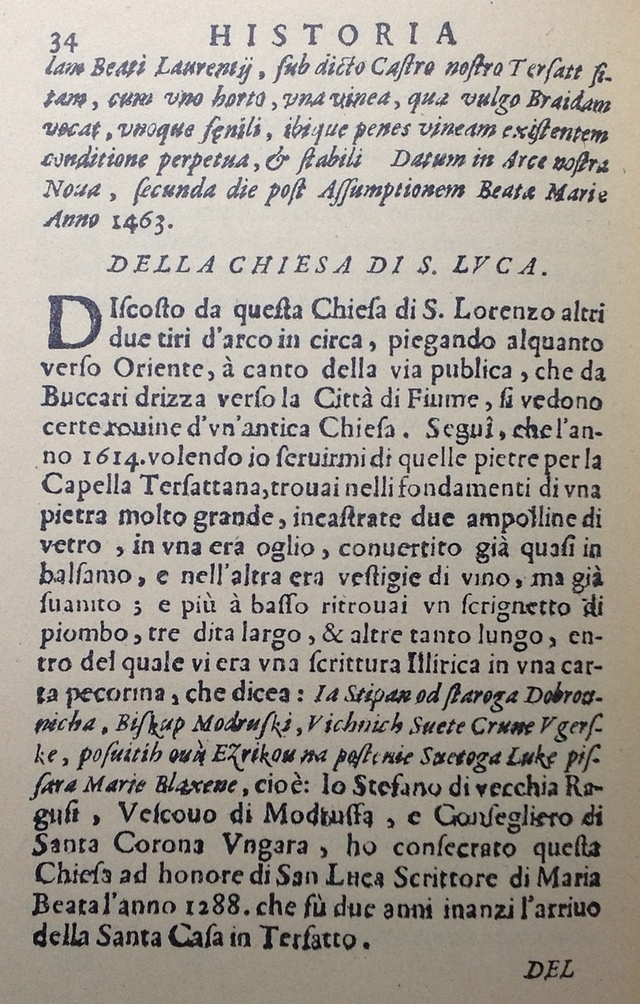
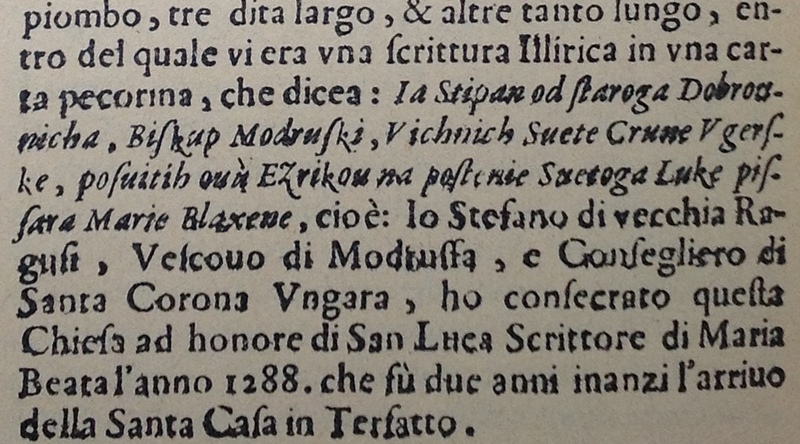
The concluding sentence (describing the muniment) mentions
that Stipan consecrated this church in the year 1288 (two years
before the arrival of the Nasareth House, i.e., Santa Casa, to the Trsat Sanctuary near the city of Rijeka, Croatia).
In italics is
emphasized the aforementioned text in Croatian, and above it (in the
second line) it was indicated to have been written in "scrittura
Illirica" (that is, in Croatian Glagolitic Script). See p. 34 (Croatian
translation on p. 112) of this important book by Franjo Glavinić
(1585 -
1652), published in 1648 in Udine:
The famous Vinodol Code from 1288, mentions the Modruš princes.
 he
first part of the Code
Slave 73
(Glagolitic collection kept in Bibliothéque Nationale,
Paris)
was written in 1375 by Grgur,
son of Martin Borislavić from
Modruš, then by Stipan
supisac, and prvad
Mikula na
Lindare. The book was written in the city of Šibenik, see [Šimić,
Glagoljica na šibenskom području]. It was during a certain period in
Spain, and since 1951 it is in Bibliothéque nationale in Paris.
he
first part of the Code
Slave 73
(Glagolitic collection kept in Bibliothéque Nationale,
Paris)
was written in 1375 by Grgur,
son of Martin Borislavić from
Modruš, then by Stipan
supisac, and prvad
Mikula na
Lindare. The book was written in the city of Šibenik, see [Šimić,
Glagoljica na šibenskom području]. It was during a certain period in
Spain, and since 1951 it is in Bibliothéque nationale in Paris.
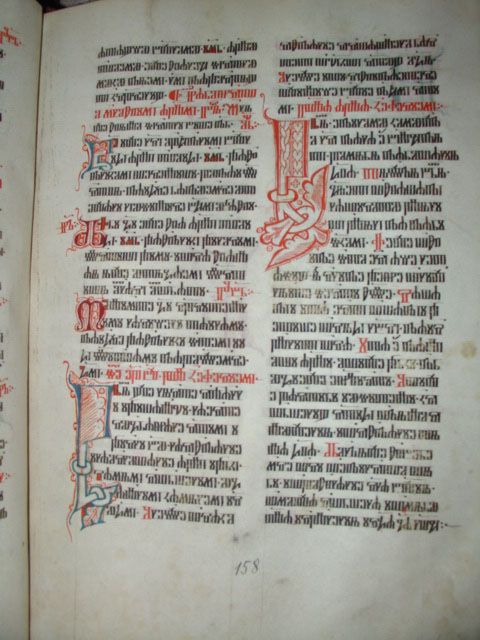
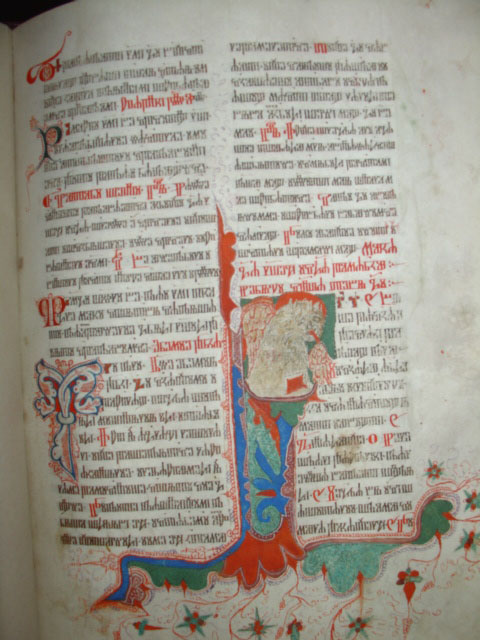
Glagoljski zbornik iz 1375. godine, pohranjen u Parizu (Bibliotheque Nationale, Slave 73), ima posebno mjesto među hrvatskim glagoljskim spomenicima (jedini rukopisni "liber horarum"). Izdvaja se od ostalih hrvatskih glagoljskih spomenika i po tome što ima dva teksta Očenaša: jedan među liturgijskim molitvama (f. 137v) koji se pripisuje ruci glavnoga pisca, Gregorija Borislavića, a drugi u misalskom dijelu - u Kanonu mise (f. 219r) i pripisuje se darovitom pisaru Stipanu. Oba se teksta razlikuju međusobno, a tekst Gregorija Borislavića razlikuje se od svih tekstova Očenaša u dosad poznatim hrvatskoglagoljskim spomenicima, i to dvjema ključnim leksičkim pojedinostima - riječima "kraljevstvo" i "kruh" u zazivima. Time je dobiven odgovor na pitanje kad se u hrvatskom glagoljskom Očenašu javljaju riječi "kraljevstvo" i "kruh". SeeAnica Nazor.
We know that by the end of 14th century a Paulist Glagolitic convent of sv. Nikola was built 4.5 km south of Modrus. Available documents from 1444 to 1475 mention a Glagoliti paulist vicar Stanislav, of the Polish origin. It is interesting that he translated Rules of the Paulist order from Latin into Croatian, in the Glagolitic script! He was vicar in the above mentioned convent of sv. Nikola on the mount of Gvozd (since the 18th century called Kapela). See [Runje].
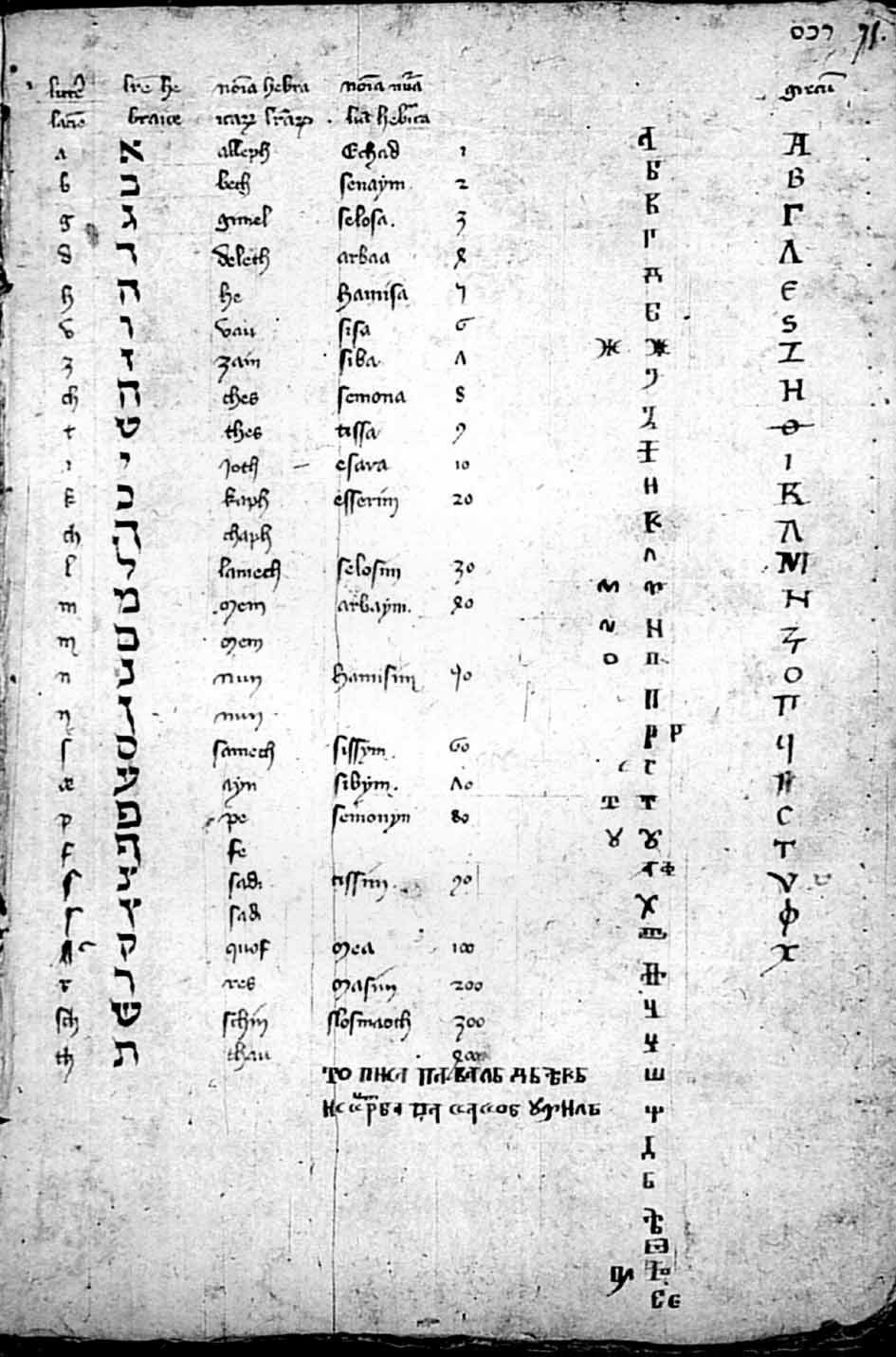 Paval
dijak is Krbave was a
student in Paris in the beginning of 15th century, a student of Georges d'Esclavonie.
Georges d'Esclavonie,
or de Sorbonne, was a Glagolitic priest from the same period, and
professor at Sorbonne in Paris. According to [Stanko Tenšek],
his predecessors
could be from Krbava. Paval dijak from Krbava left us an interesting
leaf in kept in Tours, containing his exercises in various scripts:
Gothic, Hebrew, and Croatian Cyrillic, where he also wrote his name
("to pisa Paval Dijak is Krbava kakob umil"). Georges d'Esclavonie was
in close relations with students from Krbava (de Corbavia). It is worth
mentioning that in one of his manuscripts kept in the City Library
(former Cathedral Library) kept in Tours in France, George de Sorbonne
mentions the following list of Croatian bishops that practiced
Glagolitic Mass (see
here, bottom on
the left):
Paval
dijak is Krbave was a
student in Paris in the beginning of 15th century, a student of Georges d'Esclavonie.
Georges d'Esclavonie,
or de Sorbonne, was a Glagolitic priest from the same period, and
professor at Sorbonne in Paris. According to [Stanko Tenšek],
his predecessors
could be from Krbava. Paval dijak from Krbava left us an interesting
leaf in kept in Tours, containing his exercises in various scripts:
Gothic, Hebrew, and Croatian Cyrillic, where he also wrote his name
("to pisa Paval Dijak is Krbava kakob umil"). Georges d'Esclavonie was
in close relations with students from Krbava (de Corbavia). It is worth
mentioning that in one of his manuscripts kept in the City Library
(former Cathedral Library) kept in Tours in France, George de Sorbonne
mentions the following list of Croatian bishops that practiced
Glagolitic Mass (see
here, bottom on
the left):
- Episcopus de Korbavia (from Krbava), on the first place;
- Episcopus Cnynski (from Knin);
- Episcopus Krxki (from the town of Krk on the largest Croatian island of Krk); then
- archbishop of Split
- bishop of Trogir
- bishop of Šibenik
- archbishop of Zadar
- bishop of Nin
- bishop
of Rab
- bishop
of Osor (island of Cres)
- Episcopus Senski (from the town of Senj).
Poklonenje
i pozdravlenje knezu Jurju
kako momu
gos-
podinu plemenitomu dam ti viditi da sam
zdrav Božju milostju i svete Marie Gospoe.
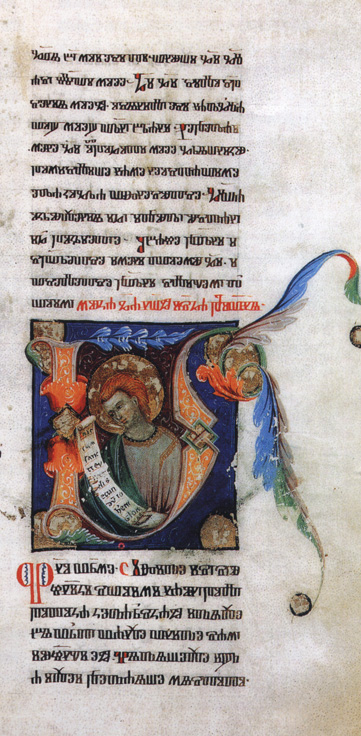
 ne
of the most
beautiful Glagolitic books is Missal
of Prince Novak from 1368,
written in Krbava, now kept in the National
Library in Vienna, Austria. The missal contains the earliest known
Croatian verses in the Glagolitic script (see Acta
croatica, pp. 317 318):
ne
of the most
beautiful Glagolitic books is Missal
of Prince Novak from 1368,
written in Krbava, now kept in the National
Library in Vienna, Austria. The missal contains the earliest known
Croatian verses in the Glagolitic script (see Acta
croatica, pp. 317 318):
I pomisli vsaki
h(rst)janin
da se svyt ništare ni,
jere gdo ga veće ljubi,
ta ga brže zgubi.
Nu jošće pomisli vsaki sada:
ča se najde ot nas tada,
gda se d(u)ša strahom smete,
a dila n(a)m skriti nete...
The famous Middle Age
death
sequence "Dies irae", appears in the missal of Prince Novak more than
hundred years earlier than in Latin missals in Europe. It also contains
some music
notation. Written by Prince
Novak Disislavic for saving his soul, its beautiful Glagolitic letters
were later used as a model for printing the first
Croatian incunabulum in 1483
(Missal Romanum), only 28 years after
Gutenberg's Bible. Prince Novak is from Ostrovica, from the clan of
Mogorovic. According to dr. Marija s. Agnezija Pantelic, the Missal of
Prince Novak was written according to a missal from the convent of sv.
Marija in Zadar.
Vidi [Hilje
and Tomić, Slikarstvo, p. 154].
The
missal is important also due to a
short note
written in the book more than hundred years later, in 1482, by Juraj Zakan from the town of
Roč in
Istria, where he mentions his
excitement with activities related to
printing the first Croatian incunabulum, published in 1483.
The note was written in the town of Izola (Slovenian part of
Istrian peninsula).
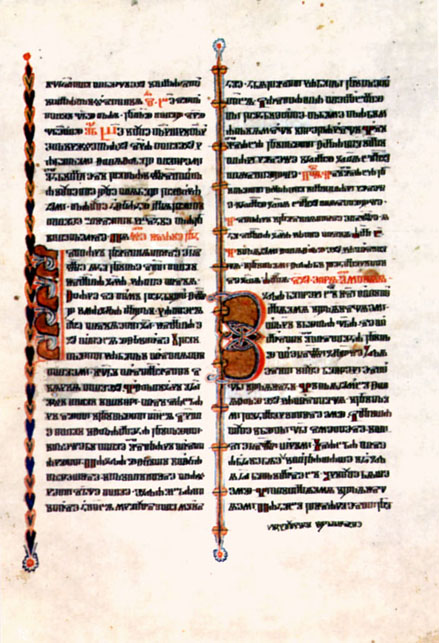

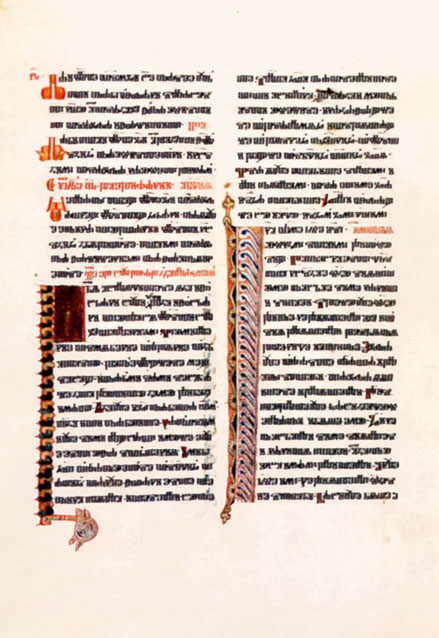
Narrated by dr. Vesna Badurina Stipčević, Zagreb
 Berlin missal
of Bartol
Krbavac (218 vellum leaves, two columns with 31 lines), 1402 (Berlin,
Staatsbibliothek). The book had interesting history: written for the
church of St. Juraj Koprivski on the beautiful Zrmanja river (at that
time called Kopriva), it was in Zadar in 1440, in Rome in 1627, in
England in 1808 (Kensington House). It is known that in 1882 it arrived
from London to Berlin as a part of Hamilton's collection (named
according to a Scottish collectioner Hamilton). Finally, in 1956 the
book was again found in Berlin, where it is also now. The beginning of
the missal contains a short note written by Caperan (professor of
oriental languages) in French, recommending this book to scholars
because of its beauty and antiquity.
Berlin missal
of Bartol
Krbavac (218 vellum leaves, two columns with 31 lines), 1402 (Berlin,
Staatsbibliothek). The book had interesting history: written for the
church of St. Juraj Koprivski on the beautiful Zrmanja river (at that
time called Kopriva), it was in Zadar in 1440, in Rome in 1627, in
England in 1808 (Kensington House). It is known that in 1882 it arrived
from London to Berlin as a part of Hamilton's collection (named
according to a Scottish collectioner Hamilton). Finally, in 1956 the
book was again found in Berlin, where it is also now. The beginning of
the missal contains a short note written by Caperan (professor of
oriental languages) in French, recommending this book to scholars
because of its beauty and antiquity.
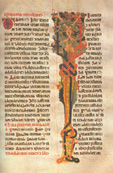
[1] - [2] - [3] - [4] - [5] - [6] - [7] - [8] - Roč missal, 15th century (National Library in Vienna, Austria), Cod. Slav. 4, 252 leaves, (24 x 35.5 cm), written probably by Bartol Krbavac (a fantastic book, with beautiful illuminations and intials; I had it in my hands in 2007 during my visit to the Austrian National Library in Vienna),
 Beram
missal, (490 pages, National
Library in Ljubljana, Slovenia), ~1425, written probably in the town of
Bakar for the parish church in Beram, Istria.
Beram
missal, (490 pages, National
Library in Ljubljana, Slovenia), ~1425, written probably in the town of
Bakar for the parish church in Beram, Istria. - Bakar breviary (containing also chronicle of the town of Bakar), 1414, lost,
- Hum breviary, 1442, probably written by Bartol Krbavac.
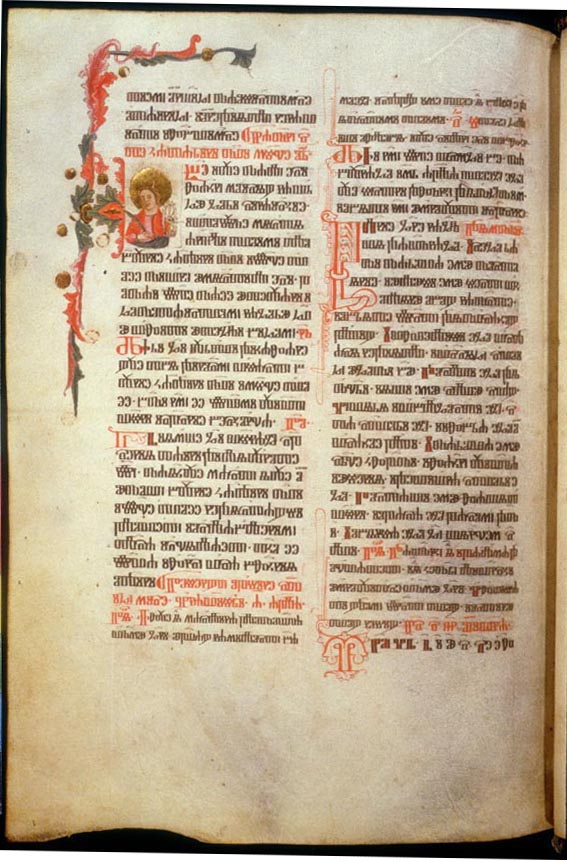
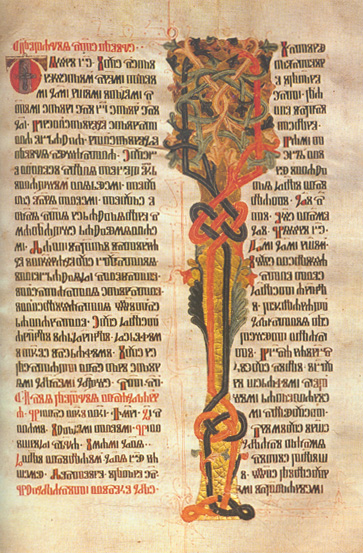
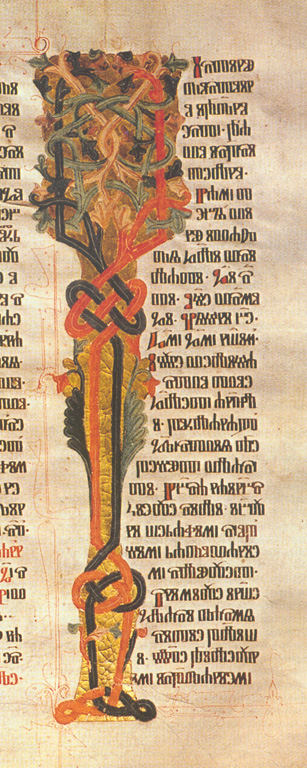
All of them are rich with nice miniatures. It is known that Bartol lived in Zadar for about thirty years, from 1410 to 1440, see [Runje, p. 17].
According to dr. Marija s. Agnezija Pantelić, it is possible that the artistic atmosphere created by Bartol Krbavac enabled the appearance of world's famous painter Julije Klovic (1498-1578), known as "Michelangelo of miniature."
Blaz Jurjev Trogiranin was outstanding painter from 15th century, working in Trogir. He was born in Lapac. Among many sacral paintings we should mention a grand polyptych in the cathedral of St. Lovro in Trogir, on which he left us his short note in Glagolitic quickscript around 1435.
The oldest known Glagolitic document written in Glagolitic quickscript is a muniment from Pocitelj (Lika) from 1393. It mentions ...Tomaš i Butko krbavski lički buški i procaja knezi.
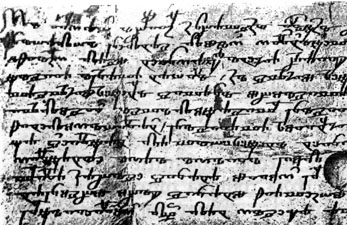 |
The oldest known Croatian cursive Glagolitic muniment that we know of (and preserved in the original) is a little bit older - from 1376 (Dobrinj).
In Golubić near the town of Bihać (now in western Bosnia, ie. Turkish Croatia) a Glagolitic tablet was found where among others the Krbava Prince Tomas Kurjakovic is mentioned, and his support for building strongholds on the island of Ripac on the Una river in 1442. The tablet, which used to be in the church of St. Martin, ruined by the Turks, is now in the famous Franciscan monastery in Fojnica in central Bosnia. See [Fučić, Glagoljski natpisi, p. 164]. For Croatian Glagolitic heritage in Bosnia see here.
In the ruins of the bourg of Buzim a short glagolitic fragment containing nice and and pretty large glagolitic letters (up to 13 cm) was found, dating from 15th century. It is kept in the Museum of Lika in Gospic, see [Fučić, Glagoljski natpisi, p. 113].
An interesting Glagolitic seal from 1492 from Krbava mentions two Krbava dukes Petar and Juraj; see below. It contains a circular inscription Petar i Juri, knezi krbavski, and the herald of the noble family of Gusić. It can be seen on the Exhibition of the Glagolitic Script in the city of Rijeka.
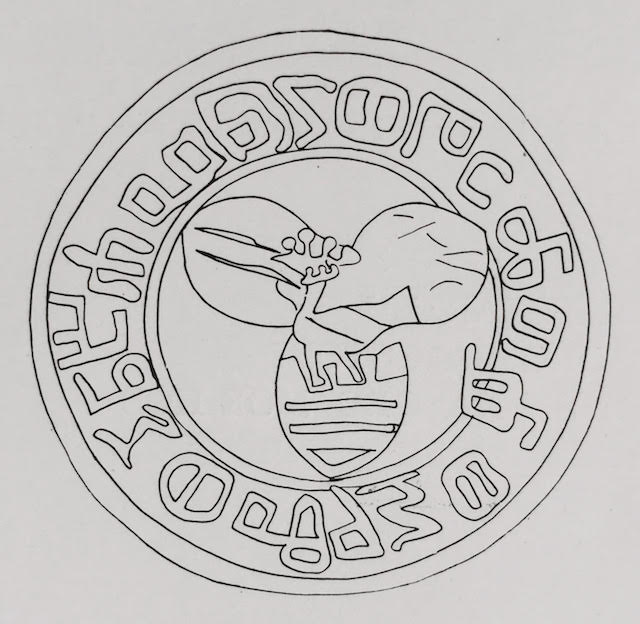
Glagolitic seal: Pet(a)r Juri Kn(e)zi Krbavski / Petar Juri Princes of Krbava.
In the middle three coats of arms, one of them with crowned goose in the middle,
representing the Gušić family, and with the crown arround its neck.
See [Fučić, Glagoljski natpisi], p. 222.
There are some opinions that the 1483 Glagolitic incunabulum might have been be printed in once famous Modruš (Valentin Putanec), while others propose the town of Roc in Istria. Unfortunately, the exact data are missing, and the colophon of the book does not indicate the precise place of printing.
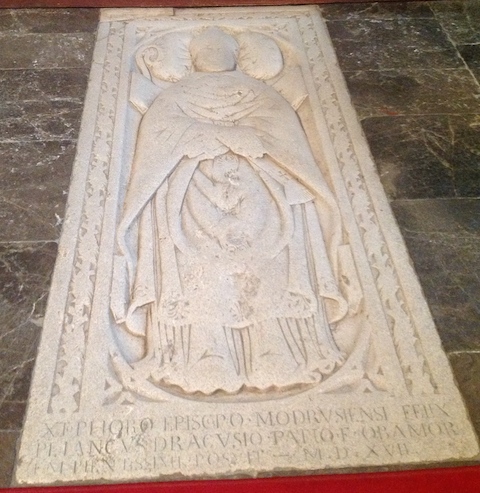
The grave of the Modruš bishop Kristofor (Xtophoro episcopo
Modrvsiensi) in
in the churhc of Sv. Filip i Jakov (St. Philip and Jacob) in Novi
Vindolski.
In 1486 bishop Kristofor
of Modruš (born in Dubrovnik) had
to escape
from Modrus to the town Novi Vinodolski on the Croatian littoral
before the Turkish onslaughts. Once glorious Modrus, important
spiritual and trade
center of Middle Age Croatia, lost its importance after 1493,
and today it is a small village with sad remains of the Trzan
castle (its walls were 1200 m. long).
The
area was again ravaged by partisans in
1942, and during Serbian aggression on Croatia in 1991-1995.
 Croatian
ban (governor) Ivan Karlović,
the last descendant of the family
of dukes of Kurjakovics', was born in a rich noble family, with their
property mainly in Lika and Krbava. Due to Turkish penetrations he lost
many of his lands. He ruled during the great Croatian exodus in the
16th century. After exhausting battles he died at the Medvedgrad bourg
near Zagreb, and was buried in the Church of Majka Božja Remetska in
Zagreb. He entered into the poetry of Croatian exiles in Italy, Austria
(Gradisce - Burgenland), and the poetry of Croatian Muslims. His sister
Jelena was mother of the Siget hero Nikola
Šubić Zrinski.
Croatian
ban (governor) Ivan Karlović,
the last descendant of the family
of dukes of Kurjakovics', was born in a rich noble family, with their
property mainly in Lika and Krbava. Due to Turkish penetrations he lost
many of his lands. He ruled during the great Croatian exodus in the
16th century. After exhausting battles he died at the Medvedgrad bourg
near Zagreb, and was buried in the Church of Majka Božja Remetska in
Zagreb. He entered into the poetry of Croatian exiles in Italy, Austria
(Gradisce - Burgenland), and the poetry of Croatian Muslims. His sister
Jelena was mother of the Siget hero Nikola
Šubić Zrinski.
In
the Medvedgrad bourg near
Zagreb died a
famous Croatian latinist poet Jannus Panonius
from the 15th century.
A very beautiful Glagolitic muniment from 1469 (Licka listina) is preserved with six hanging seals ("pecati visuci"). It mentions a duke and judges of the noble Kings' office in Lika ("knez i suci plemenitoga stola kraljeva... v Lici). Also, a testament in the Glagolitic script is preserved, by which a certain Matijica Utišenić leaves some lands to a church on the Velebit mountain above Medak ("crkvi svetago Ivana na Gori").
Broz Kolunić (more precisely, Broz Kacitic from the clan of Kolunic from Lika) wrote a collection of Lenten sermons in the Glagolitic script in 1486 in Knezeva vas near Otocac. It is interesting that the colophon with his signature was written in Croatian cyrillic.
A valuable golden pectoral romanic cross of Krbava bishops, dating from 13th century, is kept today in the town of Bribir. In 1491 a basement had been attached with engraved glagolitic text, mentioning Jurki Andrijicic, see [Fucic, Glagoljski natpisi, p.105].
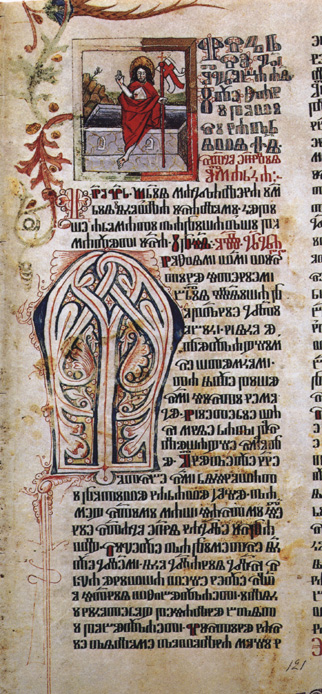 Pop
(Rev.) Martinac (plemenem
Lapcanin, i.e. from Lapac) lived in
Grobnik near Rijeka, and described in the Novljanski II breviary from
1495 (completed in the course of 11 years) the tragic
defeat of Croats in the 1493 Krbava battle
with the Turks. Both Novljanski
I and II breviaries were prepared
by members of Glagolitic Paulist order in Croatian south.
Pop
(Rev.) Martinac (plemenem
Lapcanin, i.e. from Lapac) lived in
Grobnik near Rijeka, and described in the Novljanski II breviary from
1495 (completed in the course of 11 years) the tragic
defeat of Croats in the 1493 Krbava battle
with the Turks. Both Novljanski
I and II breviaries were prepared
by members of Glagolitic Paulist order in Croatian south.
Simun Kožičić Zadranin (or Benja) born in Zadar, Krbava - Modruš bishop, founded the Glagolitic printing house in Rijeka (1530-1531) where six books were printed:
- Psaltir,
- Oficij rimski,
- Misal hruacki (Croatian Missal),
- Knjižice krsta,
- Knjižice od žitija rimskih arhijereov i cesarov,
- Knjižice od bitija redovničkoga.
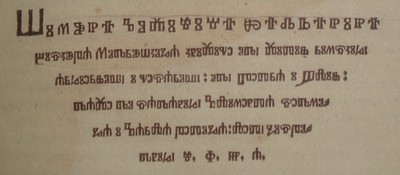
Šimun
Kočičić Zadranin, bishop
of Modruš,
Knjižice
od žitija rimskih arhijereov i cesarov
In 1513 at the Lateran Council he delivered a speech in front of the Pope asking for help in the struggle against Turkish onslaughts. We know that Simun Kozicic Zadranin planned to publish the history of Croatian land (hrvacke zemle), but the book was either not published, or lost. Namely, Kozicic asked Toma Niger (Toma Nigris), the Skradin bishop (and later the Trogir bishop), and close friend of the famous Marko Marulić, to write the book about history of Croatian land (hrvacke zemle) and its glory (slavi ee).
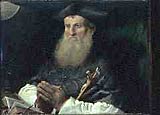
Nikola Modruški, bishop of Senj from 1457, and bishop of Modruš from 1461, was among others Pope's representative at the court of Stjepan Tomašević in Bosnia, and on the court of the Hungarian king Matijaš Corvin in Budim. His huge library whose origin is from Modruš, was left to the Vatican. He wrote a treatise in defense of the Glagolitic Script in Modruš Diocese. It is regarded to be the first polemic treatise in the history of Croatian literature. It is interesting that Nikola Modruški was born in Boka kotorska. In 1474 he printed the first book among the Croats, in the Latin language.
 rbava
and Lika were very little studied
in the context of their relations to Bosnia and Bosnian
Chruch, whose members were
called
Krstyans. It seems that the Krbava Diocese was founded in 1185 among
others also in order to prevent spreading of heresy of
Bosnian Krstyans.
rbava
and Lika were very little studied
in the context of their relations to Bosnia and Bosnian
Chruch, whose members were
called
Krstyans. It seems that the Krbava Diocese was founded in 1185 among
others also in order to prevent spreading of heresy of
Bosnian Krstyans.
Here is a list of complete Glagolitic books related to Lika, Krbava and Modruš:
- Code Slave 73, from
1375, Paris (Bibliothèque
Nationale), many thanks to Biserka Krslin-Barda (Paris) for the link
- Code Slave 78, Paris (Bibliothèque Nationale)
- Missal of Prince Novak Disislavić, 1368 (National Library in Vienna)
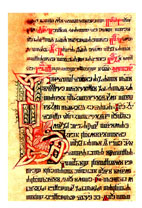 Vatican
breviary
Illirico 5 (1379)
Vatican
breviary
Illirico 5 (1379) - Vatican breviary Illirico 6, 14th century
- Vatican breviary Illirico 10
- Vatican Illirico 8 (missal), 14th century
- Bull of Paulists, 14th century
- Krbava breviary, lost (see [Pantelić, p. 84])
- Fragment of a Kosinj missal (eight leaves kept
in Podbrezje in Slovenia), from the beginning of the 14th century
- Lost missal (Kukuljevic), 14/15 centuries
- Berlin missal of Bartol Krbavac (436 vellum pages), 1402
- New York missal (according to Henrik Birnbaum, UCLA, the missal is from Lika-Krbava region or from Zadar hinterland)
- Roč missal, 15th century (National Library in Vienna, Austria), Cod. Slav. 4, 252 leaves, (24 x 35.5 cm), written probably by Bartol Krbavac
- Beram missal of Bartol Krbavac (National Library in Ljubljana Slovenia), ~1425
- Draguć breviary, 1407, probably from Krbava (in use in Istria, in Roč and Hum)
- Fragment of breviary (Archive of HAZU, Zagrebu, III c 12), 70 leaves, written in Krbava
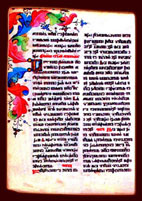 Bakar
breviary (containing also the chronicle of the town of Bakar), 1414,
lost
Bakar
breviary (containing also the chronicle of the town of Bakar), 1414,
lost - Missal from 1435, 564 vellum pages
- Hum breviary, 1442
- Bribir missal, 1459
- Bribir breviary, 1470
- Kolunić collection of lenten sermons, 1486, near Otočac
- Dabar breviary, 1486 (from the Frankapan castle of Dabar near Otočac in Gatska parish)
- Vinodol collection, 15th century
- Vinodol (Kukuljević's) breviary
- Metropolitan breviary (MR 161)
- Modruš urbar, 1486 (40 pages)
- Novljanski missal
- Novljanski I breviary, 1459
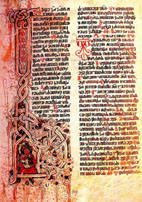 Novljanski
II breviary, 1495, see
here
Novljanski
II breviary, 1495, see
here - Kosinj breviary, 1491 (incunabulum, the unique preserved sample is kept in the National Library Marciana in Venice)
- Oxford collection (15th century, kept in Bodlean Library, Oxford), Canon. lit. 414, written in Lika, known to have been in possession of Alberto Fortis
- Ljubljana collection (National library in Ljubljana, Slovenia, NUK 368)
- Tkon collection (Tkon is a town on the island of Uljan), beginning of 16th century, written probably in Modrus
- Petrinić collection
- Blagdanar popa Andrije from Novi
- Dijalog Grgura pape
- Missal of Pavao Modrušanin, printed in Venice, 1528 (one copy in Odessa, Cambridge, London, Prague, two copies in St. Petersburg, and 3 in Zagreb)
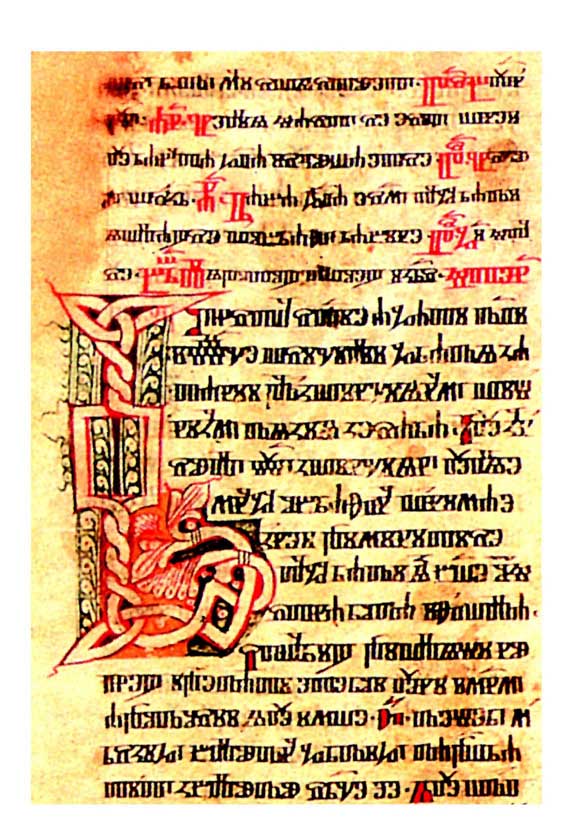
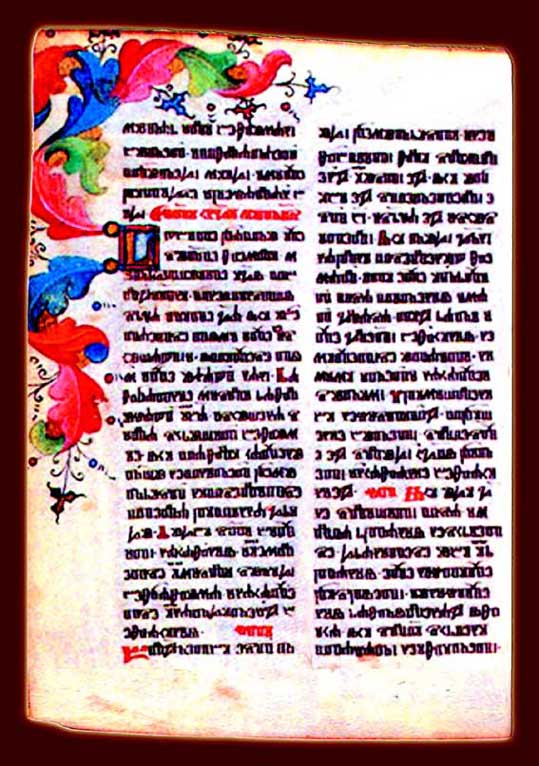
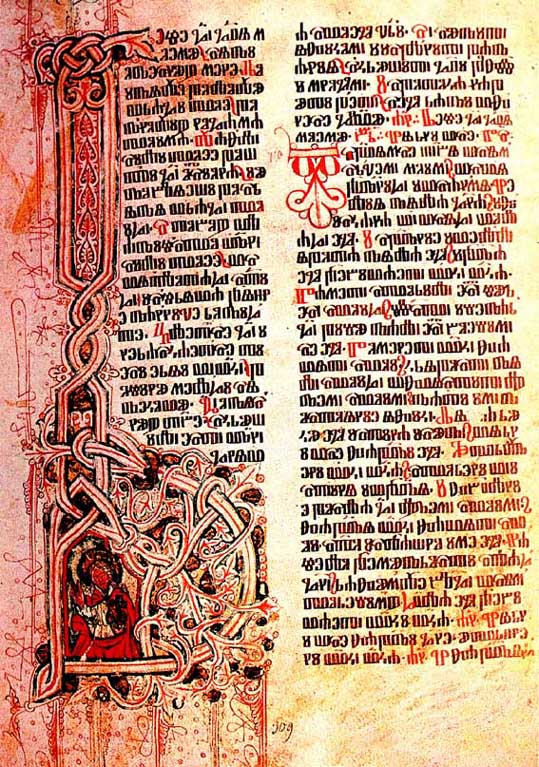
and numerous very old and valuable fragments.
Fragment of a missal from Kosinj, bought in 1374 into Kosinj, written probably at the beginning of the 14th century in the area of Rijeka bay:
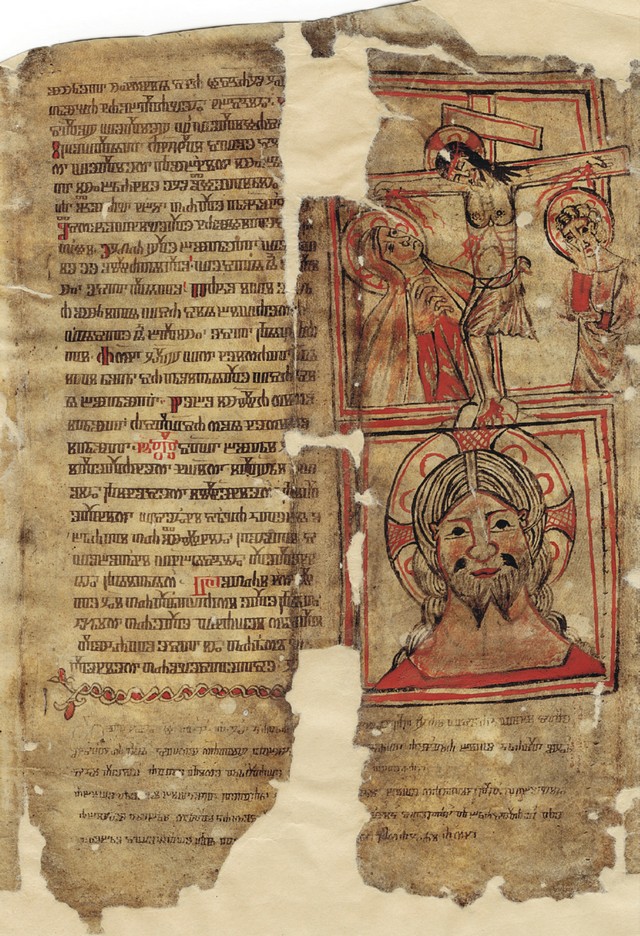
It
was in use in the Kosinj middle-age churches in the villages of Buci
and Srakovina. The church in Buci coincides with the present-day church
of St. Antun Padovanski i Gornji Kosinj (i.e., the Upper Kosinj), while
the village of Srakovina changed its name to Sraklin in the new era,
which was renamed to present-day Kosinjski Bakovac in 1913. See [Zor] and [Mance]. This is one of eight preserved leaves, kept in Podbrezje in present-day Slovenia.
Near
the bottom of the above photo, there is a marginal inscription in the
last six lines.
See the following article written by Ivan Mance: Kosinjski rukopisni misal prodan 1374., a pisan početkom 14. st.
The Vatican breviary Illirico 5, kept in Biblioteca Apostolica Vaticana, dating from 14th century, and written by Petar pisac (Petar the scribe), has been redeemed from the Turks in 1487. It is indeed deeply moving how ordinary people helped with their money and goods in order to redeem the book, although very poor, living in regions looted during frequent Turkish penetrations.
According to Henrik Birnbaum (from the University of Los Angeles, USA), the New York Missal (1400-1410), kept in the Pierpont Morgan Library in New York, might originate from the Zadar hinterland or Lika-Krbava region.
Here we provide the list of Glagolitic missals, breviaries and collections, related to Lika i Krbava, according to [Damjanović]:
|
|
|
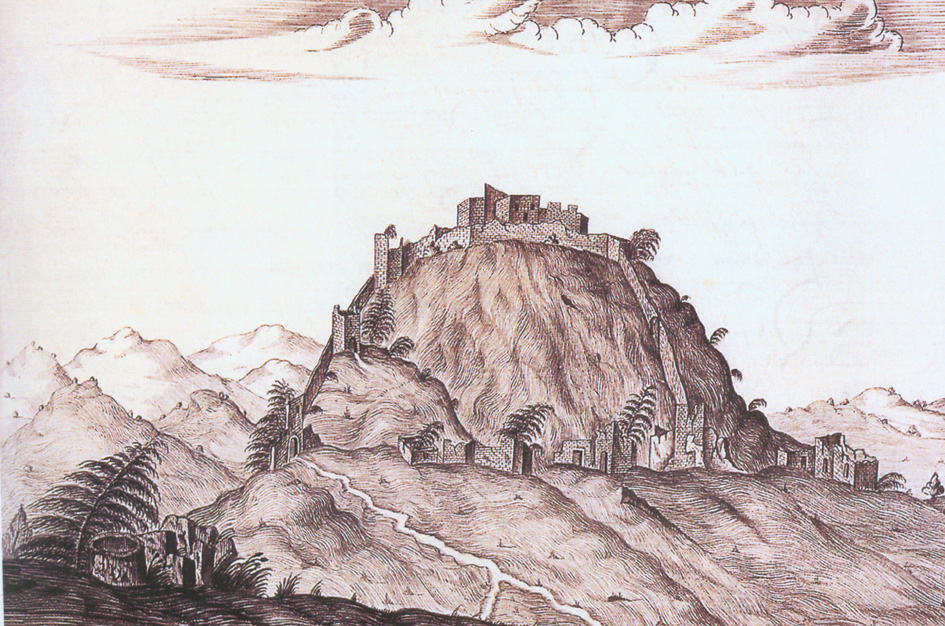 The Modruš urbar
from 1486 is important Croatian legal document, originally written in
the Glagolitic Script, but preserved in two Latin translations from
16th and 17th centuries. The books has 40 pages, and its reprint
exists, see [Lopasic].
It is interesting that
Modrus, which today is a small village (with glorious past), was
mentioned for the first time in 1160.
The Modruš urbar
from 1486 is important Croatian legal document, originally written in
the Glagolitic Script, but preserved in two Latin translations from
16th and 17th centuries. The books has 40 pages, and its reprint
exists, see [Lopasic].
It is interesting that
Modrus, which today is a small village (with glorious past), was
mentioned for the first time in 1160.
Among Croatian legal documents, belonging to Acta Croatica, we may mention several very interesting and beautiful Glagolitic documents kept in the library of Franciscan convent of sv. Kriz in Ljubljana, Slovenia. They were written in Lika in 1433, 1469, in Senj in 1513, and in Slunj in the 16th century, see [Voncina]. We also mention the glagolitic document from Kaseg (Lika), 1513, kept in the Senj Archives, described in [Hercigonja, Na temeljima hrvatske knjizevne kulture].
In the city of Zadar, as well as in Rab, there were numerous Glagolitic priests from Krbava (de Corbavia) in 14th and 15th centuries. Jakov Blažević de Modrussia (Jakov pok. Blaza) was a notable copyist and illuminator of Glagolitic books, working in Zadar. Also a considerable number of Glagolitic priests were active on island of Krk, islands in the region of Zadar (Uljan, Pasman, Iz, Dugi otok), and in Istria. For example,
- a Glagolitic priest Butko Budonja from Lika is mentioned as a Glagolitic scribe of the brotherhood of Sv. Silvestar in Zadar in 1388, see [Antun Badurina, article by Petar Runje, p. 63];
- in 1401 a Glagolitic priest Ratko pok. Bilaca Meglanica "de Corbavia" obtained a missal and breviary in Bokanjac, see [Antun Badurina, article by Petar Runje, p. 116];
- a Zadar priest Volkacije left his silver cross to a church in Krbava in 1413, and his missal to the covent of Sv. Juraj "de Lesac" near Senj; see [Antun Badurina, article by Petar Runje, p. 63];
- Glagolitic priest Butko pok. Radoslava (i.e. of the late Radoslav) left his breviary to the church of Sv. Mihovil in the village of "Dolnja vas" in Krbava;
- in 1441 a Zadar priest Jursa pok. Mateja ordered by his last wish to be burried in the Glagolitic church of Sv. Mihovil in Zadar, and that his breviary should be given to the church of sv. Marija in Modruš;
- in 1441 rev. Jakov, a priest on the island of Uljan near Zadar, left a Glagolitic book to the church of Sv. Jakov in Krbava;
- it is worth noting that also a considerable number of Croatian noblewomen support writing and buying liturgical books, see [Antun Badurina, article by Petar Runje, pp. 64-65];
- a Glagolitic old-Croatian breviary is sold for the church of Sv. Marija Magdalena in Lika;
- in 1449 a certain Jurko Garkovic "de Corbavia" obtained from an Ugljan priest (Ugljan, i.e. Uljan - an island near Zadar) a codex for the church of Sv. Jakov "in Corbavia".
- in Komrcar on the island of Rab, a Glagolitic Franciscan Tertiary Petar "de Corbavia" died in 1450, and his colleagues write that they will take care about his books;
- Ivan Kordica, a priest in the church of Sv. Marija Magdalena in Bužani, bought a complete breviary in Zadar for 26 golden coins, see [Antun Badurina, article by Petar Runje, p. 116];
- in Istrian town Medulin there is a glagolitic graffiti To pisa pop Marko Dabran (ie. from Dabar in Lika), see [Fucic, Glagoljski natpisi, p. 245].
- in the town of Barban in Istria, in the church of Sv. Antun Opat there is the following Glagolitic graffiti: To pisa pop Vid s(i)n' Pavlov' z Like 1453, see [Fučić, p. 35];
- Paz in Istria, has a graffiti mentioning plovan Andrij iz Bužan, 1461;
- in Draguc and Hum, in 1529 and 1537, pop Andrij iz Buzan,
- in the glagolitic minutes from the town of Hum in Istria (1618.-1672.) in the baptismal book we can find 32 second names of Ličanin and 2 of Licanica. See [Vlahov], "Još jedna glagoljska matica iz Huma," pp. 174-175.
For many more details see [Runje, Tragom stare licke povijesti].
In 1499., in the environs of Zadar, the Turks have cruelly killed parisheners and their glagolitic priests. They were don Luka, don Martin Hrvatinic (i.e. Martin the Croat), don Jakov Gunjić, don Juraj Oplanić, don Vid and don Stipan. See [Bogović and Jurišic, p. 81].
In Istrian peninsula there is a village of Modrušani and Otočani (between Kanfanar and Zminj), then another Modrusani west of Svetvinčenat. On the north of Istrian town of Buzet there is the village of Krbavica. On the west of Sveti Petar u Šumi there is the village of Brinjani, while near the mouth of the Lim channel in Istria there is the village of Medaki. All these names are obviously related to those Croats who had to escape before the Turks from the region Lika and Krbava. It is well known that people Lika spoke cakavian Croatian language (ca = what) before the arrival of Turks.
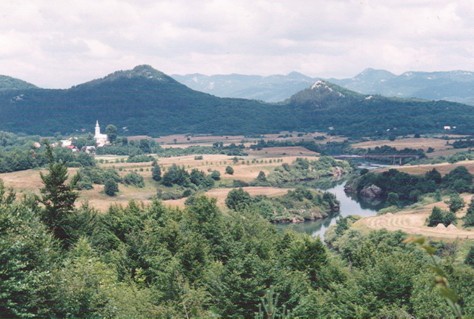
The Kosinj valley is one of the most beautiful in Croatia
When speaking about the Kosinj 1491 breviary (incunabulum), whose only preserved sample is kept in the National Library of St. Marco (Marciana) in Venice, we should stress that the Kosinj, which today is a small village in Lika, once was vary famous. Many geographical maps from 15th and 16th centuries confirm this, where Kosinj is included. On the Old maps of the Adriatic prepared by various European authors, mostly Italian, Kosinj appears as many as 11 times. It is interesting that in some of them Corbavia is indicated as the region between Metlika (Merling) and Mokrice (Mocriz) u today's Slovenia, covering also the Croatian region of Zumberak (the reason is clear - it was a consequence of massive Turkish persecutons from the region of Krbava):
- Cosin, map from 1560 (p. 27); we can also see the region of Corbavia, but not on its usual place in (today's) Lika, but as the region between Metlika (Merling) and Mokrice (Mocriz), that is, essentially in the region of Zumberak west of Zagreb in Croatia and Bela Krajina in Slovenia; Its name is obviously related to inhabitants from Krbava near Velebit, exiled by the Turks;
- Cosin, map from 1563 (p. 40); Corbavia as above;
- Cosin, map from 1565 (p. 43); Corbavia as above;
- also on maps from ~1563 and 1565 (pp. 43 and 78) we can see Corbavia with Metlika (Merling) and Mokrice (Mocriz);
- Cosin, map from 1565 (p. 77);
- Cosin, map from 1570 (p. 84);
- Khesin, map from 1573 (p. 89);
- Cosin, map from 1620 (p. 108);
- Cosin, map from 1630 (p. 118);
- Kosin, map from 17th century (p. 138).
On all these maps (and many other) we can see the fortress of Modrus (Modrussia) denoted as outstanding place.
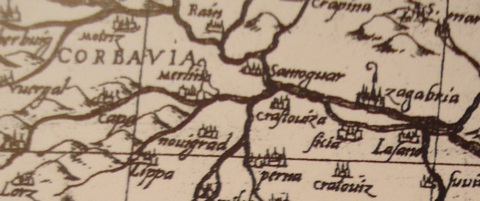
A detail from the map by Antonio Lafréry published in 1560
in
Rome, [Lago,
p. 27].
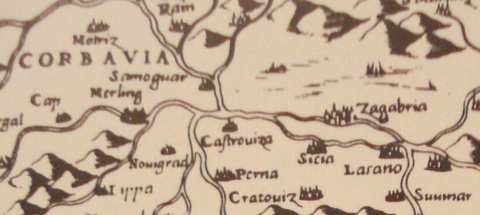
A detail from the map by Ferrando Bertelli published in 1565, [Lago,
p. 41].
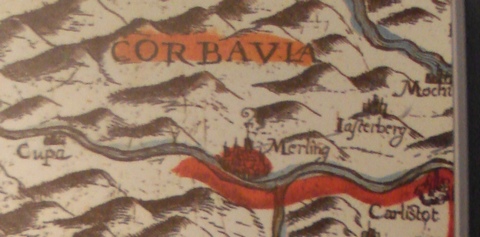
A detail from the map by Stefano Scolari published in 16th century in
Venice, [Lago,
p. 43].
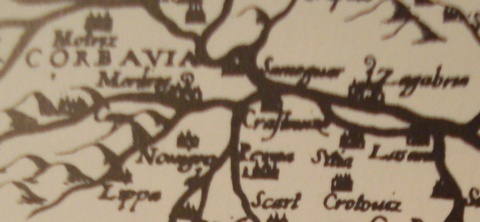
A detail from the map by Nicola Nellj published in 1570 in Venice, [Lago,
p. 44].
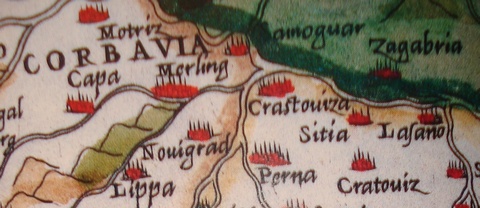
A detail from the map by Giacomo Gastaldi published in 1566 in Venice, [Lago,
p. 47].
The above maps clearly
indicate the proportions of Turkish persecutions
in Croatia in the 16th century. For more details see altogether eight
maps from [Lago,
on pp. 27, 40, 41, 43, 44, 46, 78,
107], published in Vencie and Rome between između 1560. 1593., in which
CORBAVIA was drawn in this way, on the West of Zagreb (on the map
indicated as Zagabria). See also the maps related to the Kosinj printing house.
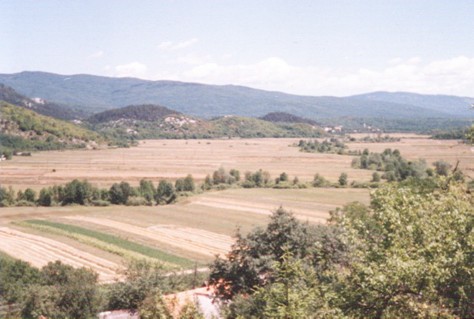
The valley of Kosinj, photo by Ms Marijana Špoljarić
A prominent Dutch geographer Abraham Ortelius, (16th century) prepared the book Theatrum Orbis Terrarum (Antwerpen), which was the first world atlas in history. Its 1577 edition contains a map where the town of Kesin (Kosinj) is indicated, while in the accompanying description one can read that in Kesin there is a (glagolitic) printing machine. Personal information by Mr. Ivo Dubravčić, outstanding Croatian old book collector, Delft (The Netherlands).
From the previous list of Glagolitic books related to Lika and Krbava we cite some of preserved missals and breviaries. We should stress that these are only sad remains of once flourishing Glagolitic literature in this part of Croatia.
Glagolitic Missals:
 Vatican
Illirico 8, 14th century
Vatican
Illirico 8, 14th century - Missal of Prince Novak Disislavic, 1368 (National Library in Vienna)
- Berlin missal (436 vellum pages), 1402,
- Roc missal, 15th century (National Library in Vienna, Austria), Cod. Slav. 4, 252 leaves, (24 x 35.5 cm), written probably by Bartol Krbavac,
- Beram missal of Bartol Krbavac, ~1425, (National Library Ljubljana),
- Novljanski missal,
- Bribir missal, 1459,
- Missal of Pavao Modrušanin, Venice, 1528 (one copy on Odessa, Cambridge, London, Prague, two copies in St. Petersburg, and three in Zagreb).
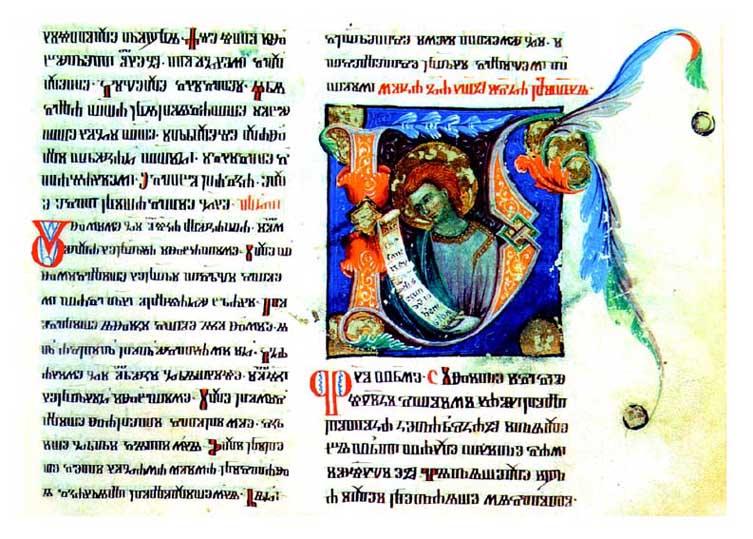
Glagolitic Breviaries:
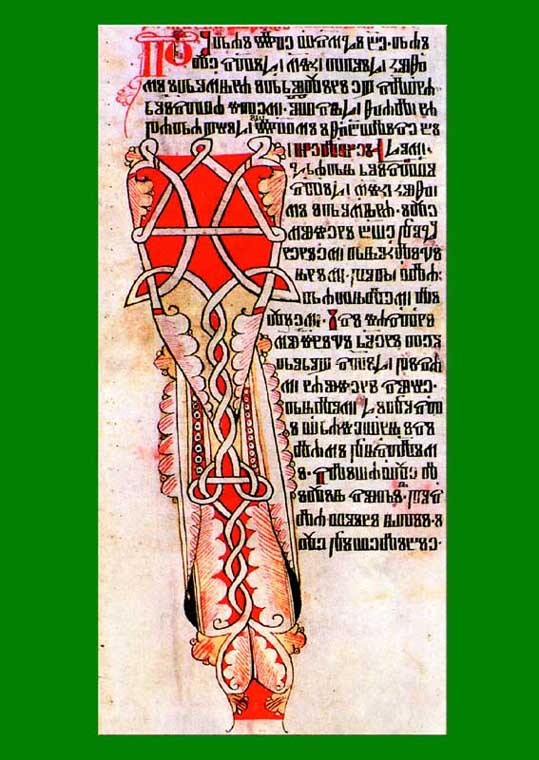
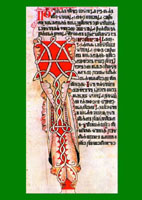 Vatican
Illirico 5 (1379), kept in the Biblioteca
Apostolica Vaticana,
Vatican
Illirico 5 (1379), kept in the Biblioteca
Apostolica Vaticana, - Vatican Illirico 6,
- Vatican Illirico 10,
- Metropolitan (MR 161),
- Vinodol (Kukuljevic's) breviary,
- Fragment of breviary (Archive of HAZU, Zagrebu, III c 12), 70 leaves, written in Krbava,
- Draguć breviary, 1407, probably from Krbava (in use in Istria, in Roc and Hum)
- Bakar breviary, 1414 (lost),
- Hum breviary, 1442 (National and University Library, Zagreb),
- Bribir breviary, 1470,
- Dabar breviary, 1486 (from the Frankapan castle of Dabar near Otočac in Gatska parish)
- Kosinj breviary, 1491 (incunabulum, the unique preserved sample is kept in the National Library of Marciana in Venice, Italy).
- Novljanski I Breviary (1459),
- Novljanski II Breviary (1495).
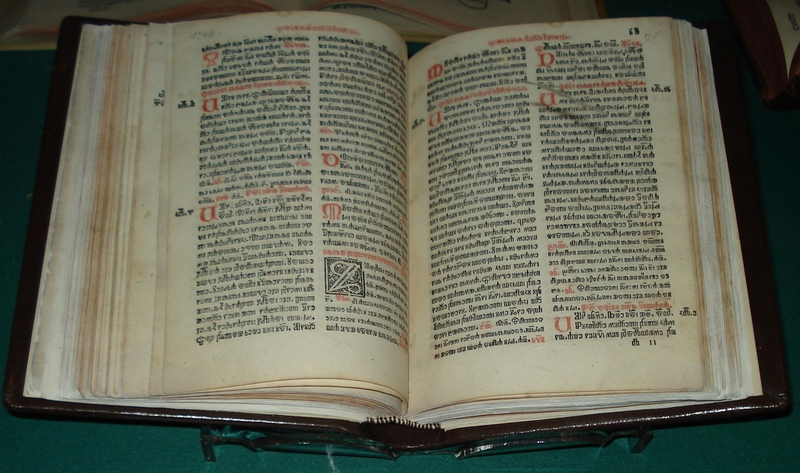
Missal of Pavao Modrušanin from 1528. A sample kept in the Nationa and University Library in Zagreb.
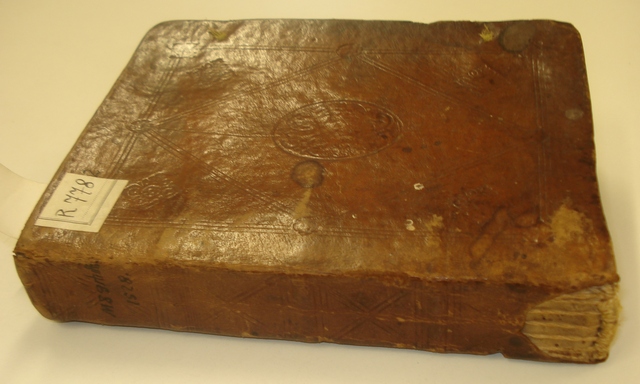
Missal of Pavao Modrušanin from 1528. A sample kept in the Library of HAZU (Croatian Academy of Sciences and Arts), Zagreb.
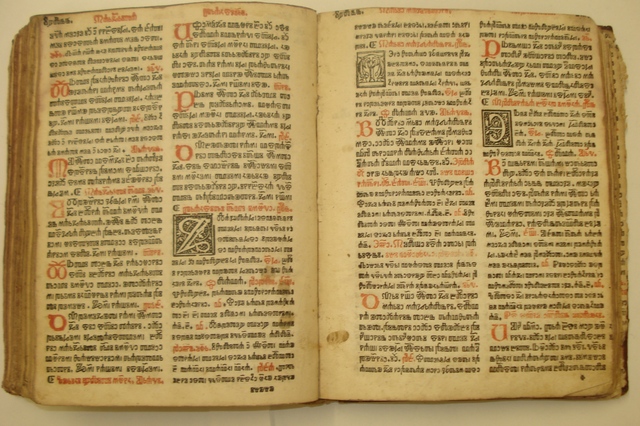
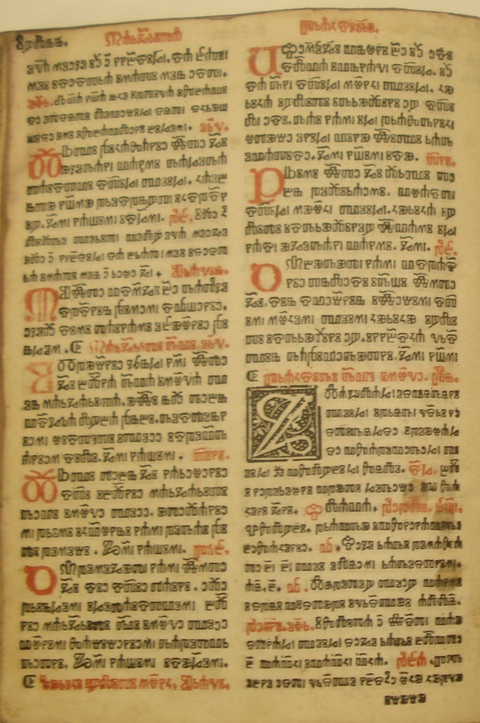
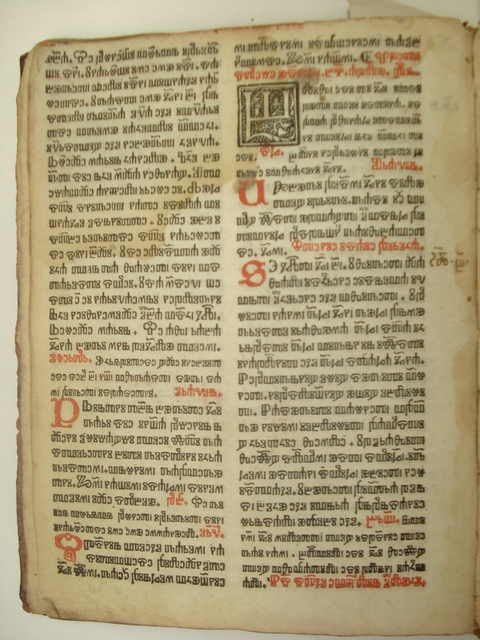
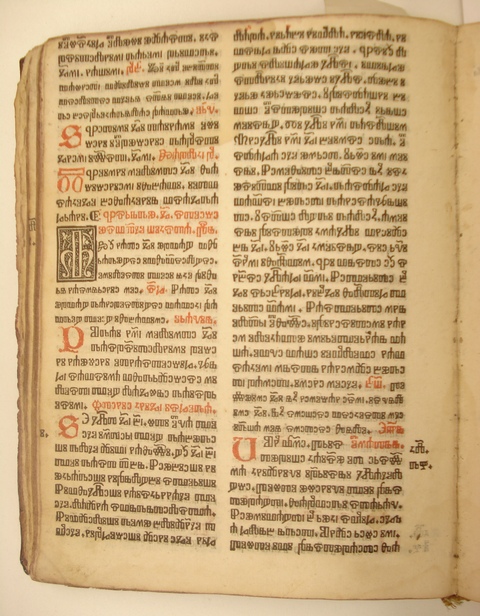
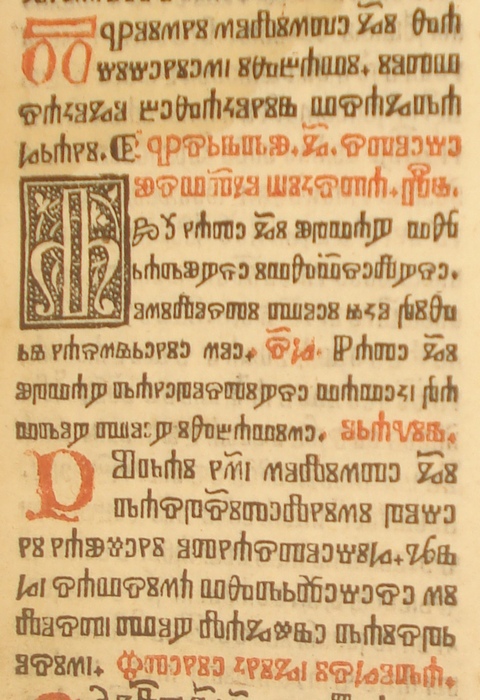
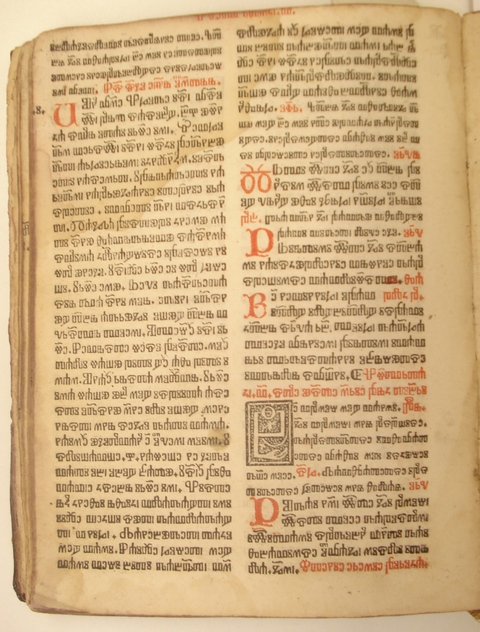
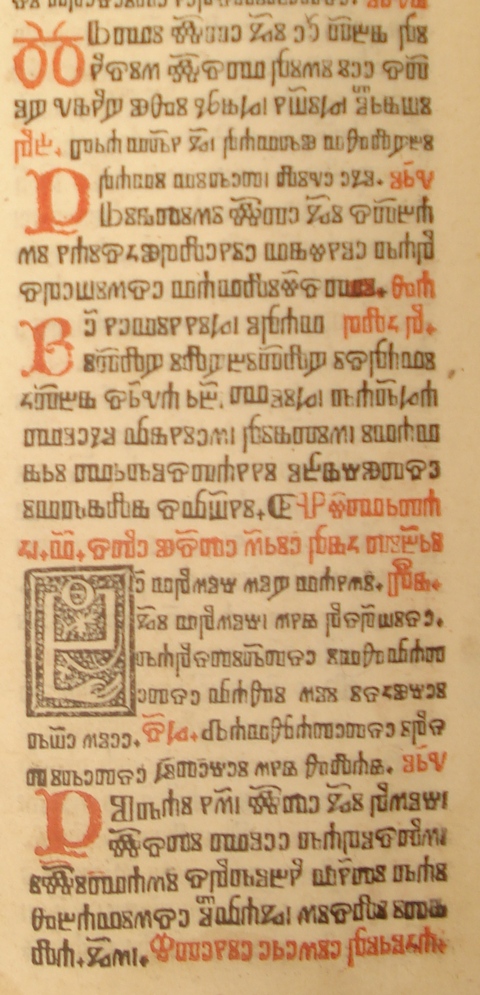
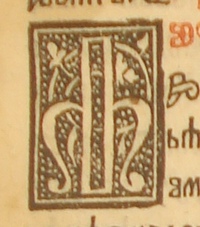

According to existing archival documents it is known that a Croatian Glagolitic Bible existed in Zadar already in 1380.
The Diocesan archive in Senj possessed abundant legal documentation written in the Glagolitic script. To this day only the glagolitic "Kvaderna" from 16/17th centuries and the testament of Toma Partinic from 1445 survived. During the Second World War the Senj Cathedral was destroyed (1944) together with many legal documents written in the glagolitic. It is known that in the 19th century there were 46 of them, see [Lokmer, Katedrala..., str. 509]). Only the above two mentioned documents survived. Mile Bogović proved that the Statute of the Senj Kaptol from 1340 was originally written in the glagolitic.
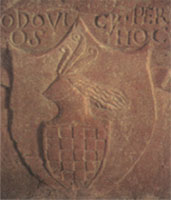
In the Senj Cathedral there is one of the oldest known Croatian coats of arms, dating from 1491. It belonged to the family of Perović from Lika, mentioned in the accompaning text in Latin.
At that time the Turkish
Empire was in
immediate vicinty of towns of Senj, Karlovac and Sisak.
In 1456 Toma Arcidiakon Senjski finished the Vrbnik I. missal in Senj (256 vellum pages), kept in the lovely town of Vrbnik on the island of Krk.

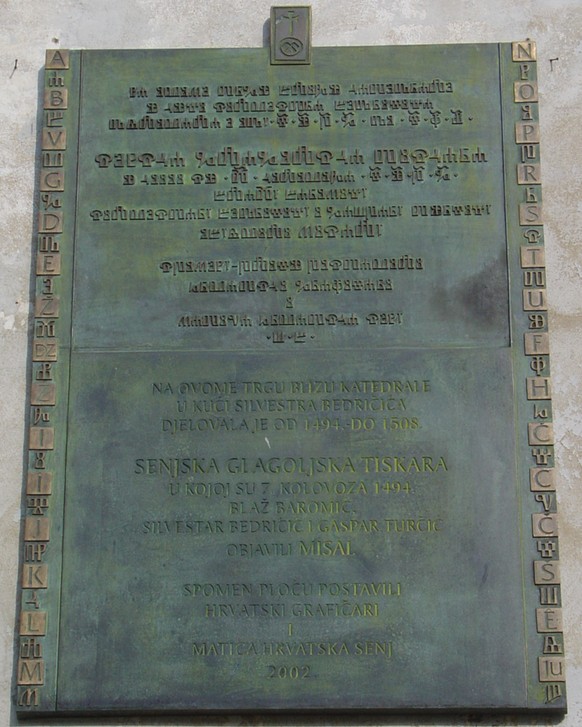
Here is a contemporary inscription in the Glagolitic script, that can be seen in the town of Senj:
In Lika, Krbava and Senj we know of only several preserved epigraphic monuments:
- very important is the Senj
tablet, 12th century,
unfortunately saved only in fragments, sister
of the famous Baska
tablet,
- relief with the figure of St. Martin, Senj, and with Glagolitic inscription from 1330,
- a Glagolitic tablet from 1492 is preserved in Istrian town Kozljak, mentioning the name of Prince Martin Mojsjevic, the ruler of Kozljak, who was born in Senj.
- Brušane, 1512,
- Kosinj, 1517,
- Kosinjski Bakovac, two fragments from 16th century in the Church of Sv. Vid,
- Otocac, 1751 (lost, parish church of St. Trinity, see [Fucic, Glagoljski natpisi, p. 273]),
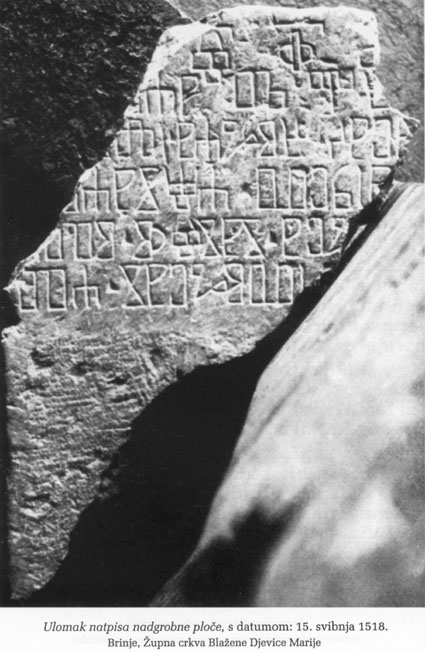
 Brinje,
1518, Župna crkva B. D. Marije,
partly destroyed during the bombing
in WW2,
Brinje,
1518, Župna crkva B. D. Marije,
partly destroyed during the bombing
in WW2, - several Glagolitic fragments have been found in 1995 near the town of Udbina (church of St. Marko Grob), immediately after the Storm operation (now in Archeological Museum in Zadar),
- Glagolitic tablet in Modrus, recent discovery,
- Krbavica inscription (information by bishop Mile Bogovic).
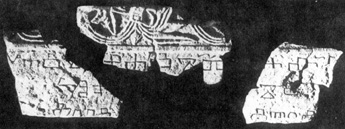

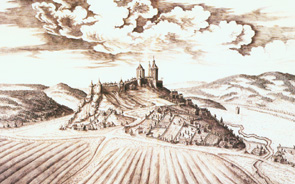
The church of St. Marko Grob (Grob = Grave), old and new, near Udbina
 |
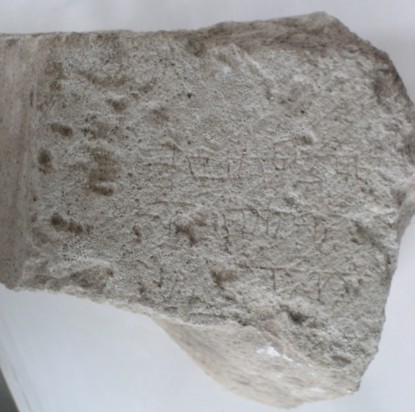 |
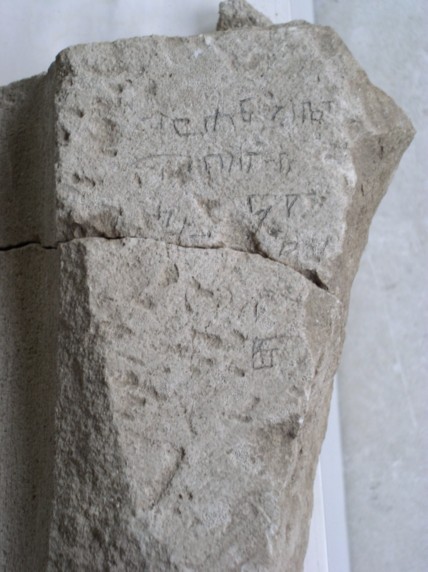
Two of several glagolitic fragments found at the church of St. Marko Grob near Udbina after the military-police liberation action Storm in 1995. Many thanks to Mr Radomir Juric from the Archecological Museum in Zadar and to Mr. Tomislav Mihatov. For description see [Juric].
Here we should mention a huge semicircular inscription in Istrian Padova (today's Kašćerga), chiseled by pop Andrij Prašić in 1529, born in Buzane in Lika. There are also several other epigraphic Glagolitic monuments from Senj, dating from 1477, 1483, 1522, 1543, ~1540 (lost), and two from 15th century, see [Fucic].
On 19 July 1433, see [Vončina], a public legal document was issued by the "valachian court" ("vlaški stol") in Lika. Its content is to guarantee and protect the rights of properties of the church of Sv. Ivan on the Hill (Sv. Ivan na Gori), probably near Medak, [JPG].
On 9 September 1469, see [Vončina], the court confirms the testament of the Lika nobleman Matijice Utišenića, by which he donates his land to the church of sv. Ivan na Gori, [JPG]. These documents are a part of Acta croatica.
 The
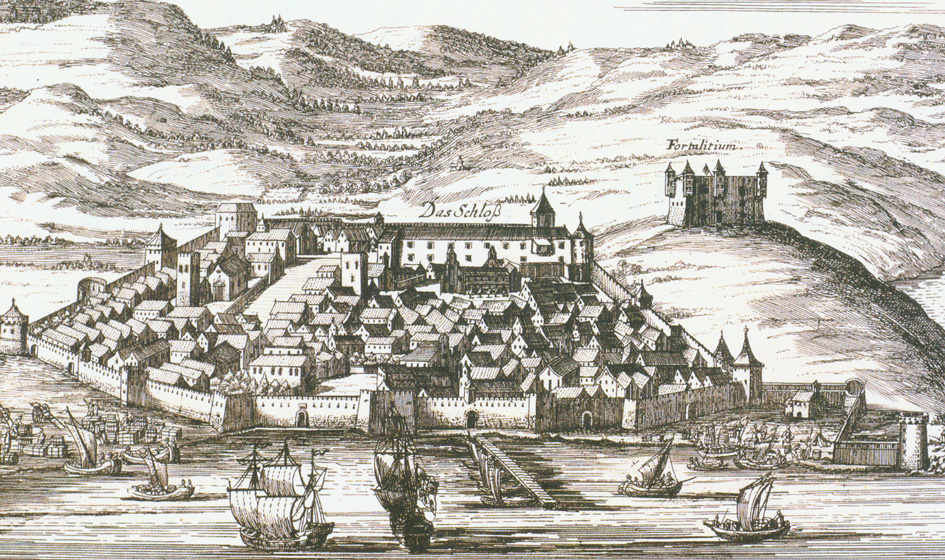
Senj Diocese was founded around 1150.
The town of Senj had very strong cultural and economic ties with the
island of Krk. It is worth mentioning that in Senj there were counselor
and merchant representations from Dubrovnik, Genoa, Catalonia
(Barcelona), and other European cities. According to [Bogović, Glagoljica, bitna odrednica hrvatskog identiteta, p. 73] and [Barbarić, Brodarstvo u Senju i Podgorju kroz prošlost, p. 7], the city of Senj had Catalonian consulate already in 1248.
The
Senj Diocese was founded around 1150.
The town of Senj had very strong cultural and economic ties with the
island of Krk. It is worth mentioning that in Senj there were counselor
and merchant representations from Dubrovnik, Genoa, Catalonia
(Barcelona), and other European cities. According to [Bogović, Glagoljica, bitna odrednica hrvatskog identiteta, p. 73] and [Barbarić, Brodarstvo u Senju i Podgorju kroz prošlost, p. 7], the city of Senj had Catalonian consulate already in 1248.
Here we should mention also the Statute of Senj dating from 1388 (or according to some authors from 1348), written in the Latin script, based on older documents.
Related to the Glagolitic heritage in Senj are the following books:
- Illirico 10,
- Kirin psalter (unjustly called Lobkowitz psalter), 1359,
- the Senj printing house:
- Baromic Missal, 1494 (incunabulum),
- Spovid općena, 1496 (incunabulum),
- Naručnik plebanušev, 1507,
- Mirakuli slavne djeve Marije, 1507/1508,
- Transit sv. Jerolima, 1508,
- Korizmenjak, 1508,
- Mestrija od dobra umrtija, 1508.
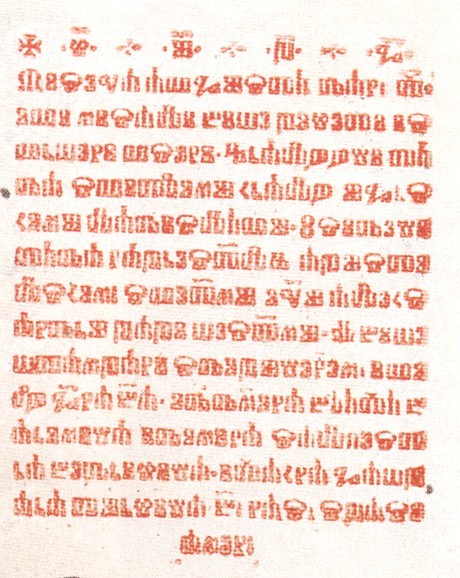
Colophon of Baromić
missala, Croatian incunabulum
from 1494 printed in Senj.
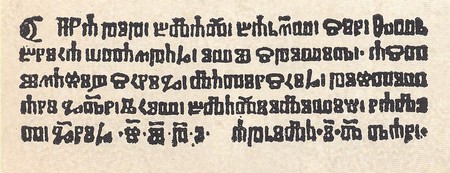
Colophon
of Spovid opcena,
Croatian
incunabulum from 1496 printed in Senj.
A professional binder of Glagolitic books was Grgur Kraljić from Senj, working in the Senj printing house. Between 1497 and 1502 he lived in Istria, near Pazin (in Roč, Beram and Hum). We know that in Istria he rebound five Glagolitic books, among them the Vitus of Omišalj breviary (written in 1396), which is now kept in the National Library in Vienna, Austria.
Marko Marulic is one of the most famous spiritual writers in the Latin language of the 15/16th centuries. His verses appeared printed in the Glagolitic Script alreday during his lifetime, in Transit of St Jerome (Transit sv. Jerolima), published in the town of Senj in 1508 under the title of Anjelske kriposti, in 144 doubly-rhymed dodecasylabic (ie 12 syllabic) lines. These verses, transcribed into the Glagolitic from the original Croatian text in Latin script, can be found by the end of the book. Many thanks to academician Anica Nazor for this information (2007). Here is a part of describing wisdom of St Jerome, see [Bratulic, Il poeta Marco Marulic e la tradizione glagolitica in Croazia, p 232]:
| Bog
razum skupi u njem tr izvrstnu
mudrost, Sveta Pisma po njem da prosine svitlost, Prorokov otajna, Kristove pritači Nam su sad nahajna, jer je on stlmači. Vsu knjigu latinsku i grčku umiše I ošće ijudejsku... |
Older Croatian Glagolitic Transits of St Jerome have been studied by [Stefanic].
 In
the Szeczenyi Library in Budapest,
Hungary, one can see the best preserved incunabulum of the Baromić
Missal, printed in the town of
Senj in 1494 (bought by Hungarians
in Graz in the 19th century, for the huge sum corresponding to 150,000
DM; information by dr Antonija Zaradija Kis). Only 3 copies have been
preserved, one of them is kept in the Saltykov-Shchedrin Library in St.
Petersburg, Russia. Blaz Baromić, born in 1450 in the town of Vrbnik on
the island of Krk, is known for his unique broken
ligatures in the history of
printing.
In
the Szeczenyi Library in Budapest,
Hungary, one can see the best preserved incunabulum of the Baromić
Missal, printed in the town of
Senj in 1494 (bought by Hungarians
in Graz in the 19th century, for the huge sum corresponding to 150,000
DM; information by dr Antonija Zaradija Kis). Only 3 copies have been
preserved, one of them is kept in the Saltykov-Shchedrin Library in St.
Petersburg, Russia. Blaz Baromić, born in 1450 in the town of Vrbnik on
the island of Krk, is known for his unique broken
ligatures in the history of
printing.
Blaz Baromić started his typographic career in Venice, where he published a breviary in 1493. Today we call this incunabulum Baromić's breviary. In the colophon we read that this book represents "brevijal hrvatski" (Croatian breviary). Two copies are kept in Croatian capital Zagreb, one in München (in Germany), one in Schwarzau (in Austria), and one in Sibiu (in Romania).
It is interesting to mention that the first printing house in Zagreb, which is today the capital of Croatia, was founded around 1694 by Pavao Ritter Vitezovic from the town of Senj.
A Senj bishop Franjo Jožefić, polyglot and a person of high education, wrote a Glagolitic letter to Ban (governor) Kristofor Frankapan with a very cultivated language and style. See [Europe - Croatia, II, Hercigonja's article].
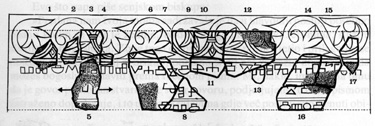
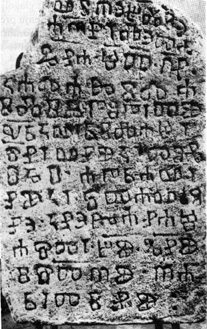
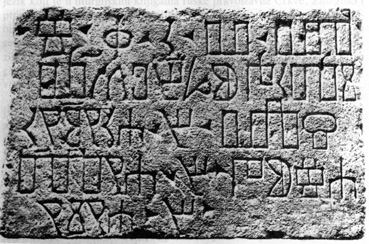
Only a few glagolitic epigraphic inscriptions from Senj survived to these days:
- fragments of the Senj tablet
from 12th century
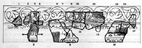
- inscription from the
church of Sv. Martin, 1330
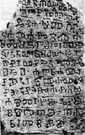
- another inscription from the Senj Cathedral of sv. Marija, kept today in the Croatian historical museum in Zagreb
- Glagolitic inscription
from the Cathedral of sv. Marija of
Senj
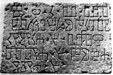
- inscription in the Gorica street in Senj, 1477
- inscription of Simun Mecaric, found in the Nehaj fortress (City Museum of Senj)
- three glagolitic fragments found in the Nehaj fortress (City Museum of Senj).
Rudolf Strohal mentions in his monograph Hrvatska glagolska knjiga, p. 67, a relatively large number of glagolitic documents from Senj, which unfortunately disappeared during the WWII bombing of the city: 1437, 1445, 1463, 1466, 1475, 1482, 1483, 1485 (2x), 1486 (2x), 1487 (2x), 1488 (2x), 1489, 1496 (2x), 1500 (2x), 1509, 1510, 1511, 1518, 1521 (2x), 1523, 1524, 1545 (2x), 1556 (6x), 1557, 1558, 1559 (2x), 1561 (2x), 1577, 1584, 1589, 1599.
In the time of carving of the Senj inscription (1330), also the Senj Statute appeared, written in the Glagolitic Script in 1340, and not in 1380, as most sources mention (the statute has been preserved in the Latin transcription). Namely, according to Dr. Mile Bogović, numerous historical events can be understood only if the year of appearance of the Senj statute is taken to be 1340. See Mile Bogović: Senjska glagoljska baština (The Senj glagolitic heritage), Senjski zbornik 35, 11-26 (2008), footnote 6 on p. 14.According to the same article by Dr. Mile Bogović, in the time of Ivan Kukuljević Sakcinski there were 46 glagolitic parchemnt documents in the Senj church archives (now there is none), while 70 documents from Acta croatica is either by content or by the place of appearance connected with Senj. This is (besides human losses) a tragic consequence of multiple bombing of Senj by Germans and the Allies in the period between 1943 and 1945. See the articles by Ante Glavičić and Mihael Sobolevski.
Closely related to Lika and Senj was the fortress of Ledenice near Novi Vinodolski, mentioned already in the famous Vinodol Code from 1288, written in the Glagolitic script. Ledenice was especially important from 15th to 17th centuries, since it was one of those fortresses that prevented free Turkish penetration to Istria and Furlania. For more details see [Laszowski].

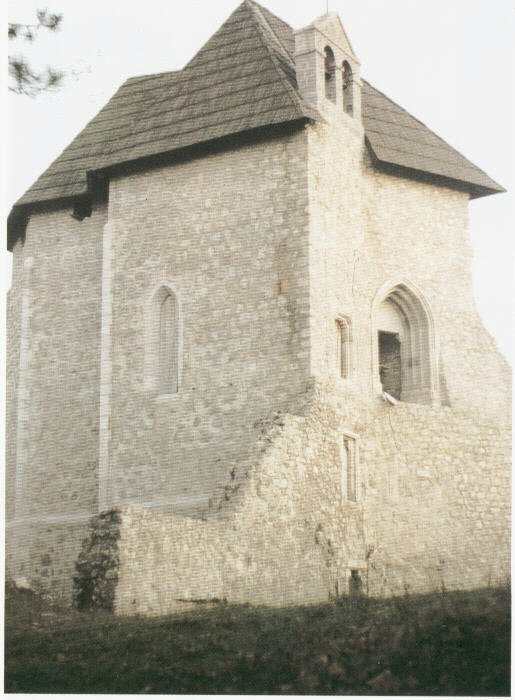
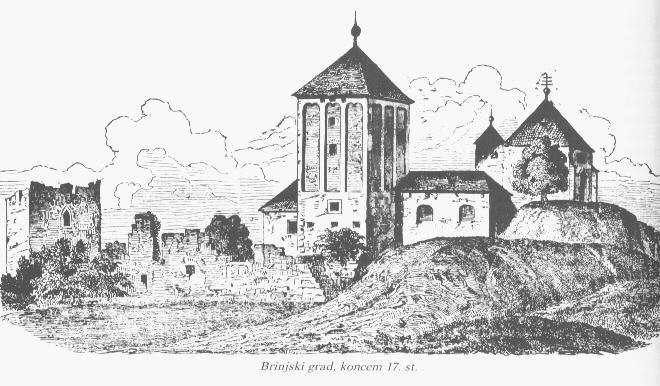
In the town of Brinje there is a valuable Gothic chapel of St. Trinity built in 1405-15, placed within the Sokolac fortress (literally, Falcon's fortress). The chapel was built by prince Nikola IV (of the Frankapan family), and his wife Dorotea Gorjanski. These two names appear also in valuable glagolitic vellum levaes of the confraternity of Sveta Marija od Gorice from the island of Krk (Baška bay). Two of these leaves are in Norway as a part of the famous Schoyen collection of old manuscripts.
 |
 |
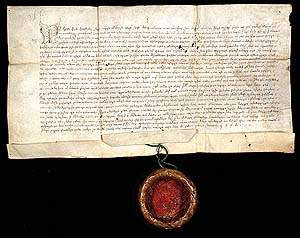
See a glagolitic document of prince Anz Frankapan (Ivan VIII.) from 1495, written on parchment in Brinje, concerning donation of a village to the convent of St. Spas near Senj.
Moscow fragments of a Croatian glagolitic missal from the 15th century have been written in a Paulist convent of St. Spas near Senj, and are kept in the State Historical Museum in Moscow (Gosudarstvenny istoričeskij muzej, the collection of manuscripts of A.D. Čertkov, No. 387).
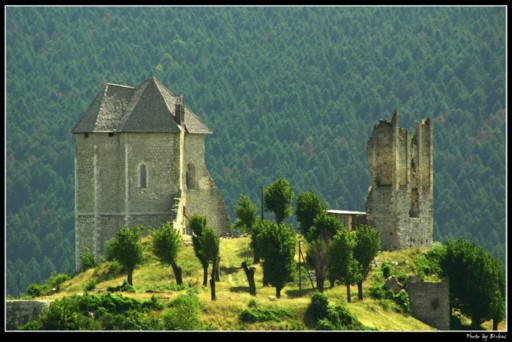
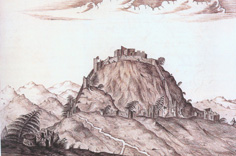 Among
Latin incunabula, the earliest work by a Croat is the funeral oration Oratio
in funere Reverendissimi Domini D. Petri Cardinalis Sancti Sixti habita,
delivered by Bishop Nicolas
of Modruš
for Cardinal Pietro Riario, the nephew of the Pope. This work was
printed in six editions between 1473 and 1482 in Venice and Padua.
Bishop Nicolas was a contemporary of the Latin poet Janus Pannonius,
very well known in the history of Humanism. Born in 1434 near Čazma in
the Croatian-Hungarian borderland, he died at the castle of Medvedgrad,
near Zagreb, in the year 1478.
Among
Latin incunabula, the earliest work by a Croat is the funeral oration Oratio
in funere Reverendissimi Domini D. Petri Cardinalis Sancti Sixti habita,
delivered by Bishop Nicolas
of Modruš
for Cardinal Pietro Riario, the nephew of the Pope. This work was
printed in six editions between 1473 and 1482 in Venice and Padua.
Bishop Nicolas was a contemporary of the Latin poet Janus Pannonius,
very well known in the history of Humanism. Born in 1434 near Čazma in
the Croatian-Hungarian borderland, he died at the castle of Medvedgrad,
near Zagreb, in the year 1478. - The impressive speech recounting the devastation of Croatia by the Bishop of Modrus, Simun Kožičić Zadranin (or Benja, 1460-1536), in the Lateran Council on 27 April 1513, Simoni Begnae Episcopi Modrusiensis de Croatiae desolatione ad Leonem X Pont. Max. (Romae, 1516), and also the Oratio Stephani Possedarski pro Domino Johanne Torquato . . . defensore Crovacie, a request made in the name of Ban Ivan Torquat Karlovic (1521-25) for weapons to defend Croatia, and for priests to encourage and console the people in their despair at the aggression.
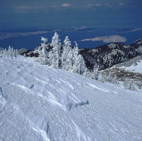 In
1522, Count Bernardinus
de Frangepanibus
(or Bernardin Frankapan,
1453-1529), a survivor of the battle of Krbava in 1493,
delivered a distressing
address to the State Senate in Nuremberg, Oratio
pro Croatia,
Nurenbergae in Senatu Principum Germaniae habita,
imploring western
potentates for help. Bernardinus was one of the most distinguished
members of the family of Frankapans, which had been linked for
centuries with the destiny of Croatia. He concluded his appeal by
quoting Horace: "Et tua res agitur, paries quum proximus ardet" ("You
are concerned when your neighbour's house is burning").
In
1522, Count Bernardinus
de Frangepanibus
(or Bernardin Frankapan,
1453-1529), a survivor of the battle of Krbava in 1493,
delivered a distressing
address to the State Senate in Nuremberg, Oratio
pro Croatia,
Nurenbergae in Senatu Principum Germaniae habita,
imploring western
potentates for help. Bernardinus was one of the most distinguished
members of the family of Frankapans, which had been linked for
centuries with the destiny of Croatia. He concluded his appeal by
quoting Horace: "Et tua res agitur, paries quum proximus ardet" ("You
are concerned when your neighbour's house is burning").
A Glagolitic Bible in possession of Bernardin Frankapan in the beginning of 16th century is mentioned in [Bratulic, Leksikon..., p. 150], and that there were no later news about its destiny. Was this the Zadar Glagolitic Bible? About Bernardin Frankapan as warrior and intellectual one can learn from writing of Simun Kožičić Zadranin that "even under arms and with sword, all the time he writes and translates".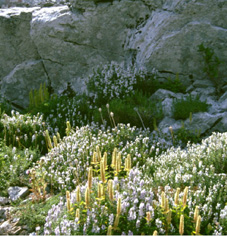 Almost
at the same time the oration delivered in the presence of the Pope by
Bernardinus's heroic son, Christopher
(1492-1527), left the
press. He had become famous by virtue of his strange destiny, and the
several years he spent in captivity in Venice. The Danish art
historian, Henry Thode, dedicated his admirable book Frangipani's
ring, an event in the life of Henry Thode
(published by John
Macqueen, London, 1900) to the memory of Christopher. Only one copy of
his Oratio ad Adrianum Sextum
Pont. Max. Christophori de
Frangepanibus veg. Seg. Modrusieque Comitis
(Paris, 1523?) has
survived, and it is kept by the British Library. Christopher had added
to his oration a memorial, which begins: "Holy Father! the counts,
barons, nobles and people of the kingdom of Croatia, addressed
themselves to my lord and father speaking thus, `You who are the oldest
and mightiest among us must zealously put our case to our Holy Father
the Pope and to the apostolic Holy See and to Christian Princes and
Kings. Tell them with what ills, miseries, and anguish the Turks
torture and torment us, how in overrunning our country they forcibly
drag us into cruel captivity, how abandoned by all we are compelled
either to leave our homes and to wander abroad, and to make our way by
begging through the world, or to conclude a treaty with the Turks and
serve them if the protection and help of His Holiness is denied to
us"'.
Almost
at the same time the oration delivered in the presence of the Pope by
Bernardinus's heroic son, Christopher
(1492-1527), left the
press. He had become famous by virtue of his strange destiny, and the
several years he spent in captivity in Venice. The Danish art
historian, Henry Thode, dedicated his admirable book Frangipani's
ring, an event in the life of Henry Thode
(published by John
Macqueen, London, 1900) to the memory of Christopher. Only one copy of
his Oratio ad Adrianum Sextum
Pont. Max. Christophori de
Frangepanibus veg. Seg. Modrusieque Comitis
(Paris, 1523?) has
survived, and it is kept by the British Library. Christopher had added
to his oration a memorial, which begins: "Holy Father! the counts,
barons, nobles and people of the kingdom of Croatia, addressed
themselves to my lord and father speaking thus, `You who are the oldest
and mightiest among us must zealously put our case to our Holy Father
the Pope and to the apostolic Holy See and to Christian Princes and
Kings. Tell them with what ills, miseries, and anguish the Turks
torture and torment us, how in overrunning our country they forcibly
drag us into cruel captivity, how abandoned by all we are compelled
either to leave our homes and to wander abroad, and to make our way by
begging through the world, or to conclude a treaty with the Turks and
serve them if the protection and help of His Holiness is denied to
us"'. - Paulus Scalichiis von Lika (Count Pavao Skalić, born in Zagreb, 1534-1575) wrote Dialogus P. Scalichii de Lika ... de Missa Tubingae, 1558, and and Glossa Pauli Scalichii de Lika ... in triginta duos Articulos Canonis Missae ex Apostolo [i.e. extracts from the Epistles of S. Paul]. Apud Iodocum Cortesanum: Romae, 1558. The imprint is fictitious; the book was printed in Germany.
- Balthasar Adam Kercselich de Corbavia (Baltazar Adam Krcelic, born near Zagreb, 1715-1778) wrote the following important history of the Zagreb Cathedral: Historiarum Cathedralis ecclesiae Zagrabiensis Partis Primae tomus 1 ... continens seriem episcoporum ab anno 1091 ad annum 1603 et tam episcoporum quam et alias notitias, etc. tom. 1. Zagrabiae, [1770.]. No more published.

A famous Croatian Renassance writer Petar Zoranic (1508-1669?) born in the city of Zadar, and known for his patriotic novel Planine (The Mountains), has his roots in Lika. His ancestors were the noble family Tetačić from Lika, and when the Ottomans attacked Nin at the end of the 15th century, the family moved to the fortified town of Zadar. Zoranic returned to Nin when the Ottoman attacks lessened. He was born in Zadar to his parents, father Ivan and mother Elizabeta Medulla. In Planine he explicitely mentions the Glagolitic Script: "...i da bi me tumačenje blaženoga Hieronima ne uvižbalo, s prirokom bih pisal, boju se" ("da nisam uvježban u pismu sv. Jeronima, bojim se da bih teško pisao", i.e., "if I were not trained in the script of St. Jerome, I am afraid that I would not have been able to write").
Mate Karaman
(1745.-1771.), born in Split, was a Cres bishop,
and later the Archbishop of Zadar. He wrote Bukvar
slavenskij
printed in Rome in 1753 in the Glagolitic and Cyrilic Scripts.
As
the Zadar Archbishop, Mate Karaman wrote in 1740 in his report to the
Propaganda Fide to Rome about the number of Glagolitic priests in the
then Venetian Dalmatia, except the island of Korčula:
- The Split Archdiocese has 300 glagolitic priests
- in the Zadar Archdiocese, except the cites of Zadar and Pag, all the parishes are glagolitic, with 300 glagolitic priests
- in the Nin Diocese all parishes are galgolitic, except those kept by monks
- in the Rab and Osor Dioceses there are only a few Latin parishes
- The Modruš-Senj Diocese has 30 glagolitic parishes
- in Istria the glagolitic priests are in all dioceses and in Croatian settlements, both under the Venetian as under the Habsburg rule.
To these glagolitic priests we should add Franciscan Tertiaries which
were users of the Glagolitic Script in the whole Dalmatia and Istria,
as well as Benedictines in the Zadar Archdiocese, which posses two
convents with several glagolitic monks. See [Krasić,
Počelo je u Rimu (It Started in Rome), p. 174].
Na području Smiljana (Smiljan je rodno mjestu Nikole Tesle u Lici), postoje dokazi o glagoljaškoj pismenosti već od 15. st., točnije, od 1445. O tome piše i fra Petar Runje, počasni član Društva prijatelja glagoljice (DPG-a), navodeći dokument iz 1504. Naveden je i dokaz o glagoljašima u okolici Smiljanskoj iz 1732. O tome svemu piše Ana Tomljenović (1938.-2023.) na str. 131 svoje izvrsne knjige [Smiljan i okolica] objavljene 2003. Recenzetni knjige su istaknuti stručnjaci: prof. dr. Ante Bežen, biskup dr. Mile Bogović (počasni član DPG-a), dr. Željko Holjevac i prof. dr. Dane Pejnović).
On the territory of Smiljan (the birthplace of Nikola Tesla in the region of Lika), there are proofs of literacy in Croatian Glagolitic Script already since the 15th century; more precisely, since 1445. Fra Petar Runje, honorary member of the Society of the Friends of the Glagolitic Script
in Zagreb, mentions a document from 1504 confirming this. He also
mentions an evidence for the existence of glagolitic priests in the
environs of Smiljan from 1732. All this is described by Ana Tomljenović
(1938-2023) on p. 131 of her excellent monograph[ Smiljan i okolica]
(Smiljan and Its Environs) published in 2003. The book was prepared
with professional help of distinguished Croatian experts: prof. dr.
Ante Bežen, bishop dr. Mile Bogović (honorary memeber of the Society of the Friends of the Glagolitic Script), dr. Željko Holjevac i prof. dr. Dane Pejnović).
The list of names from the Index
of Kukuljević's Acta
croatica, related to Gacka,
Lika, Krbava,
Modruš,
Senj and some nearby places.
All the corresponding rolls are written in the GlagoliticScript.
(D. = Dodatak = Addendum to Kukuljević's
monographs Acta
croatica; the number is the page
no;
a notion may appear on a an indicated page more than once)
Andrija,
biskup senjski (1496), 164, Andrija, žakan
senjski, 164, Andrij fratar, Vikar Bužki, 121, 124, Anić Vladko iz
Srba, 80,
Anton, fra, obrani biskup modruški (1484), 121, 123, Anton,
vikar crkve sv.
Mikule na Gvozdu modruškom i vižitator Hrvat i Istrije, 162,
Antonović Mikula,
sudac purgarah steničkih, 204, Apaj, permancer i vikar
modruški,
92, barak,
kanonik senjski, 185,
Baronić Blaž, pop, kanonik senjski, 184, Bašan de Saki, knez, vicekapitan senjski, 260, Batrić Ivan, odvjetnik u Okruglah, D. 318, Belusić Ivan iz Senja, 42, Bičina u Lici, 200, Biseće, selo i kotar lički, 174, 176, 177, Bitoraj, selo brinjsko, 172, Blaž, podknećin plemenitoga stola bužkoga, 58, Blaž s Pola, purgar stenički, 185, Blaževa luka, selo modruško, 126, Bočača u knežtvu bužkom, 172, Bočači, selo ličko, 180, Bogutić Jurja, kanonik i arhiprvad crkve senjske, 281, Bot od Baine Andrijaš, Dalmacije, Hrvat i Slovinskoga Ban i senjski kapetan, 193, 194, 195, Botuke, selo Bužko, Breze, selo modruško, 125, Brinje, grad, 55, 56, 136, 152, 154, 158, 160, 164, 172, 173, 181, Brnardo, arhiprvad modruški, 92, Bročnani, selo ličko, 168, Budišić Franko od plemena Mogorović, priur kloštra sv. Marije u Novom, 156, Budišić Franko, priur od Zažičnom, 175, 176, 178, Budišić Franko, priur u Zažitnom, 181, 190, Budišić Mihalj od Like, 125, Buk, selo bužko, 172, Butko, knez krbavski, lički i bužki, 45, Bužan, grad, 11, Bužani, mjesto, 120, 133, 148, 182, 183, Buže, Bućje, Bužane grad i Bužki grad, 58, 82, 172, Bužin grad, 193, Bužko knežtvo, 119, 135, 172, Crikvenica u biskupiji Krbavskoj, 54, 67, 68, 70, 186, 248,
Crikveno,
selo modruško, 126, Čelopek, selo u Bužah, 148,
Čičić,
pleme modruško, 126, Čitar u kotaru bužkom, 74,
Črmanj kal, selo, 114, Črna ves, selo ličko, 166, 168, Črnica, selo kod
Modrušah, 157, Čubranić Francisko, sudac senjski, 249,
Dabar,
selo krbavsko, 133, Djeanišević Martin iz Srba,
79, Doljani, selo ličko, 168, Dragovola, grašćak rmanskii
knez
stola lapačkoga,
71, Drašković Juraj i njegovi sinovi i unuci, 142,
Drašković Juraj iz bužkoga
stola, 200, Drašković Matija, 139, Draškovići,
plemeniti
iz sela Dolnoga
Zažična, 142, Dražić Šimun iz Bužan, 90, Dubčani, selo
krbavsko,
183, 191, 195,
196, Dubovik u kotaru buškom, 74, Dumankuš,
prepošt belgradski i guvernator
senjski, 124, Durar Jakov, niemački kapetan u Senju (1527), 222,
Dušmanić
Bartol, pop, kanonik senjski, 212,
Frankapan
Ivan, sin bana Mikule (1440), Krčkoga otoka
gospodin i knez krčki i modruški (1466), 100, 101, Frankapan
Jelža, udova kneza
Bartola, mati kneza Anža i Mikule, kneginja senjska, brinjska i
jelovska
(1461), 90, Frankapan Martin, knez krčki, modruški, bakarski
i
senjski, špan [župan]
sve zemlje Vrbasa i grada Kozara, sin Mikule bana (1446), 67, (1447),
70, (1450), 76, (1455), 81,
(1458),
85, (1468), 102, (1470), 104, (1475),
113, 114, (1502-2 pokojni), 116, 115,
182,
Gal
Ivan, kapetan ogulinski, vošćarski i modruški,
240, Gal Martin, kapetan senjski, 245, Gašele, selo ličko,
168,
Gladovica, selo
modruško, 126, Glagolišće, 75, 132, 133, 210,
Goli vrh,
selo modruško, 126,
Gomerie, Gojmirje, selo modruško, 126, Gradščina
u
Zažičnom s monastirom reda
sv. Pavla, 150, Grd z Bužan, podknežin, 45, Gvozd modruški,
78,
81, 157, 162,
Gvozdnica, selo u Bužanih, 129, Hitrišćevo, selo
modruško, 125, Hotilja vas,
bužko selo, 172, Hrabek, selo modruško, 126,
Hrašćevići,
selo ličko, 171,
Humćan, selo u Bužah, 148, Humčani, selo u bužkom kotaru, 75,
Ivan,
knez bužki, 75, Ivan, knez krbavski, 216, 228,
Ivanuš, vikar sv. Mikule z Gvozda, 48, Ivičin Ivan od
Mirine,
špan lički, 170,
Jakov,
arhiprvad otočki, 193, Jesen, selo brinjsko,
172, Jožefić Franjo, biskup senjski, 215, 218, 219, 221, 223, 226, 230,
232,
Juraj iz Modruš, priur molstira sv. Spasa blizu Senja, 100,
Jurevac, pleme
ličko, 200, Jurevo, selo modruško, Jurhanić Luka z Otres,
špan rotni suda
ličkoga, 147, Jurko, arhižakan modruško, 92,
Kačić
Dragiša z Čehović u Lici, 182, 200, Kapčić
Blažko, kanonik modruški, 92, Karin, priur
klaštra svete
Jelen od Senja, 63,
65, Kosin, grad, 137, Kosin, grad i selo u Bužah, 172, 173, Kosinski
Ivan iz
Bužah, 120, 144, Kosinski Juraj, 130, 137, 172, Koščice,
selo
bužko, 151, 153,
Kovačić, pleme ličko, 200, Krakar, selo brinjsko, 172, Krasno, selo kod
Senja,
153, Krbava, 122, Krbavac Vid D. 327, Krbavčić Matij, 202, Krbavski
knezi:
Tomaš i njegovi sinovi Ivan, Karlo, Pavo, gospoda
Baguška
(od Baga), 89,
Krbavsko polje, 155, Krištofor, arcidjakon senjski, biskup
modruški i krbavski,
244, Krštofor Dubrovčanin, biskup modruški, 154,
155,
156, 165, Kućan, selo
bužko, 120, Kuklić, selo u Lici, 129, 177, Kuterevo, selo kod Senja,
153,
Lagodušići,
selo ličko, 167, 210, Lapac u hrv. Lici,
56, Lapački stol, 117, Lapčani, pleme, 120, 144, 156, Lepečić Grgur iz
Bužan,
184, Leporin ili Zečić Mihovil, kanciler senjski, 218, Levnardo, vikar
gatanski, 128, 129, Ličani, selo, 203, Ličko španstvo, 174,
Lika, 138, 199,
Liković Apaj, podknežin modruški, 92, Liš, selo
krbavsko,
196, Ljubčići, selo
kod Senja, 153, Ljubotin blizu Senja, 45, Ljubotina Draga s crkvom i
monastirom
sv. Spasa kod Senja, 159, Lucković Martin s Otočca, 218, Lučani, selo
ličko,
162, Luka, priur sv. SPasa pred Senjom, 54, Lukčica, selo
modruško, 126, Lukov
dol, selo modruško, 126,
Maglići,
selo u Bužah, 84, Makšak Petar, tarnik
kapitan senjski, 129, Mali Prokičci, selo u vladanju brinjskom,
159-160, Malić
Juraj od plemena Mogovrović, Malić Petar, knez kraljeva stola ličkoga,
161,
Marin plebanuš sv. Magdalene u Otočcu, 193, Marinac, selo
kod
Senja, 119, Marinci,
selo bužko, 75, 199, 202, Marinci, selo kod Senja, 153, Martin s
Parožić, arhiprvad senjski, 53,
Martinac,
pop,
Lapčanin, 156, Marulić Ivan, kanonik senjski, 209,
Matijašević,
voin iz Srba,
79, Meres Juraj, sudac modruški, 114, Mihovil, arhižakan
senjski, 121, Mikanić
Juraj, pop, plebanuš gački, 233, Mikula, biskup
modruški
(1463), 92, Mikula,
biskup modruški i krbavski (1461), 107, Mikula, opat
modruki,
85, Mikulanić
Ivan iz Senja, 42, Mikulanić Ivan, kanonik i vaikar senjski, 191,
Miletić
Mihovil, kanonik senjski, 206. 209, Modruš, 125,
Modruša
grad, 155, Modruše
grad, 215, Modruši, grad, 45, 83, 85, 92, 110, 170,
Modruški i krbavski, 85,
Mogorović Tomaš, špan bužki, 144, 148,
Mogorovići, pleme
ličko, 166, 173, 174,
175, 177, Mohlić, selo u Bužah, 120, 124, 127, 148, 149, Mokro, selo u
vladanju
brinskom, 163, Mrganić Anton, kanonik senjski, 210, Mrmonić
Šimun z Lapača, 71,
Na
ukinjah, selo modruško, 171,
Nebluh, miesto, 69, Nebluškoga plemena
četiri kolena, 69, Nekorićki kotar u Lici, 200, Nemanić Mihovil, sudac
bužki,
188, Nemanić Pavao, sudac bužki, 144, Novak,
knez krbavski, sin kneza Petra, D. 317, Novo, selo
bužko, 195,
196, 197,
Očokovo,
selo modruško, 126, Omišlevje, selo gatansko,
193, Orlovčić Grgur, knez, kapitan senjski (1521), 207, 208, 209-210,
Orlovčić,
kapitan senjski (1523), 212, Orlovčić Juraj, špan u Lici,
138, Otočac, grad, 63, 109,
115, 126, 128, 194,
195, 208, Otočac, varoš u gatanskom kotaru, 116, Otres, selo
ličko, 147,
Paladinić,
pleme ličko, 175, Paližević Grgur, knez,
vojvoda senjskih vojnikah, 260, Pavao, biskup senjski (1484), 121, 123,
Pavao,
biskup senjski i gatanski, 128, Per Juraj z Tugomer,
vicešpan
lički, 200,
Petar, kanonik otočki 193, Petar, knez, sin kneza Novaka iz Krbave, D.
318,
Petar, priur sv. marie z Brinj, 136, Petelinić Jerolim, kapitan senjski
(1518),
206, 207, 208, Plasi, selo modruško, 125, Plasi, selo
modruško, 125, Plastovo
kod Srba, 79, Pliskovo, selo kod Modruše, Podsmlun, u Lici,
121,
Podstene, selo
bužko, 188, Pohmajević, 130, - sudac bužki, 135, Pohmajević
Miklouš, porkulab u
Otošcu i Gački, Polača, selo ličko, 147, Polak Ivan, fratar,
priur i vaikar od
sv. Mikule od modruškoga gvozda, 47, Polović Pavao, vikar
modruški, 192,
Povovsko, selo modruško, 126, Psivići, selo brinjsko, 130,
173,
180,
Račačević
Ivanuš, porkulab rmanjski, 117, Radina vas,
selo ličko, 161, Radoičić Frančiško, pop, kancilir biskupa
modruškoga Šimuna,
218, Radovanić Blaž z Glagolišć, 75, Rafael Miser, svak
kapitana
senjskoga
Petelinića, 208, Ratčić Vekan [treba Vlkan] u Tribihovićih, D. 318,
Ratković
Grgur iy Lapca, 71, Ravnina valška kod Brinja, 172,
Ribničani,
selo ličko, 138,
161, Ribnik, selo ličko, 174, 176, Rman, miesto u Hrvatskoj, 73, Rmanj,
glavni
grad plemena lapačkoga, 118, Rmanje, varoš sada u turskoj
Hrvatskoj, 77, 78,
Rača vas, selo bužko, 195, Ripač, grad, 157, - miesto, 70,
Sebidraža
vas, selo ličko, 161, Selca, selo brinjsko,
172, Selišći, selo modruško, 125, Senj, 65, 68,
71, 99,
119, 123, 124, 128,
136, 182, 206, 207, 9, 210, 211, 212, 222, 224, 234, 244, 245, 249, -
grad i
kaštel, 231, Senjski kapitul sv. Marie, 71, Sičić Dumjan iz
Lapaca, 71,
Silvester, arhižakan senjski, 191, Sladoević Juraj, špan
plemenitih ljudih
Mogorovićah u Lici, 166, Slunjski Frankapan Franjo, knez krčki,
senjski,
modruški i pročaja, D. 330, Srakvino, selo bužko, 172, Srb,
miesto, 79,
Stanislav vikar samostana sv. Mikule na Gvozdu [podrijetlom Poljak!
D.Ž.], 91,
109, 114, Stipan od staroga Dubrovnika, biskup modruški, 1,
Sutpetar, selo
ličko, 168, Sveta Jelena, kloštar kod Senja, 63, 65, 68,
Sveta
Jelena kod
Senja, 160, Sveta Jelena, monastir kraj Senja u drazi
vlaškoj, 151, 152, Sveta Jelena
nad Senjom, 113, Sveta
Maria u Brinjah, samostan, 136, Sveta Maria u Črnoj vesi, 166, 168,
Sveta Maria
u Otočcu, 126, Sveti Duh u Modrušah, 92, Sveti Marko, a
kasnije
sveta Maria,
crkva u Modrušah, 92, Sveti Mikula na Gvozdu
modruškom,
91, 92, 95, 109, Sveti
Nikola od modruškoga Gvozda, 47, Sveti Spas, manastir pred
Senjom, 48, 49, 53,
98, 100, Svilić Matej z Bužan, 127, Svoišća kod
Modrušah,
95,
Šimić,
kanonik otočki, 193, Šimun, biskup moddruški
(1526), 218, Švićko jezero, 117,
Tihotina,
vas u bužkoj županiji, 202, Tomaš, fratar,
vikar klotra sv. Mikule na Gvozdu i provincijal fratar hrvatskih Istrie
i poli
mora, 209, 211, Tomaš, kanonik senjski (1529), 233,
Tomaš, knez krbavski, lički
i bužki, 45, Tomaš, knez krbavski humski i
nebluški
(1447), 68, Tomašić Tomaš,
plem. Mogorović, 185, Tošići, vrh Modrušah, 93,
Tožić,
selo ličko, 200, Tožići,
selo ličko, 209, Tožišće, selo 184, Tribihovići, D. 318,
Tržišće, miesto u
bužkom kotaru, 75, 120, 144, 148, 150, Tugomerići, 138, Tugomerić,
pleme ličko,
166,
Urtičević
Ciprijan, sudac senjski, 260, Vaska, selo u
kotaru bužkom, 74, 126, 127, 183, 191,
Veronez
Andrij, kanceler senjski, 260, Vitunj, selo
modruško, 126, Vladići, pleme ličko, 167, Vrhovlan,
pleme ličko, 166, Vrhovlani, selo ličko, 138,
161, Vukšić,
selo ličko, 147, 171,
Zaborsko,
selo kod Modrušah, 125, Zabrda, selo ličko,
177, Zahumić, selo bužko, 188, - selo i pleme, 175, 177, Zažičan, crkva
i
monastir sv. Marie, 174, 176, 177, - s monastirom sv. Pavla, 147, 149,
Zažitno
sa crkvom sv. Marie, 190, Zorić, pleme modruško, 126,
Zulišće, selo modruško,
126,
Žudiin Andrija, purgar modruški, 92, Žunević Maroj, kapitan senjski (1482), 119, Župan hlm, selo kod Senja, 71,
Let us also mention here Antun Mateša Kuhačević (1697-1772), born in Senj, who wrote the following verses devoted to his uncle Luka, a Glagolitic priest:
i ka dila rese, a ka rane dušu,
which we took as the motto of this page dealing with the history of Glagolitic culture in Lika, Krbava and Senj.
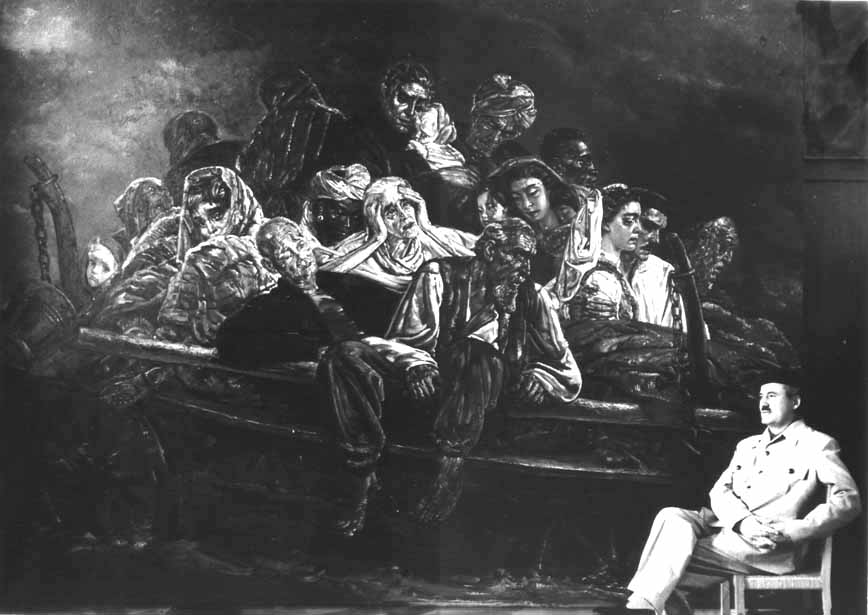 |
Exodus of 20th century, Kristian Krekovic
- Alms and gifts for the Church of Croatian Martyrs in Udbina (in Croatian) - [DOC]
- Acta Croatica
- Anđelko Badurina: Iluminacija glagoljskih rukopisa u Beču [PDF] , Rad. Inst. povij. umjet. 28/2004, pp 38-51
- Mile
Bogović:
- Hrvatsko glagoljško tisućljeće, Senjski zbornik, ISNN 0582-673X 1998,
- (editor) Krbavska biskupija u Srednjem vijeku, Visoka Bogoslovska škola u Rijeci, Kršćanska sadašnjost, Rijeka - Zagreb 1988
- Otočac od spomena na Bašćanskoj ploči do biskupijskog središta u 15. stoljeću, Grad Otočac, Gospićko-senjska biskupija i župa Presvetog Trojstva Otočac, Otočac 2010.
- [Glagoljica u Senju, and some other references]
- Veritas, interview,
- Hrvatsko slovo, interview,
- Propovijed gospićko-senjskog biskupa dr. Mile Bogovića 9. rujna 2003. na Krbavskom polju
- gospic.hbk.hr/povijest
- Mile Bogović, Hrvatin Gabrijel Jurišić: Hrvatski mučenici za vjeru i dom, Verbum, Split - Gospić, 2005., ISBN 953-235-031-4
- Mihovil Bolonić: Stoljetne veze krčkih i senjskih glagoljaša, Senjski zbornik VI, 1975, pp. 81-140
- Ivan Botica: Krbavski knezovi u Srednjem Vijeku, doctoral dissertation, Filozofski fakultet (Faculty of Arts, University of Zagreb), 2011., in Croatian, Sumary [PDF]
- [Josip Bratulic]
- [Croatia - Europe, volumes I and II]
- Stjepan Damjanović: Glagoljaško blago Like i Krbave
- [Stjepan Damjanović, Jezik hrvatskih glagoljaša]
- [Discovering the Glagolitic Script of Croatia]
- Dragutin Franić: Plitvička jezera i njihova okolica, reprint, izdanje Nacionalnog parka P.J., 1993.
- [Branko Fučić]
- Glagoljaska bastina u Vinodolu (Dragan Pelić, Crikvenica)
- hr-mucenici.hbk.hr
- [Eduard Hercigonja: Nad iskonom hrvatske knjige]
- Dragutin Hirc: Lika i Plitvička jezera, drawings by Czech painter Vaclav Anderle, Zagreb 1900, (reprinted in Rijeka in 1998), ISBN 953-158-124-3
- Rudolf Horvat: Lika i Krbava, Zagreb, 1941 (reprinted in 1993),
- Exhibition of the Glagolitic Script, Rijeka,
- Slavko
Kovačić:
- Glagoljaši Splitske nadbiskupije u Lici i Kordunu, Riječki teološki časopis, 12(2004.), br. 1, str. 250-265
- detaljan popis radova
- Krbavska bitka i njezine posljedice, Hrvatska matica iseljenika, Zagreb, 1997.
 Kristian Kreković,
Galeria Kristian Krekovic,
Palma de Mallorca
Kristian Kreković,
Galeria Kristian Krekovic,
Palma de Mallorca - Ivan Kukuljević Sakcinski: Put u Senj, Putne uspomene, (drugo dopunjeno izdanje), Matica hrvatska, Senj 2001.
- Luciano Lago: Stare karte Jadrana (Italian title: Imago Adriae), C.A.S.H., Pula 1996., ISBN 953-6250-10-1
- Emilij Laszowski: Gorski Kotar i Vinodol, Matica hrvatska, Zagreb 1923.
- Licka revija, Matica hrvatska Gospić
- Juraj
Lokmer:
- Šimun Kožičić Benja
- Katedrala Uznesenja Blažene Djevice Marije u Senju te senjski i senjsko-moduruški biskupi, Povijesno-kulturni vodič, Marulić, 3, 2004, 497-511
- Tiskane liturgijske glagoljske knjige u fondu Knjižnice biskupija senjske i modruške u Senju [PDF], Senj. zb. 35 (2008.) 161-212
- Enver
Ljubović:
- Grbovi i natpisi na kamenim spomenicima grada Senja, 1997
- Gradski i plemićki grbovi grada Senja, 1998
- Grbovi i plemstva Gacke i Like, Adamić, Rijeka, 2001 (tel. 038/051 650 180)
- Krešimir Mikolčić: Putovanje kroz Liku
- Modruš, (editors Josip Vuković and Milan Chomparo Sabljak), collection of articles, Modruš, 1997.
- www.modrus.hr
- Marija
Pantelić:
- Hrvatski glagoljski kodeksi krbavskoga područja XIV i XV vijeka, doktorska disertacija,
- Glagoljski kodeksi Bartola Krbavca, Radovi Staroslavenskog instituta, Knjiga 5, Zagreb 1964., str. 5 - 98,
- Senjski Lobkovicov psaltir iz 1359. godine, Senjski zbornik, godina 18 (1991), str. 109-128
- Kulturni ambijent djelovanja Blaza Baromića, pisca i stampara glagoljskih knjiga, Poseban otisak, Senj 1975.
- Stjepan Pavičić: Seobe i naselja u Lici, Gospić, Muzej Like, 1990 (pretisak izdanja Zbornika za narodni život i običaje Južnih Slavena, Knjiga 41, JAZU, Zagreb 1962)
- Pop Martinac i njegov zapis o bitci na Krbavskom polju 1493
- [Petar Runje: Tragom stare ličke povijesti]
- [Petar Runje: Otočac, srednjovjekovna biskupija i kulturni centar]
- Radoslav Lopašić: Urbar Modruški 1486, MH Ogulin, 1997.
- Marijana Tomić: Senjske inkunabule i Senjska tiskara
- Manojlo Sladović: Povijest biskupijah Senjske i Modruške ili Krbavske, pretisak izdanja iz 1856. tiskanog u Trstu, (pogovor M. Bogović), Gospić, 2003., ISBN 153-7034-03-8
- Vila Velebita, monthly with numerous contributions devoted to the region of Lika.
- Senjski zbornik
- Josip Vončina: Četiri glagoljske listine iz Like (or [PDF]), Radovi Staroslavenskog instituta, Knjiga 5, Zagreb 1964., pp. 213 -230,
- [Mateo Žagar]
- Mance, Ivan: Kosinj, izvorište hrvatske tiskane riječi, Redak, Split 2013.
- Kosinjska dolina i kosinjska glagoljička tiskara
- In the article [Zor] it is possible to find data about fragments of a Croatian glagolitic missal from the 14th century written on the territory of Krbava (probably in 1374, or earlier), which is kept in the Archbishop's Archive in Ljubljana, in the People's and University Library (NUK) in Ljubljana, and in the towns of Križe pri Tržiču, Mengeš, Šmartno pri Litiji and in Vipava.
- Darko Žubrinić: Hrvatska glagoljička bašćina u Lici s osvrtom na Gatsku, [PDF] (predavanje održano u Otočcu 6. ožujka 2010. u okviru konferencije "Otočac i Gacka u Srednjem vijeku")
- Jozo Čikeš (ed.): Muka kao nepresušno nadahnuće kulture - Pasionska baština Like (Passion Heritage of Lika, collection of wroks of the XIIth international scientific symposium), Gospić 2012.
- Modruš - Grad knezova krčkih i biskupa Krbavsko-modruške biskupije
- Andrea Radošević: Lička glagoljaška baština, Hrvatska revija br. 1, Zagreb 2022., str. 16. – 26.
- Ana Tomljenović: Smiljan i okolica (Brušane, Trnovac, Bužim), Meridijani, Samobor 2003. (recenzenti Ante Bežen, Mile Bogović, Željko Holjevac, Dane Pejnović)
- Ćiril Petešić: Glagoljski prvotisci i pavlini, Croatica Christiana periodica, Vol. 13 No. 24, 1989., str. 27-44.
- Darko Antolković: Nedaleko Modruša u šumi leži zaboravljeni samostan Sv. Nikole u Gvozdu
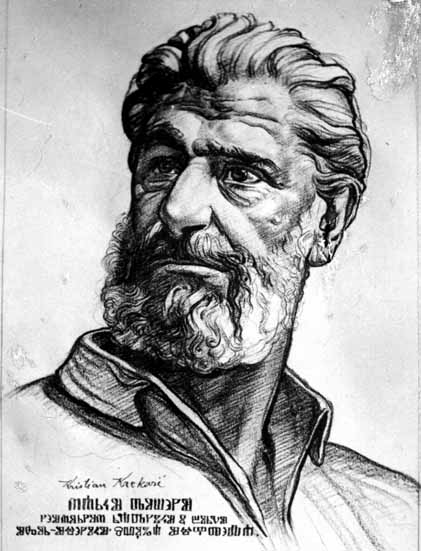
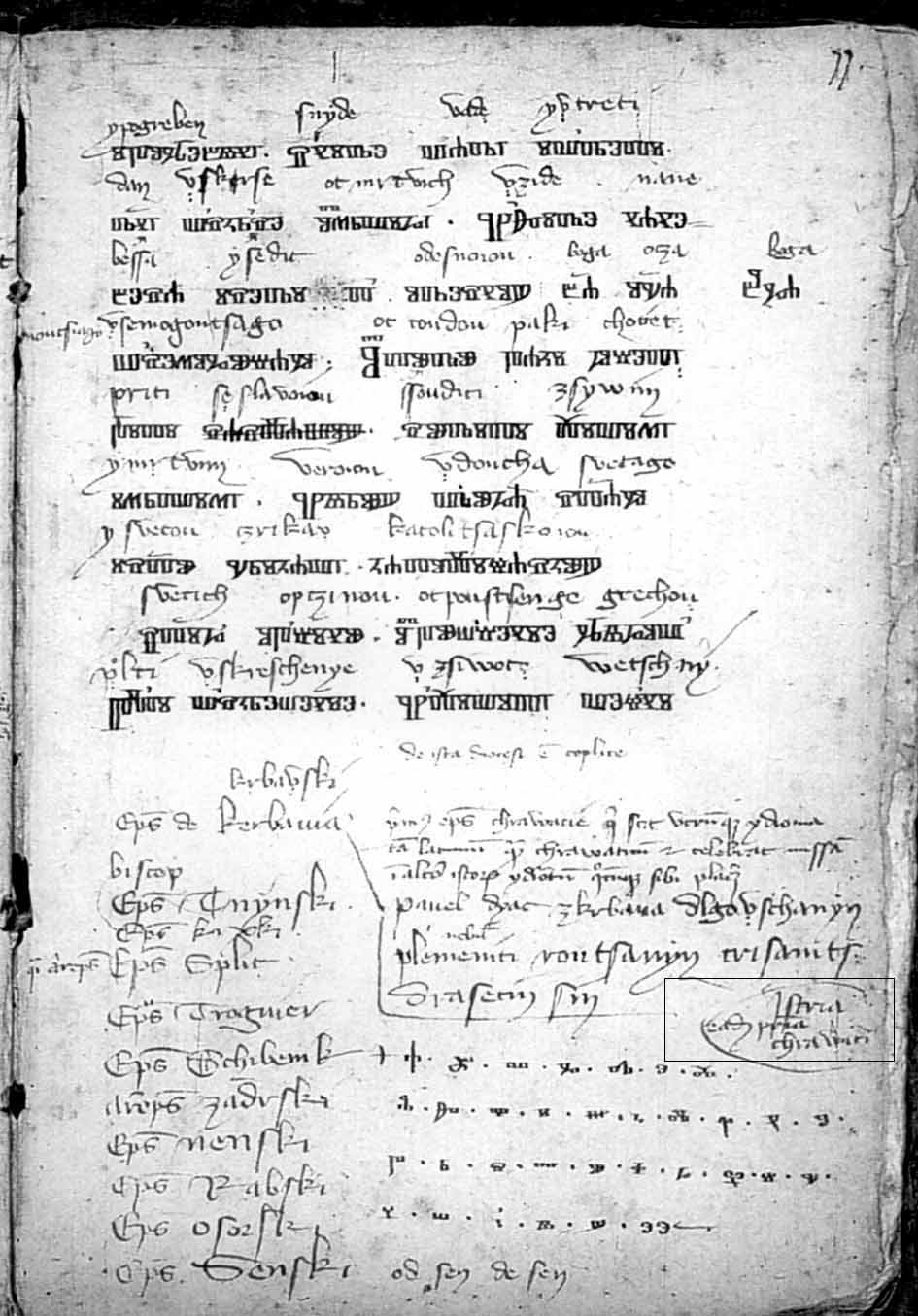
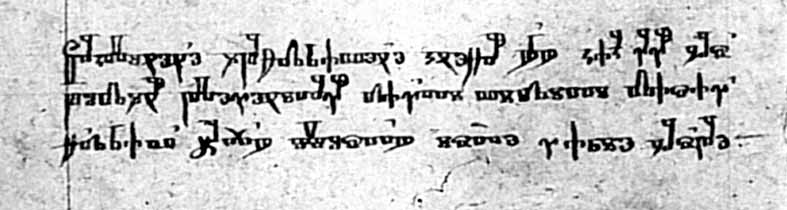
![[1]](../gif/berlin1.jpg)
![[2]](../gif/berlin2.jpg)
![[3]](../gif/berlin3.jpg)
![[5]](../gif/berlin5.jpg)
![[6]](../gif/berlin7.jpg)
![[7]](../gif/berlin8.jpg)
![[8]](../gif/berlin9.jpg)
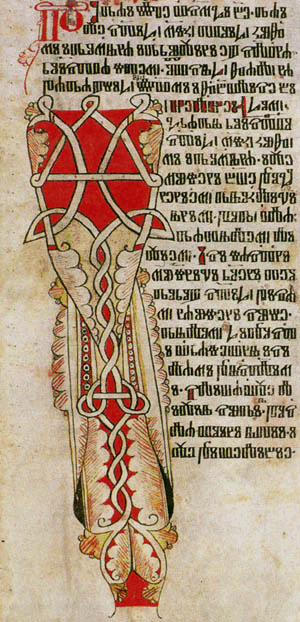
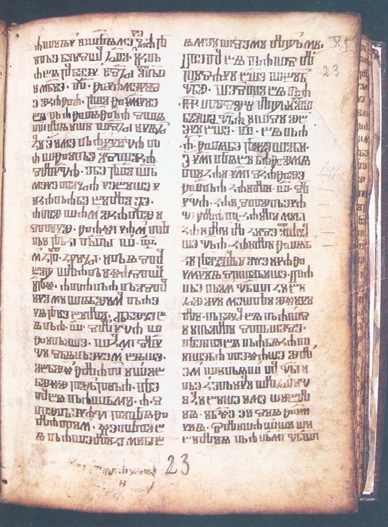
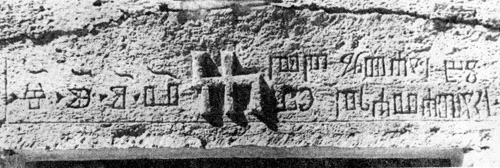
Links related to Lika:
- Ivan Ježić (1747 - 1833), the Glagolitic Bishop of Senj, by Karmen Antić, Gauteng, South Africa
- Ličko-senjska zupanija
- Gatska
- Senj
- Modruš
- Cultural and historical heritage in the county "PRIMORSKO - GORANSKA", an area closely related to Lika and Krbava
- Marijan Matijević, Junak iz Like (hero from Lika)
- King of Chips
- Efforts to build the Church of Croatian Martyrs in Udbina
Lika songs (video):
CD issued in
Argentina by the National Academy for Education, and LIKA
is inscribed in the Glagolitic Script!
Small Encyclopaedia of Croatian Glagolitic Script