Croats in Bosnia and Herzegovina
© by Darko Zubrinic, Zagreb (1995)
| Since
the whisper of Croatian tongue Can grow Can tie East and West, poem and mind |
Jer
hrvatskog jezika sum Moze da goji Moze da spoji Istok i zapad, pjesmu i um |
 The
aim of this article is to indicate deep connections between the Croats
and Muslim Bosniaks (= Bosnjaci - Muslimani). In order to avoid misunderstanding
we shall rather use their descriptional name - Muslim Slavs. The reason
is that the Croats in Bosnia are also Bosniaks. Indeed, many of them bear
Bosniak as their second name. The meaning of Bosniak is simply - a Bosnian.
The
aim of this article is to indicate deep connections between the Croats
and Muslim Bosniaks (= Bosnjaci - Muslimani). In order to avoid misunderstanding
we shall rather use their descriptional name - Muslim Slavs. The reason
is that the Croats in Bosnia are also Bosniaks. Indeed, many of them bear
Bosniak as their second name. The meaning of Bosniak is simply - a Bosnian.
In the Zagreb telephone book only (1994/95) you can see a
long list of as many as 210 surnames of Bosnjak, with only one Muslim
forename, and also more than 30 Bosnjakovic's,
with only 3 Muslim forenames.
There is village Bosnjaci in Croatia (4,500 inhabitants prior
to 1991, near Zupanja). I did not find any village of a similar name on
a map of Bosnia. Also in Hrvatsko Zagorje, near Zagreb,
there is a small village of Bosna, then
Bosanci near Bosiljevo and Bjelovar,
Bosnici near
Dreznica and Kijevo, and two small regions of
Bosna near
Vrbovac and D. Stupnik.
One can find
Croatian families
bearing the Turkish second name of Ulama even in
the NW of Croatia (Hrvatsko Zagorje).
 Let
us start by describing many traces left by the Turkish Ottoman Empire.
This civilization, that was present on Croatian soil from the 15th to
the 19th century (in eastern parts of former Yugoslavia until the beginning
of the 20th century), left a deep imprint. Many Croats converted to Islam.
The Muslim Slavs are in great majority of Croatian descent, and constitute
now a nation, recognized according to their own wish in 1968 (Muslimani
has been the usual name since the beginning of the 20th century). Except
in Croatia they live today mostly in Bosnia-Herzegovina and Sandzak (a
province in the south of Serbia, between Montenegro, Kosovo and Bosnia).
Let
us start by describing many traces left by the Turkish Ottoman Empire.
This civilization, that was present on Croatian soil from the 15th to
the 19th century (in eastern parts of former Yugoslavia until the beginning
of the 20th century), left a deep imprint. Many Croats converted to Islam.
The Muslim Slavs are in great majority of Croatian descent, and constitute
now a nation, recognized according to their own wish in 1968 (Muslimani
has been the usual name since the beginning of the 20th century). Except
in Croatia they live today mostly in Bosnia-Herzegovina and Sandzak (a
province in the south of Serbia, between Montenegro, Kosovo and Bosnia).
There were many disputes even about the name of "Muslimani", which was defined to have only the national content (i.e. one could have been Musliman without being religious at all, as was the case for example with Raif Dizdarevic, former president of former Yugoslavia; of course, his predecessors were Muslims). On the other hand the term "musliman" (with small m) had the meaning of Muslim exclusively in the religious sense. The way out was to choose an old geographical name Bosniak, which traditionally denoted any citizen of Bosnia - either Croat (as we said, many of them have Bosniak as a surname), or Muslim, or Serb. It is strange that this usurpation of the name of Bosniak has been accepted even in the official Croatia. From this easily follows a complete usurpation of the Bosnian name (usurpation of Bosnian literature, language and of the entire history of Bosnia). Of course, we do not deny the right of Muslim - Bosniaks to call themselves Bosniaks. We would like to indicate that the name of Bosniaks does not refer exclusively to Bosnian Muslims, but to Bosnian Croats too.
See also Vladimir Zerjavic: Muslim-Bosniaks
did not secure the right of autochthony in Croatia.
In Croatian: "Muslimani-Bossnjaci
nisu stekli uvjete authotonosti u Hrvatskoj".
I recommend the interested reader to consult BEHAR, the journal of the Cultural society of Bosniaks (more precisely: Bosniaks - Muslims) in Zagreb called Preporod, for their views on these very sensitive questions, especially an article by Esad Cimic in No22-23, p.12-15, 1996. The society unites outstanding Muslim intellectuals in Croatia. ``Behar'' was founded in 1900 - its first editor in chief had been Safvet-beg Basagic. It was forbidden during the 70 years' ex-Yugoslav period.
Even the historical names of many officials in the Ottoman Empire reveal their origin (Hirwat = Hrvat or Horvat, which is a Croatian name for Croat): Mahmut-pasa Hirwat (= Hrvat), Rusten-pasa Hrvat, Pijali-pasa Hrvat, Sijavus-pasa Hrvat etc. In the 16th century a traveler and writer Marco A. Pigaffetta wrote that almost everybody on the Turkish court in Constantinople knows the Croatian language, and especially soldiers. Marco Pigafetta in his "Itinerario'' published in London in 1585 states: "In Istanbul it is customary to speak Croatian, a language which is understood by almost all official Turks, especially military men."
This can also be confirmed by the 1553 visit of
Antun Vrancic, Roman cardinal, and Franjo
Zay, a diplomat, to Istanbul as envoys of the Croat - Hungarian king to
discuss a peace treaty with the Turks. During the initial ceremonial greetings
they had with Rustem - pasha Hrvat (= Croat) the conversation led in Turkish
with an official interpretor was suddenly interrupted. Rustem - pasha
Hrvat asked in Croatian if Zay and Vrancic spoke Croatian language. The
interpretor was then dismissed and they proceeded in the Croatian language
during the entire process of negotiations.
Igitur quum inter loquendum Verancius loqueretur ad interpretem,
quod passae responderi debebat, conversus passa ad Zay: Tu, inquit, scisne
Croatice? Scieo, respondit. Eti is collega tuus? Respondit: Ipse quoque...
Sed et Verancius itidem, quum eum Croatice ob quaedam severius dicta lenire
vellet, dixit.. (Verancius, 66-67). See [Eterovich],
p. 18.
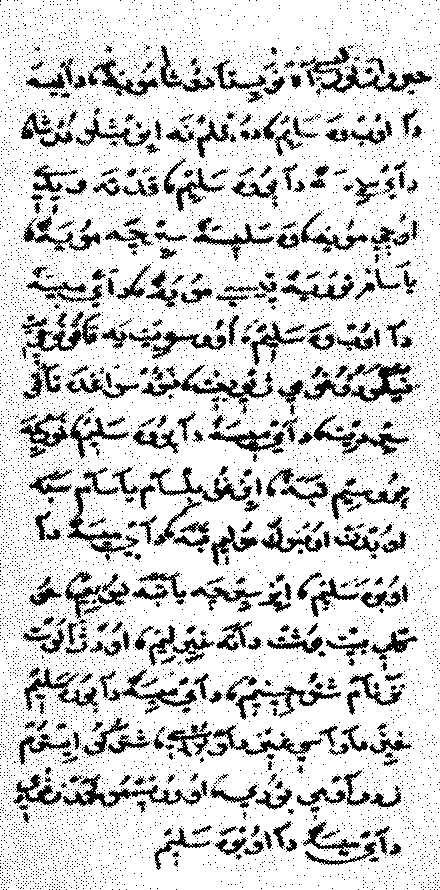
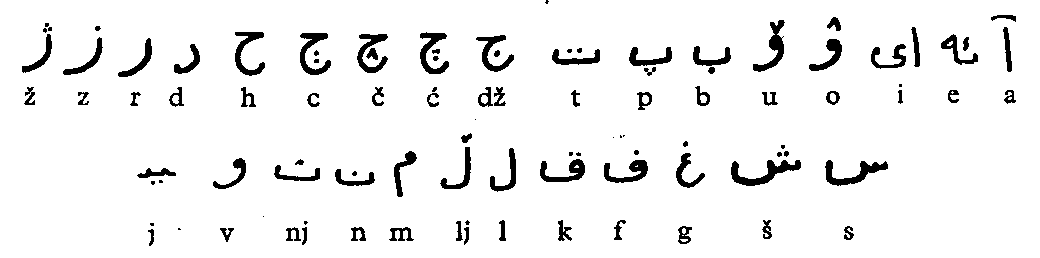 One of the oldest texts
written in Arabica (which is in fact Arabic script for the Croatian
language) is a love song called "Chirvat-türkisi" (= Croatian
song) from 1588, written by a certain Mehmed in Bosnia. This manuscript
is held in the National Library in Vienna. Except for literature Arabica
was also used in religious schools and administration. Of course, it was
in much lesser use than other scripts. The last book in Arabica was printed
in 1941.
One of the oldest texts
written in Arabica (which is in fact Arabic script for the Croatian
language) is a love song called "Chirvat-türkisi" (= Croatian
song) from 1588, written by a certain Mehmed in Bosnia. This manuscript
is held in the National Library in Vienna. Except for literature Arabica
was also used in religious schools and administration. Of course, it was
in much lesser use than other scripts. The last book in Arabica was printed
in 1941.
Many of the Muslim Slavs in Bosnia-Herzegovina had a strong awareness of their Croatian descent, and even called themselves Muslim Croats, to distinguish from the Catholic Croats. Some of the most outstanding Croatian writers and intellectuals of the Muslim faith in Bosnia and Herzegovina are:
etc. Anybody wishing to study the history of Islamic culture in Bosnia-Herzegovina seriously should consult numerous works of Hamdija Kresevljakovic (1888-1959), an outstanding Muslim Croat, member of the Croatian Academy of Sciences and Arts in Zagreb, author of an important monograph about history of Croatian literature in Bosnia and Herzegovina. Biographies of important Muslim Croats can be found in his ``Kratak pregled hrvatske knjige u Herceg - Bosni'' (A short survey of Croatian literature in Herzeg - Bosnia) printed in Sarajevo in 1912. For more information see [Karihman]. It should be noted that the literary and scientific activity of such intellectuals has been severely suppressed during the 70 years' Yugoslav period, resulting that today a very small percentage of the entire Muslim Slav population in BiH and Croatia has the awareness of its Croatian roots.
Additional information:
- Mato Marcinko: Hrvati islamske vjere
We can document the equivalence of the name of Bosniak and Hrvat during many centuries, until the Yugoslav period (see below). It seems that the final and almost complete national individualization of Muslim Slavs took place only during the tragedy they experienced during the Serbian large-scale aggression on Bosnia and Herzegovina in the period of 1992-95 (the aggression against BiH started already in October 1991 by the slaughter of the Croats in the Herzegovinian village of Ravno). This aggression found Muslim officials totally unprepared. Moreover, when Vukovar and the whole of Croatia were bleeding, being systematically destroyed in the second half of 1991, president Izetbegovic declared "This is not our war'', believing naively that the Yugoslav Army and armed extremists would not dare to do the same in Bosnia - Hercegovina. Of course, the national individualization was strengthened also during the tragic conflict with the Croats in 1993, which was been one of the well prepared results of the Serbian aggression.
The equivalence of the name of Bosniak and Croat in the early period of the Ottoman occupation of Bosnia is documented by the famous Turkish historian Aali (1542-1599) in his work Knhulahbar, also known as Tarihi Aali. He gave the following description of the properties of Croatian tribe (as he calls it) in Bosnia:
As regards the tribe of the Croats, which is assigned to the river Bosna, their character is reflected in their cheerful mood; throughout Bosnia they are also known according to that river... [i.e. Croats = Bosniaks i.e. Bosnians].
Then follows an interesting passage describing virtues of the Croats
in Bosnia.
Let us cite it in Croatian, in Basagic's translation (the original text
in the Arabic script and its translation can be seen in [Karihman], p. 78, with the Croatin translation being taken
from Safvet-beg Basagic: Bossnjaci i Hercegovci u Islamskoj knjizzevnosti):
SSto se ticce plemena Hrvata, koje se pripisuje rijeci Bosni, njihov se znaccaj odrazuje u veseloj naravi; oni su po Bosni poznati i po tekuchoj rijeci prozvati [dakle Bossnjaci]. Dussa im je ccista, a lice svijetlo; vechinom su stasiti i prostodussni - njihovi likovi kao znaccajevi naginju pravednosti. Golobradi mladichi i lijepi momci poznati su (na daleko) po pokrajinama radi naoccitosti i ponositosti, a daroviti spisatelji kao umni i misaoni ljudi. Uzrok je ovo, ssto je Bog - koji se uzvisuje i uzdizze - u osmanlijskoj drzzavi podigao vrijednost tome hvaljenom narodu dostojanstvom i ccast njegove sreche uzvisio kao visoki uzrast i poletnu dussu, jer se meddu njima nasilnika malo nalazi. Vechina onih, koji su dossli do visokih polozzaja (u Turskoj drzzavi) odlikuju se veledussjem to jest: ccasschu i ponosom; malo ih je koji su tjeskogrudni, zavidni i pohlepni. Neustrassivi su u boju i na mejdanu, a u drusstvu, gdje se uzziva i pije, prostodussni. Obiccno su prijazni, dobrochudni i ljubazni. Osobito se odlikuje ovo pleme vanrednom ljepotom i iznimnim uzrastom... Bez sumnje Bossnjaci, koji se pribrajaju hrvatskom narodu, odlikuju se kao prosti vojnici dobrotom i pobozznosti, kao age i zapovjednici obrazovanosschu i vrlinom; ako doddu do ccasti velikih vezira, u upravi su dobrochudni, ponosni i pravedni, da ih velikassi hvale i odliccni umnici slave.''
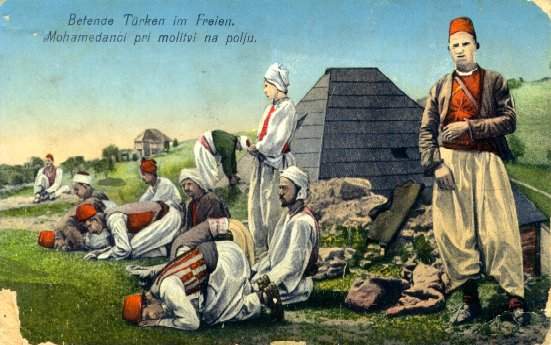 According
the documents from the 15th and 16th centuries, Bosnian Muslims in central
Bosnia and in Herzegovina called their language Croatian language and
called themselves the Croats. Even today there are Bosnian Muslims with
the second name Hrvat (= Croat). Islam left valuable written and
architectural monuments, like in Spain for instance. Let us mention that
Croatia's capital Zagreb has one of the biggest and most beautiful newly
built mosques in Europe, although in Turkish time it had none (Zagreb
was never occupied by the Turks). For instance in Belgrade, the capital
of Serbia, there had been several hundred mosques from the Turkish time,
out of which only one survived.
According
the documents from the 15th and 16th centuries, Bosnian Muslims in central
Bosnia and in Herzegovina called their language Croatian language and
called themselves the Croats. Even today there are Bosnian Muslims with
the second name Hrvat (= Croat). Islam left valuable written and
architectural monuments, like in Spain for instance. Let us mention that
Croatia's capital Zagreb has one of the biggest and most beautiful newly
built mosques in Europe, although in Turkish time it had none (Zagreb
was never occupied by the Turks). For instance in Belgrade, the capital
of Serbia, there had been several hundred mosques from the Turkish time,
out of which only one survived.
Probably the most interesting writings about the life in Ottoman Empire in the 16th century are numerous works published by Bartol Gyurgieuvits (1506-1566), who spent there 13 years as a slave.
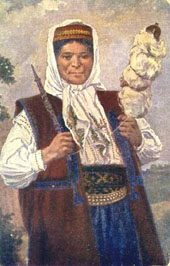 In the province of Molise in central Italy
there is a small Croatian enclave (about 4,500 people), living today in
several villages, inhabited in the 16th century by the Croats fleeing
before the Turks. They preserved their ethnic identity and language even
today.
In the province of Molise in central Italy
there is a small Croatian enclave (about 4,500 people), living today in
several villages, inhabited in the 16th century by the Croats fleeing
before the Turks. They preserved their ethnic identity and language even
today.
Since the 16th century a similar enclave has existed near Bratislava in Slovakia. The largest Croatian community of exiles dating from that period is in the area of Gradisce (Burgenland) in Austria and Hungary. One of the results of this forced migrations is that the most widespread surname in today's Hungary is Horvath, whose meaning is simply Croat. Also the family name Horvat is one of the most widespread in today's Slovenia. The surname Charvat (= Croat) in the present-day Czechia is a remaining of the presence of White Croats on this area since the Early Middle Ages. The family name Horwath and its variations is also very common in Austria (see the telephone book in Vienna). The most famous descendant of Gradisce Croats is without any doubt Joseph Haydn. It is interesting that King Ferdinand I (1515-1564) granted the Burgenland Croats in Austria the right to use Glagolitic Mass, see here.
In Slovenian part of Istria, near Italian border east of Trieste, there is the village of Hrvatini (literally - Croats). Also in Croatian part of Istria, north-east of Zminj, there is the village of Hrvatin. Several Istrian villages have names that are obviously related to those Croats who had to escape before the Turks from the region Lika and Krbava.
Additional information about centuries old Croatian emmigration in Czechia and Slovakia can be obtained here:
Today there are several tens of thousands of Croats living in about fifty settlements in the region of Gradisce, i.e. Eisenstadt (about two thirds) and in Vienna (one third). There are 14 Croatian settlements left in Hungary and only four in Slovakia, among them Hrvatski Grob (Croatian Grave) near Bratislava. Specialists estimate that the overall number of Croatian settlements in these regions in the 16th century was as many as 200 to 300! In the 16th century in the area around Bratislava in Slovakia there were about sixty Croatian settlements. See Sanja Vulic, Bernardina Petrovic: Govor Hrvatskoga Groba u Slovackoj, Sekcija DHK i Hrvatkog PEN-a za proucavanje knjizevnosti u hrvatskom iseljenistvu, Zagreb 1999.
In 1722 the Croats in the Hungarian city of Pecuh exiled from Bosnia made 47% of population, in suburbs of Budim (a part of today's Budapest) 80%, and in Siget (Szeged) 53%.
Among descendants of the Croats in Italy we should mention Pope Sixto V (he was the Pope from 1585 to 1590), who spoke Croatian at home.
It is estimated that until the 18th century there were about two million Croats who had been either exiled or taken as slaves to Turkey. Among the Bosnian Catholics there was a large number of Cryptocatholics, i.e. those who were secretly Catholics at home, and ``Muslims'' out of it. Children were circumcised, but secretly baptized as well.
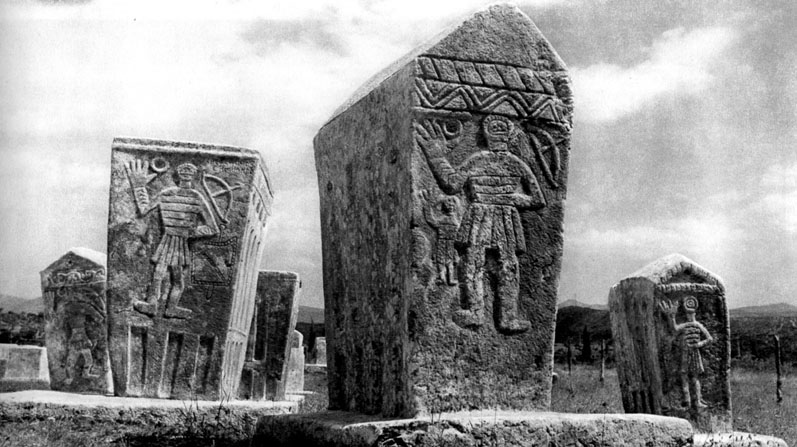
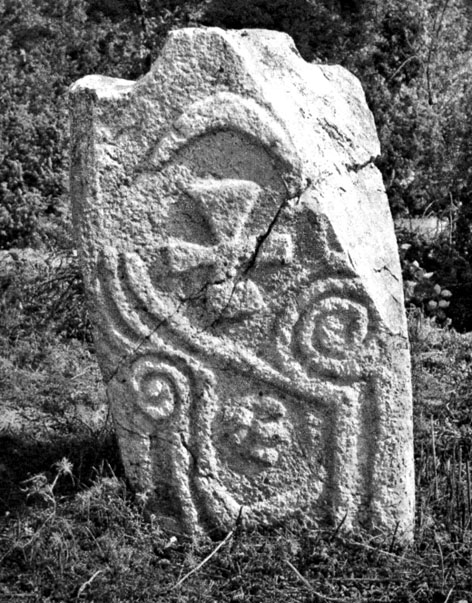
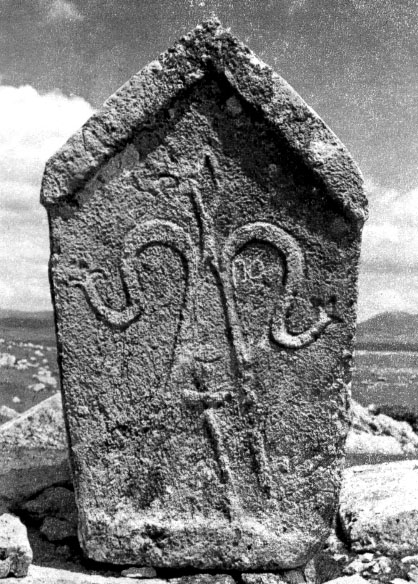
Bosnia and Herzegovina is full of very interesting, mysterious tobmbstone monuments called stechak. The most famous collection is in Radimlja in Herzegovina:
 |
 |
Here are a few stechak monuments in the vicinity of Srebrenica in eastern Bosnia:
 |
 |
 |
In the middle stechak one can see a lily, which is a very old symbol of Bosnia. In Croatia there are also numerous stechak monuments. Some of them are even near the towns of Knin, Karlovac (Generalski stol), and in Slavonia, near the towns of Pozega and Pakrac.
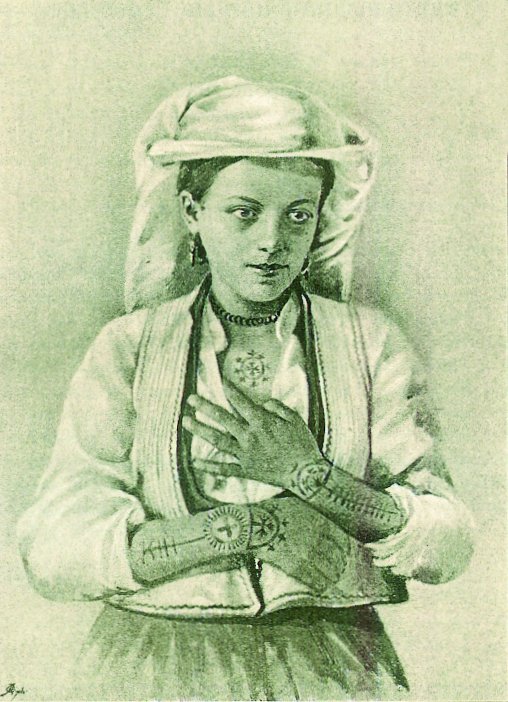
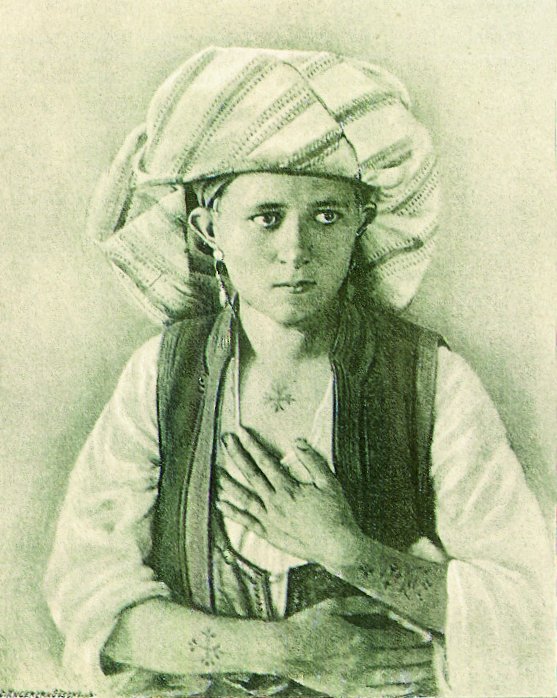 Even today Croatian women in some parts of Bosnia
tattoo their hands with Christian symbols and stechak ornaments. This very old custom, used exclusively
among Catholic Christians, had a special meaning in the period of the
Ottoman occupation. In this way, by wearing indelible signs of their Christian
religion, the forced conversion to Islam has been prevented. However,
the custom itself is much older. For example, a Greek historian Strabo
(1st century BC) mentions tattooing among inhabitants of this area. For
more information see an article by Ciro Truhelka: Die Tätowirung bei den Katholiken Bosniens
und der Hercegovina (published in Wissenschaftliche Mittheilungen
Aus Bosnien und der Hercegovina, herausgegeben vom Bosnisch-Hercegovinischen
Landesmuseum in Sarajevo, redigiert von Dr. Moriz Hoernes, Vierter Band,
Wien 1896).
Even today Croatian women in some parts of Bosnia
tattoo their hands with Christian symbols and stechak ornaments. This very old custom, used exclusively
among Catholic Christians, had a special meaning in the period of the
Ottoman occupation. In this way, by wearing indelible signs of their Christian
religion, the forced conversion to Islam has been prevented. However,
the custom itself is much older. For example, a Greek historian Strabo
(1st century BC) mentions tattooing among inhabitants of this area. For
more information see an article by Ciro Truhelka: Die Tätowirung bei den Katholiken Bosniens
und der Hercegovina (published in Wissenschaftliche Mittheilungen
Aus Bosnien und der Hercegovina, herausgegeben vom Bosnisch-Hercegovinischen
Landesmuseum in Sarajevo, redigiert von Dr. Moriz Hoernes, Vierter Band,
Wien 1896).
Bosnian Catholic Croats tattoo their hands and other visible parts of body with Christian symbols (usually with a small cross), like brow, cheeks, wrist, or below neck. This can be seen even today, not only in middle Bosnia, but also among exiled Bosnian women living in Zagreb.
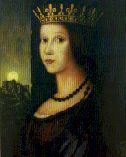 Katarina Vukcic-Kosaca (1424-1478), the last Queen of Bosnia, ardent Catholic,
wife of the Bosnian King Stjepan Tomasevic (1461-1463), is still
one of the most beloved personalities among the Croats living in Bosnia.
When Bosnia fell under the Ottoman rule in 1463, her two children (a boy
and a girl) had been taken to slavery and educated in the spirit of Islam,
her husband decapitated. She managed to escape to Dubrovnik,
and then to Rome, where she had been deeply involved in the humanitarian
activity of the Franciscan community (Aracoeli) becoming Franciscan Tertiary
herself, to help Bosnian Croats under the Turkish rule.
Katarina Vukcic-Kosaca (1424-1478), the last Queen of Bosnia, ardent Catholic,
wife of the Bosnian King Stjepan Tomasevic (1461-1463), is still
one of the most beloved personalities among the Croats living in Bosnia.
When Bosnia fell under the Ottoman rule in 1463, her two children (a boy
and a girl) had been taken to slavery and educated in the spirit of Islam,
her husband decapitated. She managed to escape to Dubrovnik,
and then to Rome, where she had been deeply involved in the humanitarian
activity of the Franciscan community (Aracoeli) becoming Franciscan Tertiary
herself, to help Bosnian Croats under the Turkish rule.
The above portrait of Katarina Kosaca, Bosnian Queen, was made by Giovanni Bellini, held in the Capitol Gallery of paintings in Rome.
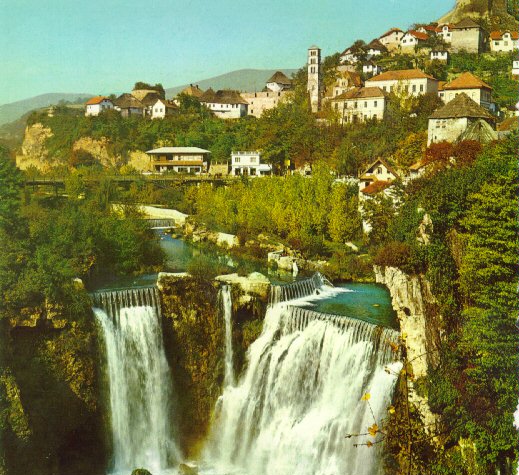 She built a church of St. Katarina in a picturesque
Bosnian city of Jajce
(totally destroyed by the Serbs in 1993). Despite her very difficult position,
she had always been treated as a Queen of Bosnia in official circles.
Tormented by the traged of her homeland, lawful Queen Katarina bequested
her Bosnian Kingdom to pope Sixto IV and Holly See in 1478 ("...in
case that my islamised children are not freed and returned to Catholic
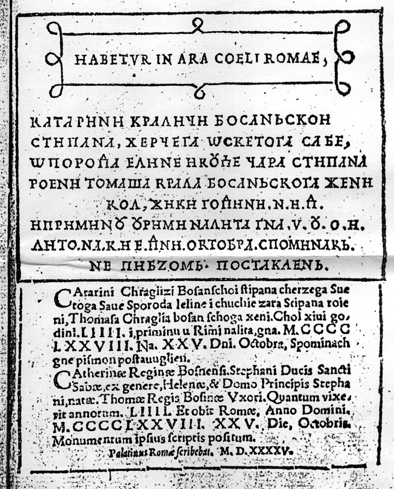
faith"). Her grave in the Aracoeli church in Rome had
a Croatian Cyrillic
inscription until 1590 (with the coat of arms of the old Bosnian Kingdom
and of the Kosaca family), when it had been replaced by
translation into Latin.
Even today, after more than five centuries, Croatian women wear black
costumes in some parts of Bosnia in remembrance to her tragic life and
kindness towards poor people. Beatified.
She built a church of St. Katarina in a picturesque
Bosnian city of Jajce
(totally destroyed by the Serbs in 1993). Despite her very difficult position,
she had always been treated as a Queen of Bosnia in official circles.
Tormented by the traged of her homeland, lawful Queen Katarina bequested
her Bosnian Kingdom to pope Sixto IV and Holly See in 1478 ("...in
case that my islamised children are not freed and returned to Catholic
faith"). Her grave in the Aracoeli church in Rome had
a Croatian Cyrillic
inscription until 1590 (with the coat of arms of the old Bosnian Kingdom
and of the Kosaca family), when it had been replaced by
translation into Latin.
Even today, after more than five centuries, Croatian women wear black
costumes in some parts of Bosnia in remembrance to her tragic life and
kindness towards poor people. Beatified.
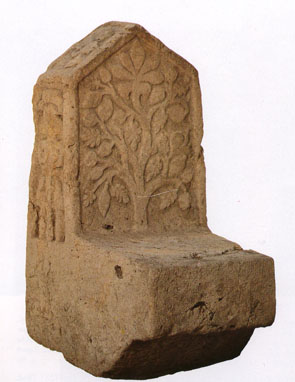 The
seat of Bosnian kings in 14th and 15th centuries was Bobovac, about
50 km north of Sarajevo. Its walls were about 1100 meters long. Many documents
are preserved mentioning Bobovac. It fell under the Turks in 1463, which
meant the fall of mediaeval Bosnian state.
The
seat of Bosnian kings in 14th and 15th centuries was Bobovac, about
50 km north of Sarajevo. Its walls were about 1100 meters long. Many documents
are preserved mentioning Bobovac. It fell under the Turks in 1463, which
meant the fall of mediaeval Bosnian state.
After the catastrophic defeat of the Serbs in the Kosovo field in 1389, on whose side both Croatian forces from Bosnia and Albanian troops had also participated, Serbia became a vassal state to the Turkish Ottoman Empire.
 Among the most tragic events in the history of
the Croats were the Turkish occupation of Bosnia in 1463, and the catastrophic
defeat of Croatian defenders in the battle with the Turks on the Krbavsko
polje (Krbava field) in 1493. The slaughter of the Croatian nobility
greatly reduced the economic power of the Croatian lands for the centuries
to come. It was described in the "Second Novi Glagolitic breviary" by rev. Martinac in 1494 (see a column
from this breviery on the photo). Marko Marulic
wrote his famous Prayer against the Turks.
Among the most tragic events in the history of
the Croats were the Turkish occupation of Bosnia in 1463, and the catastrophic
defeat of Croatian defenders in the battle with the Turks on the Krbavsko
polje (Krbava field) in 1493. The slaughter of the Croatian nobility
greatly reduced the economic power of the Croatian lands for the centuries
to come. It was described in the "Second Novi Glagolitic breviary" by rev. Martinac in 1494 (see a column
from this breviery on the photo). Marko Marulic
wrote his famous Prayer against the Turks.
In the 16th century the Turks started settling down Serbian population in the emptied regions previously inhabited by the Croatian Catholics. The representatives of the Serbian Orthodox Church had the privilege to collect taxes from the Croatian Catholics. In this way the Serbs wanted to include the Catholics into the Orthodox Church, which was under the control of the Turks (the residence of the Serbian Patriarch was in Constantinople in present-day Turkey).
Let us mention by the way that the animosity of the Orthodox Christians against Catholics was strengthened first in Greece and then in Serbia after the Crusaders had occupied Constantinople and formed the Latin Empire (1204-1261).
 Before
the Turkish penetration in the 15th century there were 151 Catholic churches
in Bosnia, about 20 Catholic monasteries, and not a single Serbian Orthodox
church. Several Catholic orders were present in Bosnia: Benedictins, Paulines,
and above all Franciscans. Immediately after the arrival of the Turks
a large number of Serbian Orthodox churches was built up, many of them
on the ruins of Catholic churches. Under the pressure of the Serbian Clergy
many Croatian Catholics had to convert to the Serbian Orthodox Christian
faith. And the religion was one of the decisive factors in the national
affiliation of the people in Bosnia.
Before
the Turkish penetration in the 15th century there were 151 Catholic churches
in Bosnia, about 20 Catholic monasteries, and not a single Serbian Orthodox
church. Several Catholic orders were present in Bosnia: Benedictins, Paulines,
and above all Franciscans. Immediately after the arrival of the Turks
a large number of Serbian Orthodox churches was built up, many of them
on the ruins of Catholic churches. Under the pressure of the Serbian Clergy
many Croatian Catholics had to convert to the Serbian Orthodox Christian
faith. And the religion was one of the decisive factors in the national
affiliation of the people in Bosnia.
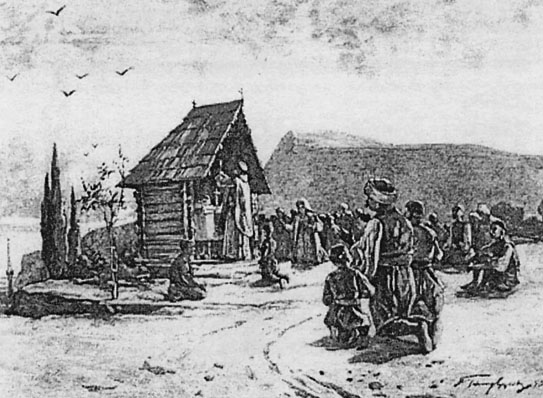 The
border between Middle Age Bosnia and Croatia was on the river Vrbas, not
on Una. The lovely town of Jajce (on river Vrbas) was in Croatia, as well
the town of Bihac. The territories enclosed by three rivers - Sava, Una
and Vrbas - bore the name of the Turkish Croatia in the European
literature of 18th and 19th century. The name was given by the Turks,
and it was accepted by Austrian, Italian, German and Dutch cartographers.
It was only in 1860 that upon insistance of the Valachian part of the population the name of Turkish Croatia
was abolished in favor of the new name - Bosanska Krajina (Bosnian Frontier).
This name appears on maps for the first time in 1869.
The
border between Middle Age Bosnia and Croatia was on the river Vrbas, not
on Una. The lovely town of Jajce (on river Vrbas) was in Croatia, as well
the town of Bihac. The territories enclosed by three rivers - Sava, Una
and Vrbas - bore the name of the Turkish Croatia in the European
literature of 18th and 19th century. The name was given by the Turks,
and it was accepted by Austrian, Italian, German and Dutch cartographers.
It was only in 1860 that upon insistance of the Valachian part of the population the name of Turkish Croatia
was abolished in favor of the new name - Bosanska Krajina (Bosnian Frontier).
This name appears on maps for the first time in 1869.
Franjo Glavinic (1585 - 1652), Croatian Franciscan born in Istria, whose parents were noblemen exiled from Bosnian Kingdom (Glamoc), wrote several important books, among which we cite
- L'origine della Provincia di Bosna Croatia (The Origine of the Province of Bosnia Croatia), two editions, Udine 1648 and 1691; the Province of Bosnian Croatia has been separated from the Province of Bosnia Argentum in 1514 by a decision which took place in the convent of Cetin in Upper Croatia;
- Historia Tersattana, Udine 1648 (History of Trsat, reprinted in 1989),
- Szvitlost duse verne (Light of Faithful Soul; in Croatian, first edition printed in Venice, second in Padova, and third again in Venice), in which he speaks about the human need for virtues here... and to please brothers and faithful, in particular the Croatian people (ugoditi... navlastito Hervackomu jeziku) and my Istrians...
- Czvit szvetih (The Flower of the Sacred People; three editions in Venice), and Chetiri poszlidnya chlovika (The Last Four Men; Venice), both written in Croatian in the monastery of Sv. Leonard near Okic in the vicinity of Samobor.
The territory between Una and Vrbas (former Turkish Croatia) has been ceded to the Serbian entity by the Dayton agreement in 1995. Truly a great success of Milosevic and his apprentices Karadzich and Mladich. The area itself, as well as the fertile region of Bosanska Posavina along the right bank of the Sava river (now also within the Serbian entity), had a large Muslim and Croatian majority in 1991. The region has been almost completely cleansed from the Croats and Muslims that lived there for centuries. A part of cleansing was the so-called "humanitarian exchange of population'' under the auspices of the international community that was not willing to put pressure on Karadzic and Mladic. The European officials describe this as a "compensation'' for the disappearance of the Serbian para-state in Croatia during the Flash and Storm operations.
The Serbs living in Bosnia came with the Turks mostly as assisting Turkish troops. It should be emphasized that these Bosnian Serbs were originally Valachies (Vlachs) from Montenegro and northern Albania. In fact they were non-slavic nomads - Protoromans and romanized Balkan Celts and Illyrians, who accepted the Serbian Orthodox faith (there were also Catholic Valachies in Croatia, croatized after 16th century). Later, under the influence of the Serbian Orthodox Church in Bosnia, they became Serbs. They had been fighting on the Turkish side until the decline of the Turkish Empire started. Their enclaves in present day Croatia follow roughly the border of the Turkish Empire in the medieval Croatia.
These migrations led to further complications. Counting on these Serbian settlers as a military aid, the Austrian kings supplied them with privileges. This meant that parts of the Croatian territory were not completely under the Croatian jurisdiction and the Croats felt them as intruders within their state. This was the beginning of the so-called Krajina (`Military Frontier'; "Bosnian Krajina" appeared much later), whose complete and systematic ethnical cleansing from Croats and from everything reminding on their existence was finished during the Serbian aggression 1991-1995. Here we see the beginning of the drama in Croatia and Bosnia-Herzegovina. The Krajina region in Croatia has been liberated during the Flash and Storm operations in the summer 1995.
 Let us continue our story on the history of medieval
Bosnia. The tax in blood (devshirma) was the most tragic for Bosnian
Catholics. It meant that every three or four years 300 to 1000 healthy
boys and young men had to be taken by force to Turkey, converted to Islam
and educated for military profession or religious disciplines. Some desperate
mothers even mutilated their children trying to save them.
Let us continue our story on the history of medieval
Bosnia. The tax in blood (devshirma) was the most tragic for Bosnian
Catholics. It meant that every three or four years 300 to 1000 healthy
boys and young men had to be taken by force to Turkey, converted to Islam
and educated for military profession or religious disciplines. Some desperate
mothers even mutilated their children trying to save them.
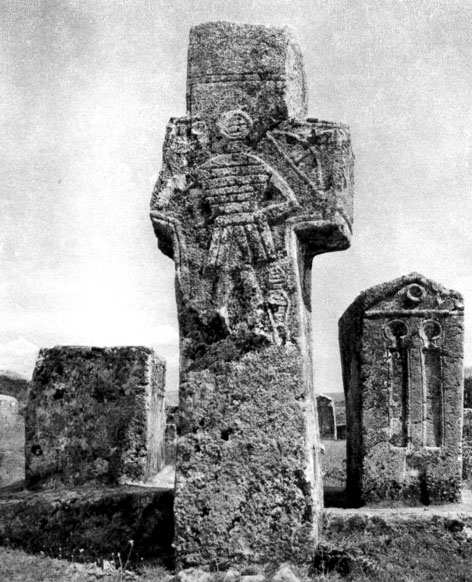
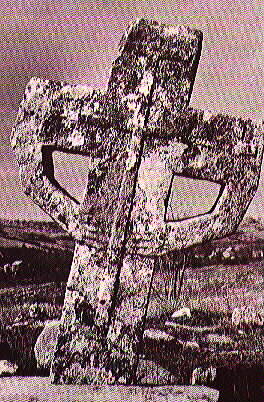
On the photo you can see an interesting cross from the region
of Duvno in Herzegovina (about 2 meters high). According to the legend,
it represents a mother whose child was killed by the Turks.
After the arrival of the Turks the states of Bosnia and Albania, which had been previously Catholic, became more and more islamized. Moreover, in the same time in Bosnia the Serbian Orthodoxy, supported by the Turks, was spreading. The Jews exiled from Spain (Sefards), who arrived to Bosnia in 1492, were accepted by the Turkish state and exempt from the tax in blood, but not from paying taxes to the Serbian Church.
It is also interesting to note that the language which the Turkish court in Constantnople officially used to communicate with the Balkan Slavs was Croatian. Many islamized Croats were present at the Turkish court as writers, officers, even grand viziers.
In 1526 the disastrous defeat of Hungarian and Croatian army took place
in the Mohac field in southern Hungary. Let us mention by the way
that since 1991 this area has offered refuge to 45,000 exiles, mostly
Croats from Serbia and occupied parts of Croatia.
The territory of western Bosnia, that was occupied by the
Turks only after the battle on the Mohac field, was called Croatian
Bosnia or Turkish Croatia (Bosna hrvatska or Turska
Hrvatska) until the Berlin Congress in 1878.
Here is a document depicting cut off heads of Croats killed after the battle at Petrinja near Zagreb in 1592:
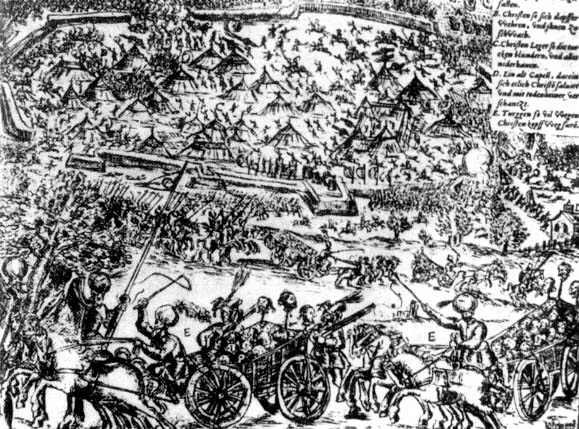
The 1592 defeat of Croatian-Habsburg army near Brest was celebrated in Constantinople by showing 29 charriots with 172 captured dignitaries, 600 cut off heads, and 23 captured flags.
A legendary Croatian military commander Nikola Jurisic (born in the town of Senj, 1490-~1545) managed to stop sultan Sulejman the Magnificent (or Great) in 1532 near the town of Köszeg (Güns) at Austrian and Hungarian border. Nikola Jurisic had about 700 Croatian soldiers, the Turks about 32,000 people. The Turkish onsloughts lasted for three weeks. The aim of sultan Sulejman was to occupy Vienna. It is interesting that two years earlier Nikola Jurisic visited sultan Sulejman in Constantinople as a deputy of King Ferdinand.
Nikola Zrinski Junior (1620-1664), a Croatian statesman and writer, described in his epic ``The siege of Siget'' the heroic death of his grandfather Nikola Subic Zrinski in 1566, which entered all the historical annals of the 16th century. With his 2500 brave soldiers, mostly Croats, he was defending the fortress of Sziget in southern Hungary against 90,000 Turks. The Turkish troops were under the sultan Sulejman the Great and supplied by 300 cannons. It took them a month to defeat the Croatian soldiers, who all died a terrible death in the final battle. Despite his promise, the King Maximillian Habsburg did not help Nikola Subic Zrinski. Historians say that the Turks had almost 30,000 dead. Cardinal Richelieu, the famous French minister at the court of King Lui XIII, wrote the following: A miracle was necessary for the Habsburg Empire to survive. And the miracle happened in Sziget. The above mentioned epic was written in the Hungarian language. Though written by the Croat, it is regarded to be one of the greatest achievements of the early Hungarian literature. See also here (in Croatian).
Nikola Subic Zrinski, his oath taken in Siget in 1566.
It is worth noting that Dominko Zlataric, famous 16th century Croatian writer in Dubrovnik, dedicated some of his translations from Greek classics to Juraj Zrinski, son of the above mentioned Sziget hero Nikola Subic Zrinski. Zlataric stated that he translated Greek verses into Croatian ("u hrvatski izlozene")
Among innumerably many Croatian captives in Turkish slavery, there were at least two that deserve special attention:
- Bartol Gyurieuvits (Bartol Jurjevic, Gjurgjevic), 16th century, who left us extremely interesting testimonies about the Ottoman (Turkish) Empire, that can be found in various libraries of almost all larger European cities;
- Juraj Hus (Husti), 16th century, who became Turkish military trumpeter.
It is not widely known that in the 16th century the town of Bihac was Croatian capital. Hasan-pasa Predojevic, an islamized Croat, occupied Bihac in 1592. About 2000 people were killed and 800 Croatian children taken to slavery and educated in the spirit of Islam. A real turning point which meant the beginning of the fall of the Ottoman expansion to Croatian historical lands (and to Europe) was a defeat of Hasan-pasa Predojevic in a battle at Sisak near Zagreb in 1593, which echoed in the whole of Europe.
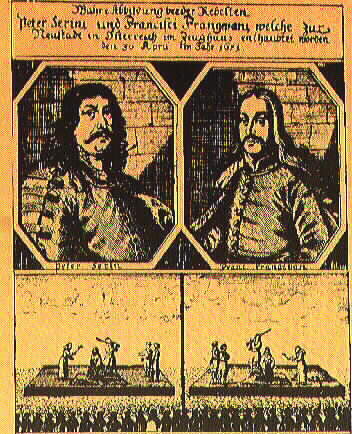 Ban (Viceroy) Petar Zrinski (1621-1671)
and Fran Krsto Frankapan (1643-1671), both outstanding as statesmen
and writers, are among the most beloved figures in the history of Croatia.
They had a great successes in liberating the areas occupied by the Turks.
However, the Viennese Military council, instead of supporting them to
free the rest of the Hungarian and Croatian lands, signed a shameful peace
treaty with Turkey, by which the liberated territories had to be handed
back to the Turks. The result of the rebellion against Vienna was a cruel
public decapitation of Zrinski and Frankapan in Wiener Neustadt near Vienna
in 1671. The remainings of these two Croatian martyrs were buried in the
Cathedral of Zagreb in 1919.
Ban (Viceroy) Petar Zrinski (1621-1671)
and Fran Krsto Frankapan (1643-1671), both outstanding as statesmen
and writers, are among the most beloved figures in the history of Croatia.
They had a great successes in liberating the areas occupied by the Turks.
However, the Viennese Military council, instead of supporting them to
free the rest of the Hungarian and Croatian lands, signed a shameful peace
treaty with Turkey, by which the liberated territories had to be handed
back to the Turks. The result of the rebellion against Vienna was a cruel
public decapitation of Zrinski and Frankapan in Wiener Neustadt near Vienna
in 1671. The remainings of these two Croatian martyrs were buried in the
Cathedral of Zagreb in 1919.
It is interesting that, while in prison from 18th April 1670 to 30th April 1671, Fran Krsto Frankapan translated Molier's "George Dandin" into Croatian, written in Paris in 1669, ie. only two years earlier. This was was its first European translation.
Petar Zrinski was also very educated, being a statesman, poet, composer, polyglot. He presented his legendary sword to the town of Perast in Boka kotorska during his sojourn there in 1654.
The letter sent by Petar Zrinski to his wife Katarina (in Croatian) just a day before his death is one of the most deeply moving texts ever written in the Croatian language. It was very soon translated and published in
- Croatian (Moje drago serce), Vienna, 1671,
- English (My dear soul), London, 1672,
- German (Mein liebes Herz), Vienna, 1671,
- French (Ma chere Femme), Paris, 1691,
- Italian:
- Mio Cuore, Vienna, 1671,
- Carisima Consorte, Dresden, 1672,
- Latin (Delicium meum), Vienna, 1671,
- Spanish (Querida Esposa mia), Madrid, 1687,
- Dutch (Myn Liefste Hert), Amsterdam, 1671,
- Hungarian (Anna Catharina), Budapest, 1671.
His wife Katarina, also an outstanding poetess, was imprisoned by general Spankau in a monastery in Graz, where she went insane and died in extreme poverty. Even the son of Peter and Katarina - Ivan Antun, the last of the Zrinski's, was imprisoned in Graz, solely because he belonged to this outstanding noble family. He died after 20 years of prison in Schlossberg in Graz out of pneumnonia.
These six centuries old noble Croatian families died out and their property was robbed. It should be stressed thet both Petar Zrinski and Fran Krsto Frankapan went to Vienna voluntarily, where they have been arrested. During the trial they defended themselves claiming that only Croatian Parliament (Hrvatski Sabor) can try them. In their bourgs they had a considerable collection of books and works of art, which after consfiscation are held in Austria (many of them in Austrian National Library). A period of the influence of the absolutistic Viennese politics had started.
Petar Zrinski and Fran Krsto Frankopan (1825-1871), by Dr. Vinko Grubisic
Even today some descendants of the Zrinski family (Sdrin, Sdrinias) live in Greece. See an interesting article by Dionisis pl. Sdrinias (Greece).
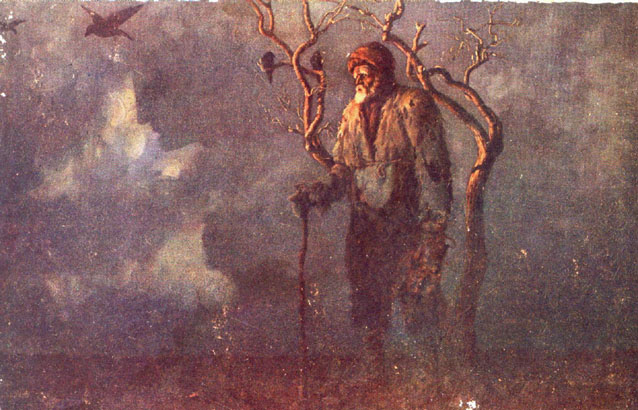 By
the end of the 17th century some of the occupied parts of Croatia and
Hungary were liberated from the Turks. The Serbs joined Austrian forces
(composed mostly of Croats), hoping to get a full freedom. However, the
Austrian forces were defeated near Skopje in Macedonia. The Turks managed
to regain most of the lost territories, and then a very difficult period
for Serbian people started. Fearing the revenge of the Turks, in 1690
Kosovian Serbs (37,000 families) left for present day Vojvodina, a very
fertile region, the part of which between the rivers Sava and Danube was
a Croatian territory and Hungarian to the north of the Danube. Actually,
the exodus of Serbs included even Budapest. Most of the Catholic monasteries
in Vojvodina became the `property' of the Orthodox Church, whose aggressivity
made interconfessional relations very tense. The emptied territories of
Kosovo were then populated by the islamized Albanians. Today the official
Serbia quite unjustly claims an equal right to both Kosovo and Vojvodina.
By
the end of the 17th century some of the occupied parts of Croatia and
Hungary were liberated from the Turks. The Serbs joined Austrian forces
(composed mostly of Croats), hoping to get a full freedom. However, the
Austrian forces were defeated near Skopje in Macedonia. The Turks managed
to regain most of the lost territories, and then a very difficult period
for Serbian people started. Fearing the revenge of the Turks, in 1690
Kosovian Serbs (37,000 families) left for present day Vojvodina, a very
fertile region, the part of which between the rivers Sava and Danube was
a Croatian territory and Hungarian to the north of the Danube. Actually,
the exodus of Serbs included even Budapest. Most of the Catholic monasteries
in Vojvodina became the `property' of the Orthodox Church, whose aggressivity
made interconfessional relations very tense. The emptied territories of
Kosovo were then populated by the islamized Albanians. Today the official
Serbia quite unjustly claims an equal right to both Kosovo and Vojvodina.
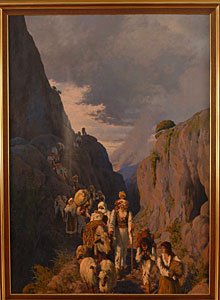 The
penetration of the Ottoman Empire to Europe was stopped on Croatian soil,
which could be in this sense regarded as a historical gate of European
civilization. Since 1519 Croatia has been known as Antemurale Christianitatis
in Western Europe. The name was given by Pope Leo X.
The
penetration of the Ottoman Empire to Europe was stopped on Croatian soil,
which could be in this sense regarded as a historical gate of European
civilization. Since 1519 Croatia has been known as Antemurale Christianitatis
in Western Europe. The name was given by Pope Leo X.
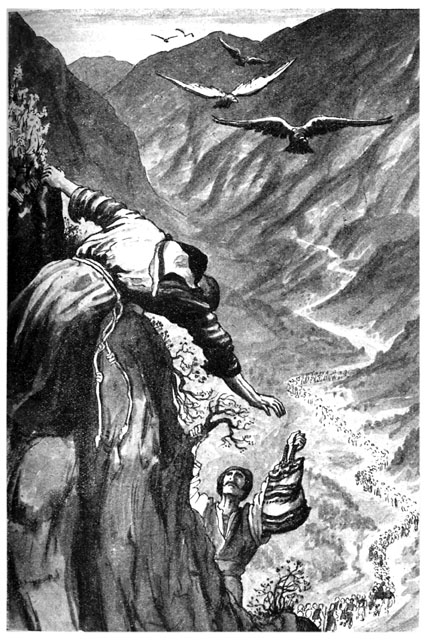 The Croats endured the greatest burden of this four century long war
against the Turks. The most tragic fact in this war was that many islamized
Croats had to fight against the Catholic Croats. It is interesting to
note that the city of Zagreb and nearby Sisak despite many attempts were
never occupied by the Turks, though they came as far as Vienna in 1683.
Budapest for instance was in the hands of the Turks for 160 years.
The Croats endured the greatest burden of this four century long war
against the Turks. The most tragic fact in this war was that many islamized
Croats had to fight against the Catholic Croats. It is interesting to
note that the city of Zagreb and nearby Sisak despite many attempts were
never occupied by the Turks, though they came as far as Vienna in 1683.
Budapest for instance was in the hands of the Turks for 160 years.
It is in the 17th century that the following very condensed description of the Croatian tragedy was given by Pavao Vitezovic (1652-1713), a writer: ``Reliquiae reliquiarum olim inclyti Regni Croatiae'', i.e. ``Remains of remainings of ancient glorious Croatian Kingdom''. Indeed, throughout its long and difficult history its territory has been reduced to the shape of a flying bird.
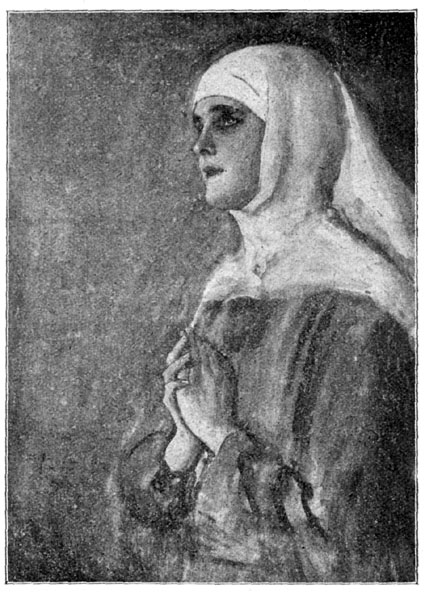
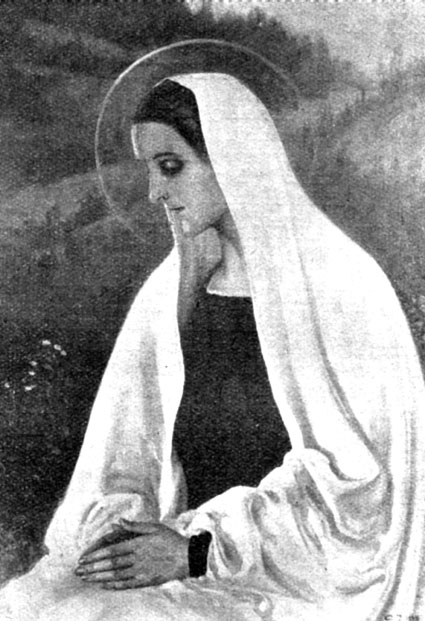
The earliest mention of a Catholic bishopric in Bosnia dates from 1089 (i.e. from the 11th century). It was called Bosnian Bishopric, and its center was in Vrhbosna (today's Sarajevo).
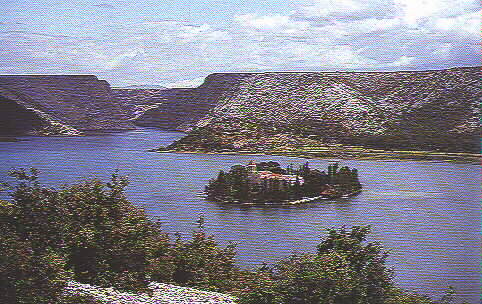
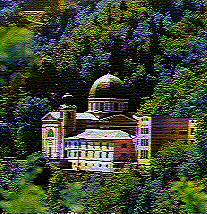 Deep traces were left by the Bosnian Franciscans, present
on Bosnian soil since 1291 (only 80 years after the foundation of the
Franciscan order). They were beloved by people, for being educated and
humble, for keeping the national and religious identity of the Croats.
In 1376 they had 35 Catholic monasteries and about 400 missionaries (the
Fojnica (Hvojnica) monastery is on the photo on the left; on the right is
the famous Visovac monastery on the Krka river, founded in 1445
by Bosnian Franciscans from Kresevo, middle Bosnia; shelled by the Serbs
in 1991).
In Turkish time, by a special Charter (Ahdnama,
1463) from the Sultan, the Bosnian Franciscans and their Croatian Catholics
had a guaranty to live in peace and freedom in his Empire. However, in
reality it was rather different. Three Franciscan bishops in Bosnia had
been killed by the Turks despite ostensible protection: in 1545, 1564,
1701, not to mention priests and ordinary people.
Deep traces were left by the Bosnian Franciscans, present
on Bosnian soil since 1291 (only 80 years after the foundation of the
Franciscan order). They were beloved by people, for being educated and
humble, for keeping the national and religious identity of the Croats.
In 1376 they had 35 Catholic monasteries and about 400 missionaries (the
Fojnica (Hvojnica) monastery is on the photo on the left; on the right is
the famous Visovac monastery on the Krka river, founded in 1445
by Bosnian Franciscans from Kresevo, middle Bosnia; shelled by the Serbs
in 1991).
In Turkish time, by a special Charter (Ahdnama,
1463) from the Sultan, the Bosnian Franciscans and their Croatian Catholics
had a guaranty to live in peace and freedom in his Empire. However, in
reality it was rather different. Three Franciscan bishops in Bosnia had
been killed by the Turks despite ostensible protection: in 1545, 1564,
1701, not to mention priests and ordinary people.
About Ahdnama and the question of its authenticity see two
articles by Sasa Sjeverski in Stecak, Sarajevo, 56/1998, pp 28-29, and
57/1998, pp 14-15.
An outstanding European intellectual of his time was Georgius Benignus (Juraj Dragisic, ?1454 - 1520), a Croat born in Bosnia, in the town of Srebrenica.
Today the richest library in Bosnia-Herzegovina is in the Franciscan monastery of Mostar (bombed by the Serbs in 1992). The most famous Croatian Franciscan is St. Nikola Tavelic (born in Sibenik about 1340-1391), a missionary in Bosnia and Yerusalem, a martyr whom Pope Paul VI proclaimed a Saint in 1970. We should also mention another Franciscian-capuchin, St. Leopold Mandic (1866-1942), who was a forerunner of today's Ecumenism.
The Franciscan province in Bosnia was called
Bosna Srebrena (Bosnia Argentum)
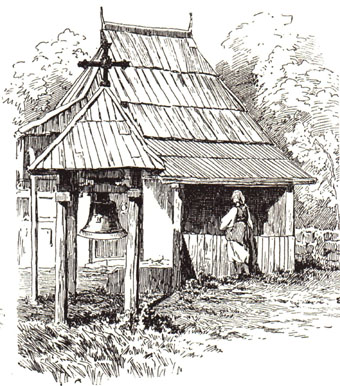 i.e.
Silver Bosnia. Since the 19th century its site is in Sarajevo. This very
old name was derived from the name of the city of SREBRENICA which
in preturkish times (before the end of the 15th century) had been known
as an important Catholic center in north-eastern Bosnia (in Croatian srebro
= silver). Due to the existence of the famous Franciscan monastery in Srebrenica,
the whole Franciscan province in Bosnia obtained its name from it. Srebrenica
was also an important mining center, known from the Roman times. It had
been settled also by the Dubrovnik merchants and Saxonian miners from Germany.
Even today there is a small village near Srebrenica called Sase, whose name
has been derived from the name of Saxons.
i.e.
Silver Bosnia. Since the 19th century its site is in Sarajevo. This very
old name was derived from the name of the city of SREBRENICA which
in preturkish times (before the end of the 15th century) had been known
as an important Catholic center in north-eastern Bosnia (in Croatian srebro
= silver). Due to the existence of the famous Franciscan monastery in Srebrenica,
the whole Franciscan province in Bosnia obtained its name from it. Srebrenica
was also an important mining center, known from the Roman times. It had
been settled also by the Dubrovnik merchants and Saxonian miners from Germany.
Even today there is a small village near Srebrenica called Sase, whose name
has been derived from the name of Saxons.
We know that in the region of north-eastern Bosnia, to which also the city of Srebrenica belongs, there existed a large number of Catholic churches and six Franciscan monasteries. This witnesses about deeply rooted Catholic tradition in this area before the Turkish occupation in the second half of the 15th century.
The names of many toponyms in this area, as well as elsewhere, reveal
its Croatian origin: 
- HRVATSKE njive (HRVAT = CROAT) on the river Drina near Zvornik,
- the nearby village HRVACICI,
- the village of HRVATI near Tuzla,
- HRVATI near Brcko,
- HRVATSKO brdo near Repnik,
- HRVATOVCI near Gradacac,
- the village BISKUPICI (Biskup = bishop; and not Episkopici'') etc.
Now we would like to provide an impressive list of
i.e. monasteries that we know to have existed before the Turkish occupation of Bosnia in 1463.
| Central
and western Bosnia:
|
Northern
and north-eastern Bosnia:
Hum (today's Herzegovina):
|
Just for comparison, immediately before the Serbian aggression that started in 1991/92 Bosnian Franciscans had altogether 25 monasteries (three of them outside of Bosnia - Herzegovina: two in Belgrade and one in the Kosovo region).
This list is for sure not complete, but it tells us already enough. It is clear that Catholic churches in Bosnia were much more numerous than Franciscan monasteries. According to the Turkish census of population in Bosnia from 1570 even the city of Foca on the river Drina had Catholic majority at that time. The ethnic and religious picture of Bosnia - Herzegovina has changed especially drastically in the 17th and 18th centuries in favor of Muslims and Orthodox Christians.
In 1658 a Franciscan Ivan from Foca (a small town in eastern Bosnia) sent a request to the Pope in the Vatican for permission to use Croatian language, "as was alowed to all priests in the province of Dalmatia" (...come pure concesta a tuti gli sacerdoti della provincia di Dalmazia), meaning of course the Croatian Glagolitic liturgy. See [Strgacic], p. 388.
A well known fact from the history of Bosnia (as well as recent) is that successes in the defense of the Croatian territories from Turkish onslaughts were followed by savage reprisals over the remaining Croatian Catholics in occupied areas (in today's Bosnia - Herzegovina and parts of Croatia). In this way many Catholic churches and monasteries disappeared and large ares in Bosnia had been emptied from the Croats. Especially infamous was gazi Husref - Beg, army leader of sultan Suleiman the Magnificent (16th century).
In this way the emptied areas had been populated by Muslim and Valachian settlers. Catholic churches were transformed into mosques like in Srebrenica, nearby Zvornik on the river of Drina, and in many other places.
An important and interesting phenomenon of Bosnian
history are Krstyans, members of the mysterious Bosnian Church
- a Christian religious sect. Krstyans are also known under the name of
Good Christians (Dobri Krstyani). According to studies of fra
Leon Petrovic, reports of Hungarian clergy to the Pope in 13th century
about the "heresy" of Bosnian Krstyans were unfounded. The "heresy"
of Bosnian Krstyans was invented by church authorities in Budim in order
to subjugate Bosnia to Hungary first in ecclesiastic, and then in political
sense. This policy succeded to separate Bosnia from the Dubrovnik Archbishopric
(which was also accused for "heresy"!), and to attach it to
the Hungarian Archbishopric in Kalocsa in 1247. Several crusades against
Bosnian "heretics" had been undertaken in the 13th century.
According to recent investigations, their overall number in the 15th century
was already small compared to the Catholic population in Bosnia. They
all dissappeared with the fall of Bosnia under Turks in 1463.
According to Franjo Sanjek, claims about massive passage
of Bosnian and Herzegovinian Krstyans to Islam are historically unfounded.
See his article "Dobri Muz'je" Crkve bosanskih i humskih krstjana
in Stecak 58/1998, Sarajevo. See also [Sanjek]. The history of Krstyans of Bosnian Church is studied
in an illuminating monograph [fra Leon Petrovic].
It is interesting that they had institutions of their own that they called hizha (house), while the bishop of the Bosnian Church was did (= grandfather), both typically Croatian names, in dialectal use even today. They were never called ``hristjans'' or ``hrischans'', as would be the case if they were of the Serbian provenance. The insitution of "did" existed also in old Croatian Kingdom, until its union with Hungary in 1102.
Another important and well documented fact regarding Krstyans in Bosnia is that liturgical books of the Bosnian Church had been transliterated from the Croatian Glagolitic sources into Croatian Cyrillic (Bosancica). Thus Krstyans are very closely related to the Croatian Glagolitic tradition.
Croatian Glagolitic sources related to Bosnia and Herzegovina:
- Kijevci fragment found near Kozara mountain found in NW Bosnia, 11/12th centuries, in its character very close to Glagolitic stone inscriptions in Western Slavonia (12/13th centuries) discovered in 1996,
- the Grskovic fragment of Apostle (12th century),
- the Mihanovic fragment of Apostle (12th century),
- a leaf of Glagolitic parchment, known as the Split fragment (12/13th centuries), held in the trasury of the Split Cathedral, probably from Bosnia,
- Glagolitic inscription in Livno, (content: A
SE PI / SA LU / KA DI / AK / 13 / 6 / 8) 1368, (and
three more fragments, groblje sv. Ive)
Many thanks to dr. fra Bono Vrdoljak, Livno, for this information - Sokolska isprava, cursive Glagolitic document from 1380, from western Bosnia (at that time part of Croatia, in Turkish time called Turkish Croatia),
- Kolunici inscription, 14/15th centuries,
- Cajnice Evangelistary, 14/15th centuries, contains a part written in the Glagolitic script (St John, 17-20), and a Glagolitic alphabet (incomplete and rather deformed),
- Hrvoje Glagolitic Missal, 1404 (held in Constantinople, Library of Turkish sultans Topkapi Saray),
- Glagolitic inscription from Golubici near Bihac in western Bosnia (ie. Turkish Croatia), carved in 1440 and in 1442, mentioning knez Tomas (ie. Prince Toma Kurjakovic) from Krbava; it is held in the famous Franciscan monastery in Fojnica in central Bosnia; see [Fucic, Glagoljski natpisi, p. 164]
- Glagolitic page from the Manuscript of Krstyanin Radosav, 1443 - 1461, transcribed into standard Croatian Glagolitic in 18th century by Matija Sovic; the book contains also two Croatian Glagolitic abecedariums, see one of them,
- the first and the second Glagolitic inscription from the vicinity of Banja Luka (Slatina) from 1471 (photos from [Poviest], see also [Fucic, Glagoljski natpisi -> Slatina]),
- Glagolitic muniments from Ostrozac, Ripac, Rmanja, Blagaj, Covac, Bihac, and Pec (mentioned by [Kresevljakovic]),
- Glagolitic inscription above the main entrance of Fehtija mosque in the town of Bihac in western Bosnia, designating the year 1527 in glagolitic characters. The mosque used to be the dominican church before the arrival of Turks. See [Fucic, Glagoljski natpisi, p. 96].
- Some glagolitic books are held in the Franciscan convent of Livno.
- Glagolitic inscription with very cultivated letters, from Buzim near Bihac in western Bosnia (ie. Turkish Croatia), mentioning Prince Juraj Mikulicic, who built the fortress of Buzim against the Turks; mentions among others that "U nu vrime va vsei hrvatskoj zemlji boljega covika ne bise..." (ie. "At that time there was not a better man in the whole Croatian land...", see the second line on the inscription below); it dates from the end of 15th century, and is held in the Museum of the City of Zagreb, see [Fucic, Glagoljski natpisi, p. 112].
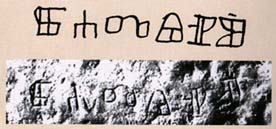
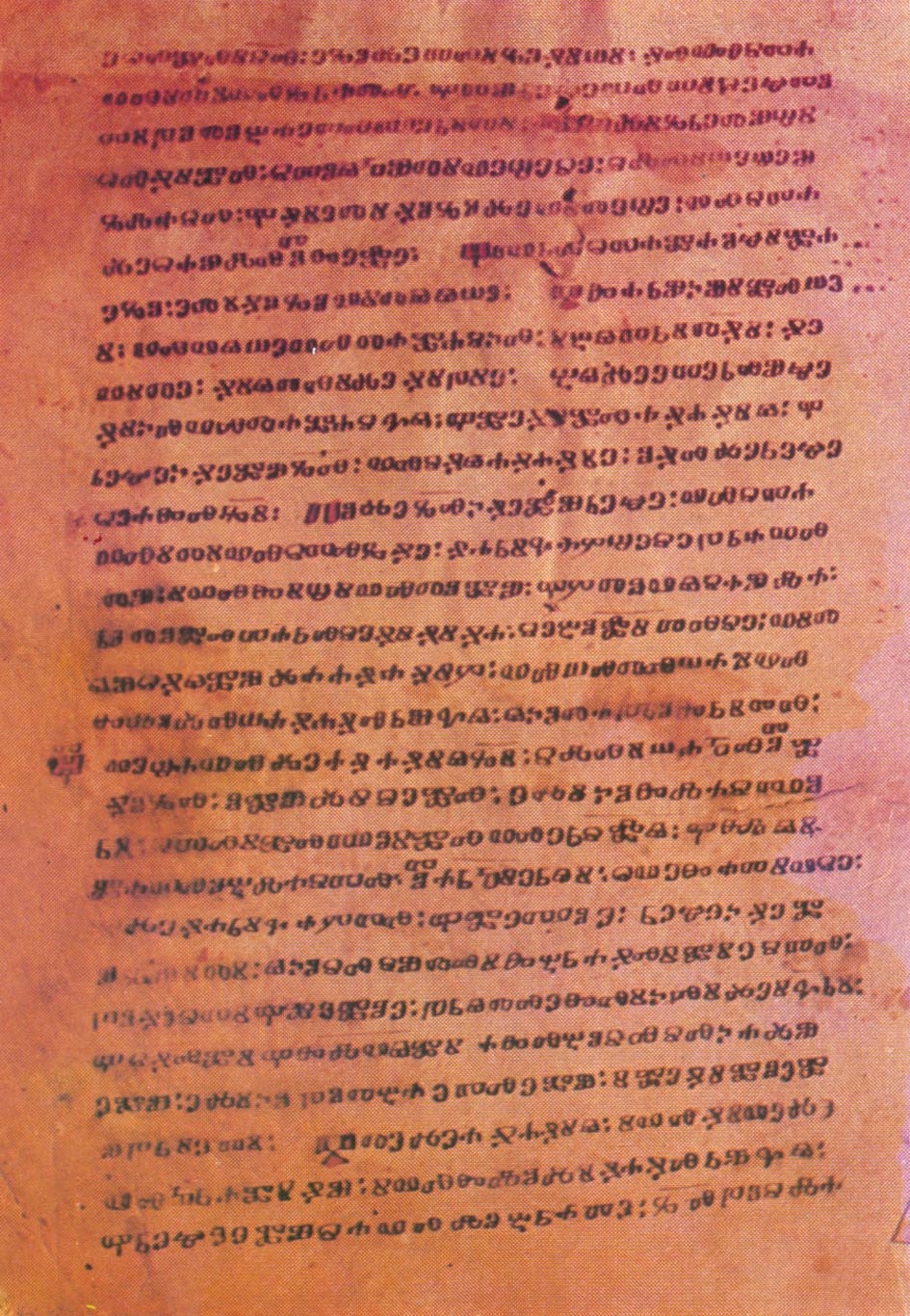
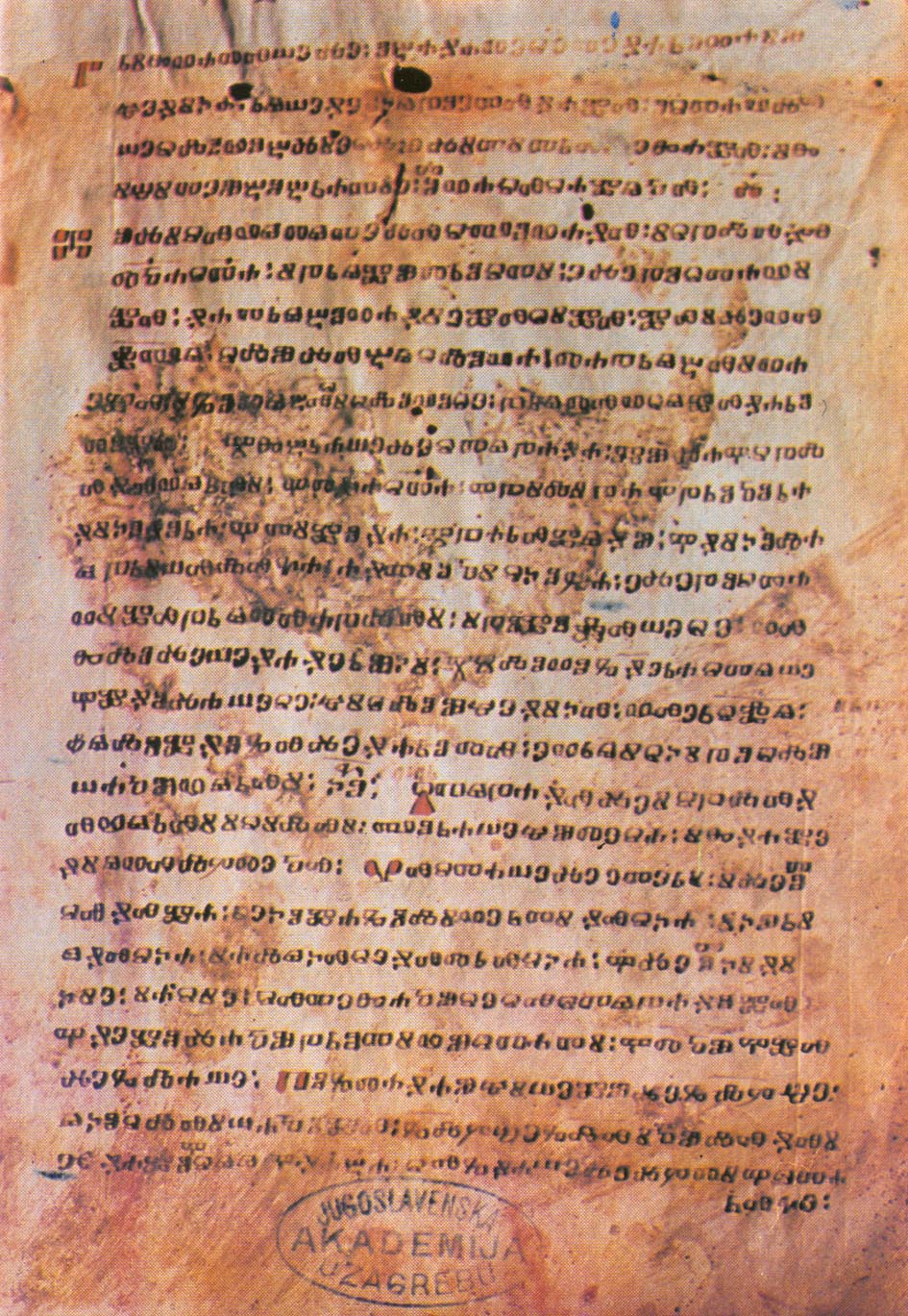
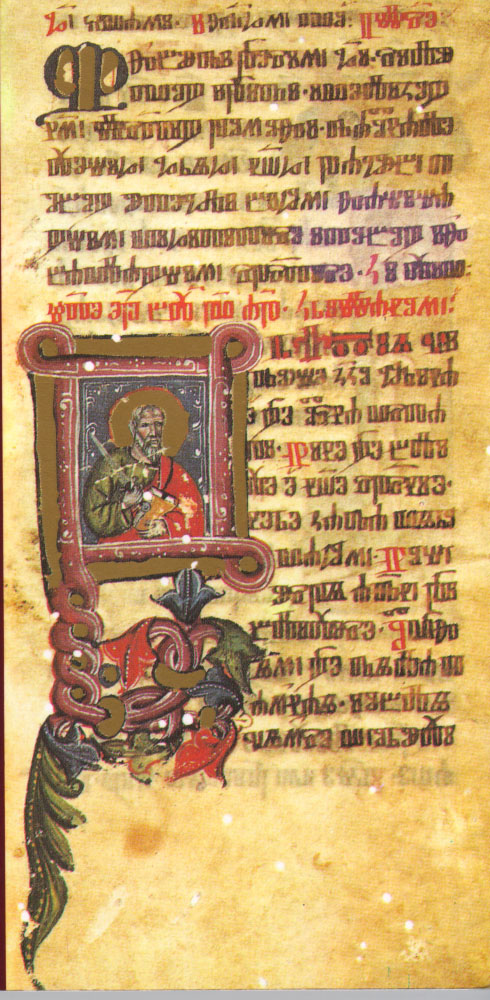
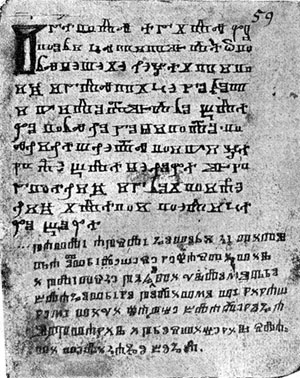
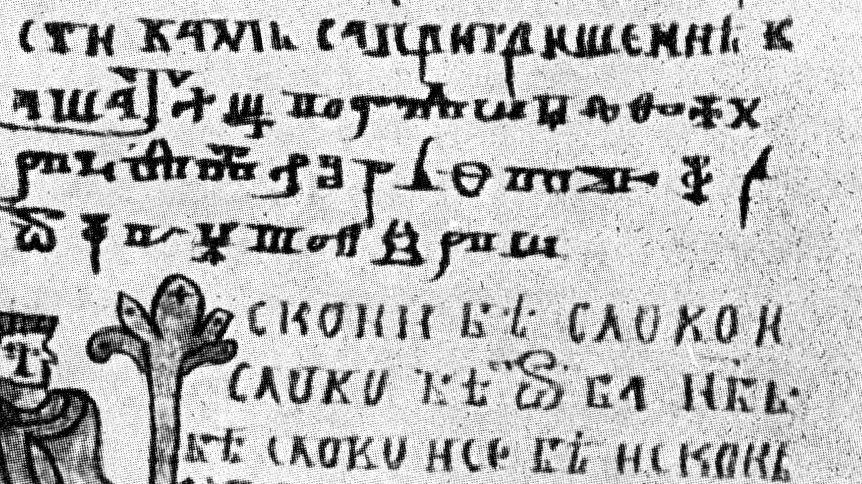


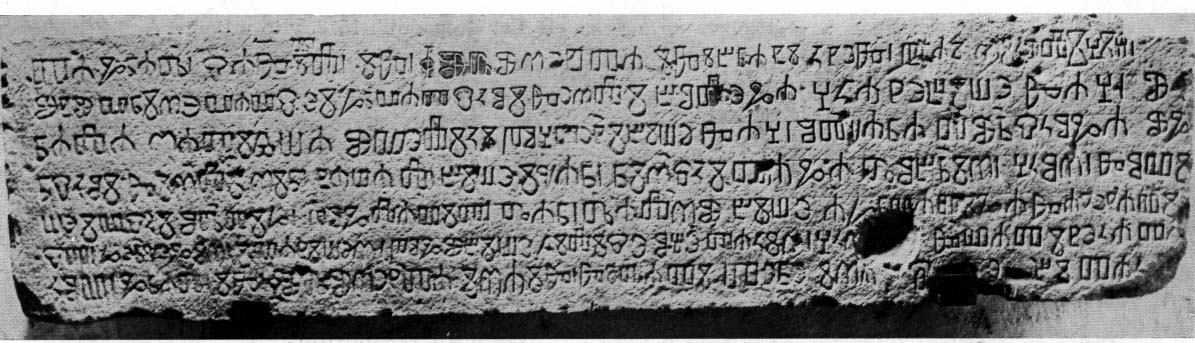
There is no doubt that the oldest phase of the Bosnian and Herzegovinean literature was Glagolitic. Numerous Cyrillic manuscripts were translated from older Glagolitic books. This can be seen for instance in the Mostar Evangelistary from the 14th century, written by Mihajlo Grk, held in the Archive of the Serbian Academy in Belgrade. The last three glagolites in Bosnia died in 1834.
Here is an interesting monument from central Bosnia with inscription for which it is difficult to decide is it Croatian glagolitic, cyrillic, or something else: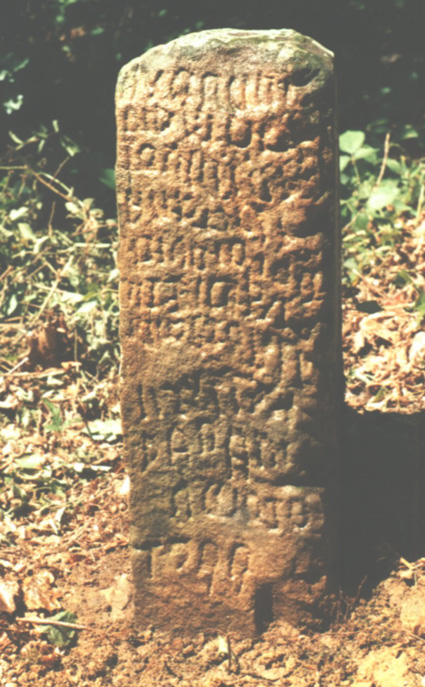
It is interesting that in 1390, Jadwiga, the Polish queen and her husband Wladyslaw Jagiello (Vladislaus Jagiello), founded a Glagolitic monastery under the invocation of The Saint Cross. It was established in Kleparz, the quarter of Krakow. Glagolitic liturgy existed there for about 100 years. Queen Jadwiga's mother was the princess Elzbieta Bosniaczka, that is, Elizabeth of Bosnia.
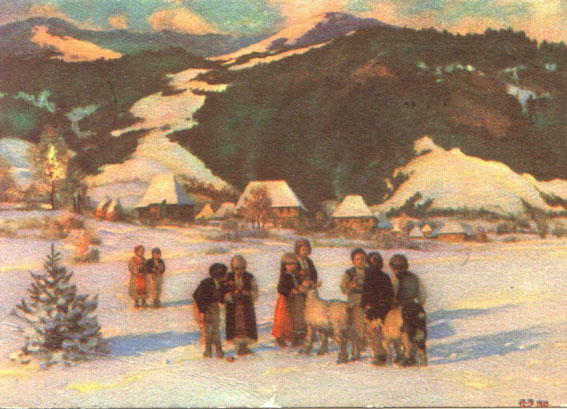 One
of undoubtably Croatian linguistic characteristics in Bosnia is a very
widespread use of the ikavian dialect (an amazing literature has
been written in the ikavian version of the Croatian language, since the
time of Marko Marulic in the 15th century, and also earlier by Glagolitic
scribes). Even today many Croats in Istria, Dalmatia, Gorski Kotar, Slavonia,
Baranja use it, as well as the Croats in Austria (Gradisce area), Hungary
and Yugoslavia (Srijem, Backa). Many traces of its use can be heard also
in Bosnia, both among the Croats and Muslims, despite intensive serbization
of the language in the period of 1918-1991.
One
of undoubtably Croatian linguistic characteristics in Bosnia is a very
widespread use of the ikavian dialect (an amazing literature has
been written in the ikavian version of the Croatian language, since the
time of Marko Marulic in the 15th century, and also earlier by Glagolitic
scribes). Even today many Croats in Istria, Dalmatia, Gorski Kotar, Slavonia,
Baranja use it, as well as the Croats in Austria (Gradisce area), Hungary
and Yugoslavia (Srijem, Backa). Many traces of its use can be heard also
in Bosnia, both among the Croats and Muslims, despite intensive serbization
of the language in the period of 1918-1991.
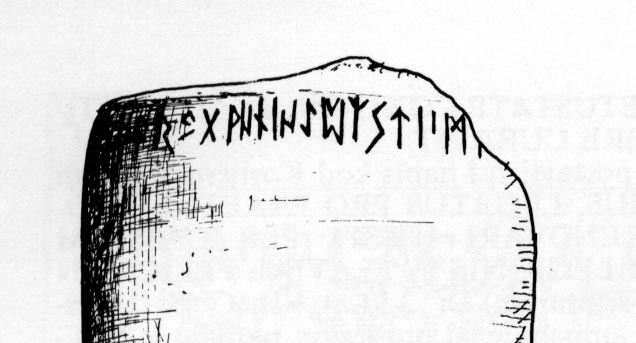 The reader may be surprised to know that there are
even traces of runic script on the territory of BiH, like
the one from the village of Breza in central Bosnia,
dating from 5-6th centuries.
The reader may be surprised to know that there are
even traces of runic script on the territory of BiH, like
the one from the village of Breza in central Bosnia,
dating from 5-6th centuries.
Much more information regarding ethnic and religious history of the Croats in Bosnia, Slavonia and Srijem, and their migrations until the 17th century, can be found in an important monograph [Zivkovic].
Besides the ikavian dialect, the Croats also use two more
dialects:
The ikavian dialect is spoken also in Slovakia, Ukraine and Bielorussia,
which is a consequence of the common history and very probably of the
common roots with the Croats in the early Middle Ages. Croats are ethnically
also very close to the Czech and Polish people.
To make out the difference, see how `milk' is written in these three dialects:
MLIKO, MLIJEKO, MLEKO, or `grandfather': DID,
DJED, DED. Another classification of dialects can be made
according to how ``what'' is written (= ca, kaj, sto):
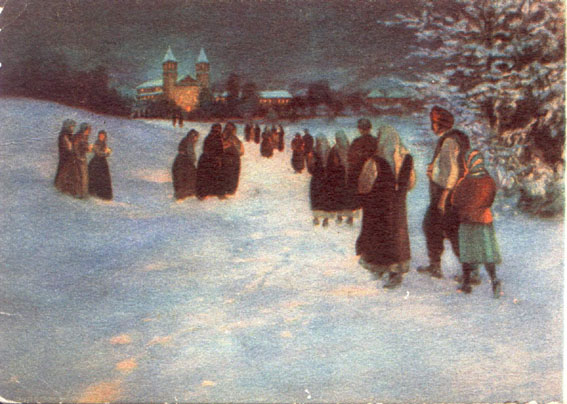 The
Croats use all these three dialects. Cakavian exists only among the Croats
and is spoken mostly along the Croatian coast and on the islands. Today
kajakvian is used to a much lesser extent. Stokavian is the official dialect
which is the most widespread. Serbian, Bulgarian and Russian languages are
also stokavian. In Croatia one can encounter each of nine possible combinations
of speeches: ikavian-cakavian, ikavian-stokavian, ikavian-kajkavian, ijekavian-cakavian,
ijekavian-stokavian (being the most widespread), ijekavian-kajkavian etc.
Ekavian-stokavian dialect is typical for the Serbs.
The
Croats use all these three dialects. Cakavian exists only among the Croats
and is spoken mostly along the Croatian coast and on the islands. Today
kajakvian is used to a much lesser extent. Stokavian is the official dialect
which is the most widespread. Serbian, Bulgarian and Russian languages are
also stokavian. In Croatia one can encounter each of nine possible combinations
of speeches: ikavian-cakavian, ikavian-stokavian, ikavian-kajkavian, ijekavian-cakavian,
ijekavian-stokavian (being the most widespread), ijekavian-kajkavian etc.
Ekavian-stokavian dialect is typical for the Serbs.
Important representatives of the Croatian resistance against the Turkish penetration, that entered our national epic literature, are
- What Jeanne d'Arc is for France, Mila Gojsalic is for Croatia. In 1543 she saved the Poljica Principality from the furious attack of 6,000 Turks. She managed to break into the Turkish camp, found the ammunition magazine next to Pasha's tent, and sacrifizing her life - blew up the entire encampment.
- Petar Kruzic (16th century), the famous defender of the Klis fortress near Split. After the fall of Klis in 1537 Kruzic was decapitated by the Turks. His sister Jelena had to pay 100 gold coins for his head, which was burried in the Franciscan Monastery of Trsat, Rijeka. We know these details from a manuscript preserved from that time, written in the Glagolitic script.
- Mijat Tomic (17th century), legendary Herzegovinian from Duvno,
- Vuk Mandusic (17th century), the famous defender of the Sibenik hinterland. His sabre is held in the Visovac Monastery.
- Ilija Smiljanic (17th century), defender of the Zadar hinterland (Ravni Kotari).
In the vicinity of Zadar (in Ravni Kotari)
there are two neighbouring villages bearing surprising
names, unique in the world, which witness about extremely complex history of
Croatia:
According to the investigations of academician Veselko Karaman there are more than 300 names in the history of the Croatian literature in Bosnia - Herzegovina. The earliest known Bosnian writer in general is Matija Divkovic (1563-1631), a Bosnian Franciscan, educated in Italy. He published his books in the Croatian Cyrillic (Bosancica).
The earliest cultural institutions in Bosnia - Herzegovina were organized by the Croats, including the most important one: the Archeological Museum (Zemaljski Muzej) in Sarajevo (opened in 1888; bombed during the Serbian aggression in 1992-95). Especially important contributions to our knowledge of the early history of Bosnia had Ciro Truhelka (1865-1942), since 1906 a director of the Archeological Museum.
The first literary periodical "Bosanski prijatelj" (Bosnian Friend) in Bosnia and Herzegovina appeared in the middle of the 19th century. It was edited by Ivan Franjo Jukic in Zagreb.
Two Bosnian missionaries are among the most important representatives of Croatian Africanistics:
Among interesting persons from Bosnia and Herzegovina, let us mention
- Kristian Krekovic (1901-1995), outstanding Croatian born Peruvian artist, known as Poeta de la pintura, with his famous Museum in Palma del Mallorca opened by the Spanish Queen Sophia in 1982.
- Borislav Arapovic, honorary director of the Biblical Institute in Stockholm, Sweden, member of the Russian Academy of Sciences. He discovered A Remarkable Address of a Croatian Minister, published among others in the Hague in 1778.
Saving the famous Sarajevo Haggadah (Jewish Bible) in 1941. The Sarajevo Haggadah surpasses all the known Haggadas in the world, and is considered to be the most valuable Hebrew illuminated manuscript in the world.
Very important cultural society of Croats in BiH is Napredak (meaning "progress"; not to be confused with Progres, which is the name of the cultural society of Serbs in BiH). Napredak was founded in 1902 and existed continuously until 1949, when the communist Yugoslav rule dissolved the society and its numerous offices and branches, and confiscated the entire movable and immovable property (buildings, libraries, books, cars, schools, bookshops, stationer's, bookbinderies, etc). The official 1949 document mentions even confiscation of "eventual organizations of Napredak not mentioned in the document". And Napredak was also the proprietor of cultural and historical collections, choirs, brass orchestras, student dormitories, etc.
The following list of offices and branches that have been dissolved by communist ex-Yugoslavia in 1949 shows clearly the power of Napredak, see [Maric, Pregled..., pp 357-359]:
- central head office in Sarajevo,
- county offices in BiH: Bosanski Samac, Gradacac, Ljubusko, Posusje, Sanski Most, Siroki Brijeg, Teslic, Tuzla, Vares, Zenica Zpece, Bosanski Brod,
- branches of Napredak: Banja Luka, Brcko, Breza, Bugojno, Busovaca, Doboj, Dreznica, Fojnica, Gradacac, Konjic, Ljubuski, Mostar, Posusje, Novo Sarajevo, Stolac, Bosanski Samac, Siroki Brijeg, Travnik, Tuzla, Visoko, Zavidovici, Zenica, Zepce, Vares Majdan, Zagreb, Bosanski Novi, Teslic, Sanski Most, Novi Seher, Olovo, Jasenice, Lug, Dubrave, Selo, Zavidovici, Livno, Derventa Capljina, Vares, Kiseljak, Jajce, Bijelo Polje, Gnojice, Cim, Buna, Lukavac, Zivinice, Pasci, Japnica, Pogrioci, Dokanj, Breske, Husinci, Orasje, Kolovrat, Krizavne, Bukinje, Crnac, Jare, Duvno, Uzarici, Prijedor, Ledenice Hrvatske, Hrgovi, Turic, Spionica Hrvatska, Drinovci, Polje, Ljepunice, Vijaka, Pogari, Mamici, Vinica, Krcevine, Ocevlje, Vir, Borovica, Cerin, Grabova Draga, Klobuk, Humac, Grab, Komusina, Baric, Vrucica, Gradnici, Blizanci, Ravno, Pocjane, Zarudje, Turbe, Bosanska Gradiska, Dubrocica, Sasina, Stara Rijeka, Poljak, Vionica, Odzak, Potoci, Raspotocje, Dolac, Voljevici, Gradisce, Janjici, Crkvice, Cajdras, Gornja Zenica, Crveni Grm, Podbrezje, Susanj, Trebinje, Ulatice, Budzak, Bijeljina, Blazevac.
We mention that in 1936 Napredak had as many as 151 branches with over 20,000 members. Among outstanding members and collaborators of Napredak were:
Josip Andric, Ivo Andric, Mate Balota (writer and economist), Vladimir Bazala (philosopher), Enver Colakovic (poet and writer), Drago Cepulic (professor), Mak Dizdar (poet), Dragutin Domjanic (poet), Krunoslav Draganovic (historian), Milovan Gavazzi (famous ethnologist), Petar Grgec (writer and leader of the prestigeous literary society of St. Jerome in Zagreb), Stjepan Gunjaca (historian), Muhamed Hadzijahic (writer), Rudolf Horvat (historian), Stefa Jurkic (writer), Gabrijel Jurkic (painter, stipendist of Napredak), Aleksandar Kokic (writer from Backa), Sida Kosutic (writer), S.S. Kranjcevic (poet and writer), Hamdija Kresevljakovic (outstanding Muslim-Croatian intellectual), Husein Muradbegovic (poet), Alija Nametak (writer), Vinko Nikolic (poet and writer), Stijepo Obad (historian), Marko Perojevic (historian), Leon Petrovic (historian), Josip Poljak (medicine specialist and mountaineer), Vladimir Prelog, August Senoa (writer), Josip Stadler (bishop in Sarajevo), Tin Ujevic (poet), Nikola Zic (historian) and many others.
The anthem of Napredak was written by a Croatian lexicographer Bratoljub Klaic, and composed by Rudolf Matz:
Napretkova himna
Silni, slavni, snazni bili su Hrvati, Njive pune cvijeca plodova i vlati, U to ropstvo tesko stegnu lance krute, Al Napredak dobro javi nove pute i Planu nova zora snagom dosad skritom. Sarajevo, Zagreb, Mostar s Bijelim Splitom, |
Among 6,300 stipendists of Napredak were two young BiH Croats:
- Ivo Andric, Nobel prize laureate for literature in 1961,
- Vladimir Prelog, Nobel prize laureate for chemistry in 1975.
Another stipendist of Napredak was academician Ivo Padovan, president of Croatian Academy of Sciences and Arts, Zagreb. It is important to mention that the Napredak schools (and not only schools) were open also to Muslims, Serbs and Jews. Napredak was revived in 1990 with the advent of democratic changes in ex-Yugoslavia.
 |
 |
 |
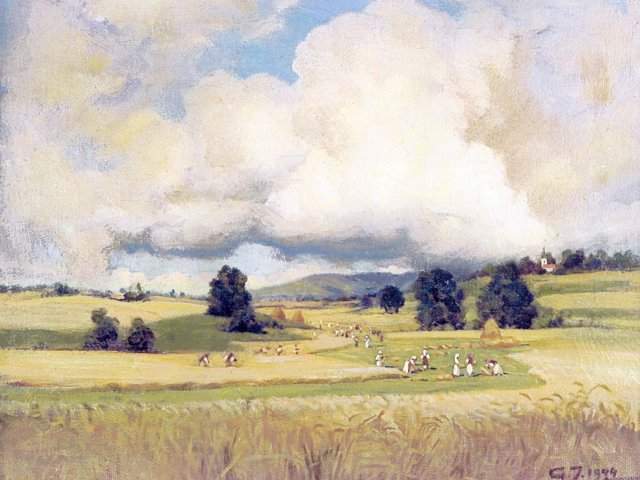 |
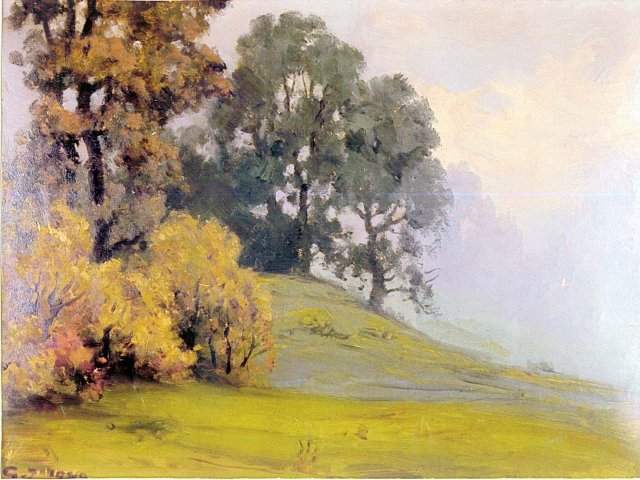
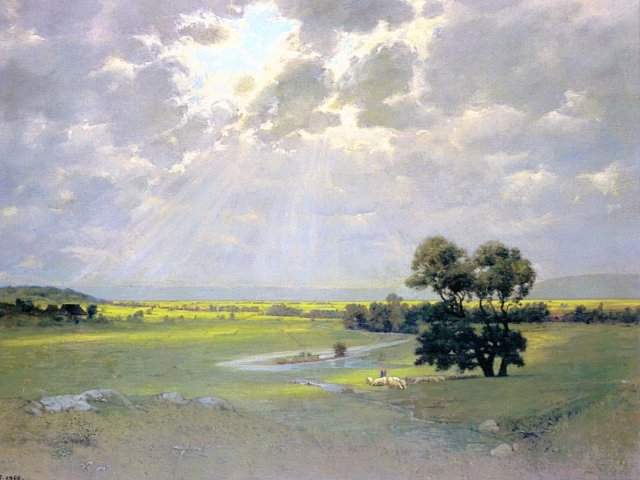
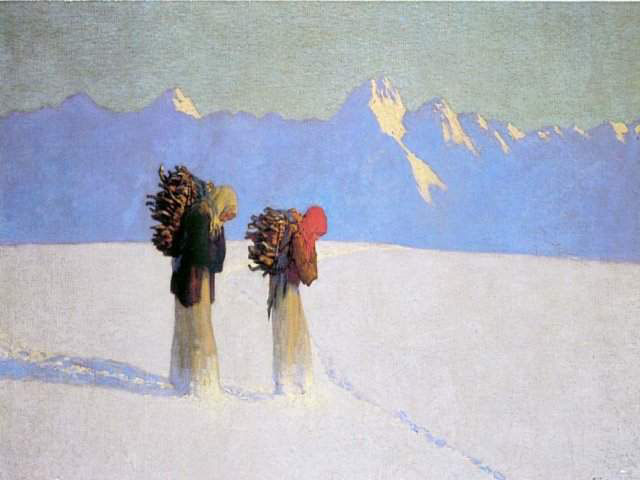
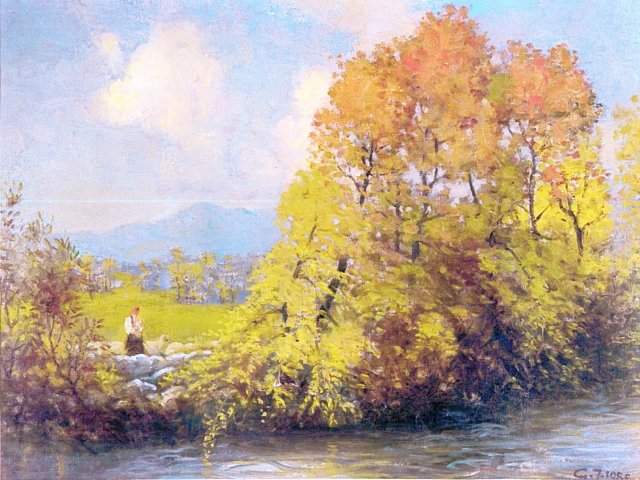
Gabrijel Jurkic (1868-1974) was outstanding Croatian painter in Bosnia and Herzegovina. See his biography (in Croatian).
 |
 |
 |
 |
Very beautiful traditional song of Bosnian Croats is S
onu stranu Plive (On the other side of the Pliva river). Since the
creation of Bosnia and Herzegovina as an independent state in 1992, the
song has been chosen as the national anthem of this state, and
remained as such until 2002.
I owe this information to maestro
Josip Magdic.
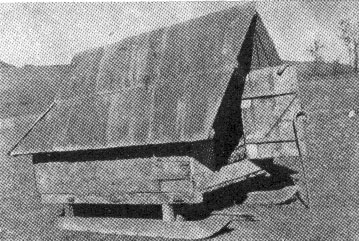
Here you can see a lovely example of Bosnian genius in civil engineering:
 |
I am not joking. As I have said, Bosnia and Herzegovina has 2 Croats as Nobel prize winners:
- Ivo Andric for literature, and
- Vladimir Prelog for chemistry.
Difficult historical conditions, relations with very different civilizations, left deep traces on Croatia and Bosnia - Herzegovina. One of the consequences is the unusual geographical shape of present day Croatia. Note that its mainland is not connected (there is a narrow passage along the Neretva river, where the territory of Bosnia - Herzegovina enters the Adriatic sea, thus cutting the Croatian soil in two - an interesting remain of the former Turkish Ottoman rule). It is little known that until 1949 Bosnia - Herzegovina had another entrance to the Adriatic sea in the region of Sutorine (between Prevlaka peninsula and Herceg Novi), which is today in Montenegro. Today quite unjustly the New Yugoslav state claims the right to Croatian Prevlaka.
Here we provide a list of Croatian Latinists who wrote about (or were in other way related to) the Turkish Ottoman Empire:
- Bartol Gyurgieuvits
- Juraj Dragisic
- Bernardin Frankapan
- Cristopher Frankapan
- Juraj Hus
- Andrija Jamometic
- Bartol Kasic
- Simun Kozicic-Benja
- Juraj Krizanic
- Josip Marinovic
- Marko Marulic
- Toma Niger
- Juraj Sizgoric
- Ivan Vitez
- Antun Vrancic
Links:
- Croats of Bosnia and Herzegovina
- Medjugorje
- Spirituality of Ivan Merz (1896-1928), Bosnian Croat born in Banja Luka
- Franciscans in Bosnia
- Napredak
- Vlatko Kupreskic, martyrdom in Bosnia and in the Hague
- Hasan Nuhanovic:
- Dobro dosli na stranice Vares - Bobovac
- Garevac - village near Modrica
- Zovik near Brcko in Bosanska Posavina
- Testimony of prim. dr. Fuad
Secerbegovic about saving Bosnian children from chetnik
persecutions during WW2
Basic references related to history of Croats in Bosnia and Herzegovina:
- Vjekoslav Klaic: Poviest Bosne do propasti kraljevstva, Zagreb, 1882, translated also into German (Geschite Bosniens von den ältesten Zeiten bis zum Verfalle des Koenigreiches, Leipzig, 1885) and Hungarian (Bosznia tertenete a legregibb kortol a kiralysag bukasaig, Veliki Beckerek, 1890), reprinted in Sarajevo in 1990,
- Poviest hrvatskih zemalja Bosne i Hercegovine
(od najstarijih vremena do 1463), Vol 1 (and the only one), Hrvatsko
kulturno drustvo Napredak, Sarajevo 1942
Reprinted by Napredak, Sarajevo, in 1991, under the title Povijest hrvatskih zemalja Bosne i Hercegovine. Third edition appeared in 1998. Written by some of the best Croatian scientists: Ljubo Karaman, Ferdo Sisic, Mate Tentor (his History of Scripts has been cited by the British palaeographer David Diringer), Ciro Truhelka, Vladimir Vrana, Marko Perojevic, and other. - Dominik Mandic (his exhaustive monographs are available at
the Library of Congress, Washington):
- Drzavna i vjerska pripadnost sredovjecne Bosne i Hercegovine, ZIRAL (Zajednica Izdanja Ranjeni Labud), Chicago-Rim, 1978 (The National and Religious Affiliation of Bosnia - Herzegovina)
- Bogumilska crkva Bosanskih Krstjana, ZIRAL, Chicago-Roma-Zürich-Toronto, 1979 (The Bogumil Church of Bosnian Krstyans)
- Etnicka povijest Bosne i Hercegovine, Chicago-Roma-Zürich-Toronto, 1982 (Ethnic History of Bosnia - Herzegovina)
- Bosnia and Herzegovina in Croatian history
- Krunoslav Draganovic, o. Dominik Mandic: Herceg-Bosna i Hrvatska, LAUS, Split, 1991
- fra Ignacije Gavran: Putovi i putokazi, I-IV, Svjetlo Rijeci, Sarajevo, (1988, 1998, 1998, 2003)
- Pavo Zivkovic: Etnicka i vjerska povijest Bosne, Slavonije i Srijema do konca XVII. stoljeca, HKD Napredak, Sarajevo - Mostar, 1996 (Ethnic and religios history of Bosnia, Slavonia and Srijem until the ond of the XVIIth century, Arrival, development and disappearing of Croatian Catholics in thesee areas).
- Ivan Zovko: Hrvatsko ime u narodnoj predaji i obicajima Bosne i Hercegovine, HKD sv. Cirila i Metoda (sv. Jeronima) Zagreb, 1990.,
- Augustin Kristic: Kresevo, Matica hrvatska, Zagreb, 1941.
- Ferid Karihman: Hrvatsko - Bosnjacke teme, Hrvatska sveucilisna naklada, Zagreb 1996.
- Franjo Glavinic: Historia Tersattana, Reprinted in 1989, Rijeka, Italian original and Croatian translation, with illuminating afterword by Academician Eduard Hercigonja,
- Dr. fra Leon Petrovic: Krscani Bosanske crkve, drugo izdanje, Svjetlo rijeci - Sarajevo, ZIRAL - Mostar, 1999.
- Franjo Sanjek: Bosansko - humski Krstjani u povijesnim vrelima (13. - 15. st.), Barbat, Zagreb, 2003.
- "Testimonium Bilabium" by Filip Lastric, Bosnian Franciscan and Latinist from 18th century, has been studied in detail by a young Italian scholar Ruggero Cattàneo, see a short summary of his extensive work
- Hamdija Kresevljakovic: Kratak pregled hrvatske knjige u Herceg - Bosni, od najstarijih vremena do danas, vlastita naklada, Sarajevo 1912.,
- dr. fra Karlo Jurisic: Katolicka crkva na Biokovsko-neretvanskom podrucju u doba turske vladavine, Krscanska sadasnjost, Zagreb, 1972
- Pisana rijec u Bosni i Hercegovini (The written word in Bosnia and Herzegovina from the earliest times up to 1918), Sarajevo, 1982.
- Ljiljana Grbelja, Franjo Maric (ed): Zepca i njegova okolica, putna crtica od Staparica - Nikole Tordinca iz 1882., Ekoloski glasnik, Zagreb 1998., ISBN 953-97331-0-3
- Franjo Maric:
- Hrvati - Katolici u Bosni i Hercegovini izmedu 1463. i 1995., Katehetski salezijanski centar, Zagreb 1998., ISBN 953-6055-42-2
- Kronologija Zepackog kraja 1458-1998, Zagreb Zepce 1999., Ekoloski glasnik, Zagreb 1999.
- Pregled pucanstva Bosne i Hercegovina izmedu 1879. i 1995. godine, Katehetski salezijanski centar, Zagreb 1996., ISBN 953-6055-18-X
- Ljetopis katolicke zupe Zepce, Hrvatski klub - Zepce, Zagreb, 2000, ISBN 953-97946-0-9
- Pregled Napretkovih hrvatskih narodnih kalendara 1907.-2002. HKD Napredak, glavna podruznica Zagreb i sredisnjica Sarajevo, 2002., ISBN: 953-6383-13-6
- Gabrijel Jurkic u hrvatskim kalendarima 1926.-1945., Donja Lomnica: Ekoloski glasnik, 2003., ISBN 953-98192-6-1
- Mirko Markovic: Descriptio Bosnae & Hercegovinae, AGM, Zagreb 1998 (in Croatian, BiH on old maps), ISBN 953-174-091-7
- Ive Mazuran: Hrvati i Osmansko carstvo, Golden Marketing, Zagreb, 1998.
- Géza Pálffy, Miljenko Pandzic, Felix Toblar: Ausgewählte Dokumente zur Migration der Burgendländischen Kroaten im 16. Jahrhundert / Odabrani dokumenti o seobi Gradiscanskih Hrvata u 16. stoljecu, Herausgegeber/Izdavac Kroatisches Kultur- unde Dokumentazionszentrum Eisenstadt, Hrvatski kulturni i dokumentarni centar, Zeljezno, Austria, 1999, ISBN 3-85374-321-8
- Die Gekreuzigte Kirche in Bosnien - Herzegovwina, Die Zerstörung von Katolischen Sakralbauten in Bosnien - Herzegowina, Banju Luka - Mostar - Sarajevo - Zagreb, Kroatisches Informationszentrum, 1997, ISBN 953-6058-22-7
- Roy Gutman (Pulitzer Prize): Bosnia: witness of genocide, Macmillan publishers, New York, 1993 (French translation Bosnie: témoin du génocide, Desclée de Brouwer, Paris 1994; translated into many other languages),
- Norman Cigar: Genocide in Bosna - The policy of Ethnic Cleansing, Texas University Press, 1995,
- Franjo Komarica: In Defence of the Rightless, A collection of documents of teh Bishop of Banja Luka and the Bishop's Ordainary written during the war years of 1991 to 1995, Croatian Heritage Foundation, Zagreb, 1997
- Vladimir Zerjavic: Rasim Delic, general Armije BiH, omalovazava uspjehe Hrvatske vojske i doprinos oslobodjenju BiH
- Vjenceslav Topalovic: Srednja Bosna - ne zaboravimo hrvatske zrtve 1941-50./1991-95., HIC, Zagreb, 2000
- Zdravko Dizdar, Mihajlo Sobolevski: Cetnicki zlocini na podrucju Hrvatske i Bosne i Hercegovine 1941-1945, Dom i svijet, Hrvatski institut za povijest, Zagreb 1999.
Back to Croatia - an overview of its History, Culture and Science