THE BAŠKA TABLET
precious stone of Croatian literacy
Dedicated to the memory of Branko Fučić (1920.-1999.)
Darko Žubrinić, Zagreb (2000); in Croatian
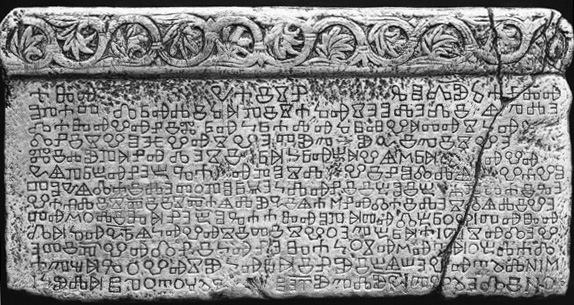
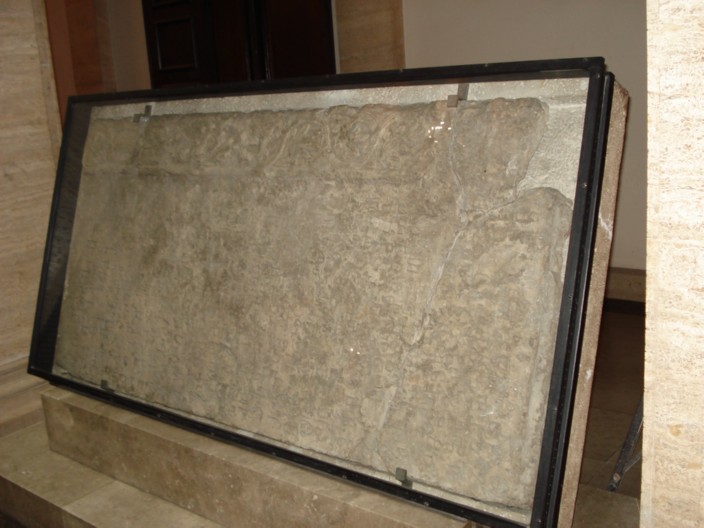
The Baska tablet is probably the most famous monument of early Croatian literacy, dating from about 1100, i.e. almost four centuries before the discovery of America. Its size is impressive: 2x1 m, 800 kg, while its mass is no more than 540 kg. According to Branko Fucic and Eduard Hercigonja, the language of inscription is Croatian - Chakavian with elements of liturgical Church Slavonic, and the script is Croatian Glagolitic.
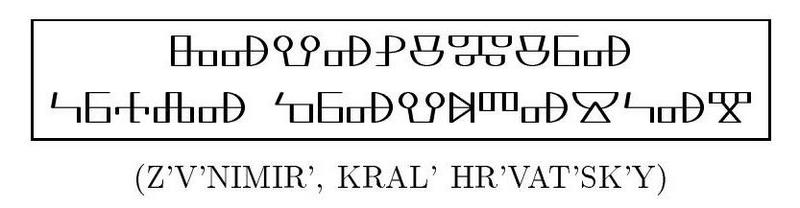
Its importance is, among others, due to the fact that in its third line we can read "Zvonimir, Croatian King". While there are even older documents in the Latin language mentioning the Croatian name, the Baska tablet is the oldest known document in which the Croatian name is written in Croatian language, and moreover, in Croatian Glagolitic Script.
Let us mention that the Croatian name for Croatian language is in use at least since 1275 (it is often encountered in the legal document Istrian Boundaries), that is, more than two centuries before the discovery of America.
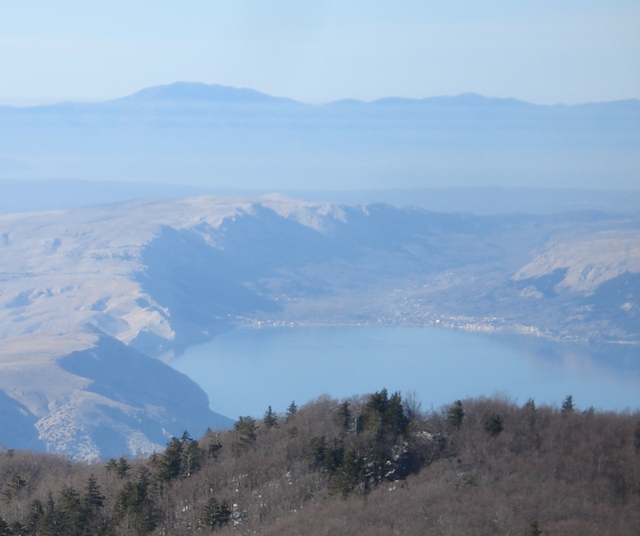
Miraculous view to the Baška valley on the island of Krk and
on
Učka in Istria
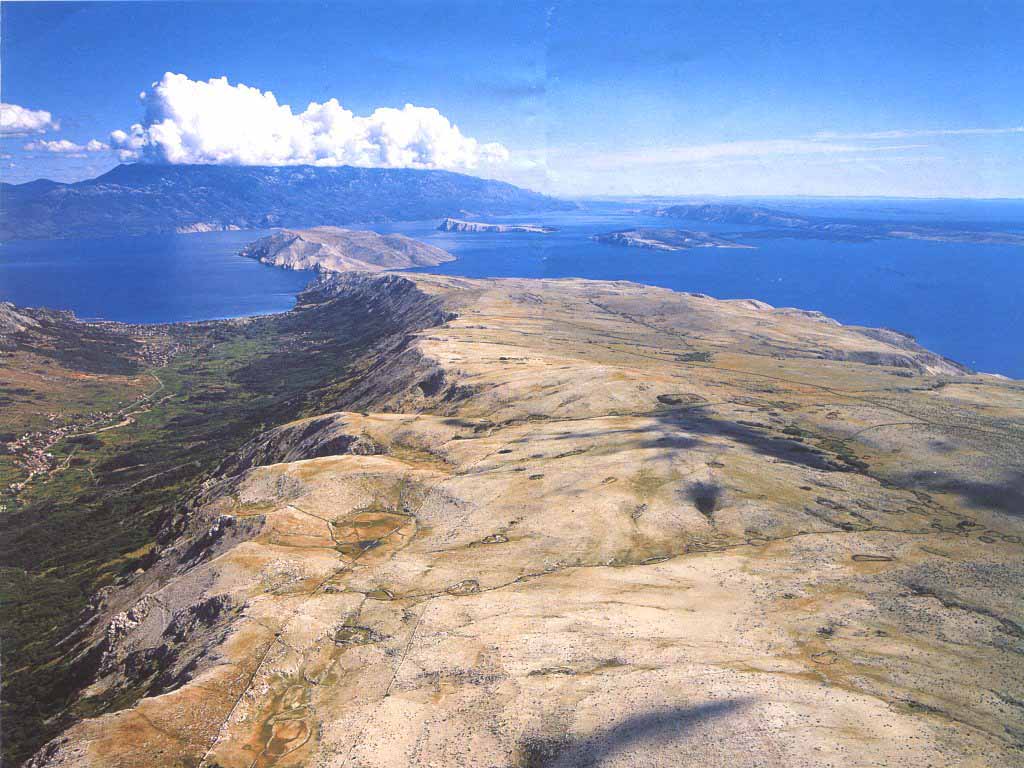
from the legendary Velebit mountain.
Photo by D.Ž. The Baška valley is situated in one of the
most
beautiful ambiences in the world.
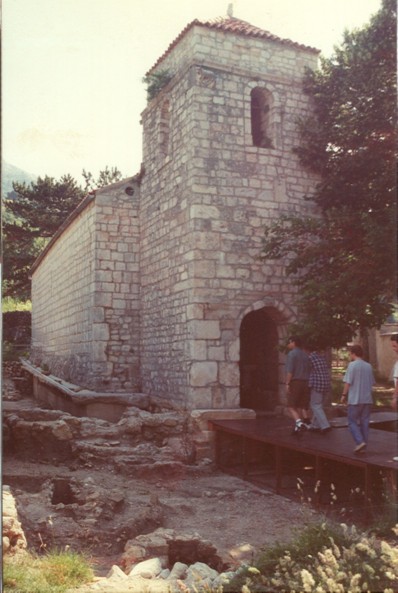
It was found in the church of St. Lucy (Sv. Lucija) in Jurandvor near Baska on Krk, the largest Croatian island. Since 1934 the monument is placed in the main building of the Croatian Academy of Sciences and Arts, and anybody can see it. Its chemical protection has been organized by Dr. Mladen Deželić (1900-1989), professor of chemistry at the Univeristy of Zagreb; see his article [PDF], as well as his laboratory notebook [PDF] (many thanks to Dr. Gjuro Deželić for sending us these interesting documents).
Baska Tablet is not the oldest monument of Croatian literacy.
For example, the Plomin inscription, the Valun tablet, the Konavle
fragment, and some other, are older. However, the Baska Slab is
the oldest monument carved in Croatian language in which the Croatian
name is mentioned.
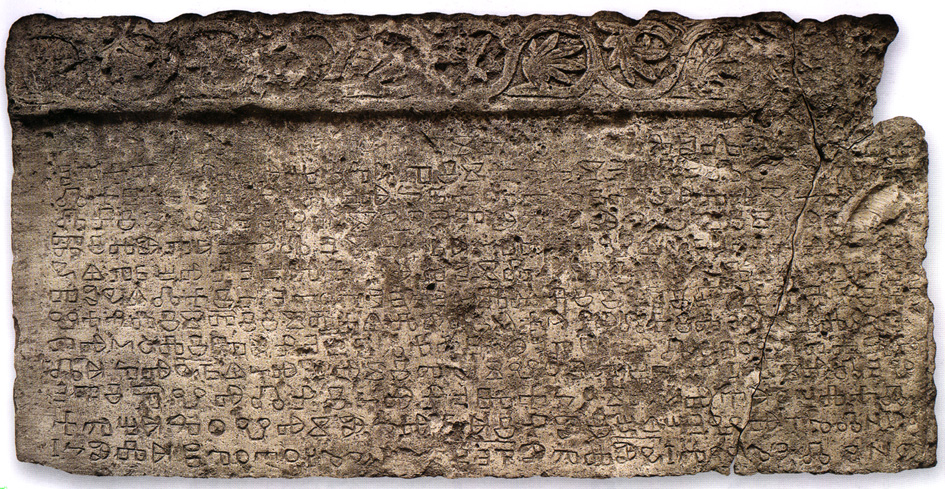
Here we provide transliteration of 13 lines of the Glagolitic text of the Baska tablet into Latin characters. We denote
- Glagolitic "yus" by Ju,
- Glagolitic "yat" by Ja or Je,
- Glagolitic "iže" by Ï,
- semivowel "jer" with apostrophe,
- missing letters are placed in parentheses.
| AZ V' IME OTCA I S(I)NA I SVETAGO DUHA AZ' |
| OPAT' DR'ŽIHA PISAH SE O LEDINE JuŽE |
| DA Z'V'NIM(I)R KRAL' HR'VAT'SKI V' |
| DNI SVOE V' SVETUJu LUCIJu I SVEDO - |
| MI ŽUPAN' DESIMIRA KR'BAVE MARTIN' V L(I) - |
| CE PRB'NEBŽA S' POSL' VIN(0)DOLE JaK(O)V' V O- |
| TOCE DA IŽE TO POREČE KL'NI I BO(G) I *BÏ* AP(OSTO)LA I *G* E - |
| VANJELISTI I S(VE)TAJa LUCIJa AM(E)N' DA IŽE SDE ŽIVE - |
| T' MOLI ZA NE BOGA AZ OPAT' DBROVIT' Z' - |
| DAH' CREK'V' SIJu I SVOEJu BRATIJu S DEV - |
| ETIJu V' DNI K'NEZA KOS'M'TA OBLAD - |
| AJuĆAGO V'SU K'RAINU I BJeŠE V' T' DNI M - |
| IKULA V' OTOČ'CI S' SVETUJu LUCIJu V' EDINO |
The text of the Baška Tablet narrated by Stjepan Bahert,
drama artist:
The approximate English translation of the Baska tablet is as follows:
| I, in the name of Father and Son and the Holy Spirit, I |
| abbot Držiha, wrote this about the plot of land which |
| was given by Zvonimir, the Croatian King, in |
| his days to St. Lucy (Sv. Lucija) and witnesses (are): |
| Desimir, Prefect of Krbava, Martin (Mratin) in |
| Lika, Pribineža, clerk in Vinodol, Jacob (Jakov) on the |
| island. If anyone denies it, let him be cursed by 12 Apostles and 4 |
| Evangelists and St. Lucy (Sv. Lucija). Let anyone who lives here |
| prays God for them. I abbot Dobrovit |
| built this church with my nine brethren |
| at the time of Prince Kosmat who ruled |
| the whole Country. In those days |
| Mikula was in Otočac with St. Lucy (Sv. Lucija) together. |
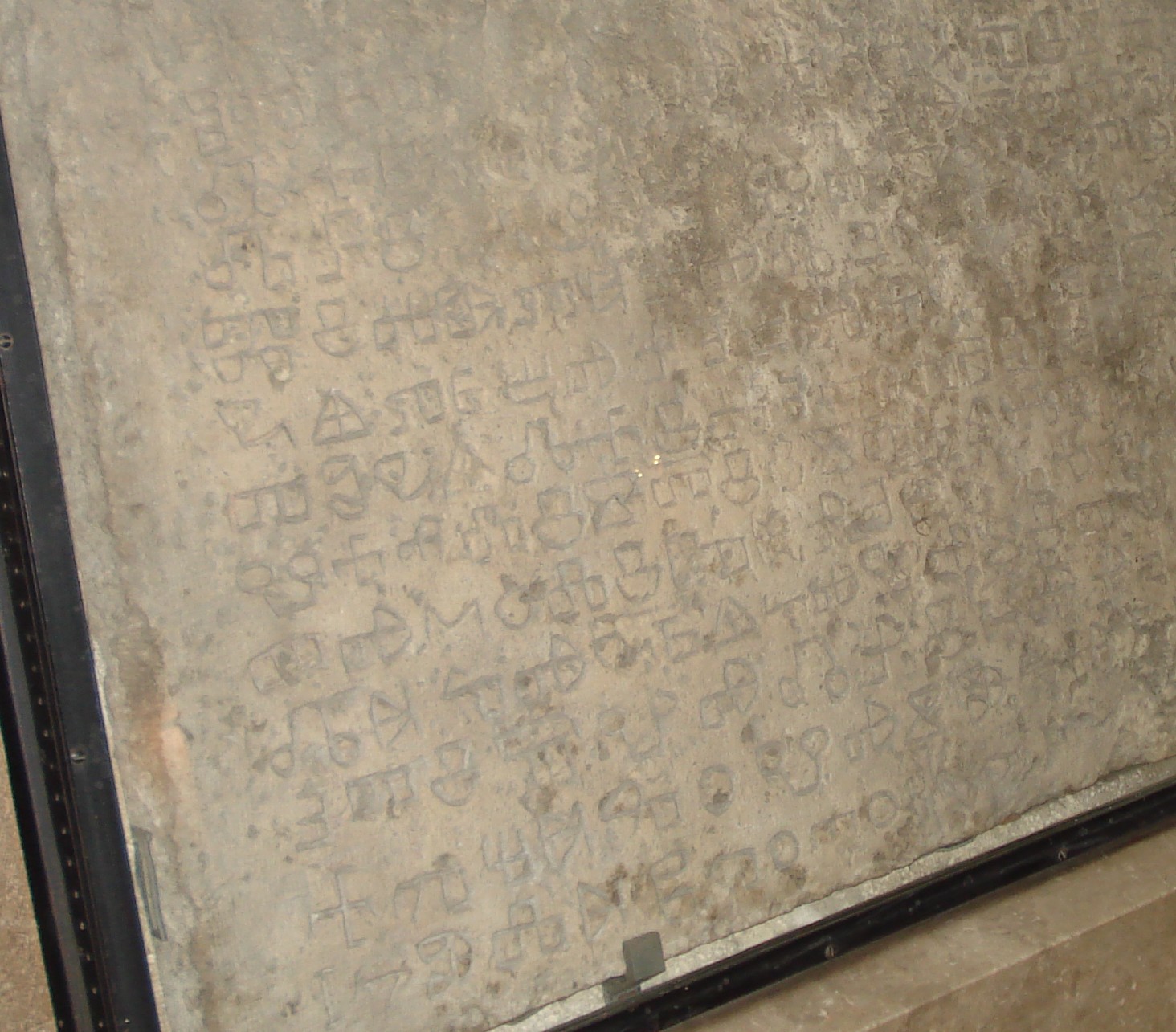
Of particular interest is
the third line of the Baska tablet,
which mentions the Croatian King Zvonimir. Note that the Glagolitic
text corresponding to HR'VAT'SK'[I] ends with K', since the tablet is
damaged on this place.
|
|
|
|
 |
 |
 |
The glagolitic "az" appearing in KRAL' is different from the "az" appearing in HR'VAT'SK'I, which has a unique triangular form:

Its source is obviously from cuneiform scripts, and the meaning is known, see e.g. Hans Jensen's monograph Sign, Symbol and Script, (English translation from German; London, George Allen and Unwin Ltd, 1970), pp 85, 87. Curious glagolitic P seems to be related to very old Egyptian group of scripts (Meriotic script), see pp 79 and 81 in the same monograph. Also some Etruscian letters have analogues in the glagolitic.
The reconstructed third line of the Baska tablet containing Zvonimir, Croatian King, looks like this:

Zvonimir, Croatian King (note that there are no spacings between words)
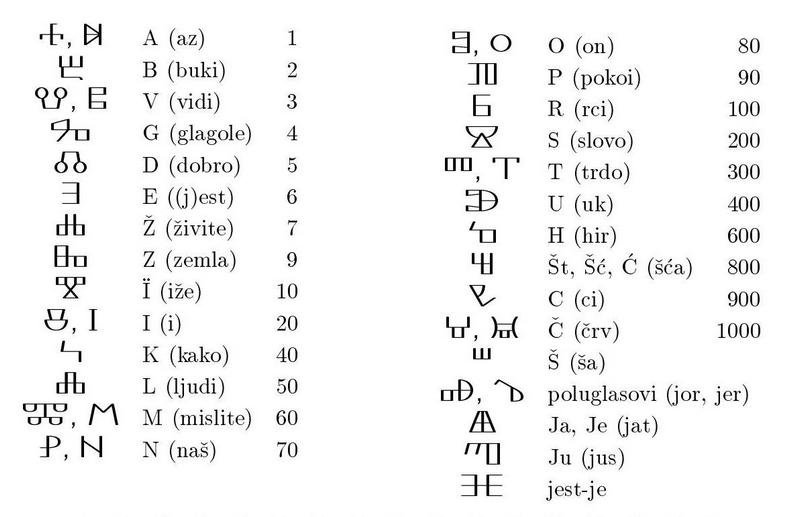 Table
of
Croatian Glagolitic Script on the Baska Tablet
Table
of
Croatian Glagolitic Script on the Baska Tablet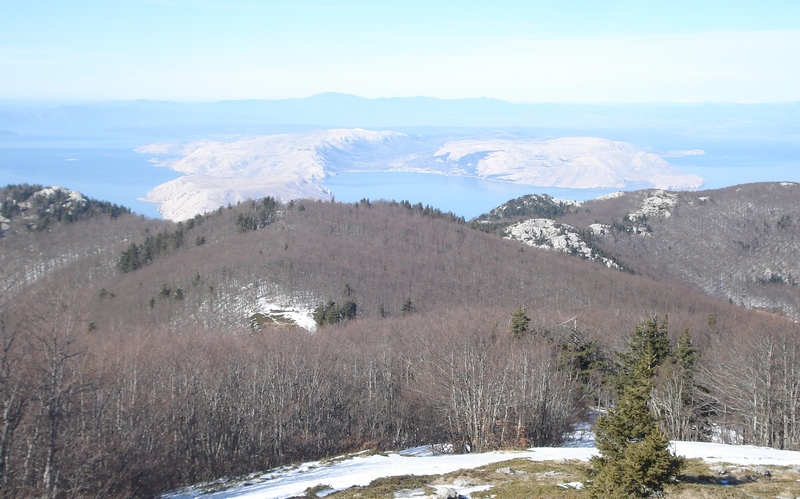
A view to the island of Krk and to its Baška valley from the
mountain of Velebit.
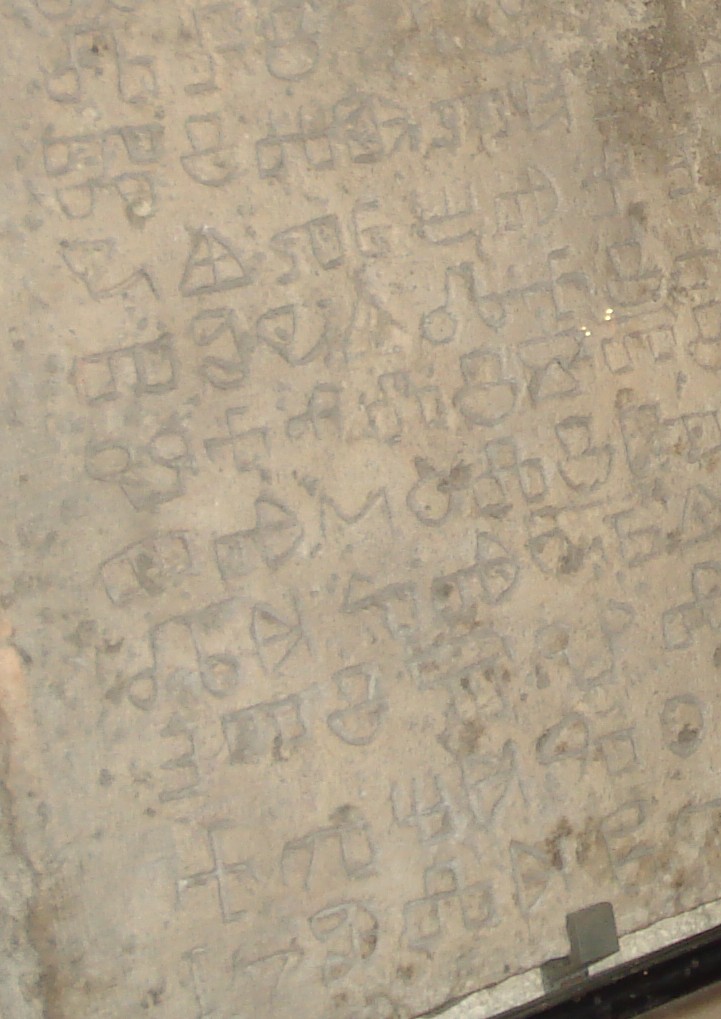
Several detilas from the Baska tablet:
D.Ž.:
Croatian Glagolitic letters of the Baska
Tablet [PDF]
D.Ž.: Croatian Fonts for Users of LaTeX
[PDF],
[LaTeX
source file] (here you can
see how to use the Glagolitic
TeX font for
the Baska Tablet)
The Baška tablet has 402 characters and 107 words, and as such is the larges Croatian Glagolitic inscription from 10th-12th centuries. The following two in order are from the region of Dubrovnik: the Župa dubrovačka inscription which has 102 characters and 24 words, while the Konavle inscription has 49 characters and 15 words. Source [Cuncic-Perkic].
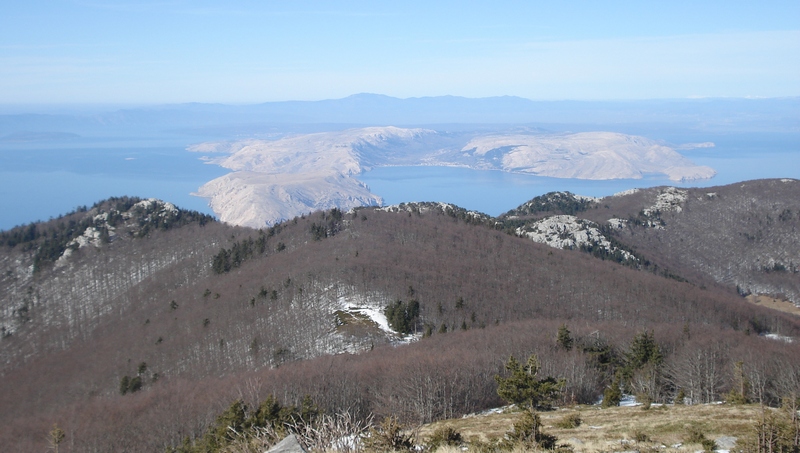
A view to the island of Krk and to Učka from the mountain of Velebti.
The Baska tablet served as the left side of the former closure screen which separated the church monastic choir from the space for congregation. There existed also the right side of the closure screen, out of which only four small pieces have been left.
The Jurandvor 2nd fragment, probably a remain of the second Baska tablet (right side of the closure screen), had been discovered and published in 1864. by Ivan Crncic, together with the Jurandvor I fragment. But already in 1879 Geitler did not find it any more. Accordin to [Fucic, Glagoljski natpisi, p. 63], it was either discovered or is now in a foriegn collection. It contains a remain of the Croatian name: ...VATSK... (HRVATSKI - Croatian)
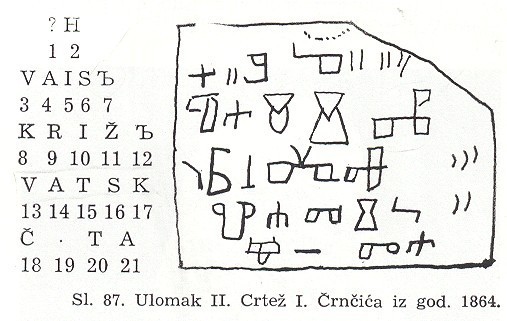

...VATSK...
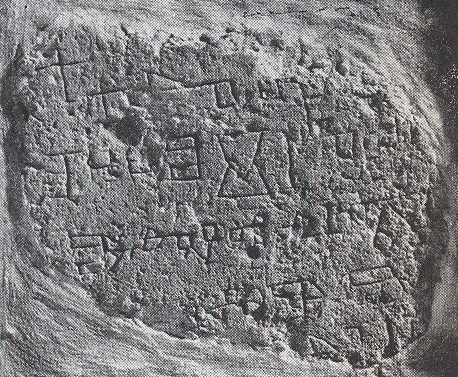
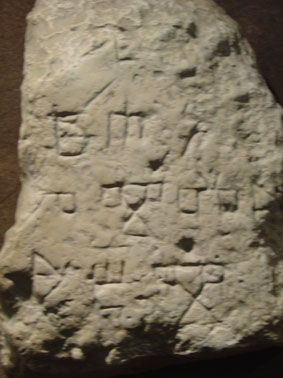
Photo of the Jurnadvor 1st fragment from no later than 1914, made by J. Brunsmid. According to [Fucic, Glagoljski natpisi, str. 65], the Jurandvor 1st fragment could have belong to the left upper corner of the second Baska Tablet, that is, of the right side of closure screen.

Here we can see the text U ZV'ONIM..., and this is without any doubt a part of the name of Croatian King Zvonimir, 11th century. Here we can see the so called bifurcating M, a ligature ZV, and a semivowel ' in the form of the left key. The photo is from 1914 at the latest.
The condition of the Jurandvor 2nd fragment in 1980 was the following, see [Fucic, Glagoljski natpisi, see p. 62]:
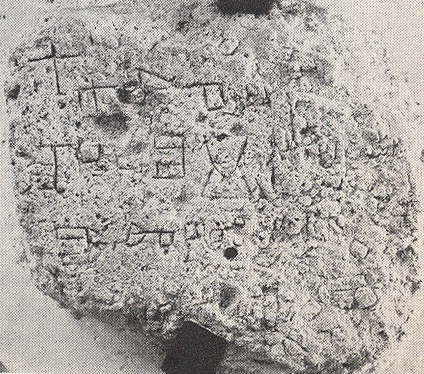

The characters are hardly recognizable, and bifurcating M is almost entirely damaged, contrary to the above photo taken some 70 years earlier.
As we see, one of the fragments contains the Croatian name (...VATSK...), another a part of name of King Zvonimir (ZV'NIM...), but the content of the whole inscription is unfortunately unknown (see [Fucic], pp 62-65). Thus, we can speak of two Baska tablets, the left one which is saved but damaged, and the right one which is destroyed.

Croatian name in glagolitic texts from around 1100 until 17th century
It is worth noting that in the fifth line of the Baska tablet the names of joupan (prefect) Desimir from Krbava and Martin (Mratin) from Lika are mentioned as witnesses.
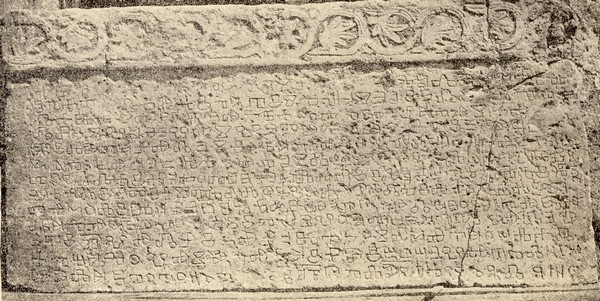
The
earliest known photo of the Baska Tablet,
1869, by Ivan Standl
See a large photo: JPG
(1MB)
Letters
of the Baska Tablet in very high resolution
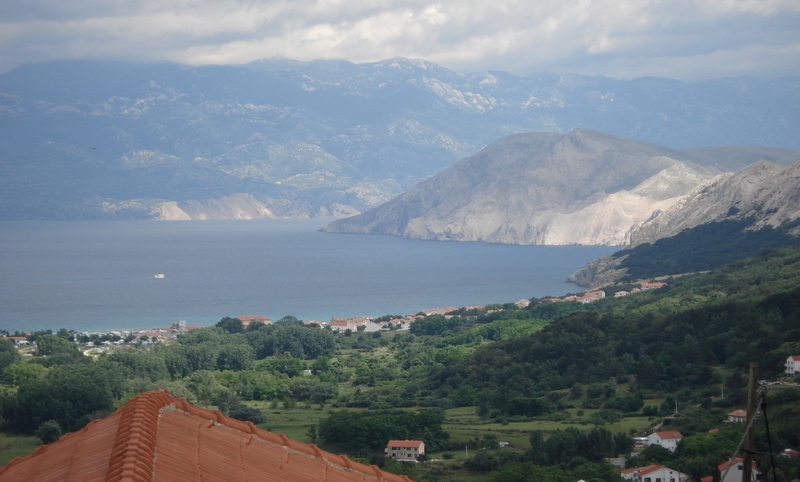
Breathtaking view to the Baška valley and Velebit mountain
from
the convent Sv. Marije Goričke
in Batomalj.
The oldest known confraternity rules written in the Croatian Glagolitic
Script are those of the Confraternity of Sv. Marije
Gorička, from 1425. Two leaves are kept in the National Library in Norway,
and the other have dissappeared.
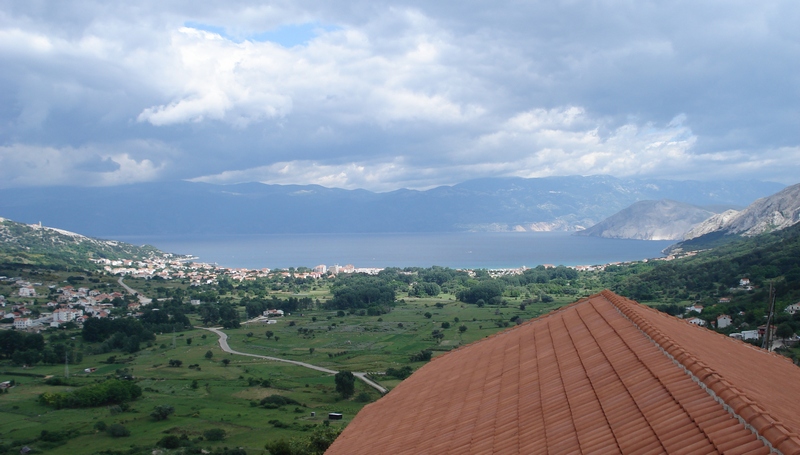
 The
Baska Tablet has been
studied by Ivan Kukuljević
Sakcinski (1851), Franjo
Rački
(1855), Ivan Črnčić
(1866), Vjekoslav
Štefanić
(1955), and Branko Fučić
(1982), where the years in parentheses
refer to published papers and books. The name "precious stone" for the
tablet was given by Stjepan
Ivsic,
outstanding Croatian
linguist. The place where the Baska tablet has been found is a
fascinating valley that you can see on the photo, with the mighty
mountain of Velebit behind it.
The
Baska Tablet has been
studied by Ivan Kukuljević
Sakcinski (1851), Franjo
Rački
(1855), Ivan Črnčić
(1866), Vjekoslav
Štefanić
(1955), and Branko Fučić
(1982), where the years in parentheses
refer to published papers and books. The name "precious stone" for the
tablet was given by Stjepan
Ivsic,
outstanding Croatian
linguist. The place where the Baska tablet has been found is a
fascinating valley that you can see on the photo, with the mighty
mountain of Velebit behind it.
|
|
 |

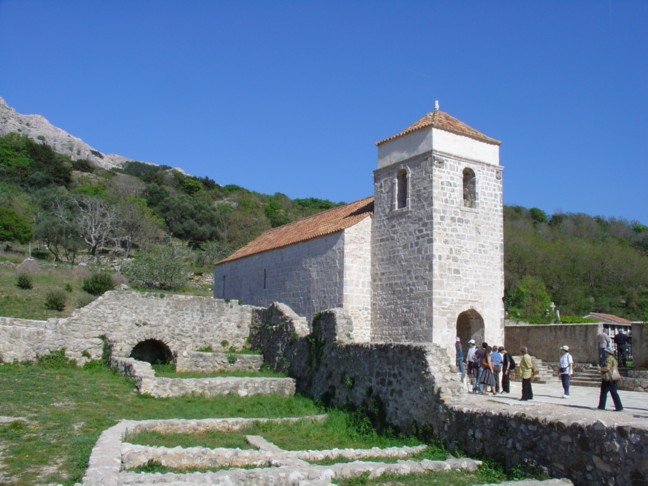
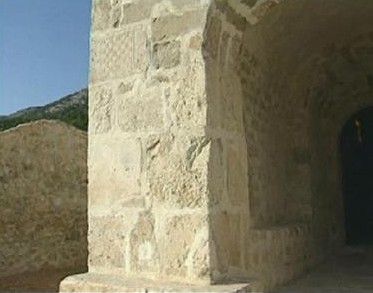
Church of Sv. Lucija (St. Lucy) in Jurandvor
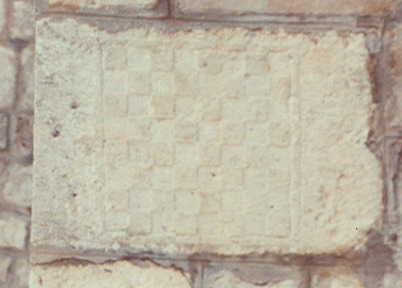
Croatian Coat of Arms
on the Church of St. Lucy, not later than 1494,
and probably much older (a remain of unknown church)
Eduard Hercigonja, Tisućljeće hrvatskoga glagoljaštva, str. 35:
Bašćanska je ploča signum temporis iskona nacionalne kulture na više doživljajnih razina: cjelinom vanjske dojmljivosti - od reprezentativnog volumena, jednostavne ljepote motiva trolinijskih vitica i lišca na gornjem dijelu, do likovno ekspresivne, skladne ornamentike glagoljskih slova, kao i svojim sadržajem, "ritmički organiziranom strukturom teksta i, naposljetku, jezikom u kojem se starohrvatska čakavska riječ funkcionalno prožimlje elementima liturgijskoknjiževnoga crkvenoslavenskog jezika, što književni izraz tog spomenika osebujno patinira, utiskuje mu pečat visokog stila.
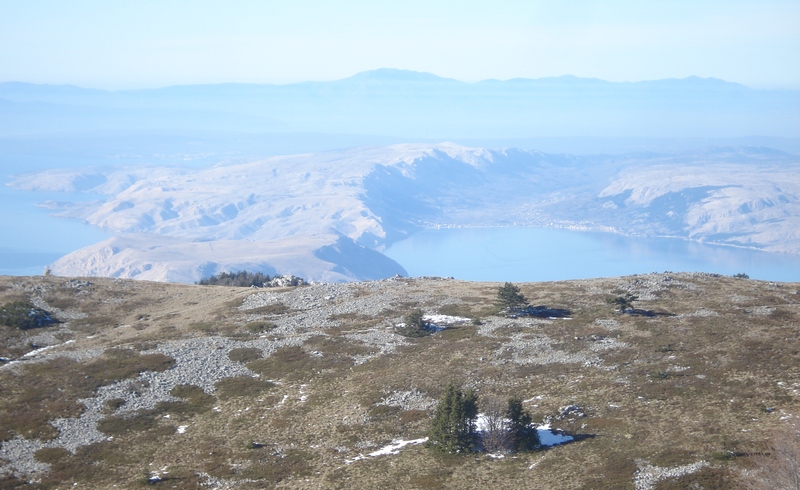
A view to the island of Krk and to Učka from the mountain of Velebit.
The traditional verses of Sveta Lucija (St. Lucy) were written already by the end of 19th ct. In Novi, it was sung in 1892. g. by M.
Sokolić, and the verses were written Anton Mrakovičić Pavlić. The verses were preserved Rado Žic
Mikulin, who wrote it in 1950s according to reciting of his grandfather A.
Mrakovičić Pavlić. In these verses, the Glagolitic letters are called hrvaske čarke (Croatian letters). This is in accrodance with the terminology from other sources (for example, Alphabetum chrawaticum by Georges
d'Esclavonie , arround 1400, or Krobatische
Buchstaben in Glagolitic books printed in Urach, Germany, in 1560s, or Croatica scriptura
from 1584. by Adam Bohorič). Also, the verses provide the year of completion of the church of St. Lucy, as 1080,
most probably on the festive day of St. Lucy on 13th December. In the
left column, we provide the source, while on the right column is its
transcription into contemporary Croatian language. The verses were
published in
[Eleršek i Žic Mikulin: Putom Sunca, pp. 388-389].
SVETA LUCIJA Sveta Lucija zgrajena je bila, deset sat osandeseta je finila. Benediti za nju pinezi zbirali, po svoj zemji Hrvaskoj petjali. Dični Vitoš veli sve je to ojal, crikvi Božjoj lipi načrt dal. Crikvi sprida krćenica bila, crikvu na dva razdil je dila zi lominu na koj je čarkalo ki i koliko se za crikvu dalo. Zi hrvaskimi čarkami se klalo ki je zemlju za crikvu donal i ki koliko ekuli zač je dal. Dika tamo lipa bila je rečena hrvaskomu kralju Zvanimiru, ki je crikvi podaril ledinu, i pod Hlamom Dolci od Prvaja, još čuda zemje kolo Hrtovaja. Lipo tamo drobno čarkano je bilo ča su dali veli kosiz krbavski, lički, tninski i kosiz brački. Silni judi va crikvu ne stali, leh su prid nju mašu poslušali. Po maši su se veselili, od crikva va Bašku preselili i do kasna va noć su tancali, kantali i lipo se divertali. |
SVETA LUCIJA Sveta Lucija izgrađena je bila, tisuću osmdeseta je završavala. Benediktinci za nju novac skupili, po svoj zemlji Hrvatskoj prosili. Dični Vitoš veliki sve je to vodio, crkvi Božjoj lijepi nacrt dao. Crkvi sprijed krstionica bila, crkvu na dva dijela razdijelilo dijela pločom na kojoj je pisalo tko i kolik se za crkvu dalo. Hrvatskim se slovima zapisalo tko je zemlju za crkvu darovao i tko koliko zlatnika za što je dao. Dika tamo lijepa bila je rečena hrvatskomu kralju Zvanimiru, koji je crkvi podario zemljište, i pod Hlamom Dolci od Prvaja, još puno zemlje oko Hrtovaja. Lijepo tamo sitno zapisano j'bilo što su dali veliki kosizi krbavski, lički, kninski i kosiz otočki. Silni ljudi u crkvu ne stadoše, neg' su pred njom misu poslušali. Po misi su svi se veselili, od crkve se u Bašku preselili i do kasno u noć plesali, pjevali i lijepo se proveli. |
There exists one more song entitled Sveta Lucija (St. Lucy), but considerably more extensive, noted in 1896. g. It was found in the Krk Bishopric (Rado Žic). The verses were sung by M. Dekanić, and they were written also by Anton Mrakovčić Pavić. These verses provide considerably more details about building of the church of St. Lucy, and 1080 is also stated as the year of its completion, as in the first song. This song was published in [Eleršek i Žic Mikulin: Putom Sunca, str. 390-391].
Ivo Frangeš of the Croatian Academy of Sciences and Arts said the Baska Tablet is simultaneously document and monument, history and art, continuous present of our language and of our being, and that all in it is Croatian: its name, language, king, land and spirituality.
Croatian
writer Silvije Strahimir Kranjčević in his Uskočkim elegijama, Pred
Kraljevskom pločom
u Baški,
recites the following beautiful verses:
Daj da spustim
svoje
čelo
na taj kamen poizdrti,
daj mi časak da mi duša
pomoli se prije smrti. ...
Pružimo si
bratske ruke
rastrgane iz daljine,
iskopajmo grob si velik
s kraja na kraj domovine
i lezimo u njeg mirno,
kao braća zagrljeni;
udruženi jednim srcem
i zanav'jek sjedinjeni!
DALMATINO POVIŠĆU PRITRUJENA Izblideni Misal svetog Jeronima, izlizana Bašćanska tavuleta rvackeg ditinjevanja. zaudobjeni friži glagoljaških serpentini isfrolani patakuni, žurke* i kadeni. Izlizani Ideali i Misali po rvackin oputinan sokolaški procesjuni pričešćeni demoštracjuni od taverni do taverni svitlosću kerv častna vikovični terpećemu naslidovati pogrda Balkanike. Pute, laze pizon dubli tovari. Gustirne žedne, mijun sići i lati. konkulana škina težakov od motik po žurnatin pritrujena. Prage kalet žnjutin dubli puntari,** naboj Dalmatine rebati na drači, kroz kadene dicu čičan pasli, a judi driti ka kolone, Dalmatino, povišću pritrujena. Intradu pravice s tilin štrukali. Dalmatino, povišću pritrujena! Rod puntarski resa na drači. Dalmatino, povišću pritrujena! Ditinstvon gladnin povist štukali, Dalmatino, povišću pritrujena! Kroz kadene dicu čičan pasli, a judi driti ka kolone, Dalmatino, povišću pritrujena! ---- *patakuni, žurke - mjedeni novac, dijelovi muške težačke narodne nošnje u Dalmaciji **puntar - naziv za osobu koja je bila pristaša povratka Dalmacije u sastav Hrvatske, odnosno pristaša Narodne stranke |
DALMACIJO POVIJEŠĆU PREMORENA Izblijeđeni misal svetog Jeronima, izlizana Bašćanska ploča hrvatskog ditinjstva zaboravljene ogrebotine glagoljaških zavojnica istrošeni patakuni, zurke i lančići. Izlizani ideali i misali po hrvatskin stranputican sokolaške procesije pričešćene demonstracije od vinotočnica do vinotočnica svjetlošću krv časna vijekomnavikli trpeći nasljeđivati pogrda balkana. Puteve, ulaze u polja teretom izdubli magarci Bunare žednjele milijun vjedara i polijevača. Savita leđa zemljoradnika od motikanja po nadničarenjima premorena Pragove ulica gležnjevima dubali puntari, gnojni čir Dalmacije otkuvaca na drači, kroz lance djecu sisama dojili, a ljudi uspravni kao kameni stupovi, Dalmacijo, poviješću premorena. Ljetinu pravičnosti s tjelesima izaželi, Dalmacijo, poviješću premorena! Rod pobunjenički rastao na drači, Dalmacijo, poviješću premorena! Djetinjstvom gladnim povijest začepili, Dalmacijo, poviješću premorena! Kroz lance djecu sisama dojili, a ljudi uspravni kao kameni stupovi, Dalmacijo, poviješću premorena! |
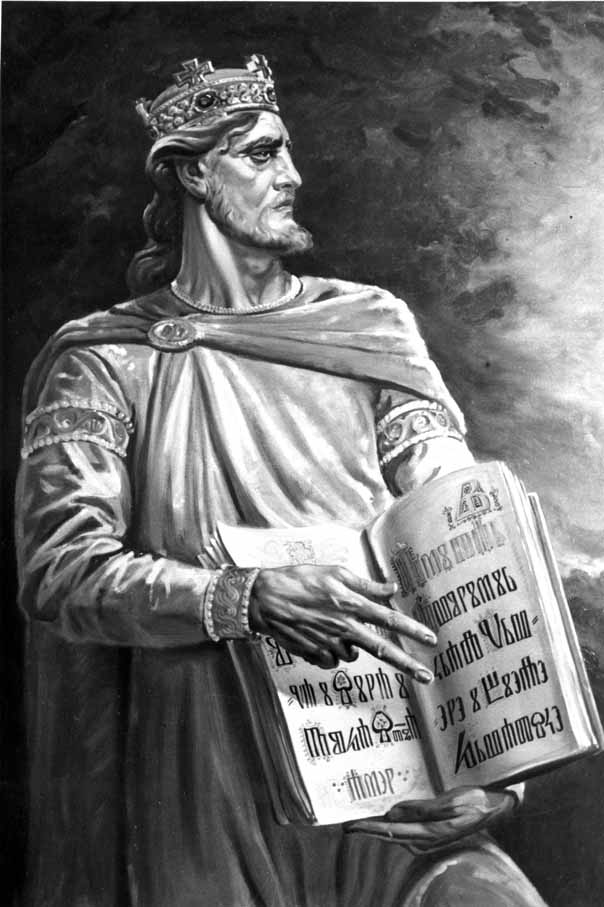
Below you can see an imaginary portrait of King Zvonimir by a Croatian painter Kristian Kreković, known for his famous gallery in Palma de Mallorca, Spain:
 |
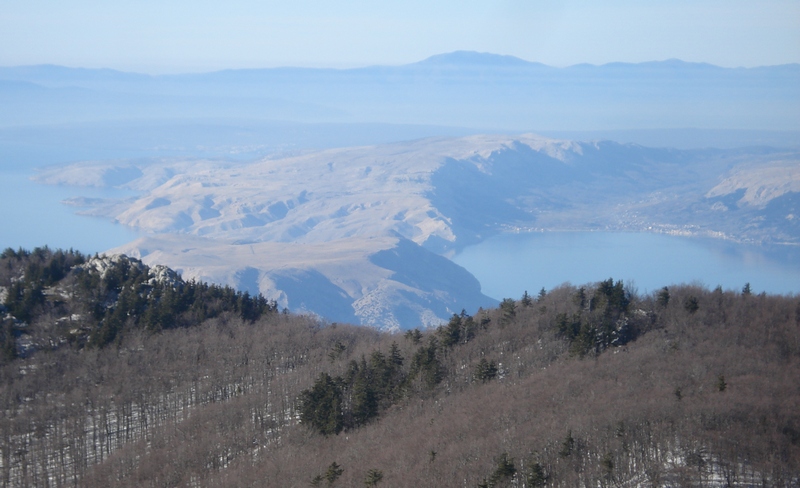
A view to the island of Krk and to Učka from the mountain of Velebit.
The Baska tablet and its content were also inspiring for musicians. Maestro Ljuboslav Kuntaric's composition "The Baska Tablet" was performed in 2004 by a mixed choir of the parish church from Gernlinden, Munich, Germany, directed by maestro Alfons Strähhuber, in the church of St. Lucy, Jurandvor. Also Stjepan Sulek wrote a capella composition in 1978/79 entitled "Bascanska ploca". Croatian composer Krešimir Fribec (1908–1996) compsed a cantata for choir and chamber orchestra inspired by the text of the Baska Tablet. Distinguished Croatian composer Dusan Praselj is the author of Staroslavenska misa and Bascanska ploca.
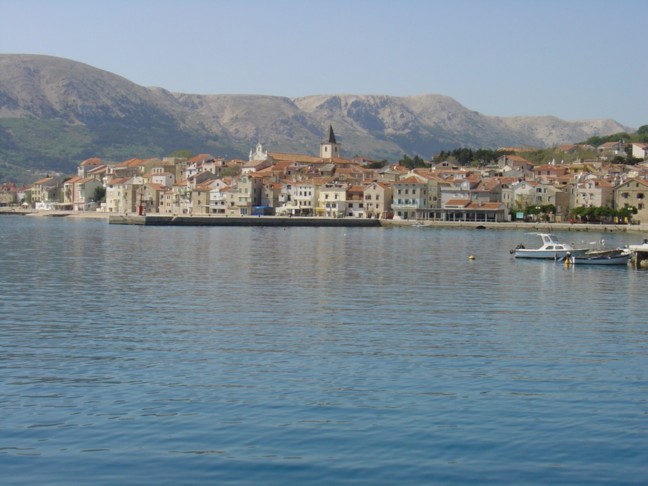
Baska on the island of Krk
It seems that Dante traveled through Croatia, and with help of Croatian pilgrim, now a friend and guide through Croatia, Bishop Kažotić, he visited Jurandvor on the island of Krk and saw the Baska Tablet.
The first gypsum copy of the Baška Tablet was created by Ivan Rendić (1849-1932), distinguished Croatian sculptor.
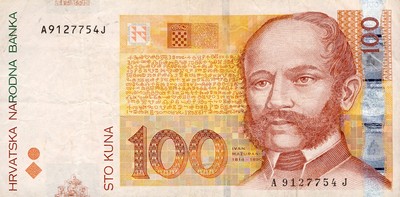
The Baska Tablet on the banknote of 100 Croatian Kuna (HRK), and Ivan Mazuranic (1814-1890).
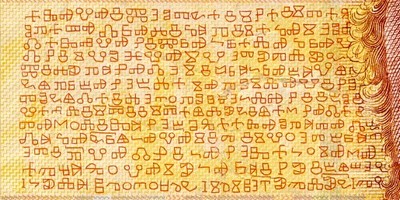
It was only in 1971 that the Baska tablet, the most important monument of early Croatian literacy, was allowed to enter the curriculum of our primary schools. During many years of the communist rule in ex-Yugoslavia the Baska tablet was forbidden in Croatian schools. Similarly to this, European representatives of international community in Bosnia - Herzegovina do not allow that textbooks written for Croatian children in this state mention the Baska Tablet, and even the Croatian national anthem Lijepa Nasa Domovino (Our Beautiful Homeland)!
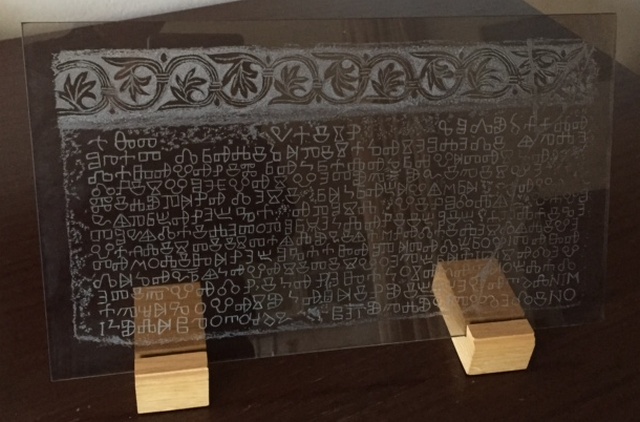
Baska Tablet made in glass, made by Mrs. Bibijana Marković, Zagreb
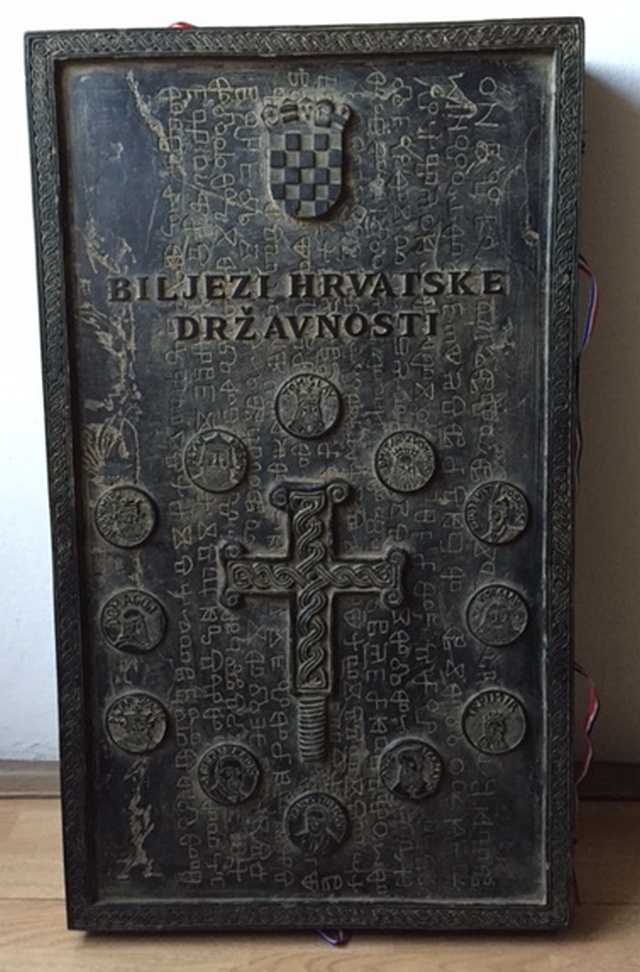
Signs of Croatian Statehood, by Mr. Ante Glibota
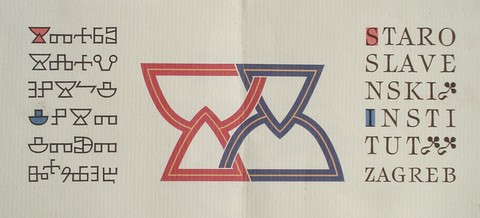
An invitation card to a Christmas party by the Old-Slavonic Institute in Zagreb, decorated with glagolitic characters from the Baska tablet.

Alter cover in Baska inspired by the Baska Tablet

Kravata
inspirirana Bašćanskom
pločom, www.kravata.hr

Siniša Grgić, Croatian Ambassador in Stockholm, donating a replica of the Baška Tablet
to Professor John Martinis, Croatian-American Nobel prize winner for Physics in 2025.

- For more details see [Fučić], pp 44-65.
- Prvi istraživači Bašćanske ploče
- Stjepan Damjanović: Bašćanska ploča – krsni list hrvatske kulture
- Mladen Deželić (many thanks to Dr. Gjuro Deželić for sending us these interesting documents):
- Croatian Glagolitic Epigraphy, academician Branko Fučić
- Mile Bogović: Otočac od spomena na Bašćanskoj ploči do biskupijskog središta u 15. stoljeću, Grad Otočac, Gospićko-senjska biskupija i župa Presvetog Trojstva Otočac, Otočac 2010.
- My first appointment with the Baška Slab...
- Glagolitic TeX fonts, including the Baška Tablet
- Hrvatska glagoljaška bašćina otoka Krka (Croatian Glagolitic heritage of the island of Krk) - with numerous photos
- Žagar, Mateo: Kako je tkan tekst Bašćanske ploče, Zagreb 1997
- Mrgari
- Bernardin Modrić: Hrvatski dragi kamen (Bašćanska ploča), film od 24 min. snimljen u koprodukciji Hrvtske radiotelevizije i Istre filma, 2010.
- Sanja Nikčević s grupom učenika: Iskoni bje Slovo - U početku bijaše Riječ
- Episode with the British Prince Philip, related to the Baška tablet.
On this web since July 2000, prepared on the occasion of 9 centuries since the creation of this precious stone of Croatian literacy.