Croatian Pop and Folk Music
Darko Zubrinic, Zagreb (1995) An
age is known by its music
Croatian proverb (see [Kuhac])
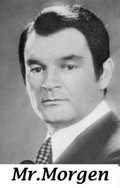 Ivo Robić
(1923-2000), a famous
Croatian pop singer
who made the German song "Morgen"
a hit in Europe and in the USA. At the
Zagreb Music Conservatoire he studied piano, clarinet, saxophone,
flute, and double bass, and was lauded by his teachers as a musical
prodigy. For Germany's Polydor Record Co he first cut "Morgen" in 1959,
and in a few weeks the "Morgen" climbed to Germany's top songs. It was
sold in more than a million of copies (half a million in the USA!), so
it is not surprising that he was nicknamed "Mr
Morgen".
In 1959/60 he obtained the statue of Bronze Lion from the Radio
Luxemburg, and in 1961 the Silver Lion for his song
Mit 17 fängt das Leben erst
an. Besides his
native Croatian, Ivo Robić spoke and sang in German, French, Italian,
Spanish, and English. He and his wife Marta donated their house in
Ičići near Opatija to the Rijeka Archdiocese, and it now serves as a
parish church.
Ivo Robić
(1923-2000), a famous
Croatian pop singer
who made the German song "Morgen"
a hit in Europe and in the USA. At the
Zagreb Music Conservatoire he studied piano, clarinet, saxophone,
flute, and double bass, and was lauded by his teachers as a musical
prodigy. For Germany's Polydor Record Co he first cut "Morgen" in 1959,
and in a few weeks the "Morgen" climbed to Germany's top songs. It was
sold in more than a million of copies (half a million in the USA!), so
it is not surprising that he was nicknamed "Mr
Morgen".
In 1959/60 he obtained the statue of Bronze Lion from the Radio
Luxemburg, and in 1961 the Silver Lion for his song
Mit 17 fängt das Leben erst
an. Besides his
native Croatian, Ivo Robić spoke and sang in German, French, Italian,
Spanish, and English. He and his wife Marta donated their house in
Ičići near Opatija to the Rijeka Archdiocese, and it now serves as a
parish church.
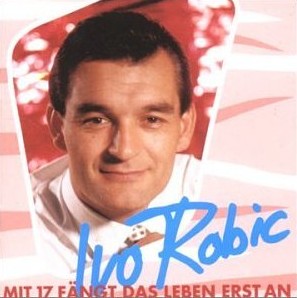
Ivo Robić was a guest star in some prestigeous USA programs: Perry Como Show of NBC, the Ed Sullivan Show, the Dick Clark Show, etc. With his "Morgen" he left behind on american top lists such stars like Frank Sinatra, Nat King Cole, Paul Anka and Dean Martin.
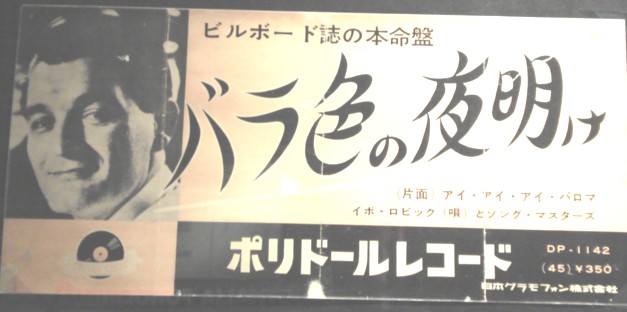
Ivo Robić in Japan
Ivo Robić on YouTube:
- Samo jednom se ljubi
- Morgen
- Mit 17 fängt das Leben erst an
- Serenada Opatiji
- Okreni zadnji list (OPATIJA)
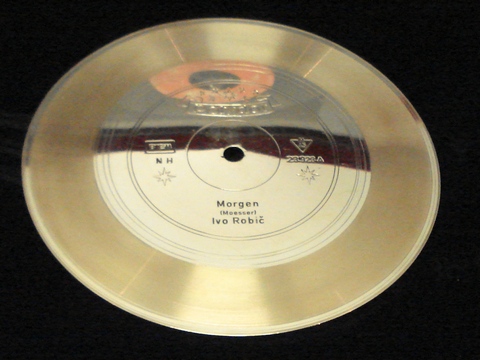
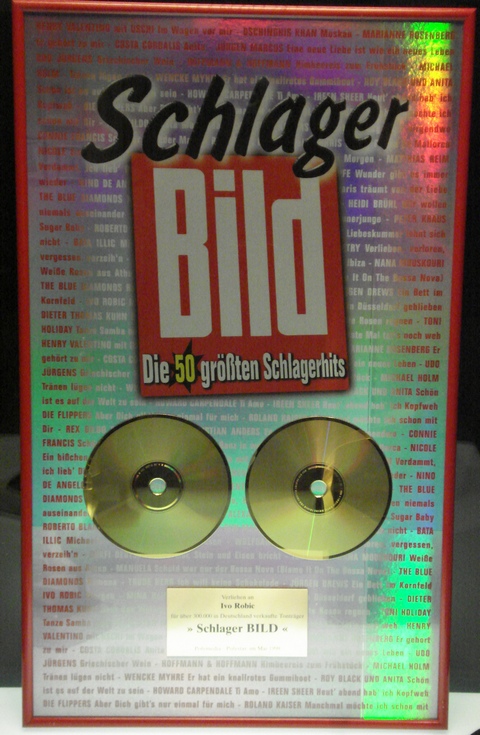
Polydor Silver disk for Ivo Robić 1959/60, as a recognition for his hit
Morgen, sold in two million copies.
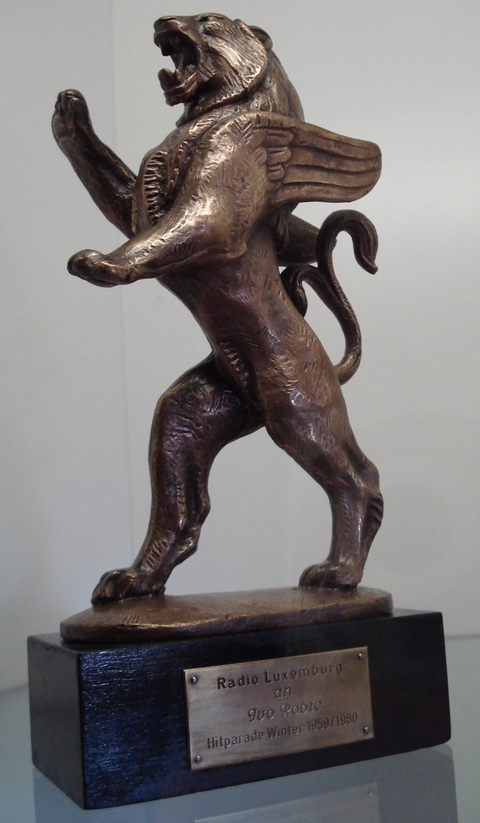
Radio Luxemburg bronze lion for Ivo Robićand his Morgen, 1959/60
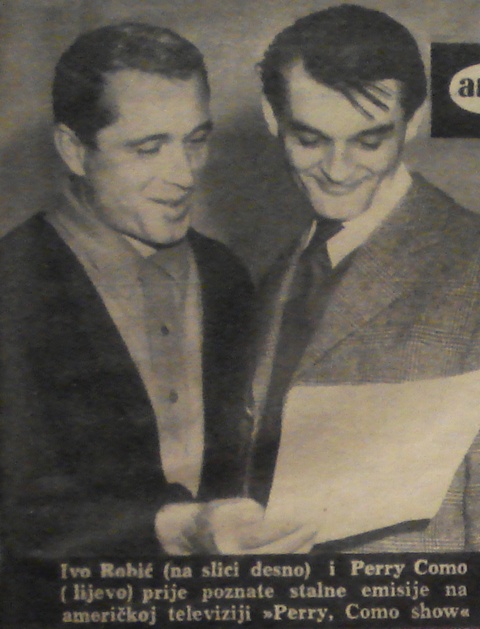
Ivo Robić as a guest of Perry Como TV show in the USA
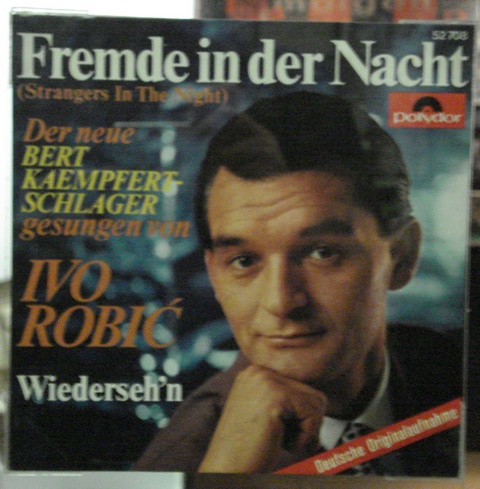
Ivo Robić was extremely succesful interpreter of Fremde in der Nacht
(Strangers In
the Night) in Germany
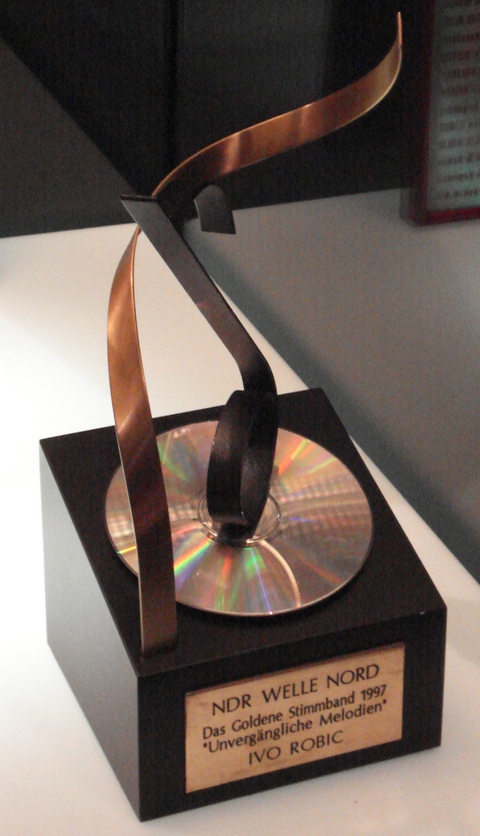
Recognition to Ivo Robić in 1997.
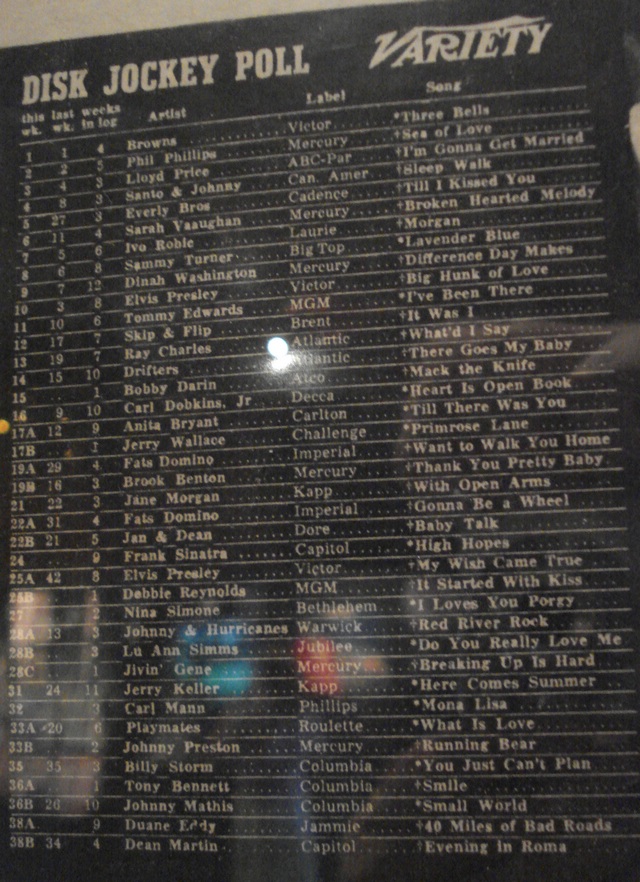
Ivo Robić and his Morgen were on the seventh place of the Disk Jockey
Poll in the USA. Below his name on the list you can see Elvis Presley,
Ray Charles,Fats Domino, Frank Sinatra, Dean Martin, etc.
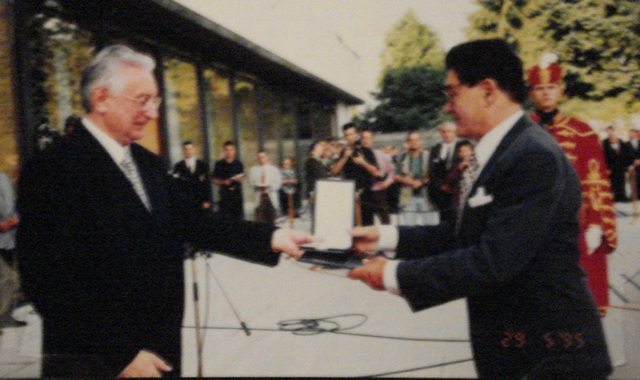
In 1995 Ivo Robić recieved a recognition from Dr. Franjo
Tudjman,
president of the Republic of Croatia: The Order of Morning Star.
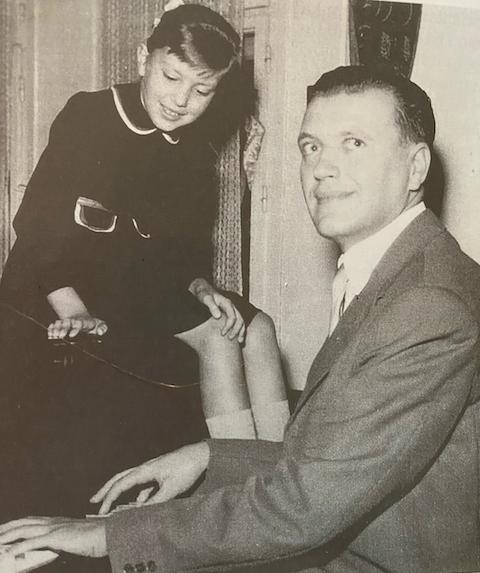
Krešo Milutin Vandekar with his daughter Maja in Zagreb in 1958.
Photo by the courtesy of Maja Rabaeus b. Vandekar (on the photo at the
age of around 8),
grand-daughter of Milica
and Josip Vandekar.
     (tata):
      D    A7            D
      Moja mala djevojčica
      D       H7      Em H7
      puna je velikih želja,
      Em      A7        D    Hm
      baš kao šipak pun košćica,
      Em      A7      D    D7
      tako je puna veselja.

     (kći):
      G
      Tata, kupi mi auto,
      G      G+    Am
      bicikl i romobil,
      Am      D7     G E7
      kupi mi medu i zeku,
        A7         D
      kolica Jugovinil.

                   G
      Tata, kupi kolača,
         G      G+      C    E7
      bombona i naranče dvije,
          Am     D7    G E7
      bar jednu malenu bebu,
      Am       D7       G
      velim ti da je to sve.


     (tata):

      Moja mala djevojčica

      voli i šetnje i priče,

      ali u gradu pred izlogom

      satima stoji i viče.


     (kći):

      Tata, kupi mi auto,

      bicikl i romobil,

      kupi mi medu i zeku,

      kolica Jugovinil.


      Tata, kupi kolača,

      bombona i naranče dvije,

      bar jednu malenu bebu,

      tata, kupi mi...

      tata, kupi mi...


     (oboje)

      Tata, kupi mi sve!
Guy Mitchell (1927-1999), American singer of Croatian roots (Albert George Cernik) "Singing the Blues"
Helen Merrill
aka Jelena Ana Milcetic, one of the most distinctive jazz singers ever,
her both parents are from the island of Krk in Croatia
Tony Butala the lead singer of the THE LETTERMEN
is of Croatian descent
During my visit to Dublin, Ireland,
in 2000, with the King of Dolls,
we were told by our hosts, Irish missionaries who had their school in
Timor Island in South-East Asia, that they are teaching children a
"Yugoslav" song there. When we asked them sing this song, we
immediately recognized that it was in fact a very popular and beautiful
Croatian folk song O,
more duboko (Oh, Deep Sea) from the region of Dalmatia.
In 1963, Malka Marom from Israel and Joso Špralja from Croatia formed the singing duo Malka & Joso. For the next four and half years, they sang folk songs of many lands in fourteen languages - well above ground: in Yorkville’s coffee houses, college campuses, supper clubs, radio and TV and Capitol recordings. In their repertoire they had Israeli and and Croatian songs as well. Malka & Joso have recorded four albums. Malka & Joso Forever, a CD retrospective of their songs was released by EMI in 2001 to rave reviews.
Gabi Novak (1936-2025)
was distinguished Croatian pop and jazz singer. During 40:50 - 45:50 of
the interview she described the destiny of her father
in 1945. Her son Matija Dedic was a fine jazz-pianist and composer.
Tomislav Ivčić (1953-1993), a famous Croatian singer, is best known for his songs Večeras je naša fešta and Stop the War in Croatia.
Don't ever cry, by the Croatian band Put (Path), at the European Song Contest in 1993. This female band also had the name of Putokazi (Signposts): Vivien Galletta, Angela Jeličić, Melita Sedić, Naim Ajra, Petar Čučak Migliaccio, and Olja Dešić.
Nostalgija, Lidija Horvat Dunjko and Magazin band with Danijela Martinović, Croatian song performed at European Song Contest in 1995.
Sveta ljubav (Sacred Love), Maja Blagdan, Croatian song at the European Song Contest in 1996.
Luciano Pavarotti & Friends: Together for the Children of Bosnia (Modena, Italy, 1995), with participation of Croatian composer Nenad Bach, New York, with his tune Can We Go Higher? - [mp3].- Bono Vox, a singer from U2, recites the famous Gundulic's verses O lijepa, o draga, o slatka slobodo from 17th century in Croatian language (= Oh beautiful, oh dear, oh sweet liberty) in the song entitled Miss Sarajevo, sang by Pavarotti: [mp3]
In 1999 Croatian pop singer Tereza Kesovija received an important French recognition Chevalier des Arts et Lettres for contributions to culture. On behalf of the French president Jacques Chirac it was presented by Jean-Jacques Gaillarde, French Ambassador in Croatia. She is known in Croatia and France for her promotion of the French chanson. At the Grand Prix Eurovision Contest held in 1966 she represented Monaco.
Tereza will be remembered also for her numerous humanitarian concerts during the 1991-1995 aggression on Croatia, held not only in her homeland, but also in central Bosnia (in Nova Bila - Srebrena Bosna). Her house in native Konavle near the City of Dubrovnik was ravaged by Serbian and Montenegrin troops. Very rich personal archives and valuable concert piano were burnt down.
Dunja Rajter (Dunja Reiter) is a well known Croatian singer and actress living in Germany. She was very much involved in humanitarian help to her homeland during the Greater-Serbian aggression in 1991-1995.
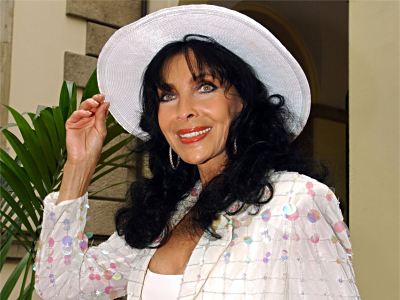
Dunja Rajter (photo by dpa)
She was the only European singer invited by Harry Belafonte to his american TV-Show where she appeared by such artists like Paul Newmann, Bill Cosby, Diahann Carroll and by Senator Robert Kennedy. Also the French public knows her from very popular Tele dimanche and from the Midi` Magazin.
Radojka Šverko is one of the greatest female singers that Croatia ever had. Except in Croatia she had concerts in Rio de Janeiro, Tokio, Seul, Athens, Puerto Rico, Caracas, Los Angeles, New York, Kopenhagen, etc. She is known for her beautiful interpretations of Croatian songs and such classics like The Shadow of Your Smile, Amazing Grace, The Automn Leaves, Bridge Over Troubled Water etc, see here.
Professor Balthazar, Zagreb, is a trademark of Croatia, a familiar and beloved figure throughout the world, especially among children:

Balt - Balthazar, Balt - Balthazar, Balthazaaar!
Listen to the Professor Balthazar Theme Song composed by Tomica Simović, Zagreb:
|
Balt
- Balthazar, Balt -
Balthazar, Balthazaaar!
|
In 1989 the Croatian pop music group Riva from the city of Zadar has won the European song contest held in Lausanne. Thanks to this great international success of Croatian pop music, the city of Zagreb, hosted the Eurovision song contest in 1990.
Nenad Bach is a recording artist, composer, and performer who has recorded for Sony, Polygram and many other labels. Two of his albums reached No. 1 in Europe, and to date he has sold over one million records.
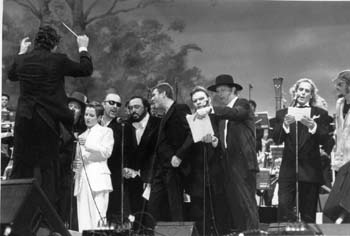
In addition, he has performed all over the world with a wide range of artists, including ‘Luciano Pavarotti’, ‘Bono’& ‘The Edge’ (U2), ‘Brian Eno’, Indigo Girls, Richie Havens, Garth Hudson & Grateful Dead), ‘Martin Sheen’, ‘Michael York’, ‘John Malkovich’, ‘Ellen Burstyn’, and many more. He performed at Woodstock '94, and in 1998 he made a compilation album with ‘Bruce Springsteen’, ‘Leonard Cohen’ and ‘Allen Ginsberg’.
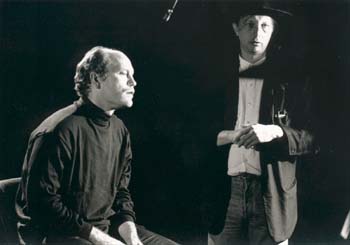
John
Malkovich reciting verses of Lijepa nasa
(Our Beautiful)
Croatian national anthem, in Croatian,
in Los Angeles studio Village Recorder, November 1990
(information by Nenad Bach, New York, July 2005)

In March 1999, Nenad opened the Miss Universe pageant in Europe with his new song "Miss Universe". Through his singing and songwriting Nenad's goal is to spread the message of joy and universal peace. For more information see here and Can We Go Higher?.
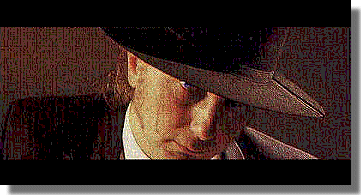
My
constant desire is to
awaken the modern ear through our collective memory
and ancient vibrations. Nenad
Bach
Finally, Nenad is also a record producer with a special interest in documenting the fascinating but little-known musical traditions of his homeland, Croatia. His most recent work includes the production of three new a cappella albums: "Fire on the Sea", by Klapa Fortunal; "Following the Cross", a collection of Lenten chants based on 600-year-old Gregorian Chants never previously recorded; and just released "Novaljo, Novaljo", by Klapa Navalia.
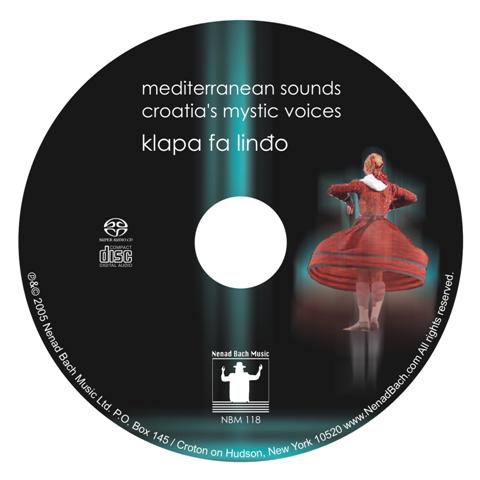
Mediterranean sounds
Croatia's
Mystic Voices
Klapa
Lindjo (female), see here
Example: Ponistra je drivo (The Window is a Tree) [wma]

and Klapa Sinj,
also here
and here
In Dec. 2005 Klapa Sinj had a very successful U.S. tour in New York
as part of the World Music Institute concert series
at the Society for Ethical Culture,
at the Kennedy
Center in Washington, D.C.,
and at the Chicago Cultural Center's Preston Bradley Hall.
Example: `Vo je nasa zemja (This is our Land) [wma]
Graphic design of CD's by Andrej
Urem
Čedomir Antolić, distinguished Croatian spiritual singer, composer and songwriter
Bruno Krajcar, distinguished Croatian ethno-jazz-rock composer and singer
Bruno Krajcar - Ća se sve va brajdah najde

Tamara Obrovac: My approach towards music went from jazz standards, through my own compositions, to my finding of an original expression by connecting the language of the folk music of my homeland (Istria, Croatia) with the rhythms and improvisation typical for jazz, so jazz is my freedom and my roots are my inner truth.
Maja Blagdan is an excellent Croatian pop singer.
Very brilliant rock guitarist of international reputation is Damir Simic - Shime.
Miljenko Matijević, amazing Croatian-American rock singer and frontman of Steelheart rock band
Oliver Dragojević, distinguished Croatian pop
musician
Zlatan Stipisic Gibonni, Croatian songwriter and singer, was elected as UNICEF's Goodwill ambassador in 2003. He is godfather of the Music school for children in Pakrac, a town terribly destroyed during 1990-1995 Greater Serbian aggression on Croatia.
Winner of the first Junior European Song Contest (J-ESC) held in Copenhagen, 2003, was 11 years old Dino Jelusic. He wrote the lyrics and music for his winning song Ti si moja prva ljubav (You are my first love). The initiative for organizing the the European Song Contest for children (J-ESC) came from Croatia.
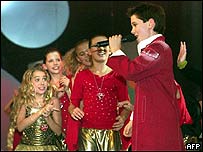
Dina Rizvić, young Croatian singer, composer, piano player and guitarist
2 CELLOS - duo of global fame, founded by Stjepan Hauser and Luka Šulić.
LORDE, authentic new star on the horizon, has Croatian roots on her mother's side
Ines Tričković, Croatian jazz singer
Mia Negovetić, Croatian singer
Frano Živković, Croatian guitarist
In 2024, Croatian singer Baby Lasagna achieved amazing success with his hit Rim Tim Tagi Dim, as unofficial winner of the Eurovision 2024. Bis.
Marko Perković Thompson 2025 Zagreb: the largest ticketed concert in history - more than half a million people
Lelek, a female vocal group representing Croatia at Eurovision Song Contest 2026 (Inka Večerina Perušić, Judita Štorga, Korina Olivia Rogić, Lara Brtan, Marina Ramljak):
- Composer Reacts/Explains "Andromeda" by Lelek | Eurovision 2026
- How Croatia 2026 Broke Eurovision’s Key Change Formula
- Justin Burke - Vocal Coach Reacts: LELEK - Andromeda LIVE
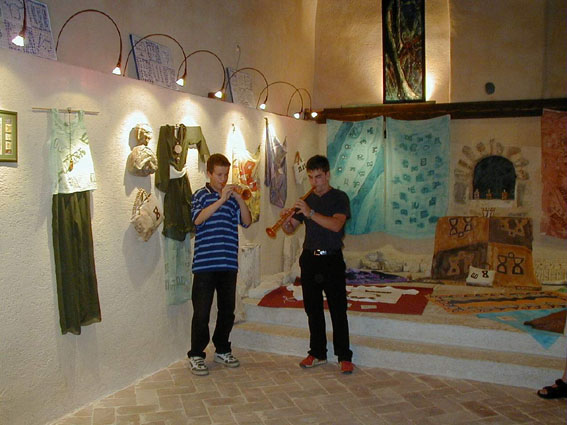 In
Croatian folk
music very original type of music can be heard on Croatian islands
(primarily on Krk, Rab, Cres), region of Vinodol, Kastav and in Istria,
based on the famous Istrian
scale, sounding "out of tune".
Specific way of singing is accompanied by a wind instrument called sopele
(or sopile), often linked with
church holidays and patron saints.
Sopile have a very penetrating sound. See
In
Croatian folk
music very original type of music can be heard on Croatian islands
(primarily on Krk, Rab, Cres), region of Vinodol, Kastav and in Istria,
based on the famous Istrian
scale, sounding "out of tune".
Specific way of singing is accompanied by a wind instrument called sopele
(or sopile), often linked with
church holidays and patron saints.
Sopile have a very penetrating sound. See
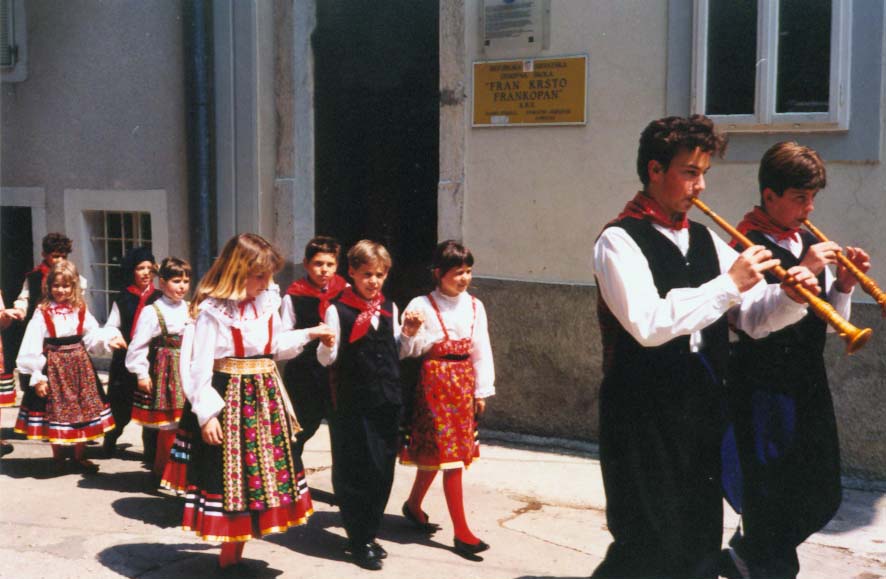
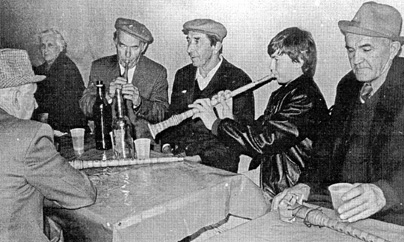
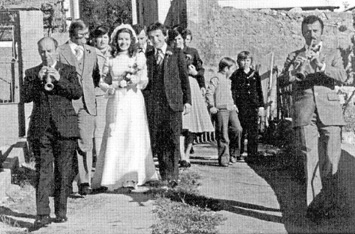
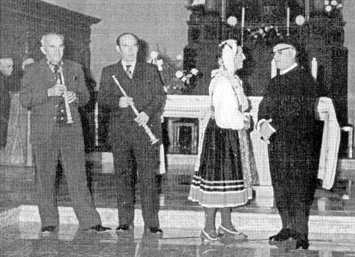
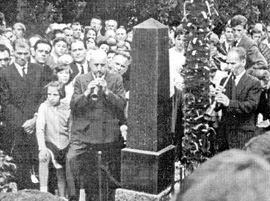
Sopile are important in many situations (from Zasopimo sopile by a famous sopile player Ivan Radic, Matica hrvatska, Rijeka 1995):
 |
 |
 |
 |
What is Istrian scale can be recognized from tuning of a pair of sopile (deep and high voice, or big and small sopela: vela i mala sopela; the Istrian scale is with toni stretti, or in Croatian - ljestvica tijesnih intervala (scale of narrow intervals); information by mr. Ivan Pavačić):
- first or male voice ("na debelo"): E, F, G, Ab, B, Cb
- second or female voice ("na tanko"): C##, D#, E, F, G, Ab
Here we have indeed C## (cisis). Note that we have six pairs of big secunda's.
 |
Source of the photo: Melodije Istre i Kvarnera
In Croatian music literature, the Istrian scale is also sometimes called the scale of 'narow intervals' (tijesni intervali; Ruza Bonifacic, Zagreb). Here is a famous Croatian song "Vrbniče nad morem" (Vrbnik Over the Sea), sung by Vrbenske kanturice school choir in Vrbnik, in the original way using narrow intervals:
Vrbniče nad morem
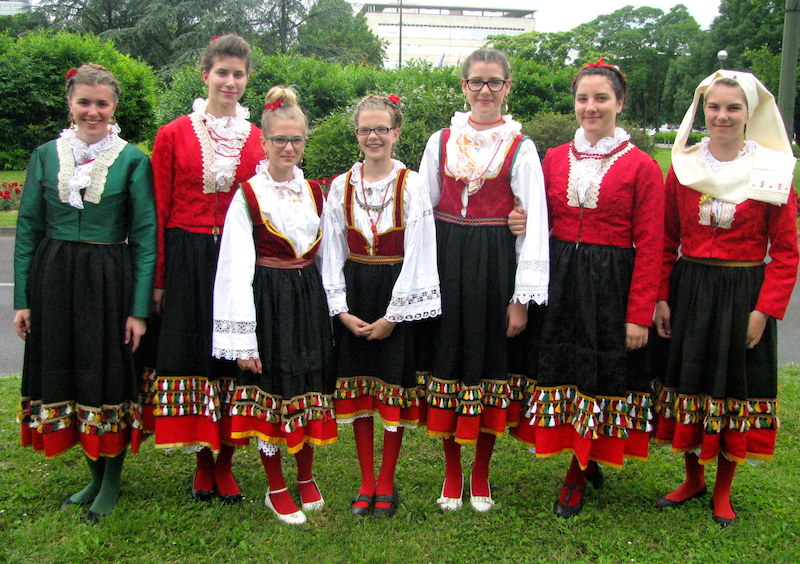
Vrbenske Kanturice
(the town of Vrbnik on the island of Krk, Croatia): Ana Vadnov, Miriam
Volarić, Mara Vadnov, Mariza Renčić, Dina Antić, Iris Magaš i Veronika
Jurešić. Zasopli su
na sopeli učitelj Ivan Pavačići Ivo Volarić. Vrbenske kanturice su bile svečano
odjevene u tesnek.
Vrbniče nad morem (pjevaju, tj.
kantaju: Dorijan Polonijo i Marijan Orlić, Vrbnik)
Zahvaljujem na pomoći g. Tihomiru Šicelu (predsjedniku Udruge
krčana i prijatelja otoka Krka) i Mladenu Žubriniću.
Even more amazing in its expressiveness and power is a very primitive way of singing called ganga, widespread in mountain regions of Bosnia and Herzegovina, and also in southern parts of Croatia (rera, ojkavica). It is interesting that Ankica Petrovic defended her doctoral thesis about ganga singing at the Queens University in Belfast where she was a student of John Blacking. See
- www.imota.net or www.ganga.hr
- Chants poulaires de l'arriere pays Dalmate, written by Pierre Bois
- Trends and Processes in the Music Culture of the Dalmatian Hinterland, by Joško Ćaleta
Istarski gunjci (bajsisti) - gunjac (bajs) is a violoncello like instrument with two strings, played in Istria.
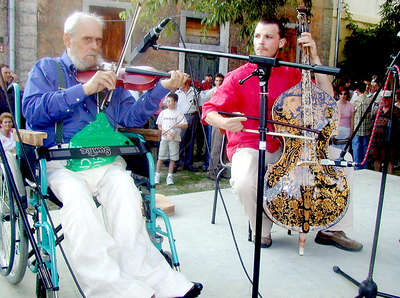
"Bajsi u Draguću", 2005: Ottavio
Štokavac (violin) and Marko
Tončić (gunjac)
in a beautiful glagolitic
town
of Draguć,
Istria, Croatia
Source: Puna je Istra bajsista,
16th Festival "Bajsi u
Draguću", 2005
Melodije Istre i Kvarnera (Melodies of Istria and Kvarner): 2006, 07, 08
Klapa singing:
- Na klapski nacin
- Dalmatinske klape i Festival u Omisu, composers Dinko Fio and Ljubo Stipišić Delmata (according to Ljubo Stipišić Delmata, there are about 400 klapa's in Croatia, 2006)
- Dalmatian klapa songs
- klapa songs
- Klapa Novalja, by Nenad Bach Music Ltd., New York; see also here
- Fire on the Sea - Klapa Fortunal, by Nenad Bach Music Ltd., New York
- ...coming in 2005...year of the klapa
|
VOIX DALMATE, Kate - Rencontre magique, Franck Alfirevic (Indian Ocean, island of Réunion) and his sister Kate (Croatia, Kastel Sucurac). See also beautiful web pages prepared by Franck Alfirevic in French, English and Croatian, the page is downloaded locally here |
| En
écoutant les klape
dalmates, j'ai réalisé que le peuple croate avait
une
âme qui méritait d'etre
dévoilée au monde
entier...
Paolo Coelho |
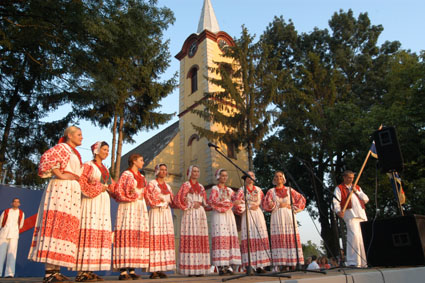
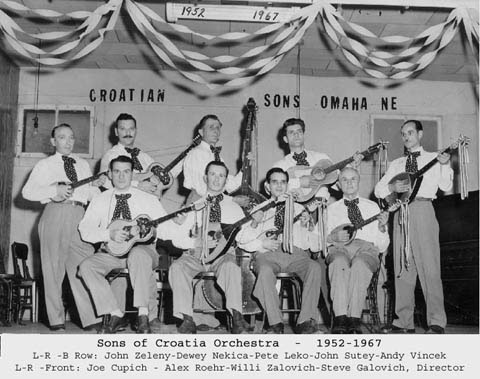
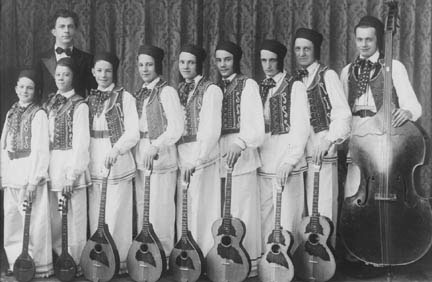
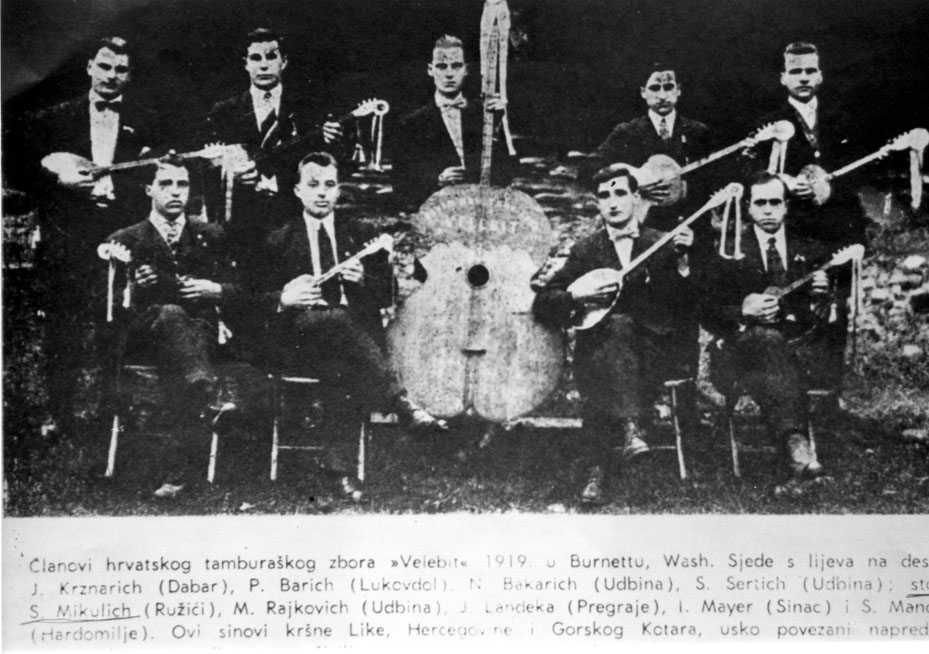
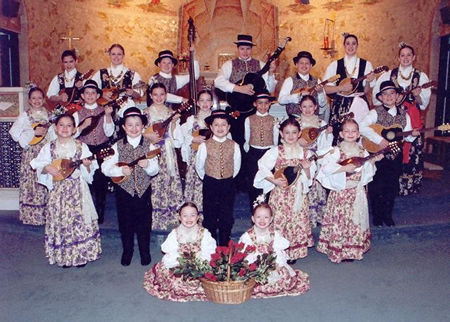
In music probably the most original contribution is the tamburitza, the Croatian national string instrument and one of the hallmarks of Croatia. The orchestral tamburitza play started in Osijek in 1847. Our folk music is very popular among the Croatian diaspora. There exist hundreds of tamburitza ensembles among Croatian emigrants throughout the world.
Visit my web-pages devoted to
 |
 |
 |
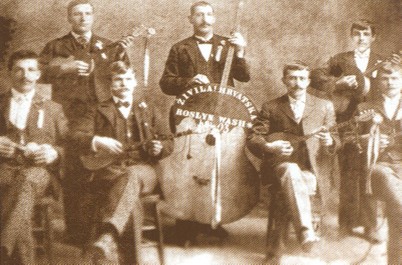
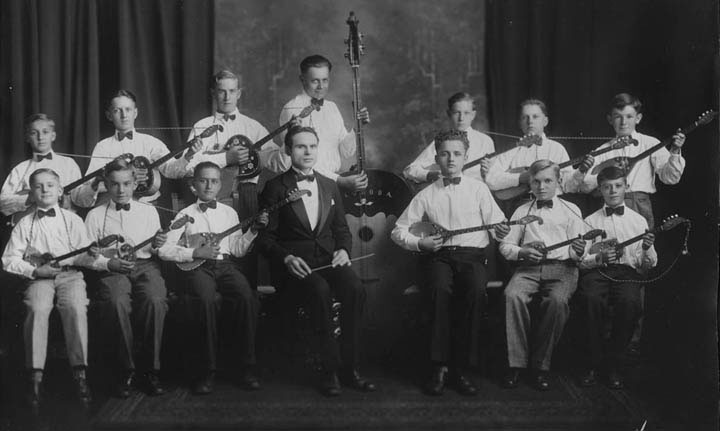
Tamburitza
orchestra "Zivila Hrvatska" (Long
Live Croatia), USA,
performed in the White House for president Theodore Roosewelt in 1900.
Over the past several decades only in the USA several hundred tamburitza orchestras were active, with more than 5,000 players. At this moment The Youth Federation of Tamburitza Players in the USA comprises 44 orchestras. Its rich activity is mainly due to the fruitful efforts of the Croatian Fraternal Union (CFU) (Hrvatska bratska zajednica) and its president Bernard Luketich in Pittsburgh. Except in Croatia and the USA, numerous tamburitza orchestras exist among Croatian diaspora in Austria, Switzerland, Germany, Hungary, Scandinavia, South African Republic, Australia, New Zealand, Canada and elsewhere.
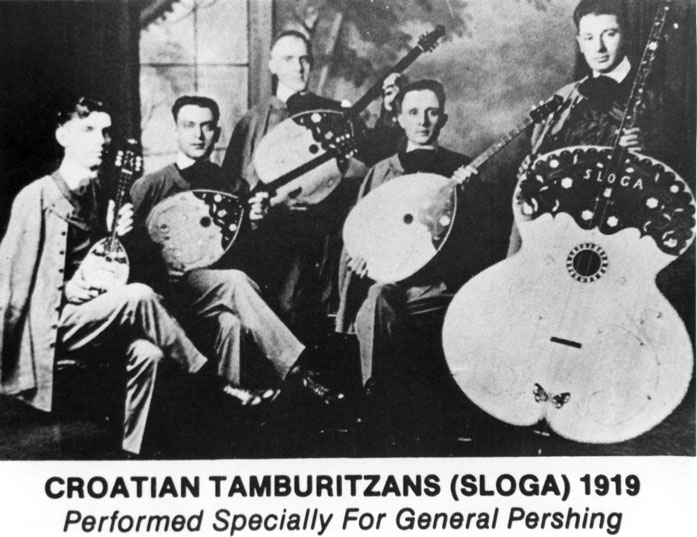
I express my deep gratitude to Mr Vladimir Novak for permission to use the above beautiful photo from his collection, and the following one (Croats from Lika, Gorski Kotar and Hercegovina, during their stay in Burnett, Washington, in 1919):
Tamburica links in Austria:
- www.tamburica.at, by Kristijan Karall,
- Tamburaski Orkestar i zbor Pinkovac.
Here is an interesting
excerpt from Tamburitza Music And The Tamburitza
Family written
by Karen White:
How did tamburitza music come to be? This question is dealt with fully in History of the Tambura by Walter Kolar (who has kindly provided us with the information and assistance in preparing this article). In partial answer to the question, one version of the following story (taken from the book mentioned) is found:
"In the year 591 A.D. the Byzantine King Mauricius was contesting the Roman Empire in Thrace. Here he captured three Slavs. To the astonishment of Mauricius, he found these Slavs unarmed, carrying with them only a tambura. With surprise he asked these Slavs who they were and what was that in their hands? They replied, 'We are Slavs and we live along the Western Seas (Adriatic). We play tambura because in our country there is no iron and we live in peace. We do not know the meaning of war bugles.'"
At that time the tambura was exclusively a solo instrument. The music was played to accompany singing and dance. It was purported, in folk tales, to be so beautiful that even the goats would dance when it was played.
Formation of tambura groups in the 1800's paralleled the growth of similar groups in other countries. In Russia and the Ukraine balalaika and domra groups were started and in Italy mandolin orchestras came into being. The same occurred in Austria, Switzerland and southern Germany.
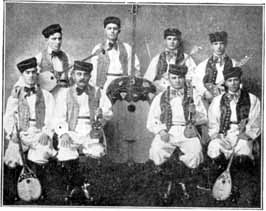
The Tamburica Croatian Orchestra, 1887
County of Buffalo, Nebraska, USA
(see bchs.kearney.net/BTales_198707.html)In Croatia, the first group of six tambura players was said to be formed by Pajo Kolaric of Osijek in 1847. The first tambura concert was given by Ivan Sladicek with a group of four players in Zagreb in 1879. In 1882, the first studies of the music were begun by Mijo Majer with a group of four students at the University in Zagreb.
In the U. S. today, tamburitza music is alive and thriving. In fact, it is claimed by some to be the single most prevalent ethnic instrument transplanted to America from a foreign land.
The above mentioned monograph about Tamburitza is:
Kolar, Walter W., An Introduction to Croatian Musical Folklore, (Tamburitza) Pittsburgh, PA 1981
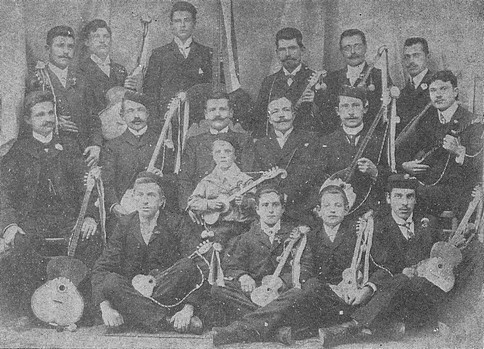
Croats in Punta Arenas, Chile
(Magallanes region), with their tamburitzas
Croatian tamburitza band
Tomislav in Punta Arenas, 1905
Hrvatsko tamburasko
drustvo Tomislav, Punta Arenas,
1905
(photo from Lj. Antic, Hrvati u J. Americi, Zagreb, 1991, pp 182 and
266, )
The oldest known Croatian tamburitza orchestra in Johannesburg, South Africa, was founded in 1902 (information by Mr. Ivo Lusic, S. Africa).
It is not widely known that Leo Fender, a famous builder of rock guitars (Fender Stratocaster), used the shape of a Croatian tamburitza head (more precisely, of the so called "brac" or "bas-prim", see below) for his characteristic guitar head. This was a result of Leo's acquaintance with a Croatian room-mate in his student days, who was a tamburitza player. Information by Nenad Bach, who mentioned this story on his CD "I love losers" (...Leo Fender mentioned in an interview for Musician magazine that he was inspired by the headstock of the tamburitza when he designed the Fender Stratocaster...). And every song on the CD is accompanied with the tamburitza play. Listen to his Can We Go Higher?.

For those wishing to know more about our folk music, we can recommend to read also
- The Tamburitza and the preservation of Croatian folk music written by Michael B. Savor (Canada)
- North Hills Junior Tamburitzans, see a lovely photo
- Musical instruments collection, Ethnographic Museum in Zagreb
- Starohrvatska tradicijska puhacka glazbala
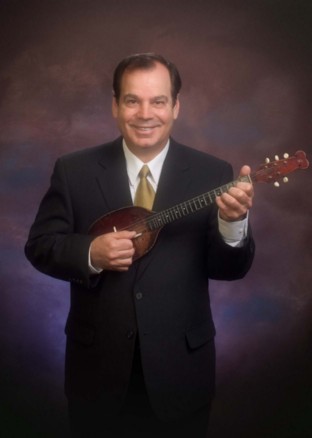
...I didn't separate American music from Croatian music. It was all music to me... My dad taught me a little bit until he got frustrated with me, then my uncle taught me. My grandfathers played, too, both of them and taught me some. They brought the instruments over from Croatia... When I was growing up we would go to Croatian dances and make new friends, friends that remained friends for a lifetime. A lot of men meet their fiancees through Croatian churches and social functions, and at the tamburitza festivals. Of course, the music was a big part of all of that...Keeping the tradition alive is a part of our life, too. Traditions have a tendency to die faster in the country where they are from. We have a natural tendency outside the country to want to preserve our culture because we're away from it. It was something that we held on to dearly because it came from our parents and grandparents...
An outstanding member of the Croatian Fraternal Union (the USA) was Rudy Perpich (1928-1995), a late Governor of Minnesota.
John (Johnny) Mercer (1909-1976) was an American lyricist, songwriter, singer, impressario, producer and a founder of Capitol Records. Among his best known hits are "Moon River", "Autumn Leaves", "Days of Wine and Roses". His mother Lillian Elizabeth Ciucevich (Ćučević, 1881-1977) has Croatian roots. Her father (and Johnny's grandfather) was John Joseph Ciucevich (Ćučević, 1834-1899), born on the island of Lastovo in Croatia. Johnny Mercer was nominated nineteen times for the Oscar for best song in a film, and won four.
TARARA
TARARA is the name for Croats used by Maories in New Zealand. The origin of the name of Tarara is most probably related to singing a melody without words, using rhytmical pattern Ta-ra-ra... Dalmatian Croats are known for their passionate love of music. According to late Ljubo Stipišić Delmata, in Croatia there are about 400 klapa choirs. This is a unique phenomenon of Croatian music, and not only Croatian.
It seems that the melody for the famous Hawaiian song ALOHA OE might be based on a Croatian folk song, as indicated in HAWAII MAGAZINE, August 1996, p 41. The folk song in question is Sidi Mara na kamen studencu from Srijem, whose melody is very close to ALOHA OE.
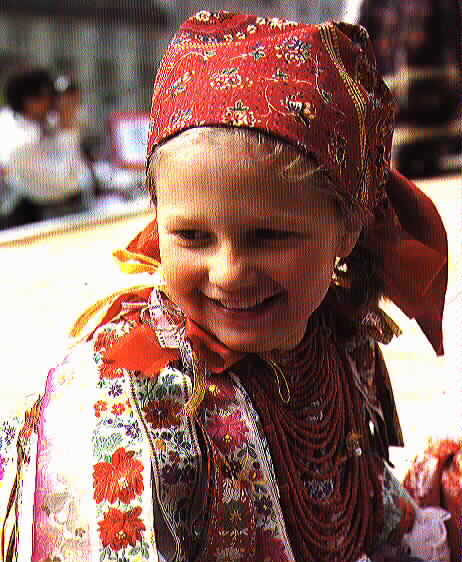
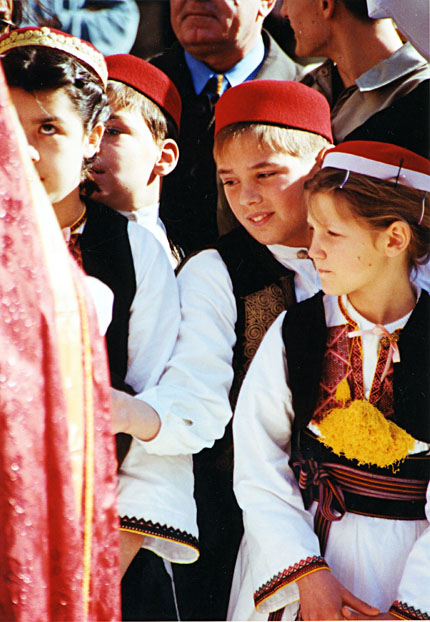
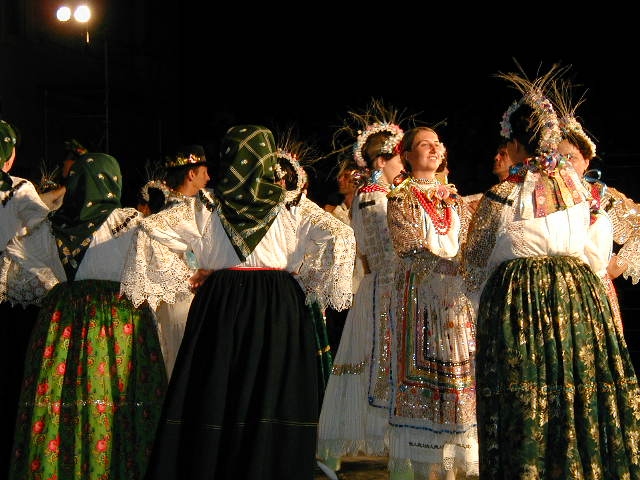
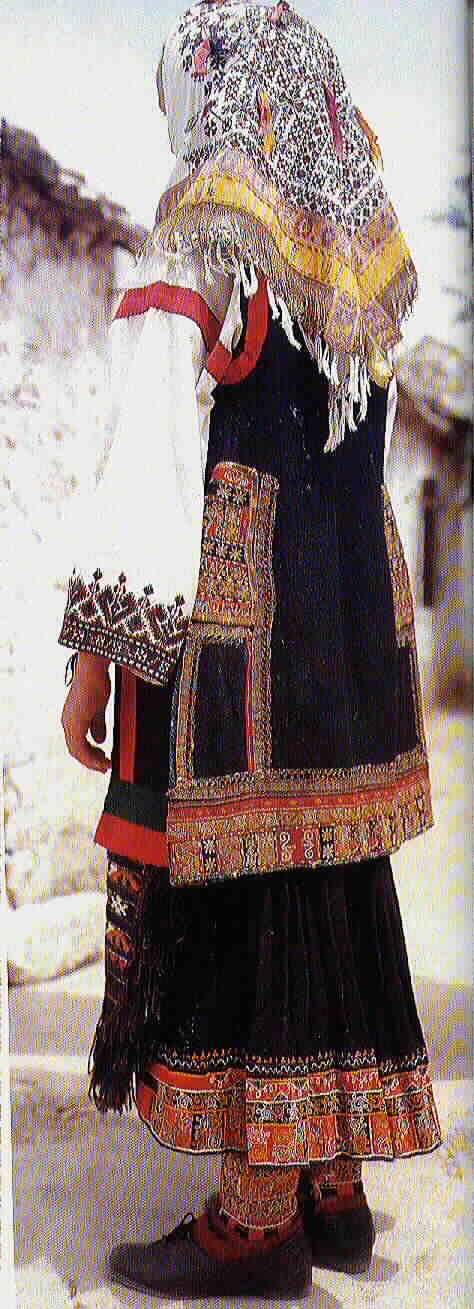 Hand
in hand with folk music go the national
costumes and dances in which one
can see such a rich source of
creativeness and imagination that are simply impossible to describe in
a short essay like this. See
Hand
in hand with folk music go the national
costumes and dances in which one
can see such a rich source of
creativeness and imagination that are simply impossible to describe in
a short essay like this. See
- LADO,
- "Dr Ivan Ivančan" Zagreb Folk Dance Ensemble
- Croatian folk art.
- Institute of Ethnology and Folklore Research, important professional institution, founded by Vinko Zganec
- Croatian traditional musical instruments
- Map of Croatian national costumes
- drawings of Croatian national costumes at South Illinois University, USA, from the second half of 19th century
- The Ohio Arts Council's Riffe Gallery presents Patterns of Meaning: Croatian Folk Life Traditions
- Bastina - Koprivnicki Ivanec
- Croatian lace
LADO is the National Folk Ensemble of Croatia, founded in 1949. In the course of the first 60 years of its existence, i.e. till 2009, it had more than 5000 concerts in 48 countries in all parts of the Globe. It is composed of 34 brilliant dancers, who are also excellent singers, and of 14 superb musicians who play some fifty different traditional and classical instruments. LADO is often called a "Dancing Museum" due to valuable collection of more than 1200 costumes, some of them over a centry old. The repertoire consists of more than 100 coreographies. The ensemble had intercontinental tours to South America, North America, Asia, Africa, and Australia, and had concerts in the following major world cities: Paris, London, Vienna, Prague, Budapest, Moscow, Rome, Madrid, Oslo, Helsinki, Stockholm, Athens, Zurich, Warsaw, Amsterdam, Burssels, Tel Aviv, Rio de Janeiro, Buenos Aires, New York, New Delhi, Beijing, Shanghai, Kuala Lumpur, Sydney, Melbourne, Perth, Tokyo, Kyoto, Nagoya, Kobe, Sapporo, etc. LADO has recorded a large number of CDs, documentaries and musical films.
When in 1973 LADO performed in New York, Anna Kisselgoff wrote that their performance "...was the best of folklore that New York has ever seen". In 2006, when this Croatian ensemble had one month tour in Japan, than one of Japanese admirers wrote in the guest book the following: "...If I could be born again, I would be born in Croatia and I would dance with LADO." In 2009 LADO has issued a superb monograph in Zagreb, LADO Hrvatsko nacionalno blago (LADO Croatian national heritage) in parallel Croatian and English.
The entire, very rich collection of national costumes held in Vukovar was destroyed during the Greater Serbian destruction of the city in 1991. The city of Split helped to reconstruct the Vukovar collection.
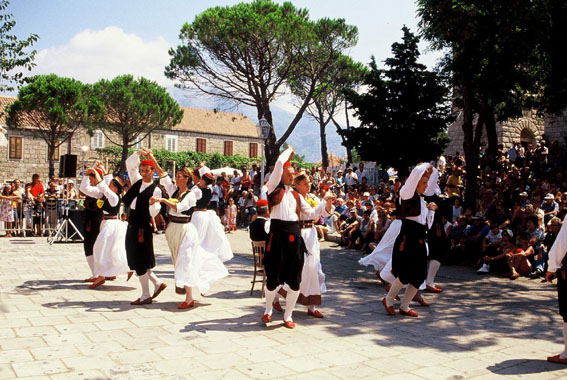
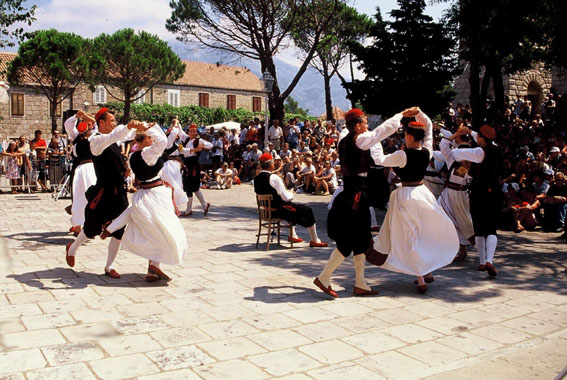
I like very much LINDJO, traditional dance from Dubrovnik environs - Konavle:

Stjepan Veckovic is a founder of the Croatian Bagpipe Orchestra. Bagpipes are usually associated to Ireland and Scotland, but Croatian bagpipe tradition is much older. An International Bagpipe Festival is organized annualy in the village of Mihovljan near Zagreb. According to Mr. Veckovic, there is no country in the world that could compete Croatia in the variety of traditional national musical instruments.
|
|
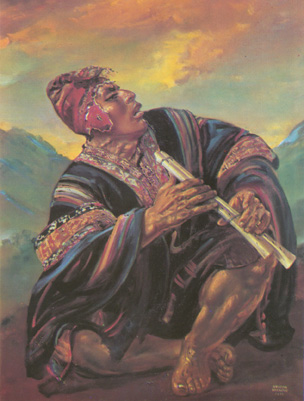
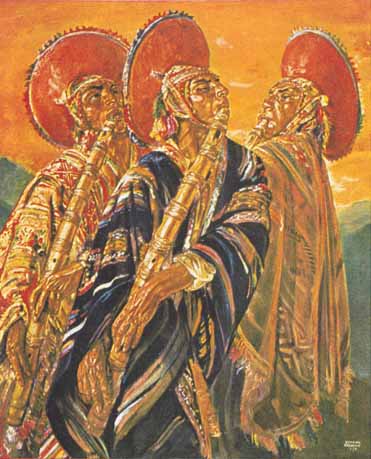
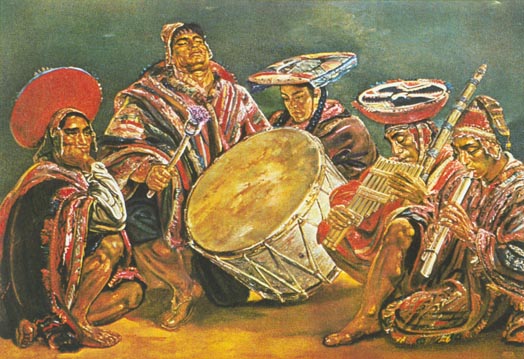
Peruvian music is not the subject of this web page, but if you are Peruvian, Spanish, Catalonian or Croatian, don't miss to see Kristian Krekovic and his gallery in Palma de Mallorca (Museu Krekovic), opened by the Spanish Queen Sophia in 1981.
 |
The Collection of Mechanical Music Automata of Ivan Gerersdorfer, Zagreb
Vuprem oči is Croatian traditional song very popular in France.
 The King of Dolls!
- Since
1991 an invaluable collection of more than 350 dolls owned by Mr Ljeposlav
Perinić, Argentina, is in
Zagreb, Croatian capital. Dressed in
picturesque national costumes from over 100 countries, these dolls
represent gifts of many dignitaries, Kings, Queens, Emperors,
Empresses, Presidents, First Ladies, Prime Ministers, Governors, etc.
to Mr Perinic. He collected them for more than 30 years.
The King of Dolls!
- Since
1991 an invaluable collection of more than 350 dolls owned by Mr Ljeposlav
Perinić, Argentina, is in
Zagreb, Croatian capital. Dressed in
picturesque national costumes from over 100 countries, these dolls
represent gifts of many dignitaries, Kings, Queens, Emperors,
Empresses, Presidents, First Ladies, Prime Ministers, Governors, etc.
to Mr Perinic. He collected them for more than 30 years.
Department for History of Croatian Music, Croatian Academy of Sciences and Arts.
 References
related
to national costumes and customs:
References
related
to national costumes and customs:
- Ivica Ivanković, Vladimir Šimunić: Croatian National Costumes, Multigraf d.o.o., Zagreb 2001, ISBN 953-6060-10-8 (parallel Croatian and English text, parallel Croatian and German version also available)
- Dunja Rihtman - Augustin: Christmas in Croatia, Golden Marketing, Zagreb, 1997 (translated from Croatian)
Goran Pelaić: www.croatianpopmusic.com
References related to Croatian music:
- F. Kuhač: Ilirski glazbenici, HSN, 1994 (reprinted from 1893 edition), with afterword of academician Lovro Županović; on p. 5 Kuhac cites the following Croatian proverb: Po zveku (glazbi) se vrieme pozna, that we took as the motto of this web page.
- Stanislav Tuskar: Kratka povijest hrvatske glazbe, Matica hrvatska, Zagreb 2000.
- Lovro Županović: Glazbena kultura, in [Croatia - Europe, volume II],
- Jerko Bezić: Glagoljasko pjevanje, in [Croatia - Europe, volumes I and II]
- Stefan Kocsis: Die sakrale Musik der
burgenländischen Kroaten
in Geschichte und Gegenwart - Maestro degl'Ivellio nam predstavlja, at www.croatia.ch
- Božidar Širola: Hrvatska narodna glazba, pregled hrvatske muzikologije, Matica hrvatska, Zagreb 1942
- Croatians singing Christmas songs
- Najstariji tamburaški
orkestri u Križevcima
Croatian Classical Music, 10th-19th centuries
Croatian Classical Music, 20th-21st centuries
Bunjevci Croats in Bačka
Croatia - overview of its History, Culture and Science