Croatian Coat of Arms
during centuries
Darko Zubrinic, Zagreb, 2005
- until 1600
- 1600-1800
- 1800-1900
- 1900-1940
- References
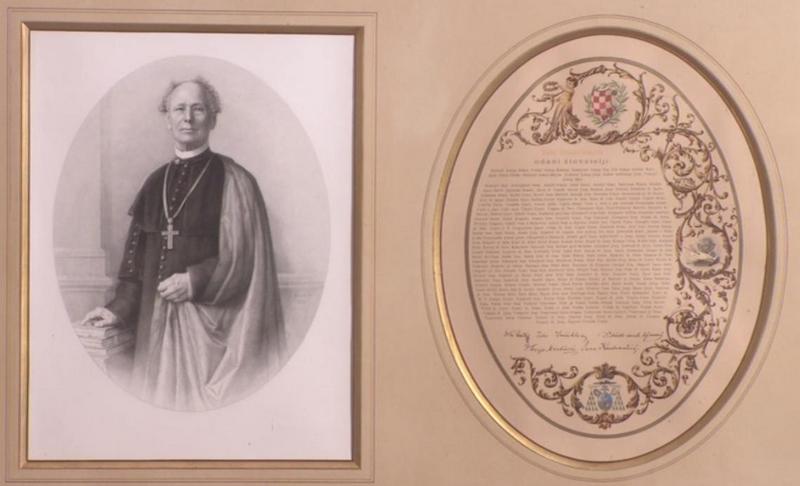
A text by Josip Juraj Strossmajer (1815-1905), distinguished Croatian
bishop.
Source Dr. Hrvojka Mihanović-Salopek: Stella Maris of Slavonian Wheat Fields
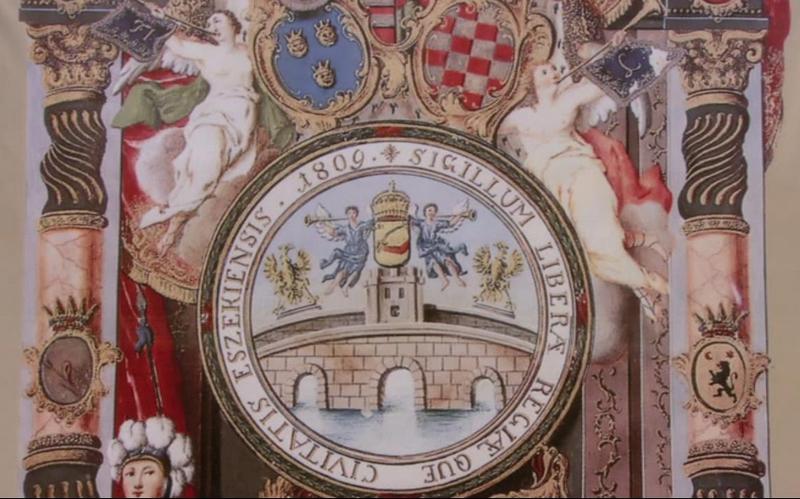
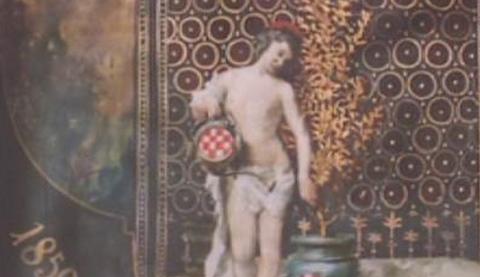
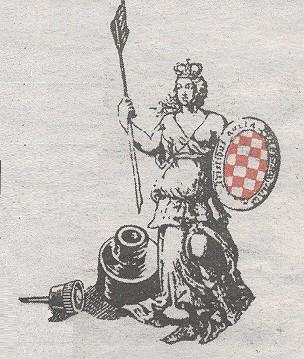
1809 seal of the Free City of Osijek (Eszekiensis)
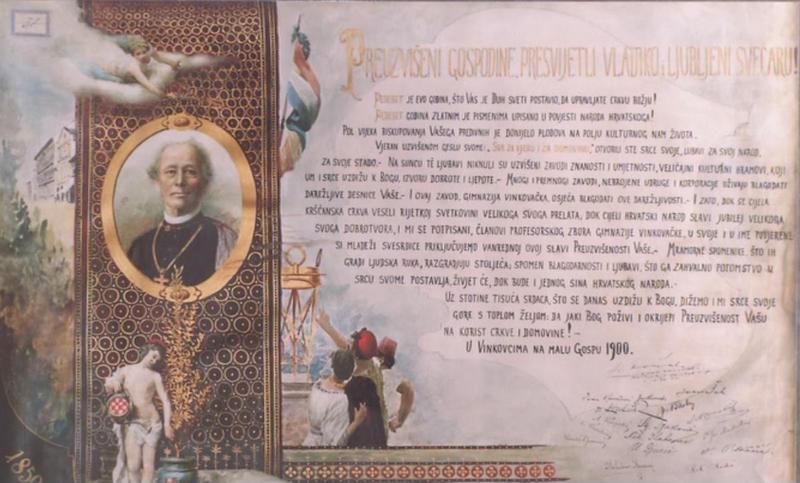
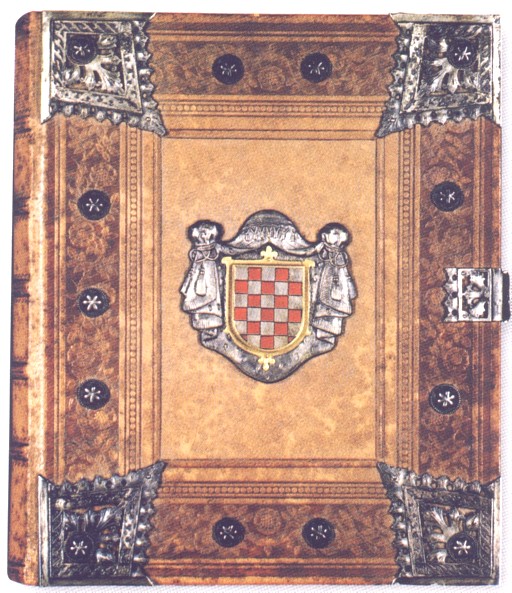
A
detail from memorial-book of participators of
the First Croatian Savings Bank general meetings 1900-1904
source:
Jozo Ivanovic, Croatian
State Archives,
2006, ISBN 953-6005-78-6
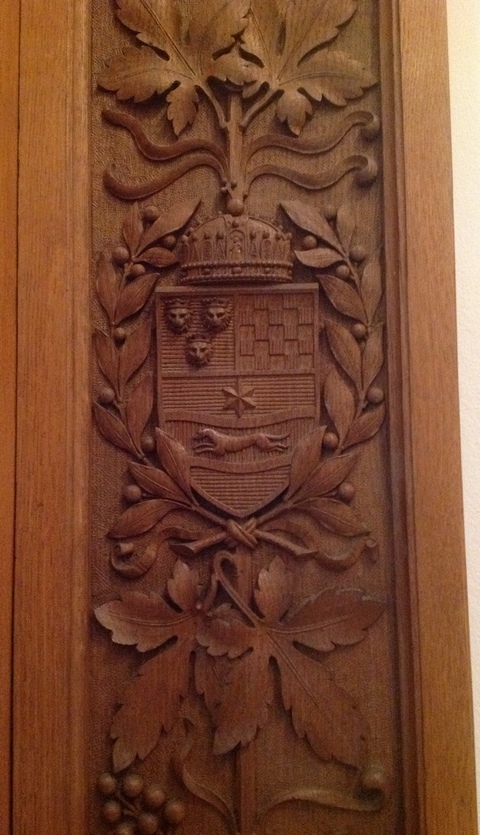
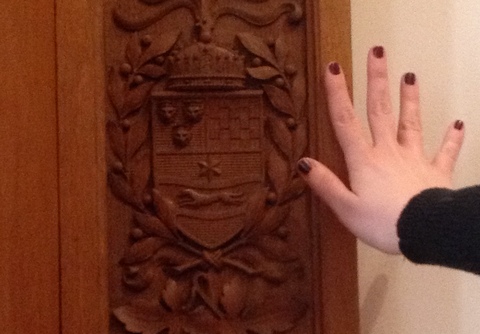
A detail from the Paris Room
of the Croatian School Museum (Hrvatski
školski muzej) in Zagreb from 1900.
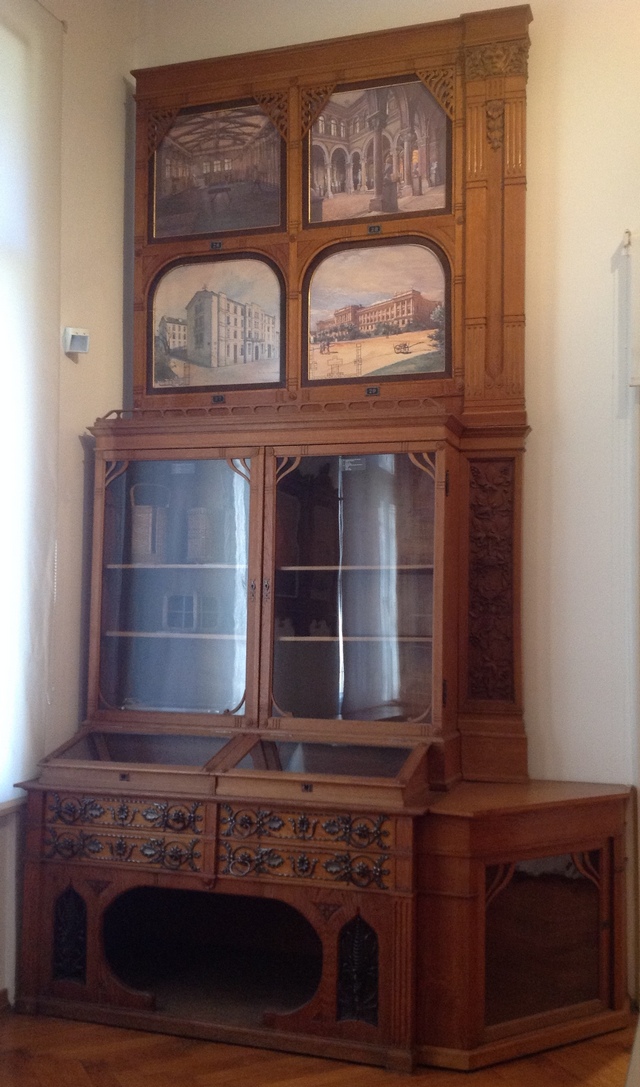
This cupboard has been made by young Croatian high-school students
(Entrepreneurship School - Obrtnička škola)
and exhibited at the Paris 1900 Expo. The Croatian Coat of Arms is on the right.
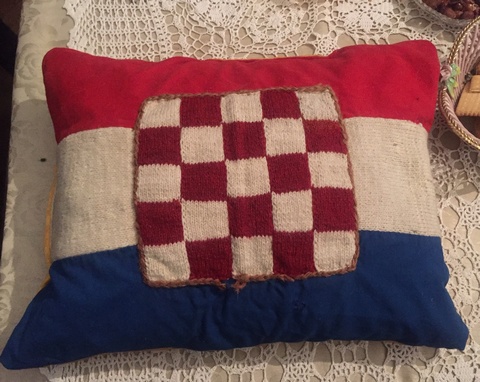
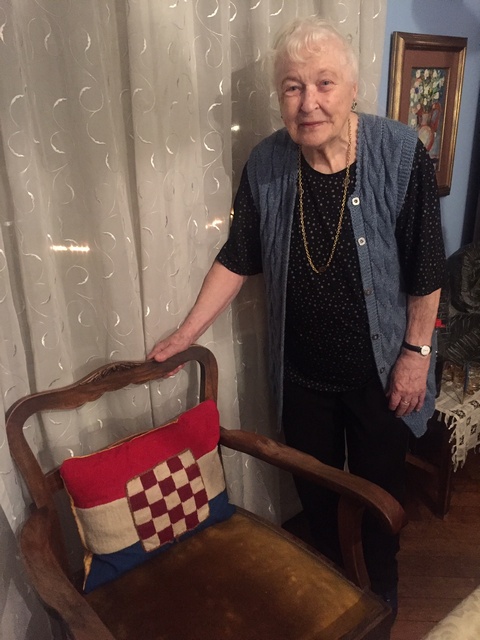
Pillow of the family of Ante Starčević (Croatian sculptor in Zagreb), arround 1900.
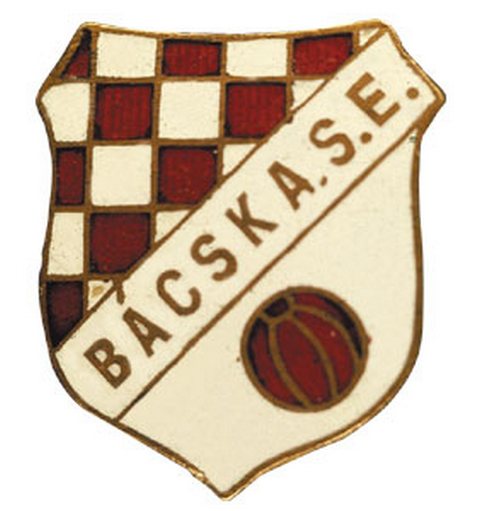
Bacska, i.e., Bačka football club in
Subotica, founded in 1901.
This photo is appearing on the cover page of [Dražen
Prčić] and on nogomet.lzmk.hr.
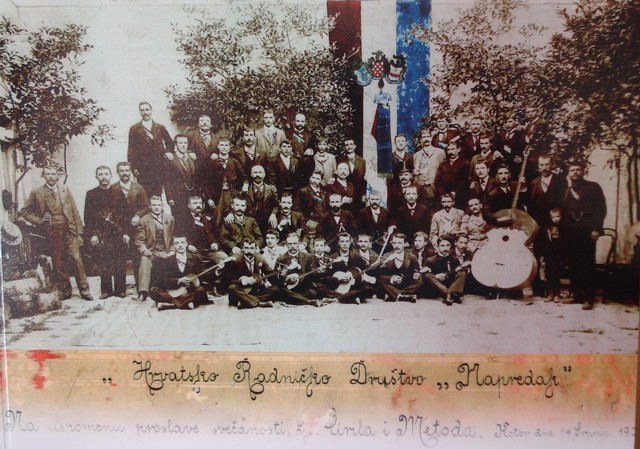
Croatian
Working Society Progress (Hrvatsko
Radničko Društvo Napredak), Kotor
1901
From the front cover page of Stolačko
kulturno proljeće,
Godišnjak za povijest i kulturu, god. VII., 2009.
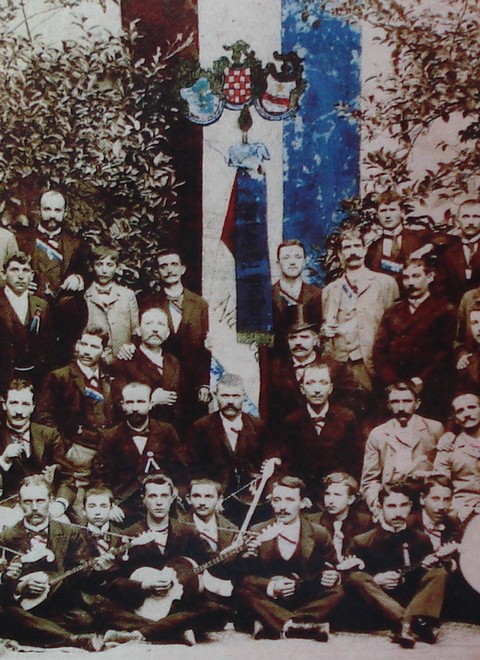
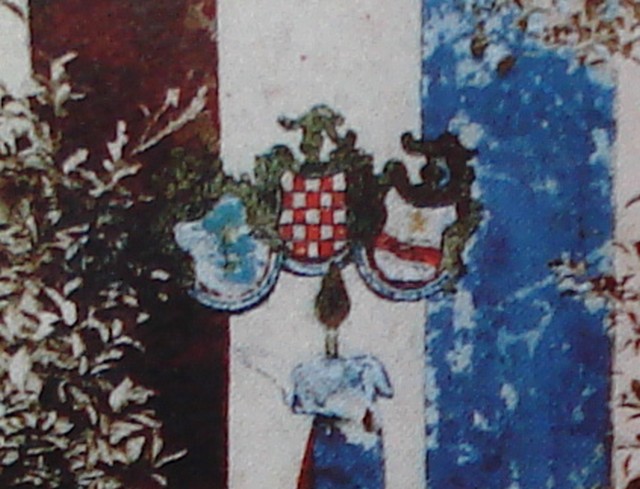
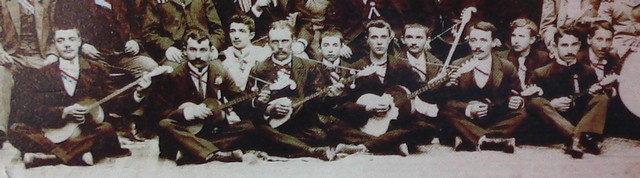
Croatian
tamburitza
players in Kotor in 1901
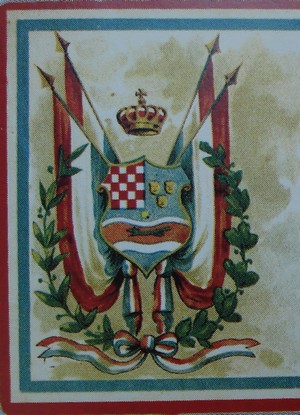
Left
half of a postcard from 1901 with Coat of
Arms of United Kingdom of Croatia, Dalmatia and Slavonia
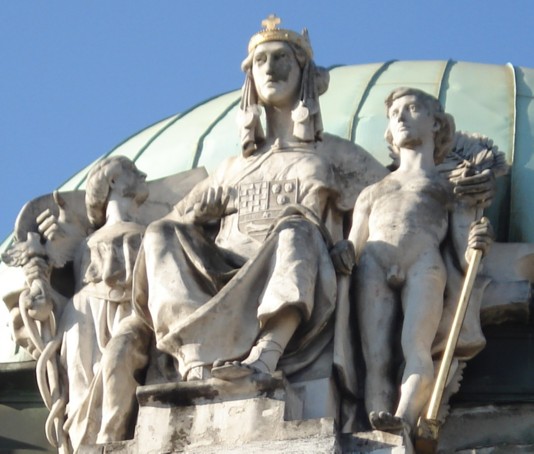
Ethnographic
Museum
Zagreb (detail from the
building built in 1902-1903), architect Vjekoslav Bastl,
Mažuranićev
trg 14, Zagreb
with coats of arms of Croatia, Dalmatia and Slavonia
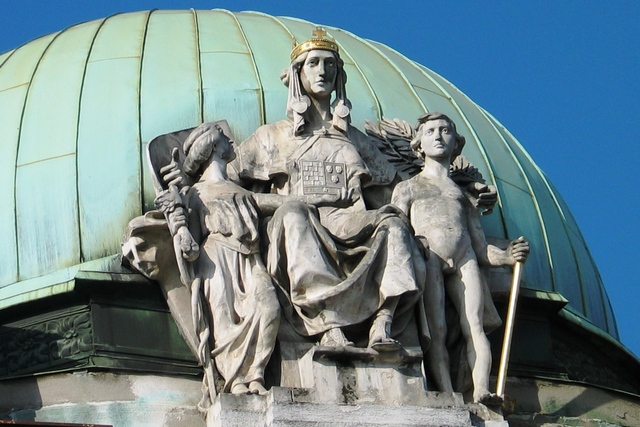
Trgovačko-obrtni muzej, a od 1919 Etnografski muzej; arhitekt Vjekoslav Bastl,
Mažuranićev
trg 14, Zagreb
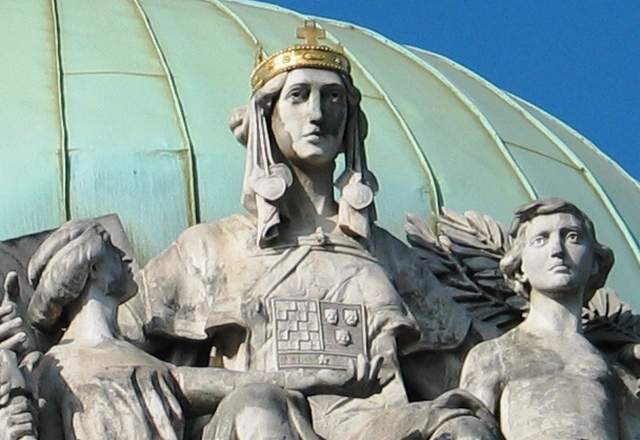
Source of the above two photos: Vjekoslav Bastl
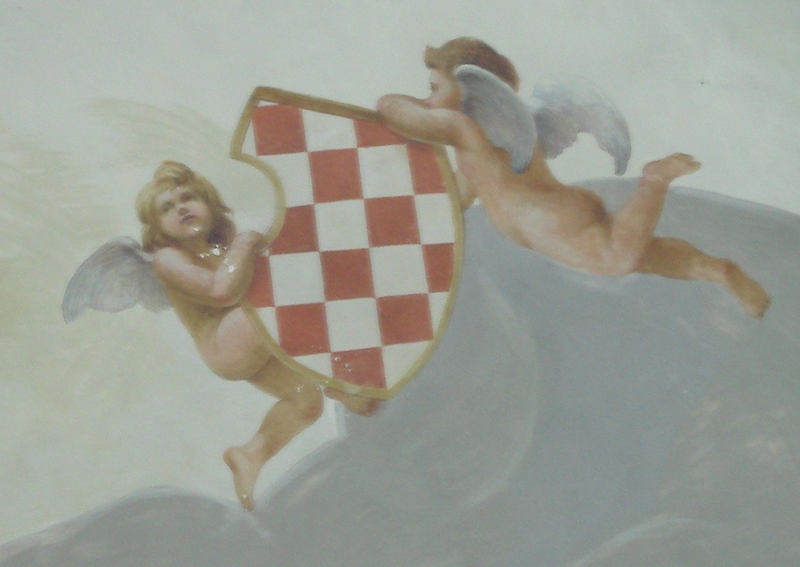
Trgovačko-obrtni muzej 1902.-1903., a od 1919. Etnografski Muzej u
Zagrebu; pojedinost sa stropa
dvorane na prvom katu
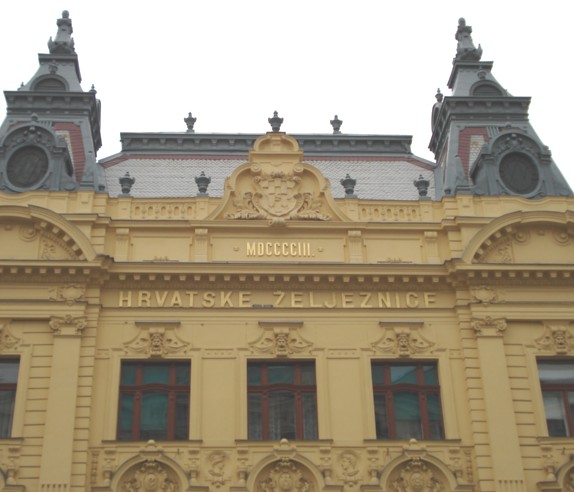
Croatian
coat of arms on the main building of
the Croatian
Railway, Zagreb, 1903,
Mihanoviceva 12
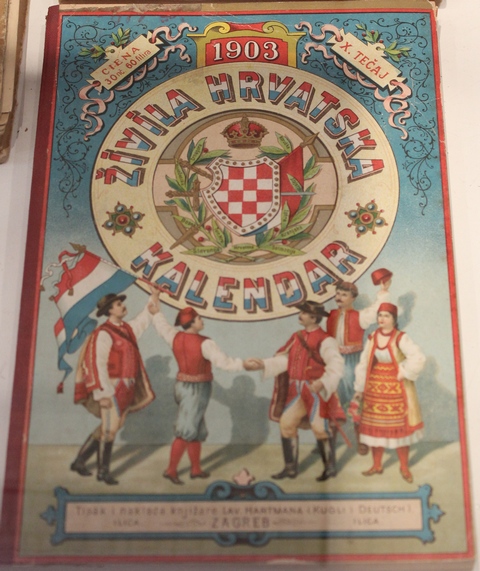
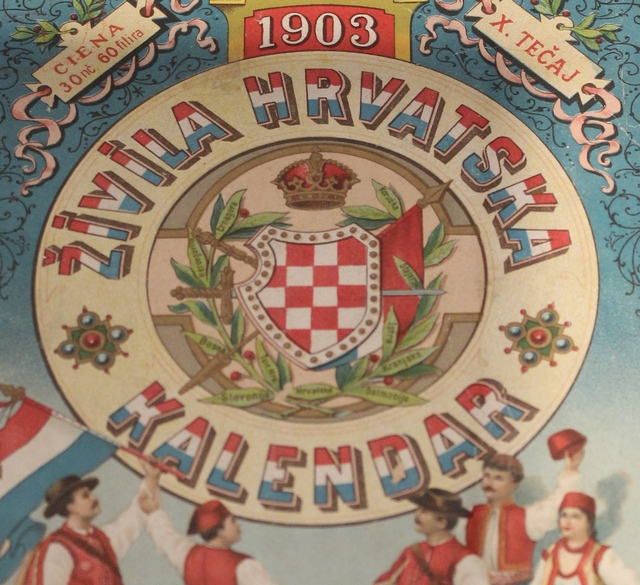
Long Live Croatia Calendar, 1903.
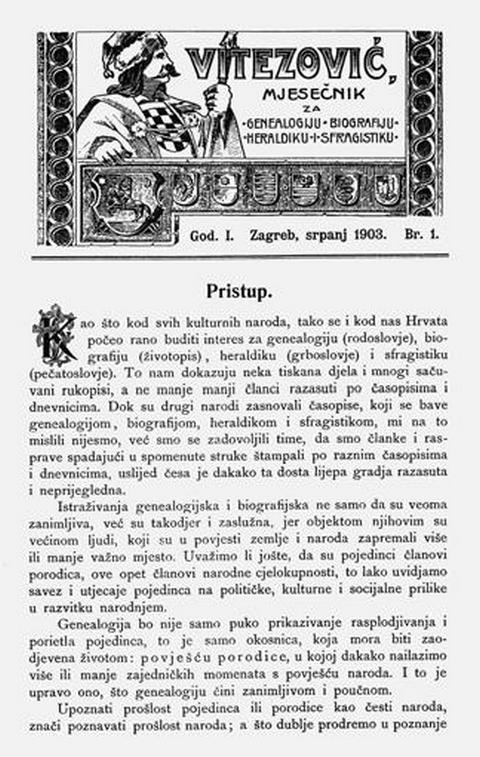
Vitezović, Croatian monthley dedicated to heraldic studies, Zagreb 1903, edited by Emilij Laszowski. Source [Galović]
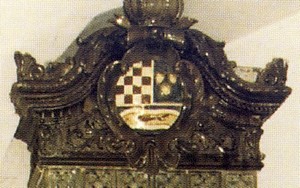
Decorated
clay furnace (detail), with the Coat
of Arms of United Kingdom of Croatia, Dalmatia and Slavonia,
beginning of 20th century, town of Krapina near Zagreb
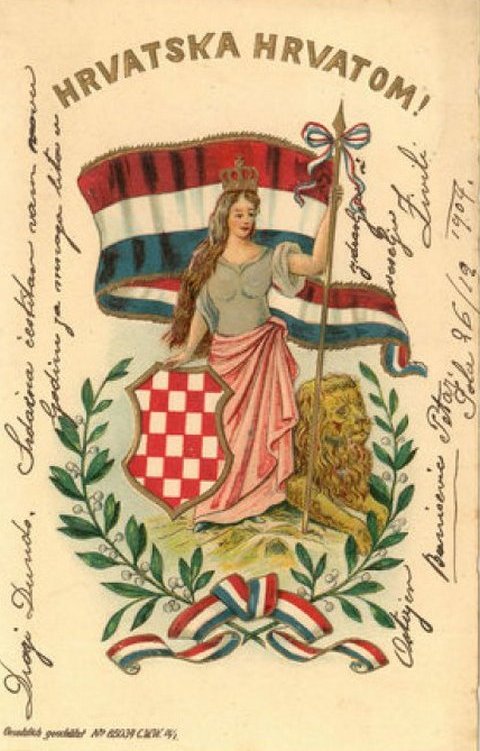
Greeting card from 1904: Hrvatska Hrvatom! (Croatia to the Croats)
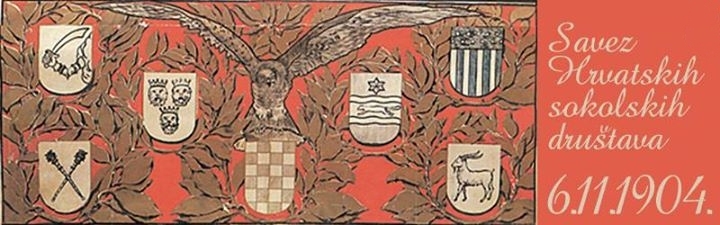
Founding of the Union of Croatian Falcon Societies, 1904, in the city of Rijeka.
Source www.formula1-dictionary.net/rijeka_povijest_1900-1925e.
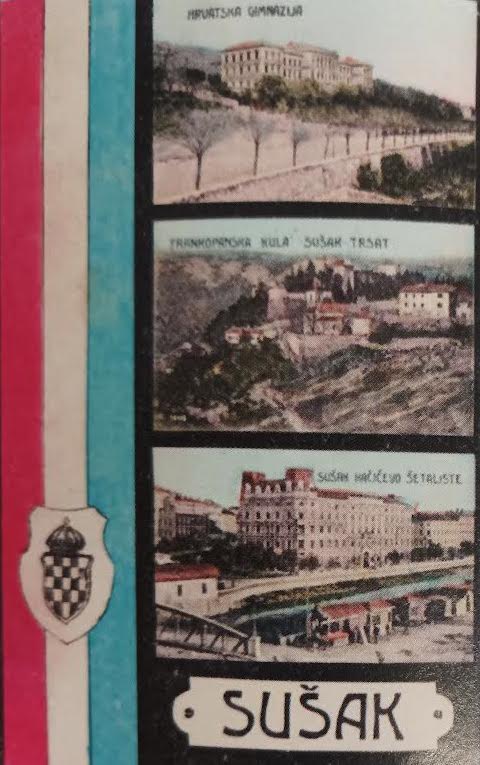
Sušak (western part of present day city of Rijeka) with Croatian Coat of Arms from, photo from the beginning of the 20th century,
with Croatian Gymnasium (Hrvatska Gimnazija),
Frakopan tower at Trsat, Sušak (Frankopanska kula Sušak, Trsat), and
Sušak, Kačićevo šetalište (Kačić's Esplanade), with the Freudenreich Palace (since 1925, Croatian Savings Bank - Hrvatska Štedionica) .
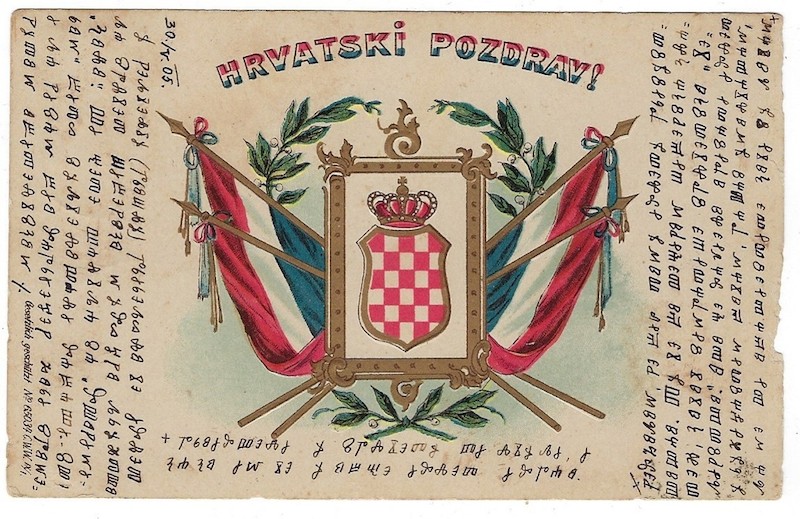
Croatian Greeting!
Greeting card from 1905, containing a message written in Croatian Glagolitic Script and
sent from the city of Šibenik
to Dobrila Buzolić in Split. Kept in the collection of Josip Meštrović
in Klis near the city of Split.
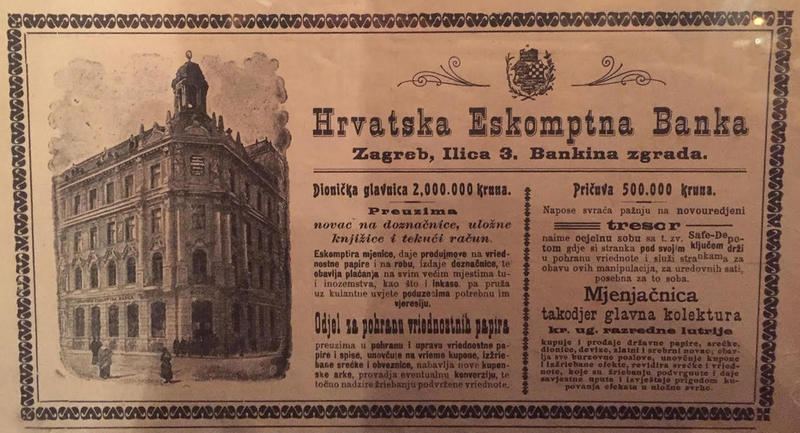
Hrvatska Eskomptna Banka, Zagreb
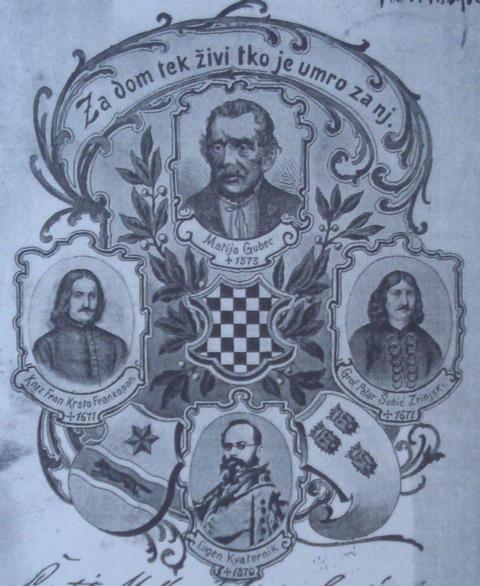
Za dom tek živi tko je umro za
nj. (For home lives only the one who has died for it.)
Postcard from Zagreb sent to Milan
Šufflay
in 1905, source [Darko
Sagrak]
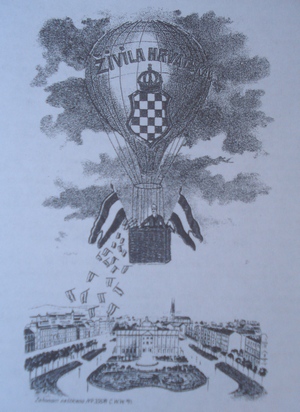
Živila Hrvatska! (Long live Croatia)
Postcard from Zagreb from the beginning of 20th ct. sent to Milan
Šufflay, source [Darko
Sagrak]

at the beginning of the 20th century, exhibited in a Zagreb pub (Kaj god, Dugave).
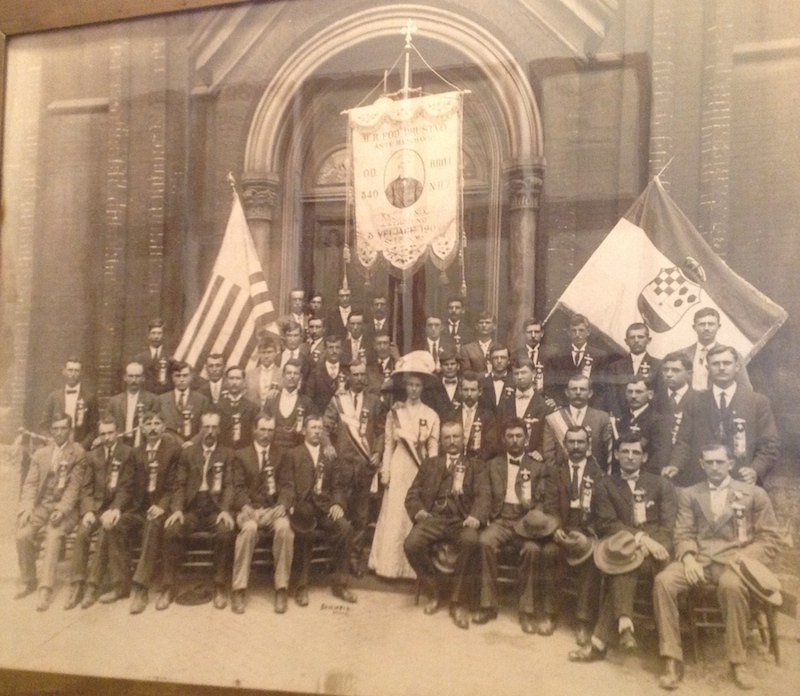
Croatian Benevolent Society (Hrvatsko podporno društvo) in St Louis,
USA, in 1905.
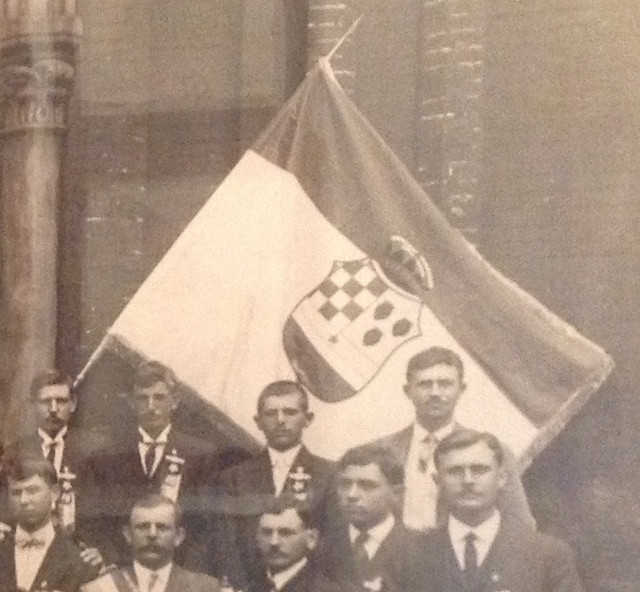
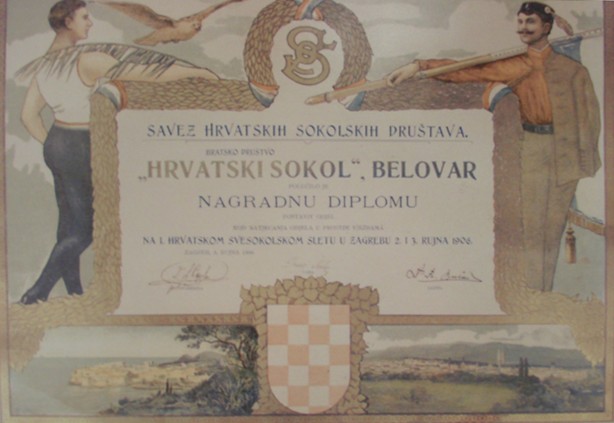
Diploma
issued by the Union of Croatian Falcon
Societies to the Crotian Falcon of Belovar, Zagreb 1906
Croatian
Reading Room, Odzak 1906
(now in BiH)
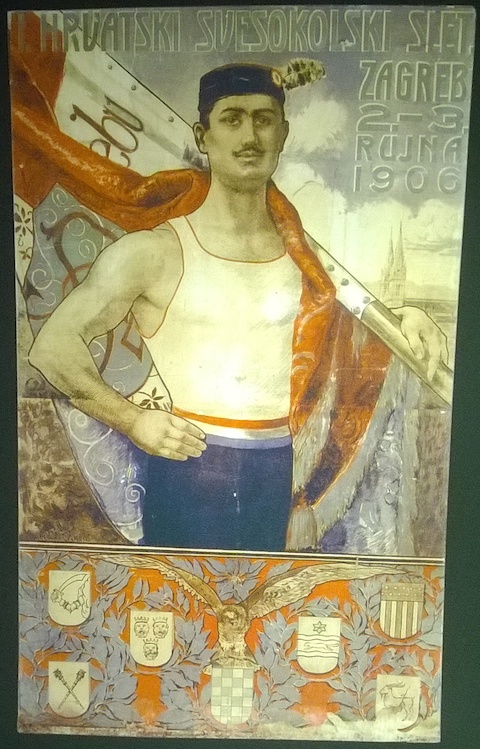
Croatian Falcon Meeting, Zagreb 1906; kept in the Croatian History Museum
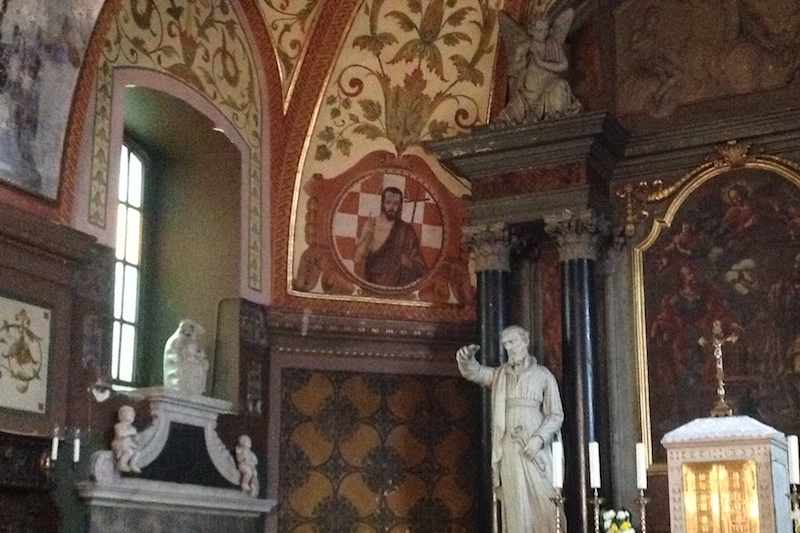
The round Croatian Coat of Arms in the church of St Philip and Jacob in
Novi Vinodolski, with St. John the Baptist on it.
It is dating from the beginning of the 20th century.
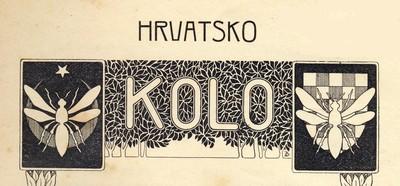
Details
from Hrvatsko kolo,
1906,
a journal published by Matica hrvatska (Matrix Croatica)
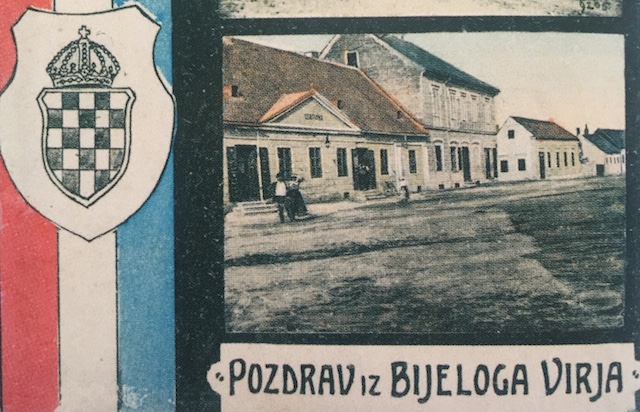
Greetings from Belo Virje (from the North of Croatia), a detail from the card.
Photo from Ivana Posedi: Koprivnička Podravina na starim razglednicama, Koprivnica 2017. (p. 58)
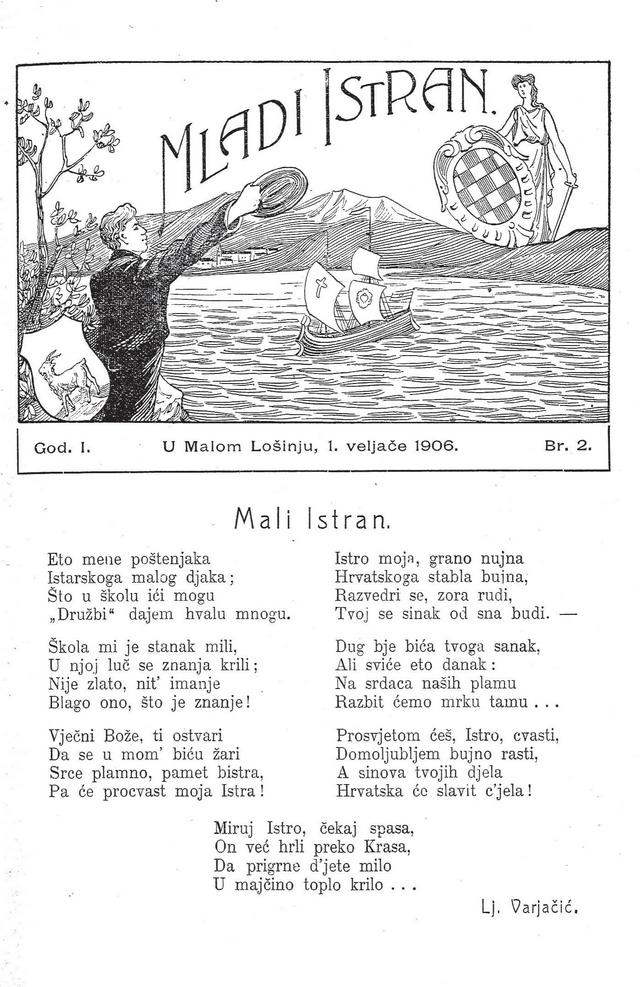
Nevio Šetić: O periodičkom tisku za hrvatsku mladež u Istri početkom XX. stoljeća [PDF], ČSP, br. 1, 249-293.
Mladi Istranin (Young Istrian), a journal published on the island of Lošinj.
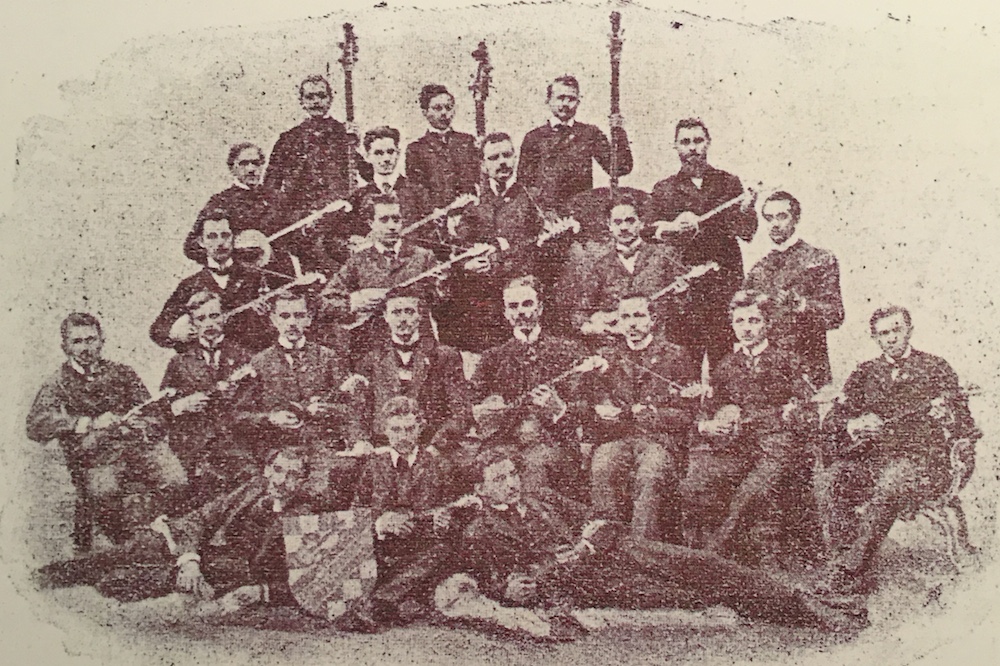
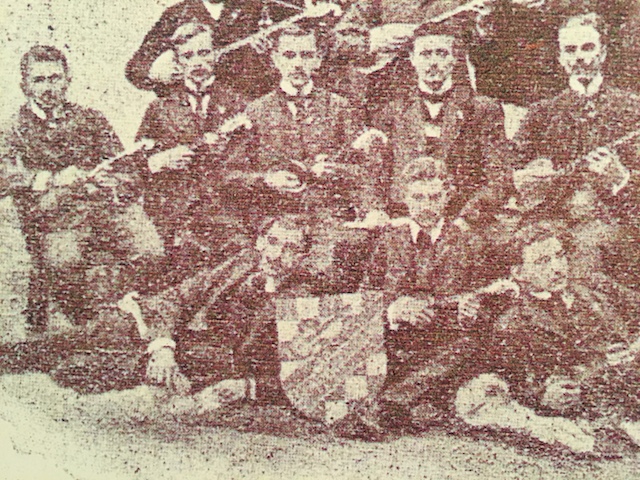
Source of the photo Tambura Museum in Brod na Savi
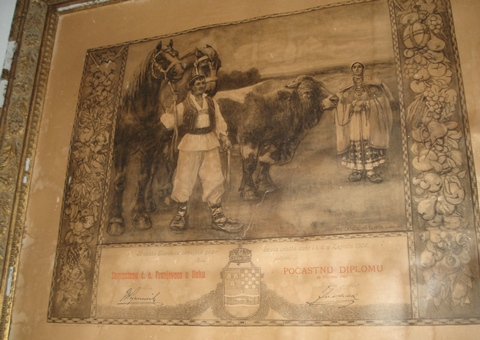
Honorable
Diploma from the Exhibition of Ilok
products and cattle in Zagreb in 1906
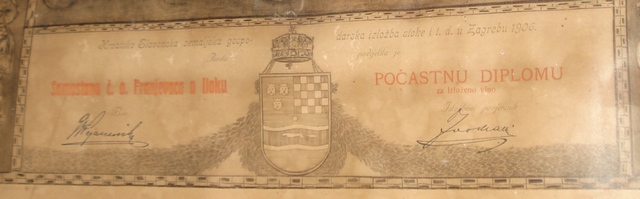
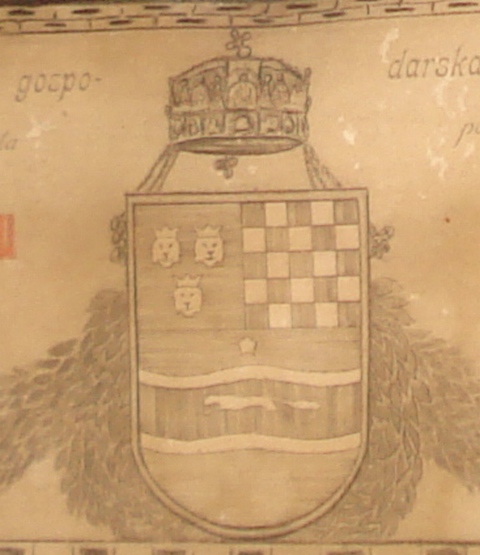
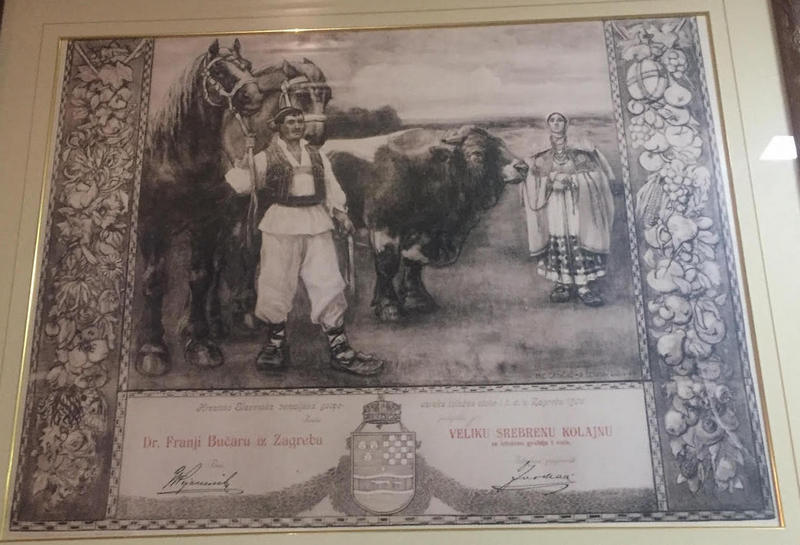
Hrvatsko-slavonska zemaljska izložba stoke u Zagrebu 1904. Velika srebrna kolajna za dr. Franju Bučara, Zagreb.
Croatian-Slavonian Land exhibition of cattle in Zagreb, 1904. Large silver medal for dr. Franjo Bučar in Zagreb.
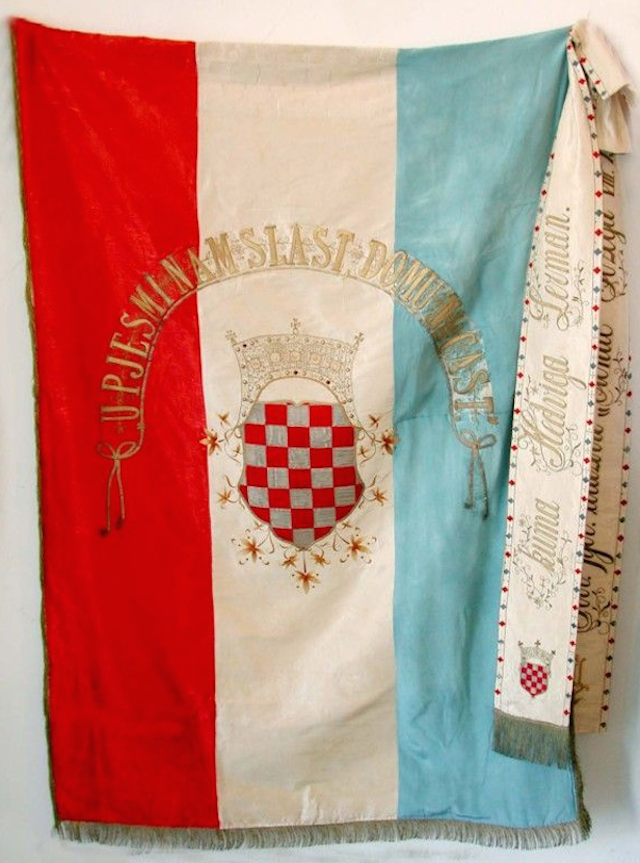
Flag of the Croatian singing society "Vienac" (Wreath) from Požega, 1907.
Above the central coat of arms: Sweetness in singing, to the glory of home (U pjesmi nam slast, domu na čast)
Vertical text: godmother (kuma) Hedviga Lerman.
Source: Gradski muzej Požega
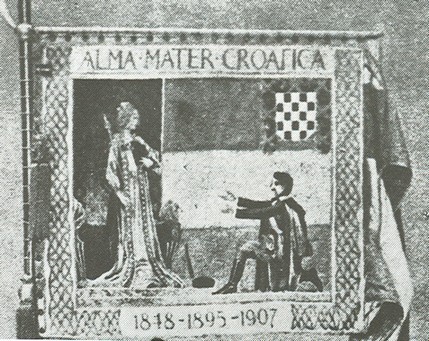
Flag
of the University
of
Zagreb from 1907
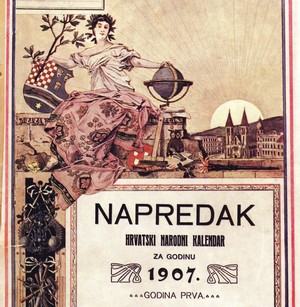
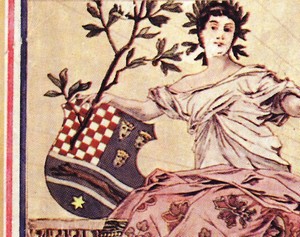
Napredak,
Hrvatski narodni kalendar za 1907.,
Sarajevo (detail from the cover page),
source [Maric,
Pregled...]
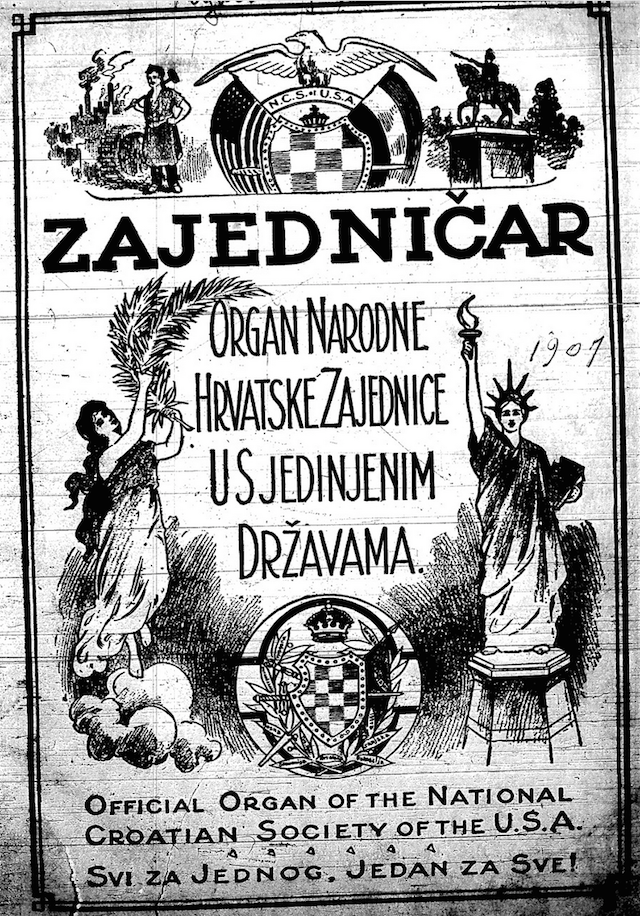
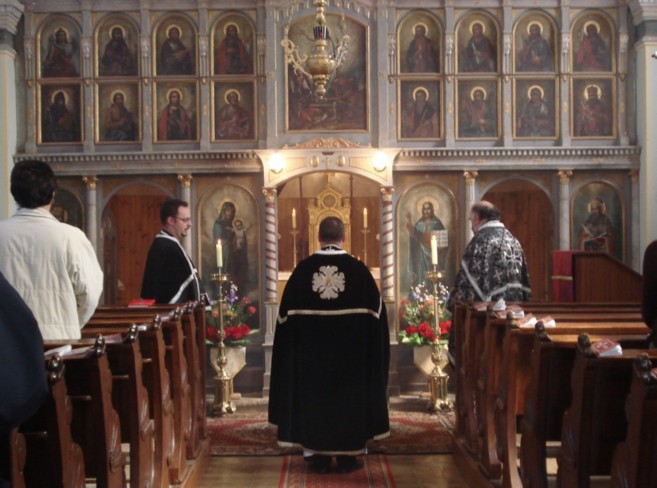


Croatian
coats of arms, 1907, in the Greek Catholic
church of Sv. Antun Pustinjak (St.
Anthony the Eremite)
in the village of Kast, Zumberak,
Croatia;
many thanks to Mons. Mile Vranesic, Zeljko Pajic (Sosice Dean), Rev.
Milan Stipic,
and to Mr. Vlatko Bilic for useful information.
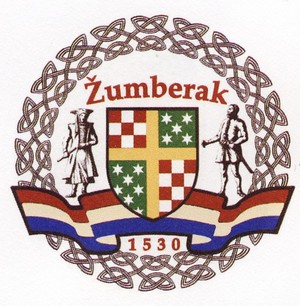

Very
nice Coat of Arms of Zumberak
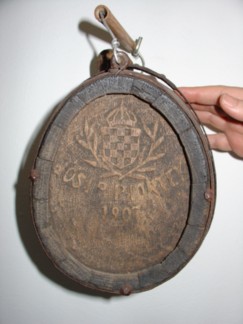
A
small barrel for wine with Croatian coat of
arms, 1907, Zumberak,
Museum of the Basilian Nunnery in Sosice
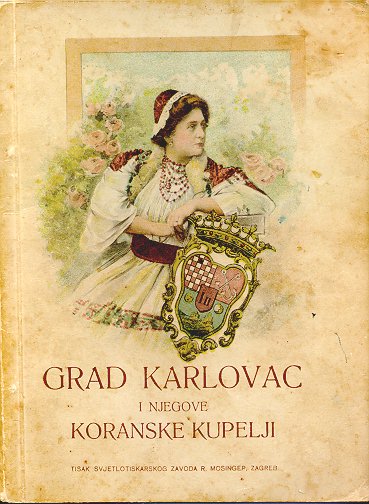
The
town of Karlovac and its Korana river spa,
(coat of arms of the town of Karlovac on the front page)
printed in Zagreb, 1908.
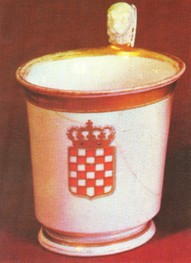
Cup
with Croatian coat of arms, 19th century
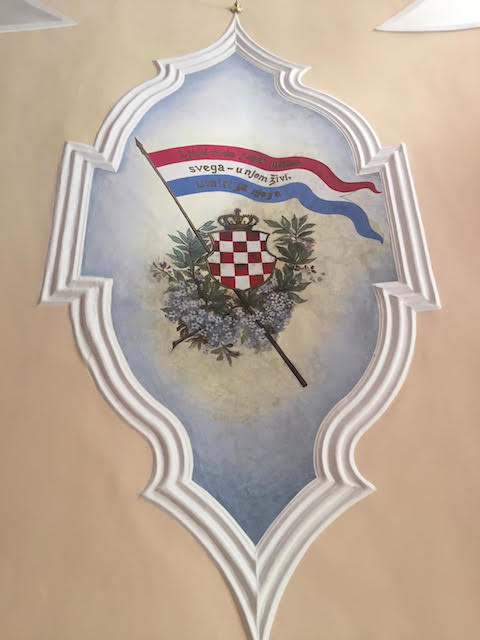
Decoration on the ceiling of the Franciscan Monastery in Cernik (near Nova Gradiška).
Dating from 1908 or earlier. Information by the courtesy of dr. fra Tomislav Vuk.

Decoration in the church of St. Peter the Apostle in Cernik (near Nova Gradiška).
Dating from 1908 or earlier. Information by the courtesy of dr. fra Tomislav Vuk.
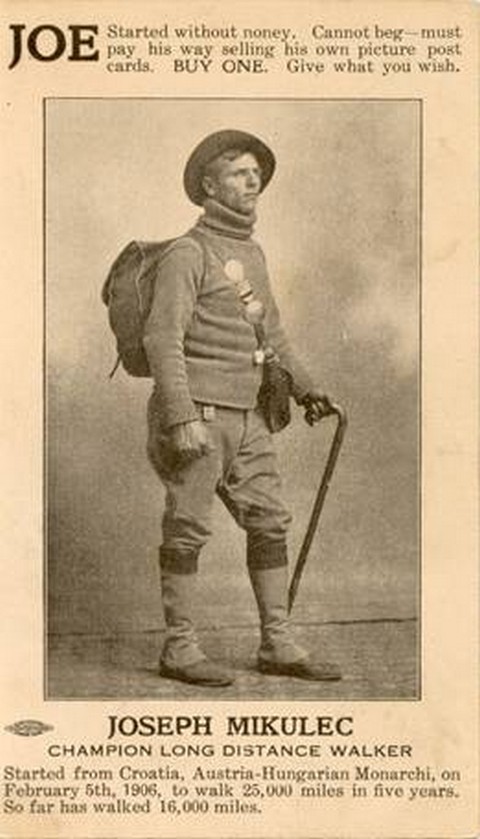
Picture
of Josip (Joseph) Mikulec
in possession of Dr.
Ante Cuvalo, Chicago
A detail on his breast: Croatian
Coat of Arms
Croatian
adventurer Josip (Joseph) Mikulec
set out to circumnavigate the globe on foot in the span of five
years.
With the start of this journey he became a perpetual wanderer.
Mostly
hiking, he traveled the world some 28 years and achieved a degree of
fame
for having collected more than 30,000 autographs of world-famous
people.
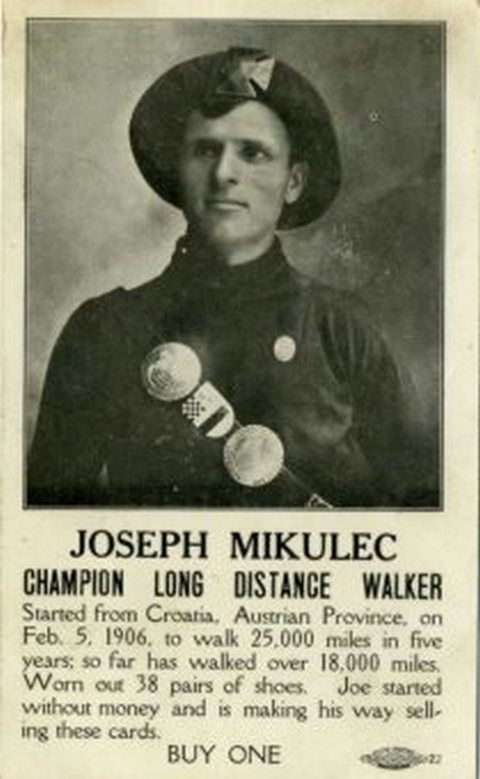
Joseph Mikulec
(Josip Mikulec) with Croatian Coat of Arms.
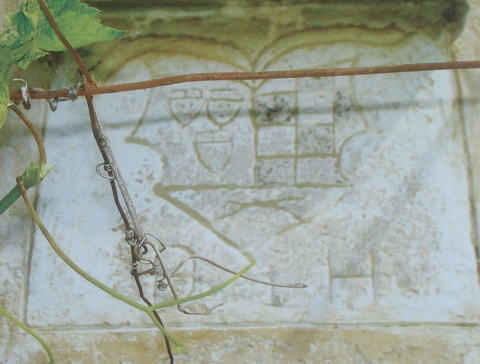
Croatian Coat of Arms carved in stone 1909, in the village of Višnjica of the Ledinac parish, south of Bosnia and Herzegovina.
Carved by Ivan Zadro according to the sketch of his brother Nikola Zadro, professor of history in Banja Luka and in Zagreb.
Source of the photo Milka Tica: Stećci od Zgošće do Ledinca, naklada Jurčić, Zagreb 2011. Many thanks to prof. Milka Tica for permission.
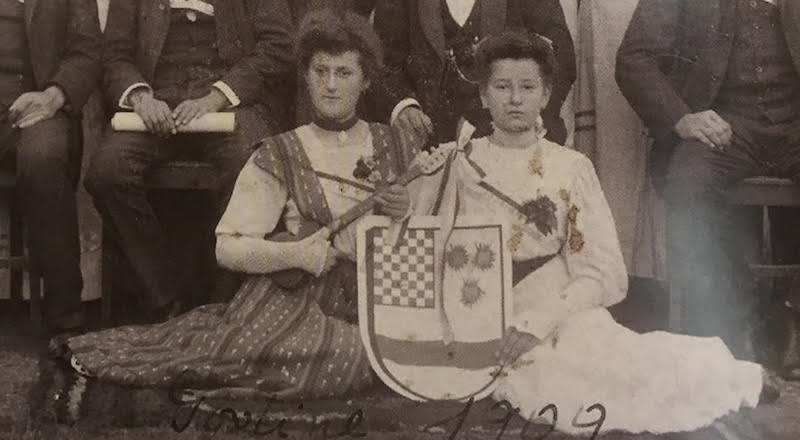
Hrvatsko pjevačko i tamburaško društvo "Zvonimir", Babina Greda, 1909. (Croatian singing and tamburiza society "Zvonimir"in Babina Greda, 1909).
Detail from a larger photo published in Mihael Ferić: Hrvatski tamburaški brevijar / The Croatian Tambura Breviary, Šokadija, Zagreb, 2011.,
fascinating book with 1300 photos on 500 pp.
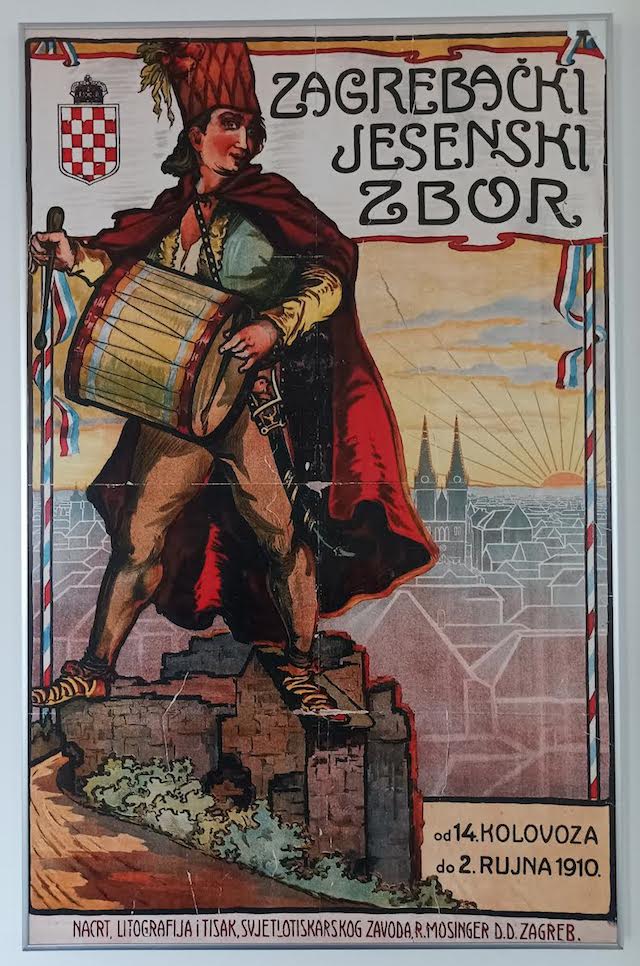
Zagreb Autumn Meeting (Zagreb Fair), 1910.
Photo exhibited near the main entrance of the Zagreb Fair.
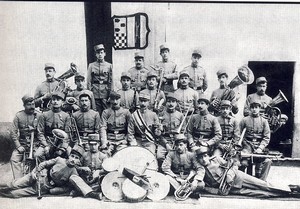
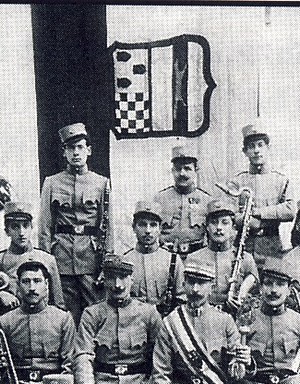
Croatian
Bokelj Music in 1910 in Kotor, Boka kotorska
(source: Milos Milosevic, Tripo
Schubert: Tri hrvatska glazbenika i skladatelja, Hrvatska revija, 2,
Zagreb 2007, pp. 49-58)
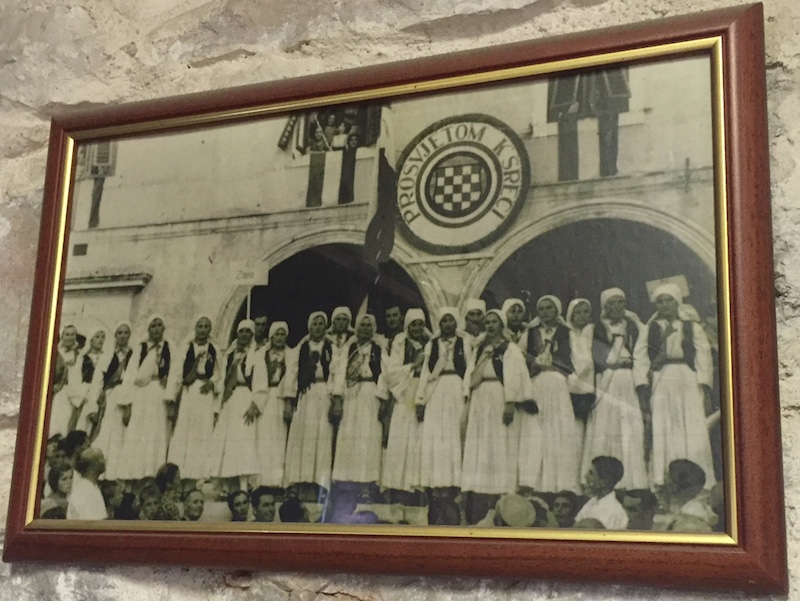
A group of women from the island of Zlarin in the city of Šibenik in
2010.
Photo from the Zlarin Museum. Zlarin is famous for coral hunting and
production of fantastic coral jewelry.
The city of Šibenik has been founded in the year 1066. (i.e., in 11th
ct.), and was at that time a seat of Croatian King Krešimir.
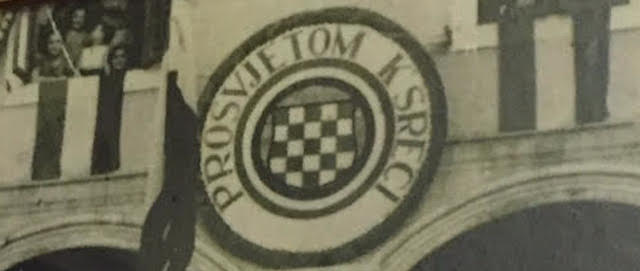
Prosvjetom k sreći - With education to happiness
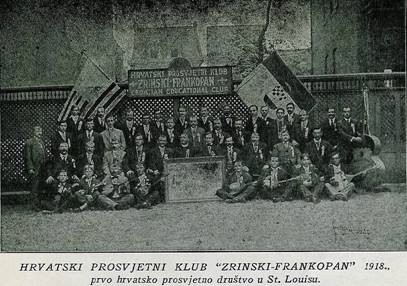
Croatian Educational Society "Zrinski
- Frankopan",
Hrvatski prosvjetni klub "Zrinski - Frankopan"
St. Louis, Missouri, USA, founded in 1910, photo from 1918.
Note the young tamburitzans
and the Croatian
flag on the right.
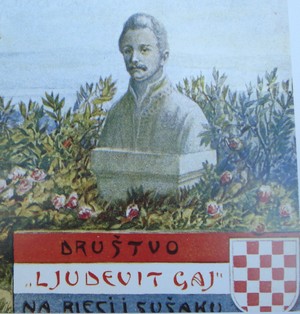
Society
"Ljudevit Gaj" in Rijeka and Susak
(detail), 1910
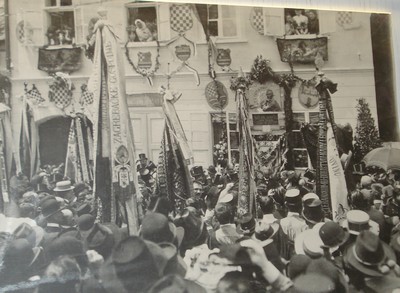
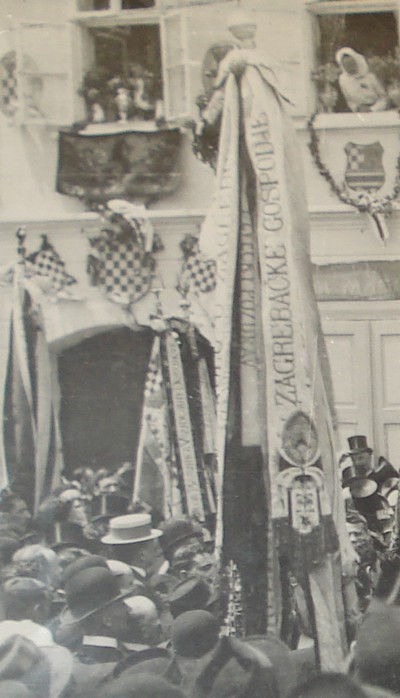
Zagreb,
1910. Notice the flag Zagrebacke
gospodje - Zagreb Ladies.
Kept in the Zagreb
City Museum
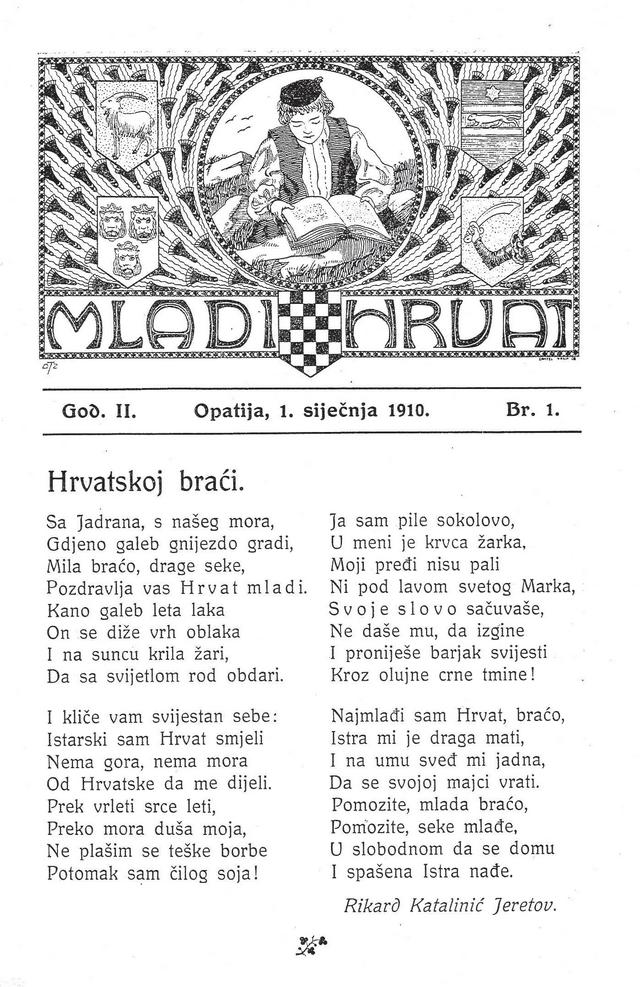
Nevio Šetić: O periodičkom tisku za hrvatsku mladež u Istri
početkom XX. stoljeća [PDF],
ČSP, br. 1, 249-293.
The
First Zagreb Fair, 1910, one of the
earliest ones in Europe.
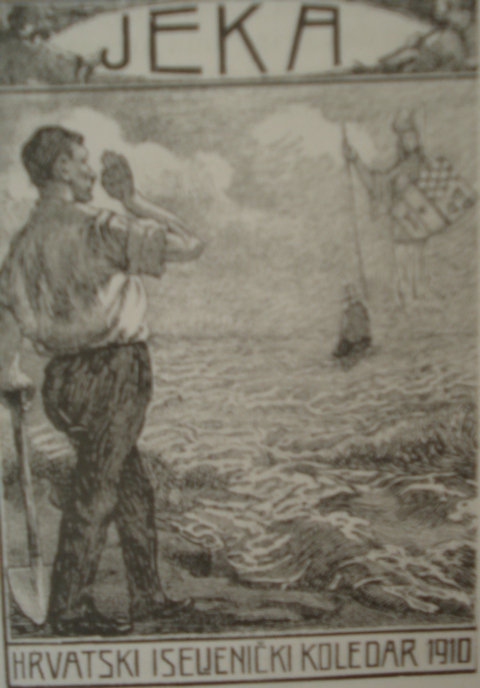
Jeka (Echo), Croatian emigrant calendar 1910. Source [Carmen Verlichak Vrljičak,
Hrvati u
Argentini, p 56]
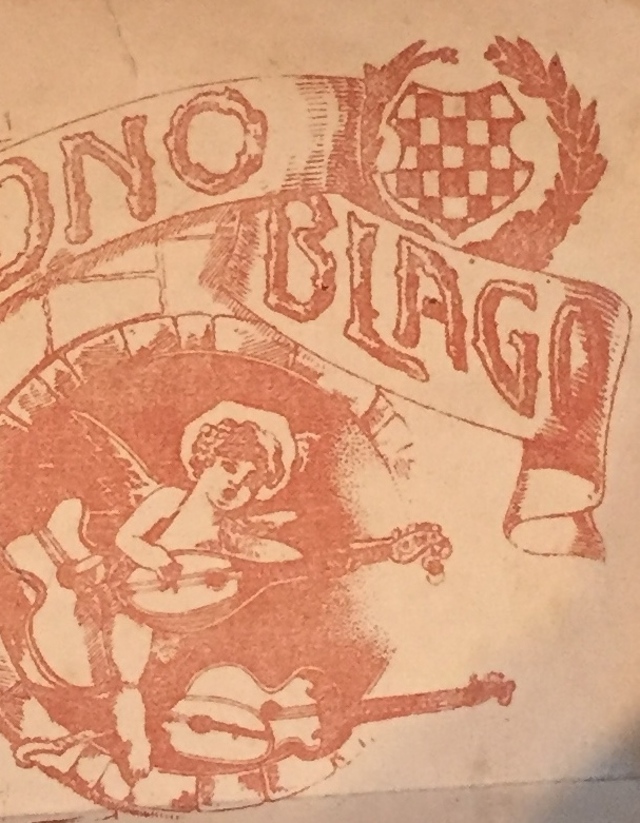
Narodno blago (People's Treasure), Sisak 1910., with Croatian Coat of Arms
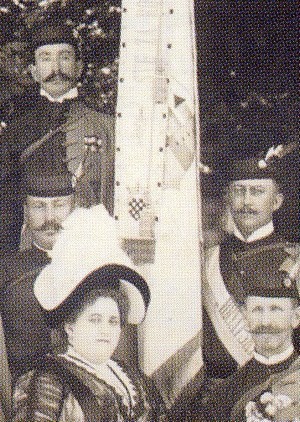
Sports
society Croatian Falcon (Hrvatski
sokol), Krapina, 1911,
on the occasion of blessing of the flag of the society (detail)
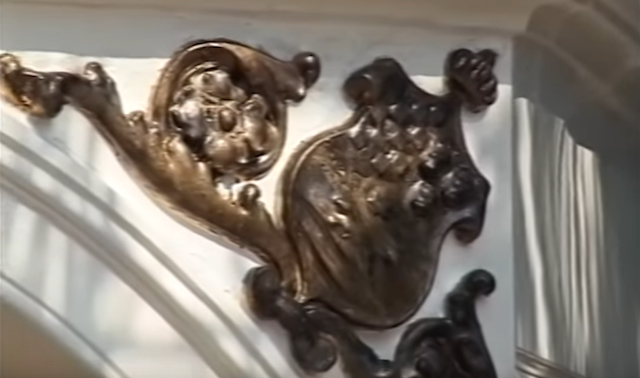
In Antofagasta, a city on the north of Chile, there is an important
community of Croatian immigrants.
Their presence can be seen among others in one of the three pavillions
(Music Pavillion) errected in the central park of the city.
The music pavillion bears the inscription:
LA COLONIA SLAVA
DE ANTOFAGASTA
AL PUEBLO CHILEANO
EN COMMEMORACION CENTENARIO
1810 - 1910
However, it is clear from the above photo (a
detail of the octagonal music
pavillion), that La "COLONIA SLAVA" was in fact "LA COLONIA CROATA".
This can be seen from the Coat of Arms of the then Triune Kingdom of
Croatia, Dalmatia and Slavonia from 1910, which is a part of the
pavillion.
For more details, see the following video:
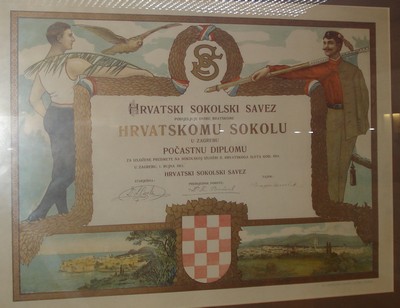
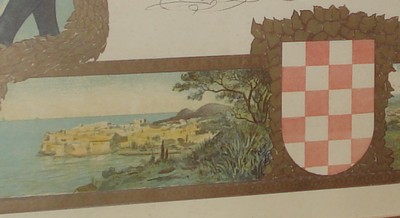
Honorary
diploma of the Croatian Falcon Society
from 1911. On the left below the City of Dubrovnik.
Kept in the Zagreb
City Museum.
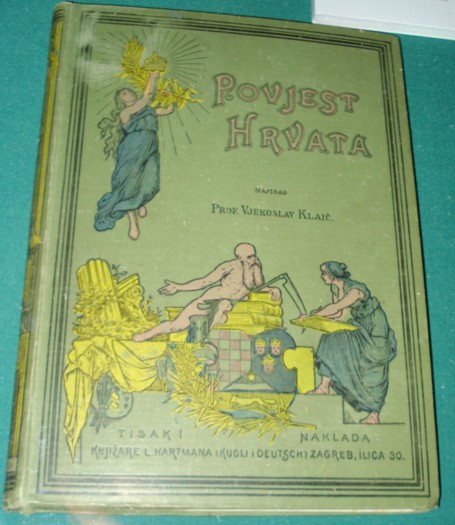
A
detail from the title page of Vjekoslav
Klaic's "Povjest Hrvata" (History of the Croats), Zagreb, 1911
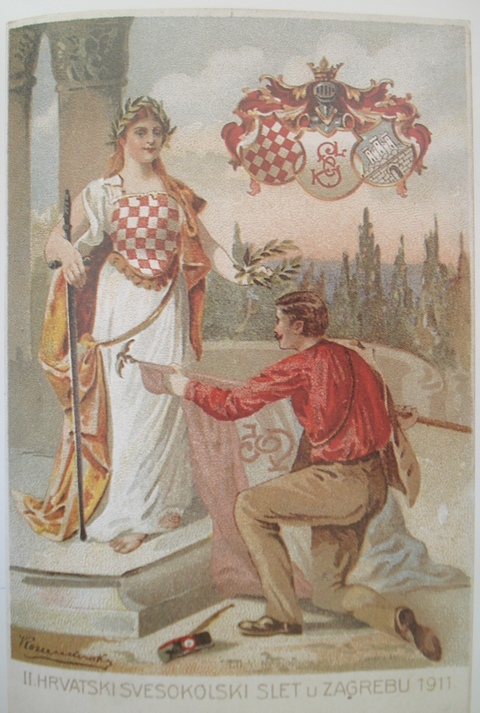
2nd All Falcon Meeting in Zagreb 1911
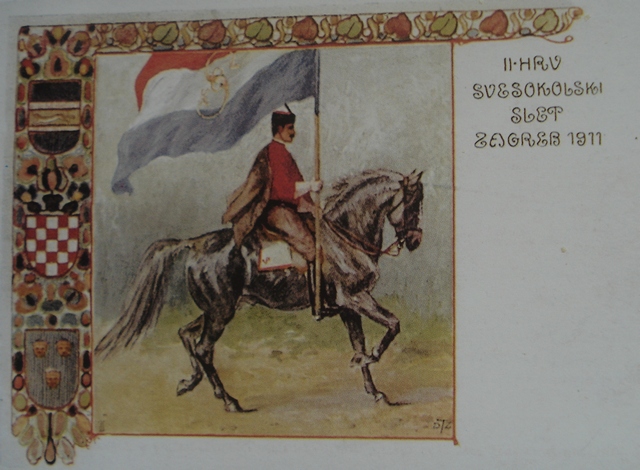
2nd All Falcon Meeting in Zagreb 1911
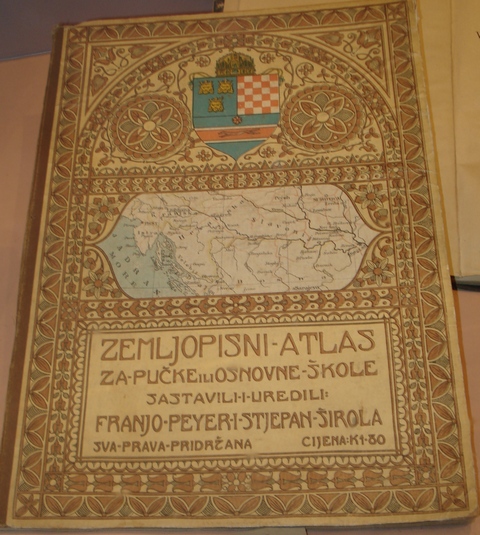
Zemljopisni
atlas (Geographical atlas), Zagreb
1912

The
Karlovac Water Supply, 1914
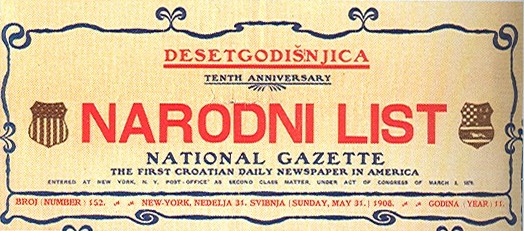
National
Gazette, New York, 1908
(the first Croatian daily newspaper in America; Croatian coat of arms
on the right)
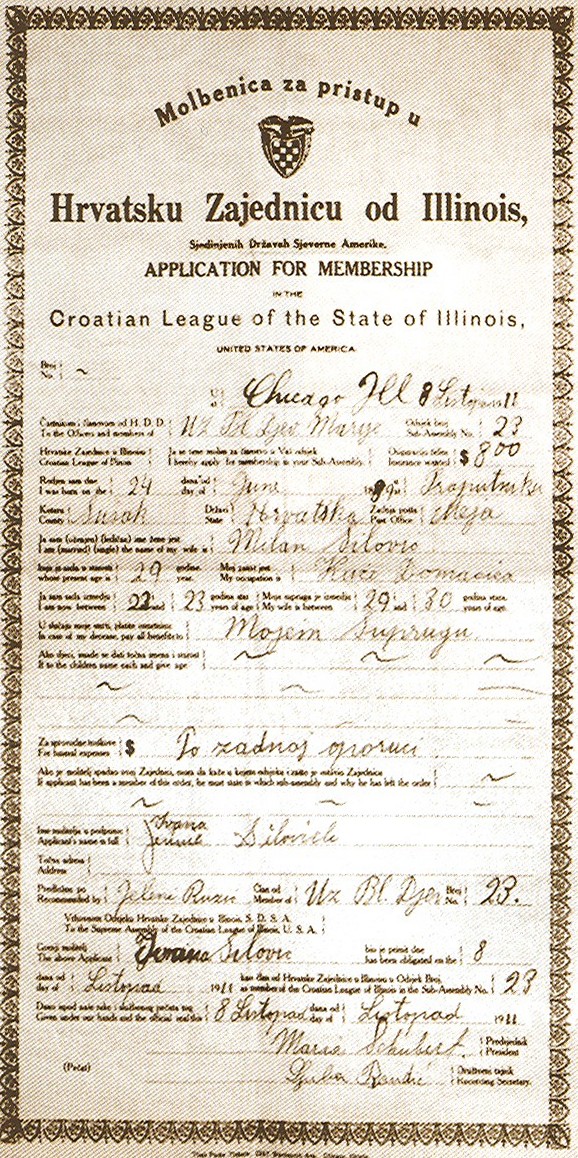
Application
for membership in Croatian
Community of Illinois, USA, 1911
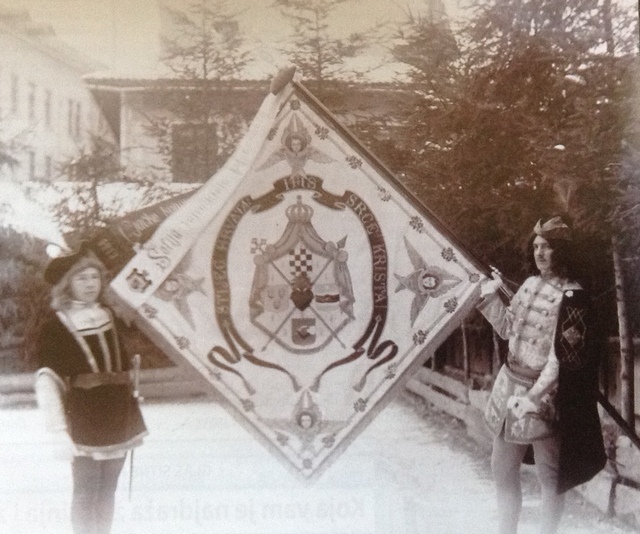
STIJEG HRVATA - IHES - SRCE KRISTA
(Flag of Croatians - IHES - Heart of the Christ)
Flag of Maria's congreagation of Young people in Sarajevo, BiH.
The flag was made in 1913 in Luxemburg, on the occasion of the
gathering of about 1500 young people
in front of the Sarajevo Cathedral, in the presence of Pope's legate
and archbishops Josip Stadler and Ivan Šarić.
Source of this information: Katolički tjednik, 22 March 2015, Sarajevo.
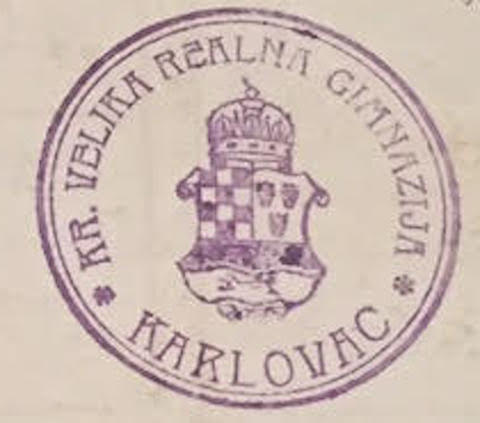
Seal from the Royal Real gymansium from the city of Karlovac, Croatia,
the former Higher Real School, which from 1870 to 1873 has
been attended by young Nikola Tesla.
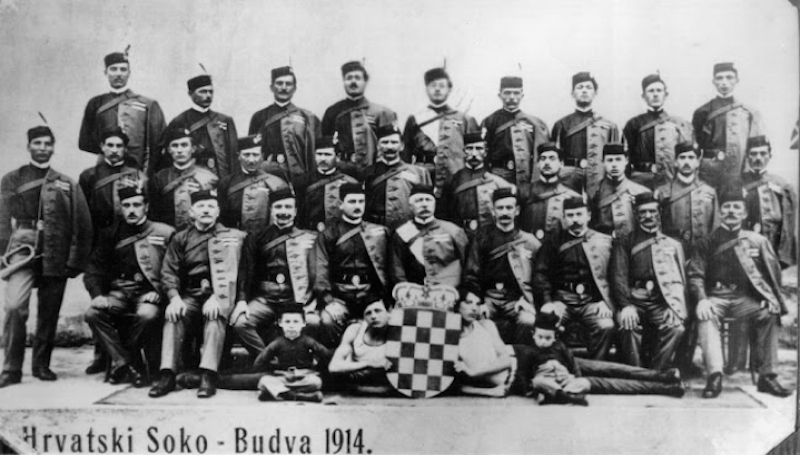
Croatian Falcon - Budva 1914. Source www.hrvatiizvanrh.hr
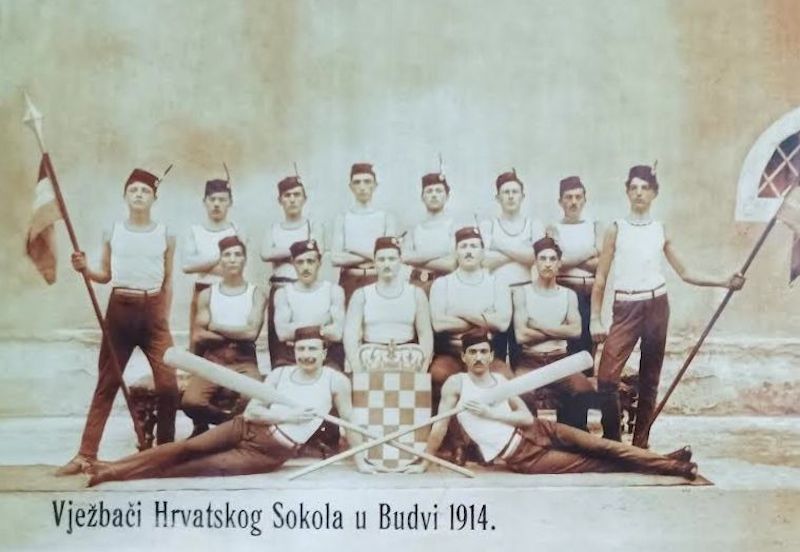
"Croatian Falcon" sports club in Budva (Boka kotorska), 1914
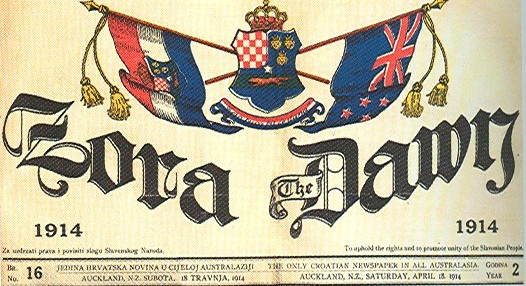
Zora
- The Dawn, Croatian newspaper in
Australia, Auckland, 1914
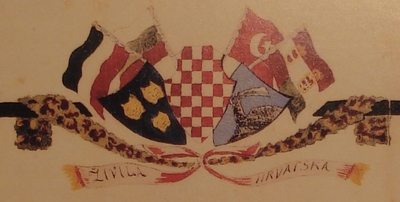
A
painting of the Liverpool camp in Australia
by a Croatian intenee during his internement there in 1916, ie in the
course the First World War. Coats of arms represent Dalmatia, Croatia
and Bosnia, with the text below "Zivila Hrvatska" (Long live Croatia).
Potos from [Sutalo,
pp 70-71]
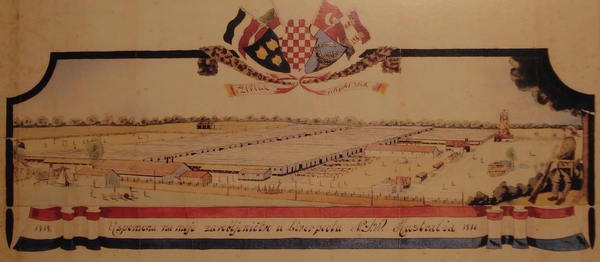
Australia,
1916
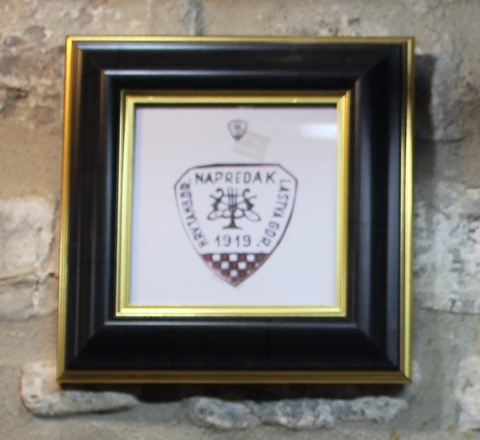
Hrvatsko kulturno društvo Napredak (Croatian Cultural Society
Progress) from the village of Gornja Lastva
in Boka kotorska, 1919
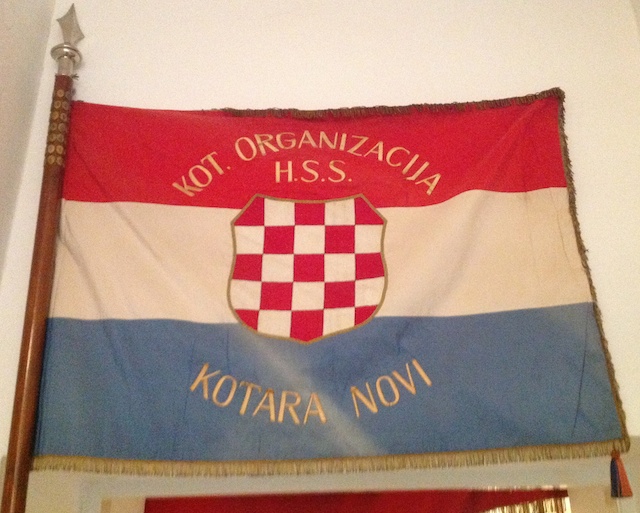
Coat of Arms of HSS (Croatian Peasant Party) in Novi Vinodolski,
arround 1920.
Kept in the City Museum of Novi Vinodolski.
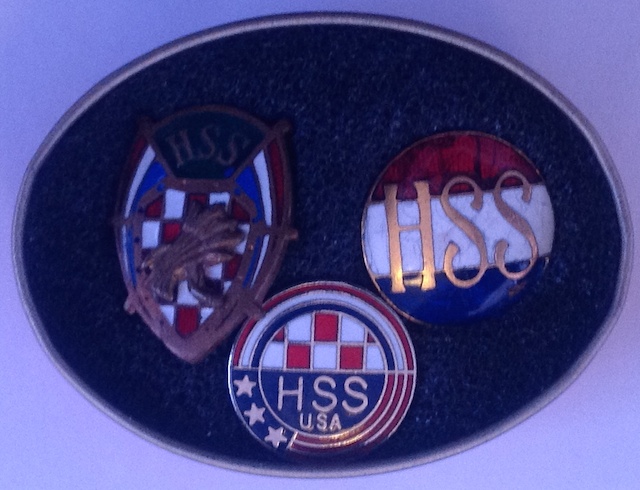
Badges of HSS (Hrvatska seljačka stranka - Croatian Peasant Party)
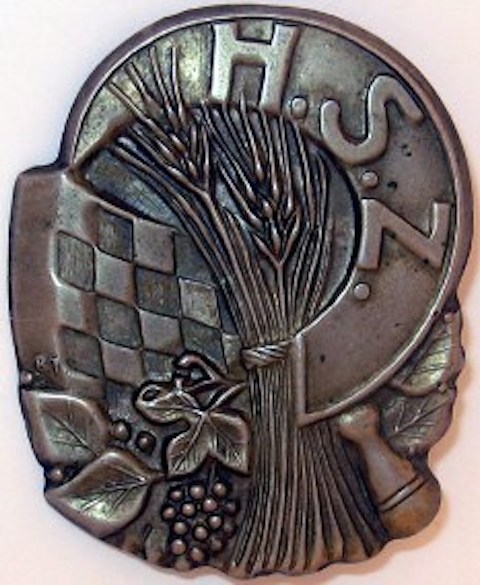
Badge of H.S.Z (Hrvatska seljačka zaštita - Croatian Peasant
Defense)
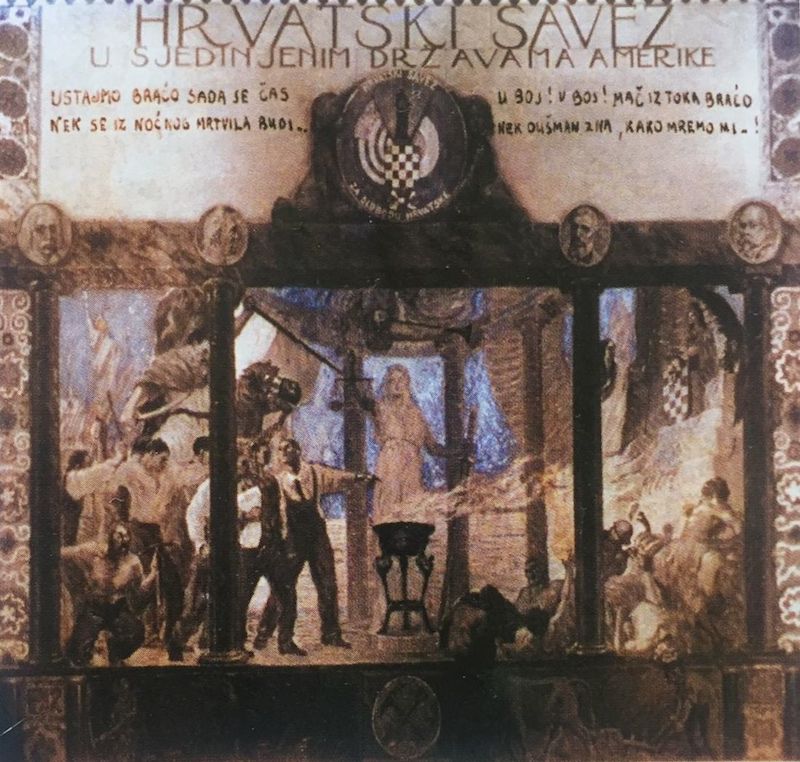
Nice drawing of Ivan Benković for Croatian Union in the USA. Source [Čizmić, Sopta, Šakić, p. 316].
Ivan Benković made a portrait of Nikola Tesla in 1913. This is probably the best portrait of this great Croatian inventor.
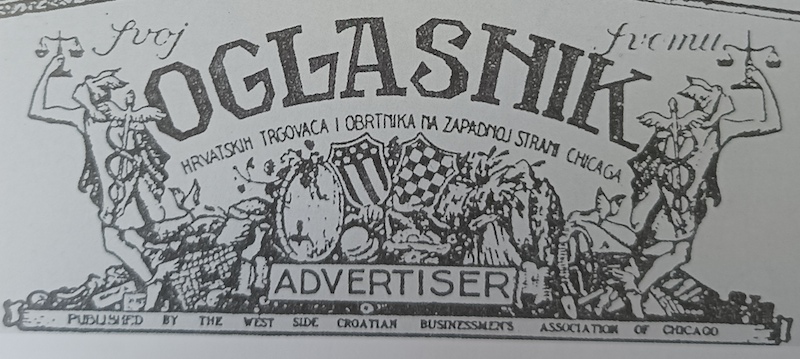
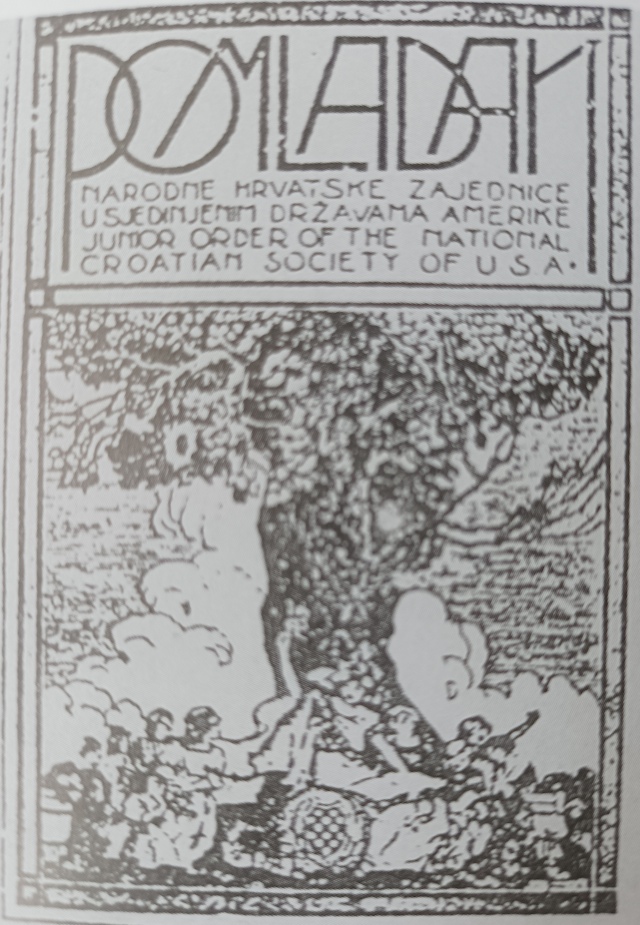
POMLADAK
Narodne hrvatske zajednice u Sjedinjenim državama Amerike.
Junior order of the National Croatian Society of USA.
Probably from 1917.
Photo from [Vladimir Novak, p. 73]
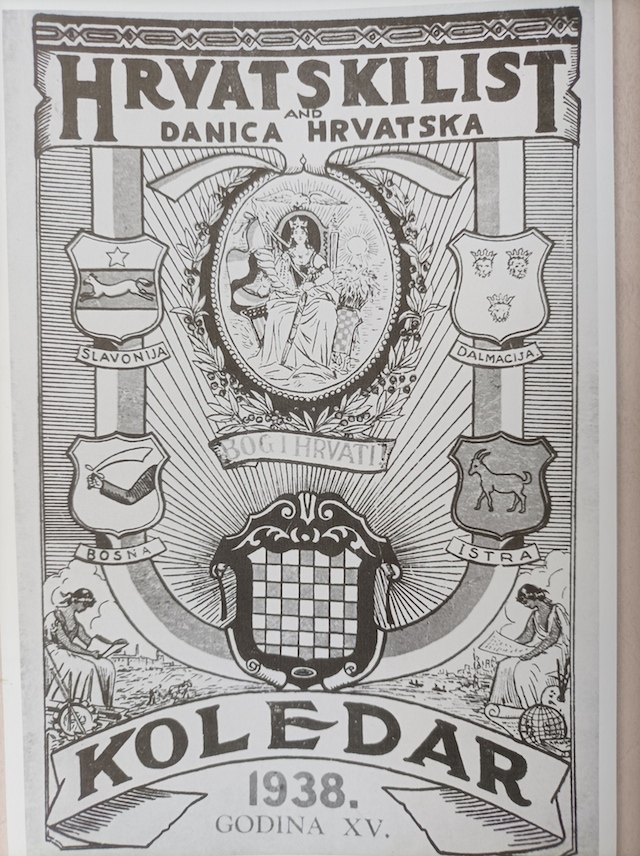
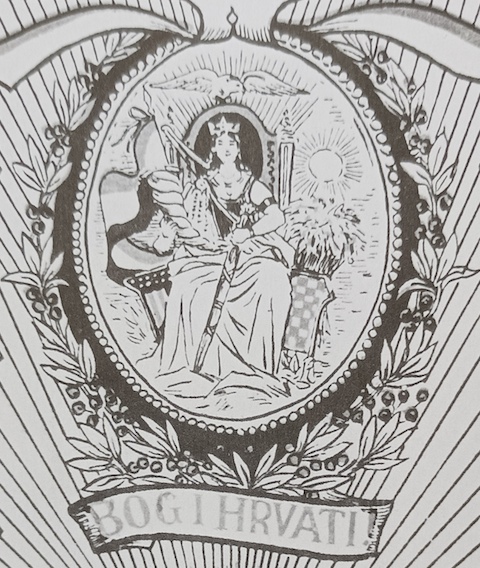
Hrvatski list i Danica hrvatska - Croatian Journal and Morning Star Croatia
Koledar - Year-book 1938.
Kolendar
(Calender), New York, issued by
Croatian printing and publishing company,1921

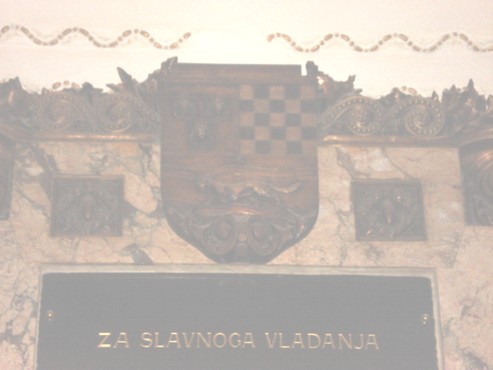
University
Library, Zagreb, built in 1913,
now Croatian State Archives
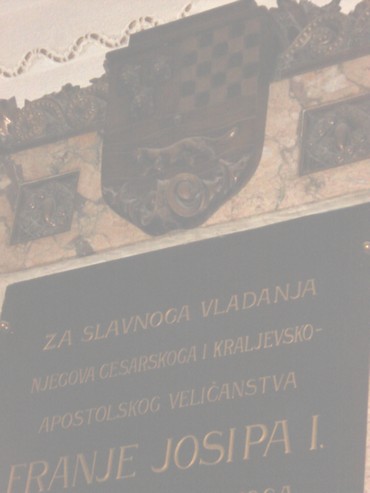
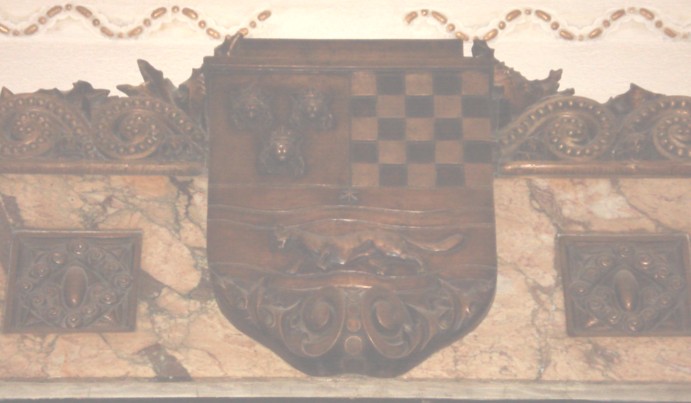
University
Library, Zagreb, built in 1913,
now Croatian State
Archives (HDA); a detail from
the main hall (with kind permission
of HDA)
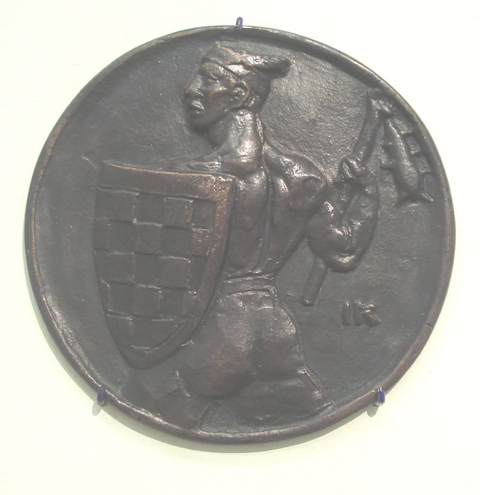
Ivo Kerdić: Medal of the Society
of Hrvatski Sokol (Croatian
Falcon) 1914.
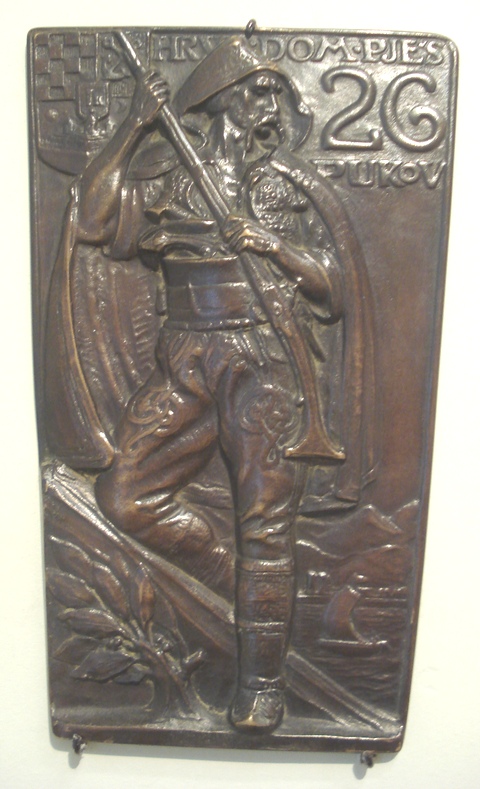
Ivo Kerdić: Medal of Croatian Home-Guard, 1915 (Hrvatska domobranska
pješadija, 26. pukovnija)
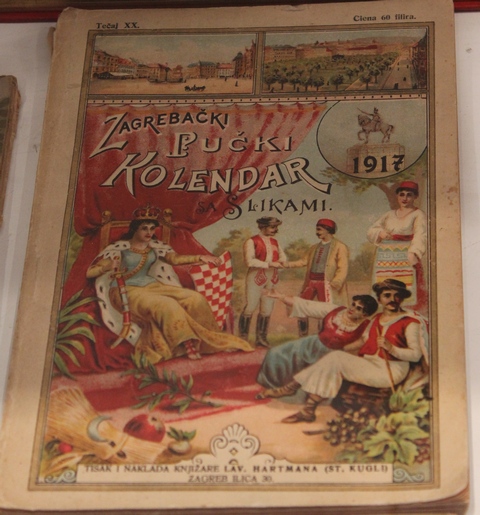
Zagreb People's Calendar, 1917.
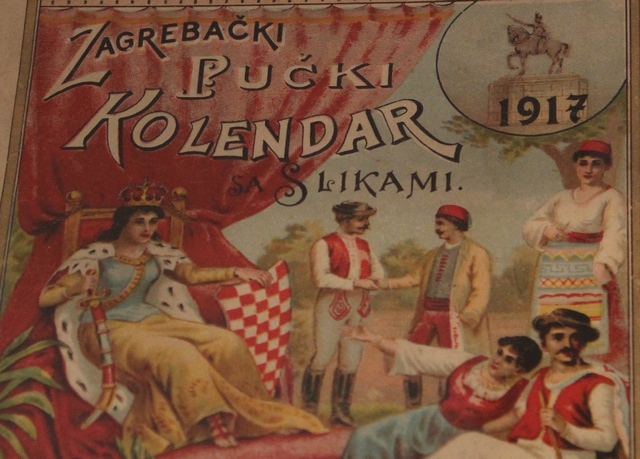
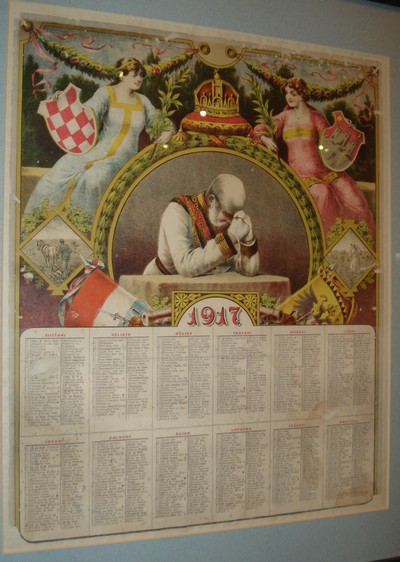
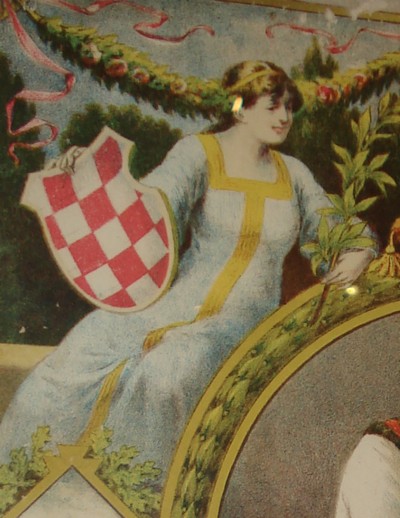
Calendar
from 1917, kept in the City
Museum of Zagreb.
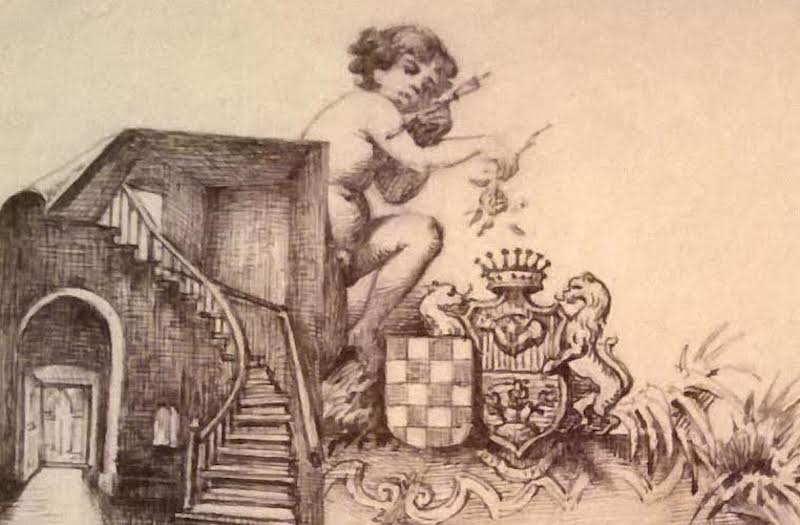
Croatian Coat of Arms on aainting by Gjuro Friedrich, Oroslavje near
Zagreb, 1919 (detail of a larger painting [JPG]).
Photo by the courtesy of Mirna
Lipovac, Zagreb.
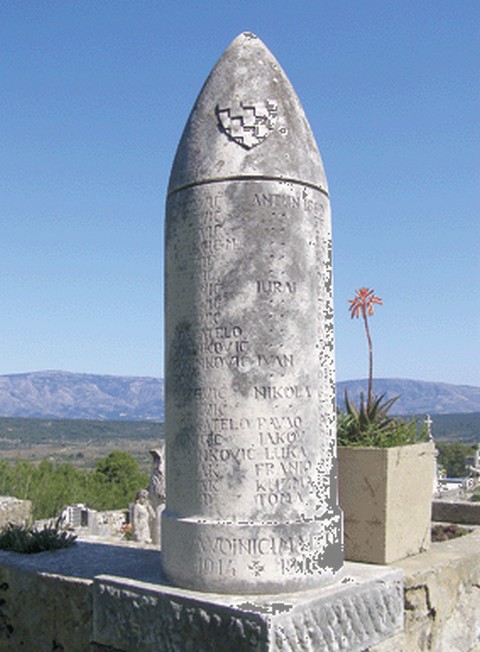
Dol na Hvaru (Dol on the island of Hvar), Croatia, a monument to the
victims of the First World War.
Photo by A. Orsini, source Mladen Klemenčić
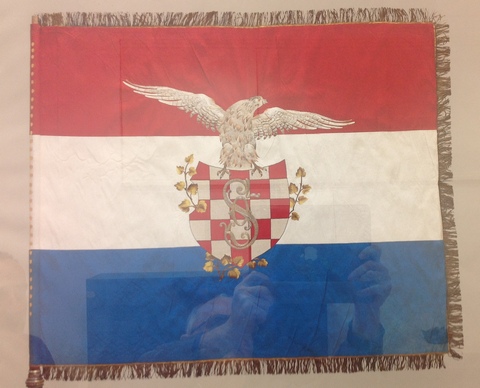
Flag of the Croatian Falcon (Hrvatski sokol) from the town of Sisak,
1920,
kept in the Croatian Military Acadmy in Zagreb.
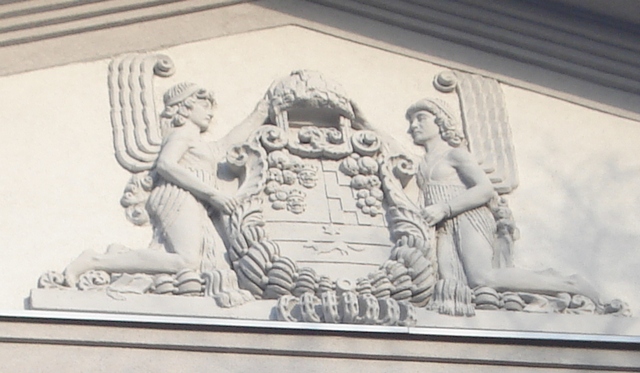
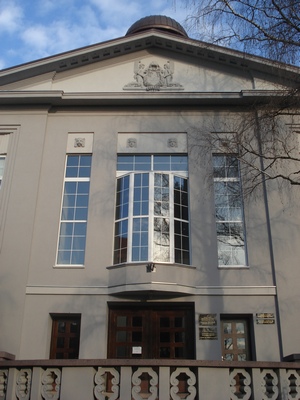
University
of Zagreb Medical School, Department
of anatomy
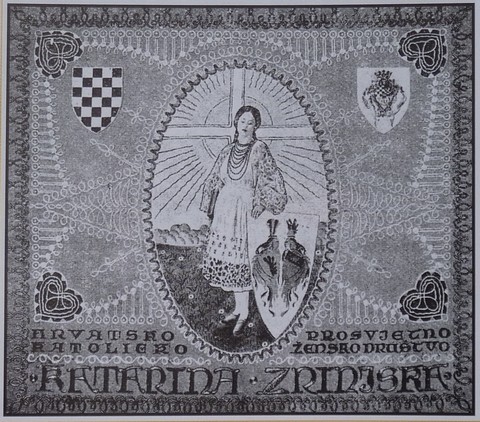
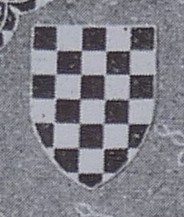
Flag
of the Croatian Educational Catholic
Female Society
(Hrvatsko prosvjetno katoličko žensko društvo) in Karlovac,
1919,
See Lucija Benyovsky: Društvo Katarina grofica Zrinski,
Hrvatska
revija, no. 3, 2007, 86-100
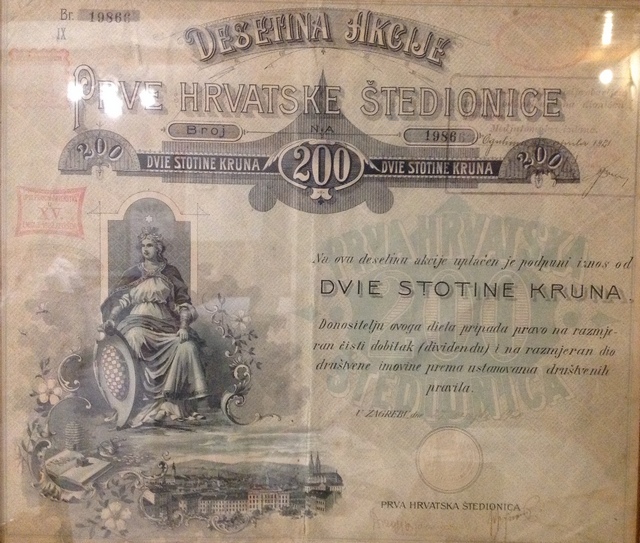
Prva hrvatska štedionica (The First Croatian Savings Bank),
Zagreb 1921.
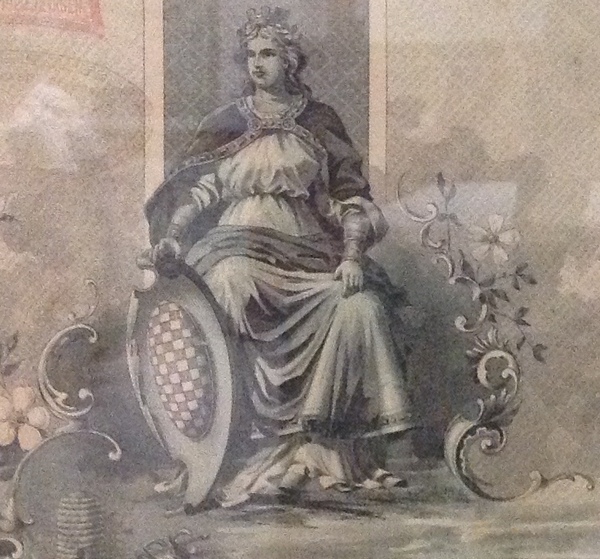
Napredak,
Hrvatski narodni kalendar za 1922.,
Sarajevo (a detail from the cover page),
source [Maric,
Pregled...]
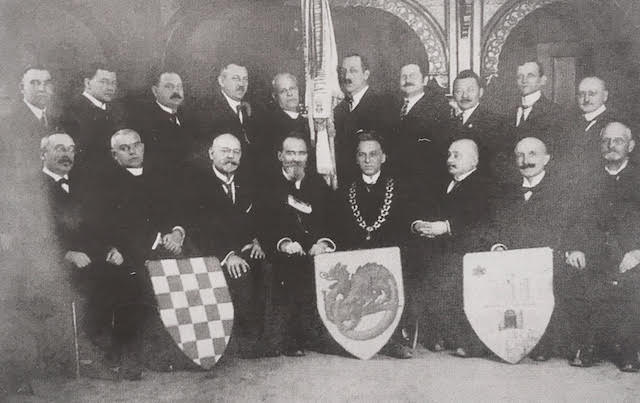
Braća Hrvatskog Zmaja 1923. (Confraternity of Croatian Dragon).
Source Đ. Deželić, D. Sečić, M. Petković: Dr. Velimir Deželić stariji, Zagreb
2002., p. 139.
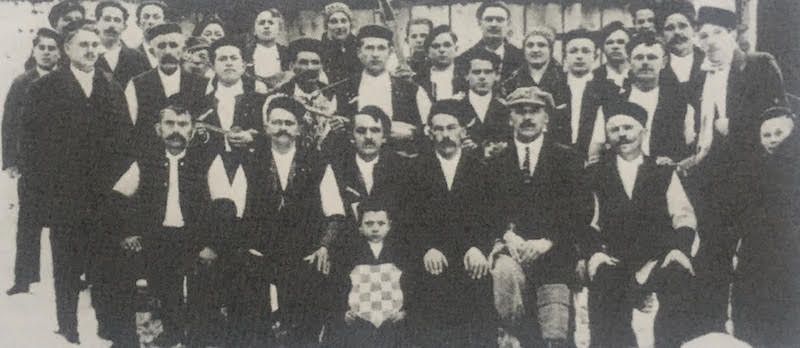
Meeting of the Croatian Peasant Party (Hrvatska seljačka stranka, HSS) in Lički Novi in 1923.
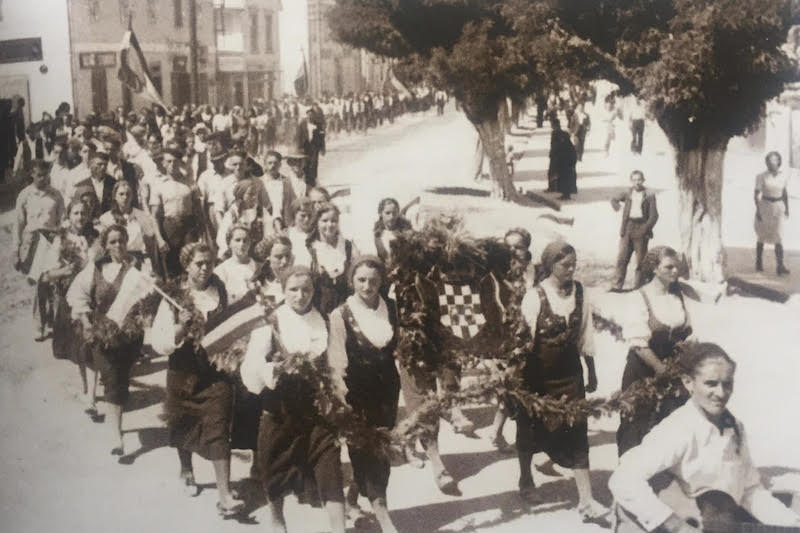
Meeting in support of Vladko Maček in Gospić, 1930s. Source of the above two photos is
Ante Bežen, Vesna Grahovac Oražic: Dobri duh Gospića, MH Gospić, Gospić - Zagreb 2016.
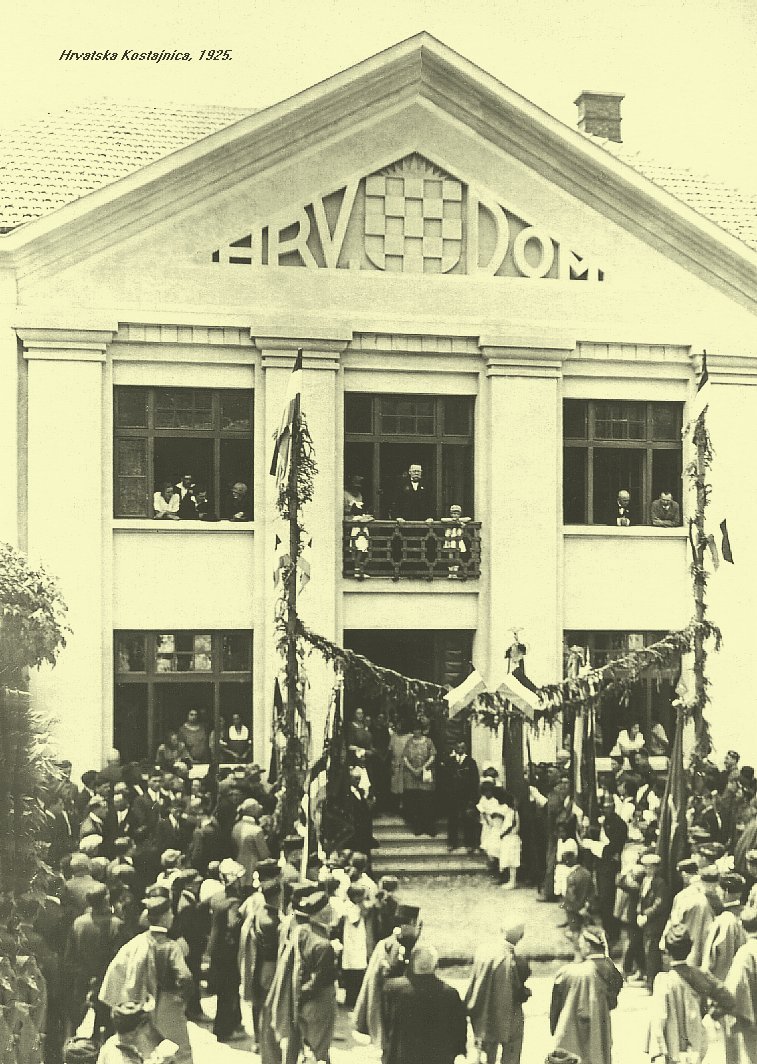
Hrvatski dom (Croatian House) 1925 in the town of
Kostajnica near Zagreb.
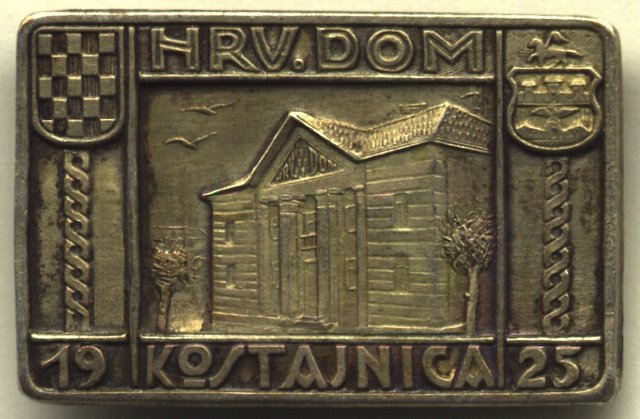
Amblem of Kostajnica 1925 containing Croatian Coat of Arms.
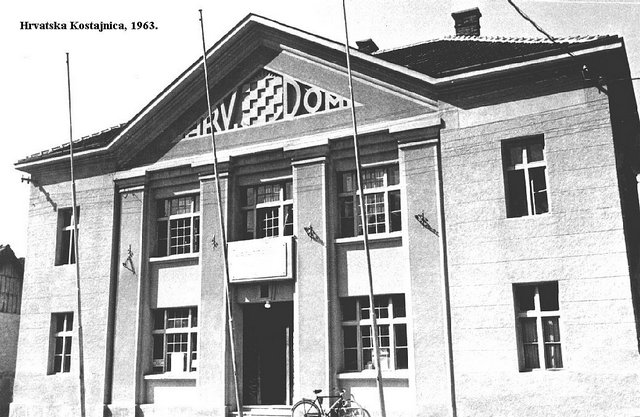
Hrvatski dom in Kostajnica.
Many thanks to dr. Vladimir Kodžić, Kostajnica, and to Mr. Stjepan
Bobeta, Zagreb.

Linen from the town of Dubica, inspired by Croatian Coat of Arms.
Source Katica Delić: Hrvatska Dubica u slici i riječi, Dubica 2013.


Linen from the town of Dubica.
Competition
of Croatian Falcon Societies in
Zagreb (Hrvatski sokol), 1925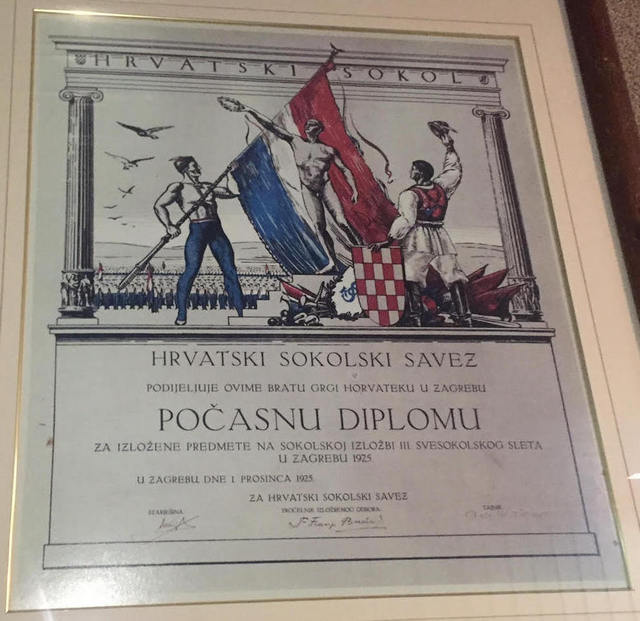
Honorary diploma of Croatian Falcon society of brother Grga Horvatek in Zagreb, 1925, for his exhibited artefacts.
Signed by Franjo Bučar.
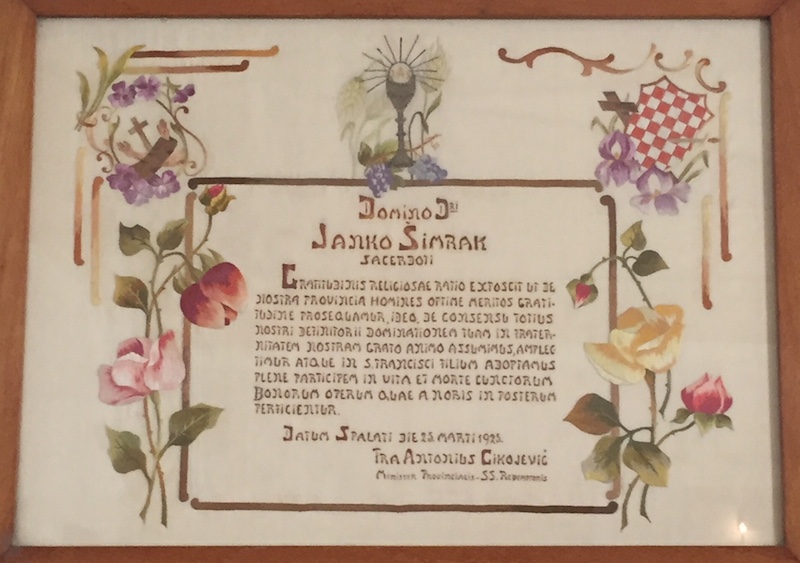
Silk woven Croatian Coat of Arms, 1925, kept in the Greek-Catholic
bishopric in Križevci,
in a document dedicated to bishop Janko Šimrak.
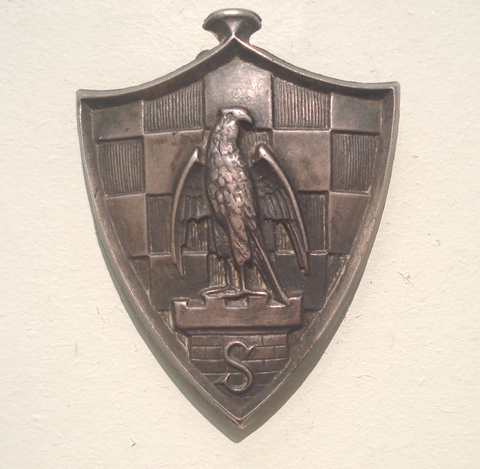
Ivo Kerdić: Medal of Hrvatski Sokol (Croatian Falcon), 1925
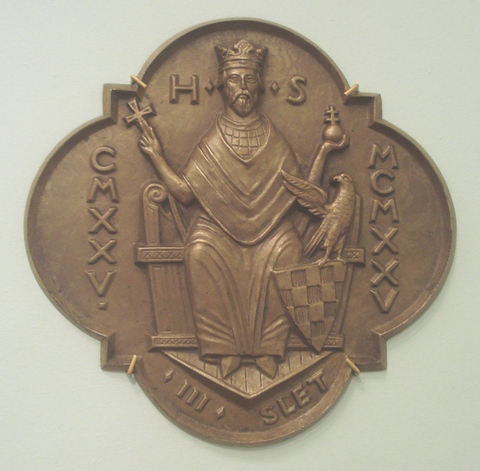
Ivo Kerdić, distinguished Croatian sculptor: Medal for the Croatian Falcon, representing Croatian King Tomislav from 925 AD (on the occasion of 1000 years), 1925
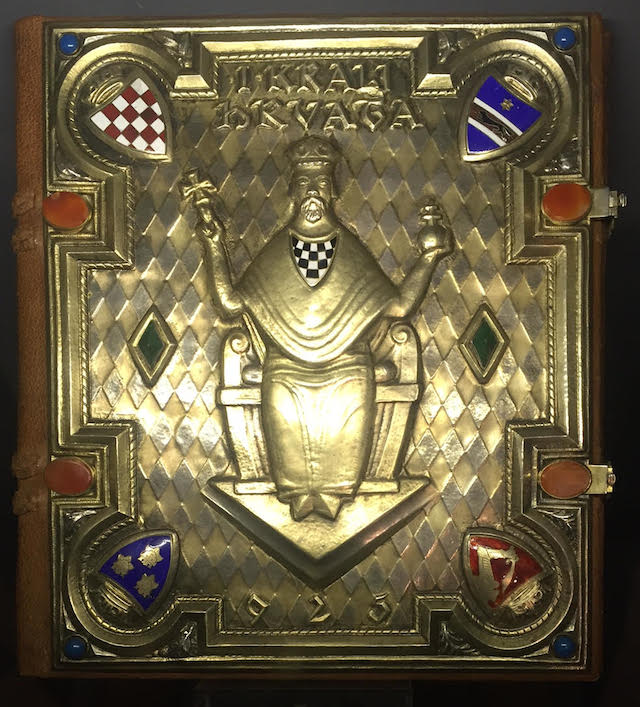
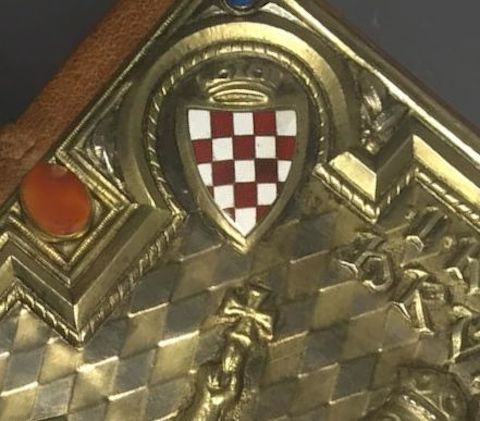
Commemorative book from 1925, marking thosand years since Croatian King
Tomislav (who reigned during the first half of the 10th century).
Prepared by Klaić, Kerdić, Hocker and Martinić, kept in the Croatian
History Museum in Zagreb.
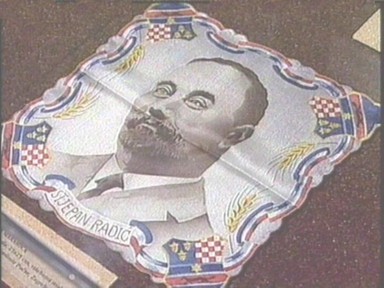
Stjepan
Radic
on
a scarf from 1920s
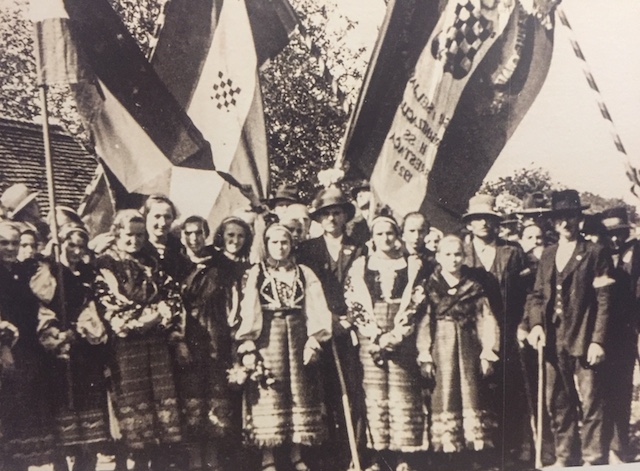
Croatian Peasant Party (Hrvatska seljačka stranka, HSS) gathering in Novska, east of Zagreb, 1923.
The HSS was founded by Stjepan Radić. Photo from the Sajko Museum Collection, Novska.
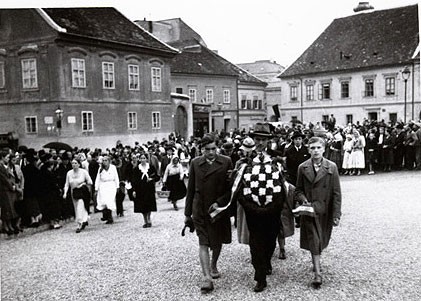
From
the funeral of Stjepan
Radic, 1928, Zagreb,
assassinated in
the Parliament of Yugoslavia in
Belgrade
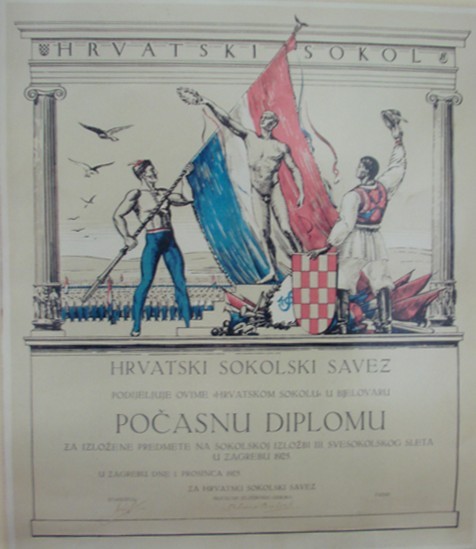
Diploma
issued by the Croatian Falcon
Federation to the Coratian Falcon Society in Bjelovar, Zagreb 1925
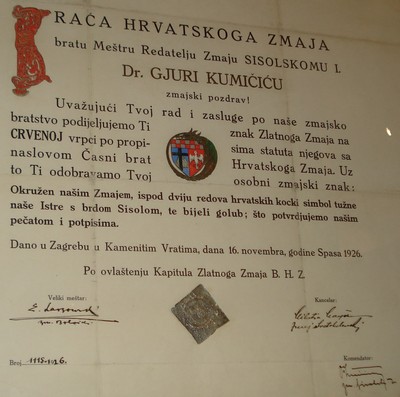
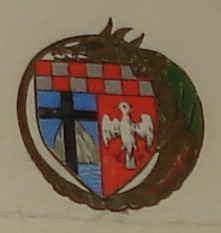
Coat
of Arms of Dr. Gjuro Kumicic, 1926, by the
rescript of the Brothers of Croatian Dragon.
Left below in the flag is the mountain of Sisol in Istria, in
South-West of Croatia.
Kept in the City
Museum of Zagreb
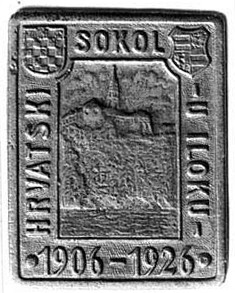
Badge
of Hrvatski sokol in Ilok
(Croatian Falcon in Ilok, sports society), 1906-1926, disappeared from
the Museum of the town of Ilok during the Serbian 1991-1997 occupation
of this Croatian town on Danube river. Source: Museum of the town of Ilok.
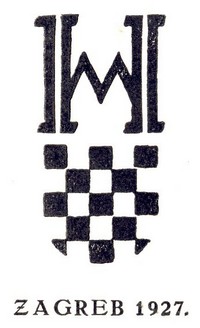
Logo
of Matica hrvatska (Matrix Croatica) in
1927
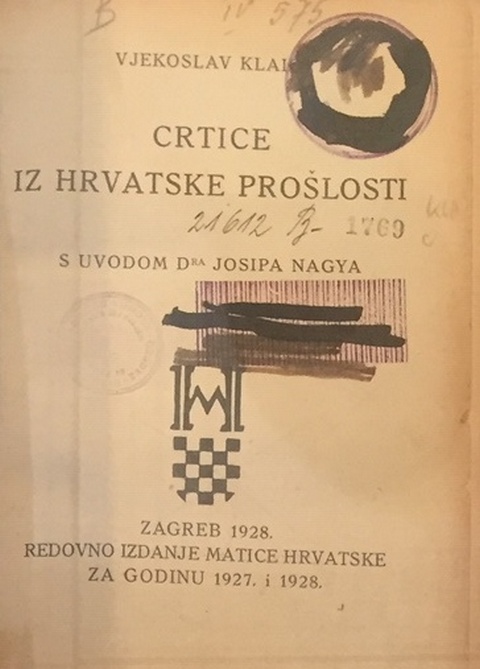
Vjekoslav Klaić (distinguished Croatian historian): A Short Survey of Croatian History,
Matica hrvatska, 1928.
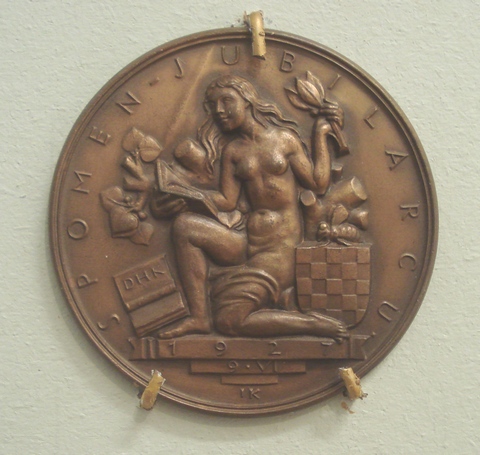
Ivo Kerdić: Medal of Ksaver Šandor Đalski, Croatian writer,
1927
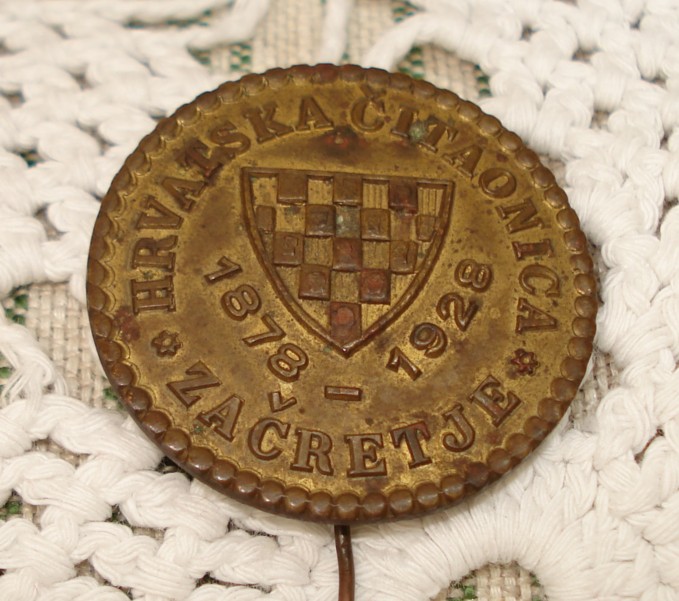
A
badge of Croatian Reading Room in Začretje
(Sveti Križ near Zagreb), 1878-1928
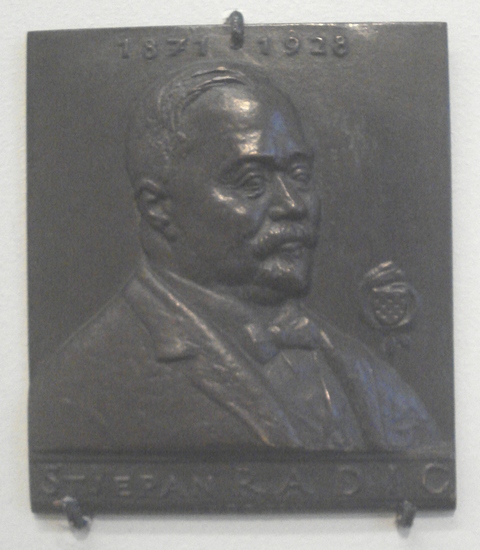
Ivo Kerdić: Medal of Croatian politician Stjepan
Radić, made on the
occasion of his assassination
in the Yugoslav parliament in Belgrade in 1928.
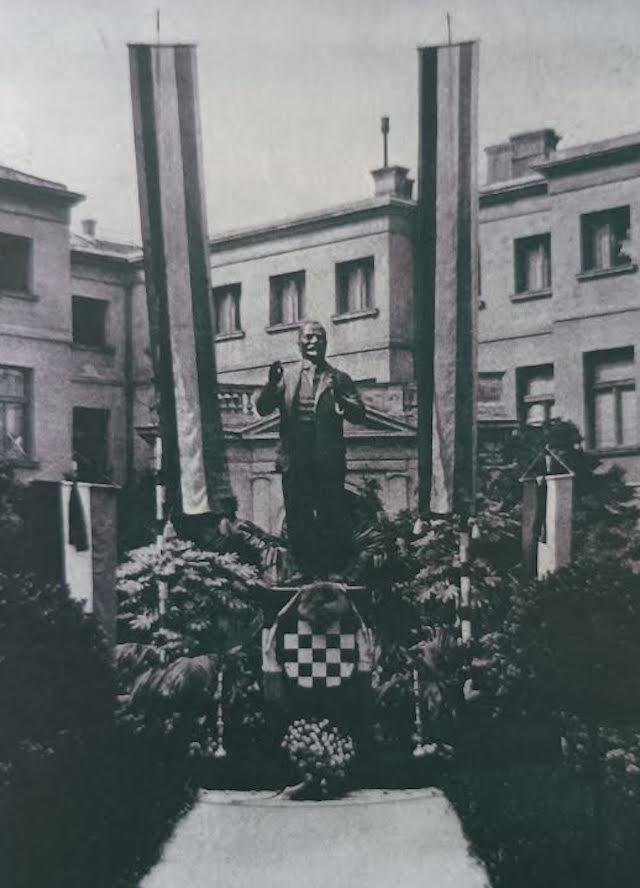
Monument of Stjepan Radić, carved by Croatian sculptress Mila Wod (yes, one "o") in Petrinja in 1929,
just a year after his assassination in the Belgrade Parliament of ex-Yu.
Here exhibited in 1935 in the then House of Croatian Peasants in Zagreb (now Gallery of Modern Art).
This was the first monument in Croatia carved by a woman.
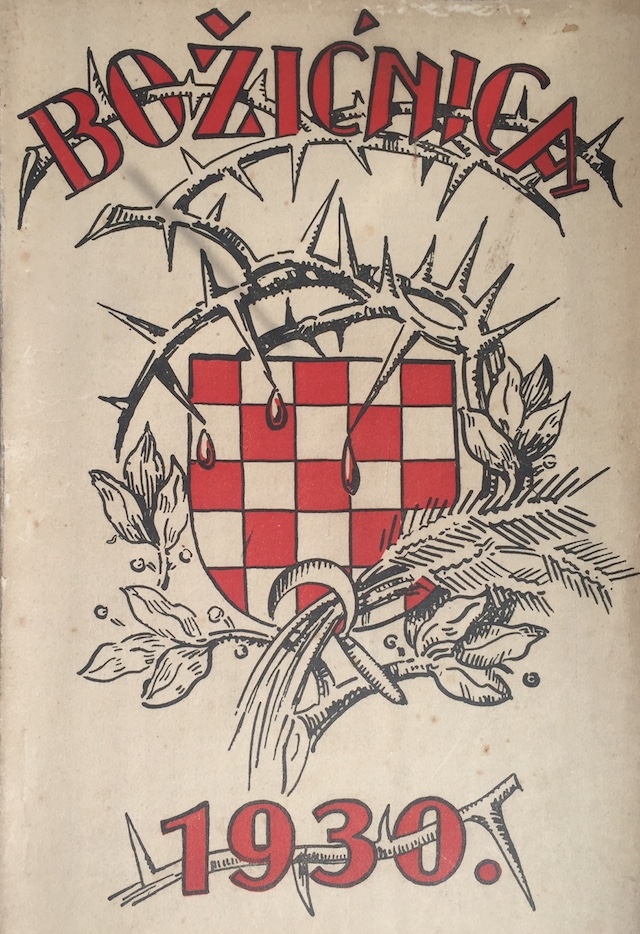
The journal Božićnica (Božić = Christmas), published by the Radić Slavic Library (Radićeva Slavenska Knjižara), 1930 Zagreb
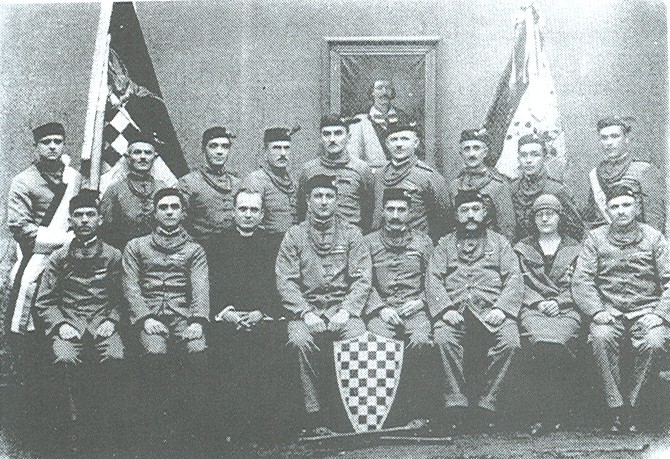
Hrvatski
sokol (Croatian Falcon Sports
Society), city of Karlovac, 1929
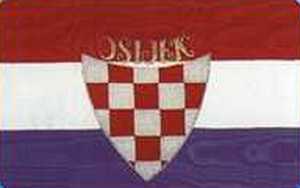
Hrvatski sokol (Croatian Falcon) Osijek, 1929, source
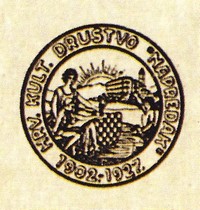
Hrvatsko
kulturno društvo "Napredak"
1902.-1927.
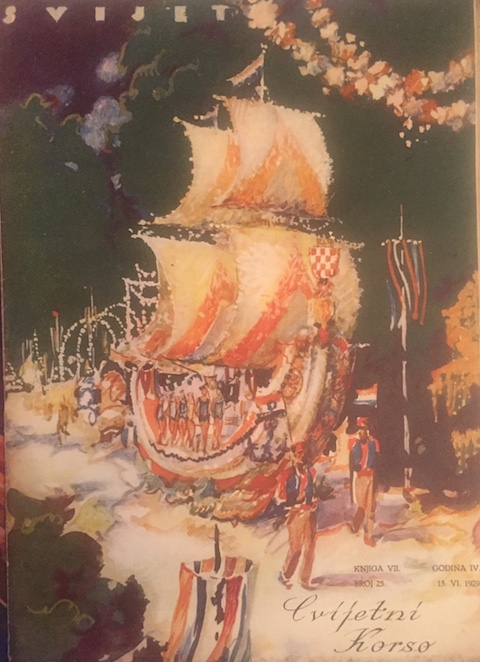
SVIJET (World), illustrated journal in Zagreb, 1929
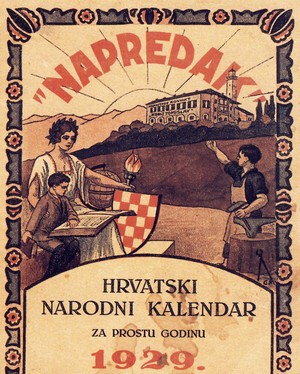
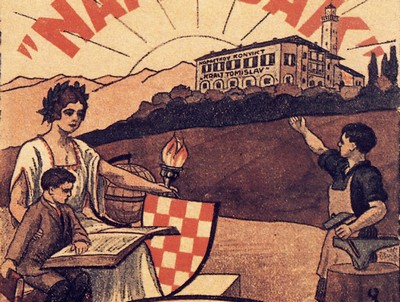
Napredak,
Hrvatski narodni kalendar za 1929.,
Sarajevo (a detail from the cover page),
source [Maric,
Pregled...]
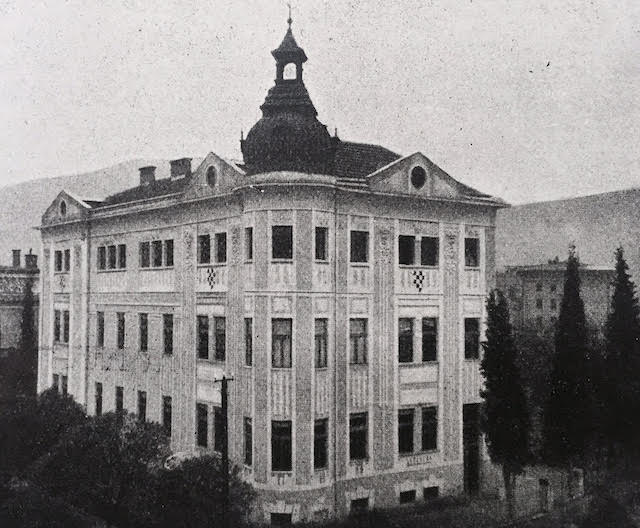
The Napredak School "King Petar Svačić" (Napretkov konvikt "Kralj Petar
Svačić"), Mostar, B&H.
Published in 1929 in the above "Napredak", Hrvatski narodni kalendar,
p. 176, which is a photo accompaning
the article by Dr. Fra Leo Petrović: Napretkova đački konvikt "Kralj
Petar Svačić" u Mostaru, pp. 192-192.
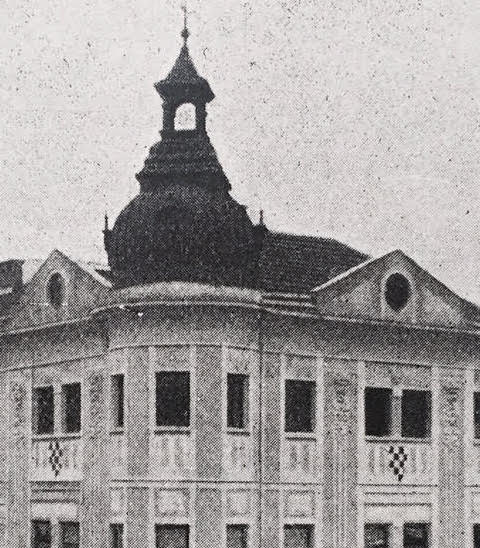
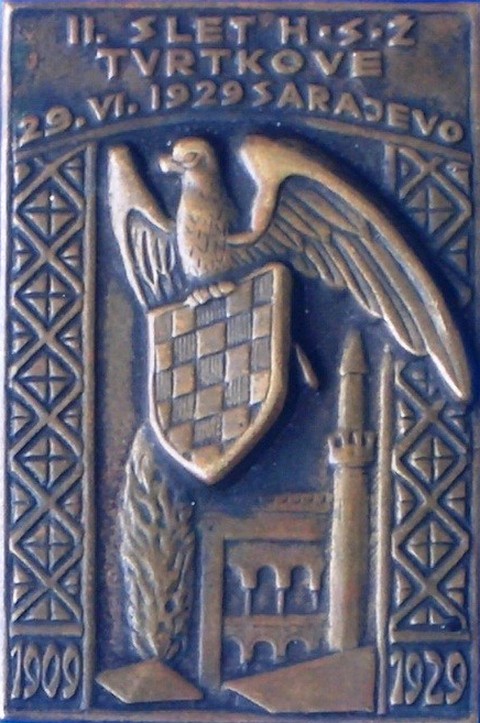
Hrvatski sokol (Croatian Falcon), Sarajevo, 1909-1929
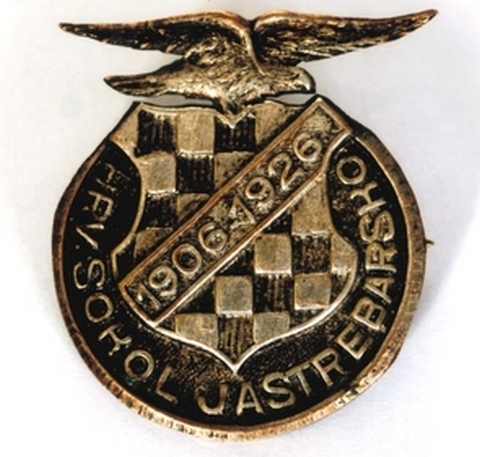
Hrvatski sokol (Croatian Falcon) Jastrebarsko, 1906-1926
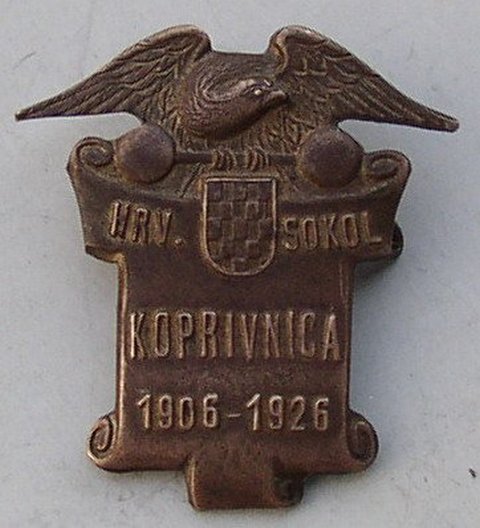
Hrvatski sokol (Croatian Falcon) Koprivnica,
1906-1926
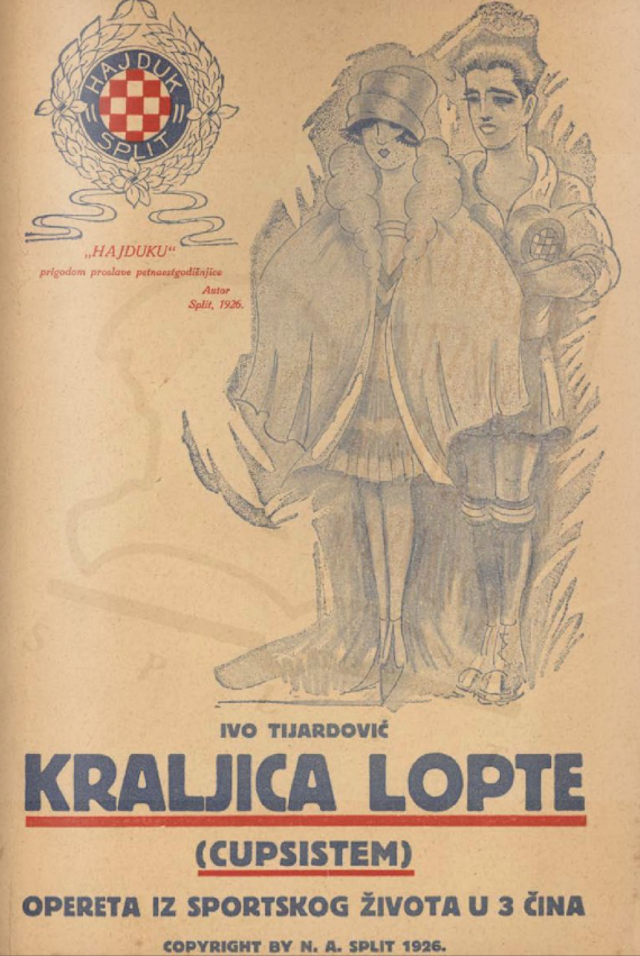
Ivo Tijardović: Kraljica lopte
(Queen of Ball), Split, 1926.
Hajduk (from the city of Split) is the only soccer club in the world
which has its own operetta, composed already 1926.
Many thanks to Dr Lea Botteri, University of Zagreb, for her kind
information. Source.
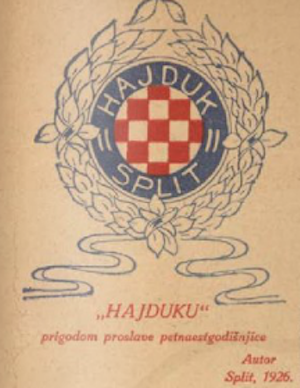
Dedication by the author, Ivo Tijardović, distinguished Croatian
composer, in Split 1926,
on the occasion of the then 15th anniversary of the soccer team of
Hajduk (founded in 1911).

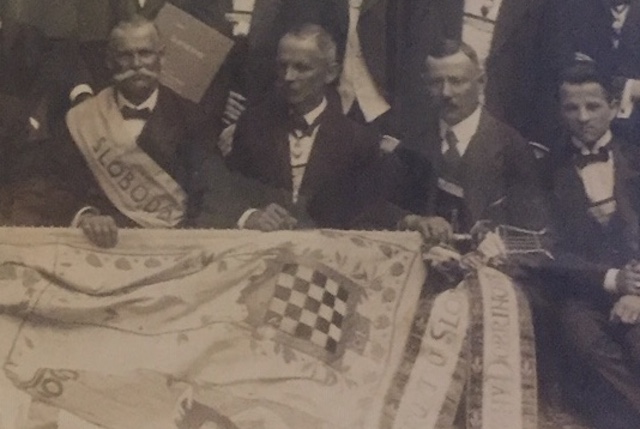
Obrtničko društvo (Entrepreneurship Society), Zagreb
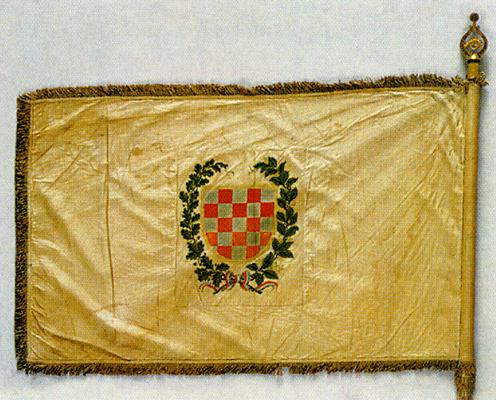
Flag
of the Brethren of the Croatian Dragon (Družba braće hrvatskog zmaja),
Zagreb, 1930
Croatian
History Museum
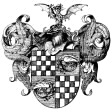
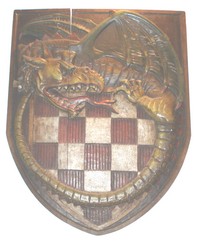
Coat
of Amrs of the Brethren of the Croatian
Dragon (Družba braće hrvatskog zmaja)
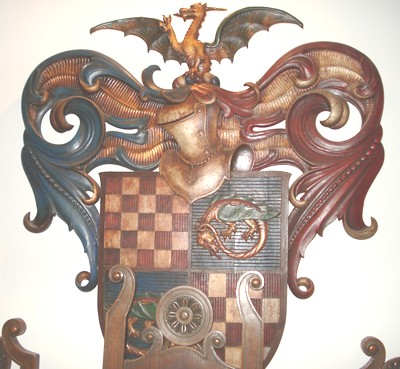
Amblem
of the Druzba hrvatskog zmaja
(Brethern of Croatian
Dragon) in their building in Zagreb (Kamenita vrata), founded in 1905
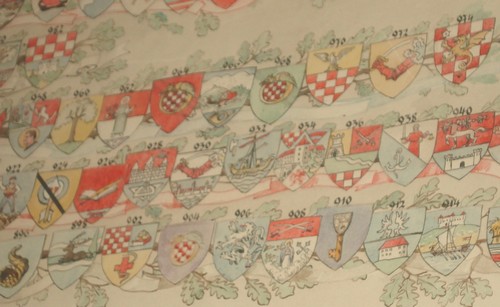
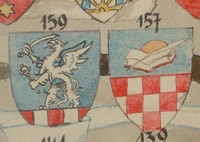
A
detail from the tree of Croatian Nobility
within Družba
hrvatskog zmaja (Brethern of
Croatian Dragon)
1910
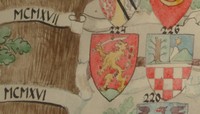
1916
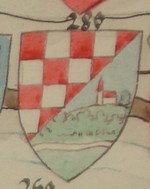
1919
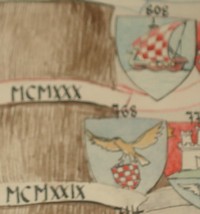
1929
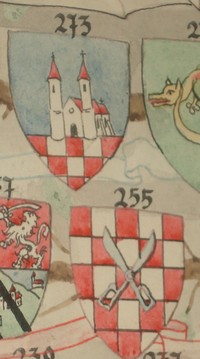
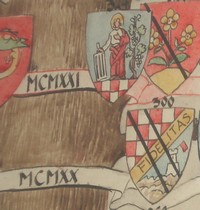
1920

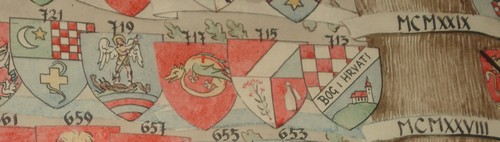
1928
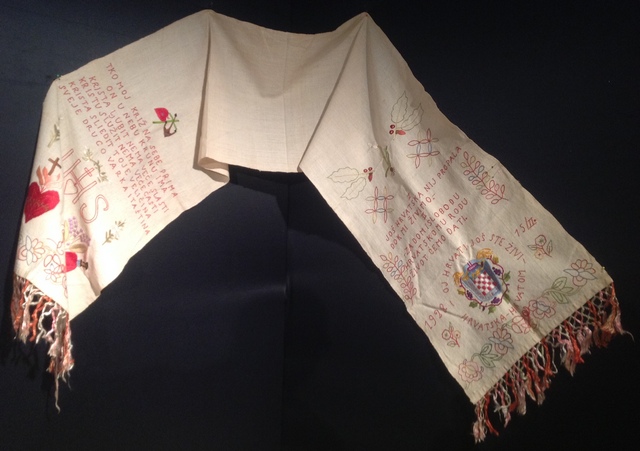
Croatian Coat of Arms on a linen handcraft from the environs of
Zagreb,
exhibited during the International Color Day in Technical Museum in
Zagreb.
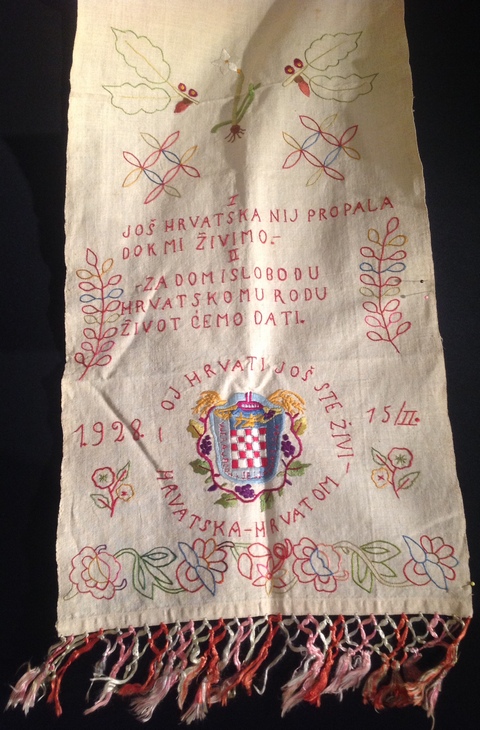
Exhibited by dr. Željko Knezić, on the occasion of the Internation
Color Day, 21 March 2015.
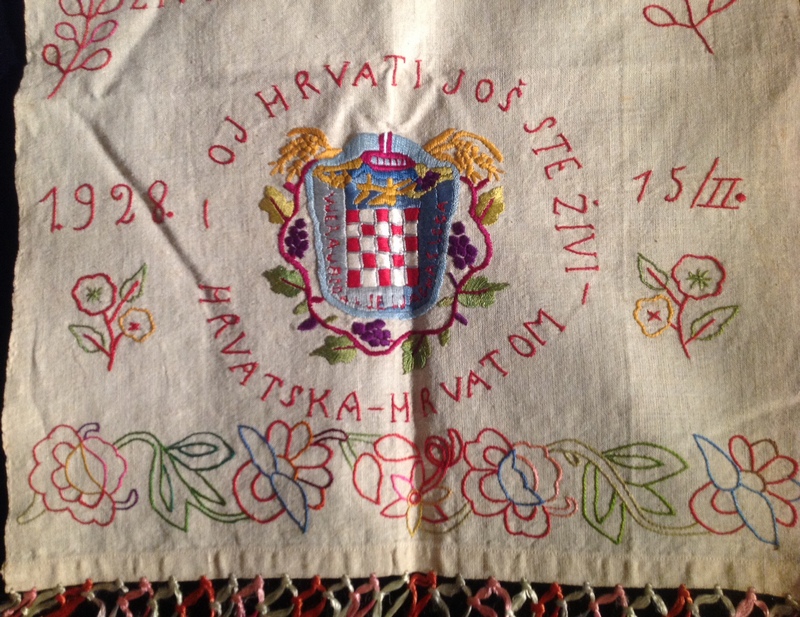
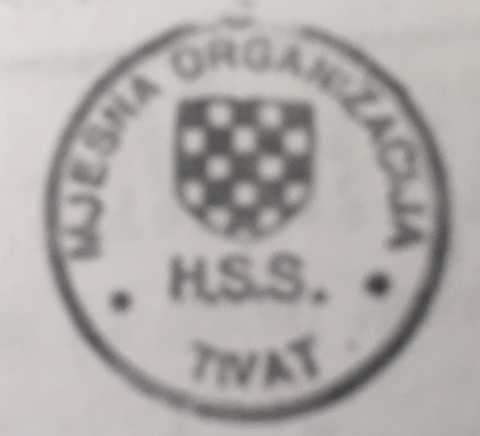
Seal of H.S.S. (Hrvatska seljačka stranka - Croatian Peasant Party)
in the town of Tivat in Boka kotorska, 1928. The founder and leader of H.S.S. was Stjepan Radic.
Photo from [Vidmarovic, Prilog
povijesti Hrvata Gornje i Donje Lastve].
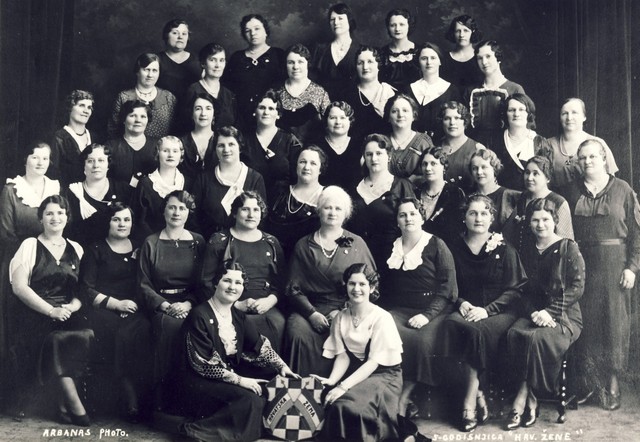
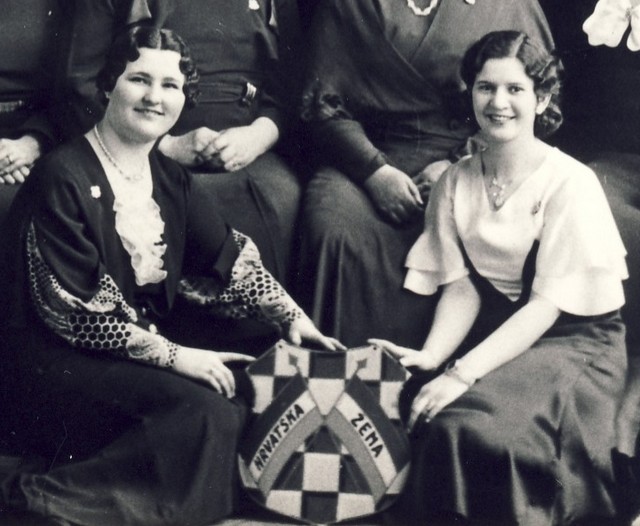
Hrvatska
Žena (Croatian Woman) society, Branch
1 of Chicago founded on January 27, 1929. Another 18 branches
were
founded throughout the United States supporting churches, schools,
charities and cultural programs as well as the
American military during
World War II. Source Vladimir Novak.
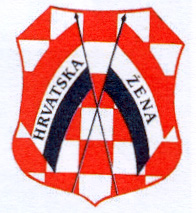
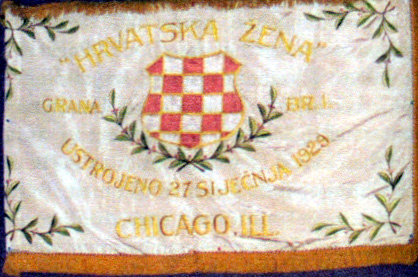
Hrvatska
žena, ustrojena 27. siječnja 1929,
Chicago ILL.
Croatian Woman, founded on January 27, 1929, Chicago ILL., source www.cuvalo.net
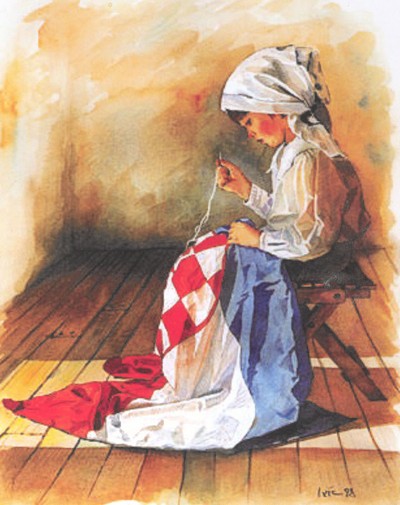
Hrvatska
žena, grana br. 1, Chicago, 1929-2009
Croatian Woman, branch #1, Chicago, 80th Anniversary, source www.cuvalo.net
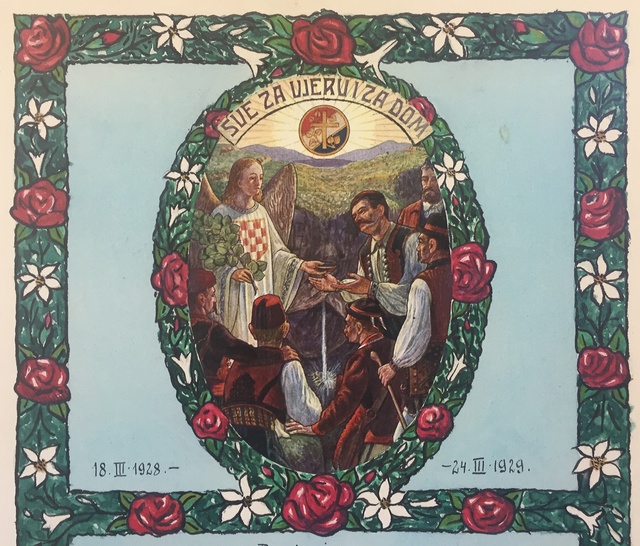
Everything for Faith and Home
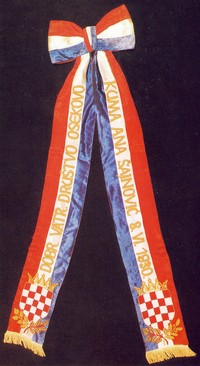
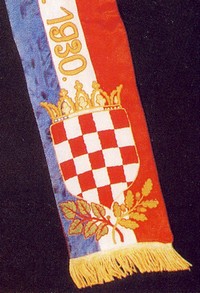
Croatian
Coat of Arms on a flag of the fire
station in the village of Osekovo in 1930, in the region of Moslavina,
west of Zagreb;
source Mandica Svirac (ed.): Lepa
ti je Moslavina,
Krscanska sadasnjost, Zagreb 1998., ISBN 978-953-151-209-4
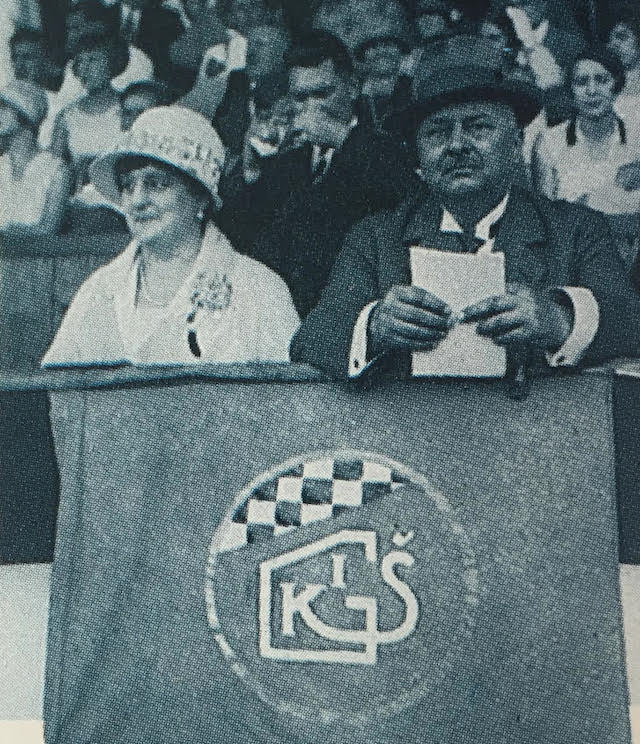
Vjekoslav Heinzel, Mayor of the city of Zagreb, with his wife, at the playground of Građanski (today the playground
of the Soccer Club Zagreb). Source Zvonimir Milčec: Galantni Zagreb, Mladost Zagreb 1989. (2nd edition), p. 240.
A part of the the amblem of Građanski is Croatian Coat of Arms.
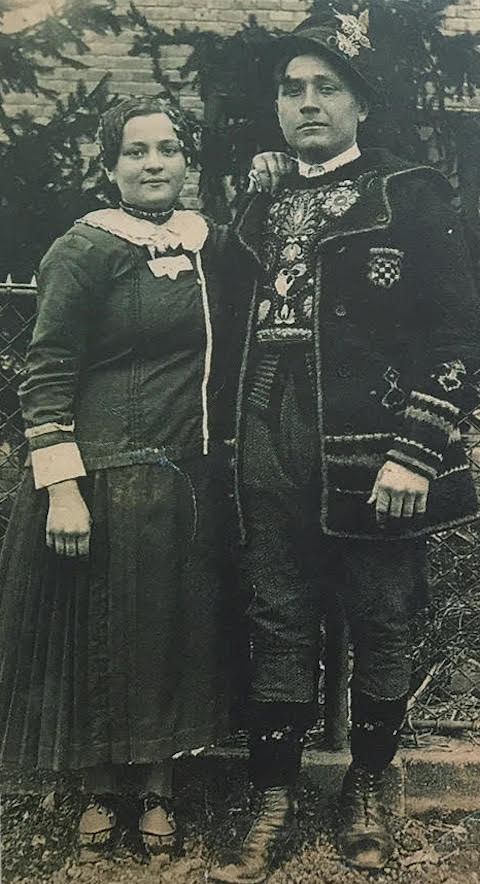
Photo taken between the two World Wars in the village of Kukujevci
in Eastern Srijem.
The suit of the man contain Croatian Coat of Amrs. Photo by Hrvatska
matica iseljenika, Zagreb.
The costume below, also nicely decorated with Croatian Coat of arms, is
from the same village.
Between the two World Wars, the village had a vast Croatian majority of
89%.
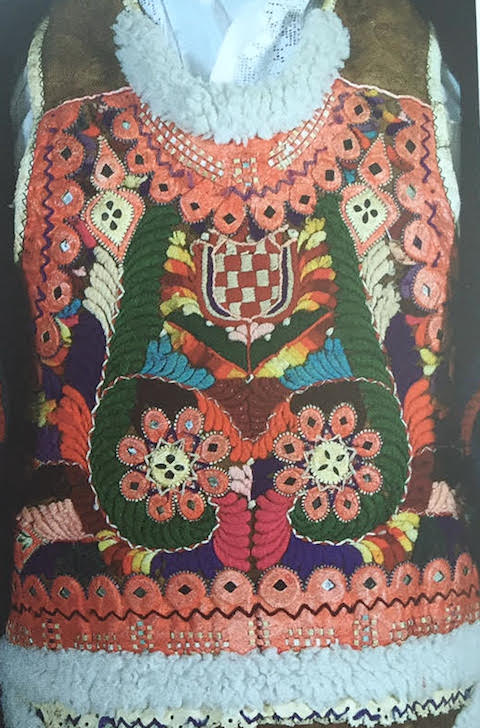
The man is wearing Croatian Coat of Arms on his suit.

Crkva Majke Božje Sljemenske - Kraljice Hrvata,
Zagreb 1932, ceiling
(detail)
The church is not far from the top of the mountain of Medvednica near
Zagreb.
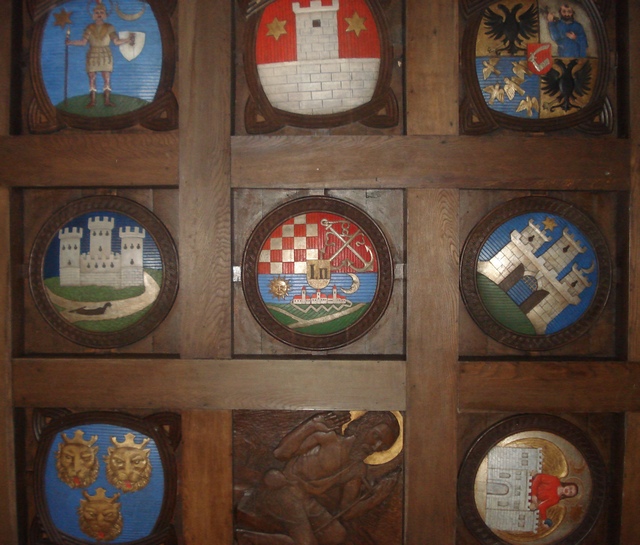
Detail from the ceiling of the church of Majka Božja Sljemenska -
Kraljice Hrvata, Zagreb, 1932.
Architect Juraj Denzler, with participation of Croatian
artists: Radoje Hudoklin, Vanja Radauš, Josip
Turkalj,
Marta Plazzeriano, Gabrijel Stupica etc.
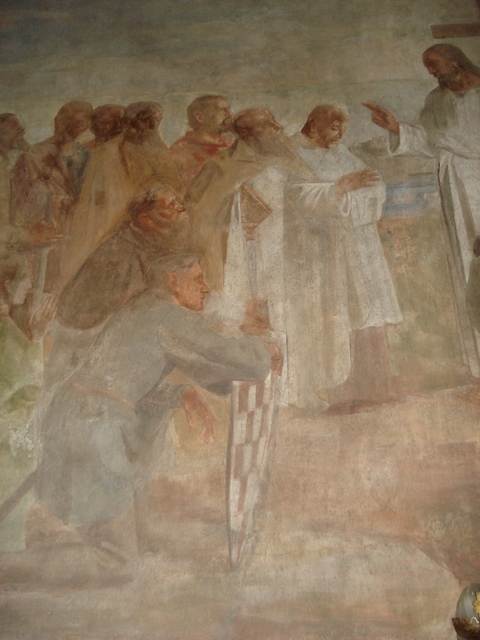
Majka Božja Sljemenska - Kraljica Hrvata, Zagreb 1932, a detail from
the wall
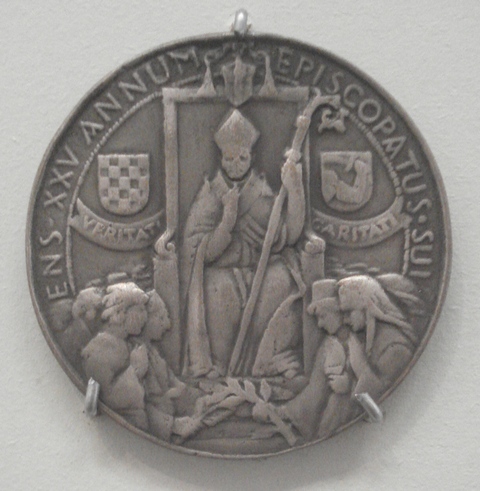
Ivo Kerdić: Medal of Ivan Šarić, Archbishop of Sarajevo, 1932
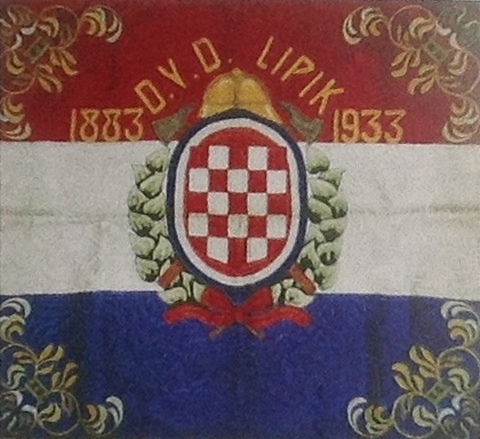
From the photomonograph by Duško Kliček: I tvoj i moj Lipik: monografija grada Lipika,
Lipik
2009., ISBN 978-953-96542-3-6
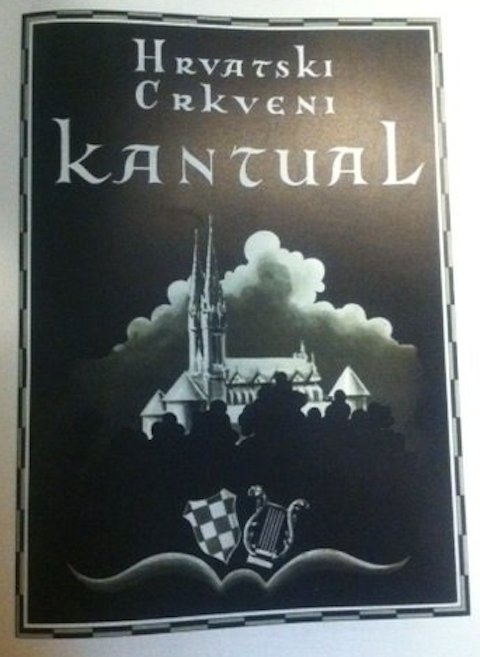
Hrvatski crkveni kantual
(Croatian Church Cantual), Zagreb 1934
Illustrated by Vladimir Kirin.
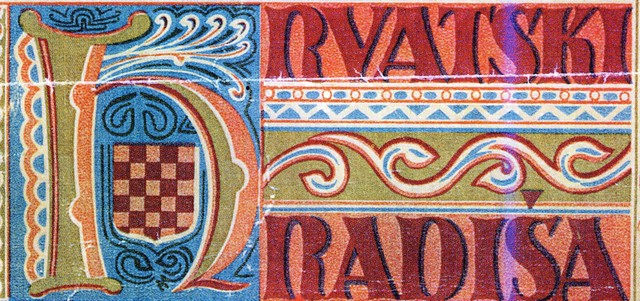
Hrvatski
radiša, Zlatne ruke Krizevaca,
published in 1934 (from the title page)
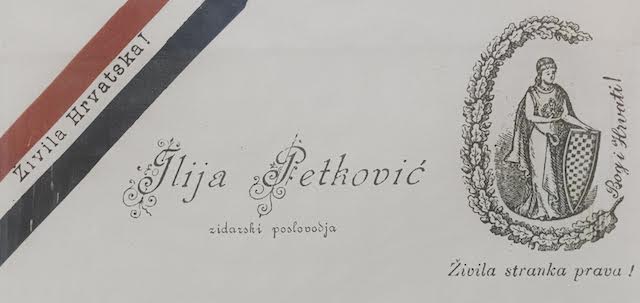
Visiting card of Ilija Petković, zidarski
poslovodja (masonry foreman), president of the Tivat municipality in Boka kotorska.
Živial Hrvatska! (Long
Live Croatia). Živila stranka prava!
(Long Live the Party of the Right) with Croatian Coat of Arms.
Bog i Hrvati! (God and
the Croats). Probably from arround 1935.
Photo by the courtesy of Zvonimir Deković, Donja Lastva (near the city of Tivat) in Boka kotorska.

Čepikuće (Croatian village near the Pelješac peninsula) 1835-1935
Photographed by Zoran Filipović - Zoro, in 1991.
Below the Coat of Arms are the initial verses of the Croatian Coat of Arms,
Our Beutiful Homeland (Lijepa naša domovino).
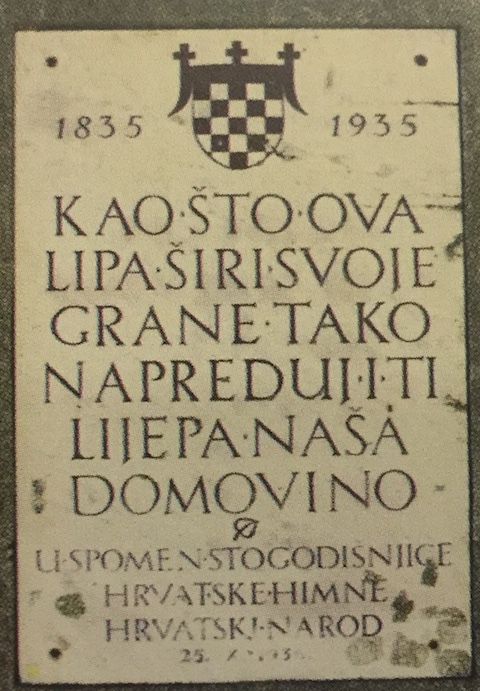
Zajezda, Hrvatsko Zagorje (near the mount of Ivanščica)
source Franjo Martinez: Oko naše
gore Ivanščice, Čakovec 2012., p. 91
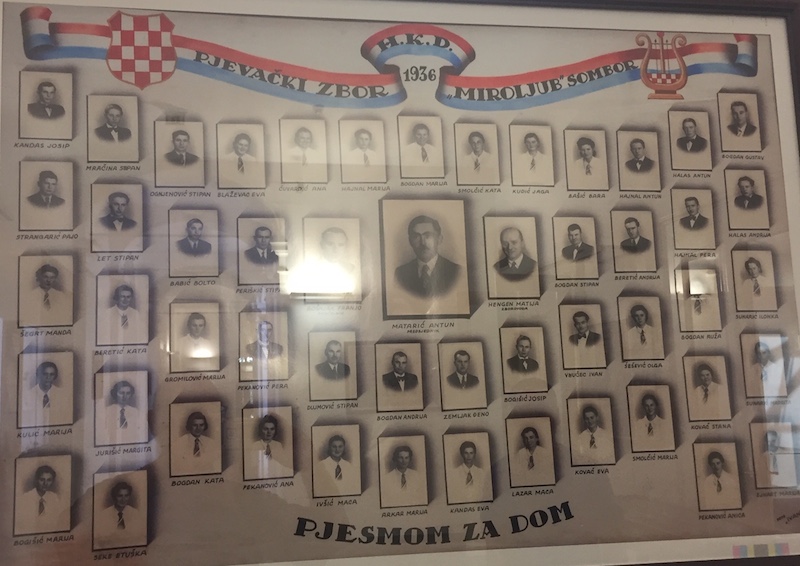
Croatian singing chori Miroljub,
Sombor, founded in 1936.
Exhibited in the Archives of the Croatian Academy of Sciences and Arts,
Zagreb
(as well as the two photos below)
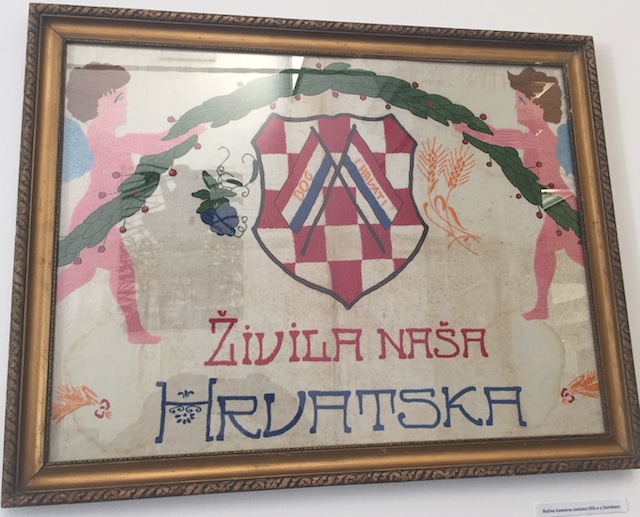
HSS (Hrvatska Seljačka Stranka - Croatian Peasant Party), Sombor
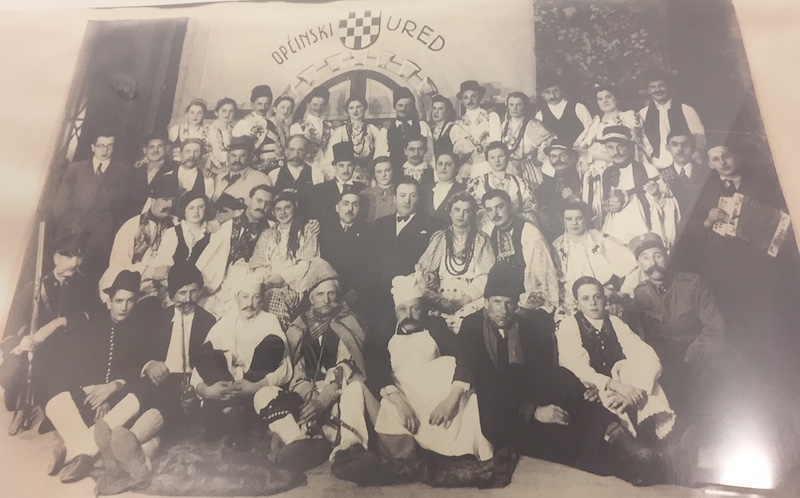
Drama section of Miroljub,
Sombor 1936.
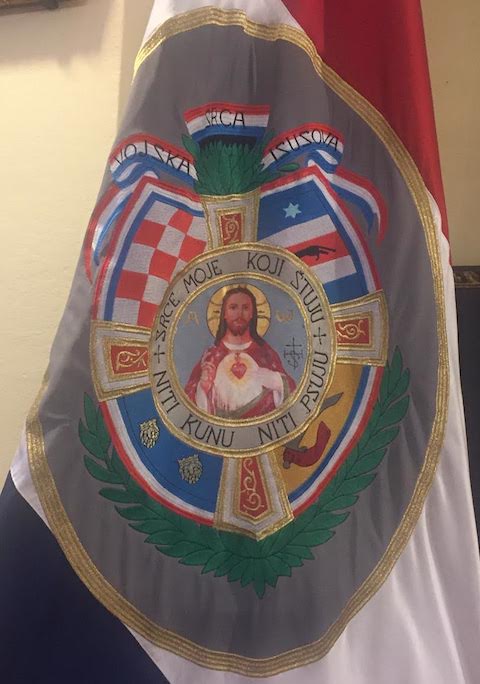
Vojska srca Isusova;
Srce moje koji štuju - niti kuni niti psuju.
Crkva sv. Martina u Vranjicu kod Splita, poznata po djelima Joze Kljakovića.
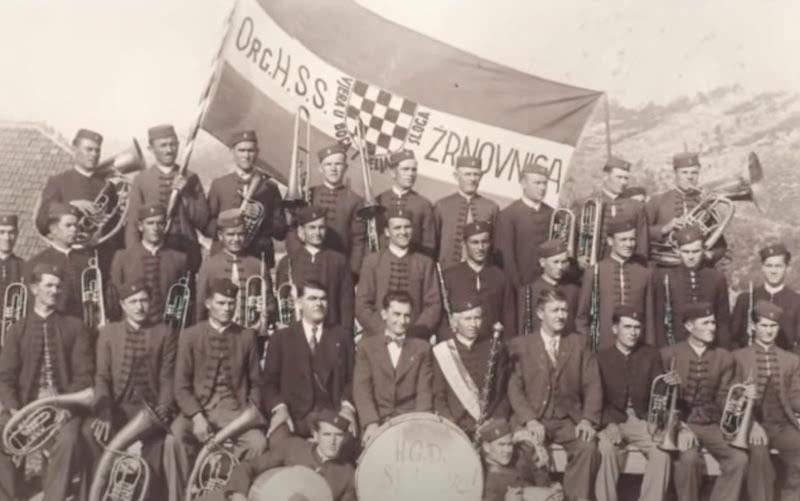
Organizacija Hrvatske seljačke stranke (Organization of H.S.S. -
Croatian Peasant Party, Žrnovnica near the city of Split, under the
mount of Mosor).
Photo taken between the Ist and IInd World Wars.
Around the Croatian Coat of Arms, it is written: VJERA U BOGA I SELJAČKA SLOGA (Belief in God and Peasant Solidarity)
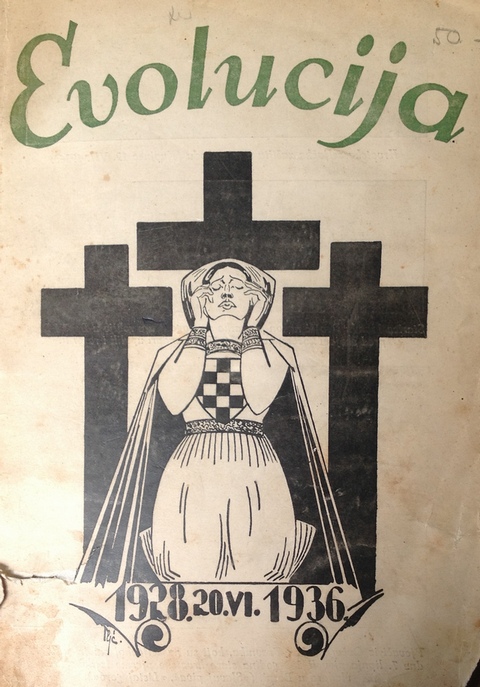
Evolucija (Evolution),
1936, journal of Lika Croatians published in the city of Zagreb
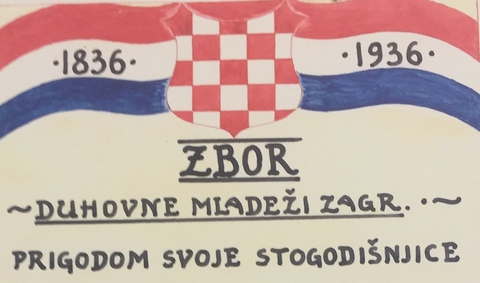
Choir of Spiritual Youth, Zagreb
on the occasion of its centernary
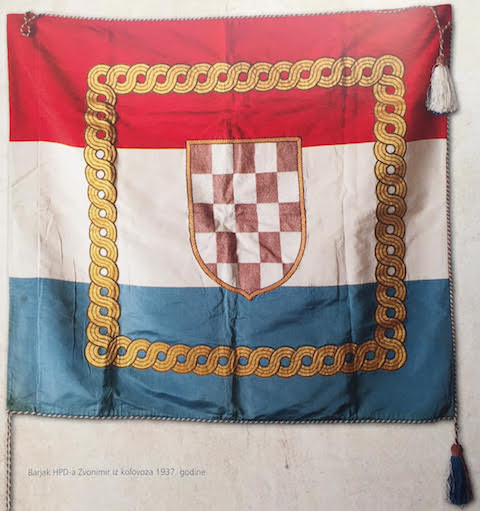
Flag of the Croatian Cultural Society Mravince,
1937.
H.K.D. Mravince, from Josip Marović: KUD
Zvonimir Mravince, 2015.
Many thanks to Katica Delić for sending me the book.
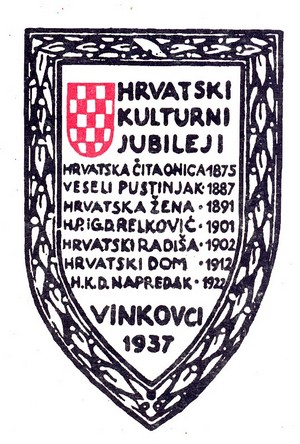
Croatian
Cultural Jubilees in the town of
Vinkovci, 1937
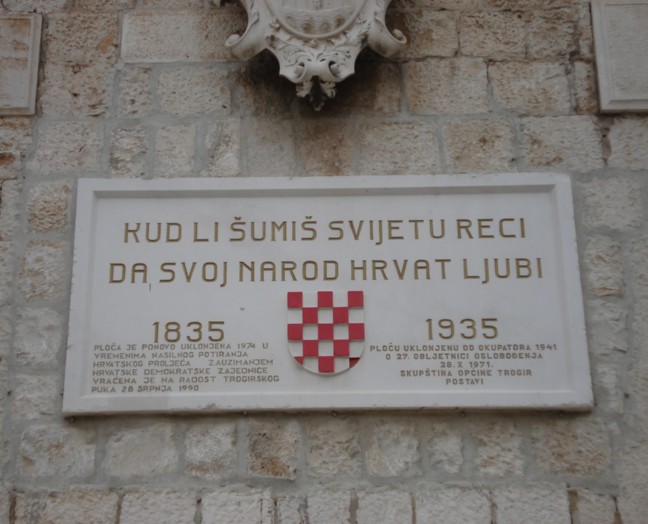
Croatian
coat of arms on the City Hall of the
town of Trogir with two verses of Croatian Anthem,
placed in 1935, removed by fascists in 1941, placed again thirty years
later in 1971,
removed in 1974, and placed again in 1990!
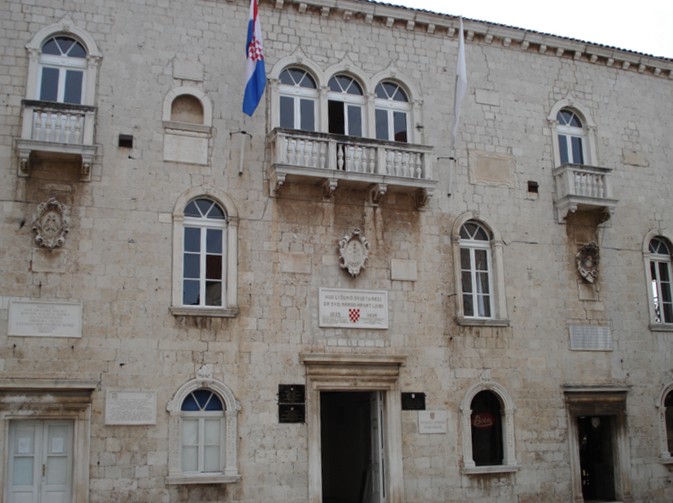
Trogir
is one of the most beautiful Croatian
cities, and under protection of UNESCO.
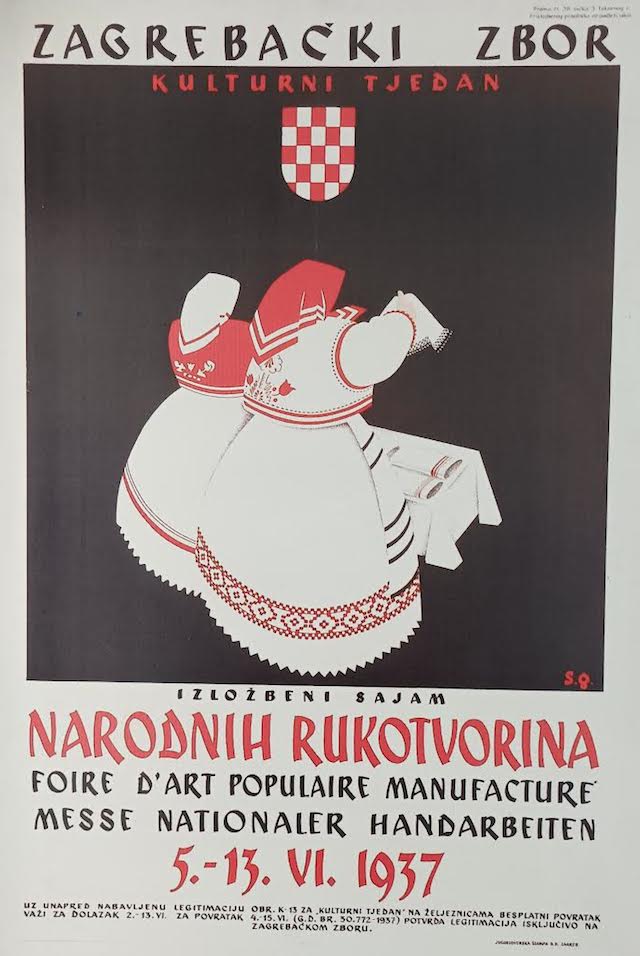
Zagreb Fair 1937 (Zagrebački Zbor), Croatian National Handicraft
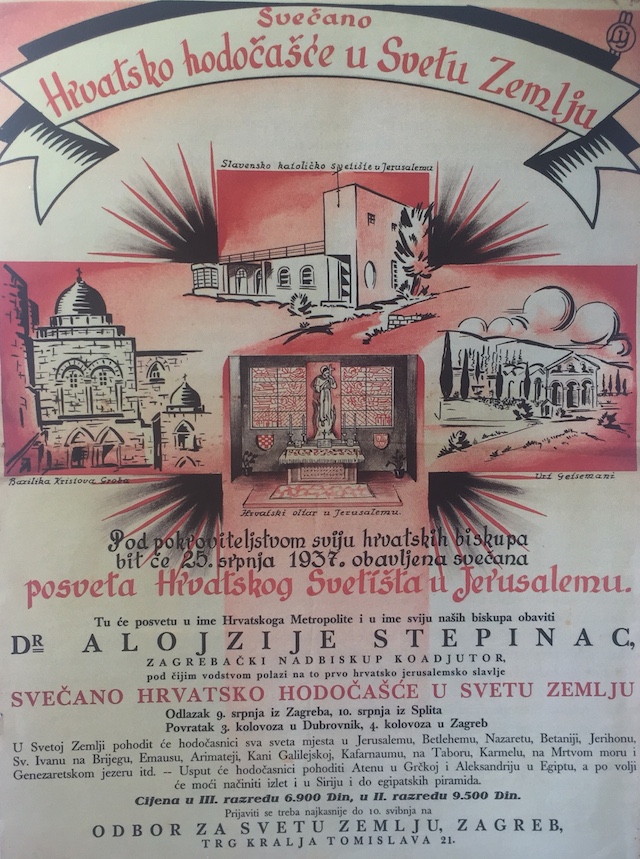
Announcement of Croatian pilgrimage to the Holy Land, 1937
Source of the above photo and the following seven:
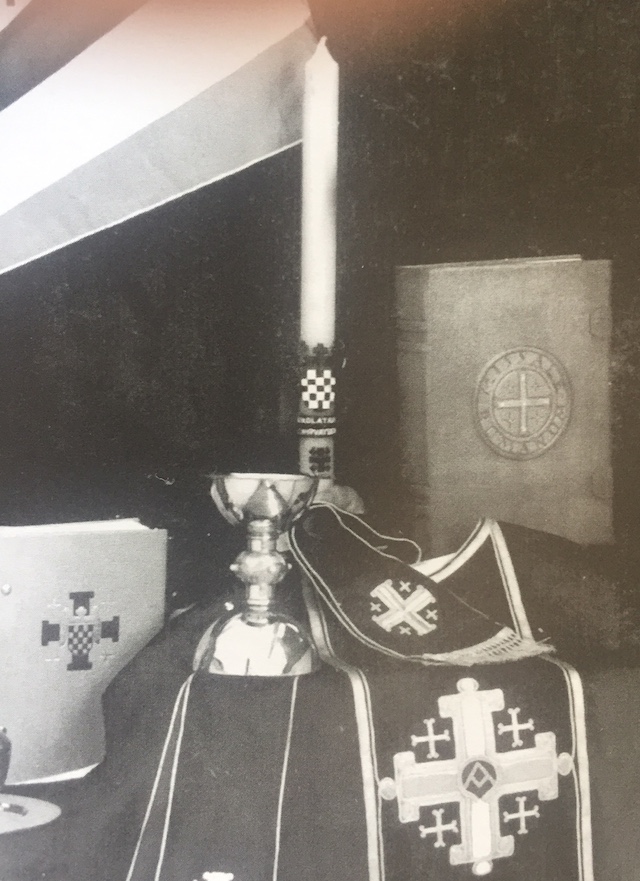
Claude Grbeša (ed.), Stepinčevim stazama po Svetoj Zemlji, 2013., Zagreb
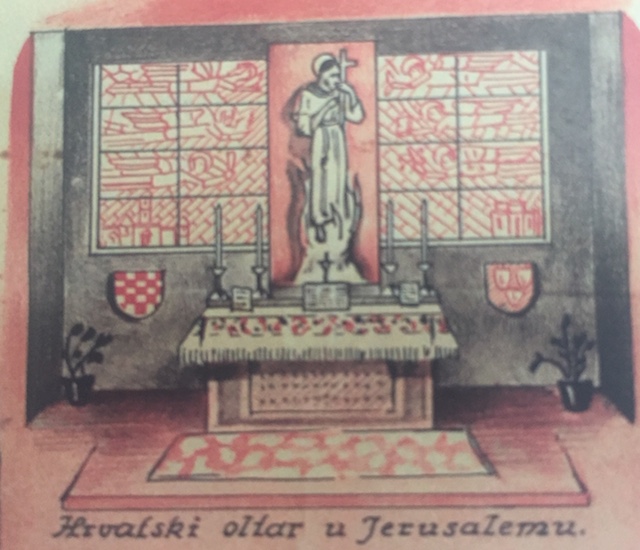
created upon the suggestions of Ivo Kerdić, professor at the Academy of Fine Arts, in 1937.
Inscribed at the bottom of the altar: "Blessed Nikola Tavelić, pray for Croatian people."
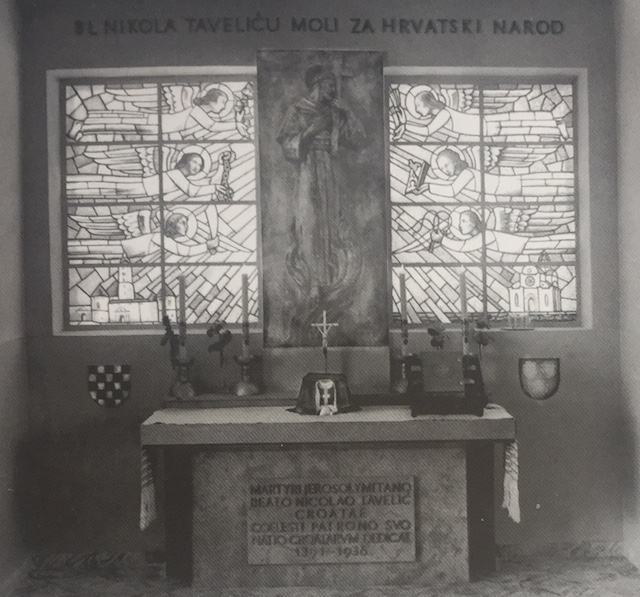
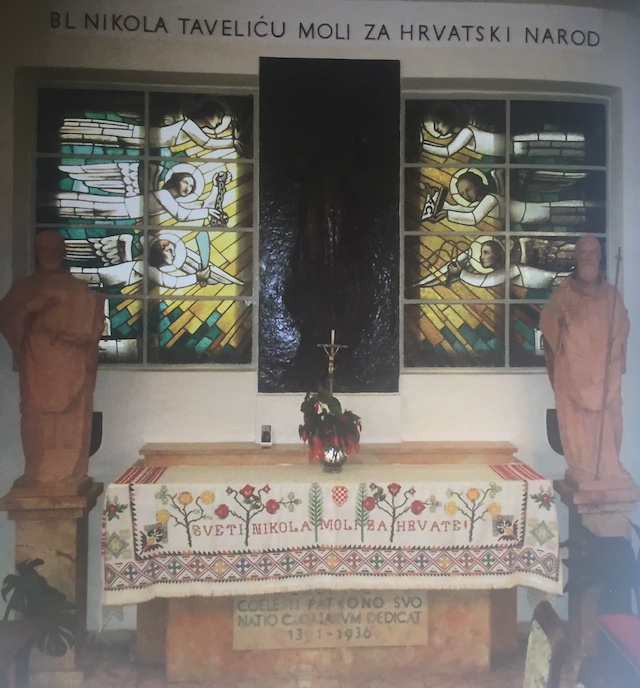
Altar of St. Nikola Tavelić in Yerusalem. Photo by Claude Grbeša in 2012.
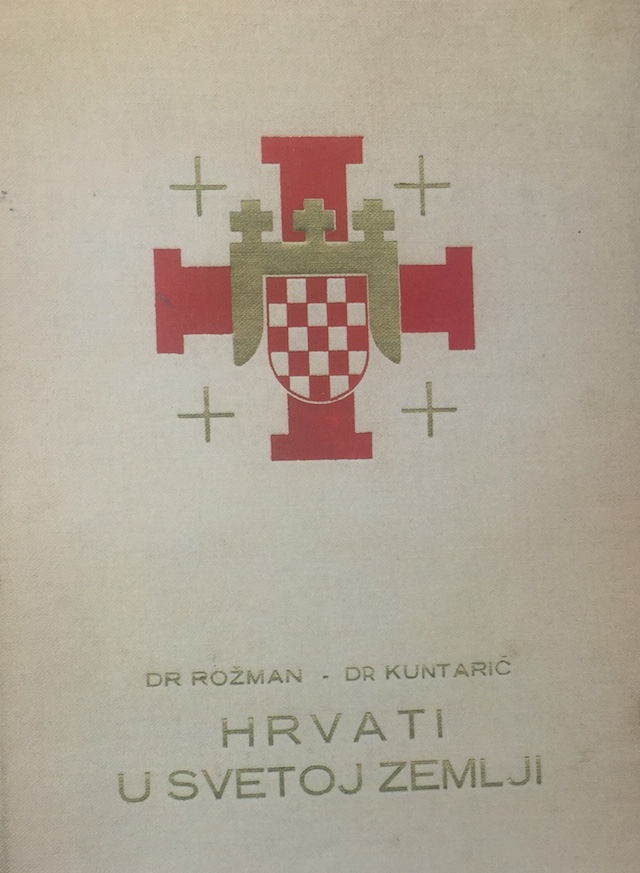
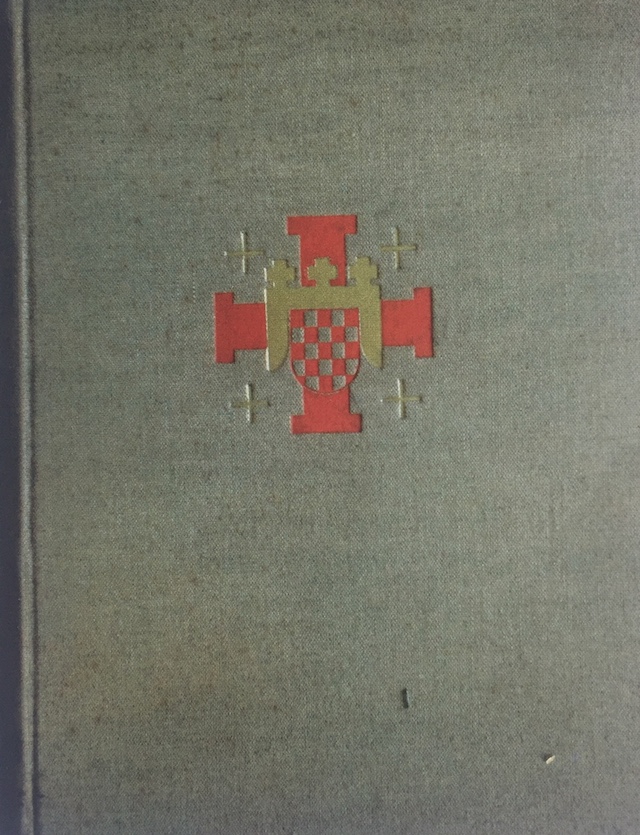
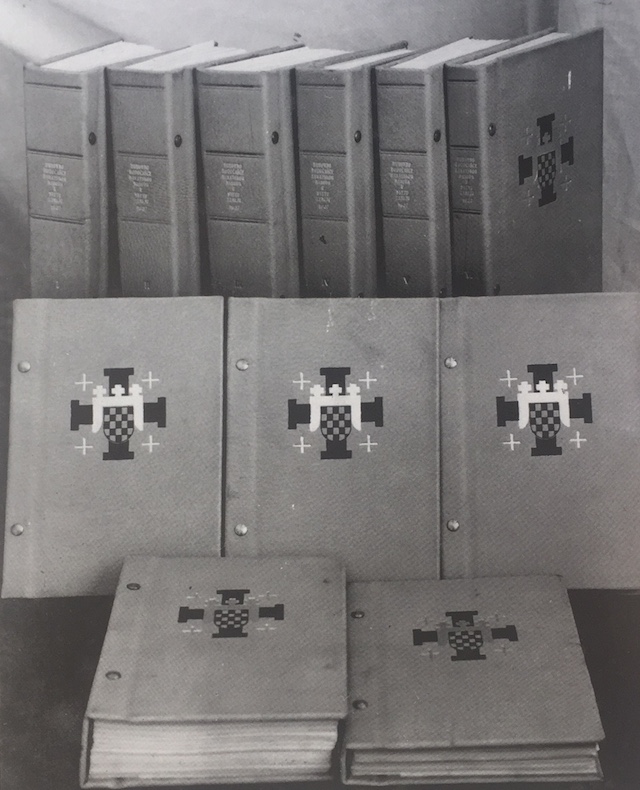
brought to Yerusalem in 1937.
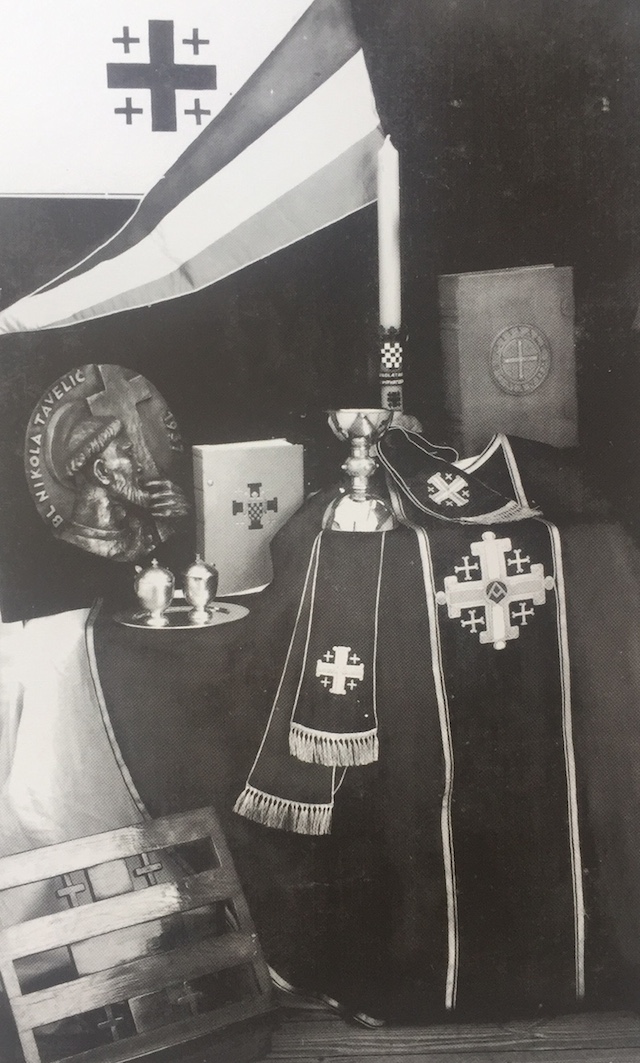
Artefacts created upon the suggestions of Ivo Kerdić, professor at the Academy of Fine Arts,
brought during Croatian pilgrimage to Yerusalem in 1937

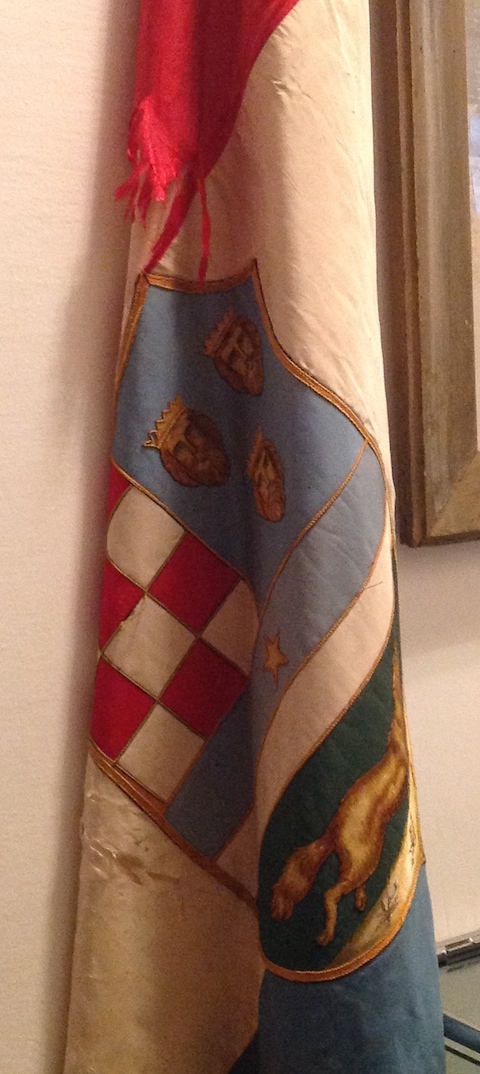
Croatian flag from Saint Louis, USA, made of silk, kept in the City
Museum of Novi Vinodolski.
Dating from 1938.
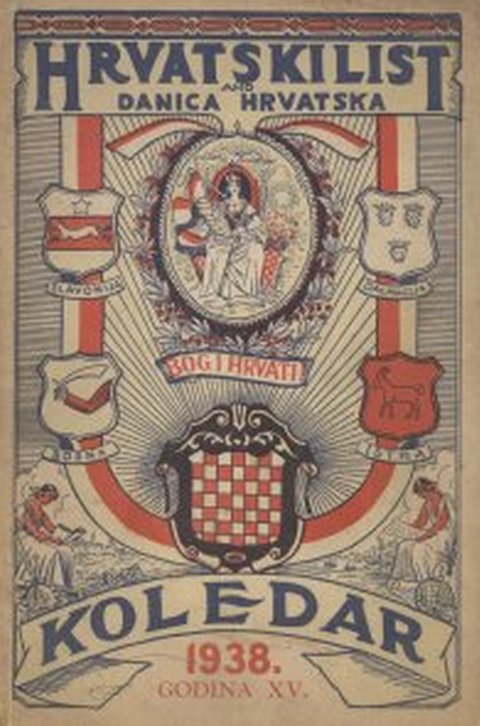
Croatian Newspaper and Croatian Venus, 1938
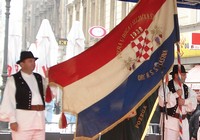
Croatian
Peasant Society, a flag from 1938
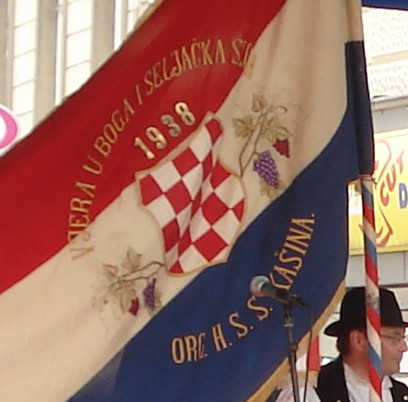
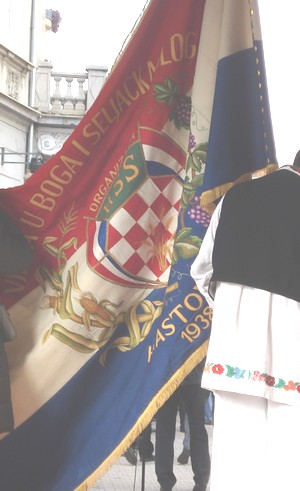
Croatian
Peasant Society, a flag from 1938
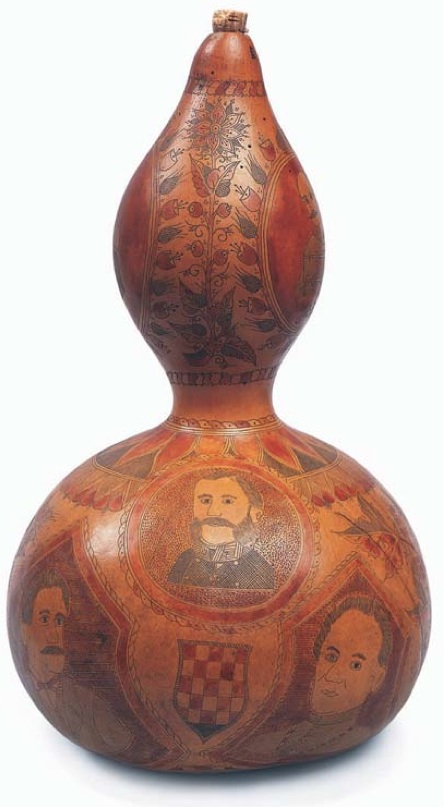
A gourd decorated with Croatian Coat of Arms, made in the North of
Croatia 1938.
Source: Croatian Folk Culture,
Institut za etnologiju i folkloristiku, Zagreb, 2004, p. 407.
Bilingual Croatian-English edition.
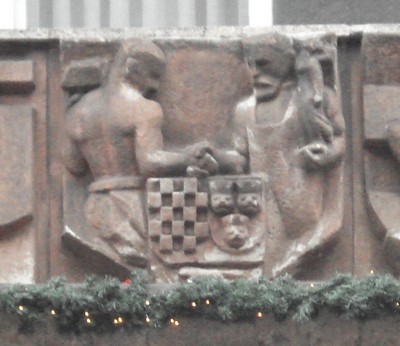
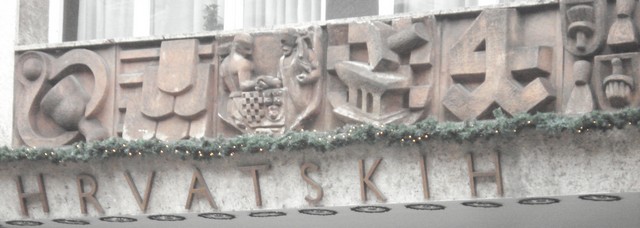
A
detail from the building of Matica
hrvatskih obrtnika (Matrix of
Croatian Craftsmen),
Zagreb, Ilica
49 (between Frankopanska street and Britanski trg), built in 1938.
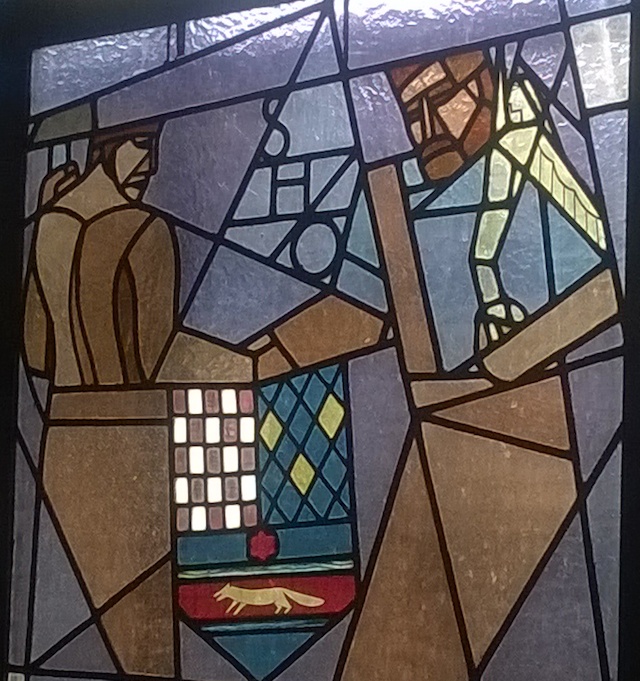
Made by I. Marinković, Zagreb, Nova Ves br. 1.
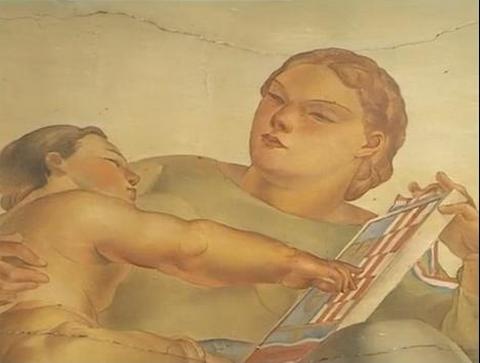
Jozo Kljaković,
distinguished Croatian painter, a fresco in Zagreb
(Opatička 27)
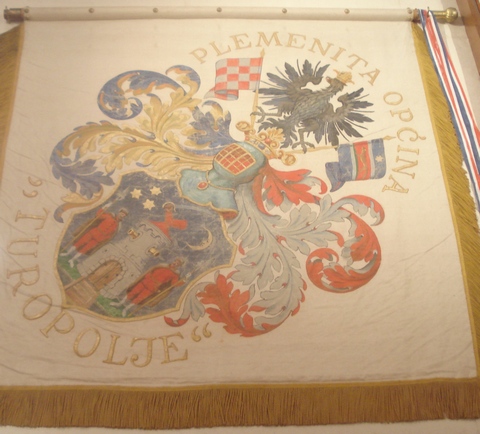
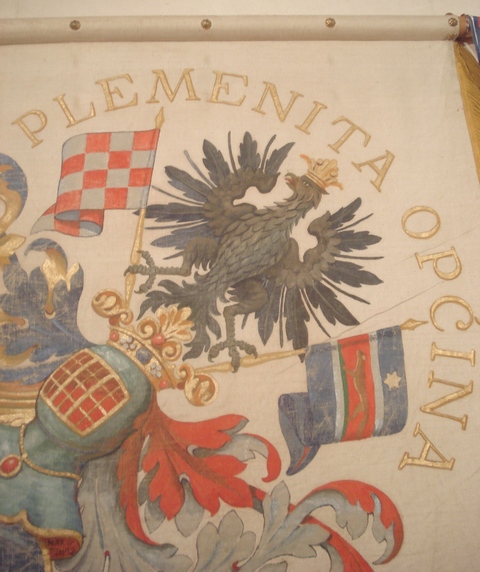
Coat
of arms of the Plemenita turopoljska općina
- Noble district of Turopolje
from 1938
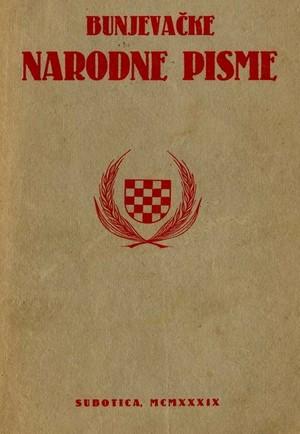
Ive
Prčić: Bunjevačke narodne pisme (Bunjevac
folk poems), Subotica, 1939.
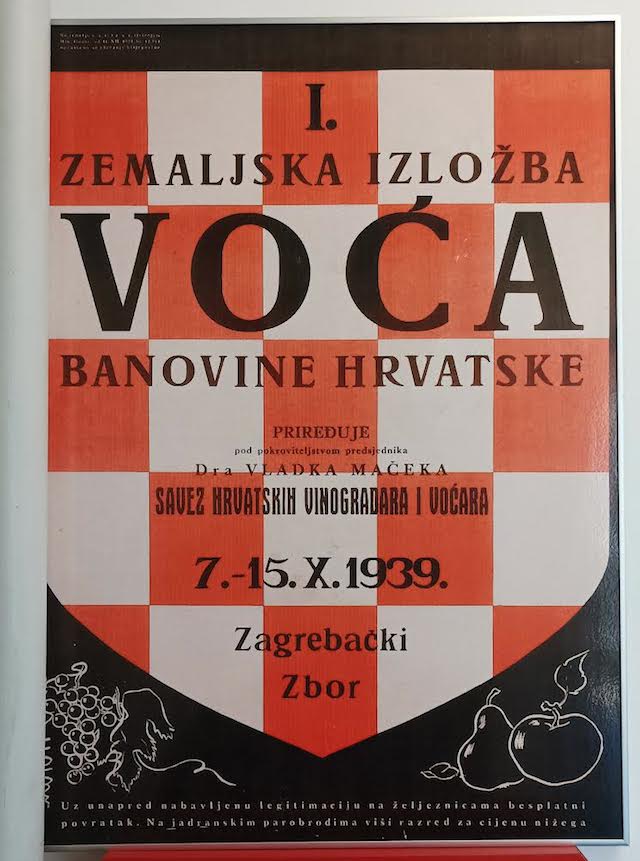
Exhibition of Croatian fruits, Zagreb Fair, 1939,
under the auspices of Dr Vladko Maček
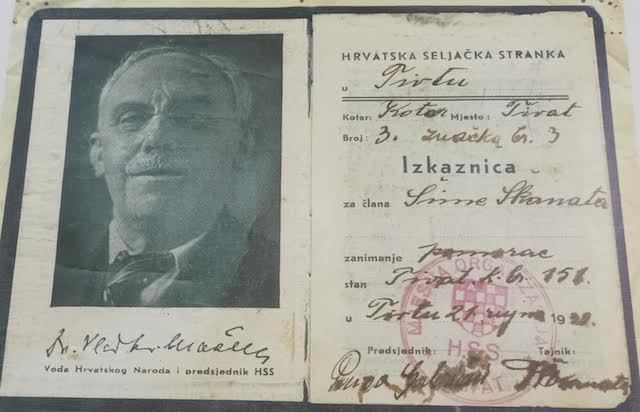
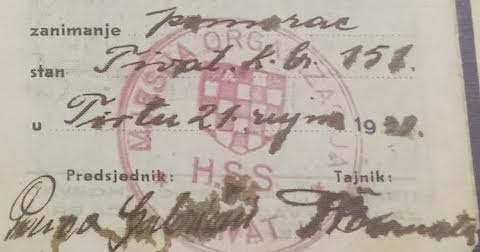
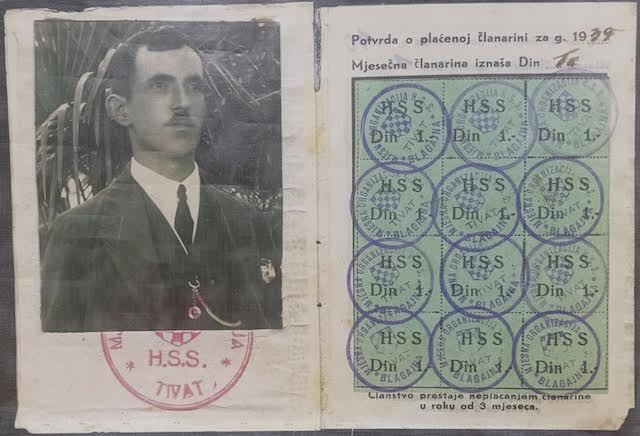
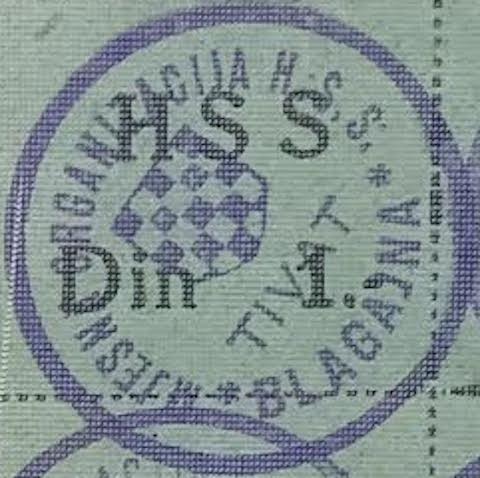
Hrvatska Seljačka Stranka (HSS, Croatian Peasant Party) in Tivat in Boka kotorska, HSS card for Šime Skanata, 1939.
Dr. Vladko Maček (president of HSS afther the assasaination of Stjepan Radić in the Belgrade Parliament in 1928) on the left.
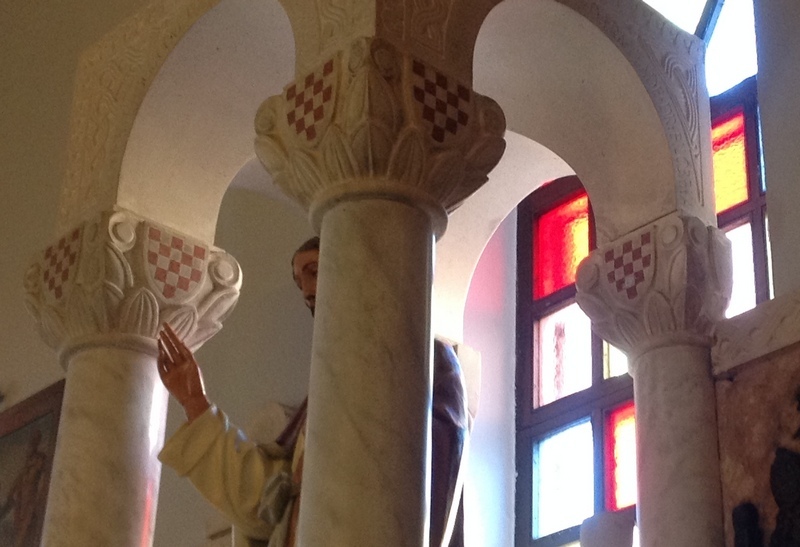
The votive altar of Sacred Heart of Jesus the King was carved by distinguished Croatian artist Mila Wod, thanks to donations of parisheners.
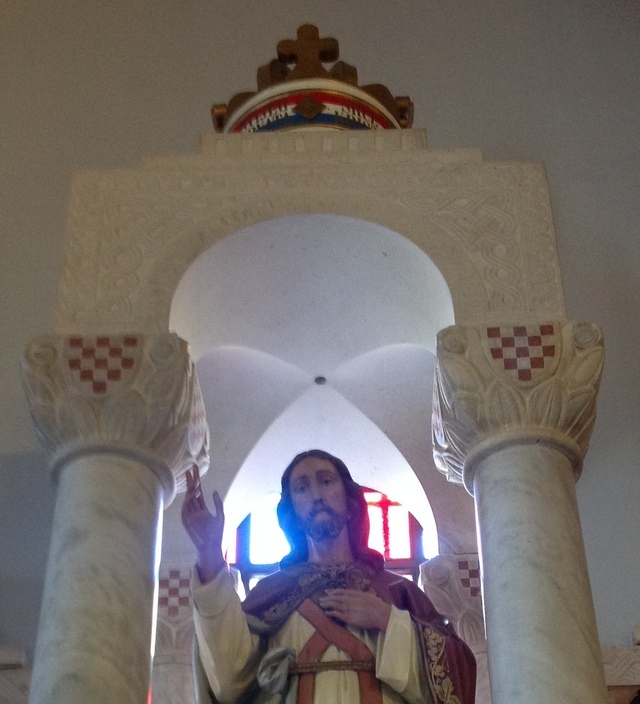
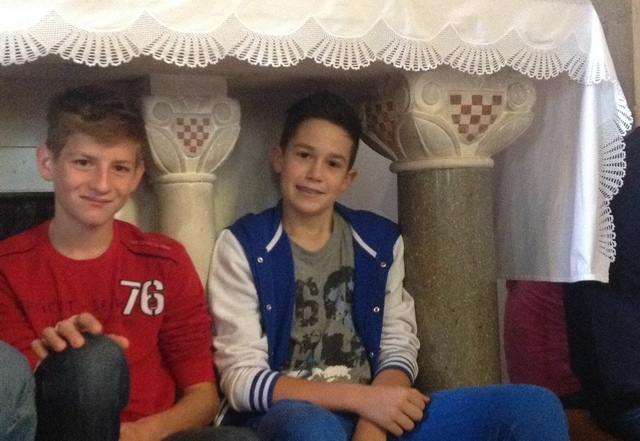
During the Holy Mass in the church of Sv. Ilija (St. Elias) in Metković
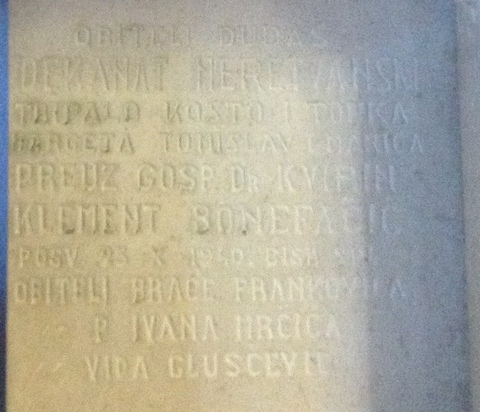
The ciborium has been consecrated by Mons. Dr. Kvirin Klement Bonefačić (1870-1957),
Split-Makarska bishop, in 1940.
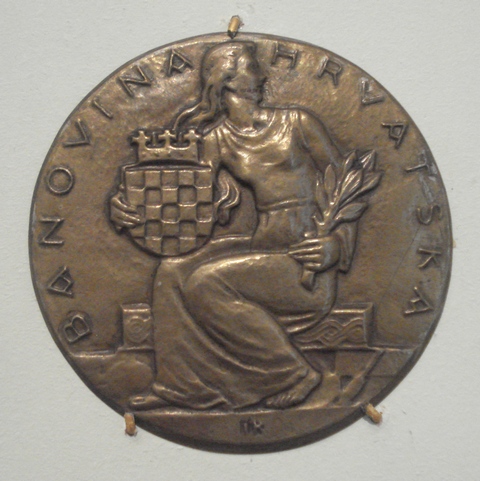
Ivo
Kerdić: Medal of Banovina Hrvatska
(Croatian Banovina), 1940.
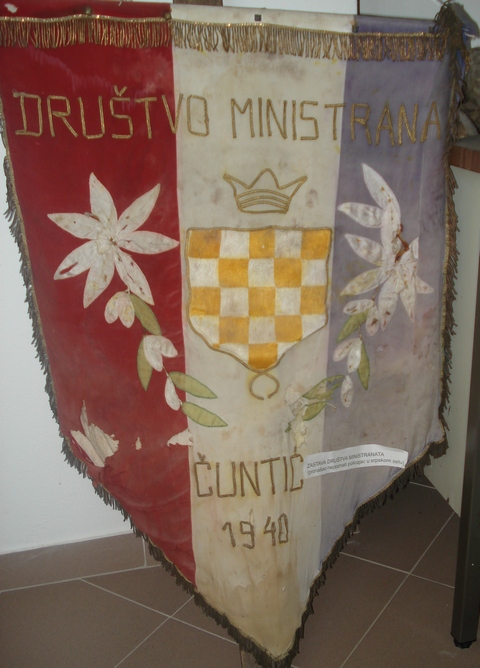
Grb ministranata 1940, village of Čuntić, Banija, Croatia
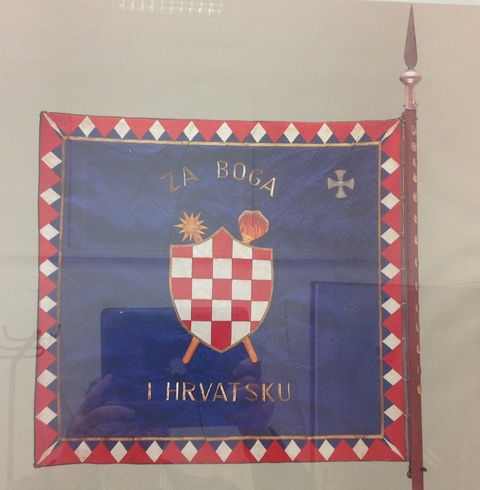
Silk flag of Croatian Catholic Youth (Hrvatska katolička mladež), 1940,
kept in the Croatian Military Academy in Zagreb
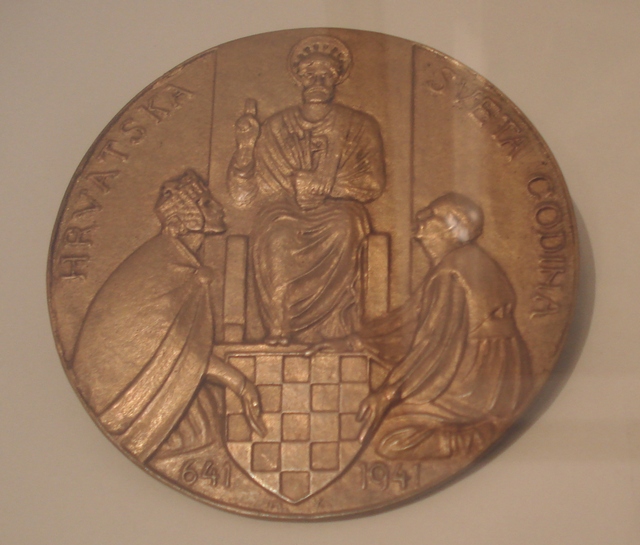
Mila
Wod
(1888-1968): 641-1941, Hrvatska sveta godina - Croatian Sacred Year
(medal)
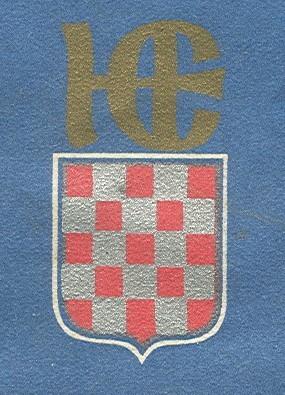
Croatian Encyclopaedia,
1938-1945, initiated by Mate Ujević,
distinguished Croatian lexicographer, containing the ligature HE
(Hrvatska
Enciklopedija)
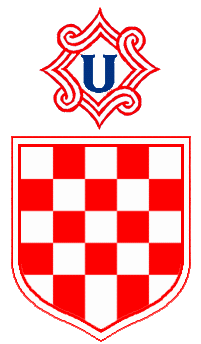
Coat
of arms of the Independent State of
Croatia (1941-1945)
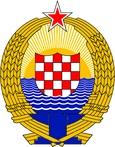
Coat
of arms of the Socialist Republic of
Croatia during the ex-Yugoslav
communist
period
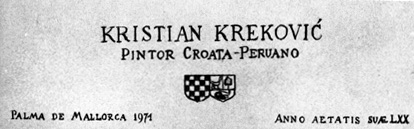 |
Autograph
of Kristian
Krekovic, pintor croata-peruano,
with Croatian and Peruvian coats of arms
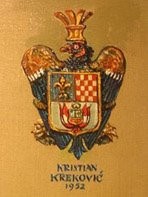
Coat
of Arms of Kristian
Krekovic, composed of centuries
old Coats of Arms of Bosnia (lily)
and Croatia.
Peruvian Coat of Arms is under them. Painted in 1952 during his sojourn
in Peru.

Kristian
Kreković's autoportrait from
1950, made
in Cuzco in Peru, the old capital of Inca Empire.
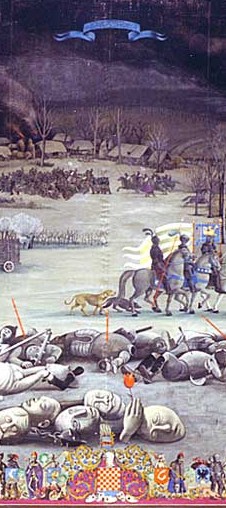
A
detail from a ceremonial curtain of the Croatian
National Theatre, Zagreb, by
Krsto Hegedusic, 1969
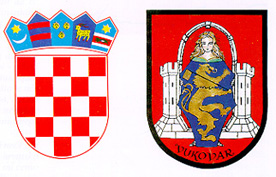
Coat
of arms of the Republic of Croatia (1991)
and of the town of Vukovar
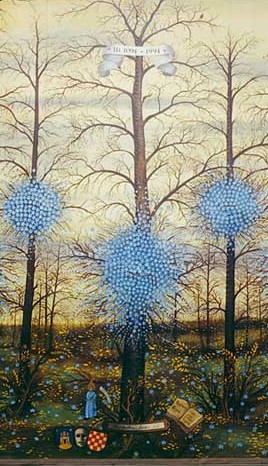
A
detail from a ceremonial curtain of the Croatian
National Theatre, Zagreb, by Ivan Rabuzin
One of our best theoretical physicists was Gaja Alaga (1924-1988), member of the Croatian Nobility from Backa and Bunjevci Croat.
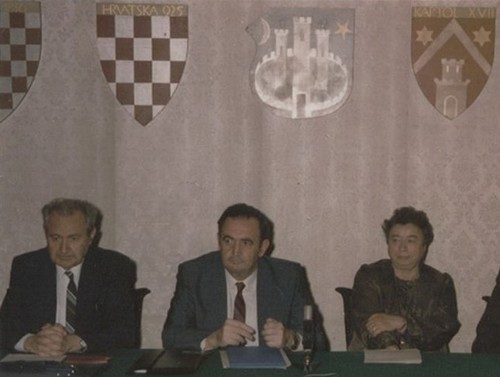
Professor Gaja Alaga,
distinguished theoretical physicist, on the left, a member of
the Croatian Nobility.
Source www.knjiznica.phy.hr
He
worked not only in
Zagreb, but also at the Niels Bohr
Institute in Copenhagen, Berkeley, Ludwig-Maximilians University in
Munich etc. In 1955,
in cooperation with K. Alder from Switzerland, A.
Bohr from Denmark and B. Mottelson from the USA,
he discovered the so
called K-selection rules and intensity rules for beta and gamma
transitions in deformed nuclei.
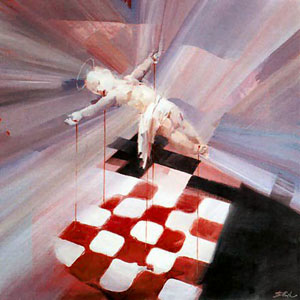
Christmas
1991
Charles
Billich, see source

Zid
boli (Wall
of Pain)
in Zagreb
From the Memorial room dedicated to Croatian defenders of the city of Dubrovnik (the room is in the very centre of Dubrovnik, within the Sponza palace):
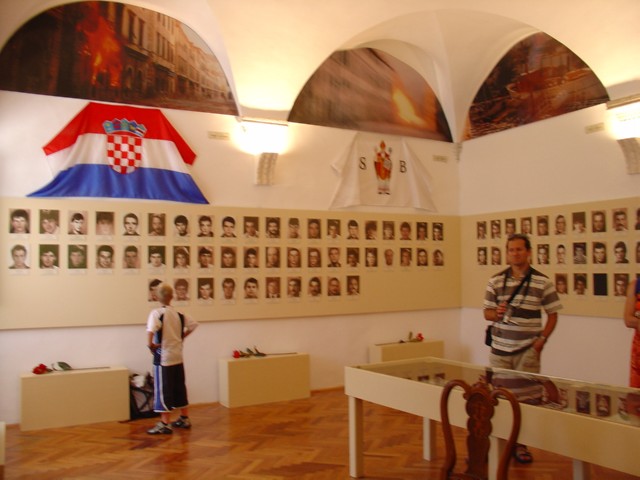
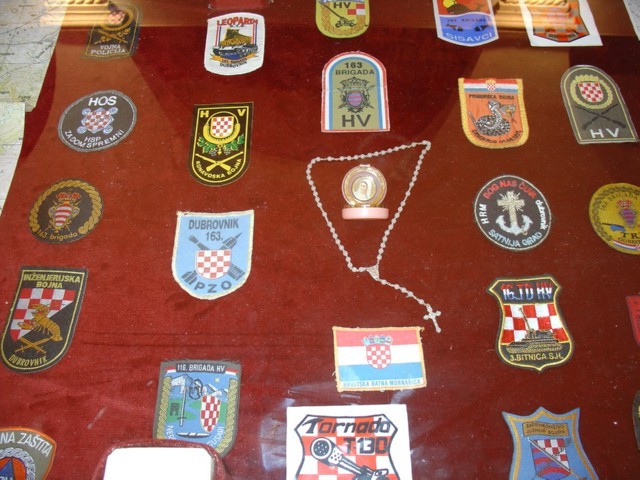
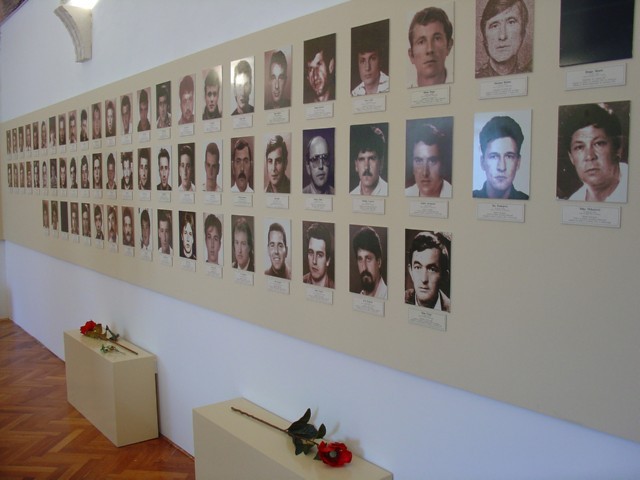

Goran
Ivanisevic,
with Croatian Coat of Arms, early 1990s,
during the most brutal Greater-Serbian attacks on Croatia
Storm Operation, 4-8 August 1995
liberation
of parts of Croatia,
in particular of Lika
and Knin, from
Greater-Serbian occupation
ensuring safe connection between Zagreb, Zadar, Sibenik, Split, Dubrovnik,...
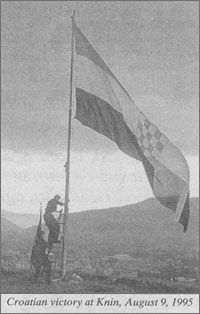
liberation of Knin,
Croatian town which never in history was a part of the so called Krajina
deblocade
of the town of Bihac in BiH,
preventing the tragedy greater than that of Srebrenica in 1995
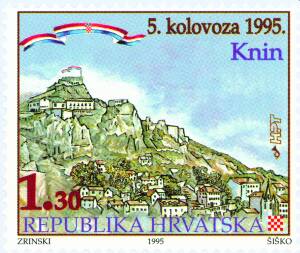
A
stamp issued on the occasion of liberation of
the Croatian town of Knin
during the Storm operation in 1995.
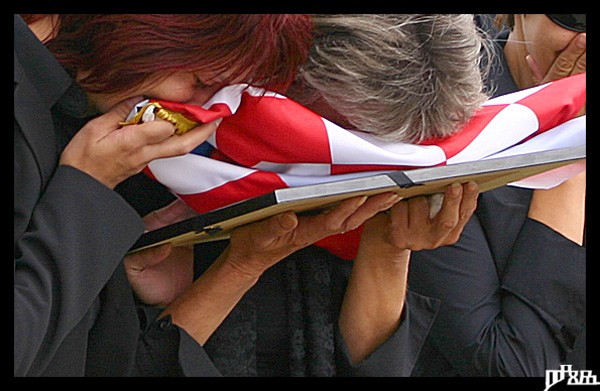
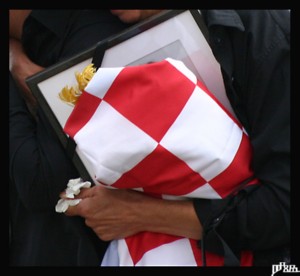
From
the 2005 burial of Croatian defenders of
the city of Vukovar, killed in 1991.
The woman in the middle burried the two arms of her husband.
(copyright by Julija Vojkovic)
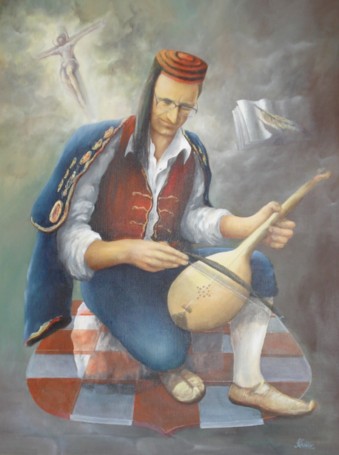
Don
Petar Vuletic, Catholic priest, painter and
poet, worked among Croats in Los Angeles (died in 1998).
This portrait made by Srecko Kriste is kept in Ravno,
in Eastern Herzegovina, not far from Dubrovnik.
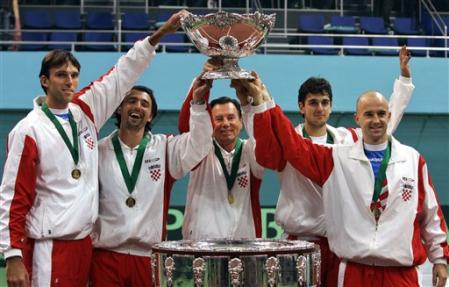
Croatian
team won the 2005 Davis Cup Tournament
in the final match with Slovakia in Bratislava.
This is one of the greatest achievements in the history of Croatian sport.
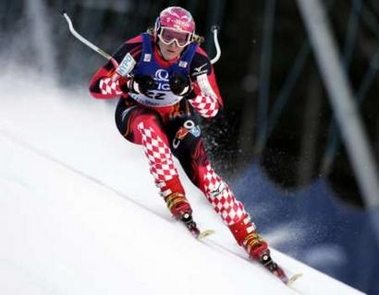
Janica
Kostelic,
winning the 2006 Women Alpine Ski World Cup super-G race in Bad
Kleinkircheheim
(photo by Ruters/Calle Teornstroem)

Glen
Boss with Croatian Coat of Arms, riding on
the famous mare Makybe Diva, owned by Tony
Santic, Australia
Photo
by Wayne Taylor

David
Diehl, New York Giants,
2008, photo from CROWN
|
|

Kimono Croatia worn in honour of Croatian ambassador Stambuk's birthday
Tokamachi factor, a paradigm for Japan-Croatia emotional attachement
The winning silk kimono named Croatia has been made in Tokamachi in the memory of the Croatian national football team's presence during the World Cup 2002 in Japan. The Mayor's daughter has worn it for the Croatian ambassador's birthday.

For
more details see Kimono Croatia
Photo by the courtesy of Dr.
Drago Štambuk, ambassador of the Republic of Croatia in
Japan.
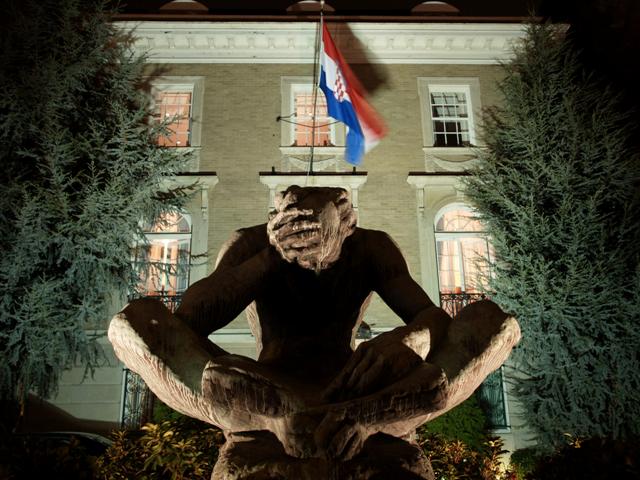
Ivan
Mestrovic's
St. Jerome in front of the Croatian Embassy, Washington DC, USA
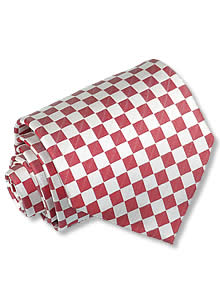
Cravate,
photo from www.croata.hr

Grb
Primorsko-Goranske županije
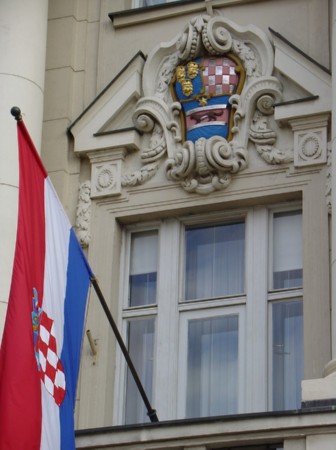
Croatian
Parliament - Hrvatski Sabor,
Zagreb
with an old Croatian coat of arms
 |
Coat of arms of the Republic of Croatia, description
- until 1600
- 1600-1800
- 1800-1900
- 1900 until today
- References
Croatia - its History, Culture and Science