| Art |
| Science |
| Latinists |
| Dubrovnik |
CROATIAN GALLERY
| Glagolitic Script |
| Music |
| Croats in BiH |
| Sports |
| Cravate |
| Parachute |
| Pen |
| Psychology |
| Dactyloscopy |
| R. Boskovic |
2005 2006 2007 2008 2009 2010 2011 2012 2013
Important new discoveries about Croatians
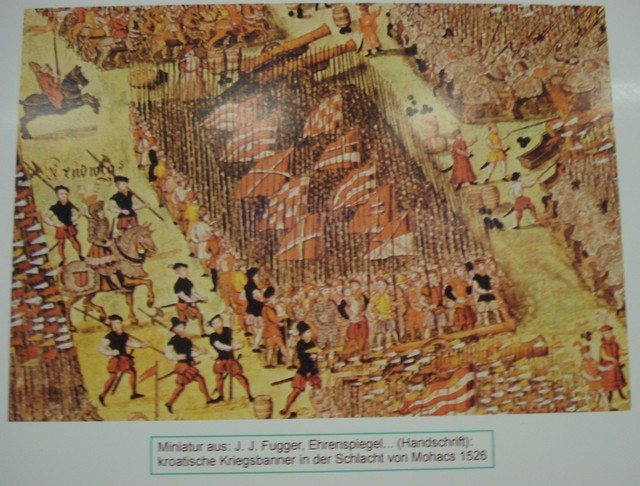
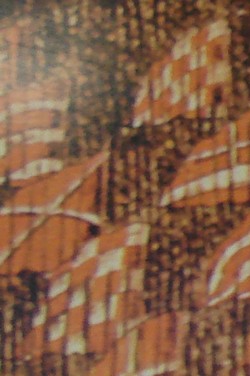
Two clearly visible Croatian Coats of Arms of Croatian troups at the 1526 battle at the Mohac field (Hungary) against the Turks (the second flag in the left column and the fourth flag in the right column). By the courtesy of Josip Sersic and Mijo Juric, Vienna, 2009.
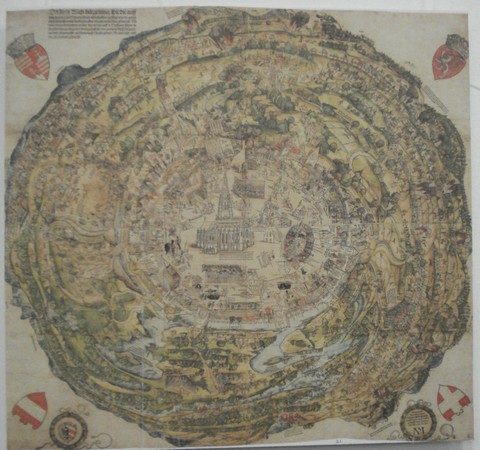
Vienna
in 1529, during the first Turkish siege of the city.
Stephansdom, the famous Vienna Cathedral, is in the center.
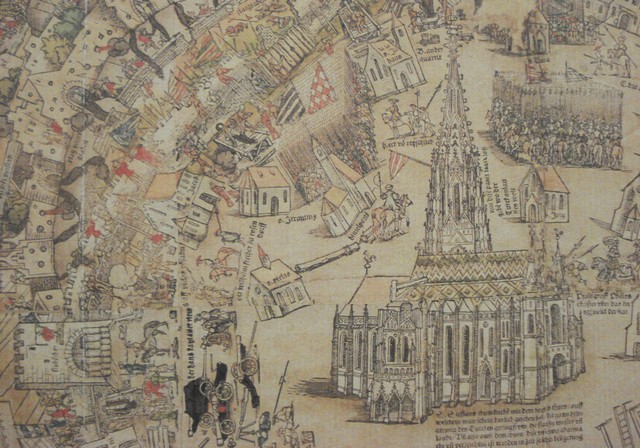
A
detail from the above map published in 1530:
Croatian Coat of Arms is in the middle top,
to the left of the Stephansdom Cathedral in Vienna.
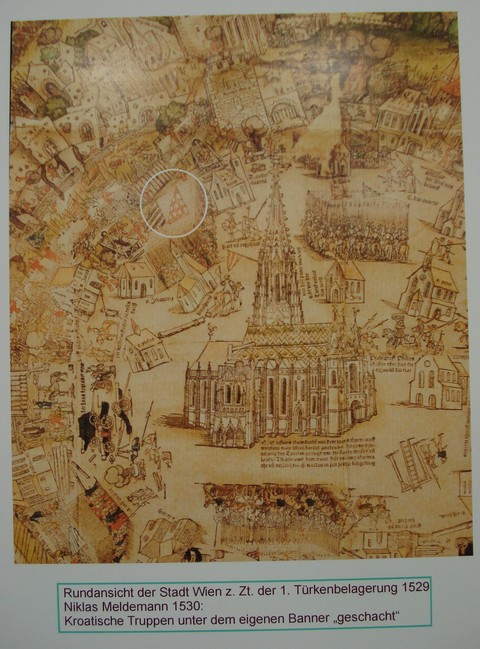
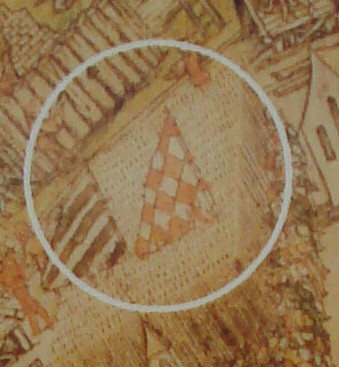
Croatian
defensive forces under their Croatian
flag in Vienna in 1529,
during the first Turkish siege of the city. For more details see Croatian Coat of Arms.
|
During the second Turkish siege of Vienna in 1683, a Croatian village called Krowotendörfel, placed immediately near the city walls, has been destroyed, and since then it does not exist any more. The meaning of its name is precisely Croatian Village! Its position corresponded to contemporary Spittelberg near the Hofburg royal palace. For more details see [400 Jahre Kroaten in Wien]. Other names of Krowotendörfel can also be encountered in the literature:
Source Croatians in Bosnia and Herzegovina If you happen to be in Vienna until the end of January 2010, capital of Austria, we invite you not to miss an important exhibition 400 Years of Croatians in Vienna (400 Jahre Kroaten in Wien) held in Amthaus Wieden, Favoritenstrasse 18, Vienna. As can be seen from the above photos, the earliest known testimony of Croatian presence in Vienna is from 1529, so that the title should be 480 Years of Croatians in Vienna. Many thanks to Mr. Mijo Juric, Vienna, for indicating the mistake in the title. The accompaning Symposium has been held in 20-22nd November 2009, organized by Krotisches Zentrum, Schwindgasse 14, 1040, Vienna, Austria. A very interesting booklet entitled 400 Jahre Kroaten in Wien / 400 ljet Hrvati u Becu (should be 480!) has been issued, prepared Peter Tyran (editor in chief) and his collaborators Josip Sersic and Mijo Juric. Many thanks to Dr. Josip Sersic and Mr. Mijo Juric, Vienna, for their kind help.
|
The oldeset known mention of Correspondence Chess
|
The first mention of playing chess in Croatia dates from 14th century, more precisely, from 1385 in the city of Zadar. Thomas Hyde, an English orientalist from 17th century, travelled through Croatia, and mentioned that the correspondence chess had been played between Croatian and Venetian merchants in 1650, more precisely, beween the Dubrovnik and Venetian merchants. It is the oldest mention of the correspondence chess in history. This fact can be found in his book "De ludis orientalibus" (On Eastern Games), published in Latin in 1694. Information by the courtesy of dr. Zvonko Krecak, Croatian physicist and president of the Croatian Correspondence Chess Association. Source Croatian Sports. In Croatia there is a Chess Street, the only one in the world. Aleksandar Lysenko, Russian international chess master, is the author of an article "In the Chess Street" published by the well known Russian chess journal "64 Chess Survey", Moscow 1996. The article deals with the Chess Club in the Chess Street in the town of Ravna Gora in Croatia. He wrote: "It is good that such a street exists, but it is a pity that the street is not in Russia."
|
Mahatma Gandhi portrayed by Kristian Krekovic in 1931
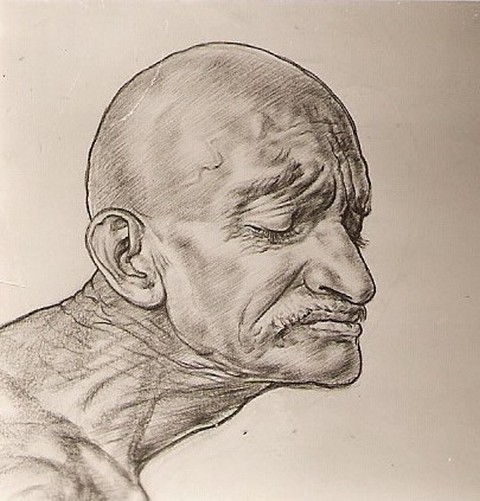
Kristian Krekovic's portrait of Mahatma Gandhi (a detail), Paris 1931.
|
The portrait of Mahatma Gandhi had been made in 1931 during his meditation in the Paris atelier of Kristian Krekovic, distinguished Croatian painter. Krekovic was a personal friend of Mahatma Gandhi. The portrait is exhibited in the Krekovic Museum in Palma de Mallorca in Catalonia, Spain. The Krekovic Museum in Palma has officially been opened by the Spanish Queen Sofia in 1981. Kristian Krekovic also portrayed
|

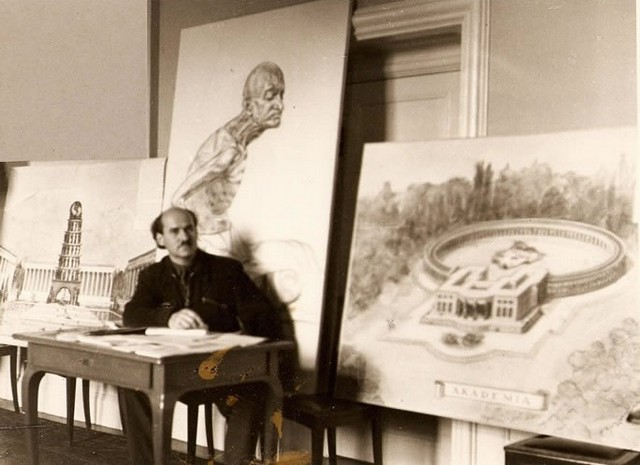
Kristian Krekovic in his atelier in Paris in 1930s. Gandhi's portrait is behind him, made in red chalk.
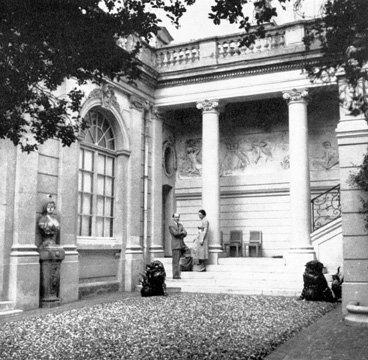
Kristian Krekovic with his wife Sina in his atelier in Paris in 1930s.
Stjepan
Tomislav Poglajen 1906-1992 and God's Underground
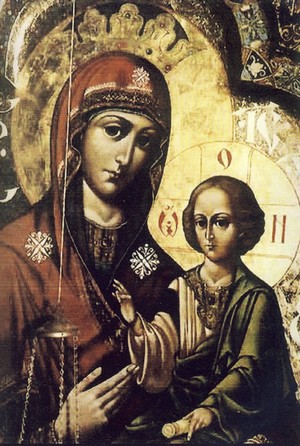
printed upon Tomislav Kolakovič's initiative in about 100,000 copies and distributed in secret to Soviet soldiers in 1944;
the accompaning text is: Presveta Bogorodice, isprosi mi od svog Sina mir u duši i svijetu i milost na času smrti...
(Dear Mother of God, ask your Son to pray for peace in my soul and in the world, and for mercy at the moment of my death...)
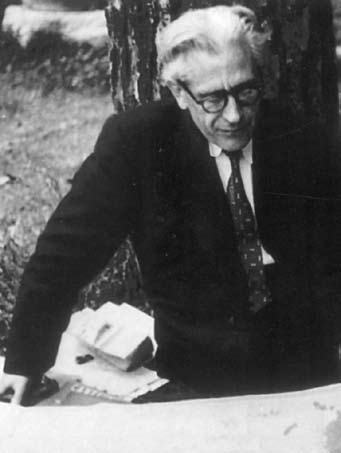
Stjepan Tomislav Poglajen or Tomislav Kolakovič in Slovakia
The Reims
evangelistary
written in Croatian Glagolitic Script in 1395
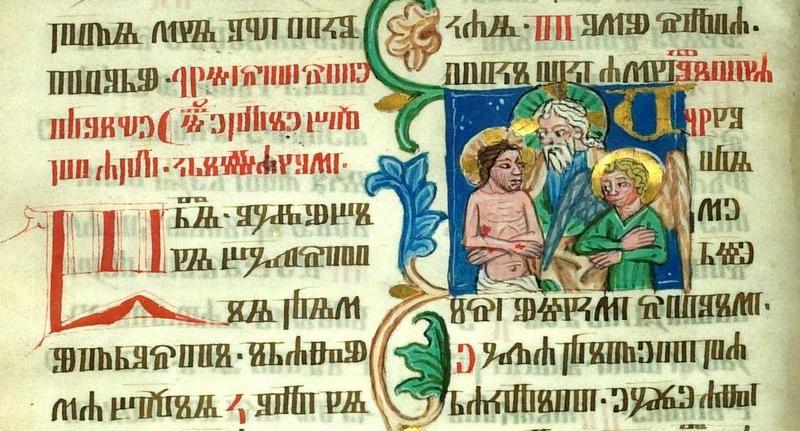
The Reims
Evangelistary from 1395 was
written by Croatian benedicitne monks in Prague, jointly with their
Czech pupils.
The book is the result of the presence of Croatian
glagolitic
benedictins in Czechia
since 1348, upon the
invitation of King Charles IV.
Furthermore, the same year the bendedictine monastary of Emaus
was
errected in the Prague upon his initiative.
The book, tied with another smaller Cyrillic book, is kept in Reims in
France. According to a legend existing in France,
the French Kings were sworn with the book during the official
coronation in the Reims cathedral, among them Louis XIV.
Between 9th and 13th centuries Croatia had more than hundred benedicine
monasteries, among them 36 for nuns.
A part of these monasteries used Croatian Glagolitic Script, while in
the rest of the world the Benedictines used
only the Latin Script. Today there are only nine bendicine
monasteries in Croatia, eight of them for nuns.
The oldest known Bendictine
Rule in a
nonlatin language in the world was written by Croatian benedicine monks
in 13/14th centuries, kept in the National and University Library in
Zagreb.
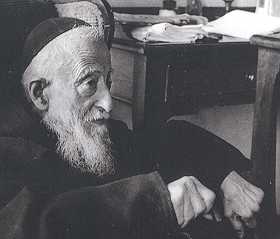
Leopold Bogdan Mandic, Croatian saint
|
St Leopold Bogdan Mandic (1866-1942, memorial day 30th July) was born in Herceg Novi in Boka kotorska, and died in Padova, Italy. Physically malformed and delicate, having height only 1m 35cm, with clumsy walk and stuttering, he developed tremendous spiritual strength. Although he wanted to be missionary in Eastern Europe, he spent almost all of his adult life in Italy, and lived in Padova from 1906 until the end of his life. He spent also one year in Italian prison during the WWI, since he did not want to renounce his Croatian nationality. He dreamed unceasingly about going to Orient, but one day he gave Communion to a very good person. And, as he described: After
finishing her
thanksgiving, she came to me with
this message: "Father, Jesus ordered me to say this to you: Your Orient
is each of the souls you assist by hearing confessions."
|
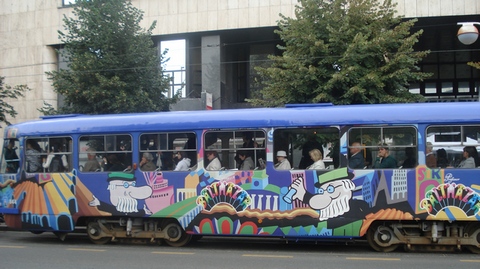
Professor
Balthazar
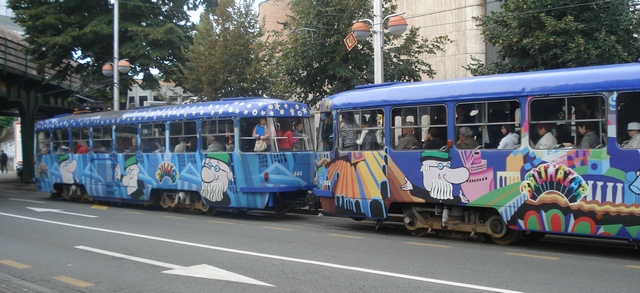
Professor
Balthazar in Zagreb

Kristian Krekovic's portrait of Ramon Llull
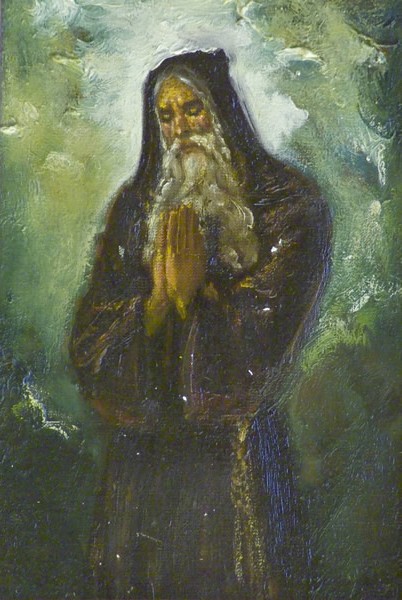
Ramon Llull (1232-1316) was distinguished Catalonian writer, philosopher, Franciscan Tertiary, and martyr.
This is one of three of his portraits made by Croatian painter Kristian Krekovic (1901-1985), kept in the Museu Krekovic in Palma de Mallorca, Spain.
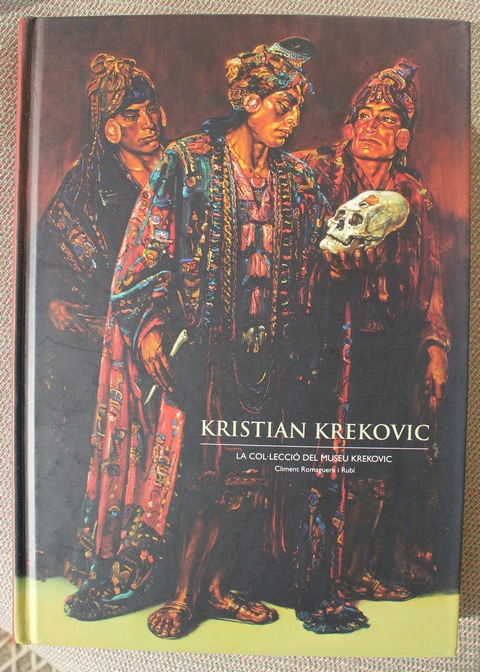
One of Krekovic's portraits of Ramon Llull can be seen in the luxorous monograph written by Climent Romaguera i Rubi: Kristian Krekovic, over the entire page 128.
The book containing 148 colour plates was published by Departement de Cultura of the Consell de Mallorca in 2006, in the Catalan language:
PREÀMBUL
La missió del Museu Krekovic
es preservar i comunicar al
públic
l'esperit creatiu del pintor Kristian Krekovic
a través de
l'obra
exposada a les seves sales. Per aquest raó, hem volgut
contribuir amb
aquesta publicació
a la difusió de la trajectòria
biogràfica i artística
d'aquest singular
artista. ...
FOREWORD
The mission of Museu Krekovic
is to preserve and communicate to the public the creative spirit of the
painter Kristian Krekovic
via his oeuvre exhibited in its halls. To this end we wanted contribute
with this publication
to spread the biographic trajectory and the art of this unique artist...
Translated from Catalan by Darko Žubrinić, a member of Amics croats de la cultura catalana society in Zagreb.
| Nikola Tesla |
| Moho layer |
| Torpedo |
| Schwarz airship |
| Propeller |
| California |
| Dreams |
| Acknowledgements |
| King of Dolls |
| Kristian Krekovic |