CROATIAN LACE
Darko Žubrinić, 2006
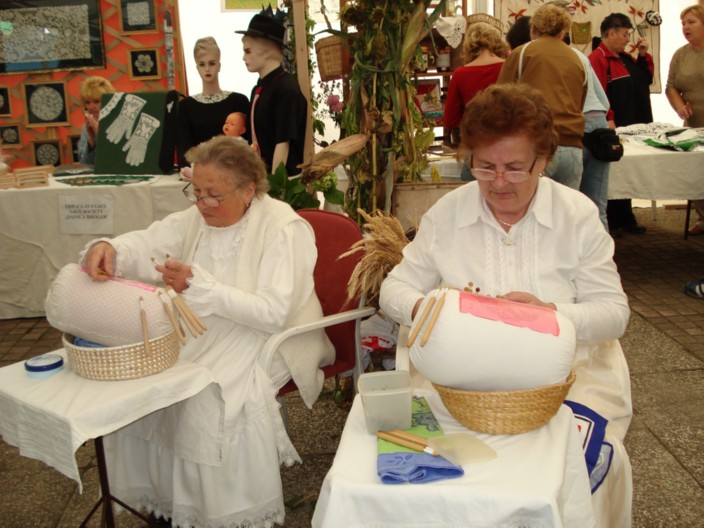
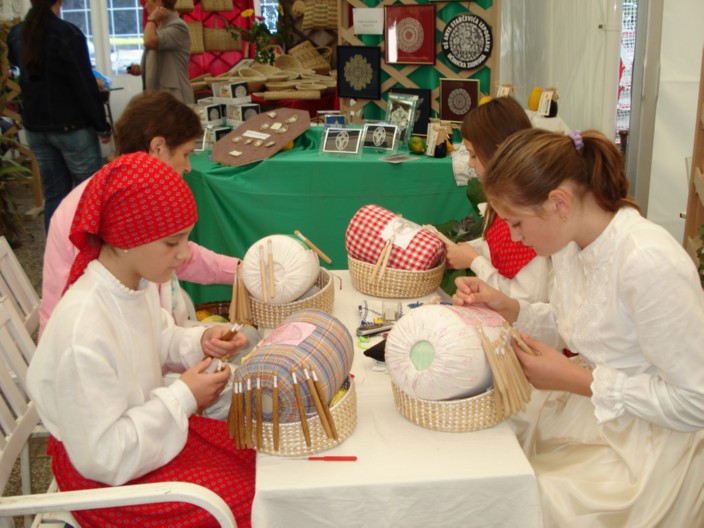
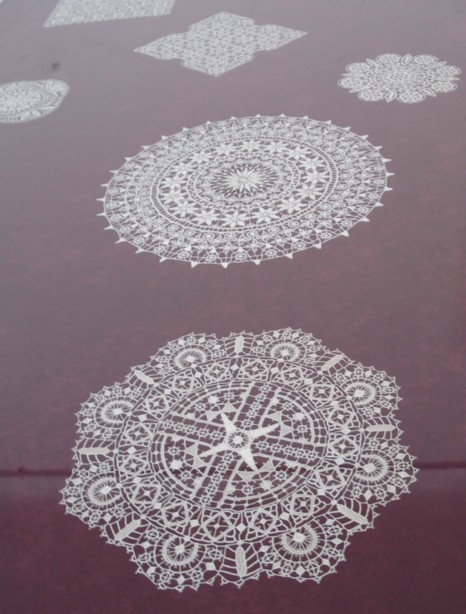
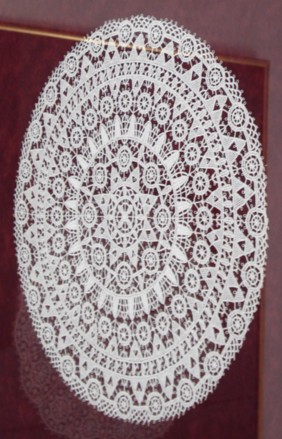
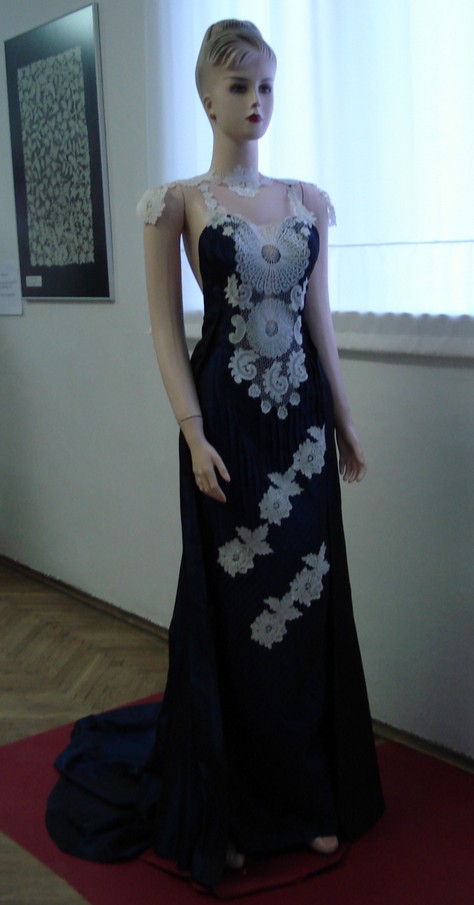
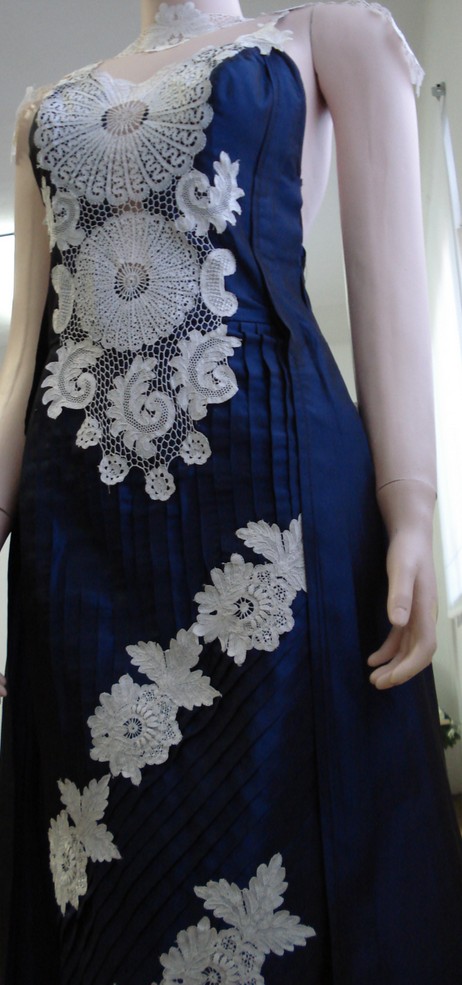
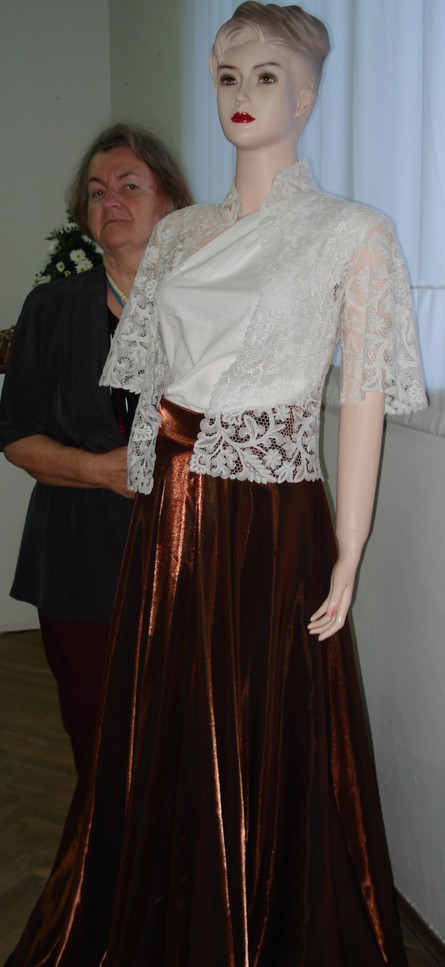
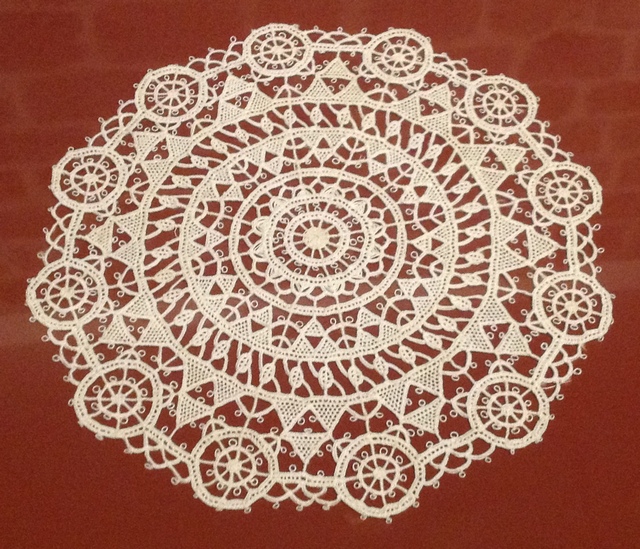
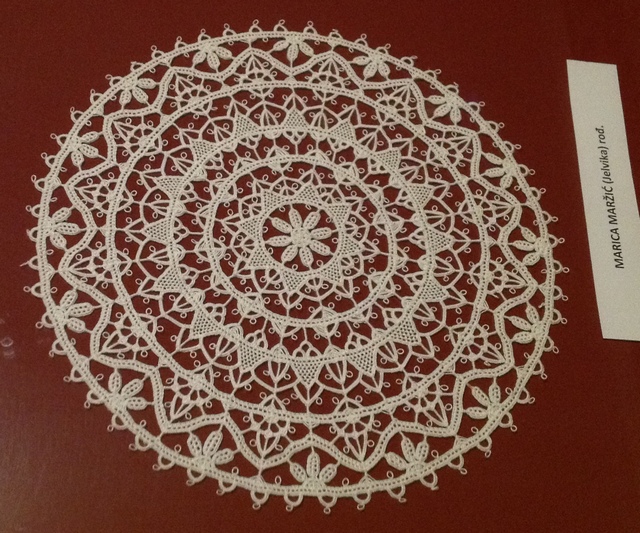
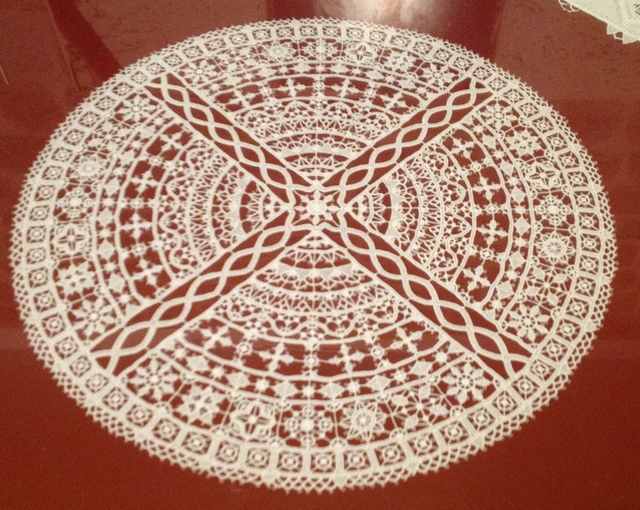
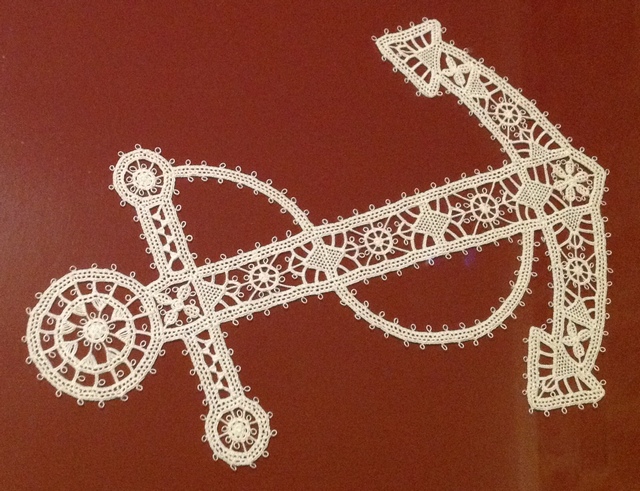
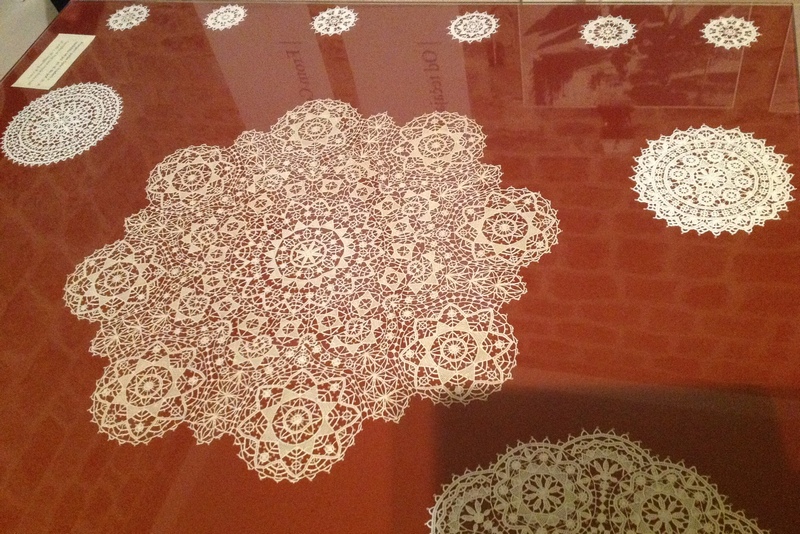
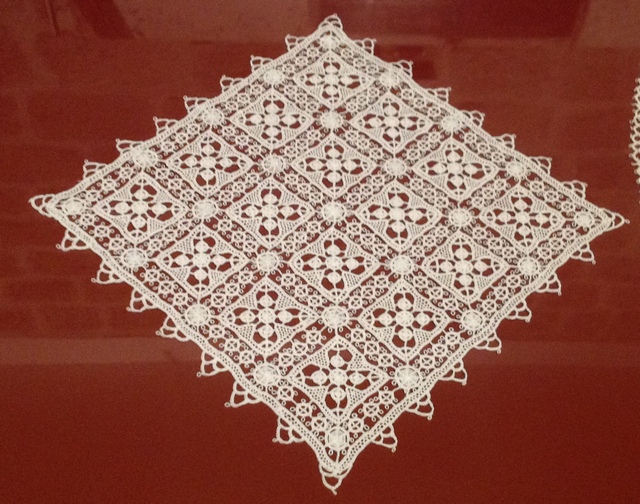
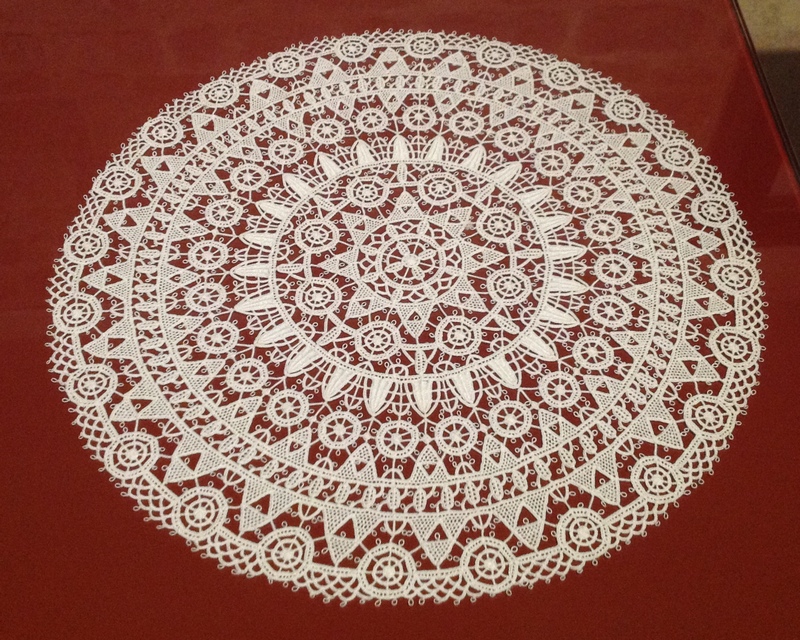
The annual exhibition of Croatian lace in the town of Lepoglava, NW of Zagreb, showed amazing skills of our women in knitting, using subtle patterns of breathtaking beauty. The 10th International Lace Festival - Lepoglava 2006 has been very successfuly organized. Here are just a few photos from the 2006 exhibition, taken by the author.
The tradition of Lepoglava lace is several centuries old. It was especially blossoming in 19th century and in the first half of 20th century. In 1937 the Lepoglava lace won the gold medal in Paris. After 1945, during the ex-Yugoslav communist regime, the tradition has almost died out. Since the 1997 it is blossoming again.
The oldest testimony of lace making in Croatia is from the 15th century, mentioned in the minutes of the Dubrovnik Senat, see [Eckhel].
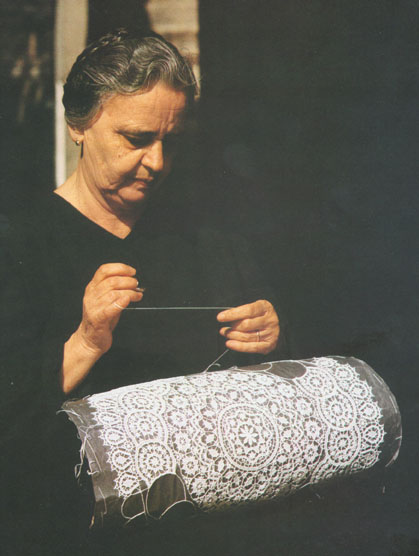
Lepoglava lace (bobbin lace):
   |
  |
  |
   |
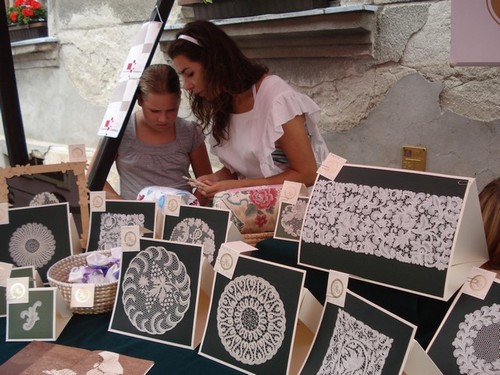
Learning the art; Špancirfest, Varaždin, September 2008.
The Lepoglava lace began to flower especially by the end of the 19th century, when Zlata Sufflay, a sister of Milan Sufflay, organized the production of sofisticated lace patterns based on folk decoration. In 1925 her lace fan was awarded the silver medal at the International Exhibition in Paris, see [Petrović Leš, p. 174].
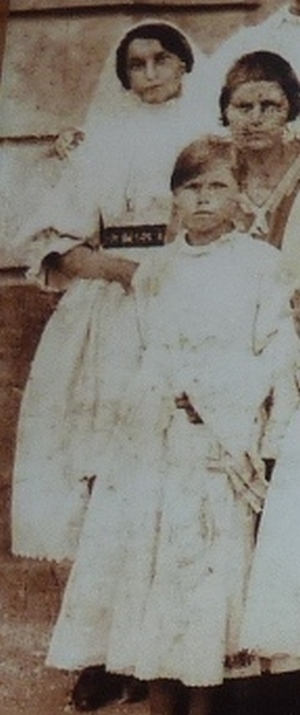
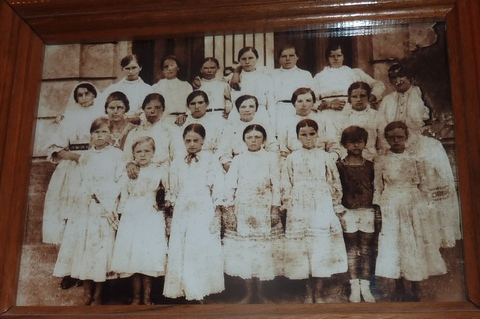
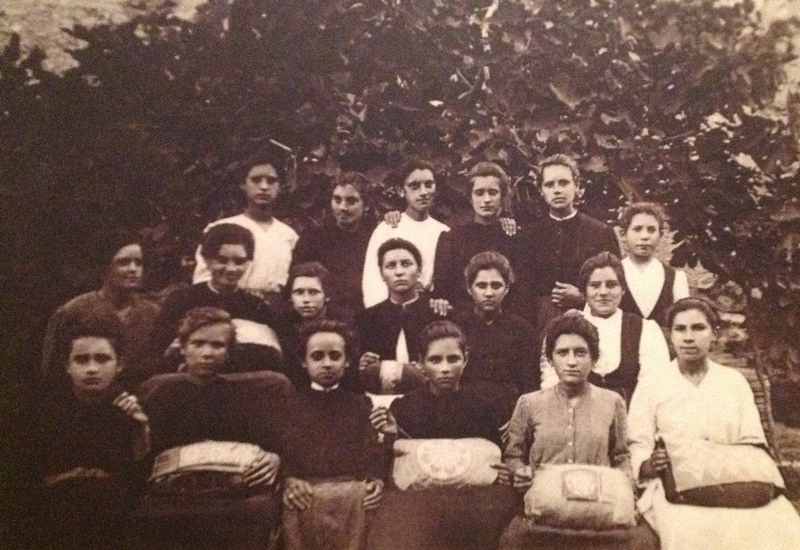
Danica Brössler on the left. A detail from the following photo taken in Lepoglava, see below, in possession of Mrs. Aleksandra Štefanek, Lepoglava.
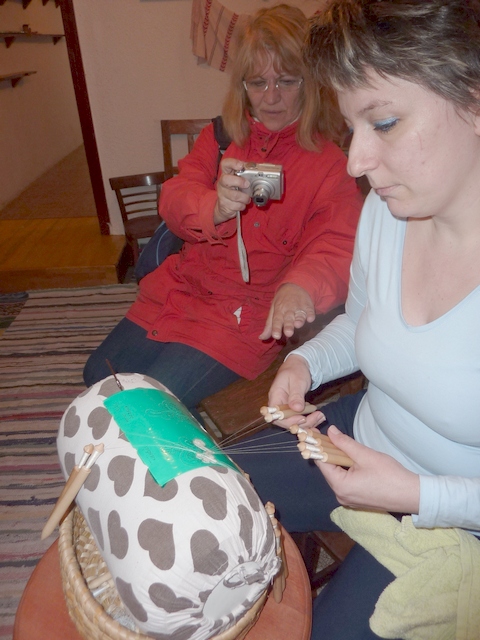
Mrs. Aleksandra Štefanek (originating from the city of Opatija) describing the art of lace making to Carmen Verlichak, Buenos Aires, Argentina. The round pilow is called dedek - which is local Croatian deminutive of grandfather. Mrs. Štefanek directs with her husband a private enterprise in Lepoglava, offering lace making, souveneers, a nice ethnographic museum, and autochtonous kitchen in their house.
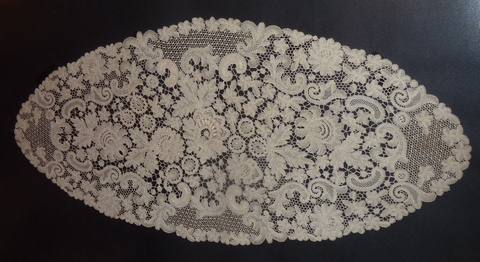
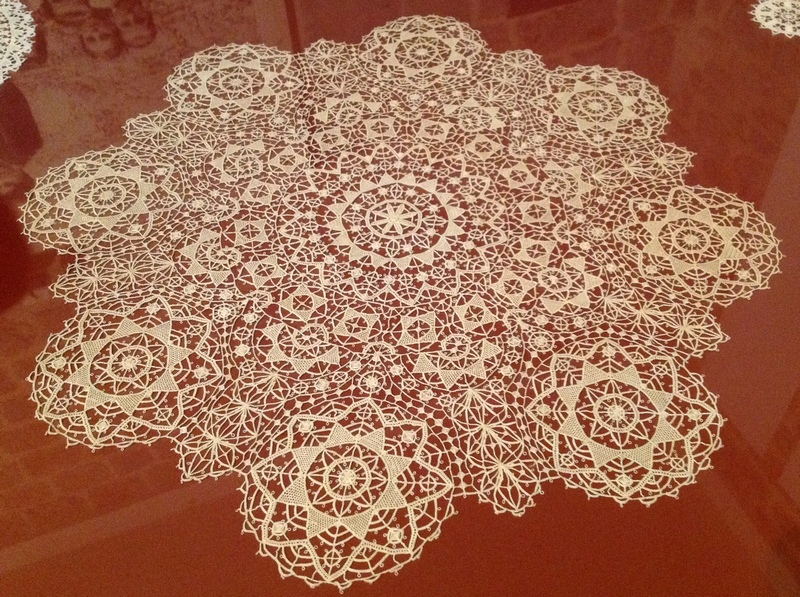
Mrs. Aleksandra Štefanek made the following sofisticated lace measuring 74x32 cm. According to her, it needs about 6 months of hard work. Sometimes a group of three women do the job, two month each, and at the end the three parts are connected. Below we provide a few details from the abov elace.
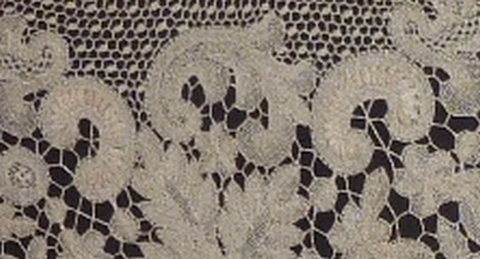
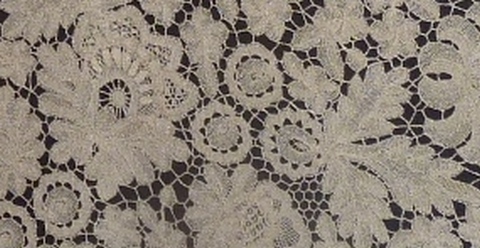
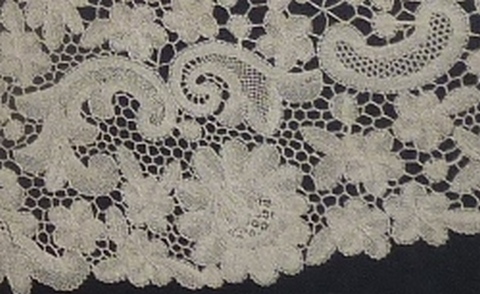
Many thanks to Mrs. Aleksandra Štefanek, Lepoglava, for permission to take the photos.
Laces are made with wooden bobins which produce a nice sound.
Lace Tent is an interesting project initiated by Akiko Sato, a japanese artist (photographer). The tent measures 3x2 meters. In order to finish it, ten local lace-makers worked for two monts, six hours a day. The project has been supported by the Embassy of Japan in Croatia and by the City of Lepoglava, and the project has been realized in 2007, in the presence of H.E. Mr Shirakawa, ambassador of Japan in Croatia, and his wife. One lace tent is kept in the City Museum in Lepoglava, and another in Japan.
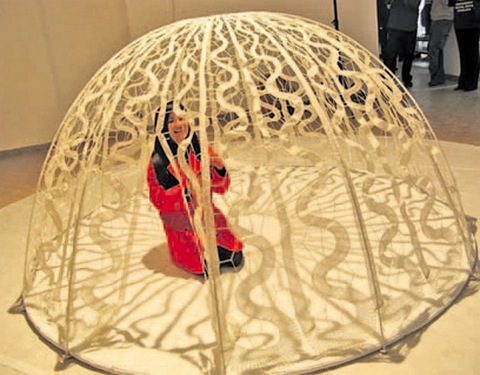
Akiko Sato from Japan, living
in Zagreb, enjoying in her
Croatian lace tent in Lepoglava.
Source Ministry of Culture of the Republic
of Croatia
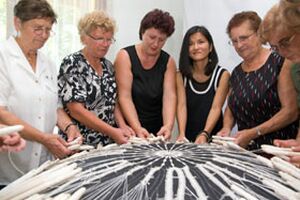
Akiko Sato (3rd from the right) with Lepoglava women
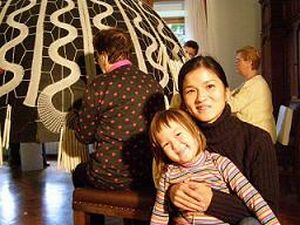
Akiko Sato in Lepoglava; Croatia - Japan
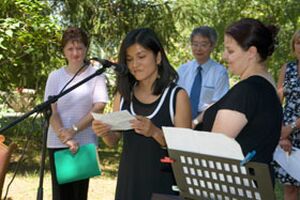
Akiko Sato, September 20, 2007, addressing in Lepoglava

Address of H.E. Mr Shirakawa, ambassador of Japan in Croatia.
Photos from The Embassy of Japan in Croatia
and hagakure.blog.hr
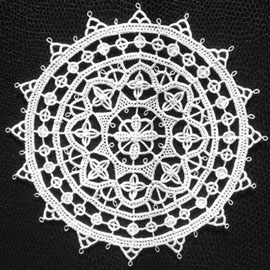
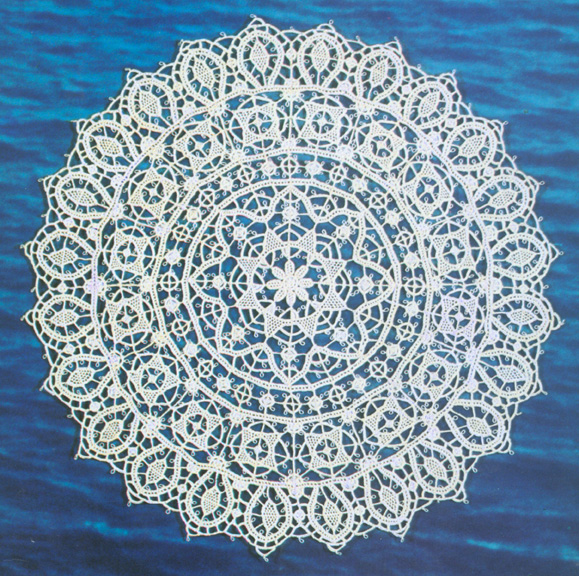
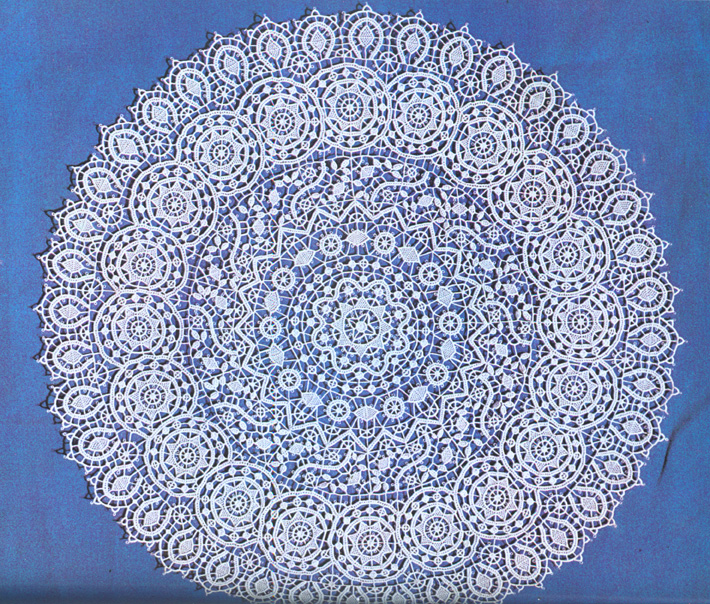
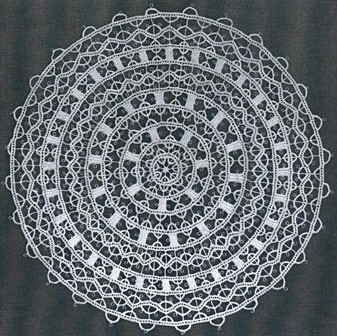
Pag lace (needle point lace)
  |
  |

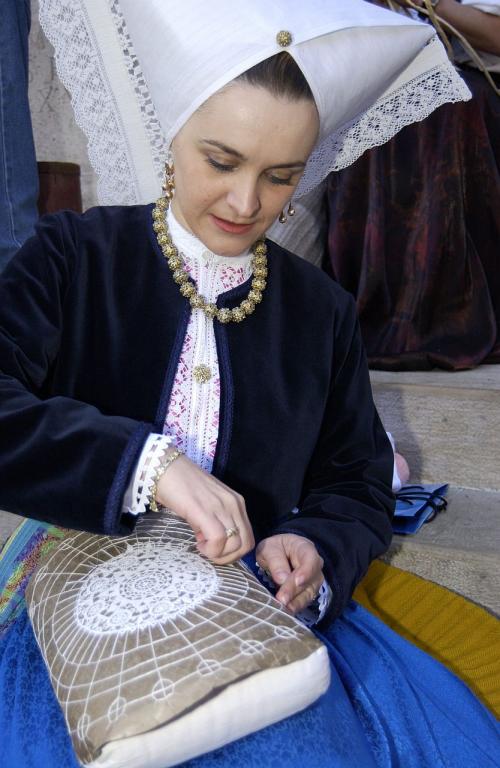
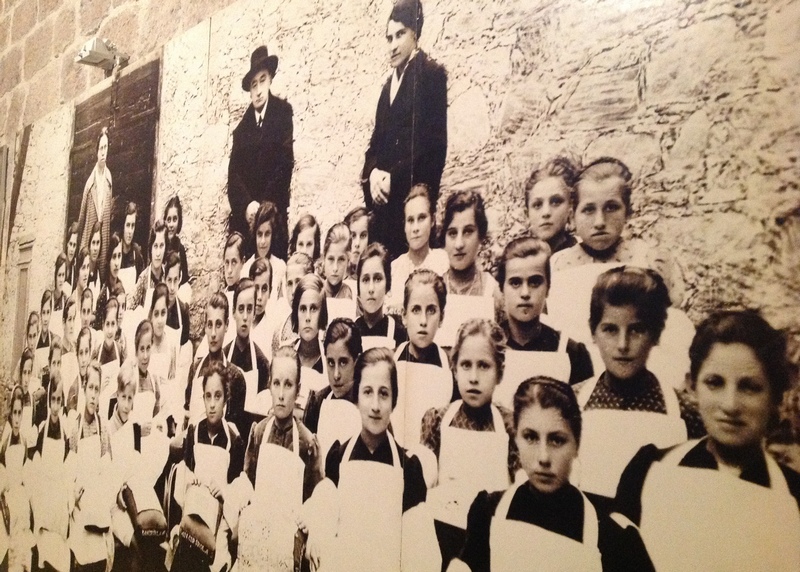
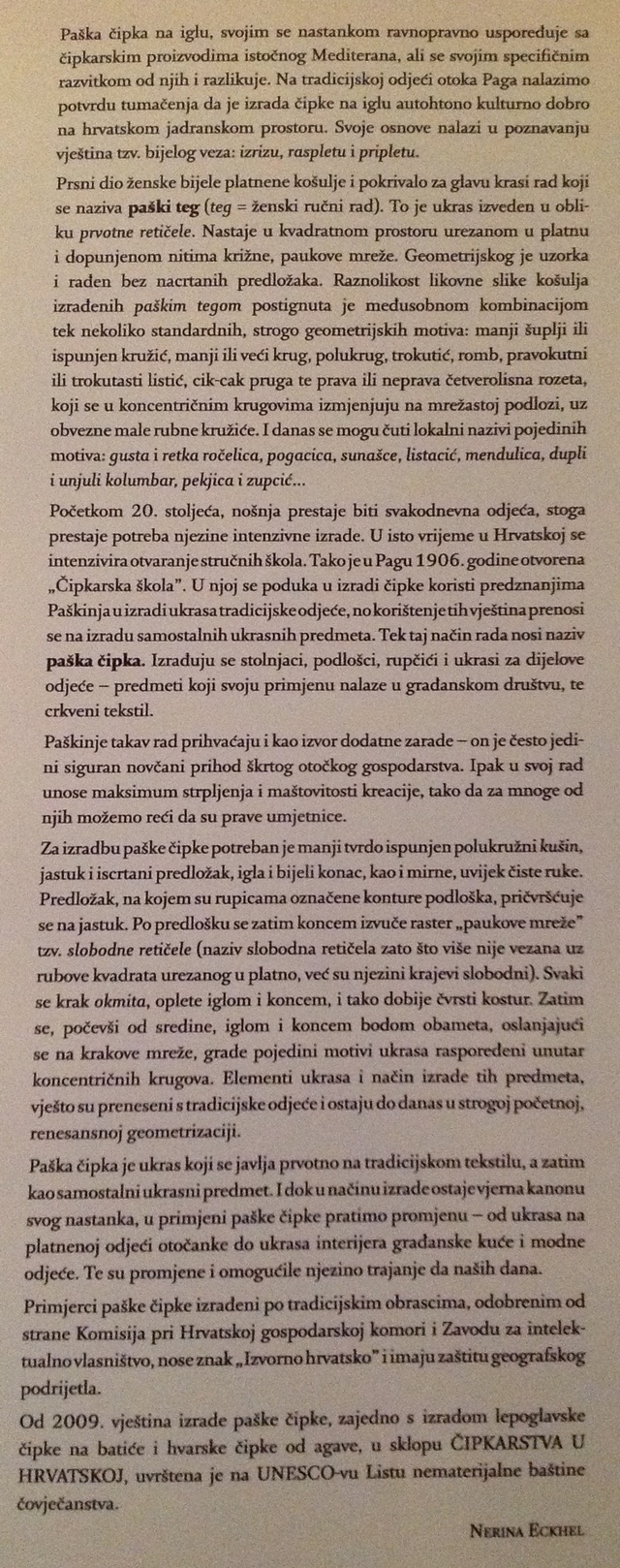
A systematic teaching of preparing the Pag lace started in 1906 (cancelled in 1948 during the ex Yugoslav communist regime, renewed in 1994). But it is known that already in the 15th century the Pag lace has been prepared within the benedictine convent of St Margarita on the island of Pag.
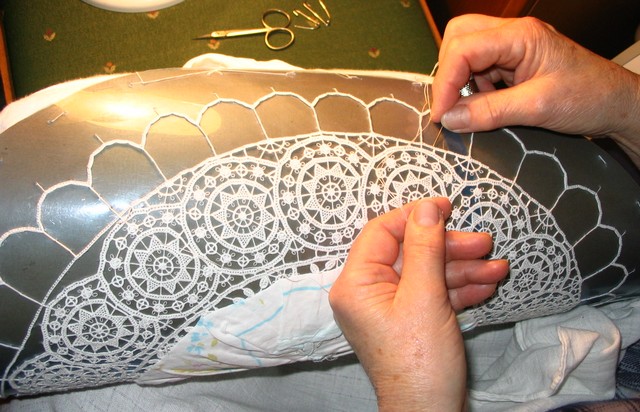
Pag lace, source Zadarski list
In the town of Pag on the island of Pag there is a Gallery of Pag Lace (Galerija paške čipke). President of the Guild of Pag Lacers (Društvo Paških Čipkarica, DPČ), founded in 1997, is Neda Oros. Their address is GRAD PAG -DPČ "Frane Budak" Branimirova obala bb, 23250 PAG, Croatia. An expert for Croatian lace is Nerina Eckhel from the Ethnographic Museum in Zagreb.
Zadar lace, see [Eckhel]
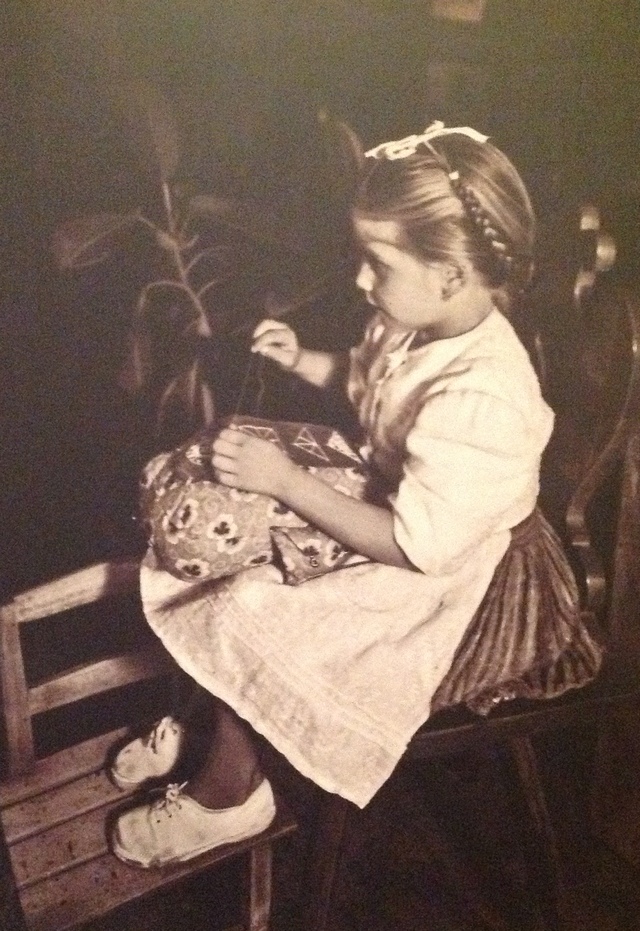
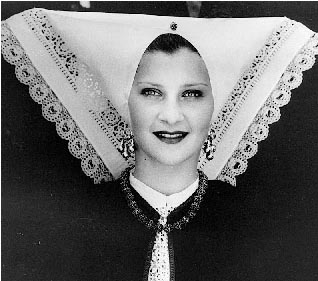
An old photo from 1916, representing a very young and beautiful Pag
Lace weaver.
The photo is from the Pag Lace Museum
in the town of Pag, on the island of Pag.
MUST SEE IT!
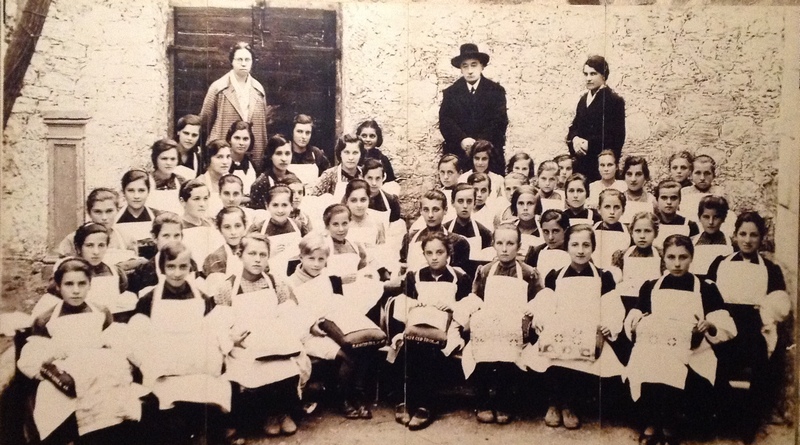
Pag Lace school in the town of Pag. Photo from the Museum of Pag Lace.
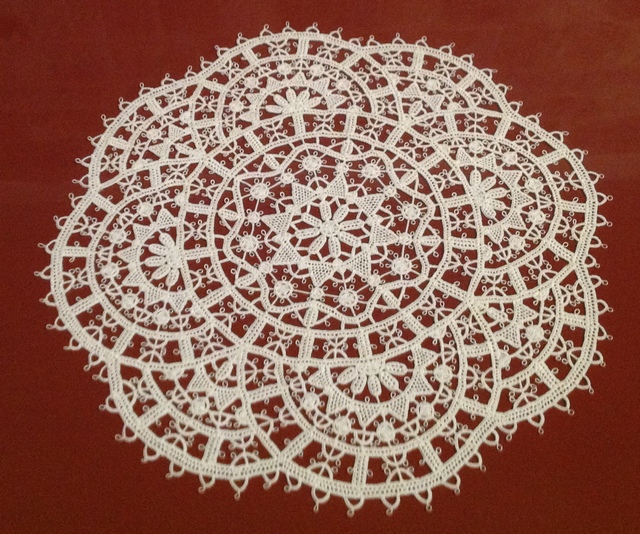

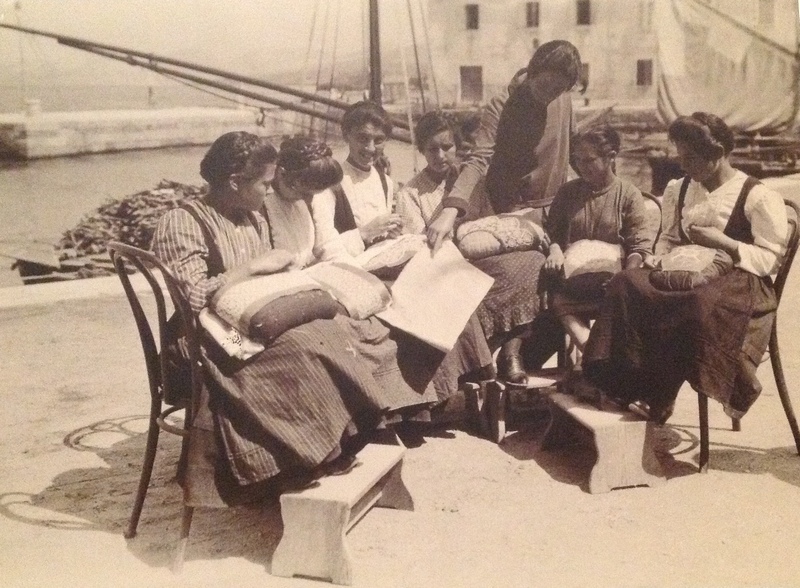
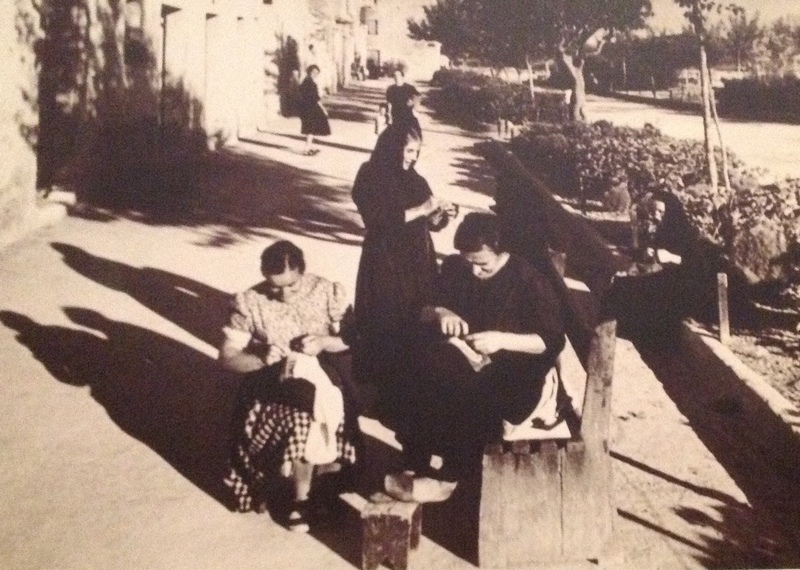
Photo from the Pag riva in 1925.
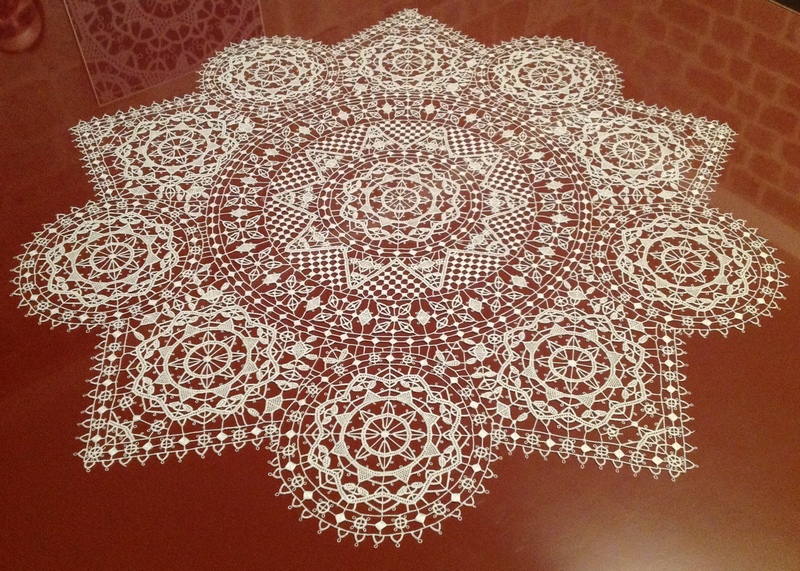
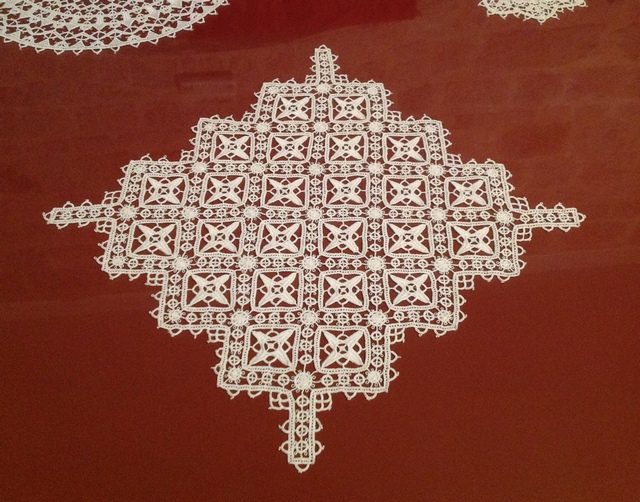
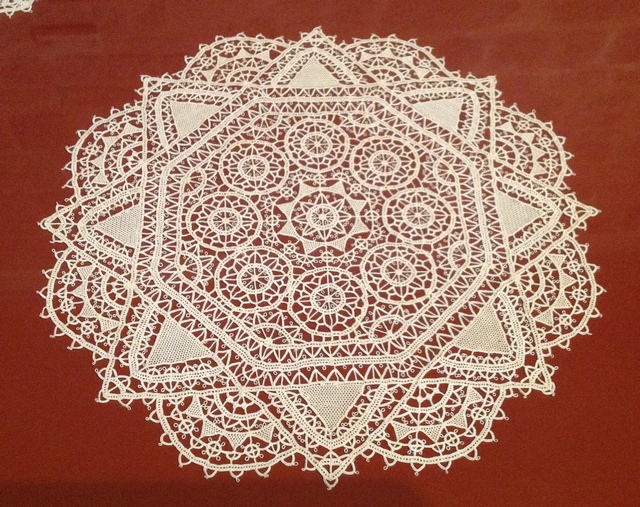
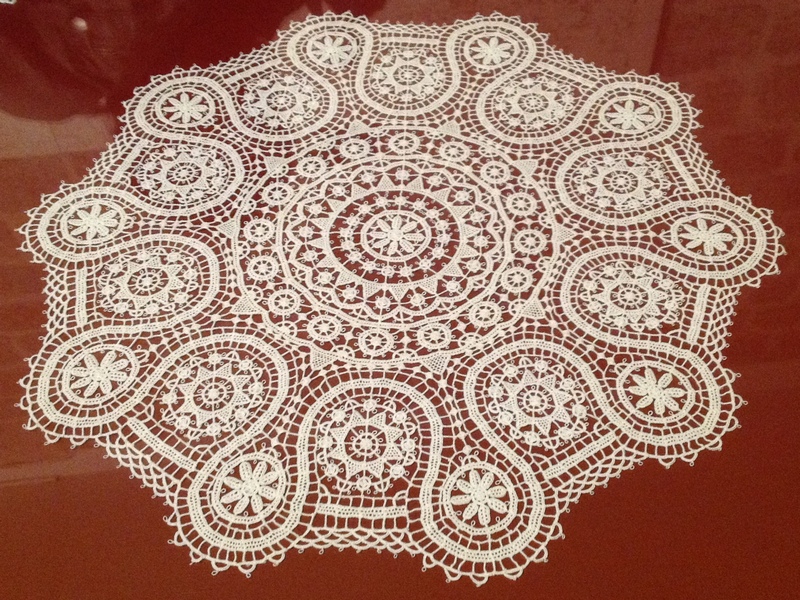
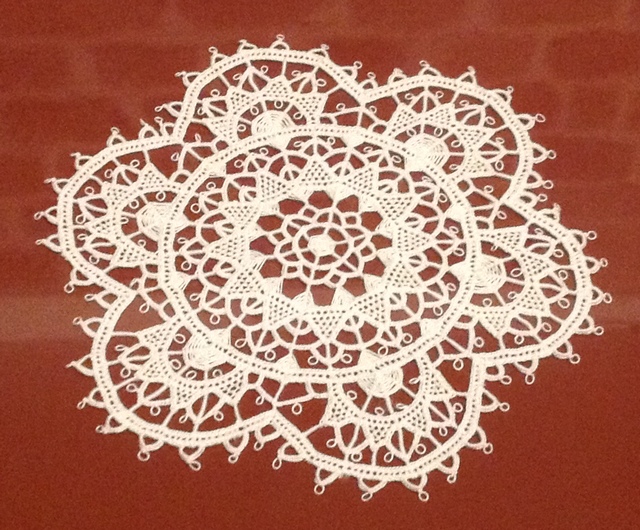
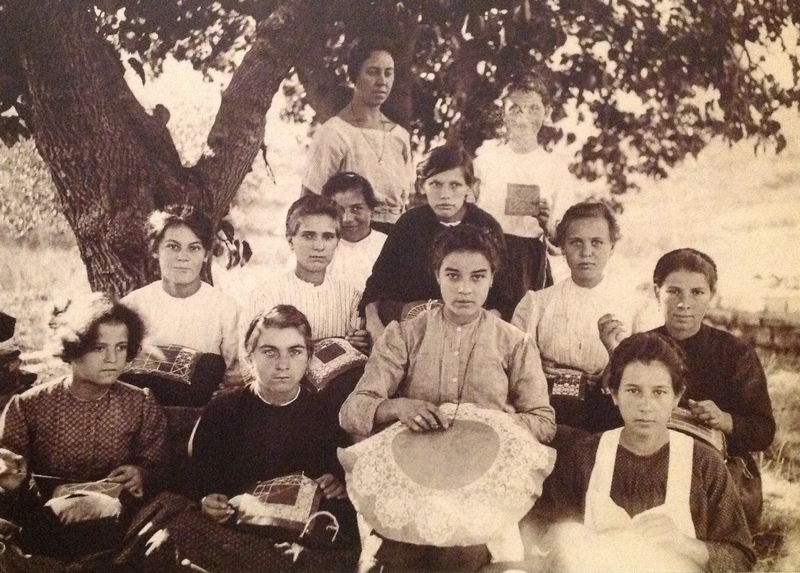
Photo from the town of Pag, 1929.
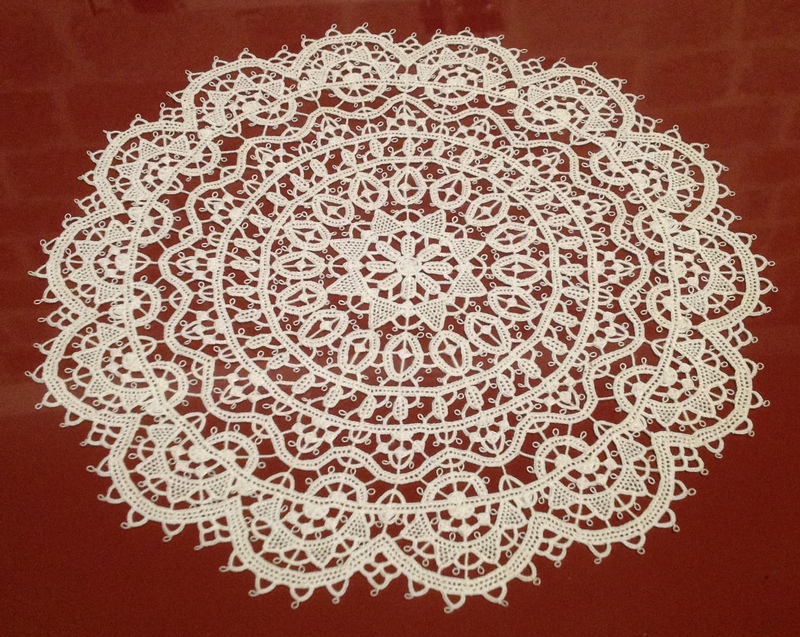
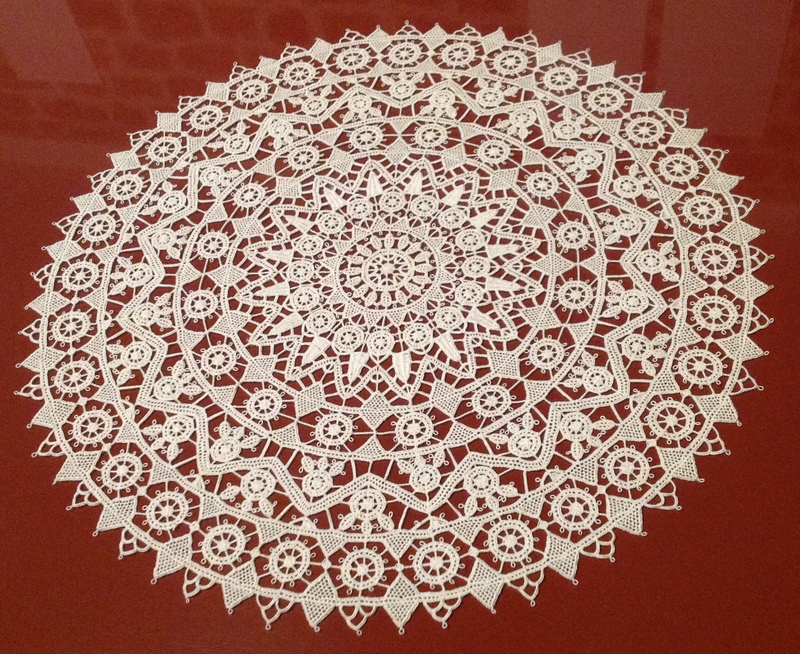
Hundreds of hours of patient work, without any mistake, are needed to
produce a high quality lace.
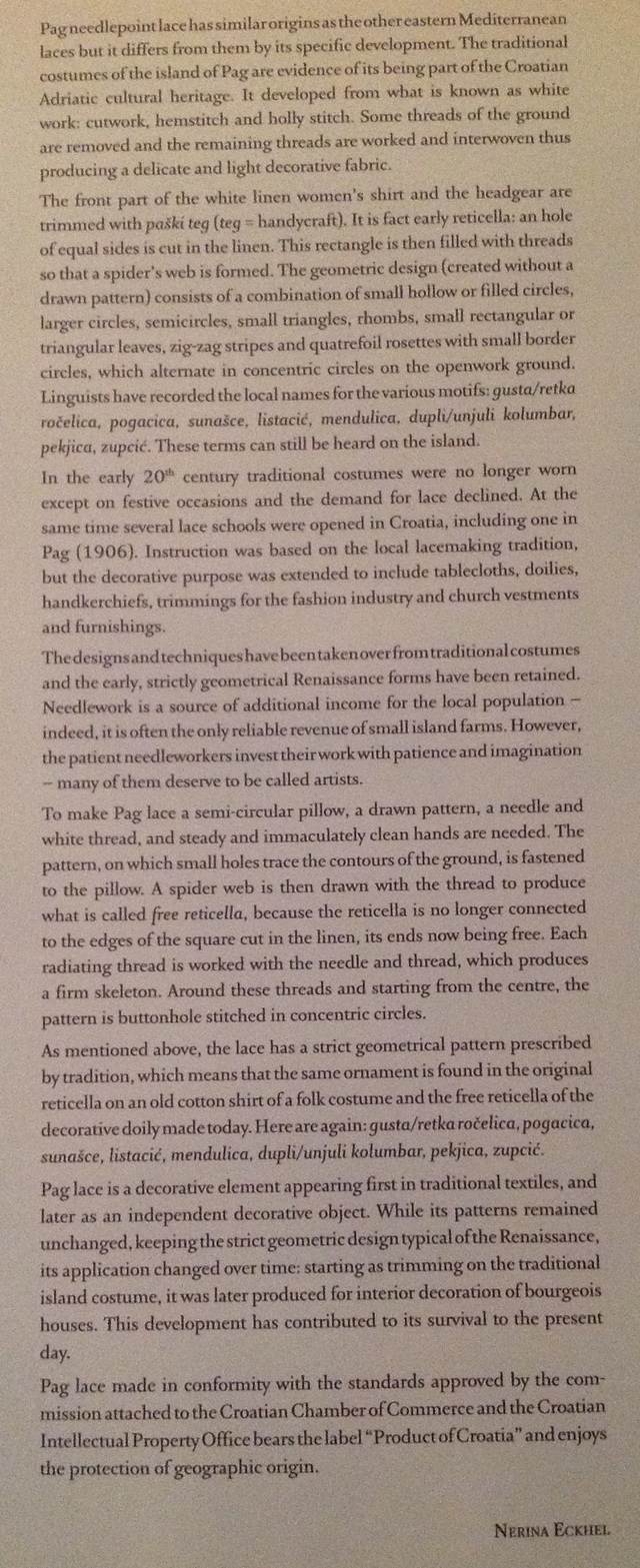
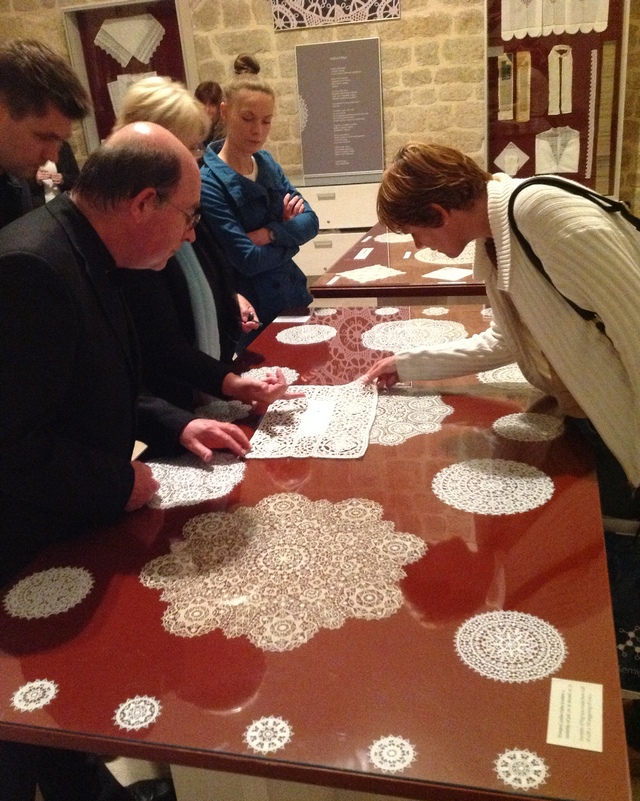
In the Pag Lace Museum in the town of Pag.
On the left don Zdenko Milić, on the right Danijela Deković, prof.
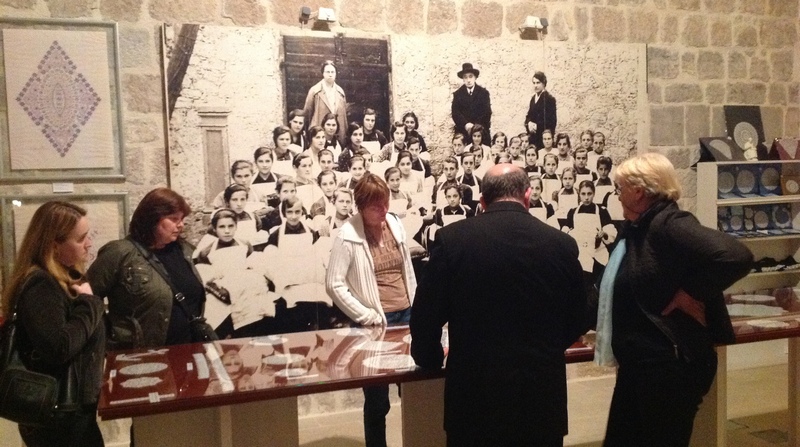
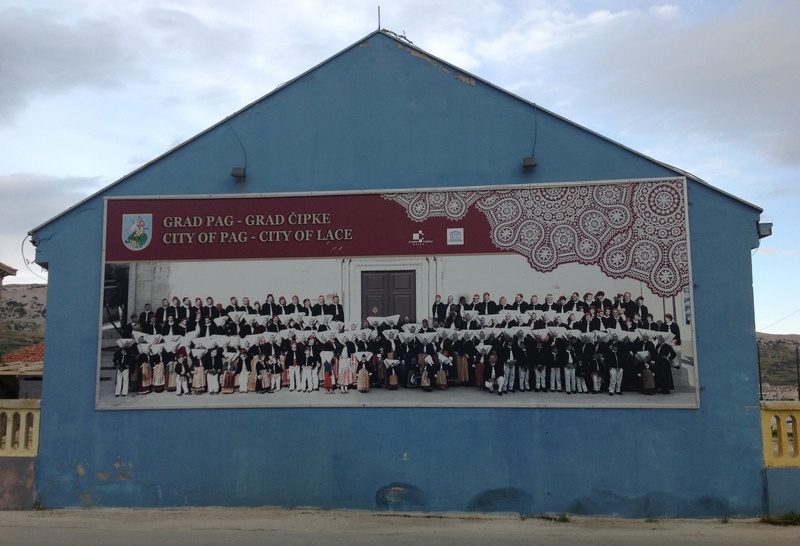
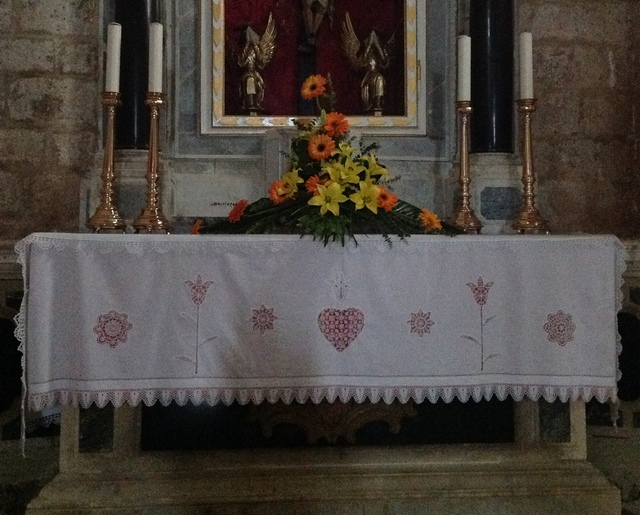
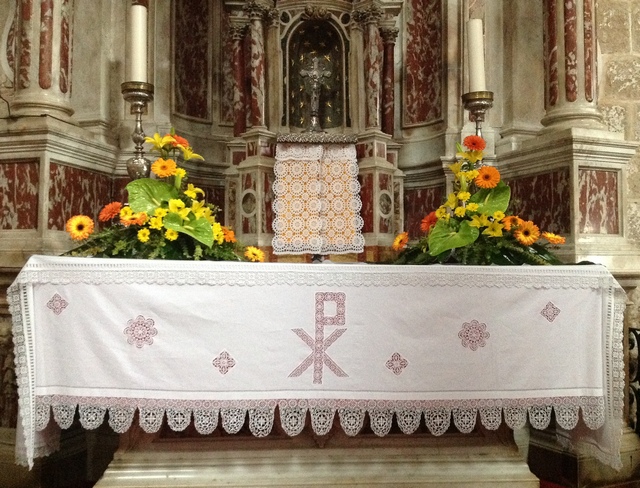
Pag Lace in the chuch of the Ascension of Blessed Virgin Mary, in the town of Pag:
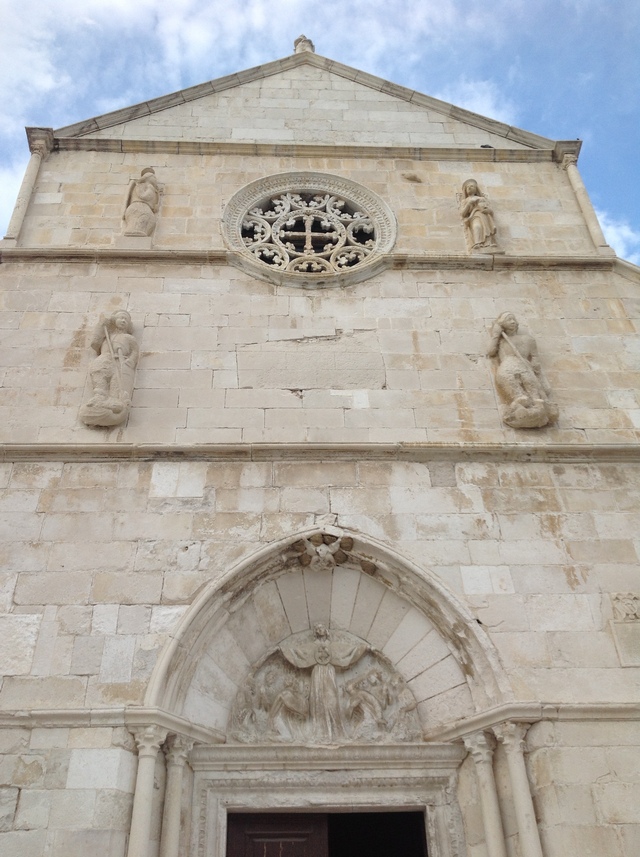
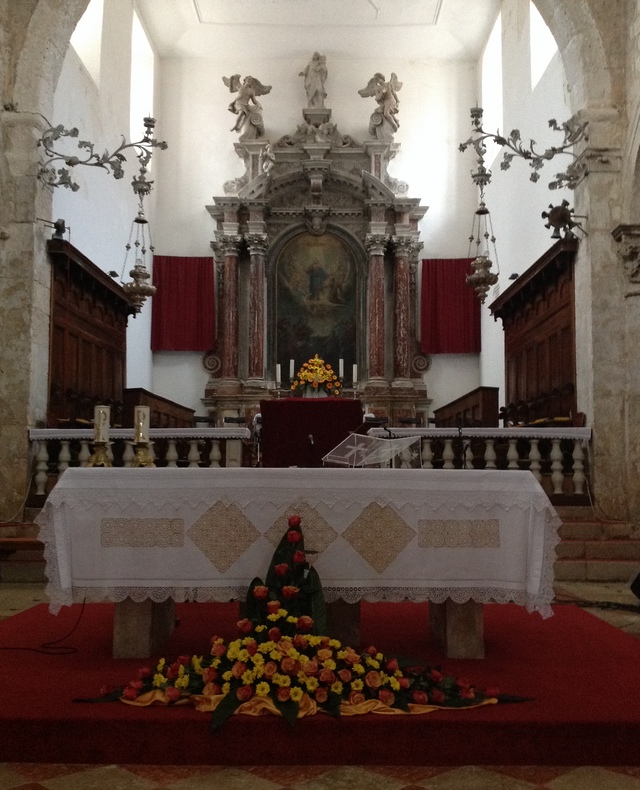
The main altar
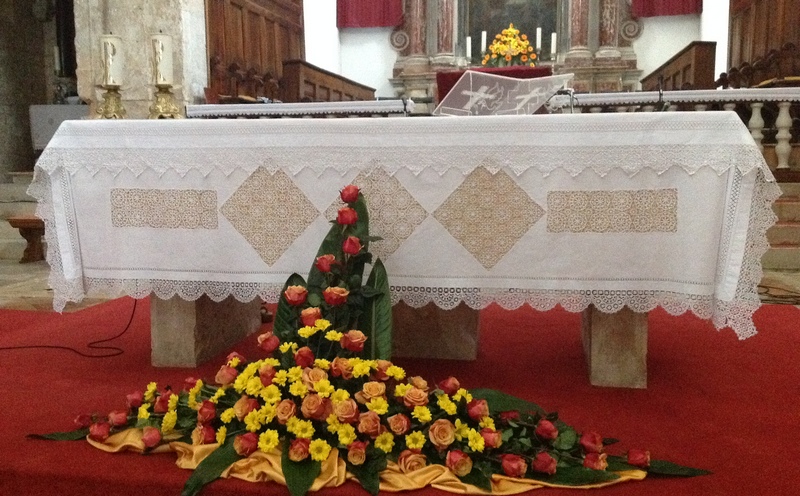
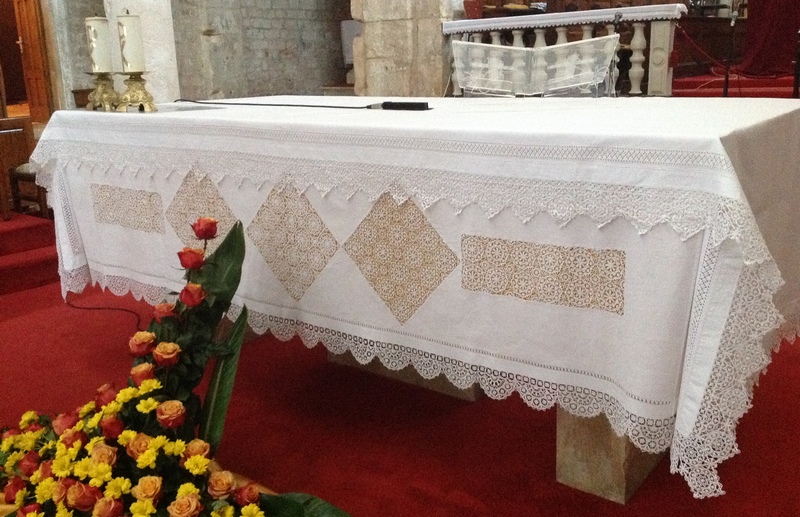
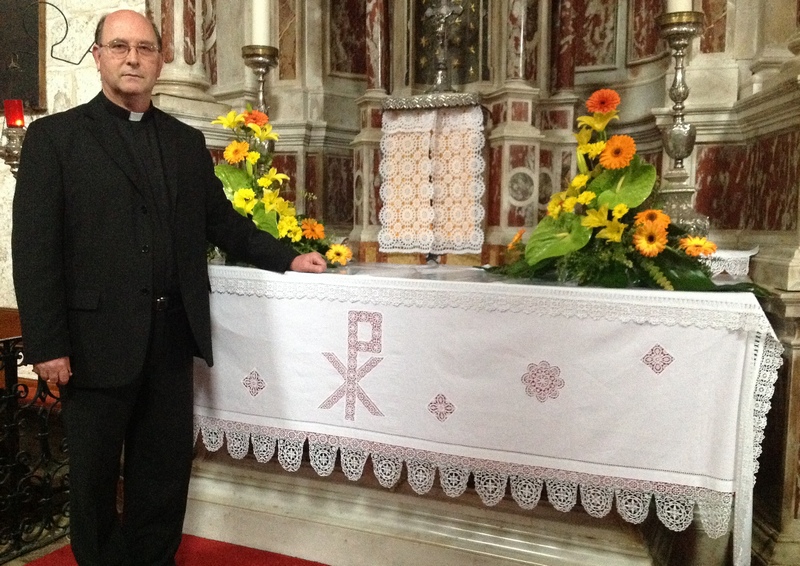
Don Zdenko Milić
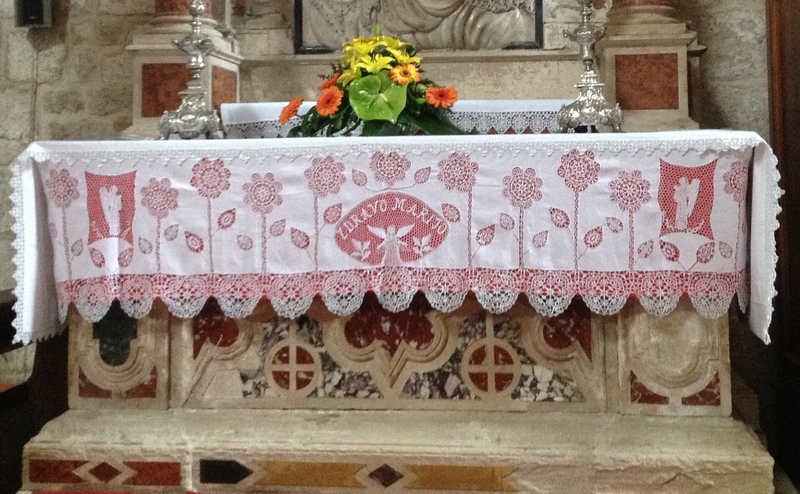
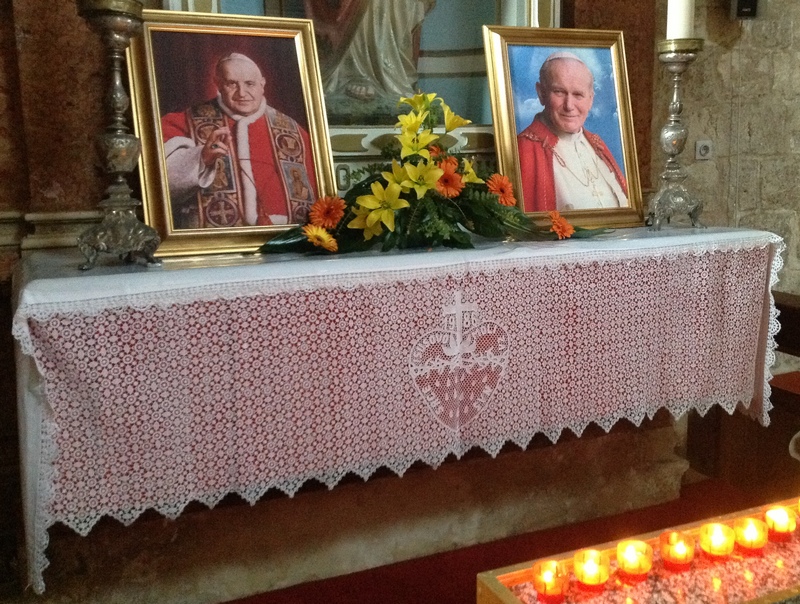
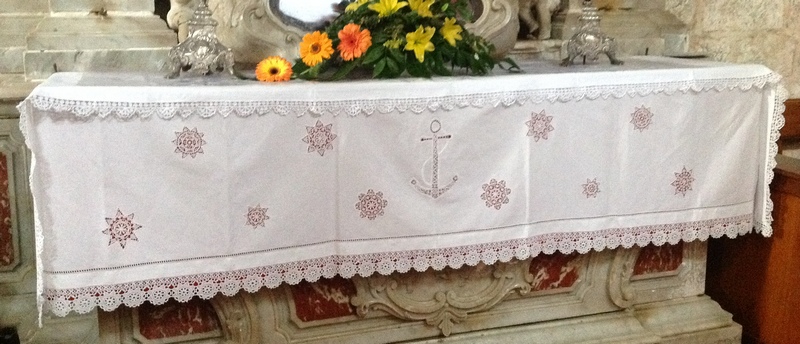
The Pag Lace in the parish rectory in the town of Pag:
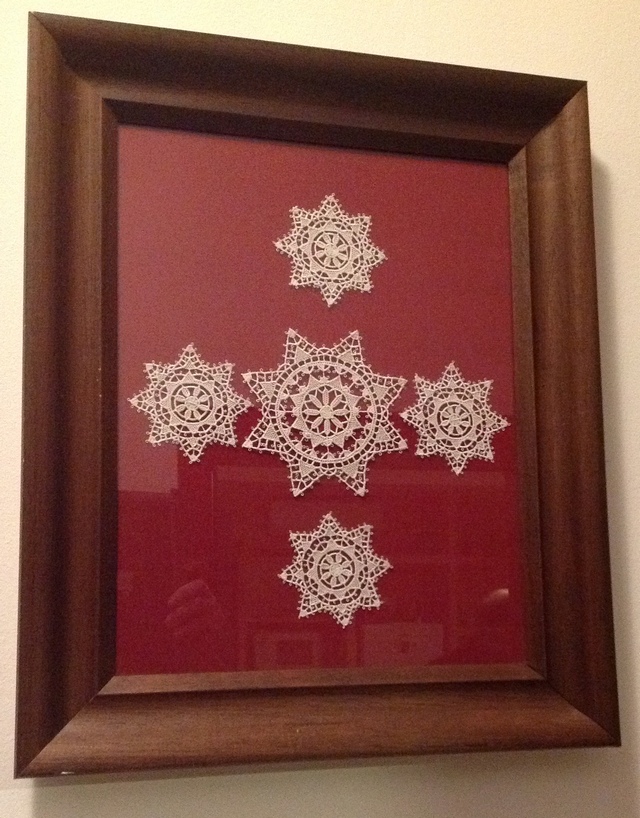
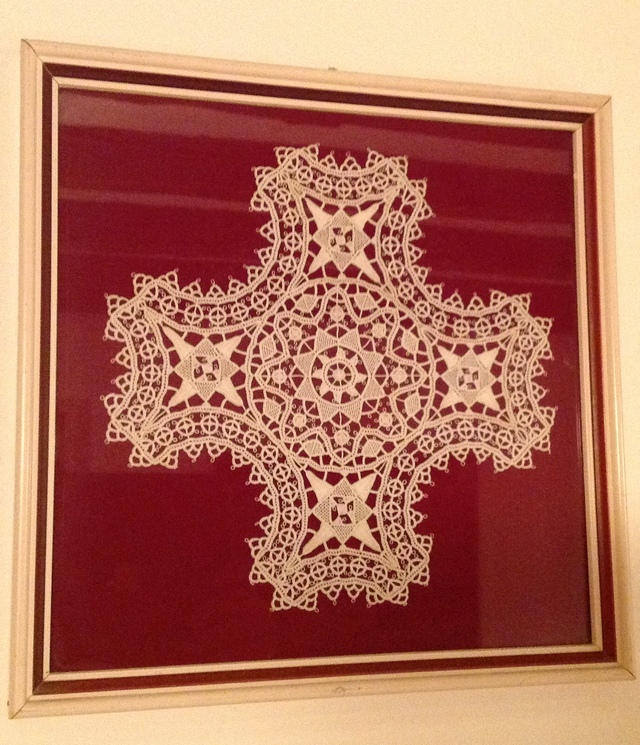
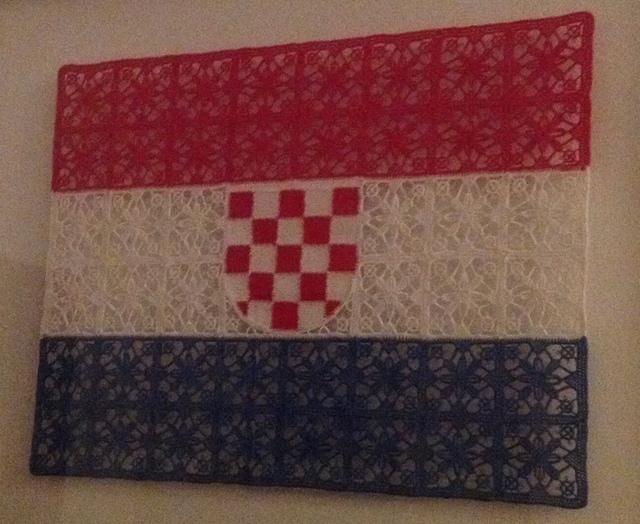
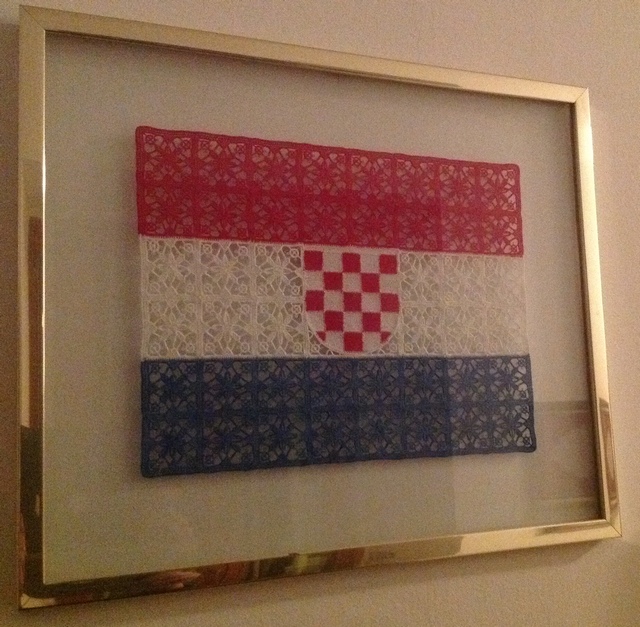
Croatian
Coat of Arms, made by Pag Lace
weavers.
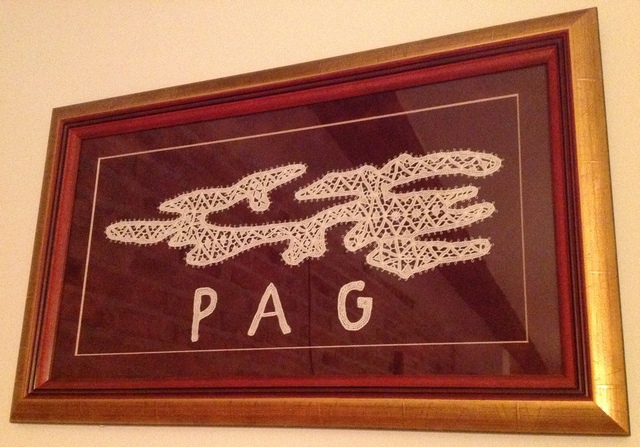
The island of Pag weaved using the Pag Lace.
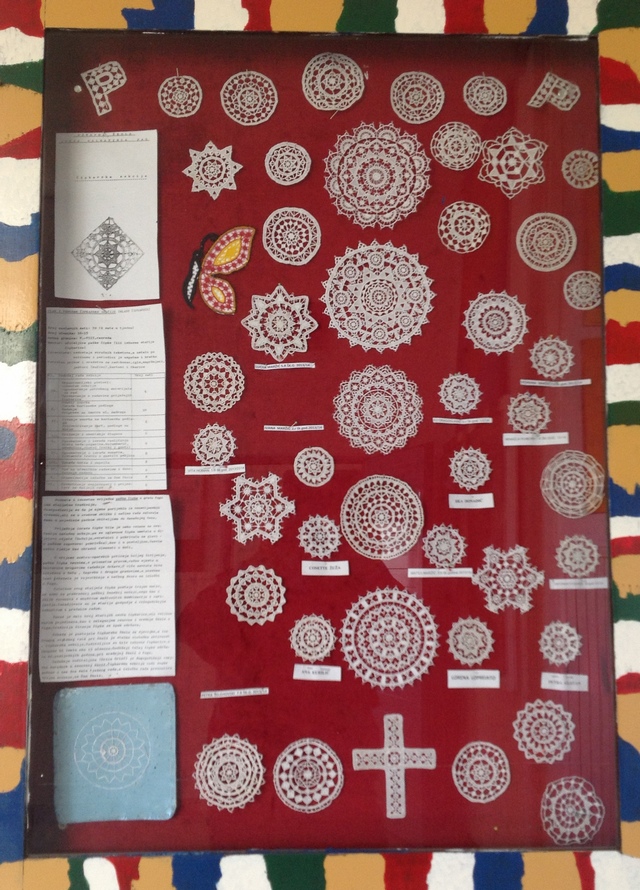
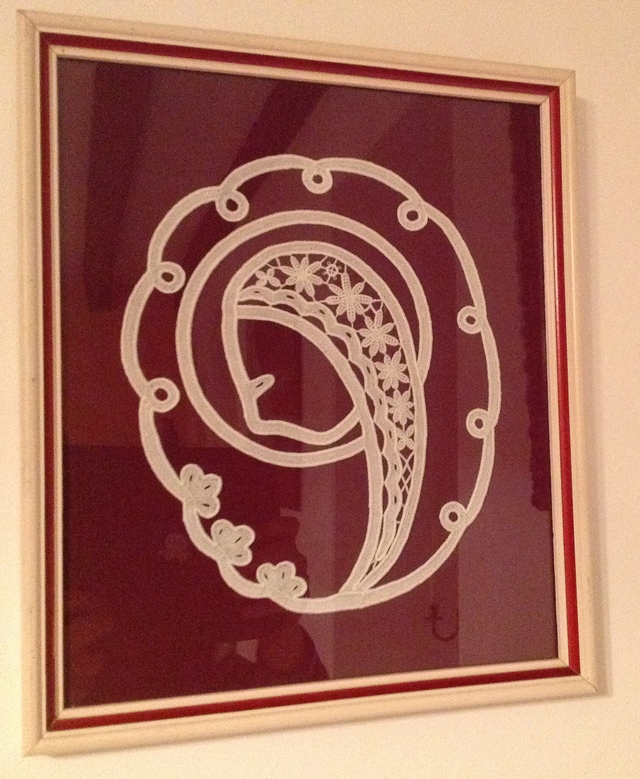
Works of art of young ladies in the Primary school "Juraj
Dalmatinac" in the town
of Pag: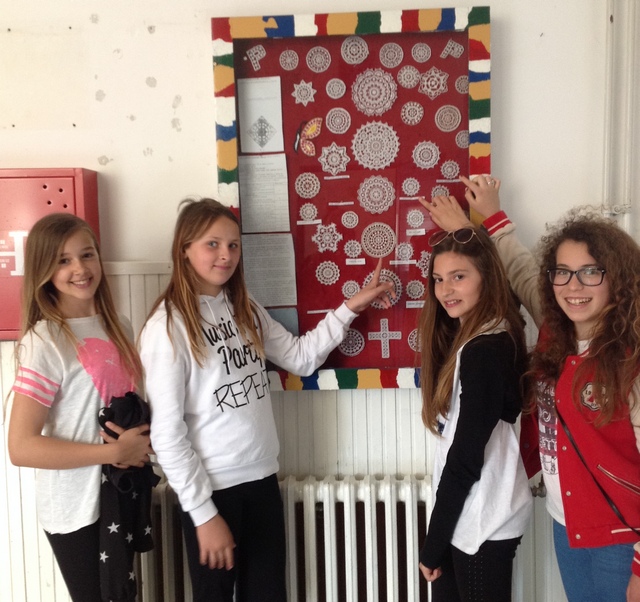
Here is what I did!
More information about Pag Lace: www.paska-cipka.com
Acknowledgements. Many thanks to don Zdenko Milić for his hospitality and kindness, as well as to Danijela Deković, prof., for suggesting to visit the island of Pag. Also, my deep gratitude goes to Mrs. Nedjeljka Oros, president of Društvo paška čipkarica "Frane Budak" (Society of Pag Lace Weavers "Frane Budak", address: Ante Starčevića 9, 23250 Pag, Croatia; e-mail: nedjeljka.oros@zd.t-com.hr ), for her permission to photograph in the Museum of Pag Lace (in May 2014), and to publish the photos.
Hvar lace (agave lace) from the island of Hvar is unique in the world to be made of threads of agave leaves!
|
|
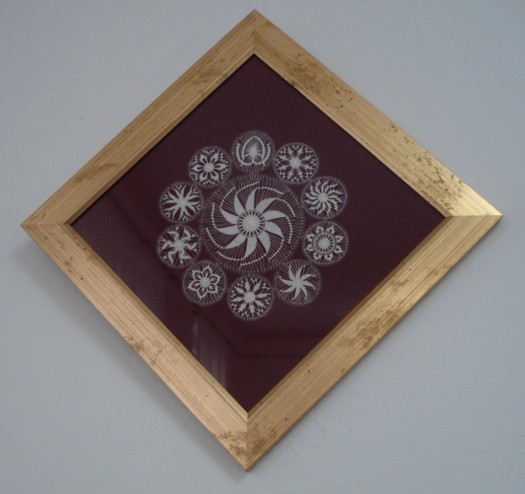
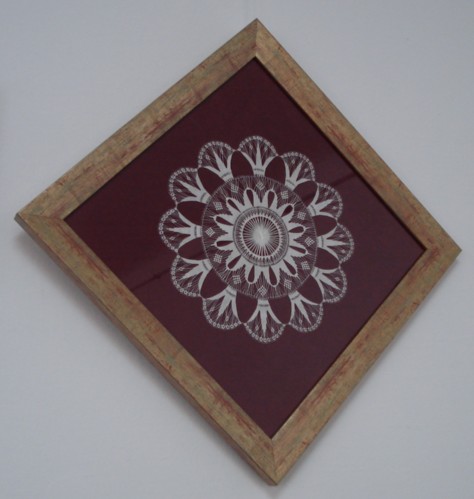
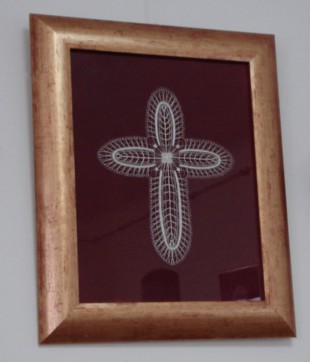
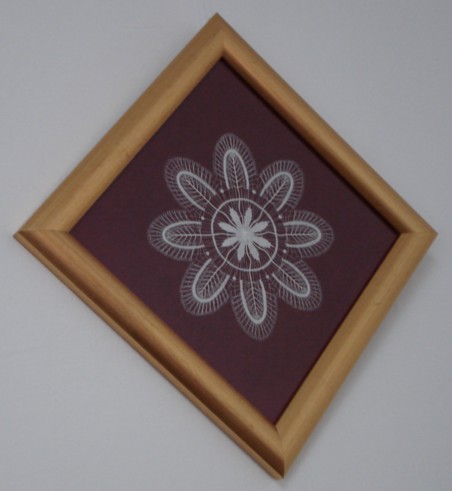
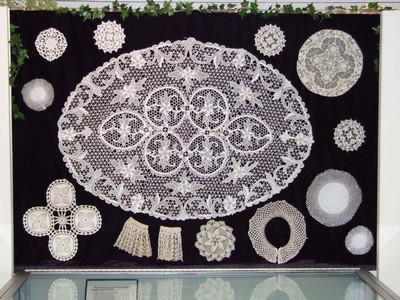
Source: www.croatianmuseum.com, The Croatian Heritage Museum and Library, located in the American Croatian Lodge Complex in Eastlake, Ohio, USA
 |
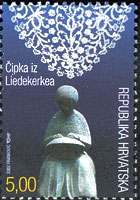 |
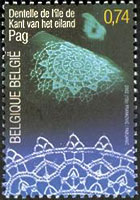
Two fantastic "reciprocal" postage stamps, one issued in Belgium representing Croatian lace, and another one in issued in Croatia representing Belgium lace:
Belgique Belgie: Dentelle de l'ille de Pag / Kan van het eiland Pag (Croatia)
Republika Hrvatska (Republic of Croatia): Čipka iz Liedekerkea (A lace from Lidedekerk, Belgium)
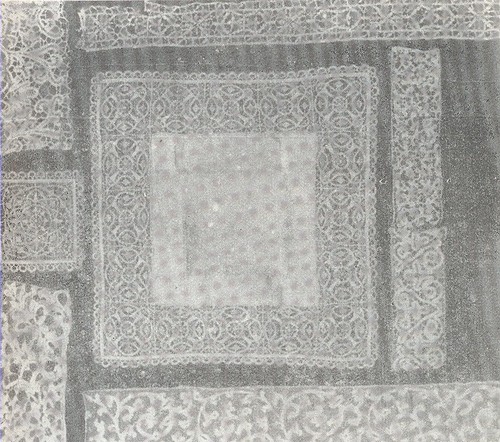
The old laces from the female Benedictine monastery of Sv. Marija in Zadar, see [Ostojic, I, p. 291]. The photo is from the monograph by [Natalie Bruck-Auffenberg].
The Exhibition of Dalmatian Laces and Embroideries was opened in May 22nd 1905 in Vienna, in Austrian Museum of Arts and Crafts. It raised a greatinterest for exhibited laces from church treasures. The exhibition was conducted by Natalie Bruck Auffenberg (born in 1877). See [Vojnovic Trazivuk, p. 284].
In 2009 the tradition of Lacemaking in Croatia has been inscribed in 2009 on the Representative List of the Intangible Cultural Heritage of Humanity
Tihana Rendić and Karmen Šoštarić won the first place at the international lace contest in Russia 2011
For more information see
- Croatian laces
- Croatian Heritage Museum, www.croatianmuseum.com, Dowry of Lace, 76 pictures
- Exhibition Guide for 10th International Lace Festival - Lepoglava 2006, [PDF], in Croatian and English
- Pag lace
- Pag Lace web: www.paska-cipka.com
- Paška čipka
- 100 years of Pag lace teching 1906-2006, article by HKR
- Lepoglavska čipka
- Čipkarski obrt Tulipan
- La dentellerie en Croatie, 2007
- Agave lace on the island of Hvar
- Zlata Šufflay od Otruševca: Hrvatska narodna čipka u domu i na oltaru - La dentelle nationale croate en famille et a l'autel, 1918.
- Natalie Bruck-Auffenberg: Dalmatien und seine Volkskunst, Wien, 1910. (hardcover, subsequent editions in 1911 and 1912; translated into Croatian in 1912: Natalija Bruck-Affenberg, Dalmacija i njena narodna umjetnost, 1912)
- Danica Brossler: Čipke, u Hrvatska enciklopedija, sv. IV, Clichit-Diktis, Naklada Hrvatskog izdavalačkog bibliografskog zavoda, Zagreb 1942., str. 313-319.
- Nerina Eckhel: Čipkarstvo u Hrvatskoj (prijedlog kandidature za upis na UNESCO-vu listu), [PDF], Informatica Museologica, pp 25-37
- Nerina Eckhel: Pohvala ruci - Čipkarstvo u Hrvatskoj; In Honour of a Hand - Lacemaking in Croatia, Etnografski muzej, Zagreb, ISBN 978-953-6273-52-2
- Slavica Moslavac: Čipka u Moslavini, katalog izlozbe, Muzej Moslavine Kutina 2000.
- Branka Vojnovic Traživuk: Dalmatinska narodna umjetnost u Austro-Ugarskoj monarhiji pocetkom XX. st., Stud. ethnol. Croat., vol. 18, str. 281-298, Zagreb, 2006.
- Tihana Petrović Leš: Lepoglavsko čipkarstvo, Srednja Europa, Zagreb 2008. (181 pp) ISBN 978-953-6979-59-2
Croatia - its History, Culture and Science