The
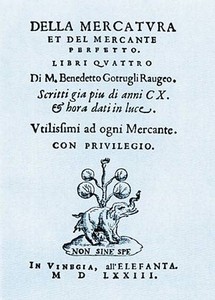
first known manual about book-keeping was Della
mercatura
e del mercante perfetto, (On
merchantry and the perfect merchant) written in
1458 by Benko Kotruljić
or Benedikt Kotruljević
(Benedictus de Cotrullis, born in Dubrovnik,
1416-1469). It is also the oldest known manuscript on double-entry.
As such it precedes Luca Pacioli's description of double-entry for no
less than 36 years, so that Kotruljic's priority is indisputable.
Kotruljic's
famous 1464
manuscript on
book-keeping,
was printed in 1573 in Venice; editor and publisher was
another oustanding Croatian scholar - Franjo Petris
The French translation
of Kotruljic's book appeared under the title "Parfait
négociant" in Lyon in 1613.
In the book he states the following: "I
declare that a merchant must not only be a good writer,accountant and
book-keeper, but he also has to be a man of letters
and rhetorician."
His another important
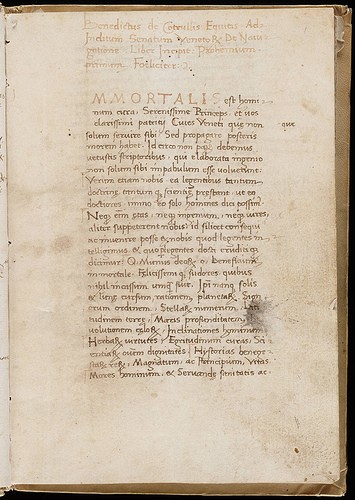
manuscript is Benedictus de Cotrullis: "De Navigatione", 1464, written
also in Italian. It is the
first known manual on navigation
in the history of Europe. Note that it appeared almost 30 years before
the discovery of America.
The book has been frequently copied throughout Mediteranean.
The original manuscript
is kept at the University of Yale (in the Beinecke Rare Book and
Manuscript Library, MS 557), and has 132 pp. See
Darko Novakovic
(discoverer of the book): Novopronadeni rukopis Benedikta Kotruljevica
De navigatione, in Dubrovcanin
Benedikt Kotruljevic : hrvatski i svjetski ekonomist XV. stoljeca.
- Zagreb, Hrvatska akademija znanosti i umjetnosti : Hrvatski
racunovoda, 1996. - ISBN 953-96998-0-0. - pp. 19-32.
Benedikt Kotruljevic: De
navigatione / O plovidbi,
Zagreb 2005., ISBN 953-6310-37-6 (parallel Italian-Croatian edition)
Dubrovcanin
Benedikt Kotruljevic, Hrvatski i svjetski ekonomist XV. stoljeca,
HAZU, Zagreb 1996. (radovi s konferencije)
In this book Kotruljevic
mentions places like Bocari (Bakar), Braca (Brac), Dalmatia, Fiume
(Rijeka), Illirico (Croatia), Mare Adriatico, and many other,
throughout Europe, Africa and Asia.
In Chapter XXXXVIII (i.e. Ch XLVIII) he also mentions that in Popovo
near Dubrovnik [25 km NW of Dubrovnik, near the village of Ravno]
there is a huge cave [Vjetrenica]
with miraculous
wind: at the entrance the air
is colder in the summer than in Italy in the winter.
On the islet of Kosljun near largest
Croatian island of Krk there is a beautiful Franciscan monastery, which
had one of the oldest "banks" in Europe. It was operational from the
17th to 19th century, providing loans for the poor at low interest
rates, to protect them from exploiters. See "What's on Kvarner," p. 81,
available at Appleby.
Frederik Grisogono
Frederik
Grisogono
(born in Zadar,
1472-1538),
a mathematician, physicist, astronomer and physician, was educated in
Padova, where later he became a university professor. His
commentaries on Euclid's `Elements' were published in
his book Speculum astronomicum
terminans intellectum humanum
in omni scientia, Venice in
1507. His most important contribution was the
theory of tides, based on the attraction of the Moon, which
influenced Mark
Antun Dominis. He
discovered the antipodal tidal wave. His theory of tides is
described in De modo
collegiandi, pronosticandi et curandi
febres, nec non de humana felicitate ac denique de fluxu et
refluxu maris, Venice 1528.
Juraj Dragišić
Juraj
Dragišić (Georgius
Benignus), Franciscan born
in the famous Bosnian
town Srebrenica, suggested a reform
of the
Julian calendar to Pope Leon X in 1514 in his study Correctio
erroris, which was accepted by
the Pope Gregory XIII. The new, Gregorian calendar is in use
since 1582.
Giulio Camillo Delminio
Giulio Camillo Delminio
(1479-1544), a famous but forgotton Renaissance thinker, was born from
parents of Croatian origin. According to Frances A. Yates he was "one
of those people whome their contemporaries regard with awe as having
vast potentialities". She wrote the monograph The
Art of Memory (1966) devoted to
Delminio. Giulio Camillo Delminio is most famous for his Theatre
of Memory (or Memory Theatre),
conceived as an encyclopaedic memory aid, and described in his book L'Idea
del Theatro,
published posthumously in 1550 in Venice. It consisted of of hundreds
of images which were arranged on the tiers of an amphitheatre.
His name Delminio
reveals that his parents are from Delminium. The meaning of the name of
Delminium in Latin is pasture for sheep, and the name of Dalmatia has
been derived from it (see Catholic
Encyclopedia - Dalmatia), also
the name of Duvno. Many thanks to Mr. Ivo Dubravcic, Delft, for his
first information about Giullio Delminio. Delminio's parents of
Croatian origin are mentioned in the book
Between the Cross and the Crescent, A selection from the Dubravcic
Collection (by Pietro Mastruzo
& Rita Colognola), Leiden University Library, Leiden 2005, p.
33.
16th century
Vinko Paletin
Vinko
Paletin (1508-1575), born in
the noble family on the island of Korcula, arrived to Mexico as a young
missionary. Later, after his studies in Italy, he became professor of
mathematics in Vicenza. For several years Paletin was employed on
diplomatic missions for the Spanish King Philip II. He translated from
Spanish into Italian the work about navigation written by the Spanish
cosmograph Pedro Medina (L'arte
del naviger, Venice, 1554).
Paletin's most important work is De
jura et justitia belli contra Indias, preserved
as manuscript in Latin, and a more extensive version in Spanish
(Croatian translations exist since 1978 and 1979). He mentioned that
builders of Maya pyramids in Chichen-Itza, Mayapan and Uxumal, as well
as builders of huge basalt heads, were in fact old Cartagians which
according to antic authors sailed off long ago across Gibraltar, and
discovered the New World (Hesperids). Maya Indians recounted to Paletin
an old legend about "the arrival of bearded people from far away". For
more details see [Zorić].
Faust Vrančić
The
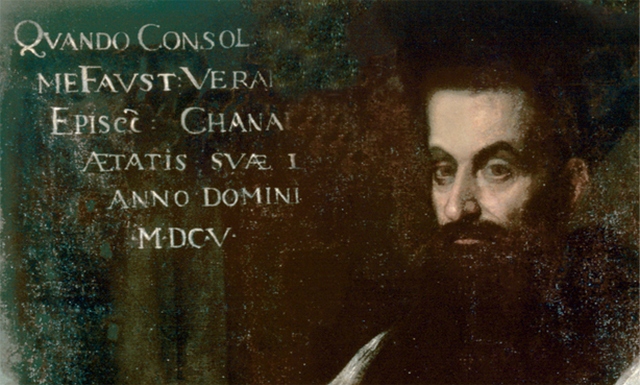
first technical discoveries are related to the name of Faust Vrančić
(lat. Faustus Verantius,
italianized name Fausto
Veranzio, hungarized name Faustus
Verancsics, 1551-1617). It is
known that he collaborated with Tycho Brache and Johannes Keppler.
Vrančić was fluent in at least seven languages. At the court of King
Rudolph II in Hradcani in Prague (Rudolph II was Roman-German Emperor
and Croatian-Hungarian King) he worked as his secretary, and in that
period completed his important dictionary of
five most noble
European languages (Dictionarium
quinque nobilissimarum Europeae linguarum: Latinae, Italicae,
Germanicae, Dalmaticae
et Hungaricae) and published in
Venice in 1595.
Faust Vrančić (1551-1617), distinguished Croatian inventor and
encyclopaedist, is burried upon his last wish,
on the island of Prvic near the city of Sibenik on Croatian coast.
He is best known for his book of inventions in Machinae
Novae, published also in Venice
in 1595. The book was financially supported by the French King Louis
XIII, and the Toscan Duke Cosimo II de Medici. Among his numerous
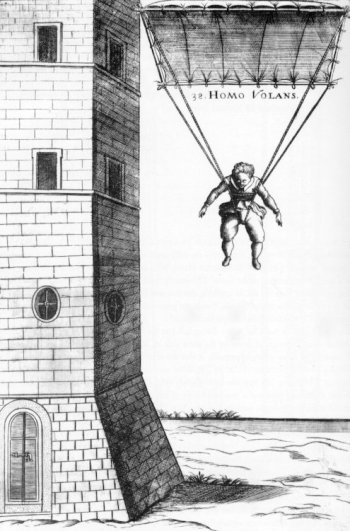
inventions the most famous is the parachute,
which he tested in Venice. It is true that Leonardo da Vinci had a
similar idea earlier, but he made only a rough sketch of it, of
pyramidal shape, while Vranic's parachute had rectangular shape, as
today.
HOMO VOLANS by Faust Vrančić
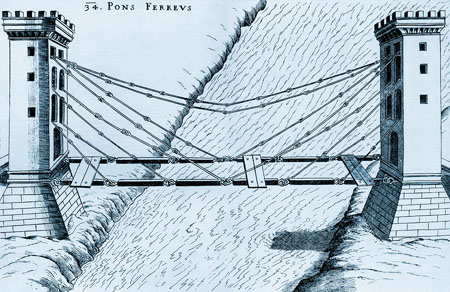
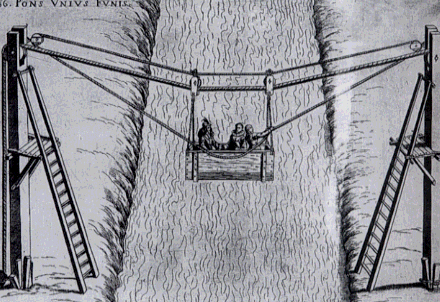
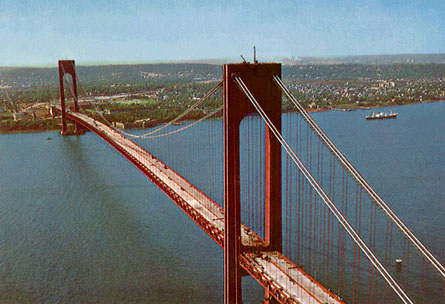
Vrančić also constructed a mill driven by tides, ropeway, gave a new
construction of metal bridges (suspended by iron chains, i.e. suspension
bridges), described in his
famous book on mechanics Machinae
novae (61 constructions, Venice,
1595). It was not until the late 18th century, that is, two centuries
later, that such bridges were built. The book was soon translated from
Latin into Italian, Spanish, French and German. A sketch of his well
known Homo volans
(parachutist) appearing in Machinae
novae is often attributed to
Leonardo in the literature, which is wrong. Vrančić was the Chancellor
of king Rudolph II for Hungary and Transylvania.
Suspension bridge by Faust Vrančić, 1595.
See Faust
Vrančić
(by dr. Vladimir Muljević, in Croatian)
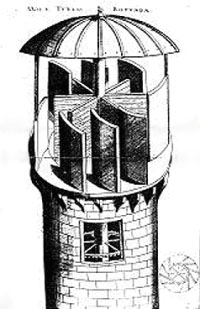
Vrančić also described in
his book Machinae Novae
the
first wind turbine:
Wind turbine by Faust Vrančić, 1595, the first in historyVrančić's Machinae Novae,
1595, was reprinted
in 1965 by "Heinz Moos
Verlag", Munich, Germany (F. Klein, A.
Wisner), translated into five languages,
in 1968 by "Ferro",
Milano, Italy (Umberto Forti), in Italian
in 1985 by "Magveto",
Budapest, Hungary, in Hungarian,
in 1993 by "Novi
Liber", Zagreb, Croatia (Vladimir Muljević,
Žarko Dadić), in Latin and Croatian
(from the introduction:
"...This
book is issued in dramatic time for Šibenik and its
environs, for Dalmatia, and the whole of Croatia [that is, issued
during Greater Serbian 1991-1995 aggression on Croatia]. The aim
and importance of this book should be close and clear to any
civilized person: it radiates with Renaissance spirit of activism
and optimism that we also wish to develop in our time, despite
all misfortune brought to us by imposed
war...")
For more information see
Gojko Nikolić: Nove spoznaje o životu i izumima Fausta
Vrančić;a, Povijest i filozofija
tehnike, Zagreb 2017. Zvonko Benčić i Josip Moser (eds.), ISBN
978-953-7992-06-4, pp. 38-65.
Vladimir Muljević: Hrvatski
znanstvenici Faust i Antun Vrančić, Encyclopaedia Moderna, 2(42)
(1993), pp. 122-136.
Nikola Sorgoević,
a
sea captain from Dubrovnik (born on the island of Sipan), wrote several
books
on navigation, shipbuilding, and tides, and three of them have been
preserved.
Two
of them have been published in 1574 in Venice, soon after his death in
1573.
Franjo Petris
Franjo
Petris
(Franciscus Patricius, a Croat born on the island of Cres,
1529-1597), a philosopher, mathematician and astronomer, was lecturing
at the University of Ferrara
and in Sapienza in Rome.
During his stay on Cyprus (then belonging to Venice) he
created a rich collection of Greek manuscripts, that finished
in the Escorial.
With his philosophical views
of neoplatonism and sharp anti-aristotelism he influenced Giordano
Bruno.
His most important books are Nova
de universis
philosophia
(New General Philosophy) and La
citta felice (A Happy Town),
published
in
Padova, treating the organization of ideal society, a forerunner of
Campanella's "Civitas
Solis" (1623).
He is buried in the Torquato Tasso tomb in the church
of St Onofrius in Rome.
Marin
Getaldić - Marinus Ghetaldus
(1568-1622) born in Dubrovnik,
was the most
outstanding Croatian scientist of his time.
He studied in Italy, England and Belgium.
His best results
are mainly in physics, especially optics, and mathematics.
Among his numerous books let us mention Promotus
Archimedus (Rome, 1603)
and De resolutione et
compositione mathematica (Rome,
1630, in five voluminous
books),
in which Getaldić appears as a pioneer of
algebraization of geometry.
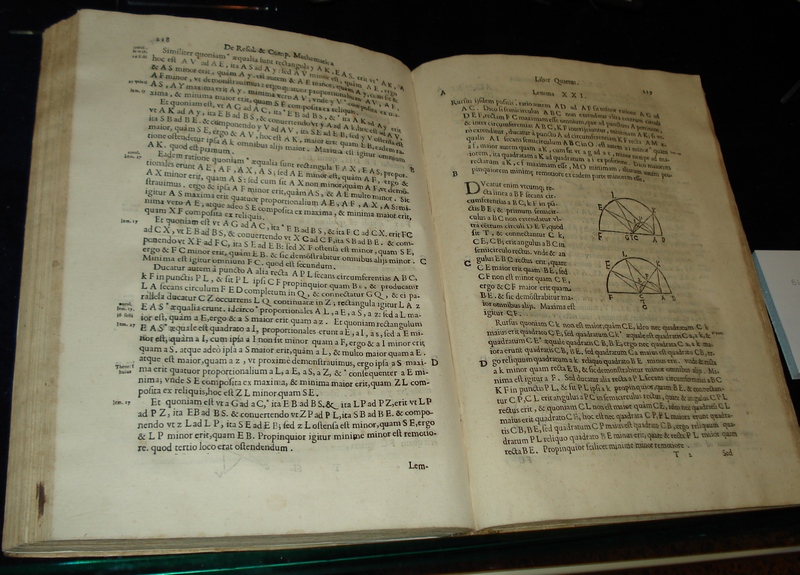
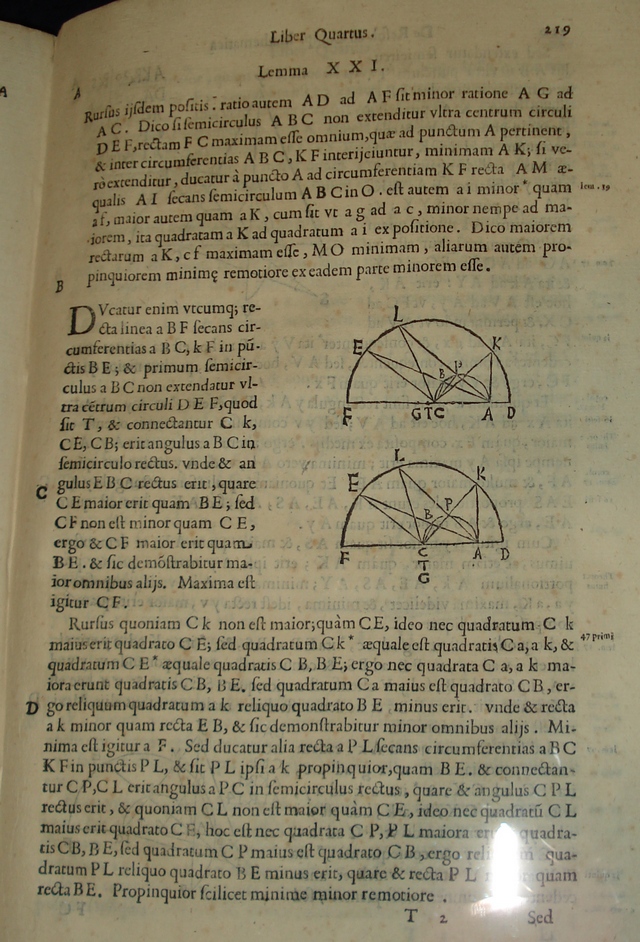
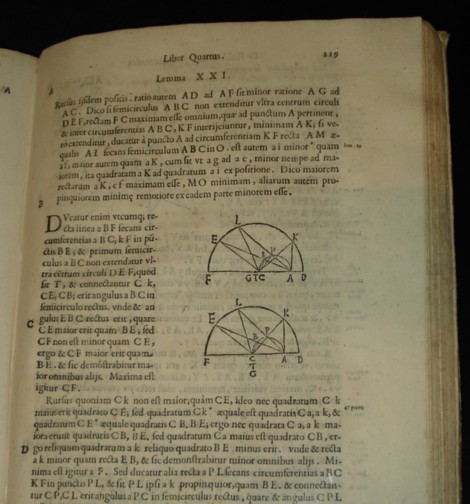
Marinus Ghetaldus: De
resolutione et
compositione mathematica, Rome,
1630.
A copy kept by the National and University Library in Zagreb.
De resolutione et
compositione mathematica
libri qvinqvi (Rome, 1630, 343 pp., 22.5 x
31.8 cm),
published eight years after his death;
a detail from Lemma XXI;
Getaldić is considered to be the main predecessor of Analytic Geometry.
His contributions to
geometry had been cited by Christian
Huygens and Edmond
Halley.
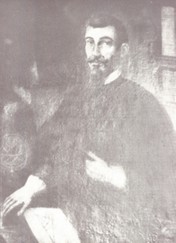
Marin
Getaldić, a portrait kept
in Rector's
Palace in Dubrovnik
Getaldić is the
constructor of the parabolic mirror (diameter 2/3 m), kept today in the
National Maritime Museum in London. During his sojourn in Padova he met
Galileo Galilei,
with whom he corresponded regularly. He was a good friend to the French
mathematician François
Viète. The fact that
the post of professor of mathematics had been offered to him in Louvain
in Belgium, at that time one of the most famous university centers in
Europe, proves his high scientific reputation. A
Venetian Paolo Scarpi wrote about him: In
mathematics he was like a demon, and in his heart - like an angel.
Ferdinand
Feller, the
eldest brother of Vilim
(William) Feller
(1906-1970), is the author of the graphic sign of the Croatian optical
industry Ghetaldus, named after Marinus Ghetaldus, that is,
after
Marin Getaldić. Photo by D.Ž. in
the city of Rijeka.
See also Elsa
fluid.
17th century
Archimedes' telescope in Dubrovnik
It seems that Dubrovnik was in possession
of Archimedes' telescope,
about which a testimony exists written in 1672 by Antun Sorgo
(Sorkocevic, son of distinguished Dubrovnik composer Luka Sorkocevic),
in his book "Origine et chute de l'ancienne Republique de
Raguse". Antun Sorgo was the last ambassador of the Dubrovnik Republic
to
France, where he spent
35 years. The Archimedes' telescope seems to have been lost during the
desastrous Dubrovnik earthquake in 1667. The basic idea of
Archimedes' reflecting telescope (3rd ct. BC) seems to coincide with
that of Newton's reflecting telescope (Isaac Newton,
1642–1727).
Stjepan Gradić
One
of the most outstanding Dubrovnik
mathematicians,
physicists and astronomers of the 17th century
was Stjepan Gradic
(1613-1683), who was a Director of the Vatican Library.
Some of his experimental results are cited by Jacob Bernoulli,
and his tractate about navigation incited Gottfried Wilhem
Leibniz to discuss the problem of steering ships using helms.
Gradic's book Disserationes
physisco-mathematicae quatour
was published in Amsterdam in
1680.
He died in Rome, where according to his last wish he was
buried in the Croatian church of St. Jerome.
Ivo Puljizić
Ivo
Puljizić,
born in Pucisce on the island of Brac,
made irrigation plans for the Vatican and projected various
Vatican bell-towers in the time of Pope
Innocent X, 17th century.
Milliaria Croatica
In 1673, a map of Croatia was published by the then Croatian
dignitaries, in which a unit of Milliaria
Croatica (i.e., Croatian mile
or hrvatska milja) appears,
defined as follows:
Milliaria
Croatica (1 hrvatska milja) = 11 130 m = 1/10 of the length of
the equatorial degree.
Quite
a number of Croats took part in the first Christian Missions,
especially in South and North America and Asia. Ferdinand
Konšćak, or Fernardo
Consag (born in Varazdin,
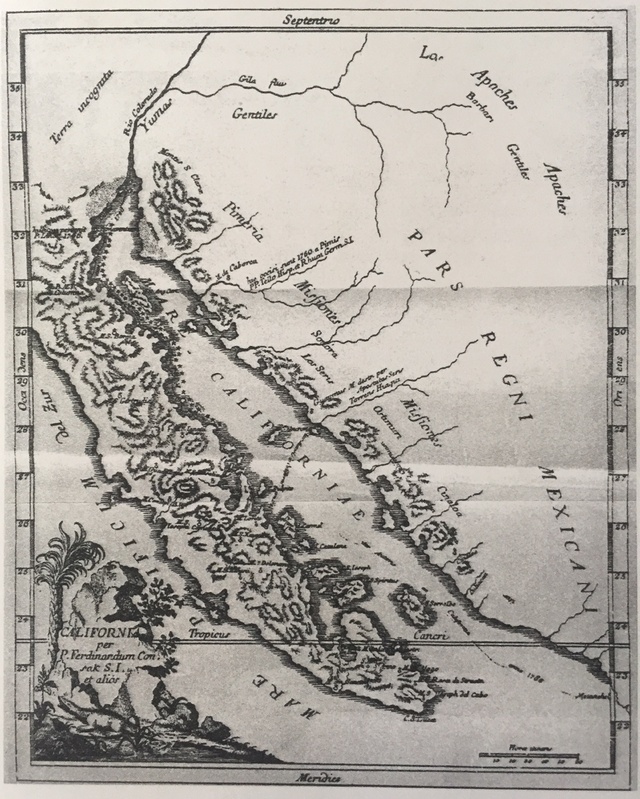
1703-1757), was a Jesuit and a Croatian missionary in North America. In
1752 he discovered that Baja
California was not an island, as
it had been believed until then, but a peninsula. There is a collection
of rocky islets on the north of the Californian bay named in his honour
as the Consag Rocks (Consag
Rocas, or Roca
de Consag, near San Felipe).
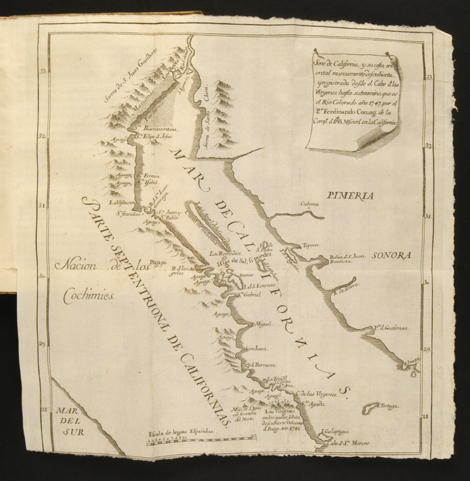
Ferdinand Konšćak: Map of Baja California
Denis Diderot and
D'Alambert used some of his maps for the French Encyclopedia, see
"Encyclopedie", Supplement 5 Carte (Paris 1755-1780), where his name is
cited as P. Consaque. Alexander Humbolt used his maps for his "Carte
generale... de la Nouvelle Espagne", Paris, 1804, and also Arrowsmith
in his "Map of America", London 1805.
The map of Ferdinand Konšćak, correctly representing California as a
peninsula for the first time.
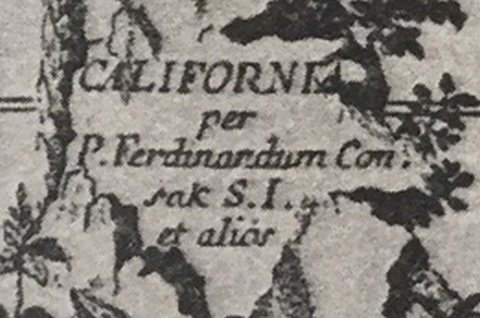
CALIFORNIA per P. Ferdinandum Consak S.I. et alias /
CALIFORNIA according to Father Ferdinand Konšćak, S.J. (Society of
Jesus), etc.
Konšćak spoke various
dialects of local Indians, in particular a very difficult dialect of
Cochinin Indians. He described a sort of boomerang that Indians used
for hunting rabbits. His diaries were printed already during his
lifetime (published by Villa-Senor y Sanchez, Ortega-Balthasar and
Venegas-Buriel), and after his death translated into many languages.
The 1761 copy of Konšćak's manuscript about California is held in The
British Museum. His work Carta
del P. Fernando Consag de la Compania de Jesus, Visistaro de las
Misiones de Californias (43
pages) is kept in the British Museum in London, Library of Congress
Harper in Washington, John Carter Library in Providence, Library of
Pomona College in Pomona, Henry E. Huntington Library in San Marino.
His life is described by
outstanding american historian Peter Masten Dunne in his monograph Black
Robes in Lower California, Los
Angeles, 1952. Seven copies of his maps are published by Ernest J.
Burrus in his work La obra
cartografica, Madrid, 1967. In
his 2000 monograph
Zorić proved that Konšćak was the author of important work Addiciones
a las noticias contemidas en la Description compnediosa de lo
descuviert y conocido de la California.
Since Konšćak discovered many springs of pouring water, it is not
surprising that even today there exist shops and warehouses in
California bearing his name: "Licores Konsag", "Konsag Liquor Store and
Mini Market", "Konsaqua" (agua purificada) etc. For many more details
see [Zorić]
and [Gabric].
In the city of Ensenada in Mexico (on the Pacific coast of
Baja California) there is a street called Boulevard Fernando Consag, named
after Ferdinand Konšćak. An international conference dedicated to Fernando Consag
was organized in Ensenada in 2009.
In his Addiciones... Konšćak
described the
following amusing event with an (illiterate) Indian who had to carry a
written message and a loaf of bread from one missionary to another. The
Indian ate the bread on his road, and gave only the message to the
missionary, without knowing that the message said among other things that he
had to bring bread as well. Being asked about the bread, the Indian
said that he knew nothing about it. When the missionary told him that
he ate it, he retorted "Who told you that?". The missionary answered
"The paper that you brought told me that!" The next time the Indian was
again asked to carry two loafs of bread and another written message. On
his road he was passing by a huge rock, where he left the message, went
with his loafs round the corner (so that the paper could not "see"
him), and ate them. To his utmost amazement, the paper told the
missionary not only that he ate the bread, but also how many loafs he
ate. The Indian, having admitted that he indeed ate the bread,
nevertheless claimed that it was impossible that the paper could see
him eating the bread: "...I hid the paper so that it could not see
me...The paper is the chatterer that speaks about things it did not
see". Taken from [Zorić,
pp. 177-178].
Tomislav Gabrić;: Ferdinand Konšćak, DI (1703-1759)
Misionar i istraživač, Verbum, Zagreb 1994.
Ignacije Szentmartony
Ignacije
Szentmartony (1718-1793) was a
Croatian Jesuit born in Croatian north (Kotoriba in Medjimurje), of a
Croat mother and Hungarian father. After his studies in Vienna and Graz
he lectured mathematics in Graz. In 1751 he went to Lisabon, where he
obtained the title of royal mathematician and astronomer, and as such
was designated to be a member of expedition for determining borders. In
1753 he sailed off from Portugal to the mouth of Amazon river for
geographic research there. Only a small amount of his work is preserved
to these days: two maps of the Amazon and Rio Negro. By the end of his
life, upon return to Croatia, he wrote the first Croatian kajkavian
grammar for Germans: Einleitung
zur kroatischen Sprachlehre für Teutschen,
Varazdin 1783. For more information see [Zorić].
Ruđer Bošković
Rugjer Bošković
(1711-1787),
the greatest Croatian scientist in history
Mijo Šilobod Bolšić
The
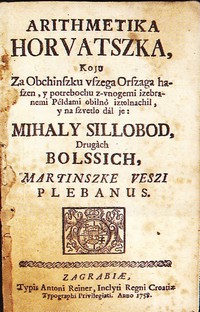
oldest Croatian book on arithmetic is
Arithmetika Horvatszka
(literally Croatian Arithmetic)
from 1758,
published in Zagreb. It was written by Mijo Silobod Bolsic.
Karlo Mrazović
The
first balloonist in Croatia was Karlo
Mrazovic, who performed two
balloon flights in Zagreb with his own balloons in 1789 and 1790. He
was born in Boka
kotorska. See [Croatia - Europe, III,
Barok i prosvjetiteljstvo, p. 426, the article by Vladimir Muljevic].
Šimun Stratik (Simone Stratico)
Simun
Stratik (Simone Stratico,
1733-1829), outstanding specialist
in nautical theory, was born in Zadar (in the family
of Schiavoni which came to Zadar from Crete). He lectured
mathematics and nautical theory in Padova, and then nautical
theory at the University of Pavia. By
the end of his life he prepared a new edition of Vitruvius'
famous Architecture
(1825) in four books accompanied with 320 tables. He
published among others
his translation into
Italian (published in Padova in 1776)
and his commentaries to the book of
a famous Swiss mathematician Leonhard Euler Theorie
complette de
la construction et de la manoeuvre des vaisseaux
(1733);
Euler's text has 360 pp, and Stratik's commentaries 180 pp;
the translation into Italian appeared before English and Russian
translations;
three language
nautical dictionary Vocabolario
di marina
in tre lingue (Milano, 1813),
Italian-French-English (in
three books, the first book has more than 500
pp); the fourth book was also planned, but never issued.
Ludwig (Ljudevit) Mitterpacher von Mitterburg
Ludwig
(Ljudevit) Mitterpacher von Mitterburg
(Mitterburg = Pazin in Istria, 1734 - 1814), was born in Bellye (Bilje
in eastern Croatia, near Danube river) and educated in Austria. He
studied mathematics and theology at Vienna University and was appointed
a teacher of religion in 1762. In 1777, Mitterpacher became the first
professor of the newly-established agricultural faculty at the Pest
University, a position he kept until his death. A very popular
lecturer, Mitterpacher also wrote several schoolbooks and lecture
notes. His most significant work was the three-volume Elementa
rei Rusticae,
a comprehensive study of agricultural
science and practice. Subjects included cultivation, plant-growing,
horticulture, vine-growing, forestry, animal husbandry and food
processing.
His books originally written in Latin language were translated into
several
languages and became important works of reference for contemporary
science.
Mitterpacher became a member of the Academy of Sciences in Bologna.
Many
thanks to Mr. Darko Varga (from Bilje, Baranja) for having
contributed Mittepacher's biography to this web.
Filip Vezdin
Filip
Vezdin or Wesdin (Paulinus
a Sancto Bartolomaeo,
1748-1806),
pioneer of European indology, was born in a Croatian village of Cimov
(Hof am Leithagebirge) in Lower Austria in Burgenland (Gradisce). He
completed his studies of philosophy and theology, Roman languages and
English in Linz and Prague. Besides native Croatian he spoke Latin,
Greek, Hebrew, German, Hungarian, Italian, Portuguese and English. As a
Carmelitan missionary (with monastic name Paulin of St. Bartholomew)
Vezdin was sent to India in 1776, where he learned Sanskrit and several
Indian dialects.
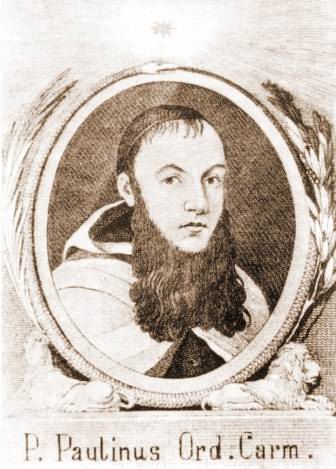
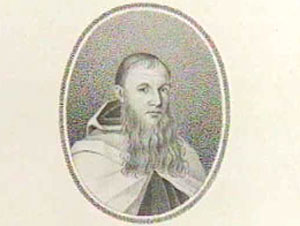
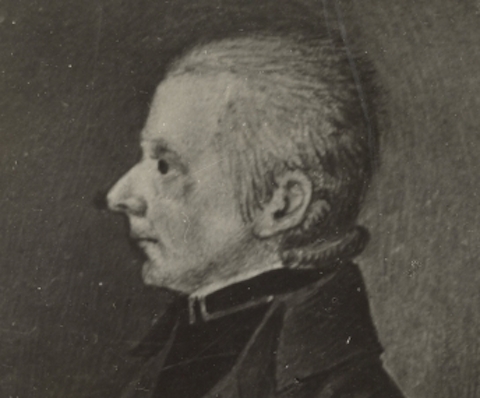
Filip Vezdin, a pioneer of European indology.
For
more information see Filip
Vezdin (in Croatian)
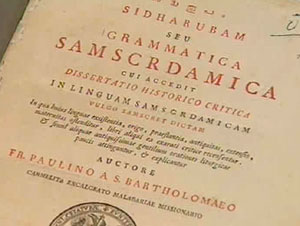
Vezdin is the author of Sidharubam
seu gramatica samscrdamica, the
first printed Sanskrit grammar in Europe, published in 1790 in Rome.
Extended edition was published in 1804 and entitled Vyacarana
seu locupletissima samsrdamicae linguae instituio.
He wrote numerous works
on Indian culture, and in addition to Sanskrit also learned Malayalam,
the Malabar coastal language, in which he wrote his works as well. At
the request of a local ruler, King Rama Varmer of the Travancore, he
wrote an English-Portugese-Malayalam grammar. The King, enthusiasted
with Vezdin's fluency in Malayalam, asked him to be his teacher of
English and Portuguese in his palace in Padmanabpuram. Vezdin's works
are kept in Rome, Vienna and Uppsala. The first methodical study of
connections between Indo-European languages is contained in his work De
antiquitae et affimitate lingaue zendicae, samscrdamicae et germanicae
disseratio, Rome 1798.
Vezdin's best known work
is Systema brahmanicum
liturgicum, mythologicum, civile ex monumentis Indicis Musei Borgian
Velitris, Rome 1791, dealing
with literature, mythology and civil order of brahmanic India, customs
and the way of life. His most interesting and most popular work is his
travel-book Viaggio alle Indie
orientali, Rome 1796. He also
published two philological studies about connections between Hungarian
and Laponian languages. Vezdin is considered as one of pioneers
of European indology.
Filip Vezdin, a pioneer of European indology
About twenty of his books
were published already during his lifetime. Some of them were
translated into German, French, English and Swedish. It is therefore no
surprise that he was a member of the Royal Academy in Naples, and of
the Academy "Dei Volsci" in Velletri and Padova.
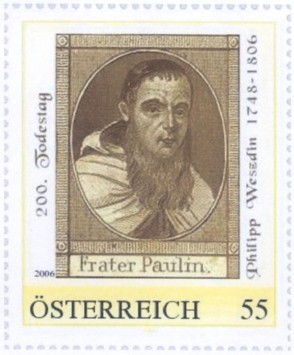
A
postage stamp issued by a Cultural Association, Hof
am Leithaberge, Austria in 2006, commemorating 200 years since Vezdin's
death.
Many thanks to Dr Luca Leoni, Velletri.
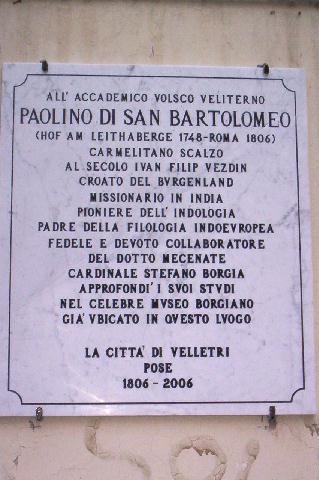
In 2006 a memorial tablet
dedicated to Filip Fezdin was placed in Velletri, a town near Rome, on
the building of Museo Borgia (in Via della Trinita), where Vezdin had
been working. The tablet mentions his Croatian descent: "Croato del
Burgenland". Also, on that occasion an Italian translation of the monograph written by Dr. Branko
Franolic
about Filip Vezdin was
promoted in the City Council of Velletri ("Paolino di San Bartolomeo,
pioniere dell'indologia nell'Europa di fine Settecento", translated
from the English original by Dr. Luca Leoni).
Memorial
tablet dedicated to
Filip Vezdin
in Velletri, Italy, 2006
Many thanks to Dr Luca Leoni, Velletri, for the photo and his
translation:
TO VELLETRI'S VOLSCIAN
ACADEMIC
PAOLINO DI SAN BARTOLOMEO
BAREFOOTED CARMELITE
IN THE WORLD IVAN FILIP VEZDIN
BURGENLAND CROAT
MISSIONARY IN INDIA
PIONEER OF INDOLOGY
FATHER OF INDOEUROPEAN PHILOLOGY
FAITHFUL AND DEVOTED COLLABORATOR
OF THE LEARNED PATRON
CARDINAL STEFANO BORGIA
HE MASTERED HIS STUDIES
IN THE FAMOUS BORGIA MUSEUM
FORMERLY PLACED HERE
THE CITY OF VELLETRI
PLACED THIS
1806-2006
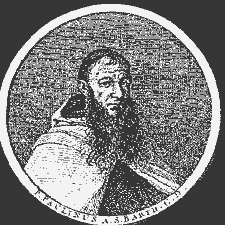
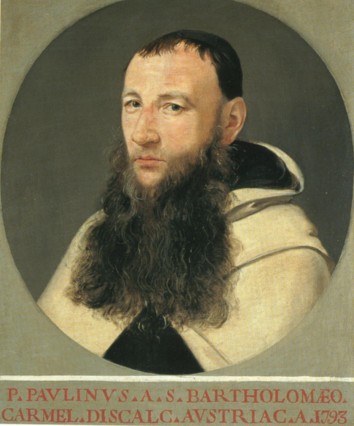
Filip
Vezdin, portrait from
1793 probably
by J.H. Cabott (1754-1841),
once in cardinal Stefano Borgia's library in "Palazzo Altemps", Rome,
now conserved in "Propaganda Fide", Rome
(many thanks to Dr Luca Leoni, Velletri)
Vezdin's research gave a
great impetus to investigation of culture and civilization of India in
Europe. In 1999 Vezdin's image was carved into the white marble
memorial plaque in the City Museum of Trivandrum, the capital of the
Indian state of Kerala. Furthermore, the following text was written in
the Sanskrit, Malayalam, Croatian and English languages on memorial
tablet in the museum:
Ivan Filip Vezdin,
Burgenland Croat, Discalceate Carmelite, with the monastic name Paulin
of St. Bartholomew, a missionary in Malabar from 1776 to 1789. The
author of the first printed Sanskrit grammar and forerunner of Indian
and Indo-European studies to the great honour of his homeland and the
Croatian and Indian people.
Ivan Filip Vezdin,
gradišćanski Hrvat, bosonogi karmelićanin, 1776. - 1789., misionarski
je djelovao na Malabaru. Pisac prve tiskane sanskrtske gramatike i
preteča indijskih i indoeuropskih studija na veliku čast svojoj
domovini te hrvatskom i indijskom narodu.
According to distinguished Croatian linguist Vatroslav
Jagić
(1838-1928), Filip Vezdin was born in lower-Austrian village of Hof an
der Leitha, and in this village already in the time of Jagić [more
specifically, in 1865, when Jagić wrote these lines] only the Croatians
live, and speak between themselves Croatian, while the older people do
not speak German. According to Jagić, it can be said for sure that
Vezdin's mother did not speak German, while his father understood
hardly anything of German. Jagić mentioned a realiable friend of him,
who said that Vezdin's relatives still live in that village, and that
they are true Croatians. Source Vatroslav Jagić: Slovjensko
jezikoslovlje, Zagreb 1865. Here is Jagić's original text in Croatian:
... Doskora zatim sazna Evropa i
pobliže o sanskritskom jeziku. Ime onoga, koji napisa prvu sanskritsku
gramatiku kao izučen tudjinac, dvostruke je po nas ovdje važnosti: ne
samo što je to bila prva od Evropejca i za Evropejce sastavljena
gramatika toga jezika, nego takodjer što ju je napisao naš čovjek,
Hrvat rodom iz Austrije, po imenu Ivan Filip Vezdin, učenomu svietu
poznatiji pod redovničkim imenom Paulinus a Bartholomaeo. On
dakle napisa prvu gramatiku sanskritsku, te je izda na sviet u Rimu
god. 1790; osim toga ima od njega i drugih znamenitih knjiga, koje se
tiču sanskritskoga jezika, književnosti i starina. Da je Vezdin zbilja
pravi Hrvat bio, rodjen u dolnjo-austrijskom selu Hof an der Leitha, to
je podpuna istina; zato što u onom selu još i danas (1865.) živu sami
Hrvati, te i danas medju sobom samo hrvatski govore, a stariji ljudi
niti ne umiju njemački. Može se dakle za cielo reći, da Vezdinova majka
nije nimalo, a otac jedva štogod razumio njemački. Osim toga kaza mi
vjerodostojni prijatelj (Pavao Žulić, moj dodatak), da i njegova
rodbina još u onom selu živi, pak i oni su sami korjeniti Hrvati. To
sam ovdje zato napomenuo, da se svakomu pravo učini; dakle i nam da
bude, što je naše. (See Hrvatske
novine, Tajednik Gradišćanskih Hrvatov, 6. 4. 2012, or the journal Književnik, Zagreb, 1865, no 2, pp.
507-509, where the original Jagić's text appears.)
For more information, see
Branko Franolić: Filip
Vezdin
("Filip Vezdin’s contribution to indic studies in Europe at
the turn of the 18th century")
Tomislav Mrkonjić:
"Velikan hrvatskih korijena", Glas Koncila, 19 February 2006, p. 18
Zdravka Matišić: Radost,
strah, predanost / Joy,
Fear, Dedication; Contribution to the biography of Filip Vesdin
Paullinus a Sancto Bartholomaeo,
in Croatian and English, Odjel za orijentalistiku Hrvatskog filološkog
društva i Filozofski fakultet, Zagreb 2006
Franjo Domin
Franjo
Domin
(born in Zagreb, 1754-1819), studied
physics and theology in Vienna and later became a dean at the
Faculty of Philosophy and rector of
the University of Budapest.
He was among the first who cured various diseases by
electrotherapy using static electricity.
Nikola Toma Host (Nikolaus Thomas Host)
Nikola Toma Host (Nikolaus Thomas Host, or Nicolai
Thomae Host, 1761-1843) was a personal physician of the Austrian
Emperor Franz I. The Botanical Garden of the University of Vienna bears
his name: Host's Garden (Host’scher Garten), which he has directed
until his death in 1834. His herbarium is kept in the Nature Museum in
Vienna.
19th century
Ivan Lupis Vukić and his torpedo
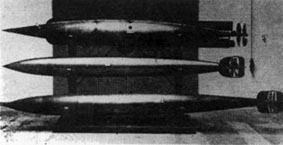
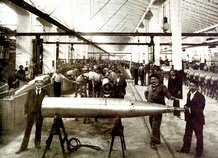
The
first torpedo
was constructed by Ivan Lupis
Vukic in the 19th century in
Rijeka, where its production had started in 1866 in the Whitehead
factory. He was born in the village of Nakovane
on
the beautiful Peljesac
peninsula near Dubrovnik.
The
project for the Theater building in Rijeka was drawn up by Helmer and
Fellner studio from Vienna. The building was illuminated with
electricity, one of the first theaters in the world to have its own
generator. See the reference below, p. 156:
Miljenko
Smokvina: Rijeka
na povijesnim fotografijama,
2nd ed, Ruševic & Kršovik, Rijeka 2003.
Around the middle of the 19th centurz, a metal factory was
built in Rijeka. It was later reconstructed into a shipzard, where the
first Croatian metal steamship Hrvat (i.e. Croat) wa built in 1872 for
the city of Senj. Following
Following he ideao of Ivan Lupis from Rijeka, the first torpedo was
constructed there. See [Smokvina
p. 191].
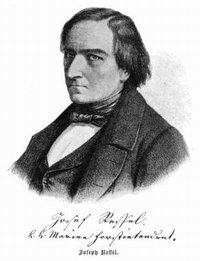
Yosip Ressel
The
first ship-screw (propeller) has been constructed by Yosip
Ressel
in 1827 (the first steamers were constructed
with paddles). Joseph Ressel was of the Czech and German
origin, working as engineer of forestry in the lovely Istrian
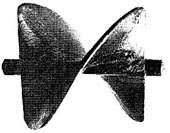
town of Motovun. It is interesting that this important discovery
was inspired by ordinary spiral corkscrew. The first propellers
were tested on a boat in Trieste. The first journey across the
Atlantic with screw-driven ship was in 1839 within 40 days, with
Ressel's screw improved by Swedish engineer John Ericsson.
It
has led to contemporary ship-screw:
Josip Belušić
In
1888 Josip Belusic
constructed the first electric
speedometer.
Belusic was born in the region of Labin in
Istria, and was professor in Kopar. This invention was patented
in Austria - Hungary under the name of "velocimeter."
NOTE: Nikola
Tesla (1856-1943) is since
recently
credited for this discovery, see
here.
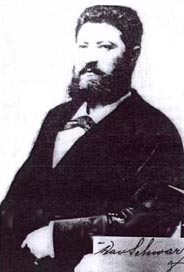
David Schwarz
David
Schwarz, a Zagreb Jew
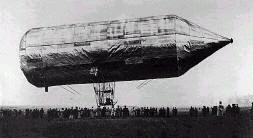
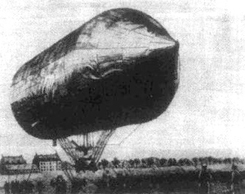
(1852-1897), invented steerable metal airship that is today unjustly
bearing the name
of the German count Zeppelin. Indeed, Zeppelin bought
the complete project from Schwartz's wife, shortly after his
premature death. It is true that in 1897 the `Zeppelin' constructed by
Schwartz fell down during its trial flight near Berlin, due to a small
technical error in the propeller, having reached the height of 460 m.
It was 47.5 m long and had 35 tons.
David Schwarz
While preparing the project of his flying ship, which for the first
time was predicted to be metal made, he had to resolve many technical
and technological problems. This led to the discovery of the special
aluminum alloy now known under the name dural,
also called the Schwartz
aluminum.The first steerable metal airship by David Schwarz, 1897The first steerable metal airship by David Schwarz, 1897
The first steerable metal airship by David Schwarz, 1897.
Photos from David Schwarz
web-site by Ante Sučur>
The American Israel Numismatic Association issued two nice
plaquettes in honour of David Schwarz, see
here.
The Croatian
Jews
left truly remarkable traces in arts,
music, science and architecture.
Ante Šupuk
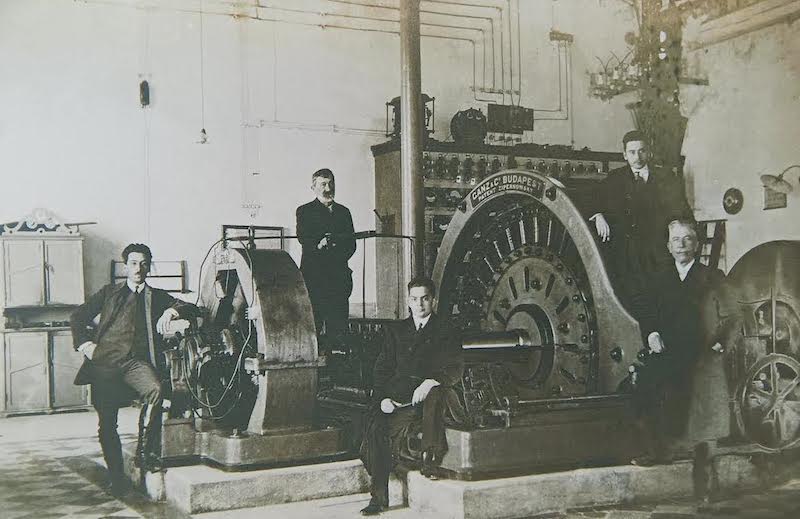
Ante Šupuk (1838-1904) second from the left. The machinery for the
Šibenik AC electric power system,
operating since 1895, was produced by the GANZ co. in Budapest.
It
is not widely known that one
of the earliest AC (alternating current) electric power systems in the
world
has been built up in Croatia, on the beautiful Krka waterfalls (one of
Croatian national parks). It
brought light to the city of Sibenik, 11 km from the power plant. It
was built in 1895, one year
before Nikola
Tesla's famous power plant on
the Niagara falls. The chief engineer was Ante
Šupuk. The plant brought light to the Šibenik cathedral, which was
the first cathedral in the world lighted with AC.
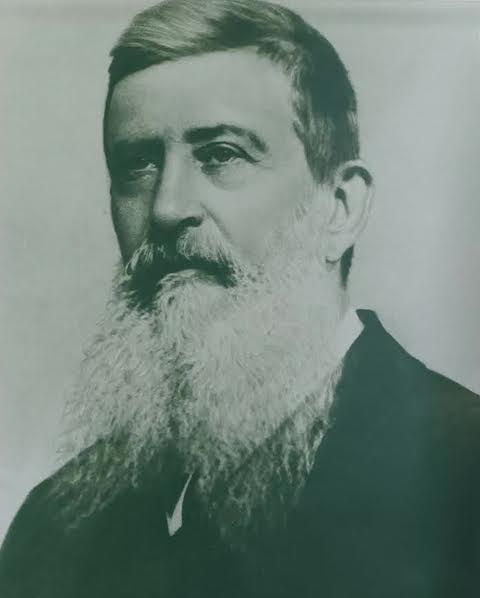
Ante Šupuk, Croatian inventor, entreprepenur, and
politician, mayor of the city of Šibenik, Croatia.
At
the time when Krka - Šibenik AC electric power system was built, there
was no
transmission system for larger distance. Krka-Šibenik was one of first
integrated power systems. It was a two-phase system in time when major
cities like London and Rome had one-phase systems. With time, other
cities also adopted multiphase (or polyphase) systems invented by
Nikola Tesla, and this is kept up until today.
This was one of the first commercial power systems, supplying an entire
city with multiphase electric power. For more information, see Milestones: Krka-Šibenik Electric Power System, 1895.
Vatroslav Jagić
Modern
Slavic studies were founded by Vatroslav Jagić (born in
Varaždin,
1838-1923), professor of philology at the Universities of Zagreb,
Berlin, Vienna,
Sankt
Petersburg, Odessa. He was a full member of the Petersburg's
and Austrian Academies of Sciences. A great importance for
the development of Slavic philology had the journal Archiv
fur slavishe Philologie that he
founded in Berlin, and whose editor in chief he was during 45 years. He
also
initiated and organized the
Seminar for Slavic studies in Vienna in 1887, which later
grew out to the Institute of Slavic Studies. His scientific opus
is enormous: if collected, it would occupy about 100 books.
Vatroslav Jagić
Among numerous scientific
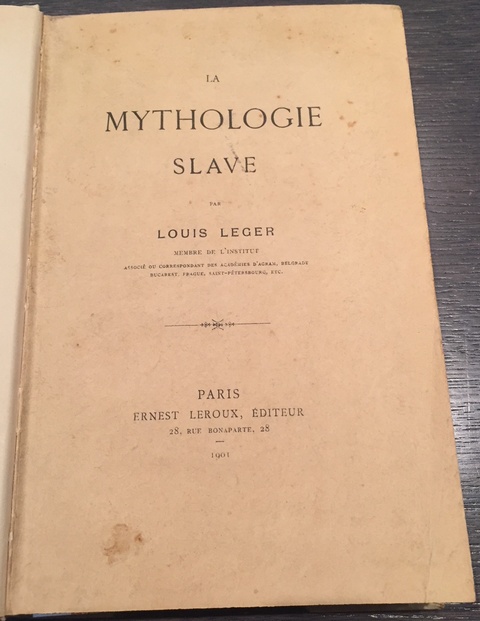
collaborations, we mention a distinguished French scientist Louis Leger (a pioneer in
Slavic studies), who wrote a
nice dedication on a separate page of his book La mythologie slave, published in
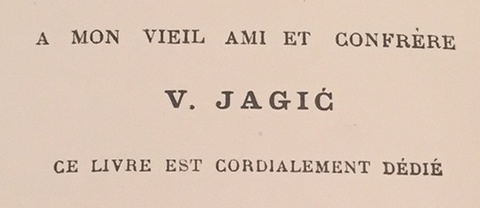
Paris in 1901: "A mon vieil ami et confrère V. Jagic ce livre est
cordialement dédié". Louis
Leger is known for his study of the famous Reims Evangel, kept in the Municipal Library in
Reims, France, the second part of which was written in Croatian Glagolitic Script in
Prague in 1395.
Many thanks to dr. Antonija Zaradija Kiš, Zagreb,
for showing me her copy of this book.Don Frane Bulić
Some
important
discoveries in the field of Croatian archeology were
accomplished
by don Frane Bulić
(1846-1936).
Especially important was a discovery of an inscription
on
the sarcophagus of queen Jelena
(10th century).
Ferdinand Kovačević
One
of the pioneers of telegraphy is Ferdinand
Kovacevic
(1838-1913). He invented the possibility of telegraphic connection
along a single
wire (the duplex connection), whereas before four wires had
been used. By the way, Zagreb had its telegraph lines only six
years after the first telegraph lines in the world introduced by
Morse
(Washington-Baltimore, 1844).
Ferdinand Kovačević
Telegraph connection with the
Croatian region of Lika,
where Kovacevic
was born, had been
established already in 1854. Kovacevic published
several electrotechnical books in Zagreb in German language. It is
interesting that Ferdinand Kovacevic was born in the village of Smiljan
in Lika, i.e., in the same village as Nikola Tesla.
Spiridion Brusina
A
zoologist of international reputation Spiridion
Brusina
(born in Dubrovnik,
1845-1908), analyzed and classified 600 fossil species. He has a great
merit
for popularizing science in Croatia. Natural scientists
throughout Europe named in his honor about 50 species according to his
name.
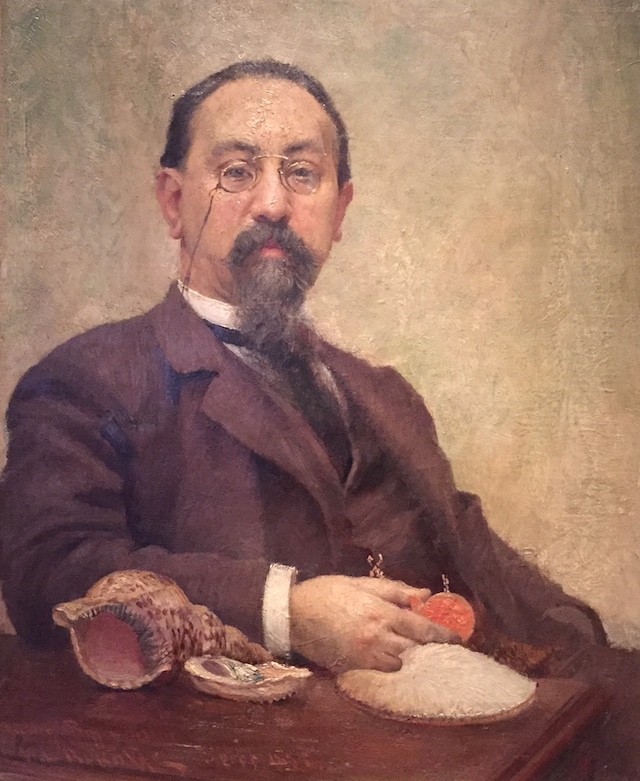
Portrait of Špiro Brusina, 1895,
by Vlaho Bukovac, distinguished Croatian painter.
Croatian Natural History Museum, Zagreb
Vinko Dvořák
Vinko
Dvořák
(1848-1922), Czech who came from Prague
to Zagreb in 1875 and was lecturing physics at the University
of
Zagreb, was the student of Ernst
Mach. He is
well known by his discoveries in acoustics, especially about
acoustic forces. He was the first constructor of
an acoustic radiometer, which
has been unjustly attributed to Rayleigh. Information by professor Vatroslav Lopasic,
professor of physics at the University of Zagreb.
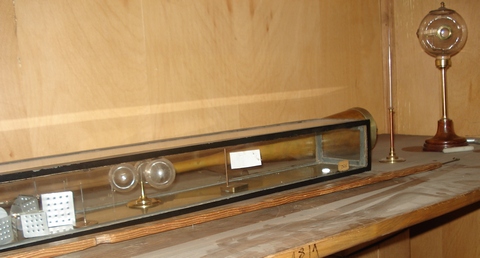
Parts
of acoustic radiometer
constructed by Vinko Dvořák, kept in the Department of
Applied
Physics
of the
Faculty of Electrical Engineering and Computing, University of Zagreb.
The aim of the instrument is to study mechanical effects
of sound.
Gustav Janeček
Gustav Janeček
(1848-1929), pharmaceutist and chemist born and educated in Czechia,
since 1879 was employed at the University of Zagreb. In the period of
1908-1909 he was a rector of the University of Zagreb. He was important
in organizing the study of chemistry at the University of Zagreb. Under
his mentorship, the first PhD in Chemistry in Croatian was defended in
1886.
He was a member of JAZU (since 1991 HAZU - Croatian Academy of Sciences
and Arts) in Zagreb since 1887, president of its Department of
Mathematics and Natural Sciences in the period of 1908–17, and
president of the Academy in
the period of
1921–24. He was an extraordinary member of the Czech Academy of
Sciences.
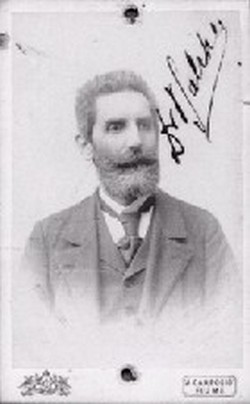
Peter Salcher
Peter
Salcher (1848 – 1928),
professor at the
Rijeka Naval Academy, was a close associate of Ernst Mach and succeeded
in what the famous physicist could not achieve - to make a picture of
the invisible. Mach wanted to provide experimental evidence of his
hypothesis about the existence of a shock wave
around objects moving at speeds greater than the speed of sound.
Therefore, he asked Salcher to try gaining such evidence in his
laboratory in Rijeka. No sooner said than done.
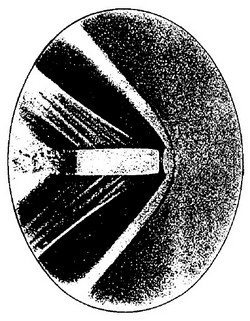
Peter
Salcher, author of the first ultra-fast photo of a shock wave
around flying gun bullet
In 1886, Salcher and his
associate Sandoro Riegler took a series of
ultra-fast photographs of the acoustic phenomena that arise around a
flying gun bullet, thus proving the existence of the shock wave,
today also known as the sound
barrier.
The
Salcher photo of the shock wave around flying gun bullet. Source.
His work was a
scientific sensation. Could the unit for the speed
of sound, instead of Mach, have been Salcher? We'll leave that question
unanswered and just remember that Salcher during his experiment
actually took the first ever photographs of – a flying
bullet. Source
of the text www.kvarner.hr
.