St Paul the Apostle spent three months on the island of Mljet in Croatia
Darko Žubrinić, 2009
Abstract. An important book by Ignjat Đurđević published in 1730 in Venice was released in 2008, in The Year of St Paul, i.e. two thousand years after the birth of St Paul. It is the Croatian translation of Ignjat Đurđević's monograph written in elite Latin language, in which he proves that St Paul spent three months on the island of Mljet in Croatia, and not the island of Malta.
Saint Paul had shipwreck on Croatian island of Mljet, and not on Malta. This is the subject of the monumental book written in elite Latin language by Ignjat Đurđević, published in Venice in 1730. Ignjat Đurđevic was Croatian Baroque writer from the city of Dubrovnik. The island of Mljet is not far from Dubrovnik.

On the right St. Paul the Apostle, another protector of the City. The painting is kept in the Dominican Monastery in Dubrovnik.
Photo by Ivo Pervan.
It was Dr. Miho Demović who initiated an important project of Croatian translation of Ignjat Đurđević's 1730 monograph. Đurđević's book proves that St Paul's shipwreck occured on Croatian island of Mljet, not on Malta. For example, Malta is not in Adria (the Adriatic Sea), but in Lybian sea.

Ignjat Đurđević, 1675-1737, Croatian writer, poet, historian and
benedictine monk at the Veliko jezero (Great Lake) abbey on the island
of Mljet.
Publication of the book
Ignjat Đurđević: Sveti Pavao apostol brodlomac (St Paul the Apostle Castaway), Miho Demović (ed), Dubrovačke knjižnice, 2008., 360 pp. (Ignjat Đurđević's 1730 book translated from elite Latin into Croatian by Jozo Marević, with extensive foreword by Dr Miho Demović in Croatian and English), ISBN 978-953-97952-3-0
was a great event in 2008, proclaimed The Year of Saint Paul by pope Benedict XVIth.
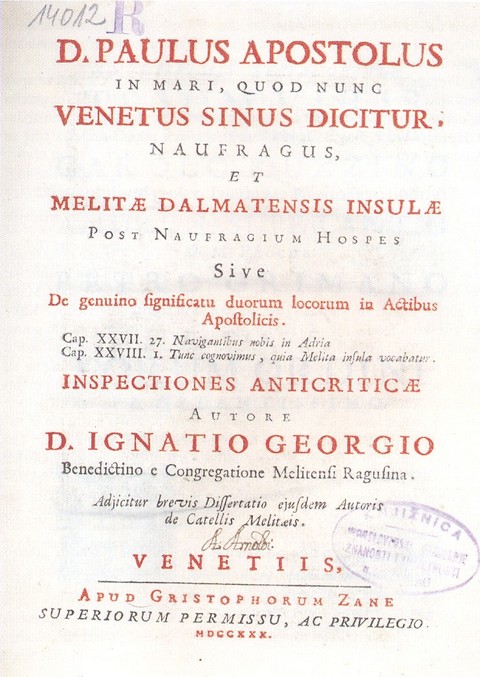
Ignjat Đurđević's (Ignatio Georgio) original book about the shipwreck
of St Paul the Apostle on the island of Mljet, published in Venice in
1735,
written in elite Latin language.
The editor in chief of Croatian translation is Dr. Miho Demović, outstanding Croatian historian and musicologist. The 2008 translation was printed in hardcover, and the first 104 pp contain Scholarly introduction written by Dr. Miho Demović in Croatian and English:
Miho Demović: Ignjat Đurđević i dubrovačka tradicija o svetopavloskom brodolomu u vodama hrvatskog otoka Mljeta, Uvodna studija, Zagreb 2008. / A STUDY ACCOMPANYING CROATIAN TRANSLATION OF THE ĐURĐEVIĆ'S BOOK ON SAINT PAUL'S SHIPWRECK ON THE ISLAND OF MLJET
The Croatian version of Demović's introductory study is available on pp 5*-60*, and in English on pp 61*-104*. This web page is based mainly on Miho Demović's study.
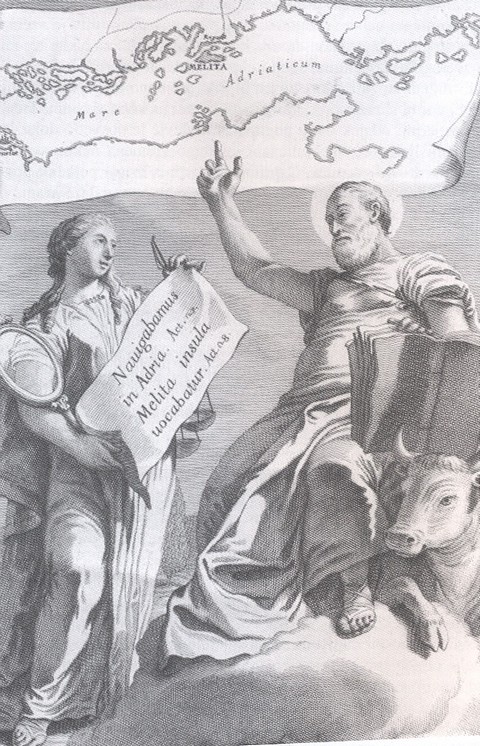
Drawing in Ignjat Đurđević's book indicating that the shipwreck of St
Paul
happened on the island of Mljet, and not on Malta.
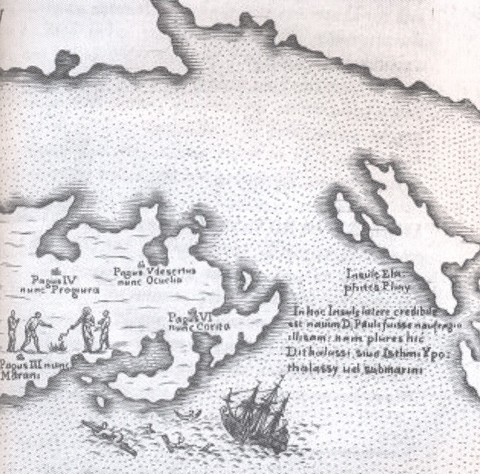
Description of St Paul's shipwreck on the island of Mljet.
Note a drawing of St Paul throwing a poisonous snake into the fire.
The following 360 pp of the book contain Croatian translation of Đurđević's original treatise published in elite Latin. The book contains several indices: Index of cited authors, Index of terms, and Index of photos.
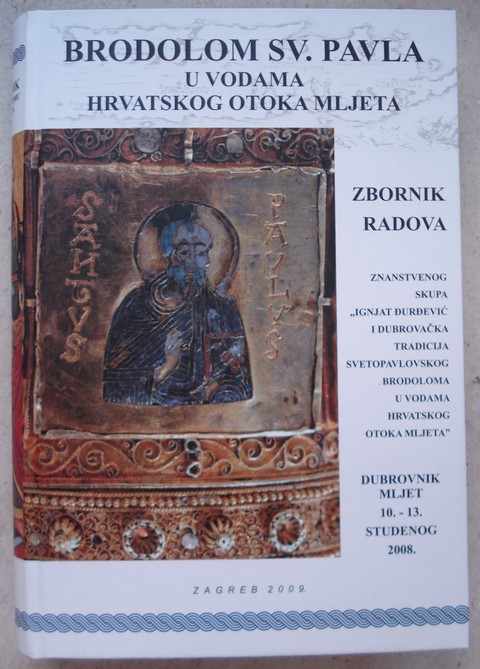
Miho Demović (ed.): Shipwreck of St Paul in the waters around Croatian island of Mljet,
Zagreb 2009, collection of scholarly articles.
Đurđević's 1730 book was translated from elite Latin into Croatian by Dr. Jozo Marević, Dubrovnik. Elite Latin is not easy to read even to those with solid background in Latin language. Therefore the book was accessible only to a narow circle of top scholars. Now with Croatian translation of the book and the accompaning scholarly study published in English, the book became available to much borader public. We extend our congratulations to Dr. Miho Demović and all of his collaborators for their painstaking and important work.
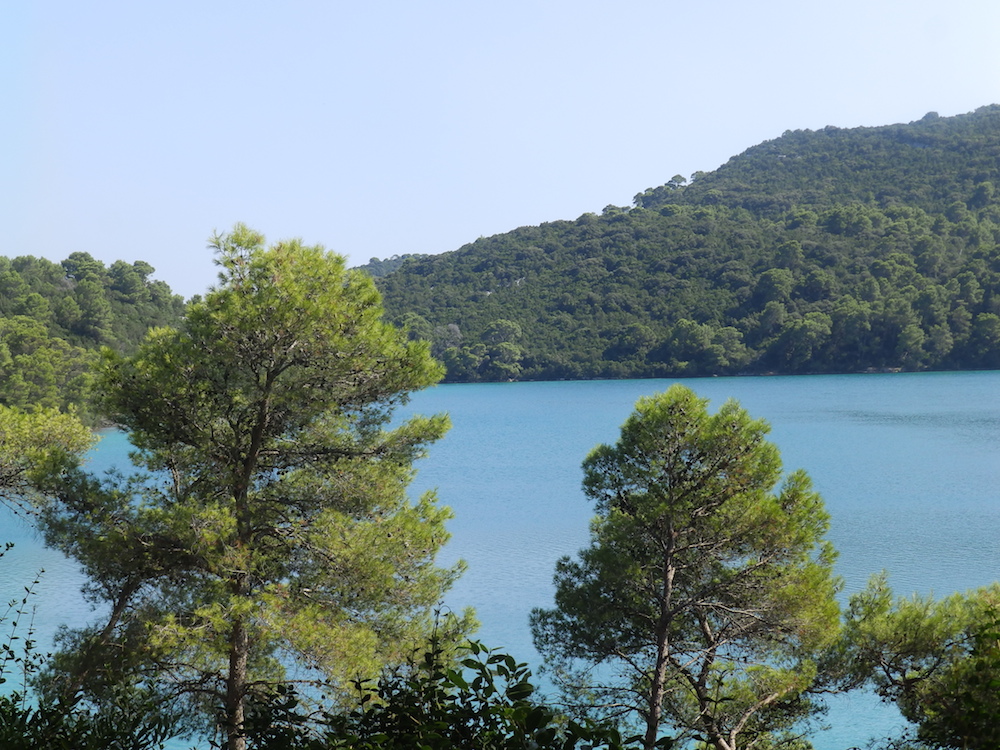
Island of Mljet, Croatia, paradise on the Earth. Photo by Nikola
Piasevoli.
As Dr. Miho Demović stressed,
neither I nor the publishers had any intention whatsoever of perusading people to accept the author's opinion that the actual location of Saint Paul's schpwreck was indeed the island of Mljet (although, we personally, deeply and confidently trust it as a fact). The only intention we had was to point out the event as an interesting excerpt from the old Ragusan political, religious and literal history.
Until recently it was believed that the first person to identify the location of Saint Paul's shipwreck near Mljet was the father of European historigraphy, the Greek emperor and historian Constanine Porphyrogenitus (905-959) who, describing the south Dalmatian islands in his work "On Administering the Empire", wrote the following:
Another big island is Mljet. It was described by Saint Luke in the Acts where he calls it Melita. Saint Paul was there bitten by the viper but he shook it off into the fire where it was burned.
However, scholars have recently discovered new information in The Geography of distinguished Armenian scholar Ananias of Shirak, written between 592-636 AD, which confirms that Saint Paul stayed in Dalmatia following a shipwreck that happened on the Adriatic island of Melita (Mljet). See Robert H. Hewsen: The Geography of Ananias of Širak, Wiesbaden 1992, p. 47.
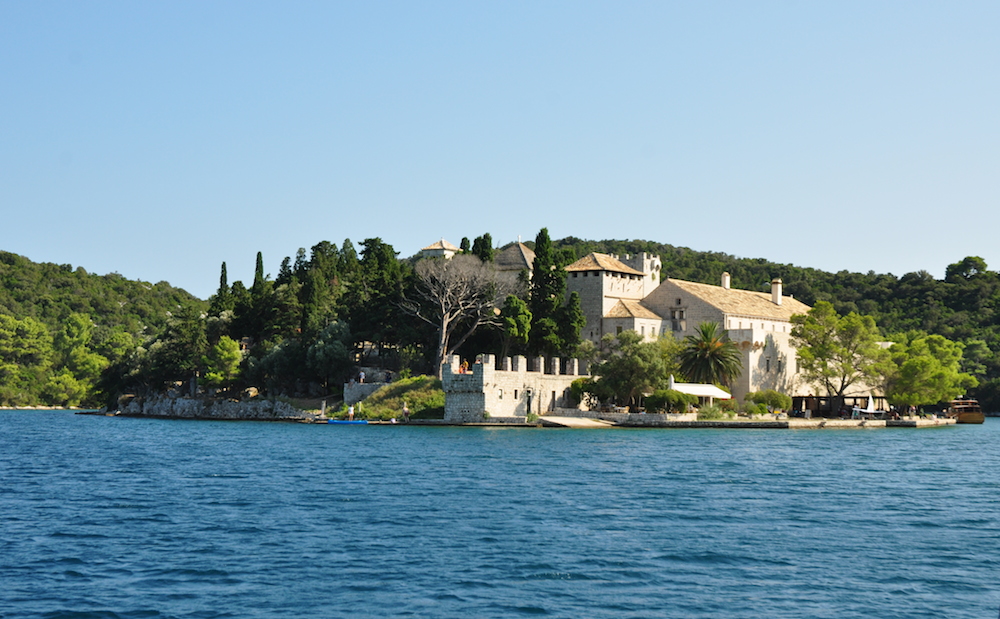
The bendictine Abbey of Sv. Marija (St Mary) on an islet on Veliko
jezero (Great Lake) near the island
of Mljet. Photo by Nikola Piasevoli.
After Porphyrogenitus, the 16th century Italian historian of Dubrovnik (Ragusa) Serafino Razzi, Dominican and for a while Vicar of Capitular of the Ragusan Metropolitan see, claimed the same. He set forth the following:
At the end of this presentation on the island of Mljet, I shall tell you that many serious writers think that this Ragusan Mljet was the very island where Saint Paul the Apostle escaped after the shipwreck and there he was bitten by a viper as written in chapter 28 of the Acts. One of them is the honorable cardinal Gaetano.
Razzi thought that the shipwreck couldn not have taken place in Malta because Malta was situated in the African, instead of in the Adriatic Sea.
Đurđević claimed at the beginning of his book the following
I say and I claim that before the chivalrous Hospitaller Order of St John moved to African Melita, the glory of Saint Paul's shipwreck site had been granted, without any hesitation or doubt, to Illyrian Melita.
It is interesting that
while Malta was under the Spanish government, Đurđević was supported in
his views by both English and French scholars. However, when Malta came
under the English protectorate, the circumstances changed and the
English writers stood up for the Maltese option. Something similar
happened to the French writers when Malta was conquered by Napolen
Bonaparte.
|
Chapter 27, 27 of the Acts in the Bible mentions ADRIA (i.e. Adriatic Sea) Đurđević's translation from Vulgata of St Jerome:
Đurđević's translation from Greek original into Latin:
Translation into Croatian from Đurđević's translation into Latin:
Translation into English from Đurđević's translation into Latin (D.Ž.):
And the contemporary English translation of the Bible changed the original Greek and Latin texts (see ACTS 27, 27) as follows:
This English "translation" of the Bible is cited from the Good News Bible, published by The Bible Societies: see p. 186 of the New Testament for the "Mediterranean" (instead of the original Adria in the Bible), and p. 187 of the New Testament for "Malta". Obviously, the translators were aware that Malta is not in the Adriatic, so they simply changed the original Adria into "Mediterranean", in order to avoid obvious contradiction.
|
|
In Chapter 28, 1 of the Acts in the Bible we have the first sentence indicating Melita as the island of St Paul's shipwreck, and in the 16th century the name of MELITA was simply changed to Malta. Đurđević's translation from Vulgata of St Jerome:
Đurđević's translation from Greek original into Latin:
Translation into Croatian from Đurđević's translation into Latin:
Translation into English from Đurđević's translation into Latin (D.Ž.):
|
Issuing of Croatian translation of Bartol Đurđević's monumental book was made possible by a generous finantial support of prof. Pavica Šundrica-Šperk. She is retired professor of English language at a Dubrovnik high school.
Dr. Miho Demović initiated organizing a conference in Dubrovnik in November 2008, dedicated to Đurđević's monograph. The participants explored numerous proofs, direct and indirect, that St Paul spent three months on the island of Mljet in Croatia, and not on Malta.
Some of Đurđević's Croatian texts are available via Wikipedia. He was a tri-lingual poet: he wrote in Croatian, Italian and Latin.
A result of centuries old tradition of St. Paul in Croatia is that there are as many as 320 versions of Croatian second names based on the name of "Paul". It is estimated that about 10000 people in Croatia are bearing such second names.
A part of more than three hundred versions of second names existing in Croatia, based on the name of "Paul":
The Armenian, Ananias of Shirak, stated in his Geographia from the beginning of the 7th century, that St Paul the Apostle had been shipwrecked near the Island of Mljet (and not on Malta). Likewise, the Byzantine emepror historian [Porphyrogenitus, D.Ž.] from the end of 9th century in his renowned work "De Administrando Imperio" also mentioned the same fact. Both these ancient writers maintain categorically that St Paul's shipwreck took place in the waters of the Island of Mljet. St Paul's stay in the Illyricum, together with his disciple St Luke, were mentioned by the first Christian writers, St Jerome (345-420), St Gregory of Nazanius (330-390), and some others.
See Robert H. Hewsen: The Geography of Ananias of Širak, Wiesbaden 1992, p. 47.
St Paul visited Croatian island of Mljet on his journey to Rome
Miho-Demovic: Two millenia of St Paul's shipwreck near the Croatian island of Mljet
Ignjat Djurdjevic St Paul was on the island of Mljet in the Adriatic for three months
Dr. Antun Ničetić o plovidbi svetoga Pavla, Vatikanski Radio 7. kolovoza 2012., [MP3]
Marija Buzov, PhD (Institute of Archaeology, Zagreb): IS MLJET – MELITA IN DALMATIA THE ISLAND OF ST. PAUL’S SHIPWRECK?, Histria Antiqua, 21/2012, 491-505.
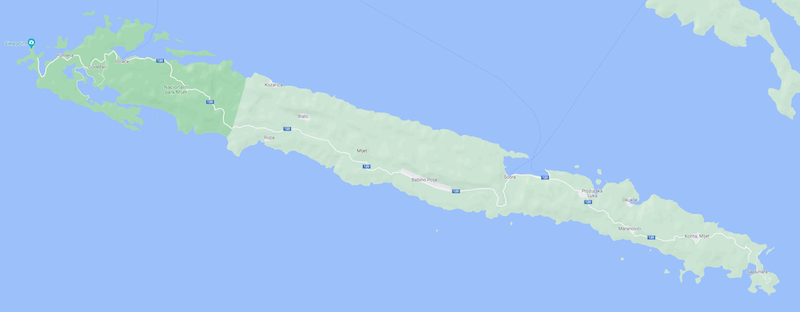
Island of Mljet on the Croatian coast of the Adriatic sea. On the east-most part of the island is the town of Saplunara:
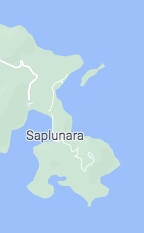
Above Saplunara is an islet Veliki Školj.
Below the islet of Veliki Školj is an even smaller islet of Mali Školj, as can be seen on the map below:
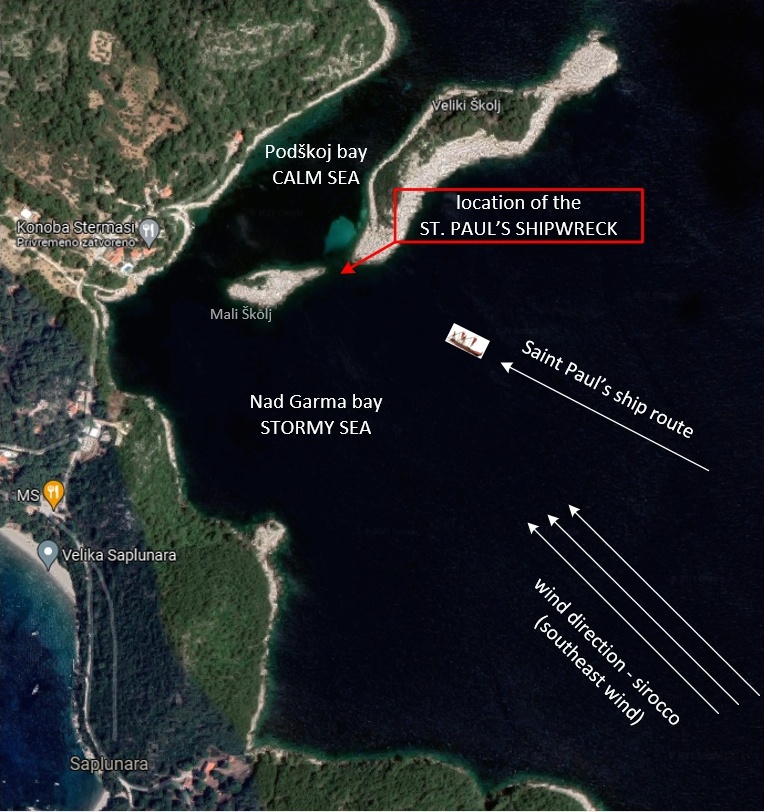
Two seas (dithalasson):
- Nad Garma bay - STORMY SEA
- Podškoj bay - CALM SEA
Strait on the eastern coast of the Mljet island between the islets of Veliki Školj and Mali Školj, together as breakwater, giving the illusion of a place where two (stormy and calm) seas meet - dithalasson
Mljet, mentioned by St. Luke in the Acts of the Apostles by the name of Melita. On that island St. Paul was bitten on the finger by a viper, which he then burnt in fire
Acts of the Apostles, 27, Paul Sails for Rome
(37) And we were in all in the ship two hundred threescore and sixteen (276) souls.
(41) And falling into a place where two seas met ( from Nad Garma bay - STORMY SEA), they ran the ship aground; and the forepart stuck fast, and remained unmoveable, but the hinder part was broken with the violence of the waves.
(43) ... the centurion ... commanded that they which could swim should cast themselves first into the sea, and get to land: (44) And the rest, some on boards, and some on broken pieces of the ship. And so it came to pass, that they escaped all safe to land. (Podškoj bay - CALM SEA)
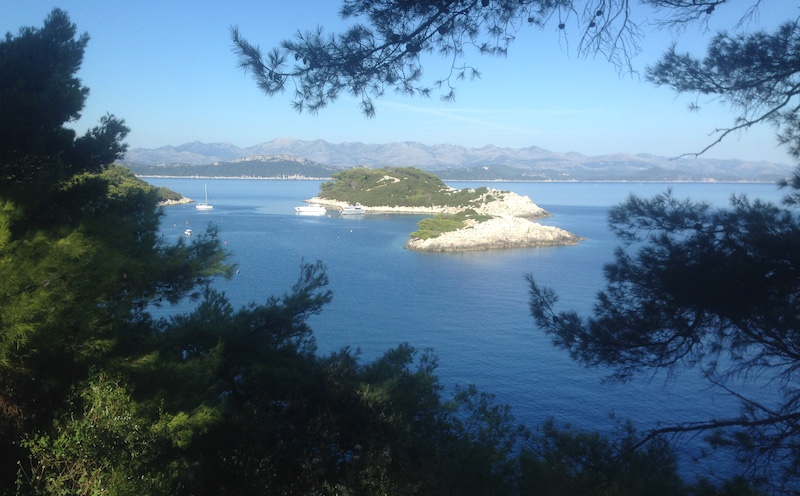
A view to Mali Školj and Veliki Školj from the island of Mljet
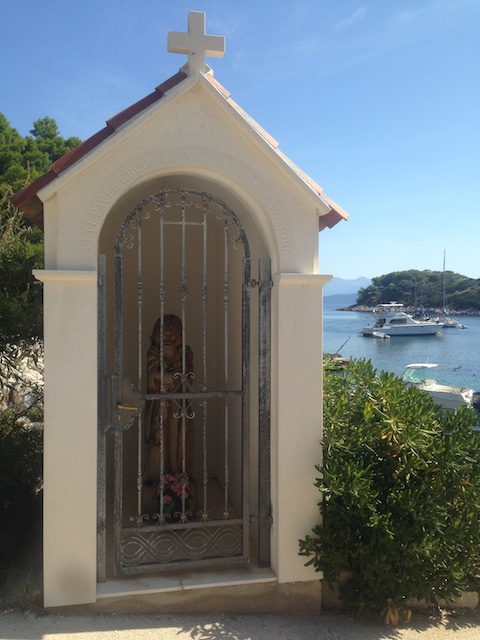
Sveti Pavle brodolomče, čuvaj naše pomorce.
Saint Paul the shipwrecked, protect our mariners.
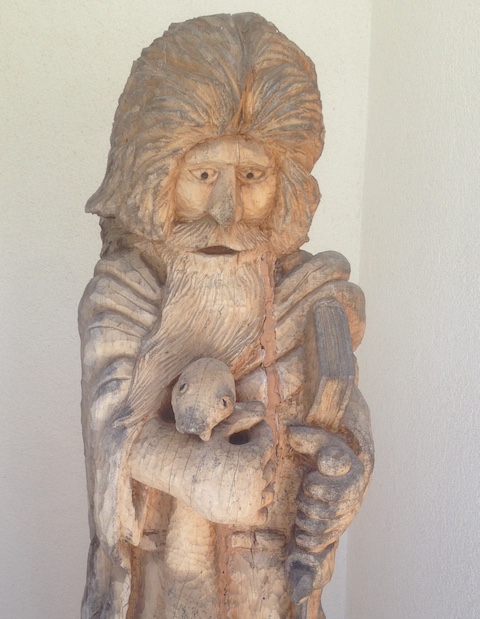
Wood carving of St. Paul

zlatko.pavetic@zg.t-com.hr
Selected articles from the Proceedings:
Dr Miho Demović: TWO MILLENIA OF DUBROVNIK TRADITION OF SAINT PAUL'S SHIPWRECK IN THE WATERS OF CROATIAN ISLAND OF MLJET, Conclusion and Summary
Dr Miho Demović: FOLLOWING HIS SHIPWRECK, ST PAUL THE APOSTLE SAILED TO ROME ON AN ALEXANDRIAN SHIP FROM THE ANCIENT HARBOUR OF POLAČE ON MLJET IN THE YEAR 61 A. D.
Dr Miho Demović: THREE FAMOUS SHIPWRECK SURVIVORS FROM DUBROVNIK
V. Palunko: Melita, otok brodoloma sv. Pavla jest otok Mljet u Dalmaciji, s talijanskog preveo i uvodnu studiju napisao dr. Niko Kličan, ur. Miho Demović, Zagreb 2009. (naslov talijanskog izvornika, Vicko Palunko: Melita del naufragio di S. Paolo e isola Meleda in Dalmazia, Spalato 1919.)
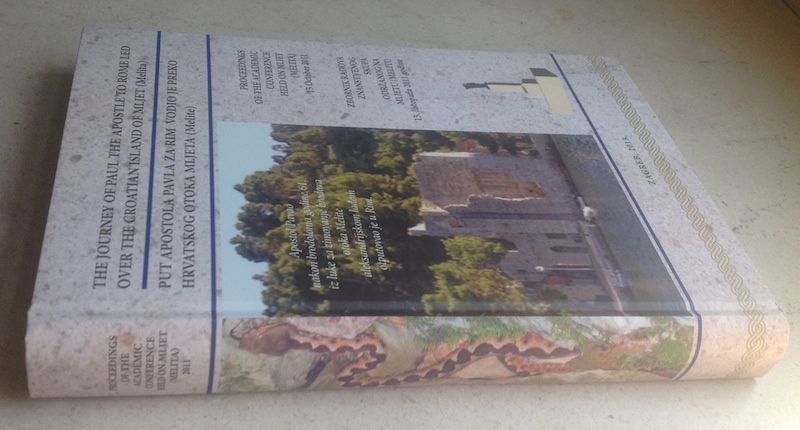
Hrbat knjige ima prikazanu mljetsku zmiju. To je vjerojatno jedincata takva knjiga u svijetu.
Predstavljanje spomenutog Zbornika u Pomeni na otoku Mljetu 29. lipnja 2015. u povodu Dana općine:
Dr. Miho Demović: Brodolom sv. Pavla apostola na otoku Mljetu
(Shipwreck of St Paul the Apostle on the island of Mljet)
Darko Žubrinić: Brodolom sv. Pavla apostola na hrvatskom otoku Mljetu 61. g. poslije Krista, predavanje održano u Pomeni 29. lipnja 2015. i u Dubrovniku u Samostanu Male Braće 30. lipnja 2015.
Predstavljanje Zbornika u Samostanu Male Braće u Dubrovniku dne 30. lipnja 2015.:
Dr. Antun Ničetić: Zašto Mljet, a ne Malta i Kefalonija? (Why Mljet,
and not Malta and Cephalonia?)
Sveti Pavao apostol brodolomac, Dubrovačke knjižnice
Studijsko putovanje na otok Mljet 2008.
U Dubrovniku predstavljena knjiga Sv. Pavao apostol brodolomac (2008.)
Znate li gdje je sv. Pavao doživio brodolom? (HTV)
Island of Mljet
Mrs Pavica Šperk Šundrica (b. in 1922), retired high-school professor of English in Dubrovnik,
is the principal financial supporter of printing the above books.
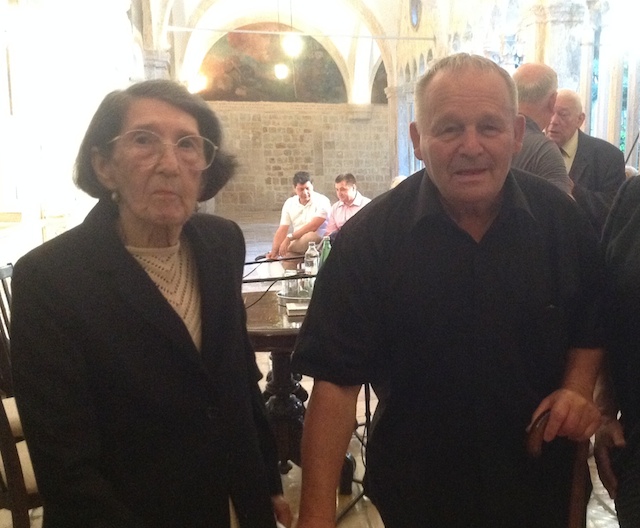
Mrs. Pavica Šperk Šundrica and dr. Miho Demović in the Monastery of Minor Brothers
in Dubrovnik, 2015.
The problem of incorrect attribution of St. Paul's Shipwreck to Malta is discussed in the following book written by rev. Neale, who was an Anglican priest:
J. M. Neale: Notes, Ecclesiological and Picturescue, on Dalmatia, Croatia, Istria, Styria, with a visit to Montenegro [PDF1] or [PDF2], London 1861.
We provide pages 161-163 of this book:
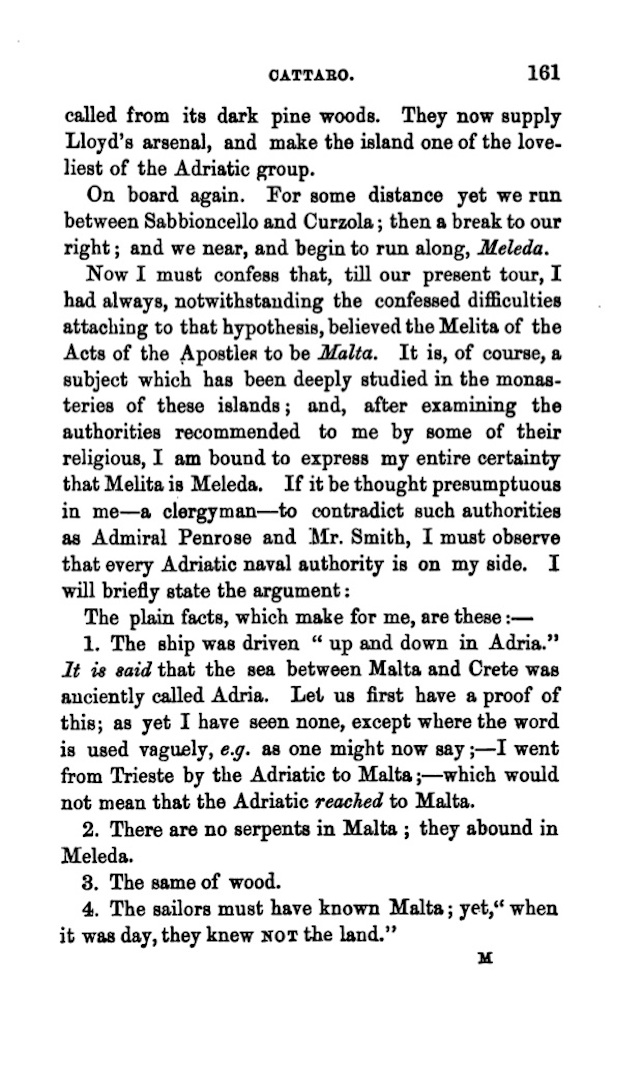
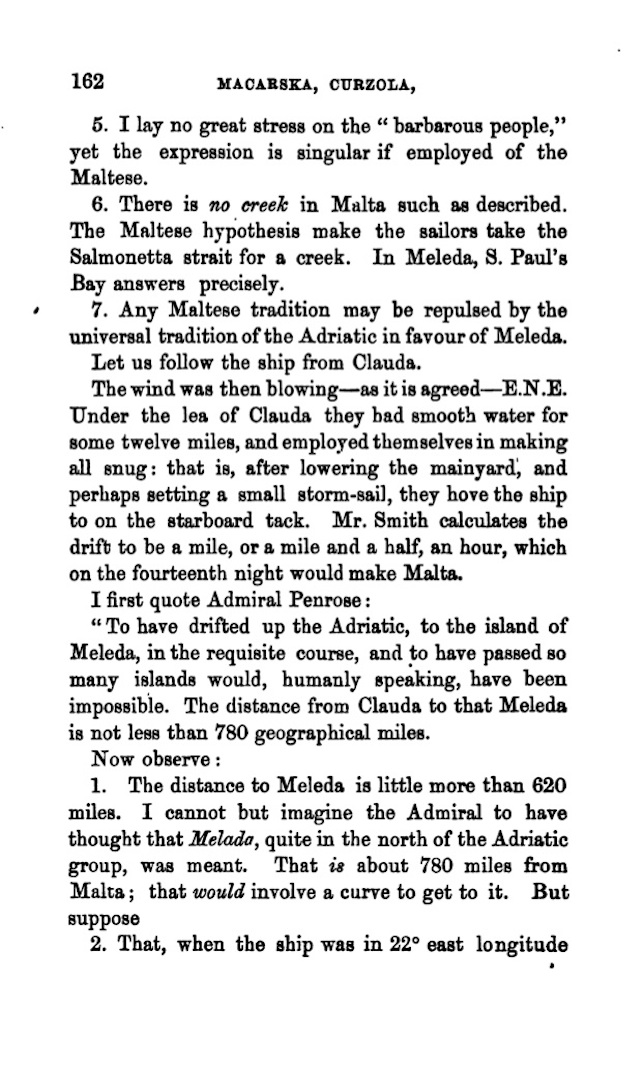
Many thanks to Mr. Juraj Lokmer for his kind information about this book.

Portrait of St. Paul by Andrija Medulic (Andrea Schiavone, Andrea Meldola de Hiadra, ~1500-1563),
distinguished Croatian painter born in Zadar or Nadin. The portrait is kept in the National and University Library, Zagreb.
Source of the photo M. Maštrović (ur.): Andrija Medulić Schiavone, katalog, NSK, Zagreb 2016.
Marija Buzov, PhD (Institute of Archaeology, Zagreb): IS MLJET – MELITA IN DALMATIA THE ISLAND OF ST. PAUL’S SHIPWRECK?, Histria Antiqua, 21/2012, 491-505.
SAŽETAK
JE LI OTOK MLJET – MELITA U DALMACIJI OTOK BRODOLOMA SV. PAVLA?
Marija BUZOV
Istočna obala Jadrana od prapovijesti, antike i ranog srednjeg vijeka bila je povezana s mjestima zapadne obale Jadrana, ali i s nekim krajevima Sredozemlja. Pored ribarstva, razmjene dobara, putovanja, na Jadranu su se dogo- dili i brodolomi o čemu svjedoče brojni nalazi.
Na problematiku brodoloma Sv. Pavla u vodama Mljeta upozorio je europsku znanstvenu javnost, Ignjat Đurđević, koja je njegovo djelo Divus Paulus Apostolus in mari, quod nunc Venetus sinus dicitur naufragus et Melitae Dalmatensis insulae post naufragium hospes sive de genuino significatu duorum locorum in Actibus Apostolicis. Venetiis, apud gristophorum Zane Superiorum permissum, ac privilegio MDCCXXX. primila s velikim zanimanjem.
No, i prije navedenog djela Ignjata Đurđevića o brodolomu Sv. Pavla u vodama otoka Mljeta znamo zahvaljujući dubrovačkoj tradiciji koja se može pratiti na temelju pisanih izvora od Geografije Ananije Širaka, armenskog geografa, matematičara i astronoma iz 7. st. (591. –636.) preko cara i povjesničara Konstantina Porfirogeneta iz 10. st.
Gdje se dogodio brodolom Sv. Pavla? Pojedini su znanstvenici iskazali svoje slaganje ili neslaganje s Đuđevićevom tvrdnjom da je Sv. Pavao doživio brodolom, kako se čini, u mljetskom zaljevu ravne obale u blizini današnjih naselja Saplunare i Korita na jugoistočnoj strani otoka Mljeta, a ne Malte. Glavni kritičari teze da se brodolom dogodio na Mljetu bili su Vimer, Bulić, Nikolanci, Tomić, Švab i drugi, a da se brodolom dogodio na Malti donosi i Biblija i Biblika. Pojedini autori spominju brodolom no ne uzimaju u obzir da se brodolom mogao desiti kod otoka Mljeta u Dalmaciji.
Na temelju analize hidrometeoroloških elemenata jugoistočne obale otoka Mljeta i maritimnih svojstava antičkog broda, zapisa iz Djela Apostolskih te promišljanjima i tumačenjima različitih autora, Miloš Brajević i Stjepo Đurđević-Tomaš upućuju na mogućnost pozicioniranja brodoloma Sv. Pavla na jugoistočnoj obali otoka Mljeta u zaljevu ravne obale. Autori definiraju da pojam “zaljev ravne obale” prema Djelima apostolskim označava uvalu u kojoj je moguć pouzdan i siguran iskrcaj, izlazak na kopno brodolomaca. No, pri prilasku “zaljevu ravne obale” brod se nasukao na hrid. No, iako je bilo zacijelo među brodolomcima i neplivača, svi su spašeni što govori o blizini obale i najvjerojatnije mirno more u zaštićenom dijelu. Zaljevi “Uvala Nad Garma” i “Uvala Podškolj” s otocima Veliki i Mali školj pružaju odličan zaklon od utjecaja jugoistočnog vjetra i valova te omogućuju siguran iskrcaj brodolomaca. Po mišljnju Brajevića i Đurđevića-Tomaša zaljev Velikog i Malog školja odgovara opisu Ditalasa prema svetom Luki, tj. dvomorskog mjesta ili dvomorja. Iz pomorske prakse autora, kad se pomorac nalazi na brodu na udaljenosti jednog kabela od Velikog školja za vrijeme jugoistočnog vjetra, ima privid da su stvarno dva mora; olujno koje udara o greben, s jugoistočne strane i mirno sa sjeverozapadne strane koje pouzdano osigurava zaklonište.
Spomenute pozicije prema Đurđeviću, Palunku i Ničetiću udovoljavaju svim maritimnim, a posebice vizualnim opisima u Djelima apostolskim te dokazuju mogućnost brodoloma sv. Pavla na jugoistočnoj obali otoka Mljeta u “zaljevu ravne obale ”. Autori drže vjerodostojnima stavove Palunka i Ničetića s obzirom na dubinu i položaj Velikog i Malog školja, koji prave prirodni valobran, odnosno dvomorje.
Na otoku Mljetu otkrivena su dva nalazišta ranokršćanskih sakralnih spomenika od kojih se prvo nalazi na viso- ravni uz more kod naselja Saplunare i Korita a drugo u naselju Polače u samom starom Palatiumu. Građene su kao dvojne crkve, no ne znamo tko imje bio titular.
Novija arheološka istraživanja na Mljetu potvrdila su ostatke još jedne ranokršćanske bazilike, koja bi možda prema predaji mogla pripadati crkvi sv. Pavla, te druge koju možemo datirati u kraj 11. st. Bazilika se nalazi na jugoistočnom dijelu otoka u blizini otočića Veli školj, mjesta gdje se držimo nasukao brod sv. Pavla, koju je zabilježio Vicko Palunko. Prvu crkvu možemo datirati u 5/6. st.
Nalazi crkava potvrđuju da je na Mljetu postojala značajna kršćanska zajednica.
Kontinuitet dubrovačke svetopavlovske tradicije možemo potvrditi spomenicima likovne umjetnosti primjerice najstarijim likom sv. Pavla izrađenim u emajlu na relikvijaru desne ruke sv. Vlaha iz 11. st. u Dubrovniku, lik svetog Pavla na triptihu Majke Božje iz 15. st. iz crkve sv. Vlaha, ukrasna sličica s likom sv. Pavla na dalmatici sv. Vlaha oltarne pale iz 15. st., potom s više renesansnih ostvarenja slikarske škole Dubrovnika posebice likom sv. Pavla u društvu sv. Vlaha na poliptihu istaknutog hrvatskog slikara Nikole Božidarevića u Dominikanskoj crkvi itd. Treba istaknuti da je na području dubrovačke biskupije postojalo 6 crkava podignutih u čast sv. Pavla od kojih je jedino danas sačuvana u Paljem Brdu u Konavlima, a na njezinu ranokršćansko podrijetlo upućuje rozeta. Na otoku Mljetu u selu Korita nedaleko mjesta brodoloma otkriveni su temelji crkve sv. Pavla. Crkve sv. Pavla bile su sagrađene i u Stonu gdje postoji toponim SuPavo, Šipanu gdje postoji brdo sv. Pavla, u Župi Dubrovačkoj gdje je kako svjedoče arhivski dokumenti uz potok Pijavičino bila crkva sv. Pavla. Da je kult sv. Pavla bio snažno razvijen ukazuje činjenica da je po imenu svetog Pavla nastalo preko tri stotine različitih prezimena.
Na kraju bismo mogli istaknuti da dvojbu koju nam je ostavio pisac Djela, nije lako razriješiti, no brojne indicije govore u prilog tezi da se Pavlov brodolom dogodio na jadranskoj Meliti.
Na temelju antičkih izvora o plovidbi Jadranom, hrvatske latinske baštine i arheoloških nalaza pokušali smo sažeto odgovoriti je li Mljet – Melita u Dalmaciji otok brodoloma sv. Pavla.
Croatia - its History, Culture and Science