|
|
ISLAND OF SUSAKZvonko Springer,
Salzburg, Austria, 1999 During our holidays in May 1998 we got a chance to make a boat trip to SUSAK Island. We boarded a medium size motor boat at CIKAT bay that took about 45 minutes to arrive at Susak's small harbor. This trip was for me a kind of old time remembrance as I made the same passage some 49 years ago. At those times Susak had still good economic basis which declined precipitously in the following 35 years. The exposed position of Susak at northern Adriatic and its vicinity to Italy caused this decline. Yugoslav Navy closed the island to foreign tourist and one needed police's permission to go over in a fisherman's boat from Mali Losinj harbor. It may be of some interest to see how the Islands' population changed during the period from 1857 to 1991 in some Adriatic islands. As a random sample I choose two most exposed islands from military point of view (Susak and Vis) and four other Adriatic islands down the coast.
-WW1 -> World War One (1914-18); +WW1 -> After World War One Crisis - World wide economic crisis; +WW2 -> World War Two; Homeland War -> in 1991/95 prior to the Independence of Croatia I believe the above data give quite a significant information about the major emigration periods from six Adriatic islands. The islands changed hands between states like: Italy, Austrian-Hungarian Double Monarchy, to Kingdom of Yugoslavia and as from 1945 all to S.F.R. Yugoslavia.
THE ISLAND OF SUSAK (SANSICUO or SANSACUS)The island of Susak is situated in the west of Kvarner's bay in the northern part of the Adriatic Sea with the northern latitude at 44°31' and eastern one at 14°19'. The surface of the island is 375 hectares with the highest elevation point at 98 m above sea level. Susak is a small open sea island that significantly differs from all other islands of Aspyrtides archipelago in geology, its non symmetrical shape and less indented shore. Susak is situated westward of Mali Losinj's harbor and across Channel of Unije. The islands Veli and Mali Srakan and Unije are further northwards where as island of Losinj closer i.e. some 8 miles from Mali Losinj's harbor.Susak is truly small island being 3 km long and 1.5 km wide. Its relief is not flat everywhere as there are depressions and ravines, which appeared as the result of loose sand erosion. Flat areas occupy the largest percentage of the island (253 ha or 67%), coves and depression some 107 ha or 29% while the rest the total island surface (15 ha or 4%) occupies the only settlement. It's a small wonder of nature differing by many characteristics to other Adriatic islands. The thick layers of minute sand of Aeolian origin cover deep down basic calcareous foundation of the island. One still doesn't know exactly how this sandy island developed. The first researches started Abbot Albert Fortis in 1770 and in 1903 D. Gorjanovic suggested that lower sandy layers were sediments created by the inflow of river Po. The upper layers of yellow sandy loamy material are Aeolin alluvion blown and deposited on top here. In thick layers of fine sand are concealed remnants of terrestrial snails but there aren't any remnants of sea life organisms (A. Bognar, 1979). It has also been suggested that submarine springs caused sand accumulation which surfaced with tectonic elevations. Ivan the Deacon mentioned the island's name as SANSAGUS in the Venetian chronicle for the first time in 844. Surprisingly there is a large number of old nautical charts, where the island is mentioned under the name of SUSAK. It was an important navigational western point of the archipelago on the outer sea passage from Istria to central Dalmatia. The oldest nautical chart, which mentions Susak, is "Carta Pisana" from the late 13th century. Its name is also found on 14th and 15th century charts including all the charts of Dutch and Italian cartographers of 16th century. Sgrooten's chart from 1593 contains for the first time a scheme of the settlement. Cornellius' chart from the late 17th century mentions the settlement's name with a tower as "Villa e torre di Sansego". In a more detailed chart by A. Fortis of 1771 shown is a settlement with the church , a harbor and a few coves and capes.
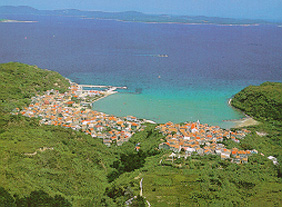
Northward aerial view of the Old Susak - the Upper settlement - and the island's harbor. HISTORY OF THE ISLAND SUSAKThe history books mention Sansego alias Susak relatively late. Early 11th century Ivan the Deacon wrote about Saracens who destroyed a Venetian fleet made them run away near the island in 844. Afterwards Susak was mentioned several times in various documents, charts and official papers of Venetian dodges like in 1208, 1229, 1280 and 1356.The island's history is painful but glorious since it has been exposed to conquest, plunder and violation of basic human rights, freedom and dignity. First known inhabitants were the Illyrians and some Greek sailors reached also this island. Romans settled down here some time before the birth of Christ. Under their domination Susak and other islands of Kvarner area, Istria and Dalmatia fall under the jurisdiction of the Province of Dalmatia. Together they became a part of the Illyrian Province. The Croats populated these islands in the early Middle Ages. After their immigration they lived together with other inhabitants under the supreme rule of the Byzantine Emperor. These islands became a part of the Croatian Kingdom during 10th and 11th centuries, which was reigned by a Hungarian king later. The Venetian Republic ruled over some islands until 1797 when they become part of the Napoleon's Illyria until 1815. The Austrian-Hungarian Monarchy annexed this region as per the Viennese congress' resolution. Susak stays under Monarchy's domination until the end of WW1 when it falls to Italy (the Treaty of Rapallo). There was a short partisan administration in 1943 until the German army occupied Susak staying there until end of WW2 in 1945. At last Susak became part of S.F.R. Yugoslavia upon Peace Treaty of Paris in 1947. POPULATION OF THE ISLAND SUSAKSusak was a summer resort for wealthier Romans who came from the land or the near-by islands. After the Saracens had defeated Venetians in the north Adriatic some took refuge on islands like Srakane and Susak. There was a Benedictine monastery on Susak since 11th century but inhabitants' number and dwellings are unknown. As from 14th century the monastery has declined and the church, as well as other churches on Unije and Ilovik turned into ruins.I've noticed some people having a different complexion compared to the other islanders during my first visit to Susak in 1949. One told us about several French armies' deserters who found refuge on the island early in 18th century. Soon after problems aggravated with the Yugoslav Navy on Susak which caused the great population exodus.
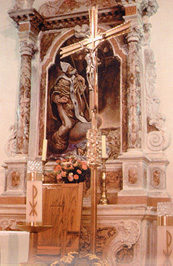
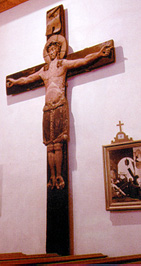
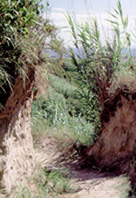
Now, 49 years later, Susak's small harbor provides a perfect mooring for sailing boats. Close to it a new settlement sprang out on old ground and one sees a lot of building activities still going on. In the Lower Susak one sees mostly renovated old houses and several newly built ones for tourists. There are few new commercial venues like restaurants, rent-a-houses and a new wine merchant enterprise. One has to ascend a steep stairway to get to the historical old or Upper Susak. We've visited there the recently refurbished Parish church where I've met Don Antun Turcic who presented me the first copy of his book (used for reference here). Most impressing of impressing items in the church is the cross "Veli Buoh" (Great God). Nobody knows how this cross (estimated from 12th century) came to the island but a legend says that it was washed ashore. Along a ravine grows reed and bamboo in the sandy loom of the island's higher plateau.
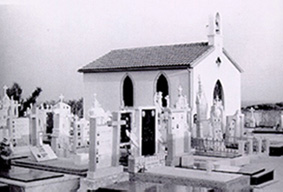
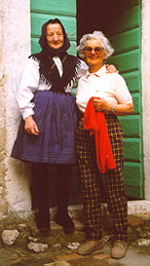
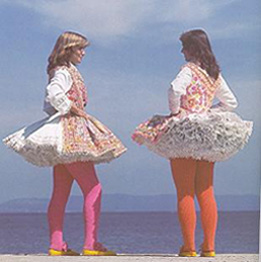
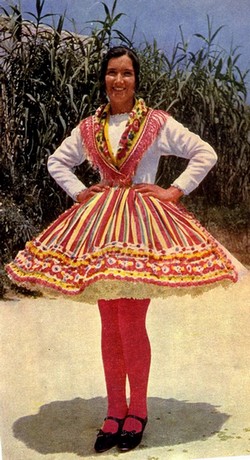
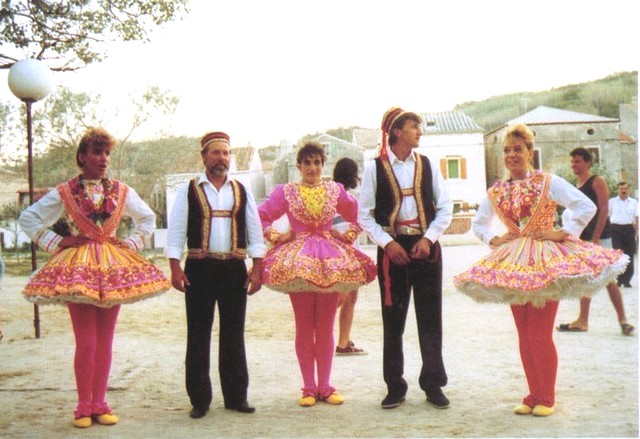
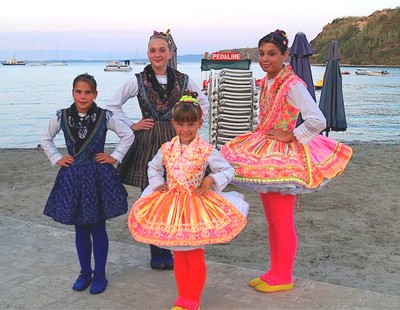
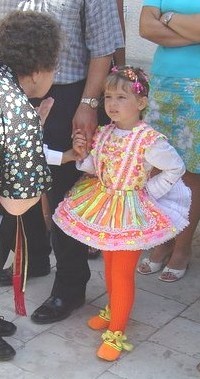
One of Susak's ravine with reed and bamboo Walking on a slightly ascending path out of the village one comes soon to island's only graveyard "Merina" and its chapel of Mournful Lady. I was astonished finding there so many new tombs belonging to people who had emigrated and returned to their native ground as the dead only. It's interesting that there are rather few surnames engraved on white tombstones. These are family's surnames some of which still exist on the island today like: Busanic (6 families), Hroncic (1), Lister (2), Matesic (12), Mirkovic (1), Morin (9), Picinic (18), Sutora (1), Skrivanic (5) and Tarabokija (11). ECONOMY ON SUSAKA Cooperative wine cellar existed from 1936 to 1969 on the island. The late cellar's capacity was 6000 hectoliters and all necessary equipment for manufacturing wine. Before 1940 about 1400 tones of grapes were gathered a year in the period from 15th August until the end of September. The late cooperative produced about 88% of good black wine, 10% of white wine and 2% of table wines only. One produced following sorts: black wines "Suscan" and "Susac", red wine (rose) "Trojiscina", white wine "Krizol" and wines "Boldun" and "Ranac". The sweet "Prosek" is made from dried grapes and is our favorite but is getting to your knees too fast though. Therefore drink it slowly. However, there are some 15 nicely cultivated vineyards albeit 62% of island's surface are still abandoned vineyards today.NATIONAL COSTUMESusak's national costume was somehow different from the all other ones of Adriatic islands. Most interesting is women's costume consisting of several layers which artistic designs originate from various time periods and cultural environments. They are strictly made for a specific life age or certain occasion. Costume named "po susacku" (in a way of Susak) is for every day's use where as the one "po losinsku" (in a way of Losinj) is for festive occasions.Simple working attire of older female has two main characteristics: a very short black skirt "kamizot" hardly reaching knees, a vest called "bust" which tightens chest and waist so that the upper part of the body looks elongated. Bust is a sleeveless vest made of red or blue cloth and worn over a white cotton shirt tightened around the neck with a "bravaroul" made of white flaxen cambric. Black kamizot is opened at sides under which one sees several white kamizots called "suknica". Long linen underpants "mudande" can't be seen. High red socks or slippers "kalcete" are knitted wooden of thin wool weave which reach above knees.
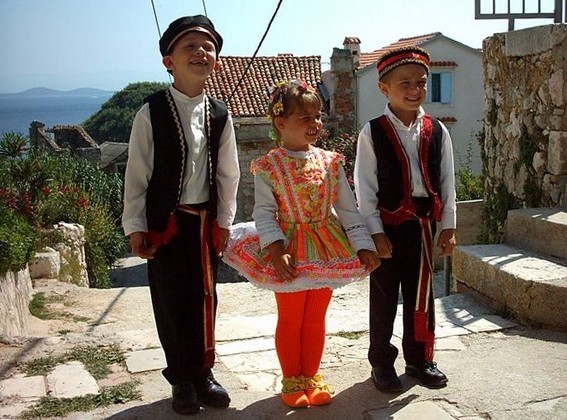
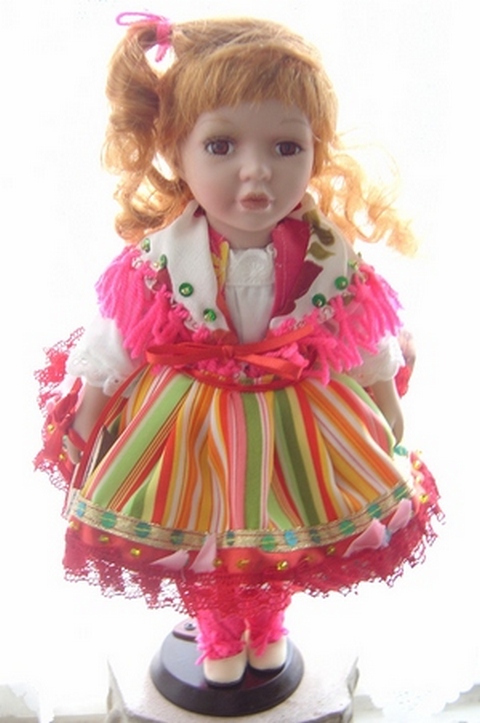
There are many more traditional parts of women's "po losinsku" costume to mention few: a blouse "zabajka", a little apron of artificial silk "tarvijerlica", under folded kamizot worn are many colored under skirts "sukna rakaman". Feet are in pink socks and in leather shoes "postoli" and the wedding crown is known as "vijel".
The men's costume looks like from a recent period resembling the one from island Cres and is less attractive then women's one. It consists of a soft and wide black cap, ordinary shirt with white collar, black linen vest, black traditionally cut trousers held by simple belt of knitted of red or pink ribbon looking like a rope. The festive belt is wider and solid pink ribbon decorated with colorful threads.
Source of the photos of Susak costumes: picasaweb.google.com MYTHIC FOLK STORIESSusak's inhabitants are mostly catholic and traditionally follow their religious customs and obligations but are not freed from old superstitious, which also exists on other islands in this area. Werewolves and witches are not familiar to the people by their names and substances. The noun STRIGA (tick) exists and is used as a derogatory term. The word "Mora" (nightmare) is a notion and "Mrak" (dark, darkness) is usually used instead. Mrak is an evil that waits and attacks men or women during nights strangling a person by lying on him or her. Mora differs from mrak for it only squeezes and suffocates but it doesn't suck out a person. It hits a person at crossroads so that head, arm, leg or any other part becomes swollen.There aren't any special means of defense against the darkness except physical resistance and one special element, which can be used against all kinds of evil "Fire". Old inhabitants believe that darkness exists on places like at "Obis" and at "Puntina" and nobody should go there. Those who went would get sick and die soon. Night darkness can harm clothes that a mother had left over night outside to be dried and such can harm a child. It can be fought by fire so a person who carries a torch or just smokes a cigarette is immune to the dark evil influence. Clothes, which were under the influence of darkness, should be put above a fireplace and a circle made around of burning fire. EMIGREES' DESTINYThe immigrants' destinies inspired John Matesic from Susak to found "The Society of St. Mikula of Susak" in Hoboken on 18th April 1948. It got its statutory rules and had some 60 members from begin. The society's aim was to help those who fell sick, to find jobs and look after those who came to America from the homeland, to pay for funeral expenses. The members gathered on Saturdays and Sundays to talk and mingle with others and to entertain. Still on Sundays the entire community comes together in St. Anna's church for the holy Mass.The society organizes a big dance four times a year where it collects the money that will be used to help all those in need and for society's needs. The money was also used for renovating St. Nicholas parish church and Merina graveyard on the native island of Susak. There were about 200 members who celebrated Society's 25th anniversary at St. Anna's church in Hoboken. The Society moved to Fairview in New Jersey as from November 1985. Source: (1) Don Antun Turcic: SUSAK - the Island of sand, reed
and vineyards; (2) Petar Strcic, Prof. DSc. Et Al.: CROATIAN ADRIATIC
ISLANDS;
DISCLAIMER : On URL: http://www.cosy.sbg.ac.at/~zzspri/ published pages are originals and authorized by copyright of Zvonko Z. Springer, Salzburg 1999. Email Zvonko Springer at : zzspri@aon.at Croatia - its History, Culture and Science
|